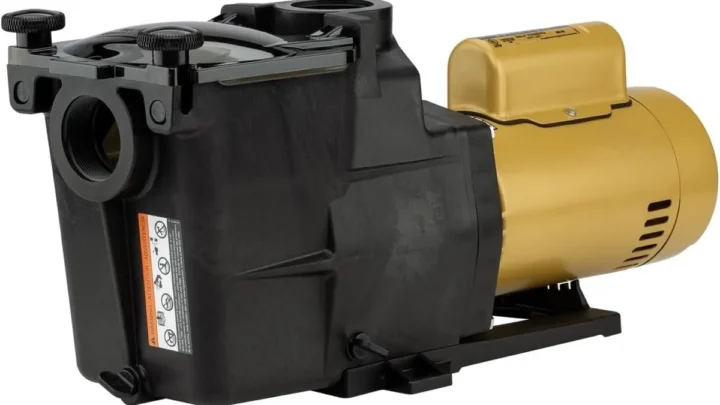
Swimming Pool Pump Problems Troubleshooting
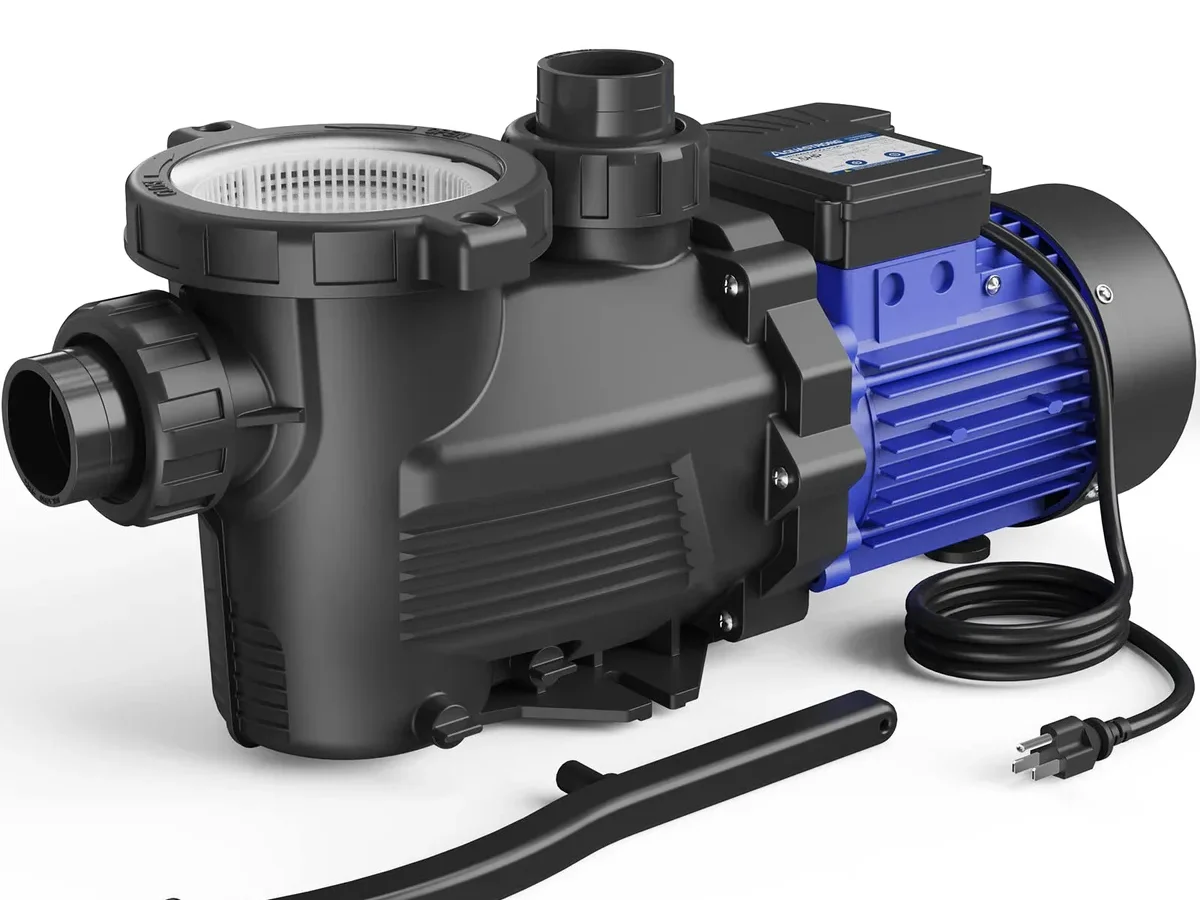
You walk out to the pool, flip the pump switch, and nothing happens. Or it hums but won't spin. Or it runs but the water barely trickles out of the returns.
Swimming pool pump problems troubleshooting doesn't have to mean calling a pro and dropping a few hundred dollars, many issues have simple fixes if you know where to look.
Manufacturer specifications indicate that over 60% of pump failures trace back to just four causes: a bad capacitor, a clogged impeller, an air leak, or a tripped thermal overload. The rest are often electrical or age-related. Knowing which one you're dealing with saves time, money, and a lot of frustration.
Let's walk through each problem step by step.
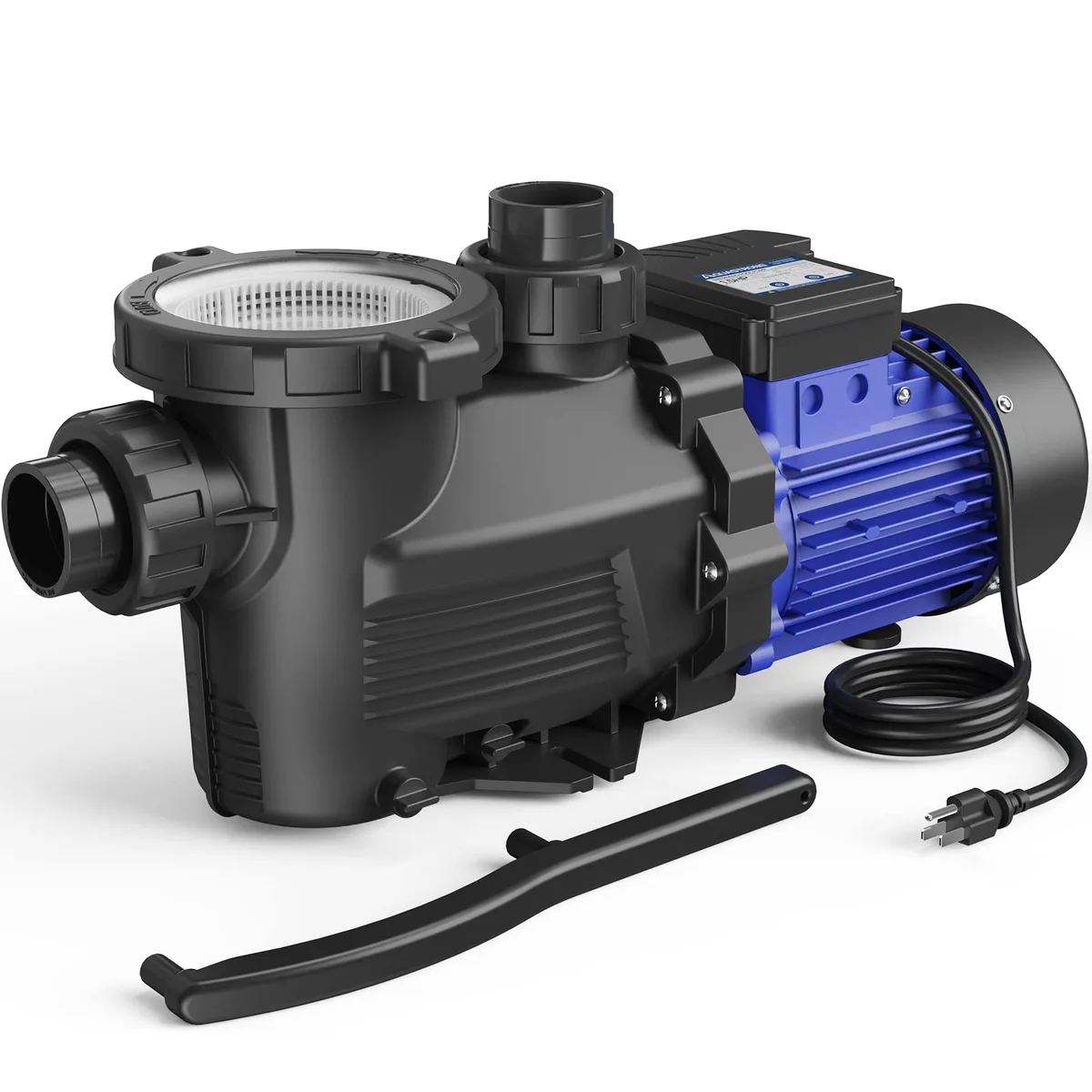
Image source: Bing (Web (fair-use with source credit))
Quick Answer
Most pump problems fall into a few categories. If the pump is silent, check the breaker and capacitor. If it hums, the impeller is likely stuck.
Low flow means a clogged filter, dirty impeller, or air leak. Losing prime points to a suction-side leak or low water level. Noisy operation usually means bad bearings or cavitation.
About 80% of these issues are fixable without a professional.
Why This Matters More Than You Think
A dead pump is not just an inconvenience. Without circulation, your pool water stagnates within 12 to 24 hours. Algae blooms, chlorine levels drop, and the water turns cloudy.
Fixing that takes shock treatments, algaecides, and serious elbow grease, easily $50 to $150 in chemicals plus your time.
Beyond water quality, a pump that keeps failing stresses your electrical system. Repeated breaker trips can damage your home's wiring. A motor that overheats repeatedly can melt internal components.
According to the National Electrical Code (NEC) NFPA 70, pool equipment circuits require GFCI protection and proper grounding. Ignoring those rules puts you and your family at risk.
The good news is that many pump problems show warning signs before they become catastrophic. A slight hum, a small air bubble in the pump lid, a gradual pressure drop, these are clues. Catching them early means a quick fix instead of a full replacement.
Pump Won't Start: Dead Silent or Humming
This is the most common call we hear. You flip the switch and nothing happens, or the pump hums but the impeller does not spin. The cause differs between the two.
If the pump is completely silent: first check the breaker. If it is tripped, reset it and try again. If it trips again immediately, stop.
There is a short somewhere, likely a bad motor winding or water in the electrical connection. Do not keep resetting it. Call an electrician.
If the breaker holds but nothing happens, the problem is likely the capacitor. The capacitor gives the motor a jolt to start spinning. When it fails, the motor gets power but cannot turn.
You can test it with a multimeter set to capacitance mode. A reading that is more than 10% off the rating printed on the side means it is dead. Capacitors cost $10 to $25 and take about 10 minutes to replace.
But discharge it first with an insulated screwdriver across the terminals.
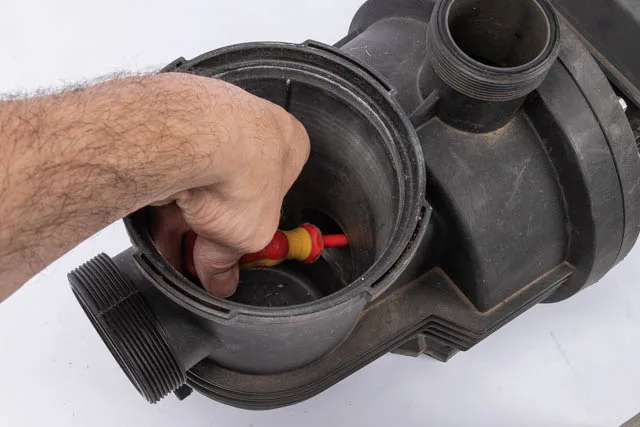
Image source: Bing (Web (fair-use with source credit))
If the pump hums but won't spin: the impeller is probably stuck. Cut power at the breaker. Find the fan at the back of the motor and use a flathead screwdriver to gently turn the shaft.
If it is hard to move or grinds, debris is wedged in the impeller. Open the pump housing and clear it out. If it spins freely but still hums, the capacitor is the culprit again.
In some cases, the motor's thermal overload has tripped. Let the pump cool for 30 to 60 minutes. If it starts after that, you are fine.
If it keeps doing it, the motor is overheating from poor ventilation, high ambient temperature, or internal issues.
Low Flow or Weak Returns
Your pump runs, but the water barely dribbles out of the return jets. This is frustrating because you are paying for electricity but not getting circulation.
Start with the pressure gauge on your filter. Know your normal baseline, usually 10 to 15 psi for a clean filter. If the pressure is 10 psi or more above that, the filter is dirty.
Backwash a sand or DE filter, or clean a cartridge filter. That alone fixes low flow in about 30% of cases.
If pressure is normal, the issue is on the suction side. Check the pump basket and skimmer basket first. A single leaf or piece of debris can block flow significantly.
Clear them and see if flow improves.
Next, look for air bubbles in the pump's clear lid. If you see them, you have a suction-side air leak. Air entry reduces the pump's ability to pull water, cutting flow.
Common leak points include the pump lid o-ring (lube it with silicone grease), the drain plugs, and the unions where pipes connect to the pump. Tighten or replace those parts.
If no air bubbles and no clogs, the impeller itself may be partially clogged. You will need to open the pump housing and inspect the impeller vanes. Remove any debris with a small screwdriver or tweezers.
A clogged impeller can reduce flow by 50% or more.
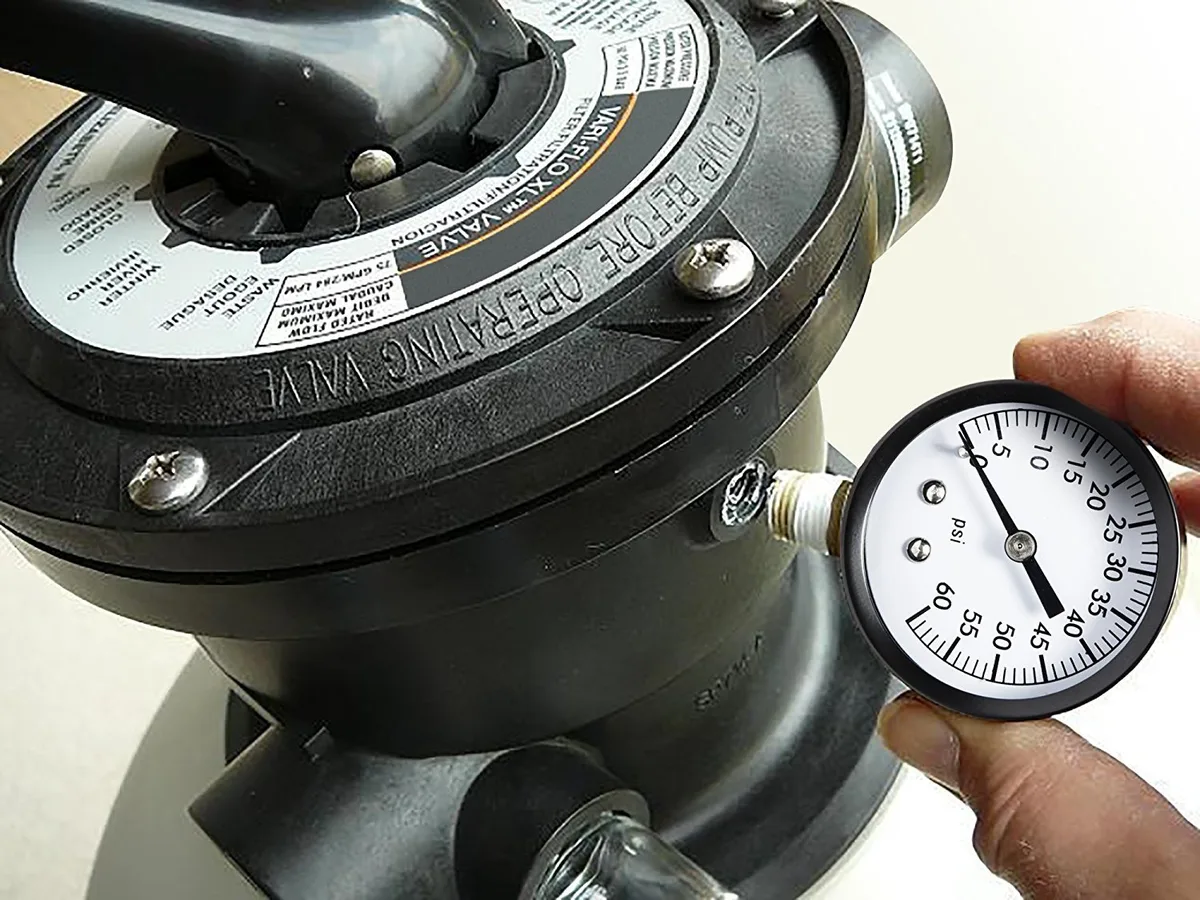
Image source: Bing (Web (fair-use with source credit))
One more thing: check the water level in the pool. If it is below the skimmer's intake, the pump sucks air instead of water. Top off the pool and see if flow returns.
Pump Loses Prime or Won't Hold It
Priming is the process of removing air from the pump and suction line so water can flow. A pump that loses prime repeatedly is telling you something is wrong.
The most common cause is a low water level. If the skimmer is sucking air, the pump will lose prime within seconds. Keep the water level at least halfway up the skimmer opening.
Next, inspect the pump lid o-ring. It is a big rubber gasket that seals the lid. Over time it dries out, cracks, or deforms.
Replace it once a year and lubricate it with silicone grease every time you open the lid. Do not use petroleum jelly, it eats rubber.
Check the drain plugs on the pump housing. They often have small o-rings that can leak. Tighten them gently or replace the o-rings.
A less obvious cause is a faulty check valve on the suction line. This valve lets water flow only one direction into the pump. If it is stuck open, water drains back to the pool when the pump shuts off, letting air into the system.
You will hear gurgling or see bubbles in the pump lid after the pump stops. Replace the check valve.
If you have checked all these and the pump still loses prime, you may have a hairline crack in the pump housing. This often happens after a freeze. You will see water weeping from the pump body.
At that point, replacement is usually the only option.
Noisy Pump: What That Sound Actually Means
Pool pumps make noise, but they should not sound like a dying animal. Different sounds point to different problems.
Grinding or screeching: This is the sound of metal on metal. It means the motor bearings are worn out. As of 2026, bearing replacement on most residential pumps costs about $75 to $150 in parts and labor.
But for a pump over 8 years old, we usually recommend replacing the whole unit. The bearings are a sign the motor is nearing end of life.
Rattling or clunking: This often means something is loose. Check the mounting bolts that hold the pump to the pad. Tighten them.
Also check the pump base for cracks. A cracked base can cause the pump to vibrate and make noise.
Gravel or rocks sound: This is cavitation. Air bubbles are imploding inside the impeller as the pump starves for water. It sounds like shaking a bag of rocks.
Cavitation damages the impeller over time. Fix the underlying cause: a suction-side air leak, a clogged intake, or low water level.
High-pitched whine: This can be a sign of a bad run capacitor or a motor that is working too hard. Check the voltage at the pump terminals with a multimeter. Low voltage can cause the motor to run hotter and noisier.
Nothing but normal hum: Some noise is normal. A variable-speed pump running at low speed is nearly silent. A single-speed pump at full speed is louder.
If the sound is steady and does not change, you are probably fine. If it changes pitch or gets louder over time, investigate.
Breaker Trips or Pump Overheats
A breaker that trips repeatedly is a serious warning. Do not ignore it and do not keep resetting it. Every trip stresses the wiring and the breaker itself.
If the breaker trips immediately when the pump starts: you have a dead short. The most common cause is water in the electrical connections. Check the junction box where power connects to the pump.
If it is wet, dry it out and reseal it. If the pump was sitting in a puddle, the motor is likely toast. Another possibility is a shorted capacitor.
A multimeter set to resistance mode will show zero ohms across a shorted capacitor.
If the breaker trips after the pump has been running for a while: the motor is overheating or drawing too many amps. Check the full-load amps on the motor nameplate. Compare it to what the pump is actually drawing using a clamp meter.
If it is over the rated FLA, the motor bearings may be seized, or the pump may be working too hard against a clogged filter or closed valve.
If the pump runs hot but does not trip: the thermal overload may be failing. Let it cool, clean the ventilation grilles, and make sure nothing is blocking airflow around the motor. If it keeps overheating, the motor windings may be breaking down internally.
Safety rule: never operate a pump that repeatedly trips the breaker. Call a licensed electrician. The NEC requires dedicated circuits for pool pumps, and ground-fault protection is mandatory.
Do not bypass these safety measures.
Safety, When to Call a Pro, and Final Decision Guide
Before you do anything else, kill the power at the breaker. Not the wall switch. The breaker.
Pumps have capacitors that can hold a charge even when unplugged. Water and electricity do not mix. I have seen pros get zapped by pumps they thought were dead.
Call a professional if:
- The breaker trips more than once and you cannot find the cause
- You see water inside the electrical connections
- The pump housing is cracked
- The motor smells like burning insulation
- You are not comfortable working with electrical components
- Local code requires licensed work for pool electrical repairs
Fix vs. replace decision guide:
| Condition | Fix | Replace |
|---|---|---|
| Bad capacitor | $10 to $25, 10 minute swap | Not needed |
| Clogged impeller | 30 minutes of cleaning | Not needed |
| Worn bearings | $75 to $150 repair | Yes, if pump is 8+ years old |
| Cracked housing | Not cost effective | Yes |
| Motor windings shorted | Not repairable in field | Yes |
| Pump over 10 years old with any major issue | Not worth it | Yes |
Maintenance habits that prevent 80% of problems:
- Check the pump basket once a week. Clear out leaves and debris.
- Lubricate the lid o-ring with silicone grease every time you open it.
- Replace the o-ring once a year.
- Keep the area around the pump free of leaves, grass, and standing water.
- Monitor the filter pressure gauge. Backwash or clean when pressure rises 10 psi above normal.
- Run the pump daily during swim season. Stagnant water breeds problems.
- Winterize properly in freeze-prone areas. Drain the pump and store it indoors if possible.
A little maintenance goes a long way. Most pump problems are not emergencies. They are warnings.
Listen to them, and you will keep your pool clear and your wallet happy.
Frequently Asked Questions
Why does my pool pump run but not move water?
The most common cause is a clogged impeller or pump basket. Cut power, open the pump housing, and clear any debris. Also check that the filter is not dirty and that the water level is high enough in the pool.
How do I know if my pool pump capacitor is bad?
Use a multimeter set to capacitance mode. Compare the reading to the rating printed on the capacitor. If it is more than 10% off or reads zero, the capacitor is dead.
You can also look for bulging or leaking fluid on the capacitor body.
Can a pool pump run without a capacitor?
No. The capacitor provides the extra torque needed to start the motor. Without it, the pump may hum but will not spin.
Running it without a capacitor can damage the motor windings.
Why does my pool pump keep tripping the breaker?
This usually means a short circuit or an overload. A short circuit trips the breaker immediately. An overload trips it after the pump has run for a while.
Check for water in the electrical connections, a seized motor, or a clogged filter causing the pump to work too hard.
How often should I replace my pool pump?
Most residential pool pumps last 8 to 12 years with proper maintenance. If your pump is over 10 years old and needs a major repair, replacement is usually a better investment. Newer variable-speed pumps are significantly more efficient.
Is it safe to replace my own pool pump capacitor?
It is safe if you follow proper precautions. Always kill power at the breaker before touching anything. Discharge the capacitor with an insulated screwdriver across the terminals.
If you are not comfortable with electrical work, call a professional. Capacitors can deliver a serious shock even when disconnected.

Similar Posts