York Diamond 80 Troubleshooting
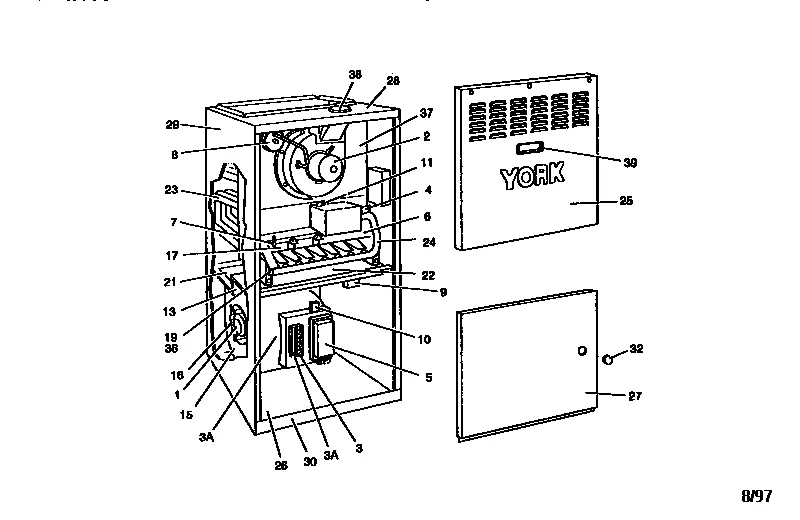
Your York Diamond 80 Troubleshooting session usually starts the same way: the house is cold, the thermostat is calling for heat, and nothing happens. It could be no heat at all, or a furnace that fires up and shuts down every few minutes. Either way, you want it fixed now.
The good news is that the Diamond 80's control board gives you strong clues if you know where to look.
The Diamond 80 is a single-stage, 80% AFUE gas furnace with a PSC draft inducer and a hot surface ignitor. Its integrated control board flashes a series of LEDs to tell you what's wrong. Per manufacturer specs, a 1-blink code means ignition failure, while 3 blinks points to the pressure switch.
Understanding these codes turns guesswork into a quick checklist.
Let's start from the beginning and work through the steps.
Image source: Bing (Web (fair-use with source credit))
Quick Answer
Read the error code from the LED on the control board. A 1-blink code means the ignitor or flame sensor failed. A 2 or 3-blink code means a pressure switch problem.
Check the air filter first. It causes many limit switch trips. Clean the flame sensor if the furnace fires but dies after a few seconds.
Replace the ignitor if it doesn't glow. Call a pro for gas valve or heat exchanger issues.
Is Your York Diamond 80 Not Working? Start Here
The York Diamond 80 is a single-stage gas furnace built in large numbers between the mid-2000s and mid-2010s. As of 2026, it's out of production, but replacement parts remain widely available. This is a simple 80% AFUE unit, which is why so many are still in service.
Before you do anything else, get safe. Turn the thermostat off, then kill power to the furnace at the breaker. If you smell gas even briefly, stop entirely.
Evacuate the house and call your gas utility from outside. Don't flip any switches on your way out.
Once you're absolutely sure it's clear, do the 60-second health check:
- Set the thermostat to heat, about 5 degrees above room temperature. Listen for the thermostat to click.
- Check the furnace's emergency disconnect switch (usually a red switch mounted on the side of the furnace or on a wall nearby).
- Verify the breaker is in the ON position.
- Look at the air filter. If it's gray, brown, or fuzzy like a wool sweater, replace it now. A clogged filter causes short cycling and limit trips.
The Diamond 80's diagnostic system makes this easier than it sounds. Once you read the blink code, you'll know which of these categories you're in.
| Symptom | The Likely Culprit |
|---|---|
| No heat, no blower noise | Thermostat wiring, power supply, control board |
| Blower runs, no flame | Hot surface ignitor, gas valve, flame sensor |
| Fires up, shuts down after a couple minutes | High limit switch, dirty filter, airflow restriction |
| Clicking sound, but no glow | Ignitor, wiring, control board |
In troubleshooting the Diamond 80, the biggest mistake is guessing. A gas furnace has a precise firing sequence, and the control board tracks each step. When one step fails, the board flashes a code.
Read the code first, then treat the cause.
Decode the Blink Codes – Your First Clue
The control board on the Diamond 80 has a small red LED. It's hidden behind a round window in the blower compartment. To read the code, leave the thermostat calling for heat and watch the LED.
It will flash a number of times, pause, then repeat. That repeat pattern is the code you need.
Place your fingers on the edge of the board, but don't touch the board while the system is live. The code stays active for a while after a lockout, so give it a few seconds to cycle. If the LED doesn't blink at all, you're dealing with a power issue.
Check the 3-amp fuse on the control board and the door latch interlock switch.
Common codes for the Diamond 80 series:
| Blink Code | Meaning | What To Check |
|---|---|---|
| 1 | No flame after ignition attempt | Ignitor, gas valve, flame sensor |
| 2 | Pressure switch stuck open | Vent, inducer motor, hose |
| 3 | Pressure switch stuck closed | Hose, switch itself |
| 4 | Limit switch open | Airflow, filter, blower motor |
| 5 | Rollout switch open | Venting, burner operation, heat exchanger |
Note: Exactly which code your unit shows can vary slightly by production year. The sticker on the inner door usually lists the codes. If the sticker is gone, the manual is available from the York dealer network.
Another thing: the board holds the last five error codes in memory, but you'll need the manual and a technician to read those. For your purposes, the current blinking pattern is enough. Make sure the blower door is fully seated too.
The furnace won't run with the door off because of a safety interlock switch.
Write your code on a piece of tape and stick it to the furnace. That way you won't forget it between trips to the hardware store. Then move to the decision tree and start testing.
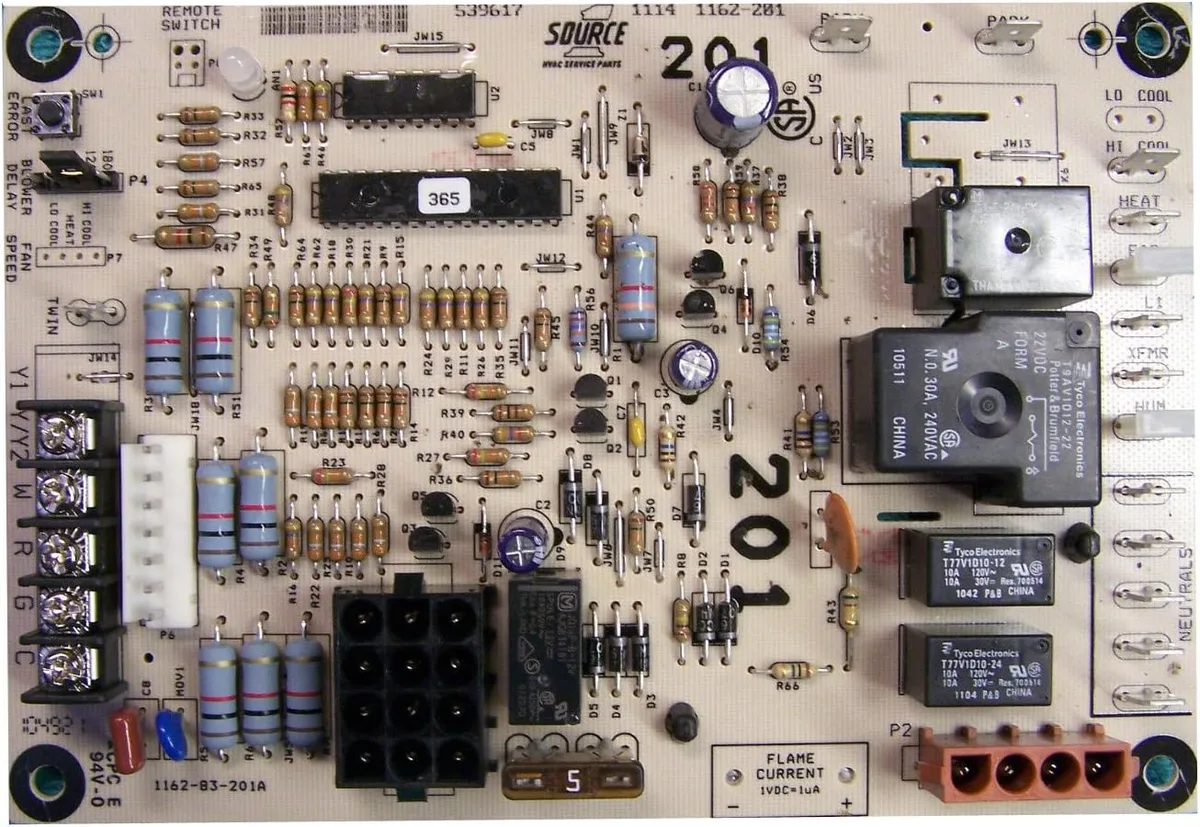
Image source: Bing (Web (fair-use with source credit))
No Heat? Follow This Decision Tree
Start with a simple question: is the blower running? It may sound obvious, but it splits the problem cleanly.
If the blower is running, the furnace already knows it's supposed to be heating. The problem is ignition. Go to the "Blower Runs but No Flame" branch.
If the blower doesn't run at all, the issue is higher up the chain. Start at the thermostat and work forward to the control board.
If the blower runs, the burner fires, then everything stops after two or three minutes, you're seeing short cycling, which is a different branch entirely.
Blower Runs but No Flame
Your furnace is past the "call for heat" stage. The inducer has run, and the control board has sent power to the ignitor. If you see no glow at all, test the ignitor with a multimeter.
Resistance should sit between 40 and 100 ohms at room temperature. An open circuit means the ignitor is dead.
If the ignitor glows orange and the gas valve clicks, but no flame, then suspect the flame sensor. A thin white or gray coating on the rod breaks the signal when it's dirty. Clean it with a fine emery cloth, reinstall, and reset the furnace.
If the gas valve never clicks, check for 24V at the valve terminals during a call for heat. No voltage means the control board is the problem.
Blower Doesn't Run at All
Start with the thermostat. Set it to heat and watch the display. If it says "HEAT ON" but nothing happens, the thermostat is fine.
Move to the furnace.
Open the blower door, then turn the power back on. Look at the LED on the control board. If you don't see even a faint glow, the board is dead or not receiving power.
Check the fuse on the board. It's a 3-amp blade fuse that costs a couple of dollars.
If the LED blinks a code, follow that code from the table in the previous section. A limit switch or rollout switch in the open position will stop the blower sequence entirely.
A final common cause is a failed blower capacitor. If you hear a low hum but the wheel doesn't spin, test the capacitor with a multimeter. Swap in a new one if it reads outside its rated microfarad range.
Furnace Cycles On and Off (Short Cycling)
There's a specific rhythm to short cycling: burners light, run for a few minutes, flame goes out, blower runs some more, then the cycle restarts. That pattern points almost always to the high limit switch.
The high limit switch trips when the heat exchanger gets too hot. The number one reason is airflow. Check the filter first, then look for closed registers or a clogged return vent.
If airflow is fine, the limit switch itself may be worn out and tripping too early. It's a low-cost part that mounts on the heat exchanger. Replace it with the same temperature rating.
Also check the flame itself. A lazy yellow flame instead of a sharp blue cone means the burner needs cleaning.
Pressure Switch, Ignitor, and Flame Sensor – Breaking Down the Three Most Common Failures
These three parts fail more than anything else on the Diamond 80, in that order. Here's how each works and how to tell if it's your problem.
Pressure Switch
The pressure switch is a safety device. It confirms the draft inducer motor is actually pushing combustion gases out of the flue. Without that confirmation, the control board won't open the gas valve.
Symptoms: a 2-blink or 3-blink code, a quiet furnace that never tries to light, or an inducer that runs but the switch never clicks.
Check the rubber hose between the switch and the draft inducer. Cracks or loose connections are the usual cause. Moisture in the hose can also block the signal.
Remove and dry it.
If the hose is fine, use a multimeter on the switch's two terminals. With the inducer running, you should get zero ohms (closed circuit). If it reads open, the switch is bad.
Hot Surface Ignitor
The ignitor is a ceramic rod that glows around 1800°F. The control board sends 120V to it for about 20 seconds before opening the gas valve.
Symptoms: no glow during a call for heat, or a faint glow that never reaches full orange.
Test with resistance. A good one reads between 40 and 100 ohms. An open reading means it's cracked inside.
When you replace it, handle the new one by the ceramic base only. Oils from your skin create a hot spot that shortens its life.
Flame Sensor
The flame sensor is a thin metal rod, roughly 3 inches long, mounted on the burner assembly. When the burner is lit, a small electrical current flows through the flame to the control board. If that current drops below about 2 microamps, the board closes the gas valve.
Symptoms: the furnace fires, runs for 4 or 5 seconds, then the flame goes out. It repeats twice more, then goes to lockout.
Fix: clean it. Turquoise or white residue on the rod is a perfect description of the problem. Use a green scrub pad or emery cloth, wipe in the direction of the rod, and reinstall.
The rod and ignitor are often right next to each other, so make sure you're cleaning the right one.
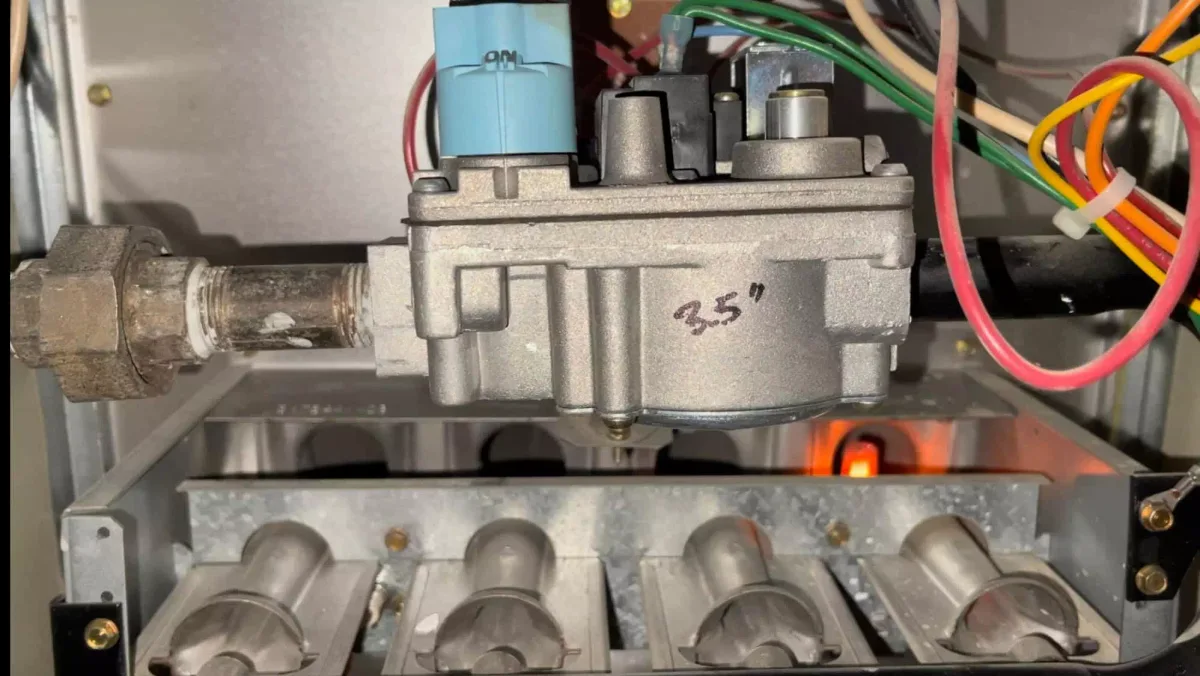
Image source: Bing (Web (fair-use with source credit))
Mistakes That Cost You Time or Money
Everyone makes at least one of these when they start working on a gas furnace. Knowing them saves you a whole afternoon.
Testing the Flame Sensor While the Furnace Is Hot
You'll burn yourself, or you'll read false numbers. Let everything cool completely before touching any part in the burner assembly.
Replacing a Pressure Switch Without Checking the Vent
The switch is often not the problem. The vent pipe can be blocked by a bird nest, leaves, or ice. If you replace the switch and the new one fails too, you're back to square one.
Inspect the flue termination outside first.
Bypassing Safety Switches
Some people jump the pressure switch for "testing." That's a carbon monoxide hazard. The switch exists because a blocked flue can kill your family. Never, ever bypass it.
Using a Dirty Air Filter "One More Month"
A clogged filter causes the limit switch to trip. It also makes the blower work harder and shortens the entire system's lifespan. Replace it at least every three months.
Setting the Thermostat to "Fan On" While Troubleshooting
Now you can't tell whether the blower is running because the thermostat wants it, or because the furnace is calling for heat. Keep the fan on AUTO until you're done.
Turning Off Gas Instead of Electricity to Reset
The furnace's electronics need power to run the ignition sequence. If you kill the gas but keep the electricity on, the system will just sit there. Use the thermostat's reset button or the breaker, not the gas valve.
One more tip: write the error code on the furnace with tape. It'll save the next tech 15 minutes of re-diagnosing what you already found.
When to Call a Pro – Safety First
There's a line between DIY troubleshooting and professional territory. Knowing where that line sits keeps you safe and your furnace intact.
You can handle these on your own:
- Replacing the air filter
- Cleaning the flame sensor
- Replacing a failing hot surface ignitor
- Swapping a blown 3-amp fuse on the control board
- Resetting a tripped rollout switch if you've confirmed the flue is clear
Call a licensed HVAC contractor for these situations:
- Gas valve replacement (requires gas pressure testing)
- Heat exchanger inspection or replacement
- Control board replacement beyond fuse swaps
- Any venting or flue work
- Persistent rollout switch trips
- Furnace is over 15 years old and needs a major repair
The rollout switch is a serious warning. If it trips, the furnace sensed flames escaping the heat exchanger. That's a carbon monoxide risk.
Reset it once after checking that the flue is clear. If it trips again within a few days, call a pro.
Aggregate reviews from across the industry show that up to half of all ignition-related problems trace to a dirty flame sensor. Cleaning that part is safe and cheap. But gas valve testing, combustion analysis, and duct inspection need certified technicians.
One more thing: if your furnace locks out three times in a row, the board enters a hard lockout. You'll need to reset it by killing power to the furnace for 30 seconds. That's another warning sign.
If you're resetting it weekly, something is failing slowly, not a fluke.
Maintenance to Prevent Future Breakdowns
The Diamond 80 is a straightforward furnace, but it needs consistent basic care. Most midwinter breakdowns come from just a few oversights. Build these into your seasonal routine.
Fall Startup Checklist
- Replace the air filter. Use a cheap one, not a high-MERV filter. The higher the rating, the harder the blower works. A low one changed every 30 days is perfect.
- Confirm the thermostat works. Set it a few degrees above room temperature and watch the burner fire.
- Look at the flue termination outside. Remove bird nests, leaves, bugs, or wasp nests. Blocked venting kills combustion airflow.
- Clean the furnace area. Remove boxes, bags, lint, or mop heads. The Diamond needs at least 30 inches of clearance in front for airflow and service access.
Every 6 months:
- Clean the flame sensor. It's a five minute job. Use a green scrub pad or very fine emery cloth. Reinstall it in the same position you removed it from.
- Listen for a rough draft inducer. If it warbles or wobbles, the bearing is wearing out. Early replacement saves the control board from extra wear.
- Test the pressure switch hose connection. Lightly tug each end to confirm the rubber is still flexible, not brittle and cracked.
Annual pro inspection
Once a year, have an HVAC tech run a combustion analysis. They measure carbon monoxide level, flue temperature, and gas pressure. The right numbers are zero CO, a stable flue temp around 350°F, and a gas manifold pressure of 3.5 inches WC for natural gas.
Per the U.S. Department of Energy, a well maintained furnace uses about 10% less fuel than a neglected one.
What Happens When You Skip Maintenance?
| Skipped Task | Consequence |
|---|---|
| Dirty filter | Limit switch trips, blower strain, short cycling |
| Grimy flame sensor | Ignition failure, lockout, service call |
| Clogged flue | Rollout switch trips, CO hazard |
| Worn draft inducer | Pressure switch fails to close, lockout |
| Gas burner dirty | Yellow flame, soot, heat exchanger damage |
The cost of a new blower motor with labor is about 200 dollars. All of these are easily preventable with 20 minutes twice a year.
Can Electrical Issues Shut This Furnace Down?
Yes. The control board operates on 24V, the draft inducer and blower run on 120V. Any voltage drop or brownout can trigger really weird behavior.
Thermostat wiring problems
A thermostat wire with poor contact on the W terminal means the furnace never receives the call for heat. Check the wiring at both ends. The wires should be tight, not just pushed in without a screw.
Control board fuse
If the fuse is blown, the furnace is dead. But it might be a sign that something else caused it. Common culprits include a short thermostat wire, a failing gas valve coil, or something that just wore out over the years.
Replace the fuse and test. If it blows again immediately, do not keep replacing it. Pull the thermostat wires off the board first.
If the fuse holds without them, it's a thermostat wire short circuit.
Neutral issues
A loose neutral connection at the power source can cause the board to act strangely. It may fire the inducer but stop ignition. Check the common wire at the furnace junction box.
If you are comfortable with a multimeter, test the voltage between the neutral and the furnace chassis while the unit is under load. It should be close to zero. A reading above 3V means a problem somewhere in the building's wiring.
Low level power concerns
Some utility power is just noisy, grounded by poor wiring. The board can try but fail to ignite. The solution is usually to have a pro install a low-rated surge protector on the compressor.
Always check the safety interlock and the door switch first. If the door is loose or the switch is old, the furnace acts like it's completely dead.
Frequently Asked Questions
Why is my Diamond 80 blower running but no flame?
Your ignitor, gas valve, or flame sensor is likely at fault. If you see no glow, check the ignitor resistance. It should read 40 to 100 ohms.
If the ignitor glows but the gas valve won't open, check for 24V at the valve terminals.
What do the flashy LED codes on my Diamond 80 mean?
The red LED on the control board blinks in a pattern. 1 blink means no ignition. 2 or 3 blinks mean a pressure switch problem. 4 blinks means an open limit switch. Check the sticker on the furnace door for a list of confirmable numbers.
How often should I clean the flame sensor on my York furnace?
About once or twice a year. A discolored rod with white or turquoise residue causes intermittent ignition failure. Clean it with a green scrub pad or emery cloth.
It's a ten minute job.
Should I replace or repair my Diamond 80?
If the furnace is over 15 years old and needs a major component like a heat exchanger or a new control board, replacement usually makes better financial sense. If it's a smaller job like a pressure switch or flame sensor, repair it.
Why does my Diamond 80 fire and then stop after 4 seconds?
That's a classic flame sensor signal failure. The burner is lit, but the sensor reads too low microamps because of invisible surface crud. Clean the sensor rod, reinstall it, and the furnace should start and stay lit.
A well-maintained Diamond 80 will run another decade past a neglected one. The time you invest now in a thirty minute cleaning and a filter swap will save you a 200 dollar service call next winter.

Similar Posts