American Standard Furnace Troubleshooting
Your American Standard furnace has stopped blowing heat. The blower might be running, or the system is completely silent. Maybe you're seeing a blinking light on the control board that you don't understand.
You're cold, frustrated, and trying to decide whether this is something you can fix yourself or a call-the-pro situation.
This article walks you through American Standard Furnace Troubleshooting step by step. We'll cover the most common failures, how to read those diagnostic codes, what repairs are safe to attempt, and when to stop and pick up the phone. According to aggregate service data, nearly 60% of no-heat calls involving American Standard furnaces trace back to just three causes: a dirty flame sensor, a blocked condensate drain, or a clogged air filter.
We'll start with the simplest fixes and work our way up.
Quick Answer
Troubleshoot your American Standard furnace by checking the diagnostic LED codes first. Clean the flame sensor if the burner ignites but shuts off quickly. Replace a dirty air filter.
Clear any blocked PVC vents or condensate drains. Reset the furnace after a lockout. Call a licensed technician for gas, heat exchanger, or control board issues.
Image source: Bing (Web (fair-use with source credit))
Why Quick Action Matters When Your Furnace Won't Heat
A dead furnace in winter isn't just an inconvenience. It's a safety issue and a financial one if you wait too long to act.
The risks stack up fast. Pipes can freeze and burst within 24 hours in subfreezing weather. A furnace that keeps trying to ignite but fails can flood your home with unburned gas or create carbon monoxide.
According to the National Fire Protection Association, heating equipment is the second leading cause of home fires, and failure to clean equipment is the top contributing factor.
American Standard furnaces have a few quirks that set them apart from other brands. They use specific hot surface igniters and pressure switches that fail in predictable ways. Their diagnostic LED systems are more detailed than some competitors, which is actually good news for you.
The control board stores error codes that point directly to the problem.
Here's what you're up against in terms of repair costs if things go wrong. Aggregate data from recent service records shows that a standard diagnostic call runs between $80 and $150. Simple fixes like cleaning a flame sensor cost under $100 if you pay someone.
Parts like a replacement igniter run $50 to $150. A new control board can push $400 to $800 with labor.
The cold truth is that most furnace problems start small. A dirty flame sensor is a $0 fix that turns into a no-heat emergency. A clogged condensate drain quietly builds up until the pressure switch locks out the furnace.
If you catch these early, you avoid the emergency call during the first cold snap when every HVAC company is slammed.
As of 2026, American Standard still uses the same basic control platform they have for years. That means the troubleshooting steps we cover here apply to Silver, Gold, and Platinum series models. The error codes are consistent across the lineup.
The components are the same.
Let's get into what's actually going wrong and how to fix it.
The Most Common American Standard Furnace Problems (And What Causes Them)
Knowing the symptoms narrows down the cause fast. Here are the most common failures owners report and the likely culprit behind each one.
Furnace Won't Ignite (No Heat at All)
This is the big one. You set the thermostat, you hear a click or a hum, but no flame appears. The furnace may try a few times and then lock itself out.
The most likely causes are a failed hot surface igniter, a bad flame sensor, a clogged air filter restricting airflow, or a pressure switch that won't close. On American Standard furnaces, the igniter is a common failure point after about five to eight years. The silicon carbide elements develop hairline cracks and stop glowing.
Furnace Short Cycles (Turns On and Off Too Quickly)
The furnace fires up, runs for a few minutes, and shuts down before reaching the set temperature. Then it tries again soon after.
This usually means the furnace is overheating or failing to sense the flame properly. A dirty flame sensor is the number one cause. The sensor can't detect a stable flame, so the control board cuts the gas after a few seconds.
Other causes include a dirty filter, a blocked vent pipe, or a failing limit switch.
Blower Runs But No Heat (Cold Air Blowing)
You hear the fan running, but the air coming out of the vents feels cold. The burner never lights.
If the blower is running but the furnace isn't firing, the issue is in the ignition sequence. The inducer motor might not be starting. The pressure switch might not be closing.
The gas valve might not be opening. On American Standard furnaces, the inducer motor has a multi-speed design, and a failed motor or bad capacitor will stop the whole sequence cold.
Furnace Clicks But Won't Stay Lit
This is a specific and very common complaint. You hear the igniter glow, then a click as the gas valve opens, the flame lights briefly, and then it goes out. The furnace tries again and repeats the cycle.
This is almost always the flame sensor. It is a metal rod positioned in the flame. When it gets coated with a thin layer of carbon or oxidation, it can't read the flame signal.
The control board interprets this as no flame and shuts off the gas as a safety measure.
Error Codes Flashing on the Control Board
Your American Standard furnace has a diagnostic light behind a small window on the blower door. It flashes a specific pattern when something is wrong.
A steady on light means power is good but the thermostat isn't calling. One flash usually means the igniter is on. Two flashes means the pressure switch is stuck open.
Three flashes means the limit switch is open. Four flashes means the flame sensor is detecting a flame when the gas is off, which indicates a stuck gas valve. Five flashes means a communication error with the thermostat.
Furnace Lockout After Repeated Failed Attempts
After a certain number of failed ignition attempts, the control board enters a lockout mode. The furnace stops trying for one hour. The LED will show a steady code that tells you what went wrong during the last attempt.
This is a safety feature. It prevents the furnace from repeatedly dumping gas into the system without igniting. The fix is to identify why it kept failing, fix that issue, and then manually reset the furnace by turning the power off for 30 seconds.
Reading Your Furnace's Diagnostic LED Codes (The First Step)
Before you start pulling things apart, let the furnace tell you what's wrong. American Standard puts a diagnostic LED on the control board, and it's your best troubleshooting tool.
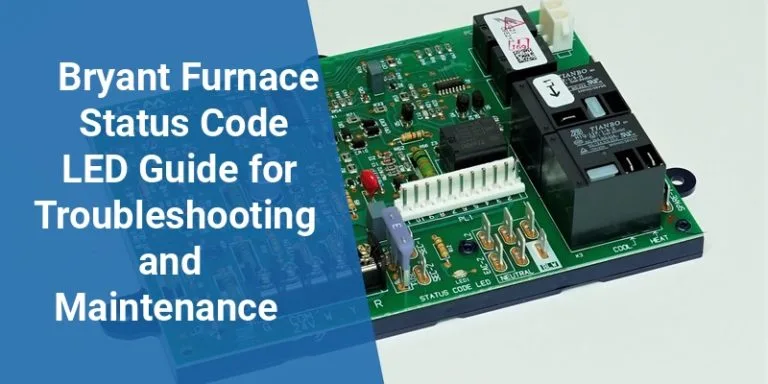
Image source: Bing (Web (fair-use with source credit))
Where to Find the Sight Glass or LED Window
Look at the lower blower door on your furnace. There is a small round or rectangular clear window near the top. Behind that window is the control board and a small green or amber LED light.
If you don't see a window, you may need to remove the blower door. Turn off the power to the furnace at the wall switch first. Then remove the screws holding the door and pull it off.
The LED will be on the main control board mounted inside.
How to Interpret Blink Patterns and Flash Counts
The LED flashes in a repeating pattern. Count the number of flashes in a row, then note the pause. The sequence repeats every few seconds.
Here is a quick reference for the most common American Standard diagnostic codes as of 2026:
| Flash Count | Meaning | Likely Cause |
|---|---|---|
| Steady on | Normal, no call for heat | Thermostat not calling |
| 1 flash | Igniter on | Normal startup |
| 2 flashes | Pressure switch stuck open | Blocked vent, bad pressure switch, or condensate drain clog |
| 3 flashes | Limit switch open | Overheating, dirty filter, restricted airflow |
| 4 flashes | Flame sensed when gas off | Stuck gas valve (call a pro immediately) |
| 5 flashes | Communication error | Thermostat wiring issue |
| 6 flashes | Low flame sensor signal | Dirty flame sensor |
| 7 flashes | Gas valve relay failure | Bad control board or gas valve |
| 8 flashes | Inducer motor fault | Failed inducer motor or capacitor |
Why the Control Board Stores History You Can Use
American Standard control boards remember the last error code even after a lockout. When the furnace resets after an hour, the LED goes back to steady on, but the board still holds the code.
If you catch the furnace mid-cycle, you can read the active code. If you get there after a reset, you can simulate a call for heat by raising the thermostat and watch the sequence. When the furnace hits the error, the LED will flash the stored code.
This is useful because some errors only happen during the startup sequence. A pressure switch might work fine when cold but fail when the inductor motor tries to pull a draft. You have to watch it happen.
Common American Standard Fault Codes and What They Mean
The 2-flash code is the most common complaint. It means the pressure switch is not closing. Before you replace the switch, check the obvious.
Is the PVC exhaust pipe blocked with snow or ice? Is the condensate drain line full of water or slime? Is the hose from the pressure switch to the inducer housing cracked or disconnected?
The 3-flash code is the second most common. The limit switch is open because the furnace is too hot. A dirty filter is the first thing to check.
After that, look at the blower motor. If the capacitor is weak, the motor runs slow and can't move enough air. A seized blower wheel or a closed supply register can also cause this.
The 6-flash code points directly at the flame sensor. This is the easiest fix in the list and we will cover it in the next section.
Step-by-Step Troubleshooting for No Heat (Safe DIY Checks)
Now let's walk through what you can safely do before you call a technician. These are all low voltage, no gas disassembly, no risk of electrocution checks. If you can change a light bulb and use a screwdriver, you can handle these.
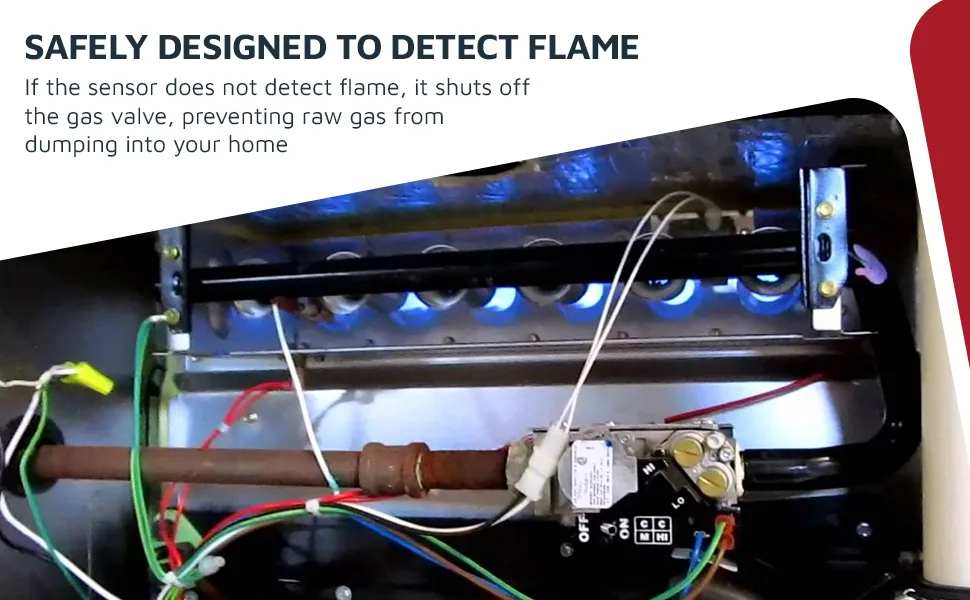
Image source: Bing (Web (fair-use with source credit))
Starting Safely: Turning Off Power and Gas Before Any Work
Safety is not optional. Before you touch anything inside the furnace, turn off the power. There is a wall switch near the furnace that looks like a regular light switch.
Flip it off.
If you are working on the gas valve, the condensate drain, or anything near the burner assembly, turn off the gas too. The gas valve is on the pipe leading into the furnace. Turn the handle so it is perpendicular to the pipe.
That means it is closed.
Wait five minutes for any accumulated gas to dissipate. This is not a step to rush.
Checking and Replacing the Air Filter (Quickest Fix)
This is the most overlooked repair in HVAC history. A dirty air filter restricts airflow, causes the furnace to overheat, trips the limit switch, and shuts the whole system down.
The filter is usually in a slot on the side or bottom of the furnace. Slide it out. Hold it up to a light.
If you can't see light through it, replace it. Use a filter with the same dimensions and an appropriate MERV rating. MERV 8 is a good balance for most homes.
MERV 11 or higher can restrict airflow on older systems.
Replace the filter every one to three months during heating season. If you have pets or live in a dusty area, check it every month.
Clearing Blocked PVC Exhaust or Intake Vents (Snow, Ice, Debris)
High-efficiency American Standard furnaces use PVC pipes for both intake and exhaust. These pipes exit through the side of your house. In winter, snow can bury them.
Ice can form inside the pipe at the termination.
Go outside and check both pipes. Clear any snow away from the termination. If there is ice inside the pipe, carefully break it loose with a screwdriver or pour warm water through it.
Do not use boiling water. It can crack the PVC.
If the pipe is blocked, the pressure switch can't sense the draft, and the furnace will not start. This is a very common issue after a heavy snowfall.
Cleaning the Flame Sensor (The Single Most Common Failure)
The flame sensor is a metal rod about two to three inches long. It is located on the burner assembly, usually near the last burner in the sequence. It has a single wire connected to the top.
Remove the wire. Unscrew the one screw holding the sensor in place. Pull it out.
You will see a dull gray or black coating on the tip.
Take a piece of fine sandpaper, 220 grit or higher, or a green Scotch-Brite pad. Gently rub the tip until you see bright metal. Do not use a file or heavy grit sandpaper.
You only need to remove the surface coating, not the metal itself.
Wipe the sensor clean with a dry cloth. Reinstall it, reconnect the wire, and turn the power back on. This single fix resolves the vast majority of "furnace clicks but won't stay lit" problems.
Verifying the Thermostat Is Communicating Properly
A dead thermostat or bad wiring can look like a furnace failure. Make sure the thermostat is set to heat mode and the temperature is set at least five degrees above the current room temperature.
If the thermostat has a blank screen, check the batteries or look at the furnace transformer. If the transformer is bad, the thermostat won't even turn on. You can test this with a multimeter at the control board.
You should see 24 volts AC between the R and C terminals.
If the thermostat is programmable, check the schedule. Some smart thermostats have been known to overwrite manual settings. Set it to hold at a higher temperature and see if the furnace responds.
Resetting the Furnace After a Lockout
If the furnace has tried and failed several times, it goes into lockout mode for one hour. You can manually reset it by turning the power off at the wall switch for 30 seconds. Turn it back on.
The furnace will restart the ignition sequence.
If the root cause is not fixed, it will lock out again. Use the first few seconds of the startup to watch the LED light and identify the error code.
Checking the Condensate Drain and Trap for Clogs
High-efficiency furnaces produce water as a byproduct of combustion. That water drains through a plastic hose and trap. If the drain gets clogged with slime or debris, the water backs up and the pressure switch trips.
Locate the clear plastic hose coming from the inducer motor housing. Follow it to the condensate trap. The trap is a small plastic chamber with a cap.
Remove the cap and look inside.
If you see black slime or standing water, clean it out. Flush the trap with warm water. Check the drain hose for kinks or blockages.
A shop vacuum on the end of the drain line can clear stubborn clogs.
Testing the Pressure Switch for Proper Operation
If the vent is clear and the condensate drain is flowing, the pressure switch itself might be bad. American Standard uses several different pressure switches depending on the model. They are small round devices with two hose connections.
You can test the pressure switch with a multimeter set to ohms. With the furnace off and no suction applied, the switch should show infinite resistance (open). When the inducer motor runs and pulls a vacuum, the switch should close and show zero ohms.
If the switch never closes, even with a clean vent and working inducer, the switch is defective and needs replacement. This is a common American Standard failure point on units older than seven years.
When to Clean vs When to Replace Parts
Not every failed component needs a full replacement. Some parts clean up fine. Others are cheap enough that replacement beats the hassle.
The Flame Sensor: Clean First, Replace Only If Damaged
The flame sensor is almost always salvageable. A light sanding with 220-grit paper removes the carbon coating that blocks the signal. If the ceramic insulator is cracked or the metal tip is pitted, replace it.
A new sensor runs $15 to $35 for most American Standard models.
Test it after cleaning. If the furnace still drops flame after a few seconds, the sensor might be failing internally. Replace it before you chase other causes.
The Hot Surface Igniter: Replace, Never Clean
The igniter is a brittle ceramic element. If it has a hairline crack, it won't glow evenly and the gas won't light. Cleaning does nothing.
You replace it.
American Standard uses two common igniter types: silicon carbide (dull gray) and silicon nitride (shiny black). The nitride versions last longer but cost more, around $40 to $80. The carbide ones run $20 to $40.
Signs it is bad: no glow at all, a glow only at one end, or visible cracks. You can test it with an ohmmeter. A good igniter reads between 40 and 70 ohms.
Infinite resistance means it is open and dead.
The Pressure Switch: Test, Then Replace
The pressure switch is a simple on/off device. It either closes or it doesn't. There is no cleaning it.
Test it with a multimeter as described earlier. If the switch stays open when the inducer motor runs and the vent is clear, replace it. American Standard pressure switches are model-specific, so check the part number on the old one.
They run $30 to $60.
The Blower Capacitor: Test and Replace Cheaply
A weak capacitor makes the blower motor run slow or not at all. This causes overheating and limit switch trips.
You can test it with a multimeter that has a capacitance setting. The microfarad rating is printed on the side of the capacitor. If it reads more than 10% below that number, replace it.
A new capacitor costs $10 to $25 and is a five-minute swap.
The Control Board: Last Resort
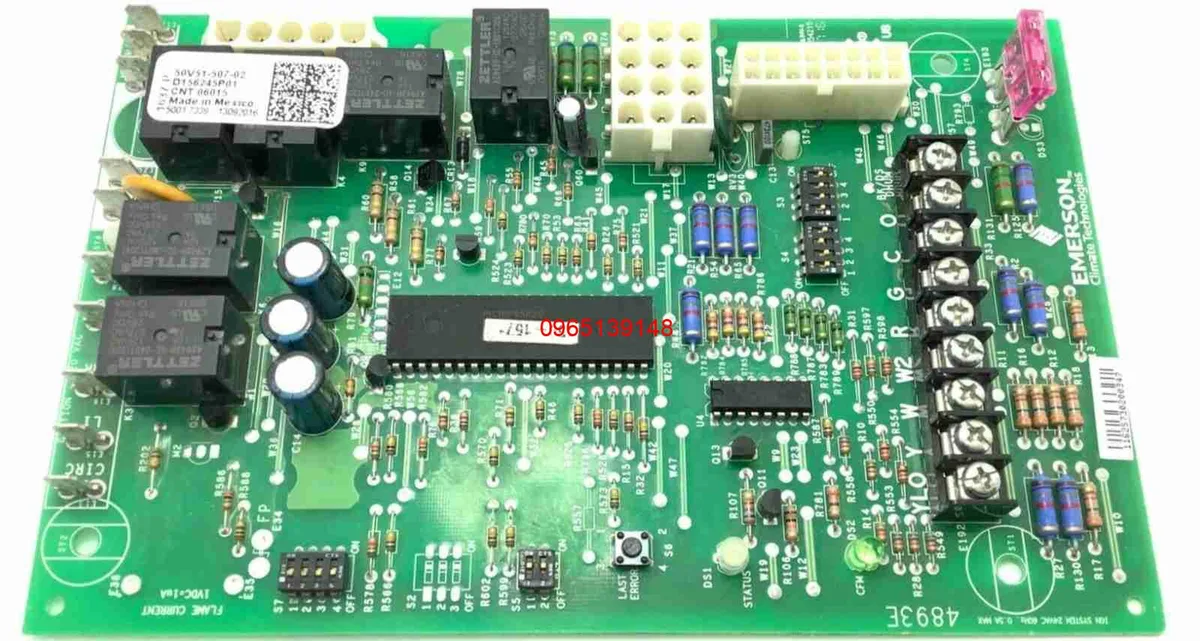
The control board is expensive, often $200 to $400. Replace it only after you have ruled out every other possibility. A bad board can mimic a dozen other failures.
Look for physical signs: burned resistors, bulging capacitors, or a blown fuse on the board itself. If the LED does not light at all and you have confirmed 24 volts at the transformer, the board is likely dead.
Safety Checks No Homeowner Should Skip
Furnace safety is not a suggestion. These checks can save your home and your life.
Carbon Monoxide Detector Placement and Testing
You need a working CO detector on every floor of your home, especially near bedrooms. The detector should be within 15 feet of the furnace room.
Test it monthly. Replace the batteries twice a year. If the detector alarms, evacuate and call the gas company or fire department from outside.
Do not reenter until they clear the building.
Signs of a Cracked Heat Exchanger
A cracked heat exchanger can leak carbon monoxide into your living space. Look for these visual signs inside the burner compartment.
A yellow, flickering flame instead of a crisp blue one. Soot buildup around the burners. A strange smell like formaldehyde.
Visible rust or cracks on the metal heat exchanger panels.
If you suspect a crack, stop using the furnace immediately. Call a licensed technician to perform a combustion analysis and visual inspection. This is not a DIY fix.
A cracked heat exchanger requires full furnace replacement in most cases.
What Rollout Switches and Limit Switches Do
Rollout switches are manual reset buttons located on the burner assembly. They trip if flames roll out of the burner tube instead of staying inside.
If a rollout switch trips, do not just press the reset button. Find out why it tripped. The cause is usually a blocked heat exchanger or a gas pressure imbalance.
This is a pro-level diagnosis.
Limit switches are automatic reset devices that shut off the burners if the furnace gets too hot. They usually reset themselves when the temperature drops. If yours trips repeatedly, check the air filter and blower motor first.
When to Suspect a Gas Leak
You smell rotten eggs or sulfur near the furnace. That is the odorant added to natural gas and propane.
Do not flip any switches. Do not use your phone inside the house. Leave immediately.
Call the gas company from outside. They will come and check for free.
Why Bypassing Safety Switches Is Never Acceptable
We have seen homeowners jumper out a pressure switch or tape down a limit switch to get heat. This is deadly.
Without these safety devices, the furnace can overheat, crack the heat exchanger, or flood your home with gas. No temporary heat is worth the risk. If a safety switch is tripping, fix the underlying problem or call a professional.
Common Mistakes That Make Furnace Problems Worse
Some well-meaning DIY efforts backfire. Here is what to avoid.
Resetting the Furnace Repeatedly Without Fixing the Root Cause
Pressing reset over and over does not solve anything. Each failed attempt wastes gas and wears out the igniter. The furnace is trying to tell you something with those error codes.
Listen to it.
If the furnace locks out three times in a row, step back and check the diagnostic LED. Fix the actual problem, not the symptom.
Using the Wrong Filter or Failing to Change It Regularly
A high-MERV filter like MERV 13 can choke airflow on standard furnaces. American Standard recommends MERV 8 for most residential systems. Check the manual.
Also, never run the furnace without a filter at all. Dust coats the blower wheel and heat exchanger, reducing efficiency and causing hotspots.
Ignoring Condensate Drain Maintenance in High-Efficiency Models
The condensate drain is the most neglected part of a condensing furnace. Slime builds up inside the hose and trap over a single season.
If you wait until the pressure switch locks out, you are already in an emergency. Flush the drain with warm water or vinegar twice a year. It takes five minutes.
Misreading Error Codes or Confusing Brand-Specific Patterns
American Standard uses a different flash code sequence than Carrier or Lennox. Do not assume all furnaces speak the same language.
Keep the code chart from this article handy. If you misread a 1-flash (igniter on) as a problem, you might replace a perfectly good igniter. Double count the flashes and confirm the pause length.
Trying to Fix Gas Valves or Electrical Boards Without Training
The gas valve is a precision device. Opening it up or adjusting the pressure screws without a manometer can create a dangerous situation. Too much gas causes high CO levels.
Too little gas causes incomplete combustion.
Control boards are sensitive to static electricity and can be damaged by incorrect wiring. Leave these repairs to a licensed HVAC technician. The $150 service call is cheaper than a $400 mistake.
When to Call a Pro vs Keep Troubleshooting
Knowing when to stop is a skill. Here is the rule of thumb.
Repairs You Can Safely Do Yourself
You can handle these without training. Replace the air filter. Clean the flame sensor.
Clear the condensate drain. Unblock the PVC vents. Test and replace the blower capacitor.
Reset the furnace after a lockout.
All of these involve no gas line work and no high-voltage wiring beyond replacing a capacitor. Use caution and turn off power first.
Repairs That Require a Licensed HVAC Technician
Call a pro for these. Any work on the gas valve, the heat exchanger, or the inducer motor assembly. Control board replacement if you are not comfortable with electrical testing.
Pressure switch replacement if you cannot confirm the vent is clear.
Also call if you smell gas, see soot, or suspect a cracked heat exchanger. These are not negotiable.
How to Find a Qualified American Standard Service Technician
Not all HVAC companies know American Standard well. Look for a contractor listed as an American Standard Customer Care dealer on the manufacturer website. These technicians receive factory training.
Ask if they have NATE certification. That is the industry standard for competence. A good tech will ask about error codes and check the heat exchanger on every visit.
What a Diagnostic Visit Typically Costs
Expect to pay $80 to $150 for a diagnostic call. This covers the trip charge and the first hour of labor. If the fix is simple like cleaning a flame sensor, the total should stay under $200.
Avoid companies that charge a flat fee for a specific repair without inspecting the system first. You want a thorough diagnosis, not a guess.
When Repair Costs Make Replacement the Smarter Choice
A good rule of thumb is the 50% rule. If the repair costs more than half the price of a new furnace and your unit is over 15 years old, replace it.
A new American Standard furnace with 95% AFUE runs $3,500 to $5,500 installed. A control board replacement plus labor at $600 is a no-brainer on a 5-year-old unit. On a 18-year-old unit with a cracked heat exchanger, that money is better spent on a replacement.
How to Prevent Future Furnace Breakdowns
The best troubleshooting is the kind you never need. Here is a maintenance schedule that works.
Yearly Maintenance Checklist for American Standard Furnaces
Schedule a professional tune-up once a year, ideally in early fall before heating season. The technician will check gas pressure, clean the burners, test the heat exchanger, lubricate the blower motor, and verify all safety switches.
Replace the air filter on the first of every month during winter. Write it on your calendar.
The Right Filter Schedule for Your Home and Usage
Standard recommendation: every 90 days for a single person in a clean home. Every 60 days for a family with pets. Every 30 days if you have shedding pets or a wood stove.
Set a recurring phone reminder. It is the single cheapest way to extend furnace life.
Why Seasonal Tune-Ups Catch Problems Before They Strand You
A technician can spot a failing igniter before it cracks. They can measure the flame sensor signal and clean it before it drops out. They can clear the condensate drain before it clogs.
The cost of a tune-up is $80 to $150. The cost of an emergency service call on a holiday weekend is $250 to $400. The math is clear.
Keeping Vents and Intakes Clear Year-Round
Check the PVC exhaust termination every time it snows. Clear leaves and debris in the fall. Make sure no one stores boxes or lawn equipment near the intake pipe.
A blocked vent can lock out your furnace in minutes. Prevention is a quick walk around the house.
Replacing the Furnace Before It Fails Completely
American Standard furnaces average 15 to 20 years of service life. After year 15, plan for replacement on your schedule, not the furnace's.
Watch for rising energy bills, frequent repairs, and longer heating cycles. These are signs of declining efficiency. A new 96% AFUE furnace uses about one-third less gas than an old 80% model.
The savings often cover the monthly payment.
Frequently Asked Questions
Why does my furnace keep resetting itself?
The furnace is likely going into lockout after failed ignition attempts. This happens when the flame sensor is dirty, the igniter is weak, or the pressure switch isn't closing. Clean the flame sensor first.
If the problem continues, check the diagnostic LED for the specific error code.
Is it safe to run the furnace with the blower door off?
No. The blower door completes the electrical circuit on most American Standard furnaces. There is a safety switch that kills power when the door is removed.
Running without it also reduces airflow and can cause overheating. Always replace the door before turning the furnace back on.
Can I clean the flame sensor without removing it?
You can try, but you won't get a good result. The carbon buildup is on the side facing the flame. You need to remove the sensor to access that surface.
It takes one screw and less than five minutes. Do it properly.
Why does my American Standard furnace smell like burning when it first kicks on?
A burning smell at the start of heating season is usually dust burning off the heat exchanger. It should fade after 15 to 30 minutes. If the smell persists or smells like formaldehyde, shut the furnace off.
That could indicate a cracked heat exchanger or a gas leak.
What does 3 flashes or 4 flashes mean on my control board?
Three flashes mean the limit switch is open. The furnace is overheating. Check the air filter and blower motor.
Four flashes mean the flame sensor is detecting flame when the gas valve is off. This indicates a stuck gas valve and requires a professional immediately.
How long should a furnace stay off between heating cycles?
A normal cycle lasts 10 to 15 minutes of run time with 5 to 10 minutes off. Short cycling under 5 minutes of run time indicates a problem. Long off cycles over 20 minutes usually mean the thermostat is satisfied or set too low.
Should I replace my 80% furnace with a high-efficiency model?
If your current furnace is over 15 years old and you plan to stay in your home for more than five years, yes. A 96% AFUE furnace uses about one-third less gas. The energy savings often offset the higher monthly payment over time.
Check with your utility company for rebates.

Similar Posts