Bed Bugs Vs Bat Bugs
You wake up with itchy welts on your arms. You check your mattress and find tiny brown bugs. Your first thought is bed bugs.
But there is another possibility most people never consider until they have wasted hundreds of dollars on the wrong treatment. Bed Bugs Vs Bat Bugs look nearly identical to the naked eye, and getting them mixed up is surprisingly common.
Here is the problem: treating for bed bugs when you actually have bat bugs solves nothing. The bugs keep coming back because the real source is a bat colony living in your attic or chimney. As of 2026, pest control professionals report that roughly one in ten "bed bug" calls turns out to be bat bugs or another look-alike pest.
That is a lot of wasted money and sleepless nights. Let us make sure you know which one you are dealing with before you spend a dime.
Quick Answer
Bed bugs and bat bugs are close cousins. They look almost the same. The key difference is where they live and what they feed on.
Bed bugs feed on human blood and stay near bedrooms and furniture. Bat bugs feed on bat blood and live in attics, chimneys, and wall voids where bats roost. The only reliable way to tell them apart is by looking at the tiny hairs on their upper body under magnification.
Why Getting This Wrong Costs You Real Money (and Sleep)
Misidentifying these pests is not a small mistake. It is the kind of error that keeps you scratching for months while your wallet gets lighter.
You call an exterminator. They treat your bedroom with sprays, powders, or heat. You pay somewhere between a few hundred and a couple thousand dollars.
The bugs disappear for a week or two. Then they come back. The exterminator retreats.
The bugs return again. At this point you are frustrated, exhausted, and questioning your sanity.
The problem is not the treatment. The problem is the target. Bed bug treatments are designed to kill bugs that live in your mattress, box spring, nightstand, and baseboards.
They are not designed to reach a bat colony roosting in your attic rafters or behind your chimney flashing. Bat bugs crawl down from the attic at night, feed on you while you sleep, and crawl back up before dawn. Spraying your mattress will never touch the main population.
Meanwhile, the bat colony is still up there. Bats are protected by wildlife laws in most states. You cannot simply poison them or seal them in.
That means the bats stay, the bat bugs keep feeding, and you keep paying for treatments that cannot possibly work.
There is also a social and psychological cost. Telling people you have bed bugs carries a stigma. Landlords panic.
Neighbors worry. If the real issue is bat bugs from a bat roost, you are dealing with a wildlife problem, not a sanitation problem. Getting the diagnosis right changes everything about how you handle it and how others perceive it.
Image source: Bing (Web (fair-use with source credit))
The One Physical Difference You Can Actually See
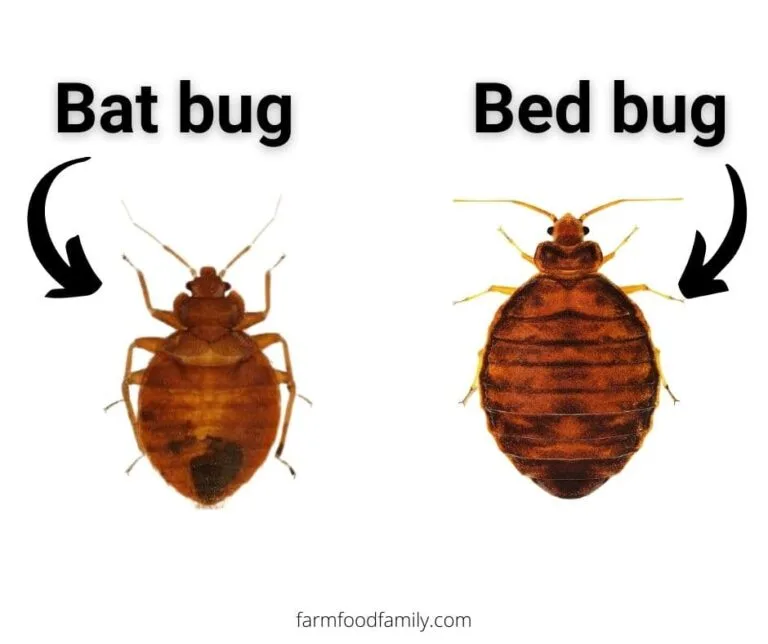
If you hold a bed bug and a bat bug side by side, you probably cannot tell them apart. They are both oval, flat, reddish-brown, and about the size of an apple seed. The average person will not spot the difference without help.
But the difference is there, and it is consistent across both species.
Hair Length on the Pronotum (The Real Test)
Every true bug in the Cimex genus has a pronotum. That is the shield-like plate right behind the head. On both bed bugs and bat bugs, the pronotum is covered with tiny hairs.
The length of those hairs is the single most reliable visual identifier.
Bat bugs have noticeably longer fringe hairs on the pronotum. Under a microscope or a strong magnifying lens, those hairs extend well past the edge of the body. Bed bugs have shorter hairs that do not extend past the edge.
It is not a subtle difference once you know what to look for. Entomologists call this the "fringe hair" test, and it is the standard method for telling these two species apart.
You need at least 10x magnification to see this clearly. A jeweler's loupe works perfectly. A handheld microscope is even better.
Collect a bug in a sealed plastic bag or a jar with rubbing alcohol. Put it on a white surface under good light. Look at the area right behind the head.
If you see hairs sticking out noticeably past the body outline, you are looking at a bat bug.
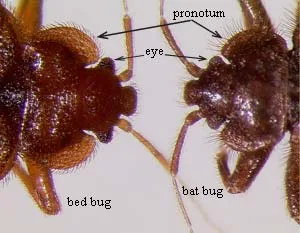
Image source: Bing (Web (fair-use with source credit))
Size, Color, and Shape — Why These Lie to You
Many online guides will tell you that bat bugs are slightly larger than bed bugs. Technically this is true. Adult bat bugs average around 5 to 5.5 millimeters.
Adult bed bugs average around 4 to 5 millimeters. But here is the problem: these bugs change size dramatically depending on when they last fed. A fully engorged bed bug can look twice as big as a hungry one.
Size alone is not reliable.
Color is even less reliable. Both species are the same rusty-brown color when unfed. Both turn darker reddish-brown after feeding.
Both look almost black when fully engorged with blood. You cannot tell them apart by color.
Shape is identical. Both are oval, flattened top to bottom, with small wing pads that do nothing. Both have six legs and two antennae.
Neither can fly or jump. A side-by-side photo of two unfed specimens is essentially useless without magnification.
This is why pest control professionals do not rely on visual inspection alone. They collect specimens and look at them under a microscope. If you are serious about getting the right answer, you need to do the same or find someone who can.
Where Bed Bugs Hide vs. Where Bat Bugs Live
The hiding locations tell you more than the bug's appearance ever will. Bed bugs and bat bugs have completely different habits. Those habits lead them to completely different parts of your home.
Bed bugs are human parasites. They live where humans sleep and rest. You find them in mattress seams, box spring folds, bed frame joints, headboard crevices, nightstand drawers, behind baseboards near the bed, and inside electrical outlets close to the sleeping area.
They spread by hitchhiking on luggage, clothing, and furniture. An established bed bug infestation is almost always centered on or near a bed or couch.
Bat bugs are bat parasites. They live where bats roost. Bats prefer attics, eaves, chimneys, wall voids, crawl spaces, barn lofts, and roof soffits.
Bat bugs stay close to the bat colony because bats are their primary food source. They only show up in living spaces when the bats leave or die. Once the bats are gone, the hungry bat bugs migrate downward looking for a new meal.
That new meal is you.
This migration pattern is key. If you find bugs in your bedroom but also notice bat guano in your attic or hear scratching in your walls at dusk, you almost certainly have bat bugs. If you find bugs only in your bedroom and have no evidence of bats anywhere in your home, you likely have bed bugs.
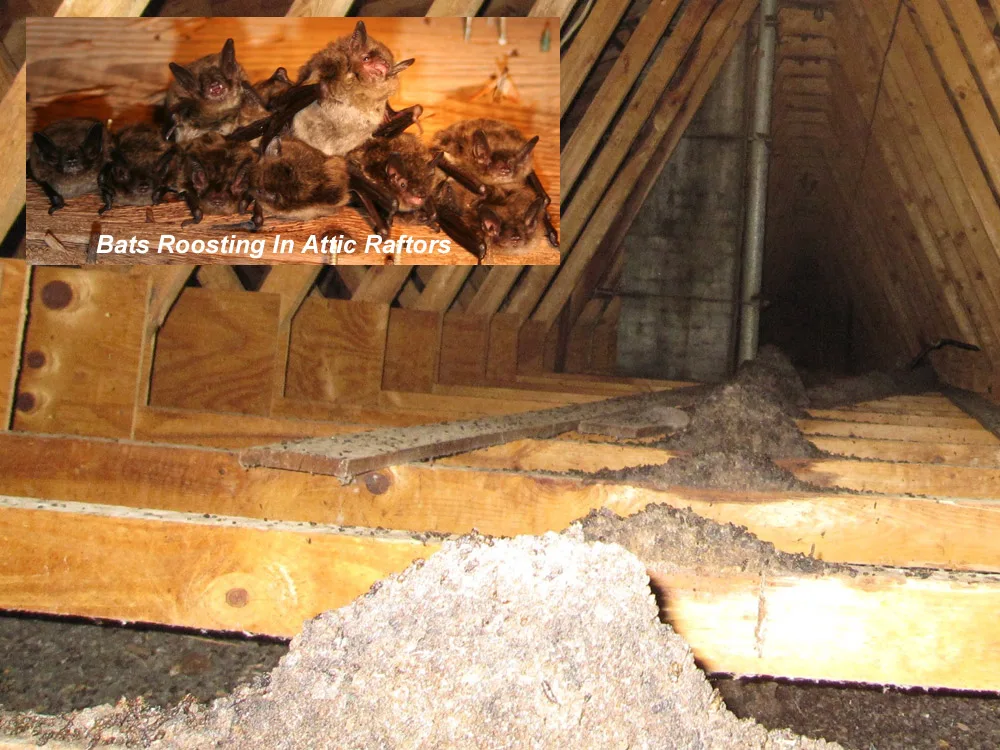
Image source: Bing (Web (fair-use with source credit))
The Attic Connection Nobody Checks
Most homeowners never go in their attic. If you are finding bites but no obvious bed bug signs on your mattress, the attic should be your first stop. Look for bat guano.
It looks like small dark pellets, similar to mouse droppings but with a crumbly texture. Guano accumulates directly under roosting spots. You may also find greasy brown stains on wood or insulation where bats have been rubbing against surfaces for years.
A single bat colony can hold dozens or even hundreds of bats. Each bat supports its own population of bat bugs. That is a massive reservoir of hungry insects that will find their way down into your living space eventually.
You can treat your bedroom ten times and it will not matter if the attic is still hosting bats.
Why Bed Bug Spray in an Attic Makes Things Worse
Some people try to save money by bombing their attic with bed bug foggers or spraying general insecticides. This is dangerous and counterproductive. Many pesticides are not labeled for use in attics with active wildlife.
Killing bats is illegal in most states because many species are protected. Dying bats left in wall cavities create odor problems and attract secondary pests like dermestid beetles and flies.
If you suspect bats, stop spraying. Contact a wildlife removal specialist who understands bat exclusion laws in your area. The bats must be removed humanely and legally before any meaningful pest control can begin.
How Each Type of Bite Happens
Both bed bugs and bat bugs bite humans. The bite itself feels nearly identical. The bug pierces the skin with its mouthparts, injects an anticoagulant and numbing agent, and feeds for several minutes until full.
You usually do not feel it happening. The welt shows up hours or days later.
Why Bat Bug Bites Follow a Different Pattern
The bite pattern can give you a clue. Bed bugs bite wherever skin is exposed during sleep. That includes arms, shoulders, neck, legs, and face.
They often bite in a line or cluster because they feed multiple times along a blood vessel. The classic pattern of three bites in a row is common with bed bugs.
Bat bug bites look the same. But the location and timing can differ. Bat bugs are not adapted to human sleep schedules.
They feed when they are hungry and when they can reach a host. If you are getting bites mostly on your upper body or head, the bugs may be dropping from the ceiling or crawling down from the attic through light fixtures and vents. Bites concentrated on one side of your body can also suggest the bugs are coming from a specific direction rather than from your mattress.
Neither bite reaction is a reliable identifier on its own. Some people have no reaction at all. Others develop large, itchy welts that look like mosquito bites or hives.
Skin reaction varies by individual, not by bug species. Do not rely on bite appearance to make your call.
The Bat Problem You Have to Solve First
Here is the hard truth: you cannot fix a bat bug infestation without getting rid of the bats. Bat bugs depend on bat blood to survive and reproduce. As long as a colony is living in your home, the bug population has an endless food supply.
Killing the bugs without removing the bats is like bailing water out of a boat with a hole in it.
The first step is confirming you actually have bats. Walk outside at dusk and watch your roofline. Bats are small, fast, and erratic in flight.
They leave around sunset and return just before dawn. You may also hear high-pitched squeaking or scratching in your walls at night, especially in the attic or chimney area.
Bat Exclusion Rules You Cannot Ignore (Maternity Season Laws)
You cannot simply seal the bats in. Most bat species in the United States are protected by state wildlife laws, and some are federally protected. During maternity season, typically May through August depending on your region, female bats give birth and raise their young in the roost.
Baby bats cannot fly. If you seal the entry points during this window, the mother bats cannot get back in, and the babies die inside your walls. That creates a massive odor problem and a secondary pest explosion.
Professional wildlife removal specialists follow a specific exclusion process. They install one-way devices, like netting or tubes, over the entry points. Bats can crawl out to hunt at night but cannot crawl back in.
They leave the devices in place for several days to a week. Only after they confirm all bats are gone do they seal the openings permanently.
This is not a DIY-friendly project. Bat exclusion requires ladders, roofing knowledge, and a deep understanding of local regulations. State extension services consistently recommend hiring licensed experts for bat removal rather than attempting it yourself.
The cost ranges from a few hundred to over a thousand dollars depending on the size of the colony and the complexity of the exclusion. It is far cheaper than repeated bed bug treatments that will never work.
Once the bats are gone and the openings are sealed, you have cut off the food supply. The bat bugs still in your home will be hungry and desperate. That is when your pest control efforts can finally make a difference.
Treatment That Actually Works for Each Pest
Once you know which bug you are dealing with, the treatment path becomes clear. The two approaches are completely different. Using the wrong one guarantees failure.
For Bed Bugs
Bed bug treatment is a multi-step process. It starts with thorough inspection and laundering all bedding and clothing on high heat. You encase mattresses and box springs in bed bug proof covers.
You vacuum thoroughly and dispose of the vacuum bag outside. Then you apply EPA-registered treatments according to their labels.
Heat treatment is the gold standard. Professional services heat your home to 122 degrees Fahrenheit or higher for several hours. It kills all life stages.
The cost is significant but effective. Chemical treatments work too but require multiple applications over several weeks because eggs survive the first round. Consistency matters more than speed with chemical treatments.
For Bat Bugs
Bat bug treatment follows a different order. Step one is bat exclusion done by a licensed wildlife professional. Step two is treating the areas the bugs traveled through, not just the bedroom.
After the bats are gone and the entry points are sealed, bat bugs will wander looking for food. They move down through wall voids, around light fixtures, and along baseboards. A pest control professional can apply residual insecticide to these travel paths.
The bugs pick up the chemical as they crawl through treated zones and die.
The good news is that bat bugs rarely establish permanent populations in living spaces without bats present. Once the bats are removed, the bugs typically die off within a few weeks. You may still get bites during that transition period.
But it ends when the food supply runs out.
When You Need a Professional to Identify a Specimen
You can do a lot of the detective work yourself. But confirming the species requires magnification. If you cannot find a clear answer after inspecting your attic and looking at the pronotum hairs, it is time to hand it off.
Your local county cooperative extension office is the best resource for this. Many offer insect identification services for free or a small fee. You mail them a specimen in rubbing alcohol or a crush-proof container.
They look at it under a microscope and give you a definitive answer within a few days.
Pest control companies can also identify specimens. But keep in mind their business model favors treatment. If you call a general pest control company and say "I think I have bed bugs," they may treat for bed bugs without confirming the species first.
Getting a second opinion from an unbiased source like an extension entomologist is worth the effort.
Frequently Asked Questions
Can bat bugs live in your bed like bed bugs?
Bat bugs prefer to stay near their bat hosts in the attic. They do not establish permanent nests in mattresses or furniture like bed bugs do. But hungry bat bugs will travel into sleeping areas to feed on humans.
They usually return to the attic after feeding.
How do I know if I have bats in my attic?
Look for guano that looks like dark crumbly pellets. Listen for scratching or high-pitched squeaking at dusk and dawn. Check your roofline at sunset for small fast-moving flying animals emerging from eaves or soffits.
Stains around roof vents or chimney flashing also point to bats.
Are bat bugs dangerous to humans?
Bat bugs are not known to transmit diseases to humans. Their bites cause skin irritation and itching similar to bed bug bites. The bigger concern is the bat colony itself.
Bat guano can harbor histoplasmosis, a fungal respiratory infection. Handle bat waste with proper protective gear or hire a professional.
Can I get rid of bat bugs without removing bats?
No. Bat bugs require bat blood to reproduce. As long as bats are present, the bug population will continue.
Killing the bugs without removing the bats is a temporary fix. The bugs will return from the bat roost within days or weeks.
Do bed bug sprays work on bat bugs?
The same chemicals that kill bed bugs will kill bat bugs on contact. The problem is location. Bed bug sprays target bedrooms and furniture.
Bat bugs live in the attic near the bats, not on your mattress. Spraying your bed does nothing to eliminate the main population hiding in the rafters.
How long do bat bugs live after bats are removed?
Without a blood meal, bat bugs can survive for several months. Some studies suggest they can live up to a year in cool conditions. Expect to see some bat bug activity for weeks after bat exclusion.
The population declines steadily as they die off without food.

Similar Posts