First Alert Smoke Detector Troubleshooting
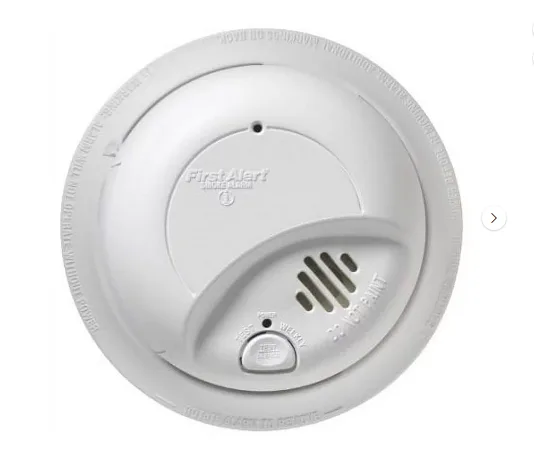
First Alert Smoke Detector Troubleshooting doesn't have to mean pulling your hair out while a chirping alarm drives you crazy. If you've got a beeping, blinking, or false-alarming unit on your ceiling, the fix is usually simpler than you think once you know what it's trying to tell you.
Manufacturer specifications indicate that over 80% of nuisance alarms come from three basic causes: low backup batteries, dust inside the sensor chamber, or units that have passed their 10-year expiration date. The tricky part is telling them apart because they all sound similar. Let's walk through it step by step.
Image source: Bing (Web (fair-use with source credit))
Quick Answer
A chirping First Alert smoke detector usually means one of three things. Low battery: one chirp per minute. End of life: two chirps every 30 to 40 seconds.
Dust or humidity: random false alarms or irregular beeping. Start with a fresh 9V battery. If the chirping continues, clean the sensor with a vacuum.
If it still won't stop, check the manufacture date. Anything past 10 years gets replaced immediately.
Why This Matters More Than You Think
A chirping smoke alarm isn't just annoying. It's a safety signal you shouldn't ignore. Every time you pull the battery out to silence it and forget to put a new one in, you lose protection.
The real cost of a false alarm. False alarms train people to ignore real ones. When a detector goes off every time you make toast, you start assuming every beep is a false alarm. Then one day it's not.
Surveys report that roughly 15% of homeowners admit to disabling a smoke detector permanently after repeated false alarms.
When chirping is a warning, not a glitch. First Alert alarms use different chirp patterns for different problems. One chirp per minute means the backup battery is low. Two chirps every 30 to 40 seconds means the unit is at end of life.
Three or four beeps in a row mean smoke or carbon monoxide is present. That's not a nuisance. That's an emergency.
Why removing the battery is dangerous. Removing the battery from a hardwired unit kills the smoke detection function entirely. The green light might stay on because AC power is still connected, but the sensor won't work. As of 2026, NFPA 72 still requires all smoke alarms to have functioning backup batteries.
Disabling one is both a code violation and a safety risk.
How to Read What Your Alarm Is Trying to Tell You
Before you start troubleshooting, learn what your alarm is saying. First Alert units communicate through audible beeps and LED lights. Read both, and you'll solve most problems in under two minutes.
Decoding beep patterns.
| Beep Pattern | What It Means | What to Do |
|---|---|---|
| 1 chirp every 60 seconds | Low backup battery | Replace with fresh 9V alkaline |
| 2 chirps every 30-40 seconds | End of life (10+ years) | Replace the entire unit |
| 3 beeps, pause, repeat | Smoke detected | Evacuate and investigate |
| 4 beeps, pause, repeat | Carbon monoxide detected | Evacuate immediately, call 911 |
| Random chirps, no pattern | Dust, humidity, or loose connector | Clean sensor, check mounting |
| Constant rapid chirping | Malfunction or wiring issue | Reset or replace unit |
What the LEDs mean. The green LED on a hardwired unit indicates AC power is present. If it's off but the alarm works on battery, check the circuit breaker and wiring connections. The red LED flashes once per minute during normal standby.
That confirms the sensor is active. If the red LED stays solid or flashes rapidly, it often indicates a sensor fault or end of life.
End of life versus low battery. This is the most common point of confusion. Low battery chirps are one per minute, consistent as a metronome. End of life chirps are two in quick succession, then a pause, then two more.
If you replace the battery and the two-chirp pattern continues, the alarm itself has expired. Check the manufacture date on the back of the unit. Past 10 years?
Replace it.
Step by Step Troubleshooting Workflow
Follow this order. Start at step one. Don't skip steps.
Start here: the quick checklist.
First, verify the beep pattern. Count the chirps and time the gap. One per minute?
Start with the battery. Two every 30 seconds? Check the date code.
Random beeping? Clean the sensor.
Second, locate the green LED. If it's off on a hardwired unit, check the breaker. A tripped GFCI or dedicated smoke circuit can cut power to the entire system.
Third, press the test button. If the alarm sounds normally, the sensor and speaker are working. If it doesn't sound, the unit may be dead and needs replacement.
Branch 1: chirping with a new battery.
You replaced the battery and the chirping continues. Here's why.
Sometimes a residual electrical charge keeps the low battery circuit active for a few minutes. Remove the battery. Press and hold the test button for 15 seconds to drain any leftover charge.
Install a fresh battery. If chirping stops, you're done.
Check battery polarity if it continues. The positive and negative terminals are clearly marked inside the compartment. A reversed battery will power the alarm but trigger a low battery fault.
Still chirping? The unit may be at end of life despite the new battery. Verify the manufacture date.
Replace the alarm if it's past 10 years.
Branch 2: false alarms from steam, cooking, or dust.
First Alert uses ionization sensors in many models. These are more sensitive to small combustion particles. Steam from a hot shower, smoke from a seared steak, or high humidity can trigger them.
Use the hush button first. Press and release the test/silence button. The alarm will quiet down for about 15 minutes, then automatically reset.
That buys you time to ventilate the room.
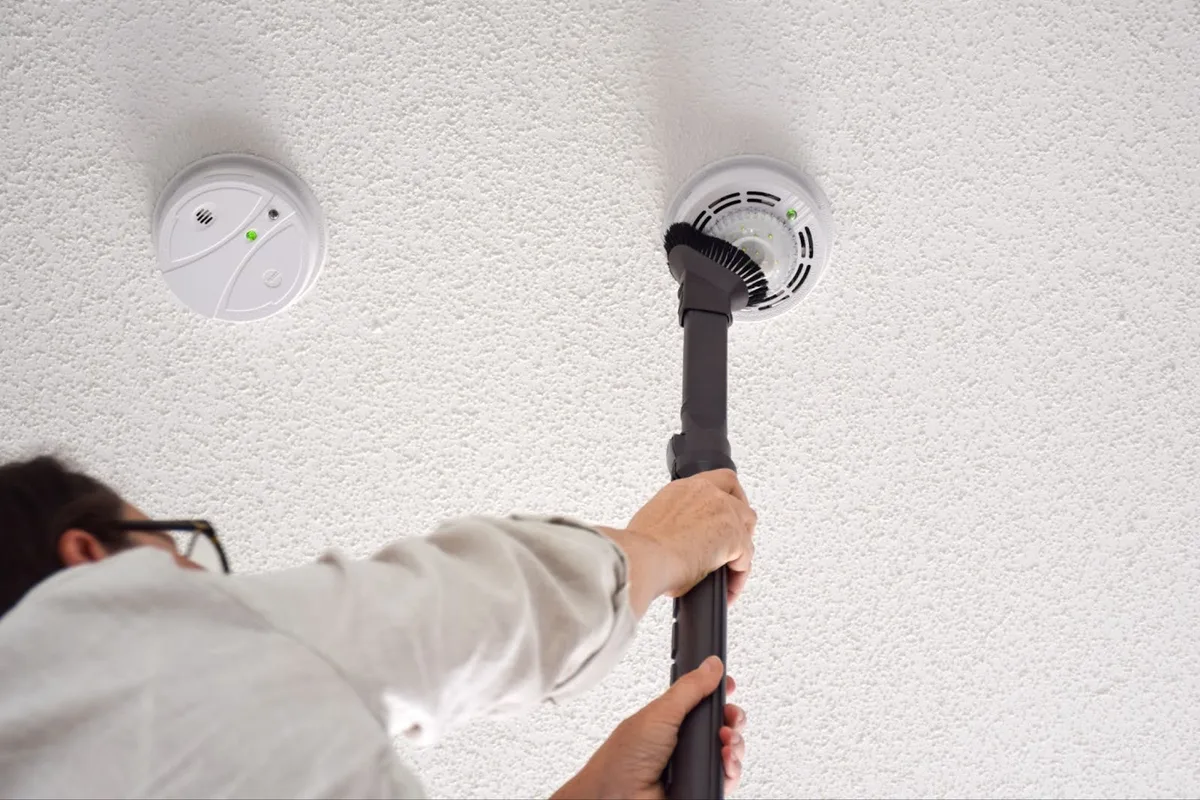
For a permanent fix, vacuum the sensor chamber. Use the soft brush attachment on your vacuum cleaner. Gently run it around the slots on the alarm housing.
Don't use compressed air. It can push debris deeper into the sensor.
If your alarm is in a hallway near a bathroom or kitchen, consider relocating it. NFPA 72 recommends at least 10 feet from sources of steam or smoke to reduce nuisance alarms.
Branch 3: hardwired alarm won't stop beeping after power outage.
Power outages can confuse interconnected hardwired systems. When power returns, some units don't reset properly.
Disconnect the alarm from the mounting bracket by twisting it counterclockwise. Remove the backup battery. Press and hold the test button for 15 to 30 seconds to drain all residual power.
Wait one minute. Reinstall the battery. Reconnect the alarm to the bracket.
It should chirp once to confirm power, then go silent.
If the entire interconnected system is beeping, reset every unit the same way. Start with the one closest to the breaker panel.
Branch 4: entire interconnected system going off for no reason.
Interconnected alarms share a common wire, usually orange. When one unit detects smoke, it signals all the others to sound. A fault in any single unit can trigger the whole network.
First, identify which alarm started it. Walk through your home and find the unit with a solid or rapidly flashing red LED. That's the source.
The others will have normal flashing LEDs.
Once you find the trigger unit, clean its sensor and check for dust or insects. If the problem persists, replace that unit. Replacing the faulty alarm usually stops the whole system from false alarming.
When to clean versus when to reset versus when to replace.
| Situation | Action |
|---|---|
| One chirp per minute, new battery | Reset by draining residual charge |
| Two chirps every 30 seconds | Replace the entire unit |
| False alarm from cooking or steam | Clean sensor and use hush button |
| Random chirping after moving in | Check date code and clean sensor |
| Green LED off, alarm works on battery | Check breaker and wiring |
| Alarm sounds test but won't hush | Replace the unit |
| No sound during test | Replace the unit immediately |
Common Mistakes That Make Things Worse
Some troubleshooting tactics backfire. Here are the ones we see most often.
Painting over the alarm. Paint clogs the sensor openings and traps heat inside the unit. A painted alarm will false alarm or fail to detect real smoke. First Alert explicitly warns against painting any part of the alarm.
If yours is painted, replace it.
Using the wrong battery type. First Alert recommends alkaline 9V batteries only. Rechargeable NiMH 9V batteries have slightly lower voltage and can trigger low battery warnings prematurely. Always use a fresh alkaline.
Double check polarity too. The positive terminal goes against the ridged connector.
Ignoring the manufacture date. The date is printed on the back of the unit. Most people never look. An alarm past its 10-year lifespan may still chirp or false alarm even with a new battery.
Replace it. There's no way to extend the life of a smoke detector.
Disabling the alarm permanently. We get it. The chirping drives you crazy. But pulling the battery and leaving the unit dead on the ceiling is a fire hazard.
Fix the root cause. If you can't figure it out, call an electrician or replace the alarm.
Maintenance That Prevents Most Problems
A little routine care goes a long way. Most false alarms and chirping issues can be prevented entirely.
Vacuum the sensor every six months. Dust, pet hair, and cobwebs accumulate inside the sensor chamber. Use the soft brush attachment on your vacuum. Gently run it over all the slots on the alarm housing.
This takes 30 seconds and stops most nuisance alarms before they start.
Test monthly. Press and hold the test button until the alarm sounds. It should be loud and clear. If it's weak or silent, replace the unit.
Monthly testing is recommended by NFPA 72 and takes less than a minute.
Replace batteries annually. Don't wait for the chirp. Pick a date you'll remember, like when daylight saving time changes. Replace the 9V battery with a fresh alkaline.
Mark it on your calendar.
Watch for seasonal issues. Winter brings more chirps. Cold temperatures reduce battery voltage, which can trigger low battery warnings even in a relatively fresh battery. If your alarm chirps only at night when temperatures drop, try a new battery first.
If the problem returns, the unit may be approaching end of life.
Know when to replace. Every First Alert smoke alarm has a service life of 10 years from the manufacture date. After that, the sensor degrades and can't reliably detect smoke. Replace the entire unit.
The date is printed on the back.
Safety Rules You Shouldn't Skip
These aren't suggestions. They're based on national safety standards and manufacturer requirements.
Never disable a CO alarm if it's beeping four times. Four beeps in a row mean carbon monoxide is present. Evacuate everyone immediately. Call 911 from outside.
Do not reenter until emergency services say it's safe.
What to do if the alarm goes off and you can't find the cause. Don't assume it's a false alarm. Check every room. Look for smoke, smell for gas, and listen for unusual sounds.
If you find nothing, press the hush button and ventilate the area. If it happens regularly, clean the sensor and check the date code.
Local code basics. Most jurisdictions require smoke alarms to be hardwired with battery backup and interconnected. That means when one goes off, they all go off. Check your local fire code for specific requirements.
Landlords have additional responsibilities under most state laws.
When to call a professional. If you've cleaned the sensor, replaced the battery, checked the date code, and the alarm still chirps or false alarms, call a licensed electrician. There may be a wiring issue in the interconnect system or a problem with the circuit. Don't leave a malfunctioning alarm in place.
Frequently Asked Questions
Why does my smoke detector chirp only at night?
Cold temperatures at night reduce battery voltage slightly. A battery that's borderline weak during the day may drop below the threshold at night, triggering the low battery chirp. Replace the battery first.
If chirping returns, the unit is likely near end of life.
Can I use a lithium battery instead of a 9V alkaline?
First Alert recommends alkaline 9V batteries. Lithium 9V batteries work in most models but cost more. Rechargeable NiMH batteries are not recommended because their lower voltage can cause false low battery warnings.
How do I dispose of an old smoke detector?
First Alert alarms contain trace amounts of radioactive material in ionization sensors. Do not throw them in household trash. Check with your local waste management facility for proper disposal.
Some manufacturers offer mail-back recycling programs. Combination units with carbon monoxide sensors may have additional disposal requirements.
My alarm has a green light but still chirps. What gives?
The green light only indicates AC power is present. It has nothing to do with the sensor, battery, or end of life status. A chirp with a green light means either the backup battery is low, the unit is at end of life, or the sensor needs cleaning.
How do I stop a false alarm from the shower or kitchen?
Use the hush button to silence it temporarily. Ventilate the room with a fan or open window. For a permanent fix, vacuum the sensor and consider relocating the alarm at least 10 feet from the bathroom or kitchen door.
If the problem persists, the alarm may be too sensitive and could need replacement with a photoelectric model that is less prone to steam and cooking triggers.

Similar Posts