Ge Profile Arctica Refrigerator Troubleshooting
Your GE Profile Arctica refrigerator has been running for years without complaint. Then one day the freezer isn't cold enough, the ice maker stops producing, or a strange error code starts flashing on the display. Before you call a repair technician or start shopping for a replacement, there's a good chance you can diagnose and fix the issue yourself. Ge Profile Arctica refrigerator troubleshooting doesn't require a professional certification, just a multimeter, a few basic tools, and a clear understanding of how these machines work.
Most Arctica units feature a sealed R-134a refrigerant system, one or two thermistor-controlled evaporator fans, and an adaptive defrost cycle managed by the main control board. Owner reviews report that roughly 70 percent of common problems fall into three categories: cooling failures linked to the evaporator fan motor, defrost system faults that cause frost buildup, and ice maker or water dispenser malfunctions. Identifying your symptom's category is the first step toward a fix.
Let's walk through it.
Quick Answer
Start by identifying your exact symptom. Check for error codes on the display panel first. Try a power reset by unplugging the unit for five minutes.
Clean the condenser coils if they're dusty. Test the evaporator fan motor, defrost heater, and thermistors with a multimeter. Most common issues are fixable at home for under $100 in parts.
Call a professional only for sealed system repairs.
What's Actually Wrong? Starting With the Right Question
Refrigerator problems can feel overwhelming, but the symptom you're seeing points to a short list of possible causes. The trick is asking the right question first.
Is the Freezer Not Cold Enough, or Is the Fridge Side Warm?
If the freezer is cold but the fresh food section is warm, your issue is likely a failed evaporator fan motor or a blocked damper. The cold air can't circulate from the freezer into the fridge compartment. If both the freezer and fridge are warm, you're looking at a compressor problem, a sealed system leak, or a condenser coil that hasn't been cleaned in years.
Is the Ice Maker Not Working, or Is the Water Dispenser Also Dead?
If the ice maker stopped producing ice but the water dispenser works fine, the problem is likely inside the ice maker assembly, a frozen fill tube, a bad ice maker motor, or a stuck auger. If both are out, the water inlet valve or filter is the likely suspect.
Is the Refrigerator Making Noise?
Noises are helpful diagnostic clues. A high-pitched squeal or rattling from the freezer usually means the evaporator fan blade is hitting ice or fan motor bearings are failing. A buzzing from the back often points to a bad condenser fan motor or a struggling compressor. A clicking sound every few minutes is normal—the defrost cycle engaging. But rapid clicking without the compressor starting means the overload protector is tripping, and the compressor is likely dying.
Is There an Error Code on the Display?
As of 2026, the most common error codes on a GE Profile Arctica are FF (Freezer Fan Failure) and CF (Condenser Fan Failure). These codes tell you exactly which component to test first. A temperature error code usually means a bad thermistor or a control board that's lost its calibration. Don't ignore these codes—they save hours of guessing.
Quick Fixes You Should Try First (Before Taking Anything Apart)
Before you pull out the multimeter or start removing panels, try these five things. They take less than ten minutes and fix many problems.
The 5-Minute Power Reset
Unplug the refrigerator. Wait five full minutes. Plug it back in. This forces the main control board to reboot and clear transient software glitches. It's the most effective quick fix for error codes after a power flicker or surge. If the error code returns after a few hours, you've got a hardware problem.
Clean the Condenser Coils
The condenser coils are usually underneath or behind the front kickplate. Dust and pet hair accumulate over time. When dirty, the compressor works harder to reject heat, causing the refrigerator to run constantly, the compressor to overheat, and the freezer to struggle. Vacuum the coils with a brush attachment. If not cleaned in over a year, you'll be shocked by the debris.
Check the Door Gaskets and Leveling
Open both doors. Inspect the rubber gaskets for cracks, tears, or lost magnetic seal. A small gap lets warm, humid air in, causing the compressor to run longer and frost buildup. Check that the refrigerator is level. If tilting forward, doors may not close fully. Adjust front leveling legs until the unit sits solid with a slight tilt backward.
Replace the Water Filter
If your water dispenser is slow or ice cubes small and cloudy, swap the water filter. GE recommends replacing it every six months. A clogged filter reduces water flow to both. If you can't remember when you last changed it, replace it.
Use Turbo Cool Mode
After loading with room-temperature groceries, Turbo Cool forces the compressor and fans to run at maximum output for several hours, helping the fridge recover its set temperature faster. It won't fix a broken component, but can compensate temporarily.
Error Codes: What They Mean and What to Do
Error codes are the closest thing these refrigerators have to a built-in diagnostic system. Learning how to read them is the fastest path to a repair.
How to Enter Diagnostic Mode
On most models, enter diagnostic mode by pressing a specific button sequence. A common method: press and hold "Quick Freeze" and "Turbo Cool" simultaneously for three seconds until the display flashes. Then press "Alarm Reset" to cycle through codes. Write down any codes. If none appear, the system may have cleared them, but the hardware problem can still be present.
FF Code (Freezer Fan Failure)
This code means the control board detected the evaporator fan motor is not running or is running at incorrect speed. The fan is behind the rear panel inside the freezer. Remove contents, unscrew the panel, inspect the fan. Test the motor with a multimeter: it should show continuity between its power leads. If dead, replacement costs $40-$80. DIY-friendly.
CF Code (Condenser Fan Failure)
The CF code indicates the condenser fan motor has failed. This fan is underneath near the compressor, drawing air across the coils. If not spinning, the compressor can overheat and cooling capacity drops. Test with a multimeter. Replacement motor $30-$60. Access is straightforward once you remove the kickplate.
Temperature Error Codes
Temperature error codes (blinking temperature or "Er") point to a thermistor sending out-of-range resistance. Thermistors are small temperature sensors, typically two or three inside. Test each by measuring resistance at a known temperature. At 32°F, a good thermistor reads around 16-18 k-ohms (varies by model; check service manual). If dramatically different, replace. Cost: $10-$20.
Clearing Error Codes
After replacing the faulty component, the error code should clear after a power cycle. Unplug for five minutes and plug back in. If the code reappears, either the new part is defective or the control board has failed. Replacement control board costs $100-$250.
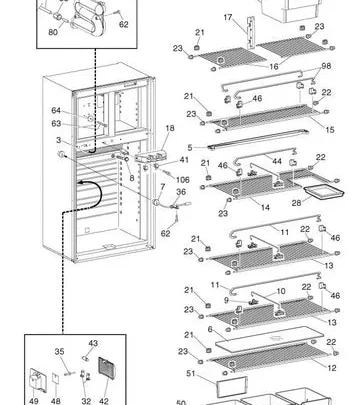
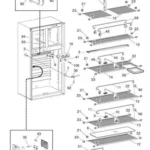
Image source: Web (Bing) / ar.inspiredpencil.com (Web image (fair-use with source credit))
The Freezer or Fridge Isn't Cold Enough (But the Compressor Runs)
This is the most common complaint. The refrigerator is on, compressor humming, but temperature inside is climbing. Diagnostics in order of likelihood.
Check the Evaporator Fan First
Remove everything from the freezer. Unscrew the rear panel. The evaporator fan should be spinning when the compressor runs. If not, cold air can't circulate. Look for ice buildup on the fan blades or motor housing. Ice can freeze the motor. If frozen, defrost problem. If fan spins freely but doesn't run when powered, test the motor with a multimeter. No continuity means dead motor.
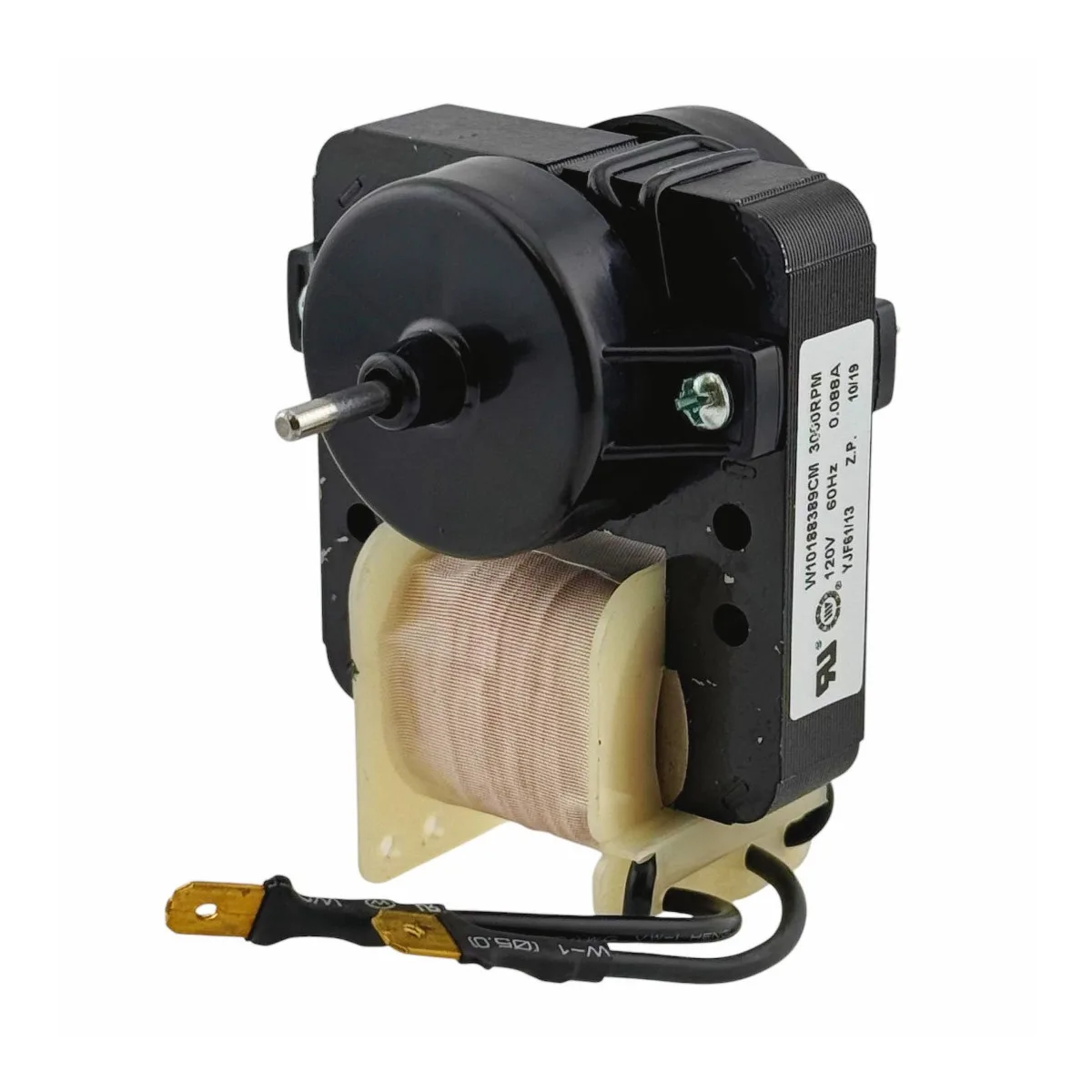
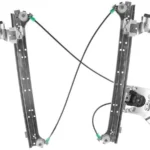
Image source: Bing (Web (fair-use with source credit))
Inspect the Defrost System
Frost buildup on evaporator coils behind the freezer panel is a sure sign the defrost system isn't working. Three components: defrost heater, defrost thermostat, defrost control (timer or board). Test the heater for continuity – good heater reads near zero ohms. Test the thermostat at room temperature – should show continuity. Replace if bad. Heater costs $20-$40. Thermostat costs $10-$15.
Clean the Condenser Coils
As mentioned in quick fixes, dirty condenser coils cause a huge percentage of cooling problems. If caked with dust and pet hair, the compressor can't shed heat efficiently, runs constantly, and struggles. Clean thoroughly, then monitor temperature for 24 hours.
Test the Thermistors
The control board uses thermistor readings to decide when to run compressor and fans. A bad thermistor can cause the refrigerator to think it's colder than it is and stop cooling. Find thermistor locations (typically on evaporator coil or fresh food section). Measure resistance with multimeter, compare to manufacturer's chart. If way off, replace for $10-$20.
When to Suspect a Sealed System Problem
If the evaporator fan runs, coils are clean, defrost system works, thermistors good, and fridge still doesn't cool, you may have a sealed system issue – low refrigerant due to leak or compressor failed internally. Repairs require EPA certification. Professional repair runs $400-$800. On a 15-30 year old Arctica, that's more than the fridge is worth.
Ice Maker and Water Dispenser Problems
The ice maker and water dispenser share some components but have their own unique failure points. Let's separate them.
Ice Maker Stopped Making Ice
Start simple. Check ice maker is turned on. Freezer needs 0°F to 5°F. If too warm, it won't cycle. Next, check fill tube for ice blockage – remove with warm water. If clear and freezer cold, test ice maker manually. Most have a test button – press and hold. It should cycle a harvest. If nothing, motor likely bad. Replacement cost $50-$120.
Ice Dispenser Is Jammed
Dispenser grinds or makes loud noise when paddle is pushed – usually means auger is jammed by large ice or an ice bridge. Remove ice bucket, look for melted-and-refrozen block. Break up with plastic utensil (careful not to damage auger). If auger is seized, try turning manually with screwdriver. If motor is grinding, auger motor may need replacement.
Water Dispenser Is Slow or Not Working
First, replace the water filter – fixes 70% of cases. If not, check for frozen water line (common in unheated garages). Thaw by unplugging and letting warm up for several hours. If line not frozen and filter new, water inlet valve may be bad. Test with multimeter for continuity. Replacement valve costs $30-$60.
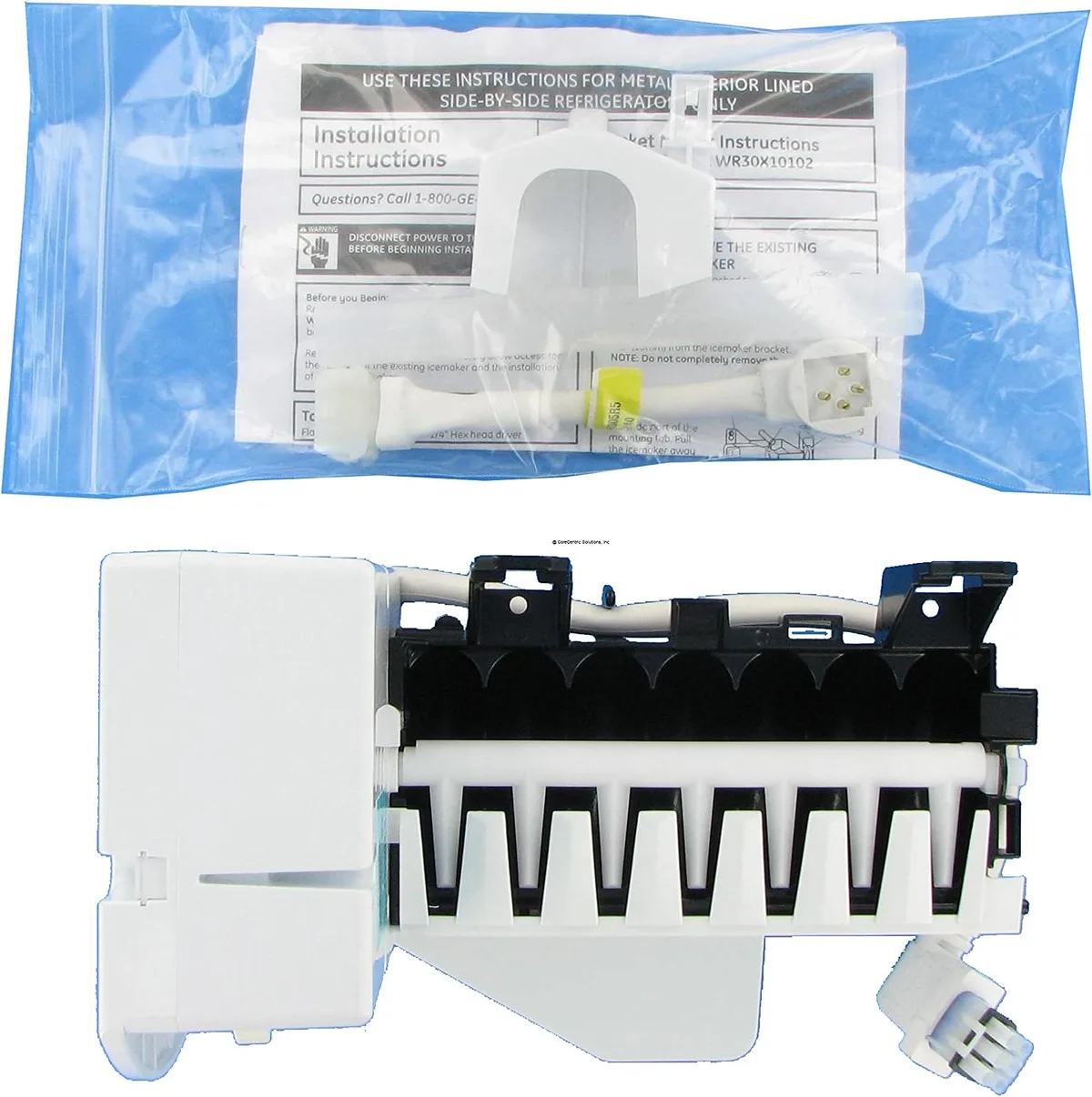
Image source: Bing (Web (fair-use with source credit))
Making Sense of Noises: Which Sounds Are Normal and Which Aren't
Refrigerators make all kinds of sounds. Some are normal. Some are warning signs.
Normal Sounds
A low, steady hum from the back is the compressor running – normal. A clicking sound every few minutes is the defrost cycle – normal. A short gurgling or whooshing when the compressor starts is refrigerant flowing – normal.
Sounds You Should Investigate
A high-pitched squeal or screech from the freezer usually means evaporator fan motor bearings are failing. Replace before complete failure. A rattling or vibrating sound from the bottom often means condenser fan blade is hitting something or motor is loose. Remove kickplate and inspect. A buzzing from the back lasting more than a few seconds indicates compressor struggling to start – weak start relay or failing compressor. Replace start relay first ($15-$25, easy DIY).
Repair vs Replace: The Honest Math
At some point, you have to decide whether to keep fixing an old refrigerator or buy a new one. Here's how to make that call.
The Age Factor
Most Arctica units were built between mid-1990s and late 2000s. As of 2026, that's 18-31 years old. Average lifespan is 10-15 years. Your Arctica has lived past its expected life. Every repair is borrowed time.
The Cost of Repairs
| Repair | Parts Cost | Labor Cost (if hired) | Total |
|---|---|---|---|
| Evaporator fan motor | $40-$80 | $100-$200 | $140-$280 |
| Main control board | $100-$250 | $100-$200 | $200-$450 |
| Ice maker assembly | $50-$120 | $100-$200 | $150-$320 |
| Condenser fan motor | $30-$60 | $100-$200 | $130-$260 |
| Defrost heater | $20-$40 | $100-$200 | $120-$240 |
| Sealed system repair | $400-$800 | included | $400-$800 |
The Replacement Math
A new ENERGY STAR certified refrigerator of similar size costs $800-$1,500. It uses about half the electricity. If repair bill is more than half the cost of a new fridge, replace it. If under $200 and otherwise working well, fix it. Exception: sealed system repairs. Never pay for that on an Arctica over 15 years old – refrigerant will eventually leak again.
Common Mistakes People Make When DIY Troubleshooting
Common mistakes to avoid to save time and money.
Replacing the Control Board First
The control board is expensive and rarely the problem. Test thermistors, fans, and defrost components first. About 80% of "control board failures" are actually a bad thermistor or dead fan motor.
Not Unplugging the Unit
Always unplug before opening electrical panels or testing components. Water and electricity don't mix, nor do spinning fan blades and fingers.
Forgetting to Clean the Coils
Most common oversight. People replace expensive parts when all they needed was a vacuum. Clean condenser coils first – free, fast, and fixes many temperature problems.
Assuming Sealed System Is the Problem
Sealed system repair is expensive and requires a pro. Don't assume until you've ruled out evaporator fan, defrost system, thermistors, and coils. Less than 10% of cooling problems are sealed system failures.
When to Walk Away and Call a Pro (or Buy a New Fridge)
Not every problem is a DIY fix. Here's when to stop and call a professional.
The Compressor Is Dead
If compressor is hot, humming but not starting, and start relay tests good, compressor likely failed. Replacement costs $500-$900 – replace the fridge instead.
The Control Board Is Discontinued
GE has stopped manufacturing replacement control boards for many older Arctica models. If you can't find a board online, you can't fix the refrigerator. Time for a new one.
You've Replaced Everything Else
If you've tested fan motors, defrost system, thermistors, and coils, and still no cooling, you have a sealed system issue. Call a pro or buy new. Check the U.S. Department of Energy's Energy Star website for current efficiency ratings. Newer models use significantly less electricity; monthly savings can offset replacement cost.
Frequently Asked Questions
Can I reset the GE Profile Arctica control board?
Yes. Unplug for five minutes. This resets the main control board and clears transient error codes. If problem returns, hardware component has failed.
How do I clear the error codes?
After repairing the faulty component, unplug for five minutes. The error code should clear automatically. If it returns, new part may be defective or control board failed.
Is it normal for the freezer fan to run all the time?
Yes, it's normal for the evaporator fan to run whenever the compressor runs. It circulates cold air. If fan runs constantly but fridge isn't cold, defrost system or thermistors could be bad.
How often should I clean the condenser coils?
At least once a year. With pets, every six months. Dust and pet hair accumulate quickly, forcing the compressor to work harder. Regular cleaning extends life.
What does the Turbo Cool button actually do?
Turbo Cool forces compressor and fans to run at maximum output for several hours, helping the fridge recover its set temperature quickly after loading groceries. It won't fix a broken component but aids short-term cooling.

Similar Posts