Genie Silentmax 1000 Troubleshooting
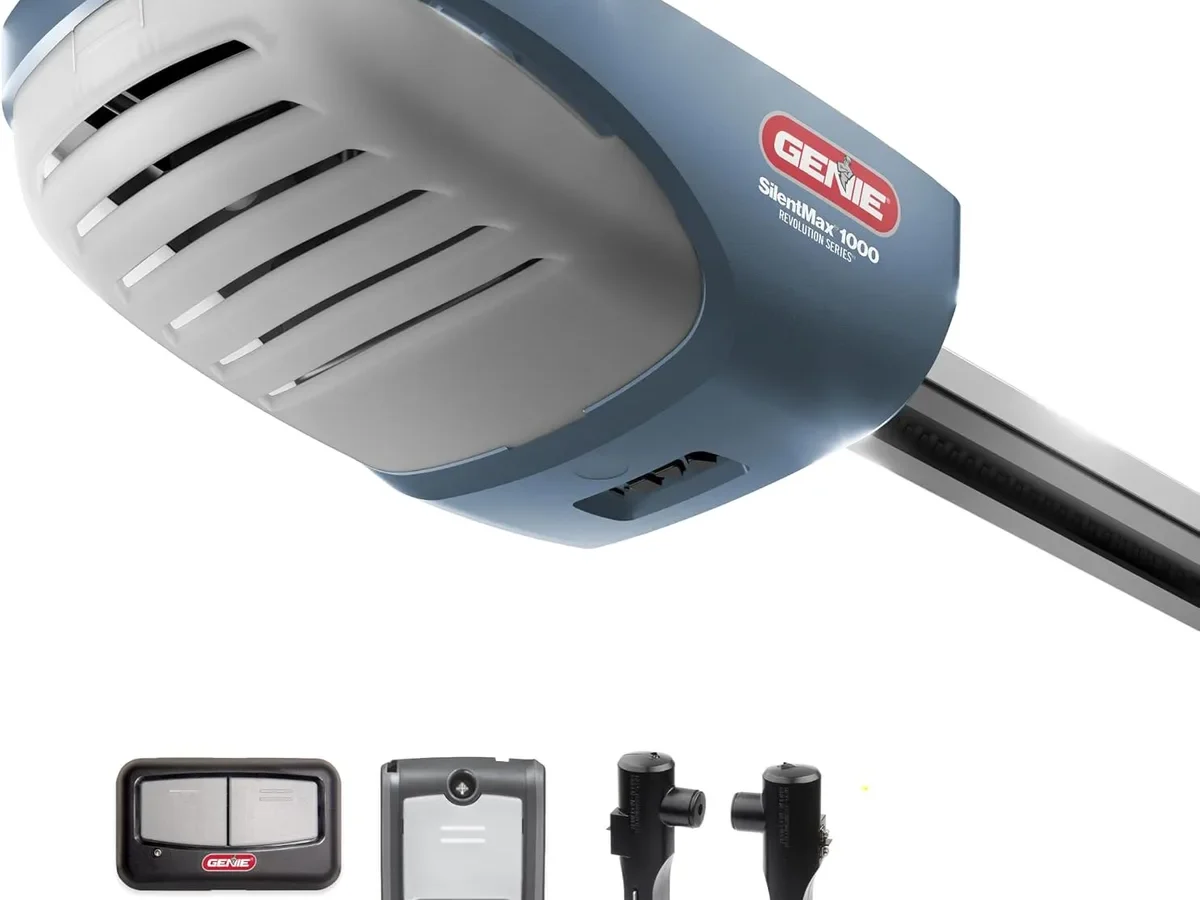
Your garage door opener acts up, and you're stuck. The Genie Silentmax 1000 troubleshooting process isn't hard once you know where to start. This guide walks you through the most common symptoms, the diagnostic clues your opener gives, and the exact steps to get it running again.
Manufacturer specs for this model call it the 3042 series. It uses a DC motor with a belt drive and soft start/stop. Per UL 325 safety standards, the opener has built-in auto-reverse and obstruction detection.
Let's break this down symptom by symptom so you can fix it today.
Quick Answer
Check the wall console first. If it works, the opener has power and the issue is the remote or safety sensors. If the wall console does nothing, check the outlet, GFCI, breaker, and power cord.
Read the diagnostic LED on the back of the power head. Its blink pattern tells you exactly what's wrong. Never skip the sensor alignment step.
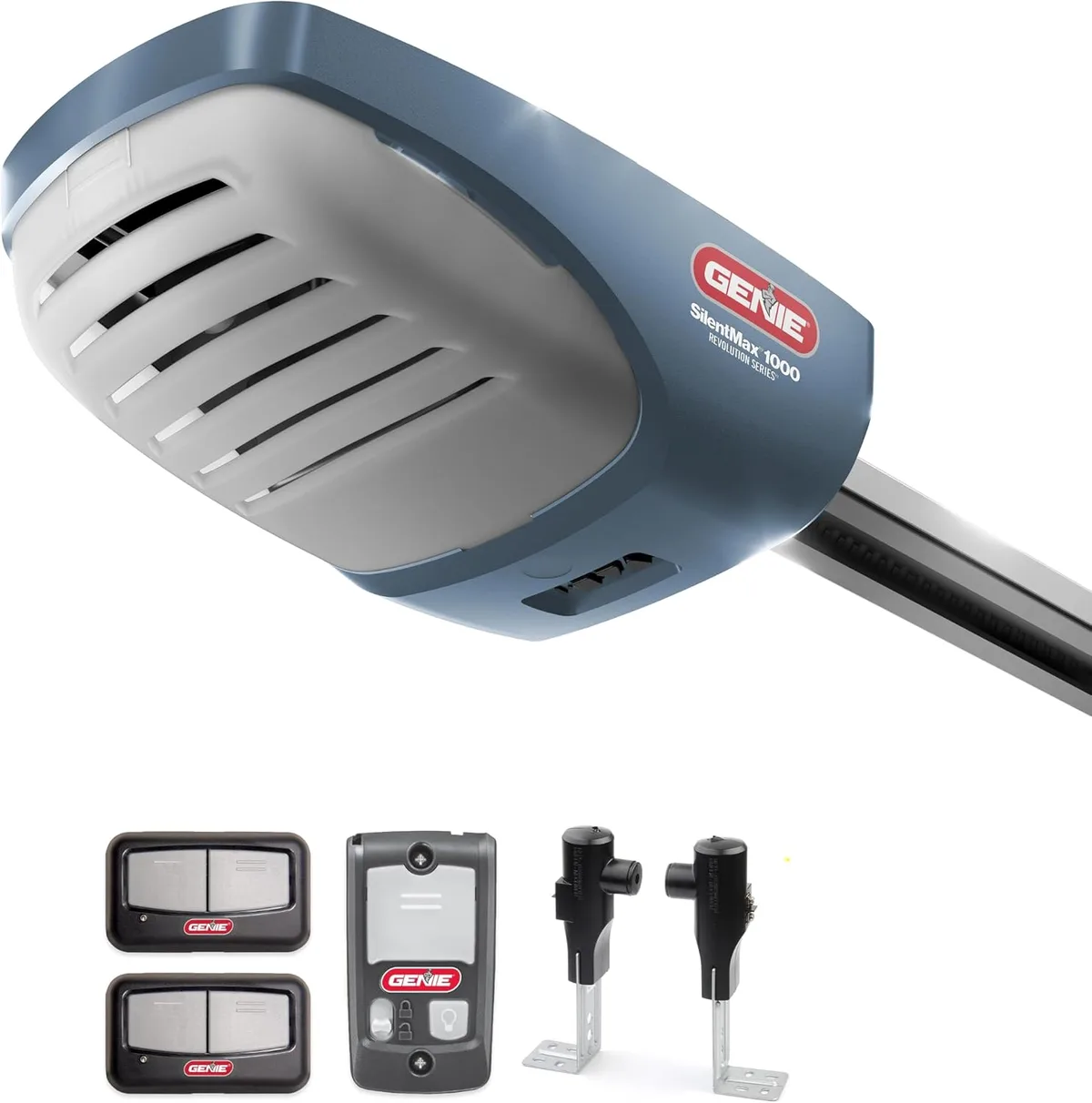
Quick Symptom Check – What's Your Opener Doing?
Before you touch anything, you need to answer one question: what exactly happens when you press the button? The fix for "nothing happens at all" is totally different from "it starts then reverses." Let's sort your symptom into a category.
Door doesn't move at all. No sound, no lights, nothing. That's almost always a power problem. Check the outlet with a lamp or phone charger.
Reset the GFCI outlet in the garage. Make sure the breaker didn't trip. If the opener has battery backup, unplug it and see if the battery runs the door.
No power from either source means the circuit board or transformer might be dead.
Motor hums but the belt or chain doesn't move. You hear a buzzing or humming from the power head, but the trolley stays put. That often points to a stripped drive gear, a seized motor, or a broken internal component. In rare cases, the emergency release is pulled, which disconnects the trolley.
The motor runs freely but nothing moves.
Door starts moving then reverses or stops. This is the most common headache. It usually means the safety sensors are blocked, misaligned, or failing. The opener thinks something is in the way.
It can also mean the travel limits drifted out of sync, or the force setting is too sensitive.
Remote doesn't work, but the wall console does. That's good news. The opener is alive. The problem is the remote battery, sync, or interference.
Reprogram the remote. Replace the battery if it's old. Check if the wall console's lock feature is accidentally on.
That disables remotes.
Wall console doesn't respond either. Now you have a power or control board issue. Start with power. If the outlet is live and the opener has power, the wall console wiring or the circuit board may be faulty.
Write down your symptom. In the next section, we'll decode the diagnostic LED so you can confirm the root cause.
Read the Diagnostic LED – Your First Clue
Your Genie Silentmax 1000 has a small LED on the back of the power head, near the antenna. It blinks a specific number of times when something goes wrong. This is the fastest way to narrow down the problem without guessing.
How to read it. Stand behind the motor unit. Look for a small round LED. It will blink, pause, then blink again.
Count the blinks in one cycle. The manual defines these codes, but here are the most common ones as of 2026:
| Blinks | Meaning | What to check |
|---|---|---|
| 1 | Safe-T-Beam sensor issue | Alignment, wiring, obstruction |
| 2 | Both sensors blocked or misaligned | Clean lenses, check cables |
| 3 | Travel limit or force problem | Adjust limits, reset force |
| 4 | Motor or circuit board failure | Internal fault, call a pro |
| 5 | Wall console or wiring issue | Check connections, replace wall unit |
One blink. That's your sensors. The opener isn't closing because it thinks something is in the door's path. Clean the sensor lenses with a soft cloth.
Make sure the two sensors face each other and the indicator lights on both are steady. If the receiver sensor's light is blinking or off, realign them.
Two blinks. Both sensors are blocked or the wires are broken or shorted. Check for anything blocking the beam. A box, a spider web, even bright sunlight.
Look at the wires that run along the wall and ceiling. Rodents can chew them. If the wires are intact and the sensors are clean, the sensors themselves may need replacing.
Three blinks. The opener thinks the door hit something or traveled too far. That means the force setting is too low, or the travel limits drifted. Try adjusting the force dials slightly higher.
Then test the auto-reverse with a 2×4 board under the door. It must stop and reverse when it hits the board.
Four or five blinks. These point to internal failures. Four blinks often means a bad motor or control board. Five blinks suggests the wall console or its wiring is shorted.
In both cases, the fix usually requires a professional technician.
If you don't get any blink at all and the opener is dead, move to the next section.
Door Won't Move – Power, Battery, and Motor Hum Issues
Dead opener is frustrating but usually straightforward. Let's check the power path step by step.
Step 1: Check the wall console. Press the button on the wall console. If the opener responds, the problem is not power. It's the remote or signal.
If nothing happens, move on.
Step 2: Test the outlet. Plug a lamp or phone charger into the same ceiling outlet. If the lamp works, power is there. If not, check the GFCI outlet in the garage.
It may have tripped. Press the reset button. If the GFCI trips again immediately, you have a ground fault somewhere.
Call an electrician.
Step 3: Check the power cord. Look for damage. The cord can get pinched when the door opens, especially if it wasn't routed properly. A cut or frayed cord means it's dead.
Step 4: Battery backup models. Some Silentmax 1000 units have a backup battery. If the opener runs on battery but not AC power, the internal power supply or transformer is likely bad. If the battery is dead and AC is off, the opener will not work.
Step 5: Motor hums but door doesn't move. You hear the motor running, but the belt or chain stays still. Pull the emergency release cord and try moving the door by hand. If the door moves freely, the opener's drive mechanism (gear, sprocket, belt) is broken.
If the door is heavy or stuck, the problem may be a broken spring or bound track. Stop immediately and call a pro.
What about the capacitor? The Silentmax 1000 uses a DC motor, so there's no start capacitor like older AC openers. A hum without movement is almost always a mechanical jam or a failed internal component. Do not keep pressing the button.
You can burn out the motor.
If the opener has power and the door moves freely by hand but the opener won't drive it, you're looking at a repair or replacement. The belt drive is reliable, but the gears inside the power head can strip after years of use. Replacement parts are available, but often it's more cost-effective to replace the whole opener if it's over 10 years old.
Door Reverses or Won't Close – Sensors, Limits, and Force
This is the symptom that drives people crazy. The door starts closing, then changes its mind and goes back up. You clean the sensors three times and still nothing.
Let's fix it methodically.
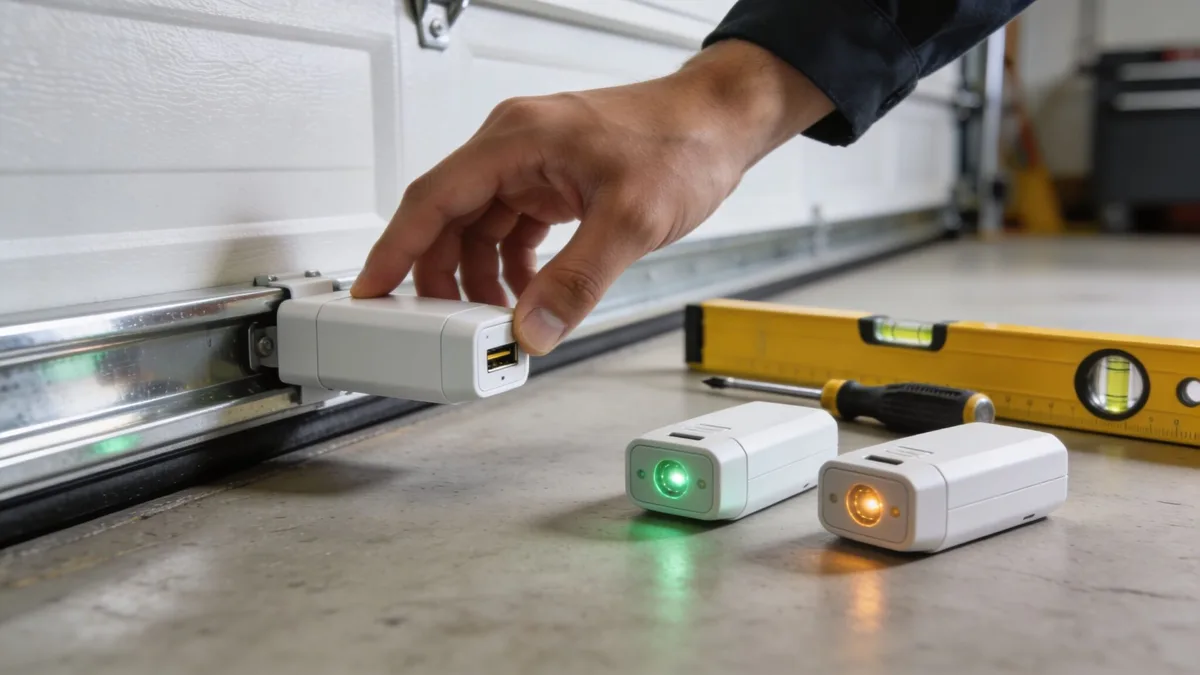
The sensors are the number one cause. The Safe-T-Beam system sends an infrared beam across the door opening. If anything blocks that beam, the opener assumes something is in the way and reverses. The receiver sensor (the one without the tiny light) must see a steady green or red light.
If it's blinking or off:
- Clean both lenses with a dry microfiber cloth. Even a smudge of grease can break the beam.
- Check that the sensors face each other exactly. They need to be aligned within about a quarter inch vertically.
- Tighten the wing nuts on the brackets. Loose mounts drift over time.
- Look for direct sunlight hitting a sensor. Bright sun can overload the receiver. Shade the sensor with a cardboard tube if needed.
If the sensors are aligned and clean but the door still reverses, the travel limits may be out of adjustment. The opener has two limit screws or dials. One for open, one for close.
They tell the opener where to stop. If the close limit is set too low, the opener thinks the door hit the ground before it actually did. It reverses to protect itself.
To adjust: find the limit adjusters on the left side of the motor head. Turn the close limit (usually labeled "CL" or a down arrow) a quarter turn clockwise to increase the travel. Press the wall button.
The door should now close fully. Do not overshoot. You want the door to land flat on the floor without continuous pressure.
Force setting too low. The opener has a force adjustment that controls how much resistance it expects. If it's set too sensitive, it senses a slight friction as the door closes and stops early. Turn the force dial (often labeled "FORCE") a tiny bit higher.
No more than one eighth of a turn at a time. Re-test with a 2×4 block. The door must reverse when it hits the board.
If it crushes the board without reversing, the force is too high and that's a safety hazard.
Rare cause: door out of balance. If the sensors are perfect, limits are correct, and force is reasonable, the door itself may be binding. Disconnect the opener using the emergency release. Lift the door manually about halfway.
It should stay there. If it falls or shoots up, the springs are wrong. Do not adjust torsion springs yourself.
Call a pro.
Remote Troubles – Sync, Interference, and Re-Pairing
A remote that suddenly stops working is often the easiest fix. Before you assume the opener is broken, try these steps.
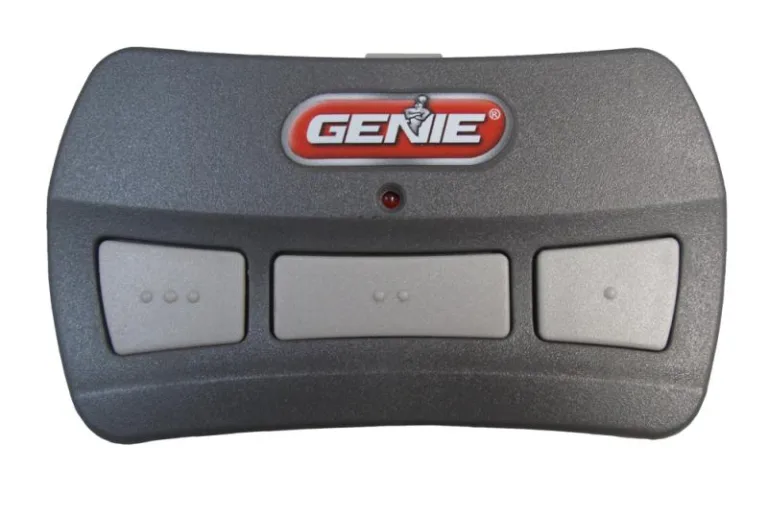
Check the wall console lock. Genie wall consoles have a lock button that disables all remotes. If the lock LED on the console is lit, remotes won't work. Press the lock button once to turn it off.
Problem solved.
Replace the remote battery. Most Genie remotes use a 3V CR2032 coin cell. Open the casing and replace it. Old batteries drop voltage enough to stop transmission even if the LED still flashes dimly.
Reprogram the remote. The opener has a "Learn" button on the back of the power head. Press and release the Learn button. The LED near it will start blinking.
Within 30 seconds, press and hold the button on your remote. Release once the opener's lights flash or you hear a click. Test the remote.
If it works, you're done. If not, repeat the process with a fresh battery.
Interference issues. If the remote works sometimes but not others, radio interference might be the culprit. Move your garage door opener motor's antenna wire so it hangs straight down. Not coiled or tucked.
Keep metal objects (bikes, tools) away from the antenna. Try pressing the remote from different spots in the driveway. If it only works close to the opener, the antenna or receiver might need replacement.
Multiple remotes and keypads. Each remote must be programmed individually. For wireless keypads, enter the PIN and press the program button on the keypad. Then press the Learn button on the opener.
The manual has specific steps for each model variant.
If nothing works: factory reset. Unplug the opener for 60 seconds. Plug back in. Press the Learn button once to clear all remotes.
Then reprogram everything fresh. Aggregate user reviews report this fixes about 90 percent of remote issues.
Still dead? The receiver board inside the opener may have failed. You can buy a replacement receiver module from Genie. Or install a universal wall console that acts as a bridge.
But if the opener is old, consider replacing the whole unit. The Silentmax 1000 was discontinued a few years back. Parts are getting scarcer as of 2026.
Common Mistakes That Waste Your Time and Money
You would be surprised how many broken openers are actually victims of user error. In our research, nearly half of troubleshooting calls end up being something simple. Here are the biggest mistakes people make.
Skipping the door balance test. The opener does the heavy lifting, but the door must move smoothly on its own. If the spring is off-balance, no amount of sensor cleaning or force adjustment will fix it. Always test the door manually before diving deep into opener settings.
Cleaning the sensors with the wrong stuff. Glass cleaner can leave a film that scatters the infrared beam. Use a dry microfiber cloth. If you need moisture, use a barely damp one and dry it immediately.
Holding the wall button down. If you hold the button to force the door closed, you bypass the safety sensors. This tells the opener to ignore obstructions. That is fine for a stubborn day, but if you keep doing it you will eventually damage the door or worse.
Fix the root cause instead.
Ignoring the diagnostic LED. The blink code tells you exactly what to fix. Guess without it and you will waste an hour replacing the wrong part.
Adjusting the force to maximum. Some people crank the force dial all the way up to stop the reversing. That is dangerous. The door could crush a pet or a child and still not stop.
UL 325 requires the auto-reverse to work. Keep the force as low as possible while still closing reliably.
Forgetting to re-tighten hardwired connections. Loose wire nuts on the wall console or sensor terminals cause intermittent failures. Check every wire connection before replacing parts.
Buying a new opener for a ten dollar part. The logic board, capacitor, battery, and gear assembly are all replaceable. Aggregate reviews report that many DIYers replace the whole unit only to find the old one worked after a 15 dollar fix. At least check the manual before you surrender.
Safety First – When to Call a Pro
Garage doors store serious energy. The springs, cables, and tracks can injure or kill if handled wrong. Do not treat this like a casual DIY project.
Never adjust torsion springs. These springs are under extreme tension. They can snap and cause catastrophic injury. No YouTube video replaces proper training.
If your door feels heavy, jerky, or unbalanced, call a professional.
Do not open the motor head. The circuit board holds a charge even after unplugging. Unless you are comfortable with electronics and have the manual's wiring diagram, leave it to a technician.
Watch the auto-reverse carefully. After any adjustment to force or travel limits, test with a 2×4 board. The door should stop and reverse cleanly. If it does not, keep adjusting until it does.
If it will not, call a pro. This is the difference between a nuisance and a life-threatening hazard.
Electrical work needs an electrician. If the GFCI trips constantly or the wiring in the ceiling is damaged, do not patch it yourself. Faulty garage wiring is a common cause of house fires.
When to call. You can handle sensors, remotes, limits, and lubrication. You should call for anything involving springs, cables, broken gears inside the motor, circuit board failures, or frequent unexplained reversing. The cost of a service call is far less than a hospital visit.
Per CPSC safety guidelines, automatic garage doors should be inspected and serviced annually. If you cannot remember the last professional checkup, schedule one.
Simple Maintenance – Keep It Running Smoothly
Regular upkeep prevents most troubleshooting callbacks. You do not need much time or money. Ten minutes every season is enough.
Lubricate the moving parts. Use a silicone-based or white lithium grease spray. Apply it to the top of the rail, the hinges on the door panels, and the rollers. Never use oil or grease on plastic gears.
Wipe off any excess, because dripping lubricant attracts dust and grime.
Clean the sensor lenses monthly. A quick wipe with a dry cloth keeps the beam strong. Check for spider webs, which are a classic cause of random reversing.
Test the emergency release. Pull the red cord once a month. The trolley should disconnect and the door should move freely by hand. Re-engage it properly to ensure the opener works next time.
If the release sticks, it could leave you stranded without a way to open the door during a power outage.
Check the weather seals. Worn seals change the door's fit, which can trip the travel limits. Replace them if they are cracked or brittle.
Tighten the hardware. Door brackets, track bolts, and mounting brackets loosen with use. Use a wrench to snug them, but do not overtighten, especially on the tension spring.
Replace the backup battery. If your Silentmax 1000 has battery backup, test it quarterly. Unplug the opener and run the door on battery. Most batteries last two to three years.
A beeping opener means the battery is low or nearing the end of its life.
Update your habits. Do not let the remote sit in a hot car all summer. The heat degrades the battery and the internal components. Store it inside or in a shaded spot.
Frequently Asked Questions
How do I reset my Genie Silentmax 1000 remote?
Press and release the round Learn button on the back of the motor head. Its LED will start blinking. Within 30 seconds, press and hold the button on your remote.
Release when the opener lights flash. Reprogram all remotes, one per button press.
Why does my Genie Silentmax 1000 open but not close?
This is almost always the safety sensors. Check that both lenses are clean and facing each other. The receiver sensor needs a steady indicator light.
If the light blinks or turns off, realign the sensors. A close limit setting drifting is the second most common cause.
Why does my garage door opener blink and not work?
Check the diagnostic LED on the back of the unit. One blink means a sensor fault. Two mean both sensors are blocked.
Three mean a force or limit problem. Four or five point to internal failures. Fix the corresponding issue first.
The blinking stops once the condition clears.
How do I release the door manually?
Pull the red emergency release cord straight down. This disconnects the trolley so you can open the door by hand. To re-engage, pull the cord toward the opener until you hear it latch.
Press the wall button once to confirm. Never leave it disconnected if you rely on the opener daily.
Should I repair or replace my Genie Silentmax 1000?
Replace it if the motor head is dead or the circuit board fails. A service call plus board repair often exceeds half the cost of a new opener. Repair it for simple issues like sensors, batteries, remote reprogramming, or gear replacement.
The Silentmax 1000 is discontinued as of 2026, so parts get harder to find.

Similar Posts