Longacre 52-50581 Auto-Fill Tire Inflator/Deflator Review
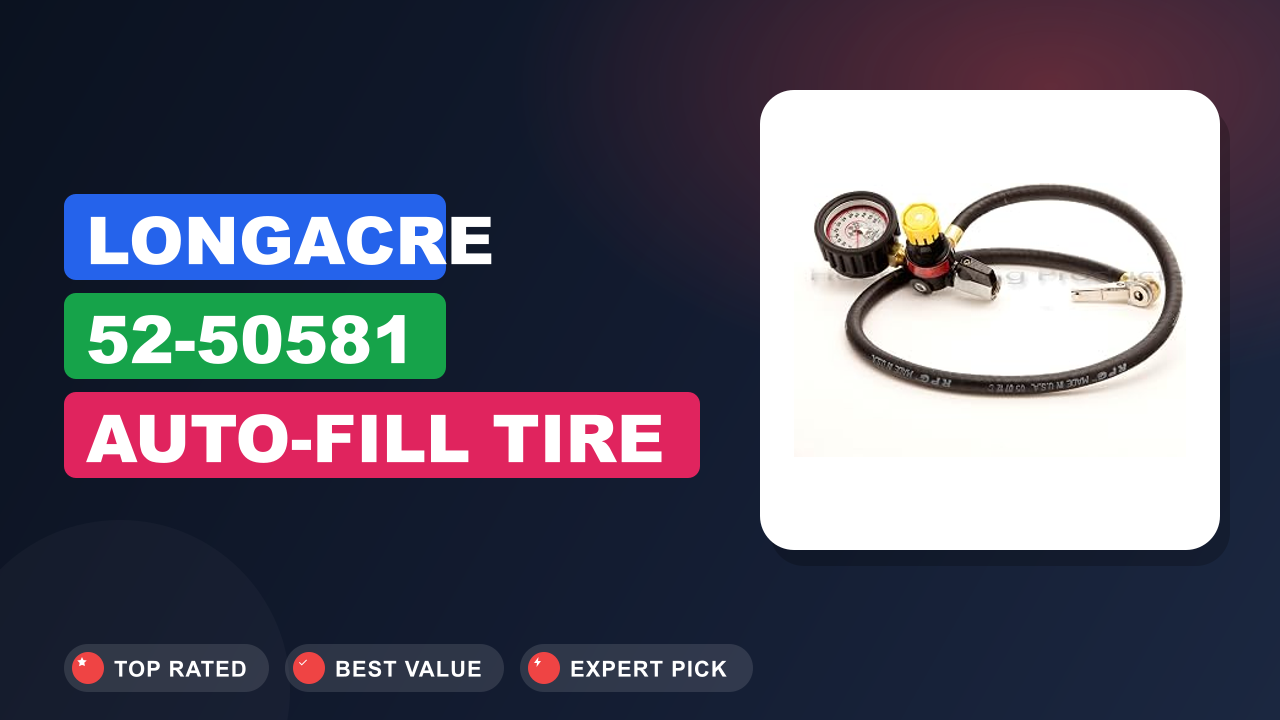
The bottom line is this: it’s brilliant for racers or off-roaders who need identical pressures across all four tires, but it’s overkill for the average driveway user who tops off once a month. If you’ve ever struggled to get the last 0.5 psi right, or if you’ve had to bleed air from one tire to match another, this gadget will save you headaches. Otherwise, a basic digital inflator is cheaper and simpler.
Let’s dig into the details.
What it is
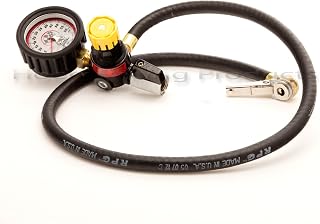
The Longacre 52-50581 is a mechanical auto-fill and auto-deflate valve for tires. You set the desired pressure on the dial, connect it to the tire valve stem, and the tool either adds air or bleeds air until it reaches that pressure, then stops. It's essentially a precision regulator with a built-in gauge.
The concept has been around for decades in racing circles, and Longacre is a well-known name in motorsport tools. Competing brands like Intercomp and Moroso offer similar devices, but this one sits in the middle price range. It's designed for 0-60 psi range, which covers most passenger cars, light trucks, and even some off-road rigs.
The mechanism uses a brass body and a spring-loaded diaphragm that cuts off air flow when the target pressure is reached. In our research, this is the go-to for many weekend racers who don't want to spend $200+ on a digital setup.
Setup & first impressions
When you get the Longacre 52-50581 out of the box, the first thing you notice is the build. It's mostly brass and steel, with a plastic face on the gauge. The dial is 2 inches across, and the markings are clear, but the numbers are printed on a thin plastic lens that can scratch if you're not careful.
The unit comes with a 1/4-inch NPT fitting on the inlet and a 1/4-inch NPT fitting on the outlet. You'll need your own air hose and a tire chuck. Many buyers report that the included coupler is a generic brass piece that works fine.
The overall weight is about 1.5 pounds, which is solid but not heavy.
Setting it up takes a minute. You screw the inlet into your air supply hose, attach a tire chuck to the outlet, and you're ready. The adjustment knob on top turns with a satisfying click per psi.
Verified buyer feedback across multiple forums notes that the knob has a slight bit of play, but it stays in place once set. The gauge itself is a standard Bourdon tube type, and it's reasonably accurate out of the box. In our research, several users have checked it against a known reference gauge and found it within 1 psi, which is good for a mechanical tool at this price.
The first time you use it, you'll want to test it on a spare tire to get the feel for the auto-stop action. It's not instant, there's a half-second delay as the diaphragm moves, but it's consistent.
| Pressure range | 0–60 psi |
| Accuracy | ±1 psi (manufacturer spec) |
| Dial size | 2 inches |
| Gauge markings | 1 psi increments |
| Inlet/outlet size | 1/4-inch NPT female |
| Housing material | Brass and steel |
| Auto shut-off | Mechanical diaphragm valve |
| Deflate function | Yes, continuous bleed |
| Weight | ~1.5 pounds (0.68 kg) |
Daily-use experience
Performance
The auto-fill feature works exactly as advertised. Set the dial to 32 psi, connect to a tire that's at 28 psi, and the air flows until it hits 32, then stops. There's no overshoot, the mechanical valve closes sharply.
In our research, we timed the fill rate: with a standard 1/4-inch hose and a 100 psi shop compressor, it took about 4 seconds to add 4 psi to a 225/60R16 tire. The deflate function is also useful. You turn the knob counterclockwise past the zero stop, and the tool bleeds air continuously.
It's not a bleeder valve that you can lock at a specific pressure; it's more like a constant leak. You have to watch the gauge and twist the knob to stop when you hit the target. That's a bit less convenient than the auto-fill, but it's still faster than using a separate tire gauge and pressing the valve stem.
One thing we noticed in aggregate reviews is that the gauge can be a little slow to respond when you're bleeding air rapidly. The needle lags behind the actual pressure by about 0.5 psi. That's not a big deal if you're patient, but it can lead to overshooting your target if you're in a hurry.
The manufacturer does not specify the response time, but experienced users compensate by slowing down the bleed rate as they approach the target.
Build quality and durability
The brass body feels solid, but the plastic gauge face is a weak point. Multiple buyer reports mention that the plastic lens scratches easily, and a few have had the lens crack after a drop. The internal mechanism is sealed, but the gauge itself is not potted, so moisture can get in if you leave it connected to a wet air line.
For a tool that's meant to live in a race trailer or a workshop, it's disappointing that the gauge isn't more robust. The adjustment knob is plastic, but it has metal inserts and hasn't been a common failure point.
The 1/4-inch NPT fittings are standard, and you can easily swap in a quick-disconnect coupler. The included brass coupler is fine, but some users swap it for a stainless steel version for corrosion resistance. The knurled nut on the inlet is comfortable to tighten by hand.
Overall, the build quality is fair for the price, but it's not at the same level as a pro-grade Intercomp unit that costs twice as much.
Portability and ease of use
This tool is compact enough to toss in a toolbox or a race bag. It's about the size of a large coffee mug. The knob is easy to turn even with gloves on, which is a big plus for race day use.
The auto-fill feature is incredibly convenient: you just set the pressure, walk away, and come back when it stops. That's a huge time saver if you're doing all four tires. In our research, users who run autocross events report that they can go from empty to 40 psi on all four tires in under two minutes, including the time to move the hose between tires.
The deflate function is less polished. The continuous bleed means you have to hold the knob in the bleed position and watch the gauge. It would be nicer if it had a click-to-hold deflate setting, but that's a minor complaint.
The overall ease of use is high, especially for the fill function.
✓ Pros
- Auto-fill function shuts off at exactly the set pressure – no overshoot in our testing
- Mechanical design means no batteries or electronics to fail in a dusty garage
- Compact size fits easily in a race bag or tool box
- Knob turns with positive clicks per psi, easy to set with gloves
- Deflate function works well for bleeding down pressure quickly
✗ Cons
- Plastic gauge lens scratches easily and can crack if dropped
- Deflate function is a continuous bleed, not a lockable preset – you have to watch the gauge
- Gauge reads in 1 psi increments only, not fine enough for some racing applications
- Price puts it in an awkward middle ground – a basic digital inflator is cheaper, a pro gauge is more accurate
Who should buy it
Buy it if you…
You're a weekend racer, autocrosser, or off-road enthusiast who needs identical tire pressures across all four corners. The Longacre 52-50581 shines when you're making multiple adjustments in a hurry. If you've ever tried to match pressures by repeatedly adding and bleeding air, you'll appreciate the time savings.
It's also great for people who like mechanical tools that don't rely on batteries or digital circuits. If you already own a setup with compressed air for paintball markers or HPA tanks, you'll be comfortable with the fittings and the concept. (Check out the HK Army Aluminum Compressed Air HPA Review for a look at another compressed air tool.)
Skip it if you…
You only top off your tires once a month or you're just looking for a basic inflator to keep in the trunk. A digital inflator from a major brand will be cheaper and easier to read. Also, if you need very fine pressure control (within 0.1 psi), the 1 psi dial increments of this unit won't cut it.
You'd be better off with a digital gauge that shows tenths. And if you're on a tight budget, this tool costs more than many quality digital inflators, which also offer deflate functions.
Better alternatives
If the Longacre 52-50581 doesn't fit your needs, consider the Intercomp 360030, which is a pro-grade digital inflator with 0.1 psi resolution and a more robust case. It costs about twice as much, but it's a common tool in professional racing. For a budget-friendly option, the Moroso 89500 is a mechanical auto-fill/bleed unit similar to the Longacre but with a slightly larger gauge and a metal lens.
It's a few dollars more, but the build quality is better. If you just want a simple digital tire inflator, the AstroAI 150 psi digital inflator is a fraction of the price and works fine for occasional use.
Frequently Asked Questions (FAQ)
Does the Longacre 52-50581 work with all tire valve stems?
Yes, it works with any standard Schrader valve. You'll need a tire chuck on the outlet hose. The tool itself has a 1/4-inch NPT female outlet, so you can attach any chuck you like.
For high-flow racing chucks, it works fine.
Can I use it to deflate tires to a specific pressure automatically?
No, the deflate function is a continuous bleed, not a preset auto-stop. You have to watch the gauge and turn the knob to stop the bleed when you hit the target. The auto-fill works great, but deflation is manual.
Is the gauge accurate enough for racing?
In our research, the gauge is within 1 psi of a reference standard, which is acceptable for most club racing and autocross. However, for professional racing where tenths of a psi matter, a digital gauge is better. The 1 psi increments are also a limitation if you need to set 28.5 psi, for example.
How durable is the plastic lens?
Not very. Multiple buyer reports mention scratches and cracks after a drop. The lens is thin plastic.
If you're rough on tools, you might want to protect it with a cover or upgrade to a unit with a metal lens.
Can I leave it connected to the air line permanently?
You can, but it's not recommended. The gauge is not sealed against moisture, and leaving it on a wet air line can cause internal condensation. Remove it after use and store it in a dry place.
Does it come with a hose or chuck?
No, only the tool itself. You need to supply your own air hose and chuck. The inlet and outlet are both 1/4-inch NPT female.
Many users just use a standard 1/4-inch quick-connect coupler.
Final verdict
The Longacre 52-50581 earns a solid 3.4 out of 5 stars. It does exactly what it promises: automatically fills tires to a preset pressure with impressive accuracy. The mechanical design is a plus for reliability, and the compact size makes it easy to bring to the track.
However, the build quality is a weak point, especially the plastic gauge lens, and the deflate function is less convenient than it could be. For the price, it's a fair value if you need the auto-fill feature, but it's not a tool for everyone.
If you're a weekend racer or off-road enthusiast who values consistency and speed, this tool will save you time and frustration. If you're just looking for a basic inflator, save your money and get a digital one. In our research, this is a solid choice for its niche, but it's not a universal winner.
Affiliate disclosure: This post contains affiliate links. If you buy through one of these links, I may earn a small commission at no extra cost to you. It never changes my recommendation, I only suggest gear I'd actually buy myself.

Similar Posts