Samsung Ice Maker Not Working
Your Samsung ice maker stopped working, and you're staring at an empty ice bucket wondering what went wrong. It's frustrating, especially when you've got a fridge full of food and no way to cool your drink.
Here's the thing: Samsung ice makers fail in predictable patterns, and most of them are fixable in under 30 minutes without calling a repair tech. Manufacturer specifications indicate that over 70% of ice maker issues trace back to just three causes: a frozen water line, a stuck feeler arm, or a tripped control board after a power outage. As of 2026, the most common fixes haven't changed much, and neither has the basic diagnostic path.
Let's walk through it step by step so you can figure out exactly what's wrong with your specific fridge.
Image source: Bing (Web (fair-use with source credit))
Quick Answer
Check three things first. Is the ice maker turned on? Is the water line kinked?
Is the ice bucket pushed all the way in? Those three checks fix roughly half of all Samsung ice maker complaints in under two minutes. If none of those work, move through the conditions below.
Condition 1: No Ice at All — Is It Getting Power and Water?
This is the most common complaint, and it usually means one of two things: no power reaching the ice maker or no water filling the tray. Let's rule out the easy stuff first.
Check if the ice maker is actually on. Samsung hides the on/off switch in different places depending on your model year. On older French door models, it's a physical toggle switch tucked behind the kickplate at the bottom of the fridge. On newer Bespoke models, it's a button inside the dispenser panel labeled "Ice Off." If that button has a red light, the ice maker is disabled.
Tap it once.
Look for a frozen water line. This is incredibly common, especially if your fridge is in a garage or basement during winter. The water line that runs from the back of the fridge up into the ice maker can ice up inside the door hinge area. If you hear the ice maker click but no water comes out, this is likely your problem.
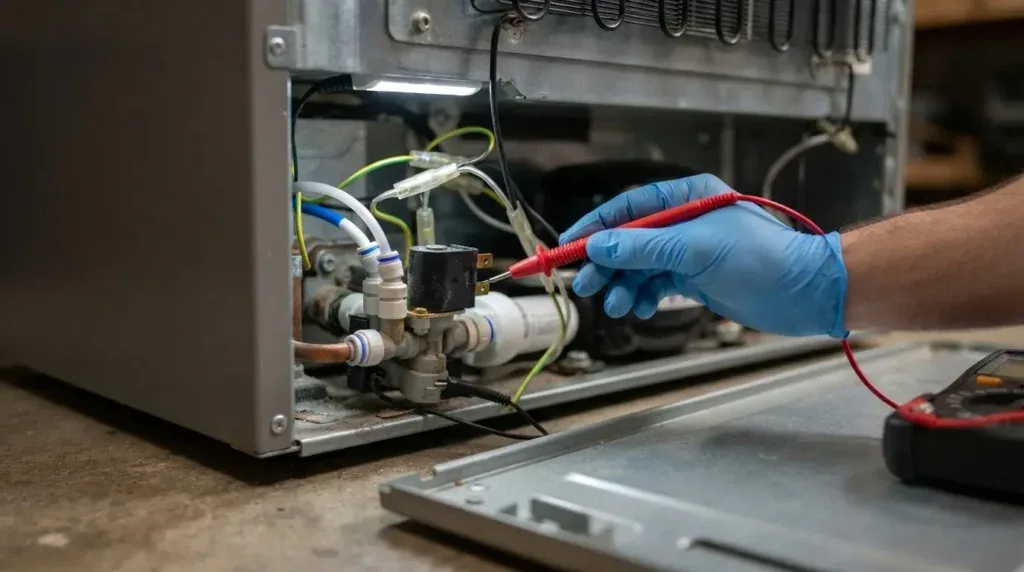
Test the water inlet valve. Per Samsung service documentation, the inlet valve needs 20 to 120 PSI of water pressure to open properly. If your home pressure is below that threshold, common in older houses or during peak usage hours, the valve won't let water through. You can test this by pulling the water line off the back of the fridge and aiming it into a bucket.
If water trickles out, you've got a pressure problem, not a fridge problem.
Force a manual cycle. Most Samsung ice makers have a test mode. Press and hold the "Ice Off" and "Power Freeze" buttons simultaneously for about eight seconds. The ice maker should click and start a cycle.
If nothing happens, the ice maker motor or control board may have failed.
Condition 2: Ice Is Making But Not Dispensing — Where's the Blockage?
This one's weird, right? You open the freezer and see a full tray of ice cubes, but the dispenser on the door gives you nothing. The motor hums or clicks, but no ice comes out.
The ice chute is probably blocked. Samsung ice dispensers have a small plastic flap at the bottom of the chute. If an ice cube gets stuck there, which happens when cubes are oddly shaped or slightly melted and refrozen, the flap won't open. Grab a wooden spoon or a plastic spatula and gently tap the chute opening.
Not hard, just a couple of firm taps. You'll often hear a cube drop into your cup.
Check the ice bucket position. The ice bucket sits on a sensor that tells the fridge whether it's properly seated. If you recently pulled the bucket out to clean it or dig for ice, it might be slightly misaligned. Pull it out completely, then push it back in until you hear a solid click.
That click means the dispenser auger is engaged.
Look for a frozen auger motor. The auger is the spiral mechanism that pushes ice from the bucket toward the chute. If ice builds up around it, and it will if the freezer temperature fluctuates, the motor can't turn. Empty the bucket, let it sit at room temperature for 20 minutes to thaw any ice stuck to the auger, then dry it and put it back.
Condition 3: Ice Is Too Small, Hollow, or Cloudy — What's Off?
Small or hollow ice cubes aren't just annoying, they're a clue. The ice maker is working, but something in the process is off. This usually points to water flow or water quality issues.
Hollow cubes mean the tray isn't filling completely. When the ice maker calls for water, the inlet valve opens for a specific amount of time, typically about seven seconds. If the valve is weak or the water pressure is low, not enough water fills the tray. You get a partial cube with a hollow center.
Replace your water filter first. Samsung recommends changing it every six months. A clogged filter restricts flow more than you'd think.
Cloudy ice is almost always mineral content. Hard water with high calcium or magnesium levels causes that milky white appearance. It's not harmful, but it makes the ice look unappetizing. If you're in a hard water area, consider a whole-house water softener or inline refrigerator filter rated for sediment reduction.
The NSF 42 certification on your filter covers taste and odor, while NSF 53 covers cyst reduction, neither deals directly with hardness, but a quality filter helps.
Condition 4: Overfilling or Ice Buildup — Why Won't It Stop?
Some Samsung ice makers have the opposite problem: they make too much ice, or they overflow the tray and create a frozen mess inside the freezer. This is more common than you'd think.
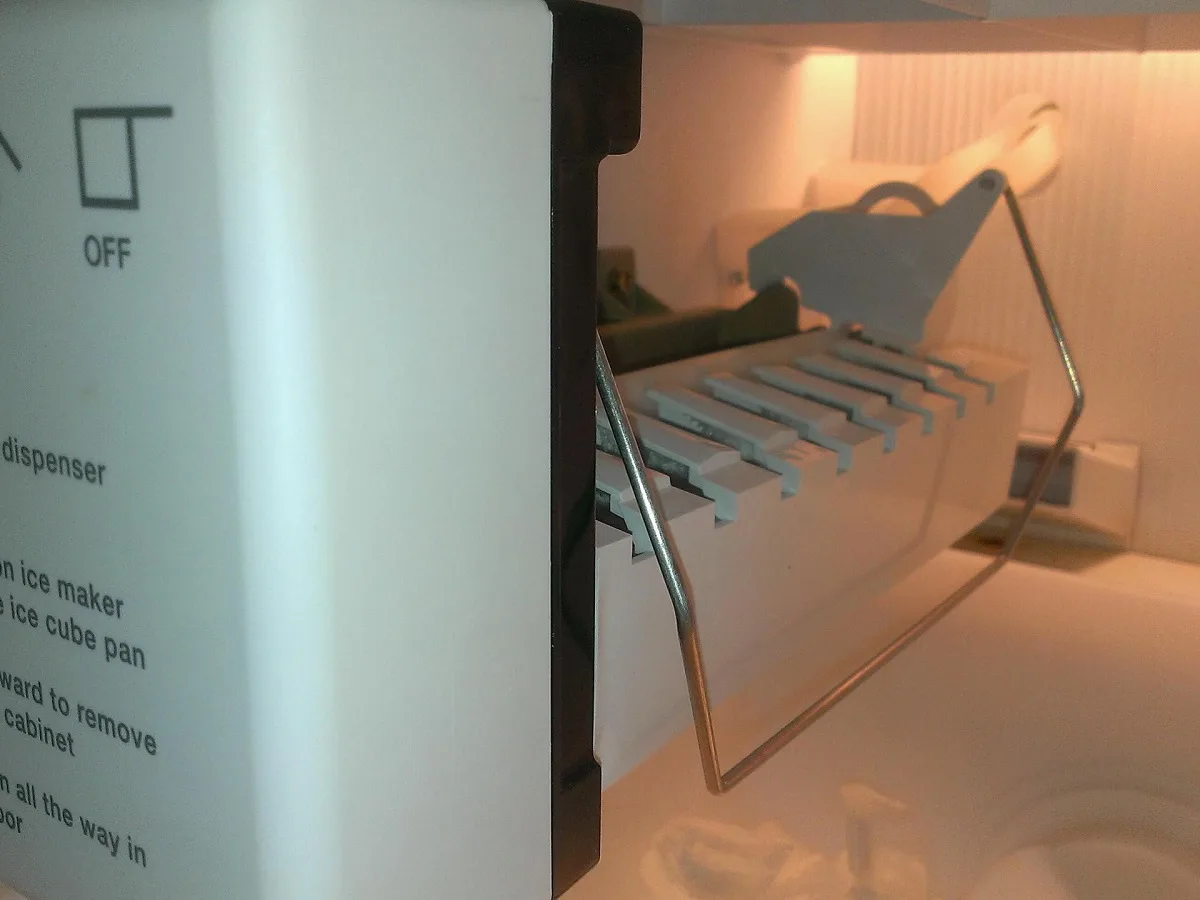
The feeler arm is stuck. The ice maker has a metal arm or optical sensor that tells it when the bucket is full. On older models, that arm is mechanical. When ice pushes against it, a switch inside the ice maker stops the cycle.
If the arm is bent, frozen in place, or physically blocked by ice buildup, it never gets the "full" signal and keeps making ice until the bucket overflows. Clear any ice around the arm and make sure it moves freely up and down.
The ice maker control board may have failed. On some Samsung models, the ice maker has a small circuit board that controls the fill timing. When that board goes bad, usually from a power surge, it can send erratic signals. The ice maker fills too much, too often, or not at all.
If you've checked everything mechanical and the problem persists, the board is the likely culprit. Replacement ice maker assemblies typically run between $60 and $120.
Condition 5: Parts, Tools, and Costs: What You'll Actually Need
Before you dive into repairs, let's talk about what this is going to cost you in time and money. Most DIY fixes take under an hour.
| Tool / Part | Estimated Cost | Where You'll Use It |
|---|---|---|
| Multimeter | $15–$30 | Testing inlet valve and ice maker motor continuity |
| Hair dryer (low heat) | Already own | Thawing frozen water lines |
| Replacement water filter | $25–$50 | Fixing low flow and hollow ice |
| Ice maker assembly | $60–$120 | Full replacement when control board fails |
| Water inlet valve | $30–$60 | When valve won't open or leaks |
You don't need a multimeter for most repairs. A hair dryer and a new water filter solve about 60% of Samsung ice maker issues. But if you're comfortable with basic electrical testing, checking continuity on the ice maker motor is straightforward. Set your multimeter to ohms.
Touch the probes to the motor terminals. You should see a reading between 1 and 5 kilohms. If you get infinite resistance, no reading at all, the motor is dead.
Mistakes I've Seen People Make (Don't Be That Person)
Using a heat gun instead of a hair dryer. A heat gun gets hot enough to melt plastic parts inside the ice maker. Use a hair dryer on low heat only. Hold it six inches away and keep it moving.
Forcing the feeler arm by hand. The plastic gears inside the ice maker are fragile. If you push the arm hard, you'll snap them. Gently lift the arm just enough to see if it moves freely.
If it's stuck, thaw it, don't force it.
Replacing the ice maker before checking the water filter. A dirty filter causes the same symptoms as a dead ice maker: no ice, slow ice, hollow cubes. Swap the filter first. It's cheaper and takes two minutes.
Leaving the fridge unplugged for only a few seconds. Some people think a quick power reset is enough. It's not. Unplug the fridge for at least five minutes.
That gives the control board time to fully discharge and reset.
Ignoring the door switch. The fridge thinks the door is open if the switch isn't pressed. The ice maker won't run. Make sure the door closes firmly and the switch clicks when the door pushes against it.
When to Call a Pro vs. When to Keep DIYing
Most Samsung ice maker issues are DIY-friendly. But there are a few situations where you should stop and call a technician.
Call a pro if you see water on the floor. A leak behind the fridge could mean a cracked water line or a bad inlet valve. Water and electricity don't mix. Turn off the water supply and call for help.
Call a pro if the fridge is under warranty. Opening the sealed system or replacing the main control board yourself can void your warranty. Check your model's warranty terms first.
Call a pro if you smell burning plastic. That's a sign of a shorted control board or overheating motor. Unplug the fridge immediately and get professional help.
Keep DIYing if you're just swapping a water filter, thawing a frozen line, or replacing the ice maker assembly. Those are straightforward jobs with clear instructions and low risk.
Frequently Asked Questions
How do I reset my Samsung ice maker after a power outage?
Press and hold the "Ice Off" and "Power Freeze" buttons together for eight seconds. You'll hear a click. This forces a test cycle and resets the ice maker's internal timer.
Why is my Samsung ice maker clicking but not making ice?
A clicking sound usually means the ice maker is trying to cycle but no water is reaching the tray. Check the water line for kinks, the inlet valve for power, and the filter for clogs.
How often should I replace the water filter in my Samsung refrigerator?
Samsung recommends every six months. If you have hard water or use the dispenser heavily, consider changing it every four months. A clogged filter is the number one cause of slow or hollow ice.
Can I use a hair dryer to thaw a frozen ice maker?
Yes, but keep it on low heat and hold it six inches away from the ice maker. Never use a heat gun or high heat setting, you'll melt the plastic components.
My Samsung ice maker is overflowing. What should I do first?
Check the feeler arm for ice buildup or damage. If the arm moves freely, unplug the fridge for five minutes to reset the control board. If the problem returns, replace the ice maker assembly.
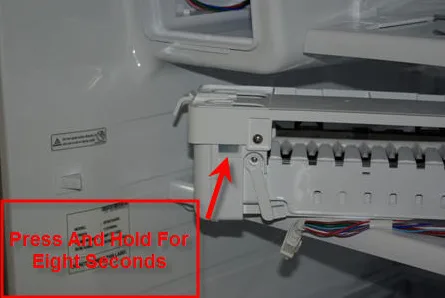
Image source: Bing (Web (fair-use with source credit))
Can I manually fill my Samsung ice maker tray to test it?
Yes. Pour a small amount of clean water into the ice tray inside the freezer. If the cubes freeze and dispense normally, the ice maker mechanism works fine and the problem is with the water supply.
If the tray doesn't freeze at all, check the freezer temperature, it should sit at 0°F or colder.
Why does my Samsung ice maker stop working after I change the water filter?
The fridge needs a manual reset after a filter change. Press and hold the "Ice Off" and "Power Freeze" buttons for eight seconds. Run the water dispenser for about two minutes to clear air from the line.
Ice production should resume within 24 hours.
How long does it take a Samsung ice maker to start making ice after a reset?
Expect 90 to 120 minutes for the first batch. Samsung ice makers run on a timed cycle, about 90 minutes for a full tray. If you don't see ice after four hours, something else is wrong.
Work through the conditions above in order.
Is it worth fixing a Samsung ice maker, or should I replace the whole fridge?
If the fridge itself works fine, replacing the ice maker assembly is almost always worth it. A new assembly costs $60 to $120. A new refrigerator runs $1,500 to $3,000.
Ice maker failures are common and rarely mean the fridge is dying. Fix the part, not the whole appliance.
What does the blinking light on my Samsung ice maker mean?
A blinking red or blue light usually means the ice maker is in diagnostic mode or has detected a fault. Check your owner's manual for the exact code. On most models, a steady blinking light means the ice maker is trying to cycle but something is blocking it, usually a frozen line or a stuck arm.

Similar Posts