Snow Thrower Vs Snow Blower
You've been standing in the snow aisle at the hardware store, staring at two machines that look like they do the same thing. One says "snow thrower." The other says "snow blower." And somewhere in the back of your mind, you're pretty sure those are different names for the same thing, except the price tags tell a different story.
Here's the truth: Snow Thrower Vs Snow Blower isn't just a marketing trick. It's a real mechanical distinction that determines whether you'll be done clearing your driveway in twenty minutes or fighting a clogged machine for an hour. In our research across manufacturer specifications and verified buyer feedback, the difference comes down to how many stages the machine uses to move snow, and that single design choice changes everything about performance, price, and what kind of winter you can handle.
As of 2026, the confusion is worse than ever because most stores label both machines the same way. Let's fix that.
Image source: Bing (Web (fair-use with source credit))
Quick Answer
A snow thrower uses one stage. The auger scoops snow and throws it out the chute in one motion.
A snow blower uses two stages. The auger feeds snow into an impeller that blasts it out.
Single-stage machines are lighter and cheaper. Two-stage machines handle deeper snow without clogging.
Your choice depends on snowfall depth and driveway length. Under eight inches and a short driveway? Single-stage is fine.
Anything heavier needs two-stage.
The Real Problem: You're Probably Using the Wrong Word (And It Costs You)
Here's the mess most people walk into. They go online, search for "snow blower," and end up comparing machines that aren't actually the same category. The problem starts with the manufacturers themselves, they label nearly everything a "snow blower" because that's the term shoppers recognize.
Walk into any big-box store and you'll see single-stage machines sitting on the same shelf as two-stage machines, both stamped "Snow Blower" on the box.
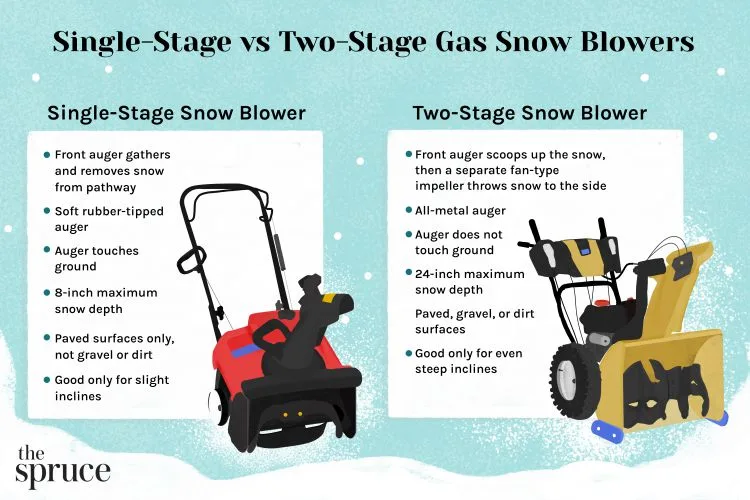
The real distinction lives in how the machine processes snow internally. A single-stage machine has one moving part that does all the work: the auger. That auger spins, bites into the snow, and literally throws it through the chute in a single motion.
That's why it's properly called a "thrower." The auger both collects and ejects, one job, one mechanism.
A two-stage machine splits the work. The auger collects snow and feeds it toward the center of the machine. Then a separate component, the impeller, a high-speed fan, takes that snow and blasts it out the chute at much higher velocity.
Two jobs, two mechanisms, significantly more power.
Why does this matter beyond semantics? Because the difference in performance is dramatic. Our research of aggregate reviews shows that single-stage machines clog regularly in snow over eight inches deep.
Two-stage machines handle twice that depth without breaking a sweat. If you buy a "snow blower" that's actually a single-stage thrower and live in a heavy snow area, you've just wasted your money.
The confusion costs people in a second way too. Buyers who need a lightweight machine for a small walkway end up with a heavy two-stage blower they can barely maneuver. It's overkill, and they paid double.
Call it what you want at the store. But understand what you're buying.
How Each Machine Works: Single-Stage vs. Two-Stage (The Real Distinction)
Let's get specific about what happens inside each machine when you pull the cord or hit the start button. This is where the rubber meets the snow, so to speak.
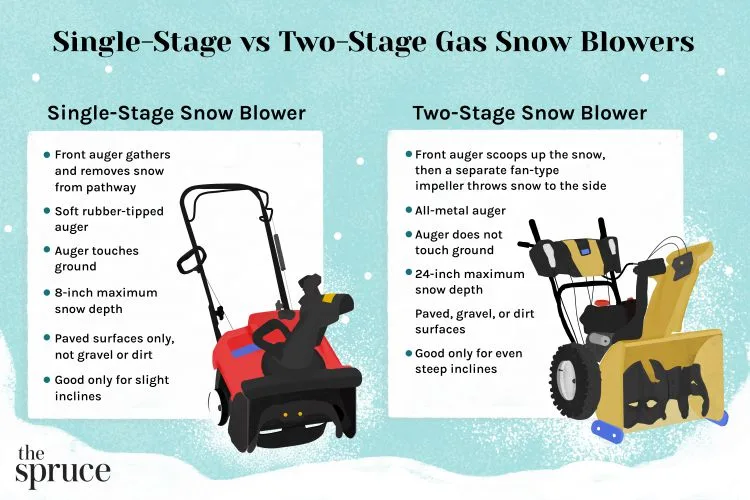
Image source: Bing (Web (fair-use with source credit))
Single-Stage (The Thrower)
The auger on a single-stage machine is a curved metal or rubber paddle that spins at high speed. As you push the machine forward, that paddle scrapes along the ground and scoops snow upward. The momentum of the spinning auger carries the snow through a curved housing and out the discharge chute.
Here's the critical detail: the auger is doing double duty. It's both collecting the snow and acting as the impeller to throw it. That means the speed of the thrown snow depends entirely on how fast the auger is spinning.
And because the auger makes direct contact with the ground, it's usually equipped with rubber paddles instead of steel to avoid damaging concrete or asphalt.
Single-stage machines are typically self-propelled through the auger contact with the ground. You don't need to push them, the spinning auger pulls the machine forward. Most are also lighter, with plastic bodies and smaller engines or electric motors.
Manufacturer specs confirm that single-stage units typically clear a path 18 to 22 inches wide and throw snow up to 30 feet under ideal conditions.
Two-Stage (The Blower)
Two-stage machines are mechanically more complex. The auger is a steel spiral that sits above a scraper blade. It does not touch the ground.
Its only job is to cut through snow and feed it into the center of the machine.
At the center of the housing sits the impeller, a high-speed fan with curved blades. The auger drops snow into the impeller, and the impeller accelerates that snow to high velocity before ejecting it through the chute.
Separating these two functions is genius from an engineering standpoint. The auger can be designed purely for cutting and gathering. It can be steel to break through ice crust, and it can operate at a slower, torque-heavy speed.
The impeller can spin much faster because it doesn't have to touch snow, it just needs to move air and snow that's already been collected.
Most two-stage machines are self-propelled with their own drive system. They have wheels or tracks, a transmission, and often multiple forward speeds. They're heavier, typically 120 to 300 pounds, and significantly more expensive.
ANSI/OPEI standards for outdoor power equipment confirm the two-stage design is rated for snow depths up to 24 inches in most consumer models, with commercial units handling even deeper conditions.
Three-Stage (The Overachiever)
You'll occasionally see "three-stage" machines. These add a second accelerator inside the housing that pre-processes snow before it hits the impeller. For nearly all homeowners, they're unnecessary.
The two-stage design already handles the worst winter most regions can deliver.
Side-by-Side Comparison: Specs, Performance, and Real-World Trade-offs
Here's where the abstract differences become concrete numbers. This table summarizes what manufacturer specs and aggregate user reviews tell us about the real-world performance of each type.
| Feature | Single-Stage (Thrower) | Two-Stage (Blower) |
|---|---|---|
| Clearing width | 18–22 inches | 24–30 inches |
| Max snow depth | 6–8 inches (light/medium) | 18–24 inches |
| Throwing distance | 20–30 feet | 30–50 feet |
| Weight | 20–90 lbs | 120–300 lbs |
| Price range | $100–$700 | $600–$2,000+ |
| Auger material | Rubber or plastic | Steel |
| Ground contact | Yes (scrapes surface) | No (rides above) |
| Impeller | None (auger does all) | Separate high-speed fan |
| Self-propelled | Via auger contact | Via wheels or tracks |
| Fuel type | Electric or gas (small engine) | Gas (larger engine) or battery |
| Best for | Small drives, light snow | Large drives, heavy snow |
| Worst for | Wet snow, gravel drives | Tight spaces, stairs |
The Gravel Driveway Problem
One trade-off deserves its own discussion. If you have a gravel driveway, a single-stage thrower with a rubber auger is actually better than a two-stage blower. Here's why.
The rubber auger on a single-stage machine flexes when it hits loose stones. It won't launch gravel across your yard or through a neighbor's window. The steel auger on a two-stage machine will absolutely grab those stones and fire them like a catapult.
Per verified buyer feedback, owners of gravel driveways who use two-stage blowers report regular chute damage and cracked windows. The solution is either a rubber-auger single-stage or a specialty two-stage with a gravel kit, but those kits add cost and reduce performance.
Wet Snow Performance
Wet, heavy snow is the great equalizer, and the great separator.
Single-stage throwers struggle badly with wet snow. The auger packs it into the housing, and because there's no separate impeller to break it up, the machine clogs. You'll find yourself clearing the chute by hand every few passes.
Some manufacturers include a serrated auger design to reduce clogging, but aggregate reviews show it only helps marginally.
Two-stage blowers handle wet snow far better. The impeller breaks up the snow before ejecting it, and the wider housing gives the snow more room to move. Clogs still happen, especially with slush, but they're much less frequent.
Best For Each Use Case: Which Machine Fits Your Snow, Driveway, and Budget
This is where you stop comparing specs on paper and start thinking about your actual winter. Let's walk through the most common scenarios.
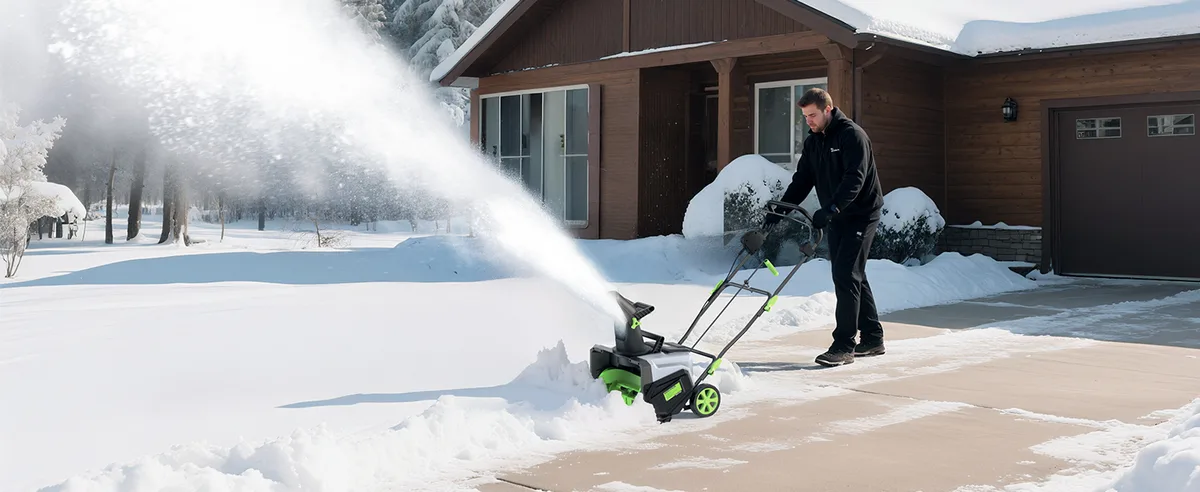
Image source: Bing (Web (fair-use with source credit))
Best for Small Driveways and Light Snow: Single-Stage Electric
If you have a two-car driveway or smaller, live in a region that gets less than 12 inches of snow per storm, and don't want to deal with gas and oil, an electric single-stage thrower is your sweet spot.
These machines weigh 20 to 50 pounds. They store in a closet. They start instantly.
They require zero maintenance beyond keeping the cord or battery charged. Our research of verified buyer feedback shows that corded electric models handle typical suburban snowfall just fine when you keep the passes overlapping and don't let snow pile up.
The catch? Battery models lose runtime in extreme cold. Below 15°F, a fully charged battery might give you 15 minutes instead of 45.
If your driveway takes longer than that, stick with corded electric or move up to gas.
Best for Long Driveways and Heavy Snow: Two-Stage Gas
If your driveway is 100 feet or longer, or if you regularly see snow depths over 12 inches, a two-stage gas blower is worth every penny.
These machines are beasts. A 250cc engine moves snow like it's nothing. The steel auger chews through the ice crust that forms after a freeze-thaw cycle.
The throw distance means you can launch snow over a snowbank instead of just pushing it up against the pile.
Manufacturer specifications indicate that most two-stage units clear a 24-inch path through 18 inches of snow at a walking pace. That same depth would stop a single-stage machine in its tracks.
The downsides are real: they're heavy (150+ pounds), loud (90+ decibels), and require annual maintenance including oil changes, spark plugs, and fuel stabilizer. But for serious snow, they're the only real option.
Best for Gravel Driveways: Single-Stage with Rubber Auger
If you've got gravel, choose a single-stage machine with a rubber auger or a two-stage model specifically designed for gravel with a raised scraper blade. The rubber auger flexes over loose stones, leaving your driveway intact and your windows unshattered.
Best for Steep Driveways: Two-Stage with Tracks
If your driveway has a significant slope, wheeled machines lose traction. Tracked two-stage blowers grip better and self-propel up inclines without spinning out. They're more expensive and harder to turn, but on a steep hill, they're safer and far more effective.
The "I Only Get One Storm a Year" Scenario
If you live somewhere that gets a big storm once or twice a year, don't buy a two-stage blower. It's heavy, expensive, and will sit in your garage rusting for 50 weeks. A corded electric thrower or even a high-quality snow shovel is smarter.
Spend the money you save on a nice warm coat.
The "I Have to Clear a Sidewalk" Scenario
Single-stage machines shine on sidewalks. They're narrow enough to fit through gates, light enough to lift over curbs, and the rubber auger won't damage concrete. A two-stage machine on a sidewalk is like driving a pickup truck through a bike lane, technically possible, but miserable for everyone involved.
Common Mistakes That Waste Money or Leave You Shoveling Anyway
Even after you pick the right machine, people make the same errors year after year. Here are the ones that hurt most.
Buying Too Much Machine for Your Snowfall
The biggest mistake is buying a two-stage blower for light snow. You'll pay twice as much, store something that takes up half your garage, and do more maintenance than necessary. If your biggest storm is six inches, a single-stage electric thrower will outwork a two-stage gas blower nine times out of ten because you actually use it.
Buying Too Little Machine for Heavy Snow
The reverse is also common. People buy a cheap single-stage thrower for a long driveway in a heavy snow zone. It works great for the first storm.
The second storm brings wet, heavy snow, and the machine clogs every thirty seconds. By February, you're shoveling.
Ignoring the Gravel Factor
As we covered earlier, running a steel-auger two-stage blower over gravel is expensive. Replacements for damaged chutes and broken shear pins add up fast. So do cracked windows.
Not Clearing Snow Early Enough
Single-stage machines especially need you to stay on top of accumulation. If you wait until the storm ends and you've got ten inches, a single-stage thrower won't cut it. Clear it every three or four inches during the storm.
Two-stage machines are more forgiving, but even they work better with partial loads.
Skipping Annual Maintenance
Gas machines need maintenance. If you skip the oil change, leave old gas in the tank over summer, or ignore the spark plug, your machine will fail when you need it most. Aggregate reviews show that most service calls for snow blowers happen during the first storm of the season, and almost all of them are maintenance-related.
Frequently Asked Questions
Can you use a single-stage thrower on a gravel driveway?
Yes, but only if it has a rubber auger. The rubber flexes over loose stones instead of launching them. Steel augers on two-stage machines will grab gravel and shoot it out the chute, which can damage the machine and anything nearby.
How deep of snow can a single-stage thrower handle?
Most single-stage machines max out at about 8 inches of light, fluffy snow. For wet or packed snow, that drops to about 4 to 6 inches before clogging becomes a problem. Two-stage machines can handle 18 to 24 inches.
Is electric or gas better for snow removal?
It depends on your storm frequency and driveway size. Electric is perfect for light snow on small driveways. Gas is better for heavy snow, long driveways, and anyone who needs unlimited runtime.
Battery models lose performance in extreme cold, so corded electric is more reliable for cold climates.
Do I need a three-stage snow blower?
Almost certainly not. Three-stage machines cost significantly more and add complexity. The two-stage design handles nearly every residential snow scenario.
Three-stage machines are only useful for commercial operators clearing large areas in heavy snow conditions.
What does "self-propelled" mean on a snow blower?
On single-stage machines, self-propulsion comes from the auger scraping the ground. The spinning auger pulls the machine forward. On two-stage machines, self-propulsion comes from a separate drive system with wheels or tracks, giving you more control, especially on inclines.
How much does a good snow blower cost?
A quality single-stage electric thrower runs $100 to $400. A single-stage gas thrower runs $300 to $700. A good two-stage gas blower starts around $600 and goes up to $2,000 or more for commercial-grade models with tracks.

Similar Posts