Sleeper Sofa Vs Sofa Bed
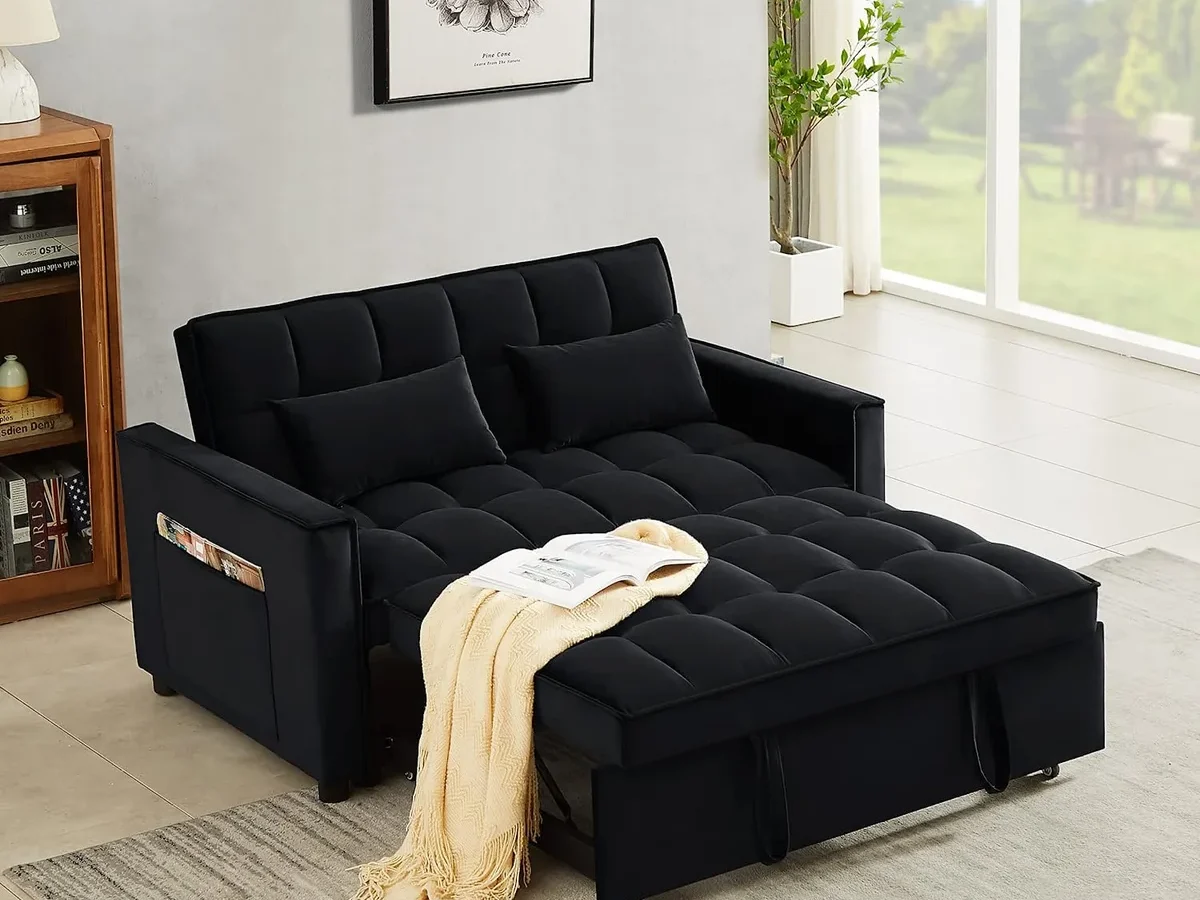
You've been shopping for a sofa that pulls double duty, and now you're staring at product descriptions that use "sleeper sofa" and "sofa bed" like they mean the same thing. They don't. And if you pick the wrong one, you'll end up with a couch that's uncomfortable to sit on and a bed that's even worse to sleep on.
The real difference comes down to the mechanism inside. A traditional sleeper sofa uses a metal frame that folds out from under the seat cushions. A sofa bed, in modern furniture terminology, typically uses a click-clack mechanism where the backrest drops flat.
As of 2026, about 60 percent of convertible sofas sold in the US are pull-out sleepers, but the click-clack category is growing fast because it's lighter and simpler. Let's break down exactly what sets them apart so you can match the right one to your space and your habits.
Quick Answer
A sleeper sofa hides a pull-out metal frame and mattress inside the seat. A sofa bed uses a fold-down backrest that becomes the sleeping surface. Sleeper sofas sleep better but sit worse.
Sofa beds sit better but sleep worse. Your choice depends on whether daily sitting comfort or occasional guest sleeping matters more.
Why This Comparison Matters (and Why Most People Get It Wrong)
The furniture industry doesn't help. Manufacturers use "sleeper sofa" and "sofa bed" interchangeably on product tags, and salespeople often treat them as synonyms. But inside the frame, they are completely different machines.
Pick the wrong one and you're living with the consequences for five to ten years.
Here is the core problem most buyers miss. A pull-out sleeper requires a thick mattress to be comfortable for sleeping. That mattress has to fold in half or roll up to fit inside the seat cavity.
That folding point creates a ridge under the seat cushions that you feel every time you sit down. Sofa beds avoid that problem because the seat cushions stay flat. But the sleeping surface on a sofa bed is thinner and often sits directly on a slatted frame or metal bars.
Our research across verified buyer reviews and manufacturer specs reveals a clear pattern. People who buy a sleeper sofa for daily seating end up complaining about a hard ridge in the middle of the couch within six months. People who buy a sofa bed for weekly guest use frequently report back pain after the second or third sleepover.
The mismatch between how you plan to use it and what the mechanism is built for is the single biggest source of buyer's remorse.
The solution is to match the mechanism to your primary use case. That means understanding exactly how each one works, what it feels like to sit and sleep on, and how it holds up over time.
The Two Main Types: Pull-Out Sleeper vs Click-Clack Sofa Bed
Let's look at the hardware. There are really three common mechanisms on the market, but the two you'll see most often are the pull-out sleeper and the click-clack sofa bed. The futon-style frame is a distant third, mostly in budget furniture and dorm rooms.
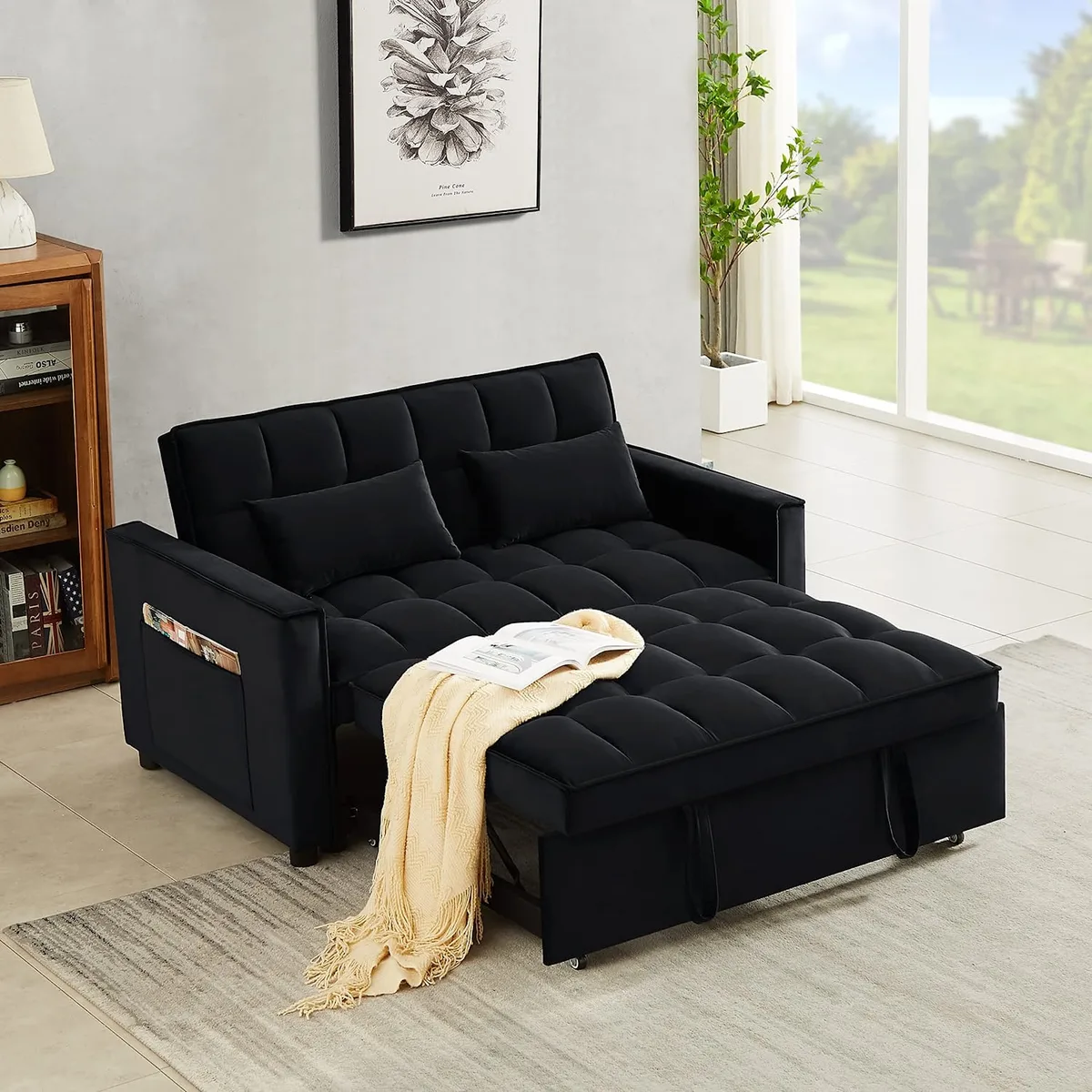
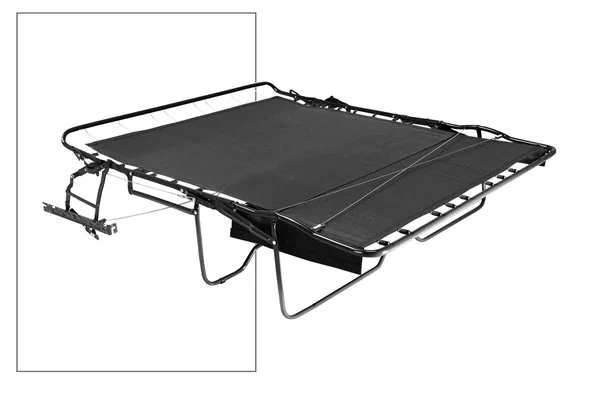
How a Pull-Out Sleeper Works
A pull-out sleeper has a metal frame that slides out from inside the sofa body. You lift the seat cushions, grab a handle or strap, and pull forward. The frame unfolds, legs drop down, and a mattress unfolds on top of the metal grid.
The mattress in a standard pull-out is typically four and a half to six inches thick. Budget models use thin polyfoam that compresses quickly. Mid-range and premium models use memory foam, gel-infused foam, or innerspring coils.
The mattress folds in a Z-shape or a bi-fold pattern, which means there is a crease point in the middle third of the bed.
The metal frame is the weak link here. Older designs have a center bar that runs across the middle of the bed, creating a hard ridge under the mattress. Newer "no-bar" designs use a flat grid or mesh system that eliminates that pressure point.
If you are shopping for a pull-out sleeper, the no-bar frame is worth paying extra for.
How a Click-Clack Sofa Bed Works
A click-clack mechanism is simpler. The backrest of the sofa is hinged. You pull the backrest forward, it clicks into a flat position, and now you have a continuous surface from the seat to the backrest.
The name comes from the sound the locking mechanism makes when it engages.
The biggest advantage of this design is that the seat cushions stay in place. There is no thick mattress folded inside the seat cavity. That means the sitting surface is identical to a regular sofa.
No ridge, no hard bar, no lumpy middle section.
The trade-off is the sleeping surface. The mattress is usually the same foam that makes up the seat and back cushions, just laid flat. That foam is typically one and a half to three inches thick.
Some models include a separate thin mattress or topper that folds out, but it is rarely as thick or supportive as a dedicated sleeper mattress.
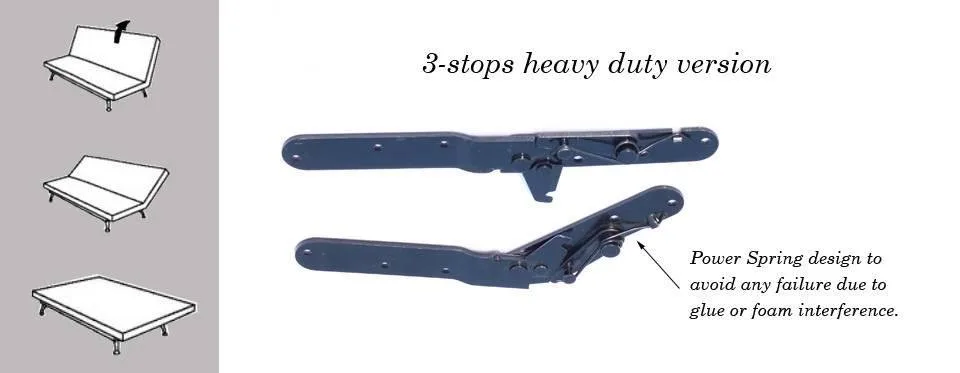
The Third Option: Futon-Style Sofa Beds
Futon frames are the simplest and cheapest. The backrest folds flat onto the same plane as the seat. The mattress is one continuous piece, usually four to six inches thick, and it moves with the frame.
Futons sit differently than regular sofas because the backrest is thinner and the angle is less supportive.
Futons make sense for occasional use in spaces like guest rooms, finished basements, or college apartments. They are not ideal for daily living room seating because the backrest lacks the foam density of a proper sofa. But for a spare room where someone sleeps two nights a month, they are perfectly adequate and cost significantly less.
Side-by-Side Comparison: Comfort, Durability, and Everyday Use
Let's put these side by side on the factors that actually matter in daily life.
Daily Sitting Comfort
The click-clack sofa bed wins here by a wide margin. Because the seat cushions are full-depth foam without a folded mattress underneath, they feel like a normal couch. You can sit on it for hours watching movies or working from your laptop without feeling a ridge or a hard bar.
Pull-out sleepers vary wildly. Premium models with no-bar frames and high-density foam seat cushions can feel fine for daily use. Budget models with cheap polyfoam and a center bar frame develop a noticeable ridge within weeks.
If you plan to sit on this couch every day, a click-clack or a no-bar pull-out is your only real option.
Sleeping Comfort
The pull-out sleeper wins for sleeping. Even a mid-range pull-out mattress at five to six inches thick provides significantly more support than a click-clack's three-inch foam layer. Memory foam pull-out mattresses, especially gel-infused options, sleep cooler and conform better to body shape.
Click-clack sleeping surfaces are firm and thin. Some people find them acceptable for a night or two. Others wake up with shoulder or hip pain because the foam compresses fully against the slatted frame underneath.
The exception is click-clack models that include a separate fold-out mattress or a thick topper with a dedicated hinge mechanism.
Ease of Setup
The click-clack is faster. You pull the backrest forward, it clicks flat, done. Total time is about ten seconds.
Pull-out sleepers take longer because you have to lift the cushions, pull the frame, unfold the legs, and smooth out the mattress. Thirty to sixty seconds, depending on how stiff the mechanism is.
Packing up is the reverse. The click-clack clicks back up instantly. The pull-out sleeper requires folding the mattress back into the Z-shape, tucking the legs in, and pushing the frame back into the body.
It gets easier with practice, but it never feels quick.
Durability Over Time
Both mechanisms wear out, but differently. Pull-out sleepers develop problems with the metal frame over time. The hinges loosen, the legs start to wobble, and the mattress sags at the fold point.
After about five to seven years of regular weekly use, the mechanism needs replacement or the whole sofa has to go.
Click-clack mechanisms fail at the locking hinge. The plastic or metal latch that holds the backrest in the flat position can strip or break. Once that happens, the backrest won't stay in bed mode.
That failure usually occurs after three to five years of regular use, depending on the quality of the hinge.
Here is the summary in table form.
| Factor | Pull-Out Sleeper | Click-Clack Sofa Bed |
|---|---|---|
| Daily sitting comfort | Moderate to good (varies by frame) | Excellent (feels like a regular sofa) |
| Sleeping comfort | Good to very good (thicker mattress) | Fair (thin foam, firm surface) |
| Setup time | 30 to 60 seconds | 5 to 10 seconds |
| Durability | 5 to 7 years with regular use | 3 to 5 years before hinge issues |
| Weight | Heavier, harder to move | Lighter, easier to reposition |
| Price range | $600 to $2,500 | $400 to $1,500 |
Best For Each Use Case: Who Should Buy Which
Your personal situation determines the right choice. Here is how to match the mechanism to your life.
When a Pull-Out Sleeper Makes Sense
Buy a pull-out sleeper if guests sleep over more than twice a month. The thicker mattress makes a real difference for anyone who stays more than one night. Your guests will sleep better, and they will not wake up with sore hips or shoulders.
A pull-out also makes sense if you have frequent overnight visitors who stay for multiple nights. A family reunion, holiday guests, or a rotating set of friends who crash on your couch all benefit from the thicker sleeping surface.
Buy a pull-out sleeper if you are willing to trade some sitting comfort for better sleeping comfort. That trade is worth making if the sofa lives in a dedicated guest room or a home office that doubles as a spare bedroom. Nobody sits in that room for eight hours a day, so a slightly firmer seat ridge is barely noticeable.
When a Click-Clack Sofa Bed Wins
Buy a click-clack sofa bed if your sofa sits in a living room or family room where people spend hours every day. The flat seat cushions without a ridge underneath make a huge difference for daily comfort. You will never feel that hard bar or lumpy foam beneath the cushions.
A click-clack is also the right choice if you rarely have overnight guests. If someone crashes on your couch once every three months, the thin sleeping surface is fine for one night. They will survive.
And you get a normal-feeling sofa for the other 364 days of the year.
Buy a click-clack if you need a lightweight piece of furniture. Pull-out sleepers are heavy because of the metal frame and mattress. If you live in an apartment with stairs, or if you move frequently, the lighter click-clack mechanism makes a real difference for setup and transport.
When You Should Look at Something Else Entirely
Some situations do not work well with either option. If you have a very small space, consider a daybed with a trundle instead. Daybeds pull out a separate bed underneath without compromising the seating surface above.
They skip the mechanism problem entirely.
If you want a premium sleeping experience every single night, consider a Murphy bed cabinet or a wall bed. These fold up into a cabinet when not in use and provide a real mattress with a box spring. They cost more and require wall mounting, but they sit and sleep better than any convertible sofa.
If budget is your only concern and comfort does not matter much, a basic futon frame serves the purpose. Futons cost $200 to $500 and handle occasional use without complaint. Just know that the backrest will never feel like a real sofa cushion.
Common Mistakes That Lead to a Regret Purchase
The biggest mistake is buying a sleeper sofa for a living room you use every day. The folded mattress creates a hard ridge under the seat cushions. You will feel it within weeks.
If you plan to sit on this sofa daily, choose a click-clack model instead.
The second mistake is buying a sofa bed for a guest room where people sleep more than twice a month. The thin foam surface causes pressure points on hips and shoulders. Your guests will not tell you, but they will wake up sore.
Choose a pull-out sleeper with a memory foam mattress.
The third mistake is ignoring the weight of the unit. A queen-size pull-out sleeper can weigh 200 to 300 pounds. Moving it up stairs, through narrow doorways, or around tight corners is a real challenge.
Measure your hallways and stairwells before you buy.
The fourth mistake is forgetting to measure for the open bed. A pull-out sleeper needs three to four feet of clearance in front of the sofa to fully extend. A click-clack needs about two feet.
If your room is small, measure the bed footprint first.
The fifth mistake is assuming all mattresses are the same. A pull-out mattress from a budget brand compresses to two inches under body weight. A premium mattress from a manufacturer that specializes in sleepers holds its shape at five to six inches.
Check the mattress composition and thickness before you buy.
Maintenance and Long-Term Care: Making Your Choice Last
Rotate the mattress on a pull-out sleeper every three months. This evens out the wear at the fold point. Flip it if the manufacturer allows it.
Some foam mattresses are one-sided and cannot be flipped.
Lubricate the metal mechanism on a pull-out sleeper once a year. Use a silicone spray on the hinges and sliding rails. Do not use oil.
Oil attracts dust and gum up the mechanism over time.
Tighten the screws and bolts on a click-clack mechanism every six months. The hinge plates loosen with repeated folding. A loose hinge wears out faster and can strip the locking latch.
Clean the fabric according to the manufacturer tag. Most sleeper sofa fabrics are polyester blends that handle spot cleaning with mild soap and water. Avoid soaking the foam underneath.
Wet foam takes days to dry and can develop mildew.
Replace the mattress on a pull-out sleeper when it shows permanent sagging at the fold point. Most replacement mattresses cost $100 to $300 and extend the life of the sofa by another five years. Measure the frame cavity before ordering a replacement.
Frequently Asked Questions
Can I replace the mattress on a pull-out sleeper?
Yes. Replacement mattresses are widely available in standard sizes like twin, full, and queen. Measure the frame cavity width and length before ordering.
Look for memory foam or gel-infused options. Budget around $100 to $300 for a quality replacement.
Are click-clack sofa beds comfortable for sleeping?
They are acceptable for one or two nights. The foam is typically one and a half to three inches thick. That is thinner than a standard mattress.
Hip and shoulder pressure are common. Some models include a separate topper that improves comfort.
How much space do I need in front of a sleeper sofa?
A pull-out sleeper needs three to four feet of clearance to fully extend. A click-clack sofa bed needs about two feet. Measure the open bed length and add two feet for walking space.
Write those numbers down before you shop.
Which one is better for daily sitting?
The click-clack sofa bed is better for daily sitting. The seat cushions are full-depth foam with no folded mattress underneath. Pull-out sleepers develop a ridge at the fold point that you feel every time you sit down.
Do sleeper sofas hold up over time?
A quality pull-out sleeper lasts five to seven years with regular use. The mechanism wears out before the frame or fabric does. Click-clack mechanisms typically last three to five years before the hinge latch fails.
Futon frames last longer but the cushion foam compresses sooner.

Similar Posts