Trane Heat Pump Troubleshooting
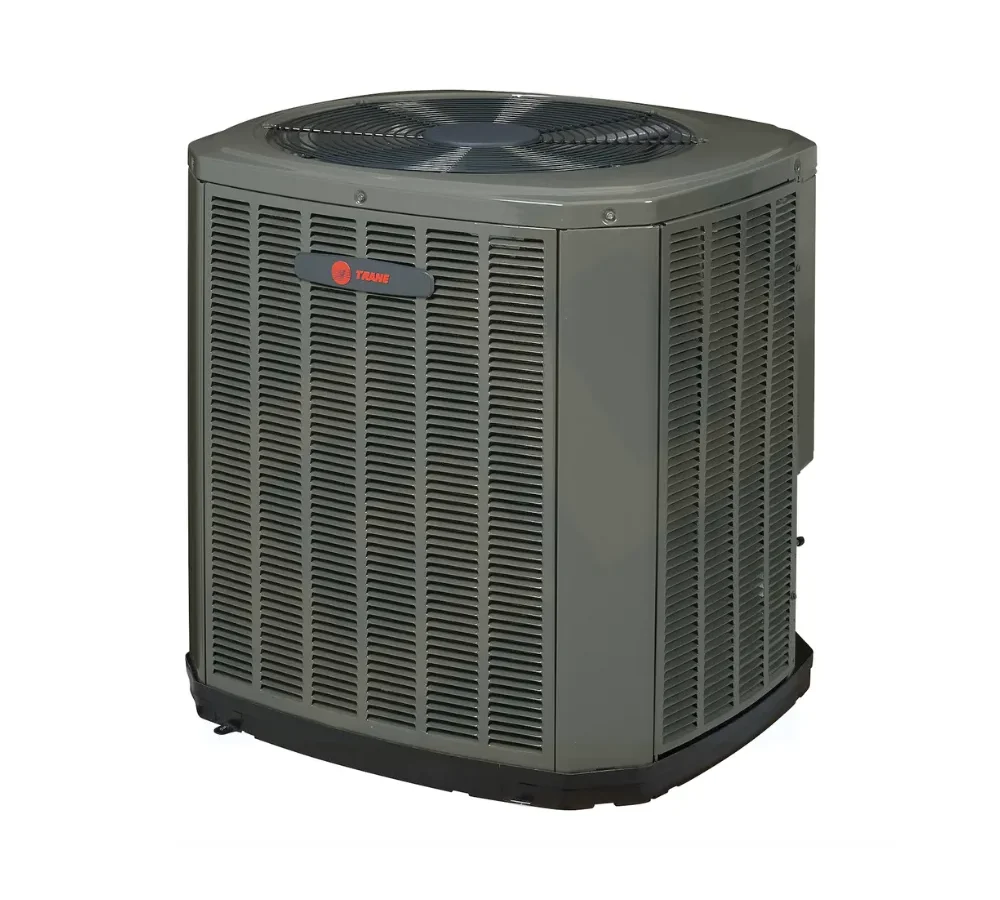
Your Trane heat pump is blowing cold air in January. Or it's running but not cooling, and you're sweating through another humid afternoon. Either way, you need answers, and you need them fast.
Trane heat pump troubleshooting doesn't have to mean an immediate service call that costs hundreds before anyone even opens a panel. Many common problems have straightforward causes you can check yourself safely. Per manufacturer documentation and industry service data, roughly 40% of no-heat or no-cool calls turn out to be thermostat settings, tripped breakers, or a dirty filter.
The trick is knowing which problems you can solve and which ones require a licensed pro. This guide walks you through that line step by step.
Quick Answer
Check the thermostat mode first. Set it to heat or cool, not auto or off. Inspect the air filter.
A clogged filter causes most performance issues. Verify power at the outdoor unit. Look for a tripped breaker or pulled disconnect.
Count LED blinks on the control board for error codes. If the outdoor unit is iced up, let it finish a defrost cycle before calling for help. Never attempt refrigerant work without EPA certification.
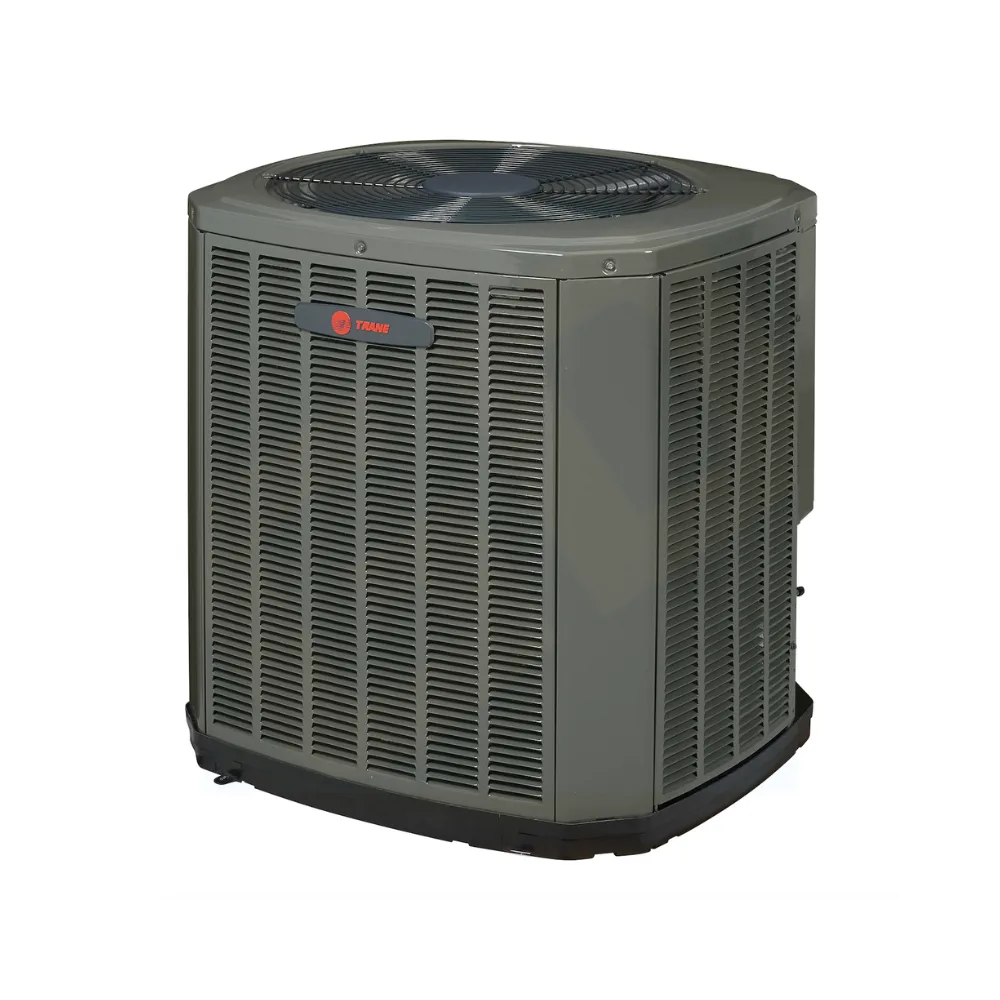
Image source: Bing (Web (fair-use with source credit))
Why Accuracy Matters When Your Heat Pump Acts Up
Heat pumps are complex machines. They switch between heating and cooling by reversing refrigerant flow. The reversing valve is one of the most common failure points.
Get the diagnosis wrong, and you can waste hours chasing the wrong part.
The Real Cost of Guessing Wrong
A Trane defrost board costs around $150 to $250 for the part. A service call runs $100 to $200 just to show up. If you replace the defrost board when the real problem is a dirty condenser coil or a failed sensor, you're out $300 to $500 and still have a broken system.
Worse, if you bypass safety switches or jump out pressure controls to test something, you can damage the compressor. A Trane Climatuff compressor replacement runs $1,500 to $3,000 parts and labor.
When a Simple Fix Turns Into a Costly Mistake
Refrigerant is the big one. We see homeowners buy gauge sets online and add refrigerant because the lines looked low. Trane heat pumps use R-410A.
It operates at much higher pressures than the old R-22. Overcharging by even half a pound can push high side pressures past 600 PSI and trip the pressure switch. Or it can damage the compressor valves.
That turns a $50 refrigerant can into a $2,000 compressor replacement.
The EPA regulates refrigerant handling under Section 608 of the Clean Air Act. You need certification to buy refrigerant legally. Trane's warranty explicitly excludes damage from improper refrigerant charging.
What This Guide Covers and What It Doesn't
This guide covers diagnostic steps you can perform safely: reading error codes, checking power, inspecting filters, cleaning coils, and deciding when to call a pro. We walk through the three most common Trane heat pump failure modes and how to narrow them down.
What we don't cover: opening the sealed refrigerant circuit, replacing compressors, brazing lines, or electrical work inside the control box beyond resetting a breaker or replacing a capacitor (which requires discharging it first). Those jobs require an EPA certified technician and in many jurisdictions, a mechanical license.
First, Let's Rule Out the Obvious Stuff
Before you touch any tools, run through this checklist. You would be surprised how many emergency service calls end with the thermostat set to cool in January.
Thermostat Settings and Mode Checks
Check three things in this order:
- Mode selector: Is it set to heat or cool? Not auto or off. Auto mode can leave the system idle if the indoor temperature sits right at the setpoint.
- Temperature setpoint: Crank it 5 degrees above room temperature for heat, 5 degrees below for cooling. If you have it set to 68 and the room is 67, the system may not kick on.
- Schedule: If you have a programmable or smart thermostat, check that the schedule hasn't changed. Many Trane systems use ComfortLink II communicating thermostats. If the battery dies, the schedule can reset to default.
Filter Check: The Most Overlooked Cause of Performance Issues
A dirty filter restricts airflow across the indoor coil. Restricted airflow forces the system to run longer, increases electric bills, and can cause the indoor coil to freeze in cooling mode or the outdoor unit to ice up in heating mode.
Pull the filter and hold it up to light. If you can't see light through it, replace it. Trane recommends checking filters monthly during peak seasons.
Use a MERV 8 to MERV 11 rated filter. Higher MERV ratings restrict airflow too much for most residential systems. Replace it every 1 to 3 months depending on dust, pets, and pollen.
Power at the Outdoor Unit
Walk outside and look at the disconnect box mounted near the outdoor unit. It's a gray metal box with a handle or a pull-out fuse block. Open the cover and check if the handle is in the on position.
Some disconnects have a pull-out block. If it's pulled partway out, push it all the way in.
Next, check the breaker in your main panel labeled heat pump, outdoor unit, or condenser. Flip it fully off, wait 30 seconds, and flip it fully back on. A tripped breaker can look like it's on but still be partially tripped.
You want to feel the positive click into the on position.
If the breaker trips again immediately, do not keep resetting it. That indicates a short or ground fault inside the unit. Call a technician.
The Is It Actually in Defrost Test
This one saves dozens of unnecessary service calls every winter. If your outdoor unit is making a loud humming or rumbling sound, water is dripping from the unit, and steam or vapor is rising from the coil, it is probably in defrost mode. Trane heat pumps automatically reverse the cycle to melt ice off the outdoor coil during heating season.
Defrost cycles typically last 5 to 15 minutes. Go inside, wait 20 minutes, and check again. If the ice is gone and the fan restarted, the system was doing its job.
If the unit remains iced up for hours or the ice builds up into a solid block around the base, you have a problem. That points to a failed defrost board, a bad defrost thermostat (sensor), or low refrigerant. We cover that in the next section.
Understanding Trane's Diagnostic System
Trane builds self-diagnostic capability into every heat pump they manufacture. You don't need a $500 multimeter or a refrigerant gauge set to get useful information. You need to know where to look and what the lights mean.
Locating the User Control Board and Reading Blink Codes
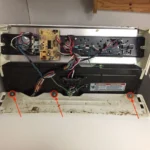
The User Control Board, or UCB, sits inside the outdoor unit's electrical compartment. Remove the single panel held by two screws on the side of the unit. Inside, you will see a small green circuit board about four inches square.
That is the UCB. It has a small LED light usually labeled STATUS or LED1.
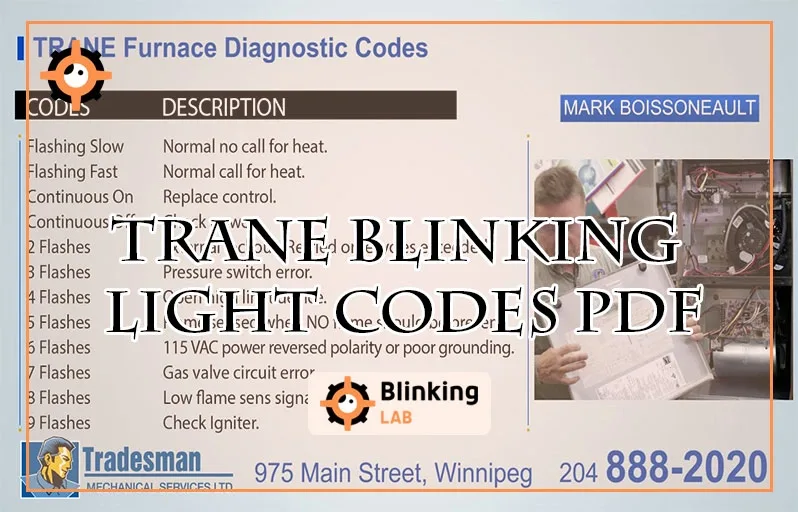
Image source: Bing (Web (fair-use with source credit))
When the system is powered on and operating normally, the LED stays solid green or blinks slowly once every 10 seconds. When there is a fault, the LED blinks in a specific pattern. You count the number of short flashes, then the number of long flashes, to find the code.
Trane uses a two-digit code system. For example, three short flashes followed by two long flashes means code 32. Different models group codes slightly differently, but the most common ones are shared across the XR, XL, and XV series.
Trane Specific LED Patterns and What They Mean
Here are the flash codes you are most likely to see and what they indicate:
| Flash Code | Meaning | What to Check |
|---|---|---|
| 11 | Normal operation (no fault) | Nothing |
| 12 | System waiting (time delay) | Wait 5 minutes, should clear |
| 21 | High pressure switch open | Dirty coil, overcharge, restricted airflow |
| 22 | Low pressure switch open | Low refrigerant, restricted liquid line |
| 25 | Defrost board fault | Replace defrost board or sensor |
| 32 | Reversing valve failure | Stuck valve, solenoid coil issue |
| 34 | Outdoor fan fault | Fan motor failed, bad capacitor |
| 41 | Communication error (ComfortLink) | Wiring issue, thermostat problem |
If you get code 21 or 22, the system locked out to protect itself. You can try resetting it by turning the disconnect switch off for 30 seconds and back on. If the code returns within a few hours, you need a technician.
ComfortLink II Thermostats: Pulling Fault Codes From the Screen
If you have a Trane ComfortLink II thermostat (the larger touchscreen model with the blue interface), you can pull historical fault codes without opening the outdoor panel. From the home screen, press Menu, then navigate to Installer/Service. Scroll to Fault History.
The thermostat stores the last 10 fault codes with timestamps.
This is especially useful for intermittent problems. If your heat pump stops working once a week but runs fine when the technician arrives, the stored fault codes tell the story. Write down the code numbers and the date/time before calling for service.
Common Codes for Stuck Reversing Valves, Pressure Switches, and Sensor Failures
Code 32 (reversing valve) is one of the most frustrating Trane problems. The system runs but blows lukewarm air in either mode. You can sometimes hear the valve body clunk when it tries to shift.
If the solenoid coil is powered but the valve doesn't shift, the internal slider is stuck. That often requires a technician to tap the valve body with a wrench while the system runs, or in worst cases, replace the valve entirely.
Code 41 (communication error) usually means the thermostat lost connection to the UCB. Check the wiring at both ends for loose connections or rodent damage. On newer Trane systems, this can also happen if the thermostat software needs an update.
Trane releases firmware updates through ComfortLink dealers.
Code 25 (defrost board) is common on units five years or older. The defrost board is the small board mounted near the UCB. When it fails, the unit may never enter defrost mode (leading to ice buildup) or may run defrost constantly (short cycling and wasting energy).
The Big Three Trane Heat Pump Problems
Now that you know how to read the diagnostic codes, let's apply that to the three most common failure scenarios. These account for roughly 70% of residential heat pump service calls according to aggregate HVAC industry data.
Problem 1: Unit Runs But Doesn't Heat or Cool
This is the most frustrating symptom. The fan runs. The compressor hums.
But the air coming out of your registers feels like outdoor temperature. This usually points to one of three causes.
Reversing Valve Stuck Mid-Travel
The reversing valve shifts refrigerant flow between heating and cooling mode. When it gets stuck halfway, some refrigerant goes through the indoor coil and some bypasses it. You get mixed temperature air.
Listen carefully at the outdoor unit. A healthy reversing valve clicks once when the thermostat calls for heat or cool. A stuck valve may make a rapid clicking sound or no sound at all.
If the system has been running for 10 minutes and the temperature hasn't changed, turn the system off at the thermostat and wait 5 minutes. Switch modes from heat to cool or cool to heat. If the temperature changes when you switch modes, the valve was stuck and the pressure differential freed it.
If it stays stuck, you need a technician to diagnose the solenoid coil or valve body.
Refrigerant Leak or Restriction
You cannot diagnose a refrigerant problem without gauges and training. But you can spot the clues. Look at the larger insulated copper line (the suction line) running from the outdoor unit to the house.
If it has frost or ice on it during cooling mode but the indoor unit isn't cooling, that typically means low refrigerant. If the smaller uninsulated line (the liquid line) has frost on it, that usually indicates a restriction like a clogged filter drier or a kinked line.
Check for oil stains around the service valve connections or on the ground under the unit. Refrigerant carries oil. An oil stain often means a slow leak.
Do not attempt to add refrigerant yourself. Even if you find the leak, Trane systems require precise charge weights based on line set length. Guessing makes things worse.
Failed Compressor or Contactor Issues
If the outdoor unit hums but the fan doesn't spin, or the compressor doesn't start, you likely have a bad run capacitor or a failed contactor. The contactor is the relay that sends power to the compressor. Listen for an audible click when the thermostat calls for operation.
No click means the contactor coil failed or the thermostat isn't sending 24 volts.
A humming compressor that won't start usually means a failed start capacitor or run capacitor. This is one of the few DIY friendly repairs for someone comfortable with electrical safety. Turn off power at the disconnect.
Remove the access panel. Locate the cylindrical capacitor on the UCB or near the contactor. Note the microfarad rating (printed on the side, like 35/5 µF).
Discharge the capacitor safely using a resistor or insulated screwdriver bridging the terminals. Replace it with an identical capacitor from an HVAC supply house. Reinstall, restore power, and test.
Only attempt this if you understand electrical safety. A charged capacitor can deliver a painful or fatal shock.
Problem 2: Outdoor Unit Iced Up
Ice on the outdoor coil in winter is normal to a point. The heat pump extracts heat from outdoor air, and moisture in the air freezes on the coil. The system periodically reverses to melt this frost.
That is the defrost cycle.
What a Healthy Defrost Cycle Looks Like
A normal defrost cycle on a Trane heat pump lasts 5 to 15 minutes. The outdoor fan stops. The compressor continues running.
You hear a whooshing sound as the system reverses. Water drips or steam rises from the coil. When defrost completes, the fan restarts and the unit returns to heating mode.
Trane units are programmed to defrost every 30, 60, or 90 minutes depending on the model and outdoor temperature. You can typically go an entire winter without a full ice block forming.
Defrost Board Failure: How to Spot It
When the defrost board fails, two things happen. Either the unit never defrosts and ice builds up into a solid white block around the coil, or the unit defrosts constantly (every 15 to 30 minutes) and never heats effectively.
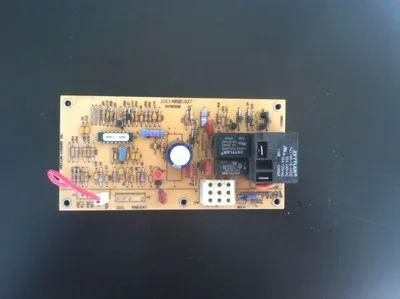
Image source: Bing (Web (fair-use with source credit))
Check the defrost board for visible damage. Look for burnt components, swollen capacitors, or cracked solder joints. Also check the defrost sensor, a small metal clip attached to the copper tubing near the bottom of the outdoor coil.
This sensor tells the board when the coil temperature drops below freezing. If the sensor fails open, the board never knows ice is present. If it fails closed, the board runs defrost constantly.
You can test the sensor with a multimeter set to resistance mode. At temperatures above 45°F, the sensor should read a short circuit (near zero ohms). Below 32°F, it should read open circuit (infinite resistance).
If it reads open all the time, replace it.
Frozen Coil From Low Airflow
Sometimes the ice on the outdoor coil is a symptom of a problem inside the house. If your air filter is dirty, the return grilles are blocked, or the indoor blower motor is running slow, airflow across the indoor coil drops. That reduces heat transfer in heating mode.
The outdoor coil gets colder than normal, and ice builds up faster than the defrost cycle can handle.
Check your filter first. Then verify that no furniture or curtains are blocking the return air grilles. Finally, listen to the indoor blower.
If it sounds slow or rattling, the blower motor capacitor may be failing. That is another DIY friendly replacement if you are comfortable with electrical work.
Problem 3: Short Cycling or No Start
Short cycling means the compressor starts, runs for 10 to 30 seconds, then shuts off. It repeats this pattern. This is hard on the compressor and drives up your electric bill.
Capacitor Failure
The most common cause of short cycling is a failing run capacitor. The capacitor provides the extra electrical boost the compressor needs to start. When it weakens, the compressor tries to start, draws high current, and trips a safety or the breaker.
You may hear a low humming sound from the outdoor unit. Or you may notice your indoor lights dim briefly when the compressor tries to start. Turn off power at the disconnect.
Remove the access panel. Look at the capacitor. If the top is bulging or leaking brown goo, it has failed.
Replace it as described in Problem 1.
High Pressure Switch Lockout
Some Trane models have a high pressure switch with a manual reset button. It looks like a small black square with a red button on top, located near the compressor discharge line. If the system locked out due to high pressure, press the red button until it clicks.
Then restore power and see if the system runs.
If it trips again within a few hours, you have an underlying problem: dirty condenser coil, overcharged refrigerant, or a non-condensing fan motor. Do not keep resetting the switch. Find the cause.
Time Delay Protection
Trane heat pumps have a built-in time delay that prevents the compressor from restarting for 3 to 5 minutes after it shuts off. This protects the compressor from short cycling. If you turned the system off and back on quickly, or if power flickered, the system may sit idle for several minutes.
Check the UCB LED. If it shows code 12 (system waiting), that is normal. Wait 5 minutes.
If the system starts after the delay, there was no problem.
Safe DIY Checks: What You Can Touch and What You Shouldn't
Some maintenance and diagnostics are safe for homeowners. Others require a licensed professional. Here is the line.
Cleaning the Outdoor Coil
A dirty outdoor coil restricts airflow and causes high pressure trips. Clean it once a year in spring before cooling season. Turn off power at the disconnect.
Remove the top grille or fan guard. Use a garden hose with a gentle spray nozzle. Spray from the inside out to push debris out of the coil.
Do not use a pressure washer. It can bend the aluminum fins. Do not use chemical coil cleaners unless the coil is heavily greasy (from a nearby kitchen vent or dryer exhaust).
For most homes, plain water is enough.
Checking and Replacing the Air Filter
This is the single most effective DIY task for heat pump performance. A dirty filter causes low airflow, frozen coils, and short cycling. Check it monthly.
Replace it every 1 to 3 months. Use a MERV 8 to MERV 11 filter. Higher ratings restrict airflow.
Inspecting the Condensate Drain and Indoor Coil
During cooling season, the indoor coil produces condensation. That water drains through a plastic tube to a floor drain or outside. If the drain clogs, water backs up and can damage your ceiling or floor.
Look for the drain line near the indoor air handler. It is a 3/4 inch PVC pipe with a tee fitting and a cap. Remove the cap and check for algae or sludge.
Pour a cup of white vinegar or bleach down the drain to kill algae. Do this twice a year.
Jumping the Defrost Board Test Pins
This is a diagnostic test only. Some Trane defrost boards have two metal pins labeled TEST. Touching them with a screwdriver forces the unit into defrost mode.
Use this to confirm the defrost cycle works when you suspect a sensor failure. Only do this with the unit running in heating mode. If the unit enters defrost when you jump the pins, the board is good and the sensor is likely the problem.
If nothing happens, the board is bad. Do not leave the pins jumped. The unit will stay in defrost and waste energy.
The Refrigerant Question: Why Guessing Is Dangerous
Refrigerant questions come up constantly in Trane heat pump troubleshooting. Let's settle this clearly.
Symptoms of Low Charge vs. Overcharge
Low refrigerant causes low suction pressure, high superheat, and ice on the suction line. Overcharge causes high head pressure, high subcooling, and possible high pressure lockout. Both symptoms overlap with other problems like dirty coils or bad fans.
You cannot tell which one you have without manifold gauges, a temperature clamp, and the manufacturer's charging chart for your specific model.
Why You Need Gauges and Certification
R-410A operates at 50 to 70 percent higher pressures than R-22. A gauge set designed for R-22 may not be rated for R-410A. Using the wrong gauges can burst a hose and cause injury.
Even with the right gauges, adding refrigerant without knowing the exact charge weight is guesswork. Trane publishes charging charts for every model. The correct charge depends on outdoor temperature, indoor wet bulb temperature, and line set length.
Guessing adds cost and risk.
The EPA Rule That Matters to Homeowners
EPA Section 608 prohibits releasing refrigerant into the atmosphere. It also requires certification to purchase refrigerant. Fines for venting refrigerant knowingly can reach $37,500 per day under the Clean Air Act.
If you suspect a leak, call a certified technician. They will recover the remaining refrigerant, repair the leak, and recharge to factory specs.
When to Call a Pro
Knowing when to stop DIY troubleshooting and call a technician saves time and prevents damage.
Error Codes You Cannot Clear
If you reset power and the same fault code returns within 24 hours, you have a persistent problem. Code 21 (high pressure) or 22 (low pressure) that returns quickly means something is wrong inside the sealed system. A technician needs to put gauges on it.
No Power to the Outdoor Unit After Basic Checks
If you confirmed the breaker is on, the disconnect is closed, and the unit still has no power, the problem is inside the electrical compartment. It could be a blown fuse, a failed contactor, or a damaged wire. Do not open the electrical compartment unless you know how to test for 240 volts safely.
Refrigerant Smell or Oil Stains
A sharp chemical smell near the outdoor unit or oil puddles under the service valves indicate a refrigerant leak. Refrigerant oil is thin and clear, similar to mineral oil. If you see it, do not run the system.
Running a system with low refrigerant can damage the compressor. Turn it off at the thermostat and call a technician.
Warranty Considerations
Trane's standard limited warranty covers parts for 5 to 10 years depending on the model and whether you registered the product within 30 days of installation. The warranty does not cover damage from improper maintenance, DIY repairs, or refrigerant work by uncertified individuals. If your unit is under warranty, call a Trane dealer.
Unauthorized repairs can void coverage.
What Info the Technician Will Need
Before you call, write down the following:
- Model and serial number (on the data plate on the side of the outdoor unit)
- Error code from the UCB LED or ComfortLink screen
- When the problem started
- Any recent weather events (power outage, storm, extreme temperatures)
- Whether you performed any maintenance or repairs
Give this to the dispatcher. It helps the technician bring the right parts on the first visit.
Keeping Your Trane Heat Pump Out of Trouble in the First Place
Preventive maintenance is cheaper than emergency repairs. Here is a simple schedule.
Seasonal Maintenance Checklist
Spring (before cooling season):
- Clean outdoor coil with garden hose
- Replace air filter
- Check condensate drain and flush with vinegar
- Test system in cooling mode for 15 minutes
- Verify temperature drop across indoor coil (14 to 21 degrees is normal)
Fall (before heating season):
- Clean outdoor coil again (leaves and debris accumulate)
- Replace air filter
- Check defrost cycle by running system in heat mode
- Inspect outdoor unit for nests or debris
Coil Cleaning Schedule and Safe Cleaning Products
Clean the outdoor coil once in spring and once in fall. Use plain water from a garden hose. If the coil is greasy, use a foaming coil cleaner labeled safe for aluminum.
Rinse thoroughly. Do not use acidic cleaners or bleach. They corrode the aluminum fins.
Trane Warranty Registration Bonus
Trane offers an extended warranty if you register your product within 30 days of installation. The standard parts warranty extends from 5 years to 10 years with registration. Labor is not covered unless you purchased an extended labor warranty.
If you bought a home with an existing Trane heat pump, check if the original owner registered it. You can transfer some Trane warranties to a new homeowner for a fee.
Dual-Fuel System Settings
If your Trane heat pump is part of a dual-fuel system (heat pump paired with a gas furnace), the system has a balance point setting. This is the outdoor temperature at which the system switches from heat pump to furnace. For most climates, the balance point is set around 30 to 35 degrees Fahrenheit.
Below that temperature, the heat pump loses efficiency and the furnace takes over.
Do not change this setting without consulting a technician. Setting it too high makes the furnace run more and increases gas bills. Setting it too low forces the heat pump to run in inefficient conditions and can cause defrost issues.
Frequently Asked Questions
Why is my Trane heat pump running but not heating?
The most common cause is a stuck reversing valve. Listen for a clicking sound at the outdoor unit. If the valve is stuck, try switching the thermostat from heat to cool and back after 5 minutes.
If that doesn't work, you need a technician.
How do I reset my Trane heat pump?
Turn off the power at the outdoor disconnect switch. Wait 30 seconds. Turn it back on.
This clears temporary fault codes. If the code returns, you have a persistent problem that requires diagnosis.
What do blinking lights on my Trane outdoor unit mean?
The LED on the User Control Board blinks a two-digit code. Count short flashes first, then long flashes. For example, 3 short and 2 long means code 32 (reversing valve failure).
Refer to the flash code table in this guide.
Should I turn off my heat pump in extreme cold?
No. Trane heat pumps are designed to operate in cold weather. They have built-in defrost cycles to handle ice buildup.
Turning the system off can cause pipes to freeze. Keep the thermostat set to heat and let the system do its job.
How much does a Trane defrost board replacement cost?
The part costs $150 to $250. Labor adds $100 to $200 for a service call. Total cost ranges from $250 to $450 depending on your location and the technician's rate.
Why is my auxiliary heat running constantly?
Auxiliary heat engages when the heat pump cannot keep up with the thermostat setpoint. This can happen during extreme cold, if the heat pump is low on refrigerant, or if the filter is dirty. Check the filter first.
If that is clean, call a technician to check refrigerant charge and heat pump performance.
Can I add refrigerant to my Trane heat pump myself?
No. Refrigerant work requires EPA Section 608 certification. Adding refrigerant without proper gauges and the correct charge weight will damage the system.
It also violates federal law if the refrigerant is vented. Call a certified technician.

Similar Posts