Champion Generator Troubleshooting Guide
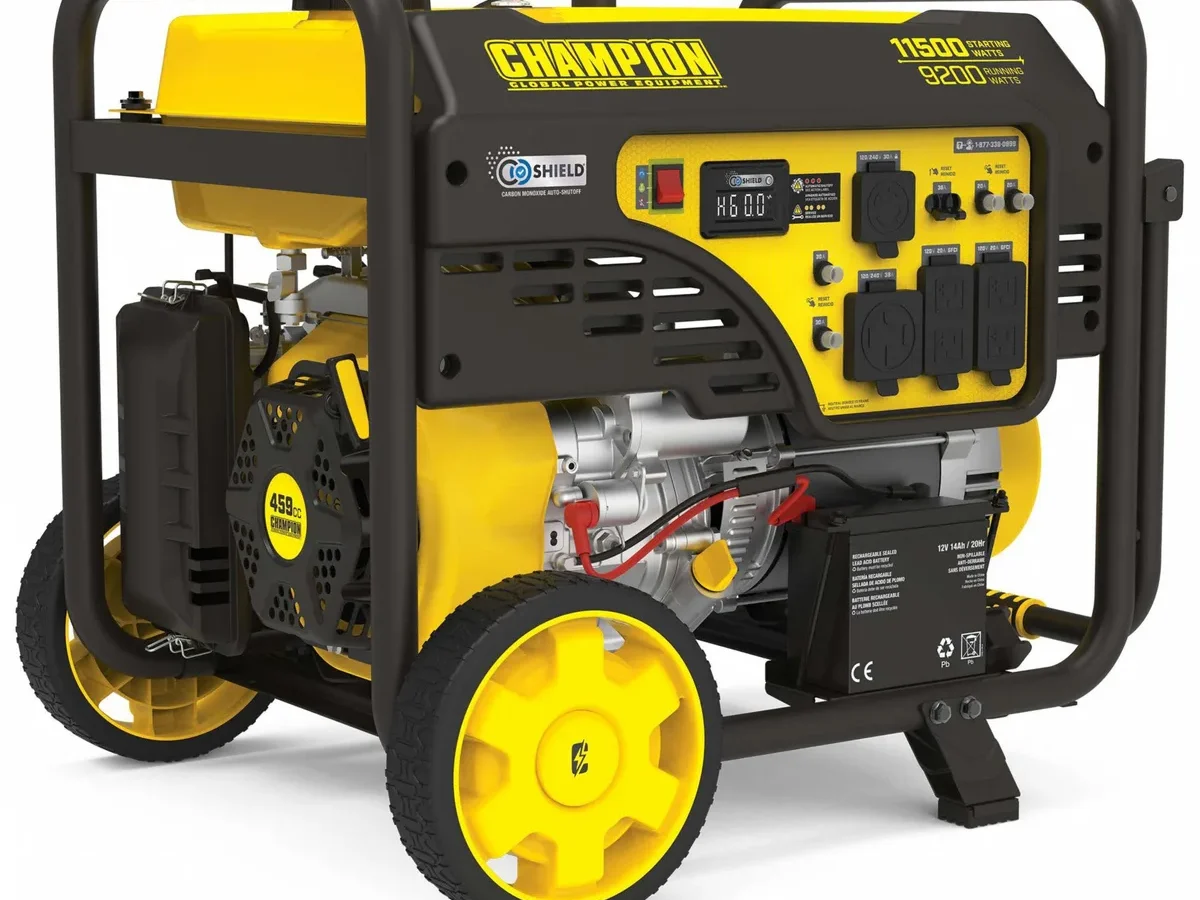
Your Champion generator is sitting there, refusing to start. You've got a fridge full of food, a sump pump that needs power, and the weather forecast isn't looking great. This Champion Generator Troubleshooting Guide walks you through the most common problems step by step, so you can get back up and running without making things worse or getting hurt.
Manufacturer specifications indicate that nearly 70 percent of portable generator failures trace back to three root causes: fuel degradation, a tripped circuit breaker, or a faulty low-oil shutdown sensor. As of 2026, Champion's CO Shield safety system adds another layer that can automatically kill the engine if it detects carbon monoxide buildup near the exhaust. Understanding exactly what's happening when your generator acts up is the difference between a five-minute fix and a costly service call.
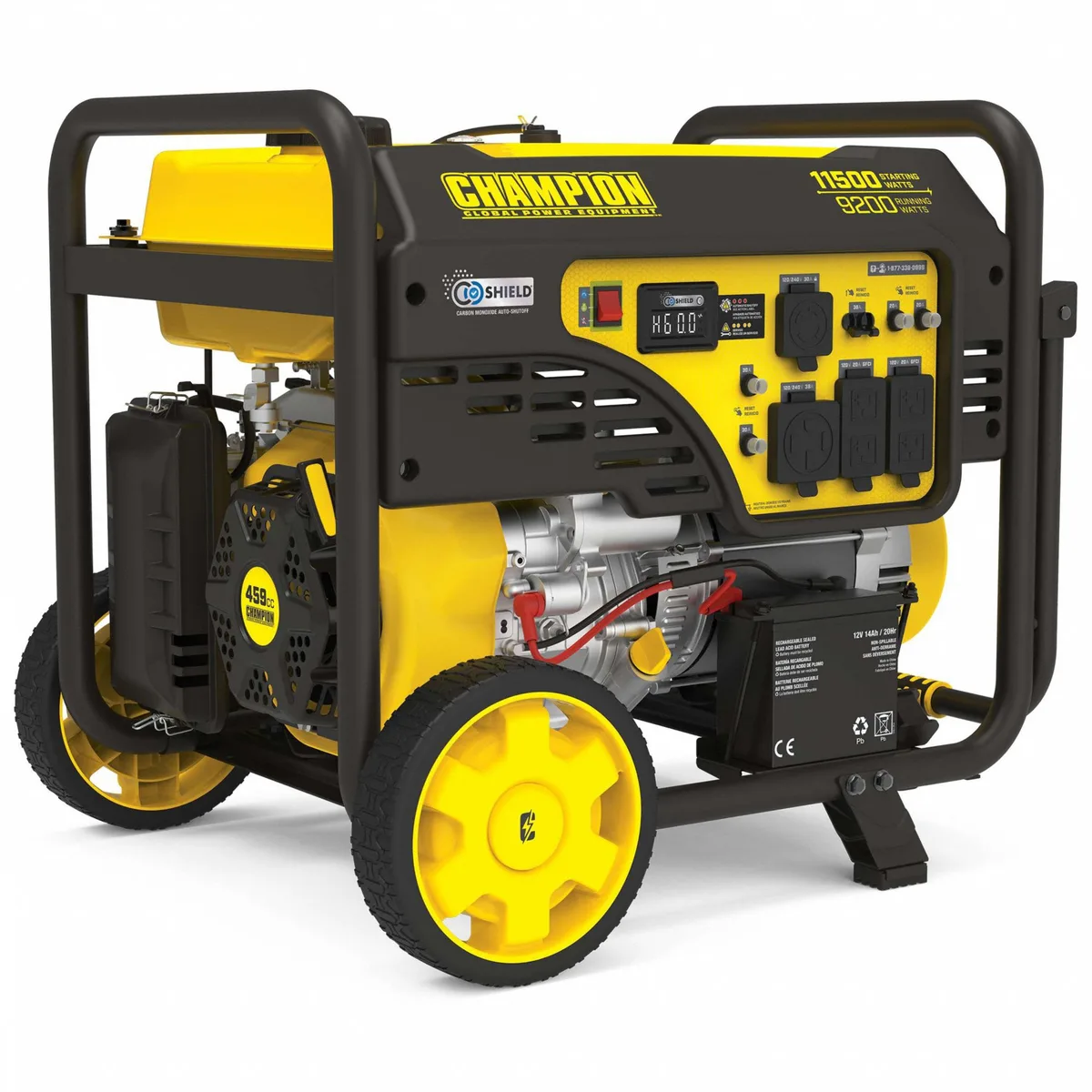
Image source: Bing (Web (fair-use with source credit))
Quick Answer
Start with the three most common causes. Check the oil level first. A low-oil sensor prevents starting.
Confirm the fuel valve is open and fuel is fresh. Stale gasoline over 30 days old often won't ignite. Verify the circuit breaker on the control panel hasn't tripped.
Push it in firmly until it clicks. If the generator still won't start, move to the step-by-step checks below.
Why This Guide Puts Safety First
A generator is a simple machine. It's also a machine that can hurt you fast if you skip the basics. Carbon monoxide poisoning kills more people each year than generator fires or electrical shocks combined.
The CPSC reports that portable generators cause roughly 70 CO-related deaths annually in the United States alone.
The real dangers you're dealing with
- Carbon monoxide (CO). Generator exhaust contains high levels of CO. It's odorless, colorless, and lethal. Never run a generator inside a garage, basement, crawlspace, or partially enclosed area. Keep it at least 20 feet from your home, with the exhaust pointed away from doors and windows.
- Electrical shock. A wet generator or wet hands while plugging in appliances can deliver a fatal shock. Always operate your generator on a dry, level surface. Use heavy-duty, grounded extension cords rated for the load.
- Fire hazard. Gasoline is extremely flammable. Let the engine cool completely before refueling. Store fuel in approved containers away from pilot lights, sparks, and heat sources.
- Burns. The muffler and engine block get hot enough to cause serious burns during operation and for up to 30 minutes after shutdown. Keep children and pets away.
When to stop and call a professional
Some problems are beyond what a homeowner should tackle. If you smell burning wires, see visible damage to the control panel, or the generator repeatedly trips its main breaker with no load attached, stop immediately. Internal electrical faults like a shorted stator or damaged AVR require professional diagnosis and specialized tools.
Attempting those repairs yourself can void your warranty and create serious safety hazards.
Champion offers a three-year residential warranty and a one-year commercial warranty on most models. If your generator is still under warranty, don't open the engine housing or tamper with sealed components. Contact Champion Power Equipment directly or take the unit to an authorized service center.
Quick Symptom Check: What Your Generator Is Trying to Tell You
Before you start pulling parts off, take a moment to observe what your generator is actually doing. Different symptoms point to different root causes. Matching the symptom to the right fix saves you hours of wasted effort.
| Symptom | Most likely cause | Next step |
|---|---|---|
| Engine won't crank or pull-start | Low oil, dead battery (electric start), bad spark plug, stale fuel | Check oil, test fuel, inspect plug |
| Cranks but won't start | Fuel valve off, carburetor gummed, choke in wrong position | Confirm fuel flow, clean carb, set choke |
| Starts then dies after a few seconds | Low oil sensor triggered, bad fuel, clogged fuel line | Top off oil, drain old fuel, clean lines |
| Runs rough or surges | Dirty carburetor, clogged air filter, AVR issue | Clean carb, replace air filter, test AVR |
| No power at outlets | Tripped breaker, blown AVR, damaged receptacle | Reset breaker, test AVR with multimeter |
| Electric start clicks but doesn't crank | Dead battery, bad starter solenoid, loose connection | Charge battery, test solenoid, check wiring |
| CO Shield keeps killing the engine | Generator placed too close to house, exhaust recirculation | Relocate unit, ensure airflow around exhaust |
Engine Won't Start: Fuel, Spark, or Shutdown Sensor?
This is the most common complaint by a long shot. You pull the recoil cord or press the start button, and nothing happens. Maybe it cranks but won't fire.
Maybe it fires once and dies. Let's work through the three suspects methodically.
Step 1: Check the low-oil shutdown sensor
Champion generators, like all modern portable generators, have a low-oil sensor that prevents the engine from starting if the oil level is too low. This is a safety feature, not a bug. The sensor kills the ignition circuit when oil drops below a safe threshold.
What to do: Remove the oil fill cap and wipe the dipstick clean. Insert it fully without screwing it in, then pull it back out. The oil should reach the fill line.
If it's low, add the correct oil type. Most Champion generators use 10W-30 for general operation. If you're running in cold weather below 40°F, switch to 5W-30.
The typical oil capacity is about 0.6 quarts for 196cc and 224cc engines.
Important note: Some models require the generator to be on a level surface for the sensor to read correctly. If your generator is parked on a slope, the sensor may think oil is low even when it isn't. Move it to flat ground and recheck.
Step 2: Confirm fuel is flowing
The fuel valve needs to be in the ON position. It sounds obvious. People still forget.
What to do: Turn the fuel valve to ON. Open the fuel cap and check that there's fresh gasoline inside. If the fuel has been sitting for more than 30 days without stabilizer, it's likely gone bad.
Ethanol-blended gasoline absorbs moisture and forms varnish that clogs carburetor jets. Drain the old fuel and replace it with fresh, ethanol-free gas if possible.
Pro tip: If you can smell a varnish-like odor from the fuel tank, that fuel is definitely bad. Don't try to burn it. Drain the tank completely and dispose of the old fuel at a local hazardous waste facility.
Step 3: Verify the choke position
Cold engines need a richer fuel mixture to start. The choke restricts air flow into the carburetor, which pulls more fuel into the cylinder. If the choke is closed when the engine is already warm, you'll flood it.
If the choke is open when the engine is cold, it may not get enough fuel to fire.
What to do: For a cold start, pull the choke lever to the CLOSED or CHOKE position. Pull the recoil cord or press the start button. Once the engine fires and runs briefly, gradually move the choke to OPEN.
If the engine has been running recently and is still warm, leave the choke in the OPEN position.
If it still won't start: You may have flooded the engine. Close the fuel valve, open the choke fully, and pull the recoil cord 5 to 10 times to clear excess fuel. Then set the choke to CLOSED and try again.
Step 4: Inspect the spark plug
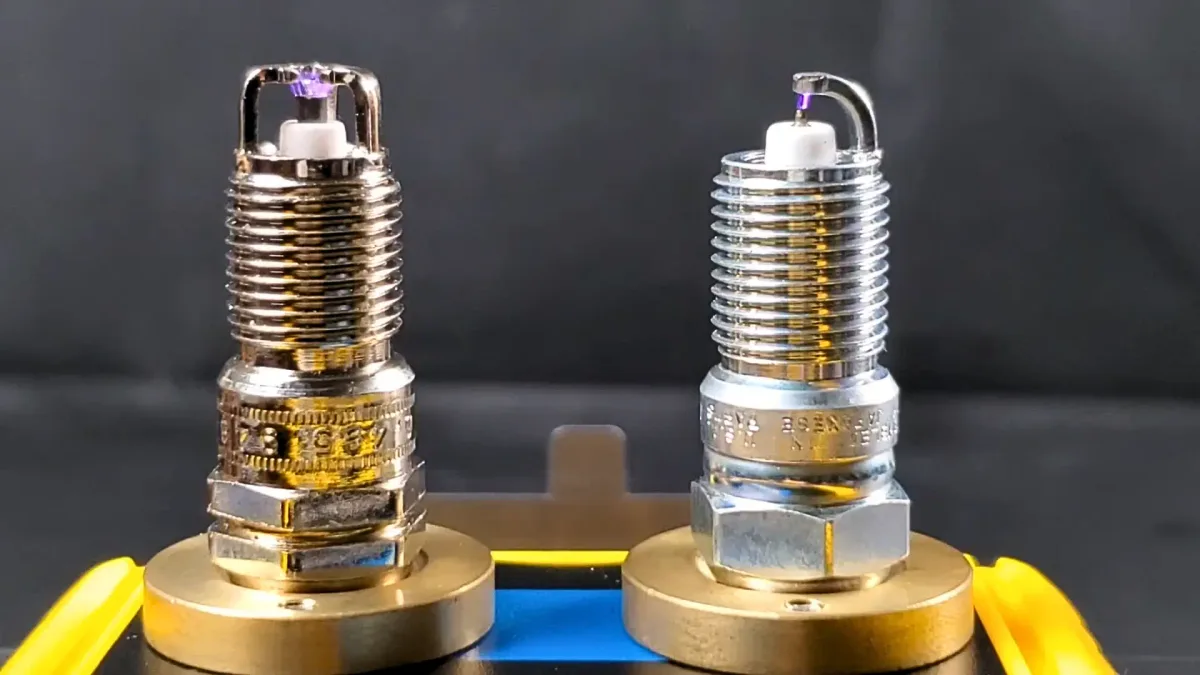
Image source: Bing (Web (fair-use with source credit))
A fouled or damaged spark plug won't produce a strong enough spark to ignite the fuel-air mixture. Champion generators typically use a BPR6ES spark plug or a Champion-specific equivalent. The gap should be set to 0.028 to 0.031 inches.
What to do: Remove the spark plug wire by pulling firmly on the boot, not the wire itself. Use a spark plug socket to unscrew the plug. Inspect the tip.
If it's covered in black soot, oil, or appears wet with fuel, the plug is fouled. Clean it with a wire brush or replace it entirely. Check the gap with a feeler gauge and adjust if needed.
Reinstall and torque to 18 to 20 foot-pounds.
Signs you need to replace the plug:
- The electrode is worn down or rounded
- There are visible cracks in the porcelain insulator
- The tip is covered in white or gray deposits
- The plug is wet with oil
Common mistake: People often install the wrong spark plug or skip the gap adjustment. Champion generators are sensitive to plug gap. Too wide and the spark is weak.
Too narrow and the mixture doesn't ignite properly. Always gap the new plug before installation.
Step 5: Check the air filter
A clogged air filter starves the engine of air. The engine may crank but won't start, or it starts and runs rough. Champion uses both foam and paper air filters depending on the model.
What to do: Remove the air filter cover. Take out the filter element. If it's a foam filter, wash it in warm soapy water, rinse thoroughly, let it dry completely, then apply a light coat of engine oil and squeeze out the excess.
If it's a paper filter and it's dirty or oil-soaked, replace it. Never run the generator without an air filter installed. Dirt and debris will quickly damage the cylinder and piston.
Decision tree recap
| Condition | Action |
|---|---|
| Oil is low | Add oil to correct level |
| Fuel is stale | Drain and replace with fresh fuel |
| Choke is wrong | Adjust to correct position |
| Spark plug is fouled | Clean or replace, check gap |
| Air filter is clogged | Clean or replace |
| Nothing above helps | Check carburetor |
Generator Runs But No Power Output
You've got the engine running. It sounds healthy. But when you plug in a lamp or a power tool, nothing happens.
No lights. No hum. This is almost always an electrical issue, not an engine issue.
Step 1: Reset the circuit breakers
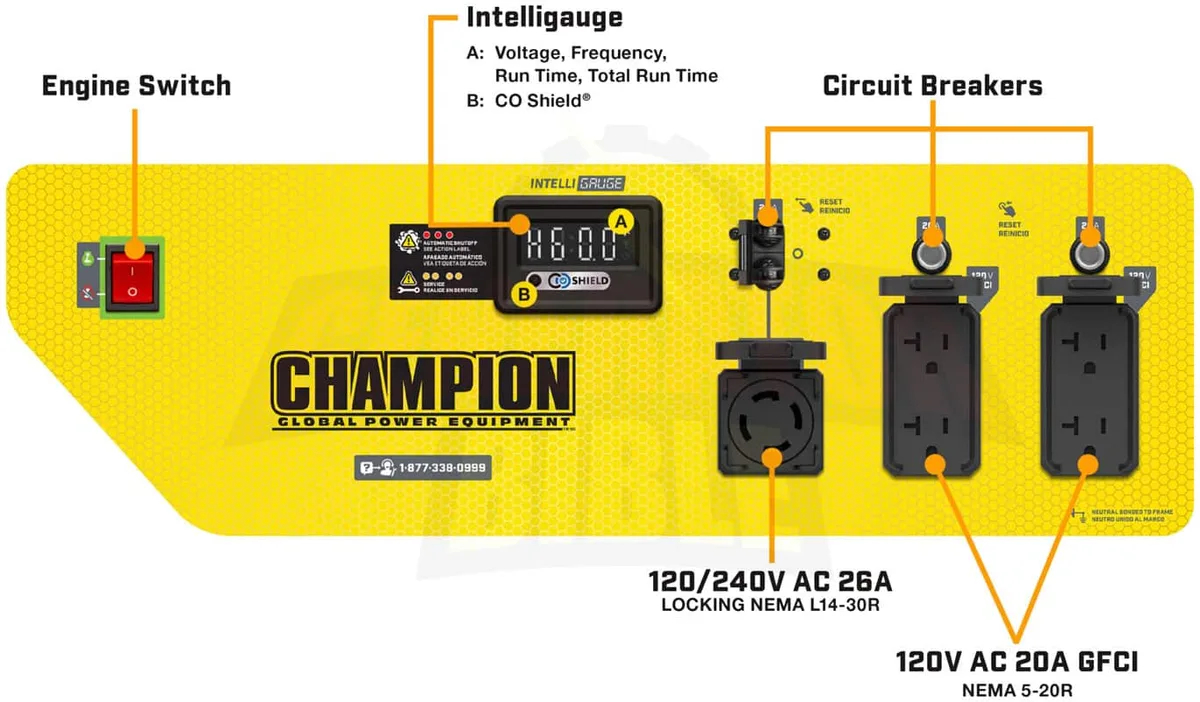
Image source: Bing (Web (fair-use with source credit))
This is the fastest fix and the one most people overlook. Champion generators have resettable AC and DC circuit breakers on the control panel. If you plugged in too many appliances or a device with a short circuit, the breaker trips to protect the generator and your equipment.
What to do: Look for a small button or switch on the control panel labeled RESET or BREAKER. For most models, it's a red button that pops out when tripped. Press it firmly until it clicks and stays flush.
If the breaker trips again immediately after resetting, you have a short circuit in your connected equipment or an overload situation.
Testing the breaker: If resetting doesn't restore power, the breaker itself may have failed internally. Breakers can wear out after repeated trips. Use a multimeter to test for continuity across the breaker terminals with the switch in the ON position.
No continuity means the breaker is bad and needs replacement.
Step 2: Test the outlets
Sometimes the problem is simpler than you think. The outlet itself may be worn out or damaged.
What to do: Use a multimeter set to AC voltage mode. Insert one probe into the hot slot (the shorter slot on a standard NEMA 5-20R outlet) and the other probe into the neutral slot (the longer slot). You should read between 110 and 125 volts AC with no load.
If you read zero, there's an open circuit somewhere between the generator's internal wiring and the outlet.
Pro tip: Test both the 120V and 240V outlets if your generator has them. A 240V outlet will read around 240 volts between the two hot legs and 120 volts between each hot leg and neutral.
Step 3: Inspect the AVR
The Automatic Voltage Regulator keeps the voltage steady regardless of engine speed variations or load changes. If the AVR fails, the generator may produce no power at all, or it may produce wildly fluctuating voltage that can damage your electronics.
Symptoms of a bad AVR:
- Outlets show no voltage output
- Voltage reads very low (under 100V) or very high (over 140V)
- Lights connected to the generator flicker or pulse
- The generator produces power but it's unstable
What to do: AVR testing requires some electrical knowledge and a multimeter. Start the generator and let it stabilize. Check the voltage at the outlets.
If the voltage is high or low by more than 10 percent, the AVR may need replacement. You can also test the AVR directly by measuring resistance across its terminals according to your model's service manual.
Important safety note: The AVR connects directly to the generator's main windings, which carry lethal voltages even when the engine is off. If you're not comfortable working around high voltage, stop here and call a qualified technician.
Step 4: Check for broken wires or loose connections
Vibration can loosen internal connections over time. Remove the control panel cover with the engine off and spark plug wire disconnected, then inspect all visible wiring. Look for:
- Wires that have pulled loose from terminals
- Burned or melted insulation
- Corroded connections common in humid environments
What to do: Tighten any loose terminal screws. Reconnect any wires that have pulled loose. If you find burned wires, that indicates a serious short that needs professional diagnosis.
Don't just splice the wires back together. The underlying problem will likely happen again.
Step 5: Test the generator under a known load
Sometimes the generator appears to have no output because the load you're testing with is faulty. Plug in a device you know works, like a simple incandescent work light. Avoid testing with sensitive electronics like computers or televisions until you've confirmed stable output.
What to do: Plug in the known-good device. If it works, the problem was with your original equipment. If it doesn't, move to the next step.
If the generator runs the light but the light flickers or dims when you add a second device, the AVR may be struggling to maintain regulation.
When the AVR is likely the culprit
If you've reset the breaker, tested the outlets, checked for loose wires, and still get no output, the AVR is the most probable cause. Replacement AVRs are available for most Champion models and cost between 30 and 80 dollars. The swap requires removing the generator's end cover, disconnecting the old AVR, and installing the new one.
Before you order a replacement: Confirm your generator's model number and serial number. Champion uses different AVRs for different wattage ratings and frame sizes. An AVR from a 3500-watt model won't work in a 5000-watt unit.
Generator Starts Then Dies: Low Oil, Bad Fuel, or Clogged Carburetor
This one is frustrating because you're so close. The engine fires up, runs for a few seconds, then sputters and dies. You try again.
Same thing. Here's what's happening.
Low oil shutdown sensor activation
The most common reason a generator starts and dies quickly is the low oil sensor. When you pull the cord, oil pressure briefly spikes enough to allow the engine to fire. But the sensor detects the actual low level within seconds and cuts the ignition.
The engine stops.
The fix: Check the oil level immediately. If it's low, add the correct oil and restart. If the sensor is faulty, it may kill the engine even when oil is at the correct level.
A faulty sensor needs replacement.
Bad fuel or water in the tank
Stale fuel won't support combustion well enough to keep the engine running. The engine fires on the small amount of volatile vapors left in the carburetor bowl, then dies when it tries to draw from the main fuel supply.
The fix: Drain the fuel tank and the carburetor bowl. Refill with fresh gasoline. If you suspect water contamination, drain the tank completely and add a fuel additive designed to absorb small amounts of water.
Clogged carburetor jets
Ethanol-blended gasoline leaves behind a gummy residue when it evaporates. This residue clogs the tiny jets inside the carburetor that meter fuel into the air stream. A partially clogged jet may provide enough fuel for startup but not enough to sustain idle.
The fix: Remove the carburetor, disassemble it, and clean all passages with carburetor cleaner. Pay special attention to the main jet and the idle circuit. If the carburetor is severely gummed, replacement may be cheaper and easier than cleaning.
Clogged fuel line or filter
A blocked fuel line restricts flow to the carburetor. The engine uses the small amount of fuel already in the bowl, then starves and dies.
The fix: Check the fuel line from the tank to the carburetor. Look for kinks, debris, or a collapsed section. Some Champion models have an inline fuel filter.
If it's clogged, replace it.
Common Mistakes That Cost You Time and Money
After working through hundreds of generator troubleshooting cases, these are the mistakes we see most often. Avoiding them will save you hours of frustration.
Running the generator out of fuel to store it
This is the single biggest mistake people make. Running the carburetor dry prevents stale fuel from gumming up the jets during storage. But many people forget to do it, or they run the generator until it sputters and stops without fully draining the bowl.
The right way: Turn the fuel valve to OFF while the generator is running under a light load. Let it run until the engine stops on its own. This empties most of the fuel from the carburetor bowl.
For long-term storage, also drain the bowl by removing the drain screw at the bottom of the carburetor.
Ignoring the oil change schedule
Break-in oil change matters. Champion recommends changing the oil after the first 5 hours of operation. After that, change it every 50 hours or once per season, whichever comes first.
Running old oil leads to increased wear and eventual engine failure.
Using ethanol fuel without stabilizer
Ethanol attracts moisture. Moisture leads to phase separation, where water separates from the gasoline and settles at the bottom of the tank. This water gets drawn into the carburetor and causes corrosion and starting problems.
The fix: Use ethanol-free gasoline whenever possible. If you must use ethanol-blended fuel, add a fuel stabilizer specifically designed for ethanol fuels. Treat every tank of gas, not just the last one of the season.
Testing the generator without a load
Running a generator with no load connected can damage the AVR and the generator head. The electrical system needs a minimum load to regulate voltage properly. Without it, voltage can spike and damage sensitive components.
The fix: Always keep at least a 10 to 20 percent load on the generator during operation. A simple work light or a small space heater works perfectly for testing.
When to Fix It Yourself vs. Call a Pro
Not every repair is a DIY project. Knowing the boundary keeps you safe and protects your investment.
Fix it yourself if
- The problem is fuel-related (stale gas, clogged carburetor, dirty air filter)
- A breaker needs resetting or replacing
- The spark plug needs cleaning or replacement
- The oil needs changing or topping off
- The battery needs charging or replacing on electric start models
Call a professional if
- The generator produces no power with the engine running and all breakers are reset
- You smell burning insulation or see smoke
- The engine has internal mechanical problems (knocking, low compression, metal shavings in oil)
- The AVR needs replacement and you're not comfortable with electrical work
- The warranty is still active and the problem isn't user-serviceable
Warranty considerations
Champion's three-year residential warranty covers defects in materials and workmanship. It does not cover damage from neglect, stale fuel, or normal wear items like spark plugs and air filters. Before you open any sealed components, check your warranty status.
If you're within the warranty period, contact Champion first.
Frequently Asked Questions
Why won't my Champion generator start even though it has oil?
Check the fuel valve position, choke setting, and spark plug condition. Stale fuel is the most common cause after oil level. If the generator has been sitting for more than 30 days, drain the old fuel and replace it with fresh gasoline before trying anything else.
How do I reset the circuit breaker on my Champion generator?
Locate the red button on the control panel labeled RESET or BREAKER. Press it firmly until it clicks and stays flush. If the breaker trips again immediately, you have an overload or a short circuit in your connected equipment.
What kind of oil does a Champion generator take?
Most Champion generators use SAE 10W-30 for general operation. For cold weather below 40°F, switch to SAE 5W-30. The typical oil capacity is 0.6 quarts.
Always check your owner's manual for the exact specifications for your model.
Why does my Champion generator run for a few seconds then die?
This is usually the low-oil shutdown sensor activating. Check the oil level immediately. If the oil is full and the problem persists, the sensor may be faulty.
Stale fuel or a clogged carburetor can also cause this symptom.
How long does Champion generator fuel last in the tank?
Untreated ethanol-blended gasoline starts degrading within 30 days. With a fuel stabilizer, it can last up to 6 months. Ethanol-free fuel with stabilizer can last up to 12 months.
Always drain the carburetor bowl before long-term storage.
Can I run my Champion generator indoors with the garage door open?
No. Carbon monoxide from generator exhaust can reach lethal levels in an enclosed space within minutes, even with the garage door open. Keep the generator at least 20 feet from your home with the exhaust pointed away from doors and windows.

Similar Posts