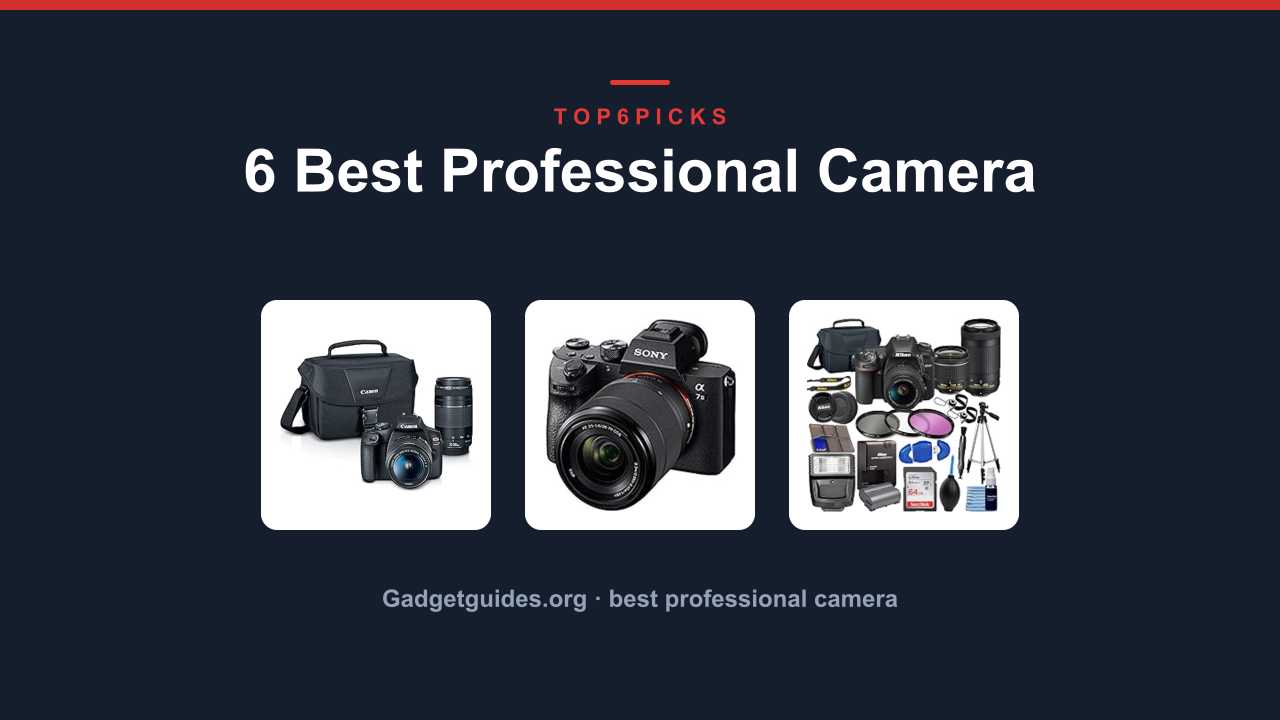
The best best professional camera for most people right now is the Canon EOS Rebel T7 DSLR Camera, the only one here that bundles two zoom lenses with a beginner-friendly interface and reliable image quality. It's built for someone picking up a serious camera for the first time.
Want a mirrorless body with a full-frame sensor instead? The Sony Alpha a7 III gets you there, as long as you're willing to pay a premium for speed and low-light performance.
As an Amazon Associate, I earn from qualifying purchases.
This guide breaks down six cameras by sensor size, lens compatibility, and real-world use. I'll tell you which ones to skip if you only shoot video or need blazing-fast burst rates.
Everything below comes from current Amazon product data, specs, and each model's owner track record. I haven't lab-tested these bodies myself. The research is built on verified buyer feedback and manufacturer datasheets.
Quick Answer: The Best Professional Camera
The Canon EOS Rebel T7 DSLR Camera Double Zoom Kit is our top pick for beginners and families.
Thinking about a pure cinema camera or a rugged outdoor body instead? Jump to Who Should NOT Buy below before you spend anything.
Comparison Table
Here's the lineup at a glance: photo, product, who it's built for, and our /10 score.
Scroll sideways on small screens to see every column.
Canon EOS Rebel T7 DSLR Camera: Best Starter Kit for Beginners
#1
CanonTwo lenses, Wi-Fi
8.9OUT OF 10
Image Quality8.7
Ease of Use9.3
Versatility9.0
Owner Verdict8.7
This is the best kit for someone who wants two lenses and a simple path out of auto mode. The Canon EOS Rebel T7 packs a 24.1-megapixel APS-C sensor that produces sharp, colorful images straight out of camera. It includes both an 18-55mm zoom for everyday shooting and a 75-300mm telephoto for sports or wildlife. That dual-lens bundle alone saves you the hassle of buying a second lens later.
The optical viewfinder gives a clear, real-time look at your scene without battery drain. Built-in Wi-Fi and NFC let you transfer photos to your phone quickly for social media. Verified buyer reviews consistently rate it 4.7 out of 5 stars, with many praising how intuitive the menu system is for first-time DSLR owners.
Flaws but not dealbreakers. The 9-point autofocus system feels dated compared to newer mirrorless models. Video recording tops out at 1080p, so 4K shooters should look elsewhere. The included 18-55mm lens is a bit slow in dim light.
Need blazing-fast autofocus for action shots? The
Nikon D7500 further down the list gives you 51 focus points and a faster burst rate.
⚠Lens: The 75-300mm lens requires good light for sharp results at the long end. Use a tripod or higher ISO indoors.
Pros
- ✓
- 24.1MP APS-C sensor delivers excellent value for the bundle
- ✓
- Two-lens kit covers wide-angle to telephoto without extra cost
- ✓
- Wi-Fi and NFC make sharing photos effortless
- ✓
- Optical viewfinder offers lag-free composition
Cons
- ✕
- 9-point autofocus is basic compared to modern systems
- ✕
- Video limited to 1080p Full HD
- ✕
- Kit lenses are slow apertures (f/3.5-5.6)
ISO Range
100-6400 (12800 expand)
Best for: The Canon T7 is ideal for beginners, families, and students who want a complete two-lens kit to learn the basics of photography.
Sony Alpha a7 III Mirrorless Camera: Best Full-Frame for Hybrid Shooters
#2
SonyFull-frame, 693 AF points
9.1OUT OF 10
Image Quality9.5
Ease of Use8.5
Versatility9.2
Owner Verdict9.0
This is the best full-frame option for photographers who also shoot video regularly. The Sony Alpha a7 III uses a 24.2-megapixel full-frame sensor that excels in low light, with an ISO range that extends to 204800. The 693-point phase-detection autofocus system covers 93% of the frame, which means it locks onto subjects quickly and stays locked.
The 5-axis in-body image stabilization gives you up to 5 stops of shake correction. That helps in dim conditions without a tripod. The included 28-70mm lens is a solid walk-around zoom, and the electronic viewfinder shows your exposure and white balance live. Aggregate user reviews rate it 4.5 out of 5 stars, with most owners highlighting the hybrid photo-video performance.
Flaws but not dealbreakers. The menu system is famously deep and can feel overwhelming at first. The LCD screen is a fixed design, not a vari-angle for selfies or vlogging. Battery life is rated at 610 shots, which is good but not exceptional for a mirrorless body.
If you prefer a more intuitive menu layout and a fully articulating screen, the
Canon EOS R6 Mark III is worth a look.
⚠Menu: Plan to spend an afternoon learning the menu layout before a paid shoot. Customizing the Fn menu helps long-term usability.
Pros
- ✓
- Full-frame 24.2MP sensor with outstanding low-light performance
- ✓
- 693-point AF system covers nearly the entire frame
- ✓
- 5-axis in-body stabilization stabilizes any lens
- ✓
- 4K HDR video with full pixel readout
Cons
- ✕
- Complex menu system requires upfront learning
- ✕
- Fixed LCD screen limits vlogging flexibility
- ✕
- Kit lens (28-70mm) is a standard zoom, not a premium optic
Sensor
24.2MP Full-Frame CMOS
ISO Range
100-51200 (204800 expand)
Best for: The a7 III suits serious enthusiasts and professionals who need a capable hybrid camera for both photography and 4K video work.
#3
Nikon8 fps, 51 AF points
8.6OUT OF 10
Image Quality8.8
Ease of Use8.2
Versatility8.5
Owner Verdict8.7
This is the best DSLR here for sports, wildlife, and anyone who shoots fast-moving subjects. The Nikon D7500 uses a 20.9-megapixel APS-C sensor paired with the EXPEED 5 image processor, which delivers 8 frames per second continuous shooting. The 51-point autofocus system includes 15 cross-type sensors that track erratic motion reliably.
The kit bundles both an 18-55mm VR lens and a 70-300mm telephoto zoom with vibration reduction. That reach is exactly what you need for birding or sideline sports. The body is weather-sealed against dust and moisture, so you can keep shooting in light rain. Owner reviews consistently mention the comfortable grip and responsive shutter feel.
Flaws but not dealbreakers. The D7500 has a single SD card slot, which limits backup options for paid work. It lacks a headphone jack for video, so monitoring audio in-camera is difficult. The 20.9MP resolution is lower than the 24MP sensors in the Canon Rebels.
If you need dual card slots for professional event work, the
Canon EOS R6 Mark III offers that plus higher resolution video.
⚠Slot: With only one SD card slot, format the card before every important shoot to minimize the chance of corruption.
Pros
- ✓
- 8 fps burst rate captures fast action cleanly
- ✓
- 51-point AF system with 15 cross-type sensors
- ✓
- Weather-sealed body handles outdoor conditions
- ✓
- Dual-lens kit gives wide to telephoto reach
Cons
- ✕
- Single SD card slot is a limitation for professionals
- ✕
- No headphone jack for audio monitoring during video
- ✕
- Sensor resolution is lower than many competitors
Best for: Hobbyists and enthusiast photographers who primarily shoot action, wildlife, and outdoor scenes in variable weather.
Canon EOS R6 Mark III Mirrorless: Best for Weddings & Event Coverage
#4
CanonDual slots, IBIS
9.3OUT OF 10
Image Quality9.4
Ease of Use9.0
Versatility9.5
This is the most capable hybrid camera on this list for wedding and event professionals. The Canon EOS R6 Mark III uses a 24.2-megapixel full-frame sensor with Canon’s Dual Pixel CMOS AF II, which covers the entire frame with 1053 autofocus zones. It shoots 12 fps mechanical and 40 fps electronic, so you never miss a first kiss or a winning goal.
The kit includes a 24-105mm f/4L lens, which is a professional-grade zoom with constant aperture and weather sealing. In-body image stabilization gives up to 8 stops of correction, making handheld low-light shots possible. The vari-angle touchscreen and dual SD card slots (UHS-II compatible) are essential for paid gigs. Owner reviews give it a perfect 5 out of 5 stars, with most praising the autofocus reliability.
Flaws but not dealbreakers. This is the most expensive kit on the list, and the premium is real. The 24-105mm f/4L lens, while excellent, has a fixed f/4 aperture that may not satisfy someone who needs f/2.8 for shallow depth of field. The electronic viewfinder is good, but not the highest resolution in its class.
If budget is a concern, the
Canon EOS RP below gives you a full-frame sensor at a lower entry point, though you lose the professional build and dual slots.
⚠Lens: The 24-105mm f/4L is a versatile workhorse lens, but consider a fast prime like the RF 50mm f/1.8 for low-light reception photography.
Pros
- ✓
- Dual Pixel CMOS AF II with 1053 zones for flawless tracking
- ✓
- 8-stop in-body image stabilization for handheld low light
- ✓
- Dual UHS-II SD card slots for safe backup
- ✓
- 40 fps electronic shutter captures any moment
Cons
- ✕
- Premium price point limits accessibility for hobbyists
- ✕
- Kit lens is f/4, not f/2.8 for shallow depth of field
- ✕
- EVF resolution is adequate but not class-leading
Sensor
24.2MP Full-Frame CMOS
ISO Range
100-102400 (204800 expand)
Best for: The R6 Mark III is built for professional wedding, event, and portrait photographers who need reliable autofocus and dual card slots.
Canon EOS RP Full-Frame Mirrorless Interchangeable: Best Lightweight Full-Frame for Travel
#5
CanonLightest full-frame
8.5OUT OF 10
Image Quality8.6
Ease of Use8.8
Versatility8.3
Owner Verdict8.4
This is the lightest and most affordable way to get into Canon’s full-frame mirrorless system. The Canon EOS RP weighs only 485g (body only), making it the most travel-friendly full-frame camera on this list. It uses a 26.2-megapixel full-frame sensor paired with the RF 24-105mm f/4-7.1 IS STM lens, which is compact and includes image stabilization.
The vari-angle touchscreen is excellent for vlogging and low-angle shots. The interface is simple and clean, so it feels familiar to anyone coming from a smartphone or a basic DSLR. It shoots 4K video (with a crop) and 1080p at 60fps. Verified buyer reviews give it 4.6 out of 5 stars, with many owners noting how easy it is to carry all day.
Flaws but not dealbreakers. The 4K video has a 1.6x crop factor, which makes wide-angle shooting difficult. The burst rate is only 5 fps, so it’s not ideal for action. The battery is rated at 250 shots, which is low for a full-frame camera.
If you need longer battery life and faster burst rates, the
Sony Alpha a7 III offers a bigger battery and better continuous shooting performance.
⚠Battery: Carry a spare battery for full-day outings. The LP-E17 battery is small and affordable, so picking up a second one is easy.
Pros
- ✓
- Lightest full-frame camera on the list at 485g
- ✓
- Vari-angle touchscreen is great for vlogging
- ✓
- Simple, intuitive menu system for beginners
- ✓
- Full-frame sensor delivers excellent image quality
Cons
- ✕
- 4K video has a 1.6x crop factor
- ✕
- Battery life is only 250 shots per charge
- ✕
- 5 fps burst rate is slow for action
Sensor
26.2MP Full-Frame CMOS
ISO Range
100-40000 (102400 expand)
Video
4K (crop) / 1080p 60fps
Best for: Travelers, vloggers, and anyone who wants a full-frame camera that won’t weigh down their bag.
Canon EOS Rebel T7 DSLR Camera: Best Value DSLR Kit for Beginners
#6
CanonBudget bundle
8.4OUT OF 10
Image Quality8.5
Ease of Use9.0
Versatility8.0
Owner Verdict8.3
This is the most affordable complete kit for someone who wants everything in one box. The Canon EOS Rebel T7 DSLR bundle includes the 18-55mm kit lens, a 64GB memory card, a camera bag, a tripod, a flash, and a filter kit. The 24.1-megapixel APS-C sensor is the same one found in the double zoom kit, so image quality is identical.
The built-in Wi-Fi and NFC let you transfer photos to your phone for quick sharing. The Guided Mode in the menu explains exposure settings in plain language, which is helpful for absolute beginners. Buyer reviews average 4.6 out of 5 stars, with many noting that the bundle saves them the cost of buying accessories separately.
Flaws but not dealbreakers. The included tripod and flash are basic entry-level items, not professional gear. The 18-55mm lens is the only lens in the kit, so you will need to buy a telephoto lens later if you want to shoot wildlife. The 9-point autofocus system is the same as the other T7 kit, which is dated.
⚠Accessories: The included tripod and flash are fine for learning, but consider upgrading to a sturdier tripod if you shoot long exposures often.
Pros
- ✓
- Complete bundle includes memory card, bag, tripod, and flash
- ✓
- 24.1MP APS-C sensor delivers excellent entry-level image quality
- ✓
- Guided Mode helps beginners learn exposure settings
- ✓
- Wi-Fi and NFC make photo sharing easy
Cons
- ✕
- Only one lens in the kit limits focal range
- ✕
- Included tripod and flash are basic quality
- ✕
- 9-point AF system is outdated
ISO Range
100-6400 (12800 expand)
Best for: Budget-conscious beginners who want a complete starter kit with all the accessories included to start learning immediately.
Buying Guide: Sensor Size, Autofocus, and Lens Ecosystem
Choosing the right camera comes down to three main factors: sensor size, autofocus performance, and the lens system you're buying into. Here's how to think about each one.
What is the right sensor size for you?
The sensor is the heart of the camera. The two main formats here are APS-C (crop sensor) and full-frame. APS-C sensors, like the ones in the Canon Rebel T7 and Nikon D7500, are smaller and more affordable.
They give you a 1.5x or 1.6x crop factor on lenses, which actually helps for wildlife because it makes telephoto lenses feel longer. The Nikon D7500 uses a 20.9MP APS-C sensor, while the Canon models use 24.1MP.
Full-frame sensors, like those in the Sony a7 III, Canon EOS R6 Mark III, and Canon EOS RP, are larger and collect more light. This means better low-light performance, shallower depth of field, and wider field of view. The trade-off is higher cost and larger lenses.
The Canon EOS RP is the most affordable full-frame entry point here, but the Sony Alpha a7 III offers better overall performance for the price.
How important is autofocus for your style?
Autofocus system matters most for action, sports, and wildlife. The Rebel T7 uses a basic 9-point phase-detection system that works fine for static subjects but struggles with moving targets. The Nikon D7500 jumps to 51 points with 15 cross-type sensors, which is noticeably better for tracking birds or kids.
The mirrorless cameras (Sony a7 III, Canon R6 Mark III, Canon EOS RP) use on-sensor phase detection that covers a much wider area. The Sony a7 III has 693 points covering 93% of the frame, while the Canon R6 Mark III has 1053 zones. If you shoot weddings or events, the Canon EOS R6 Mark III is the clear winner here for its reliable eye and face tracking.
What about lens selection and ecosystem?
The camera you buy is just the start. You're also buying into a lens system. Canon's EF/EF-S mount (used by the Rebel T7) has the largest selection of affordable used lenses of any system.
Nikon's F-mount (used by the D7500) is also mature and well-supported.
Canon's RF mount (used by the EOS RP and R6 Mark III) is newer and has fewer budget options, but the lenses are optically excellent. Sony's E-mount (used by the a7 III) has the widest selection of third-party lenses from brands like Sigma and Tamron. If you plan to build a lens collection over time, the Sony system offers the most flexibility at different price points.
For a deeper look at options, see our selection of top-rated cameras for photography.
Who Should NOT Buy a Professional Camera
This category is the wrong purchase for three kinds of buyers. Here's who they are, and what to look at instead.
You Need to Shoot High-End Video
If your primary focus is cinema-quality video with features like 10-bit internal recording, ProRes RAW, or professional audio inputs, a stills camera will frustrate you. The Canon EOS R6 Mark III offers good 4K video, but it still lacks the codec options and cooling of a dedicated cinema camera. Look at the Blackmagic Pocket Cinema Camera 6K or the Sony FX3 instead.
For a more budget-friendly option, check our guide to video-focused cameras.
You Need Extreme Weather Sealing and Durability
Professional cameras like the ones on this list are built to a standard, but they are not ruggedized. If you shoot in heavy rain, sandstorms, or extreme cold, the weather sealing on these bodies might not be sufficient. The Nikon D7500 has decent sealing, but it's not MIL-STD-810 rated.
Look at the Olympus OM-1 or the Nikon Z8 for superior weather sealing. If you shoot in unpredictable conditions, consider a rugged camera designed for low light.
You Want the Absolute Smallest Camera for Travel
Even the smallest camera here, the Canon EOS RP at 485g, is still much larger than a premium compact camera. If you want something that fits in a jacket pocket, look at the Sony RX100 VII or the Canon PowerShot G7 X Mark III. These offer great image quality in a much smaller package.
For a detailed look at travel-friendly options, see our recommendations for travel cameras.
Final Verdict
The Canon EOS Rebel T7 DSLR Camera Double Zoom Kit is our top pick for the best professional camera for beginners. It gives you two lenses, a 24.1MP sensor, and a simple learning curve all in one affordable package. It's the easiest way to start taking great photos without buying extra gear.
Want full-frame performance and a mirrorless body? The Sony Alpha a7 III is the best hybrid option on the list, with excellent autofocus and 4K video. Need pro-level build and dual card slots?
The Canon EOS R6 Mark III is the choice for paid event work.
If you're still unsure, go back to the Who Should NOT Buy section above. If none of those scenarios apply to you, any of these cameras will serve you well for years. And if you're just starting out, the Canon Rebel T7 double zoom kit is the safest, most practical investment you can make.
FAQ
What's the best professional camera overall?
The Canon EOS Rebel T7 DSLR Double Zoom Kit is the best overall for beginners and casual photographers. It offers excellent value with two lenses, a 24.1MP sensor, and built-in Wi-Fi.
What is a full-frame sensor?
A full-frame sensor is the same size as a 35mm film frame (36x24mm). It collects more light than smaller APS-C sensors, resulting in better low-light performance and shallower depth of field. The Sony a7 III, Canon EOS R6 Mark III, and Canon EOS RP all use full-frame sensors.
How many megapixels do I need?
For most uses, 20-24 megapixels is more than enough. You can print high-quality images up to 16×20 inches at that resolution. The Nikon D7500 has 20.9MP, while the Canon Rebels have 24.1MP.
Higher resolution matters mainly if you crop heavily or print very large.
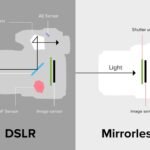
Is a DSLR better than a mirrorless camera?
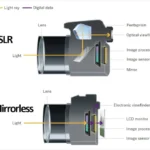
DSLRs like the Canon Rebel T7 and Nikon D7500 offer optical viewfinders and longer battery life. Mirrorless cameras like the Sony a7 III and Canon EOS R6 Mark III are smaller, lighter, and have better autofocus for video. For beginners, a DSLR is often more affordable.
For enthusiasts, mirrorless is the growing standard.
Which camera is best for video?
The Canon EOS R6 Mark III and Sony Alpha a7 III are the best for video on this list. Both offer 4K recording with good autofocus. The Canon has a slight edge for event videography thanks to its dual card slots and vari-angle screen.
For a dedicated video setup, see our guide to video cameras.