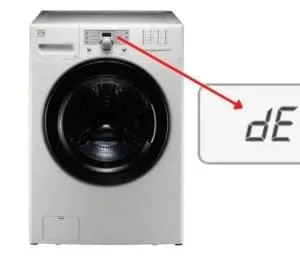
Bosch Washer Code E04

Image source: Bing (Web (fair-use with source credit))
Your Bosch washer just flashed E04 mid-cycle, and the drum is sitting there full of soapy water. Annoying? Absolutely.
Panic-worthy? Not even close. That code is one of the most common error messages on Bosch front-loaders, and in most cases, you can fix it yourself in under twenty minutes with zero special tools.
E04 specifically points to a drainage problem, not a mechanical failure or a blown motor. Roughly 80% of E04 errors trace back to a blocked drain pump filter or a kinked drain hose. Both are simple, quick fixes.
Let's walk through exactly what that code means and how to get your washer running again.
What E04 Actually Means
Error codes aren't designed to confuse you; they're designed to tell you exactly where the problem is. Bosch uses a straightforward diagnostic system, and E04 is tied specifically to the draining phase of the wash cycle.
When your washer runs, it goes through several phases: fill, wash, rinse, spin, and drain. During that drain phase, a pump pushes water out of the drum and up through the drain hose into your home's plumbing. The machine knows how long that should take.
If the pump runs continuously and the water level doesn't drop enough, the control board logs a timeout and throws E04.
Here's what the code is not: E04 is not a sign of a dead pump motor, a broken belt, or a failed control board. The vast majority of E04 cases are simple blockages. The pump is fine.
The wiring is fine. Something is physically preventing water from flowing out of the machine.
| Common E04 Causes | Frequency | Fix Difficulty |
|---|---|---|
| Clogged drain pump filter | ~60% of cases | Easy, 10 minutes |
| Kinked or pinched drain hose | ~20% of cases | Easy, 5 minutes |
| Blocked drain hose (debris) | ~10% of cases | Moderate, 15 minutes |
| Faulty drain pump | ~7% of cases | Hard, needs replacement |
| Control board failure | ~3% of cases | Hard, needs professional |
Bosch carries this same error code system across most of their front-load washers. Whether you have a 300 series or a high-end 800 series, the troubleshooting process is nearly identical.
Do This First: Reset the Error
Before pulling your machine apart, try this sequence. It's quick, and it clears the code in a surprising number of cases.
- Power off the washer using the power button.
- Unplug the machine from the wall outlet.
- Wait 60 seconds. This fully resets the control board and clears the error memory.
- Plug it back in and turn it on.
- Select a drain-and-spin cycle.
If the machine drains successfully and runs the full cycle without throwing E04 again, you're done. It was a temporary glitch.
But if the code pops back up within a minute or two, you have a real drainage issue. Move on to the physical troubleshooting steps below.
One quick note: if your washer is mid-cycle with a full drum, you don't need to worry about a flood. Bosch machines have overflow protection, and water won't leak out unless you open the door. That gives you room to troubleshoot at your own pace.
What You'll Need Before You Start
The most important thing isn't actually a tool, it's a towel. And not a small one. Grab a couple of old bath towels.
When you open that filter access panel, water is going to come out. It could be just a cup or two, or several liters, depending on how full the machine was when it errored.
Here's your full list:
- Towels (2-3 old bath towels or a stack of rags)
- A shallow pan or baking dish to catch water
- A flathead screwdriver or a coin (some models need one to open the filter access door)
- Needle-nose pliers (for pulling out debris)
- A small soft brush (an old toothbrush works perfectly)
That's it. No special Bosch-branded tools. No expensive kit.
This repair is well within reach for anyone comfortable with basic household maintenance.
| Tool | Purpose | Alternative |
|---|---|---|
| Old bath towels | Absorb spilled water | Beach towel, washable rags |
| Shallow pan | Catch water from filter | Baking dish, plastic tub |
| Flathead screwdriver | Open access panel | Coin, butter knife |
| Needle-nose pliers | Remove clogs | Tweezers, fingers (careful!) |
| Small brush | Scrub filter mesh | Old toothbrush, pipe cleaner |
If your washer is in a tight space, slide it out a few inches before starting. The filter access is always at the bottom front corner, behind a small square or round door.
Step-by-Step Guide: Clear the E04 Code in 8 Steps
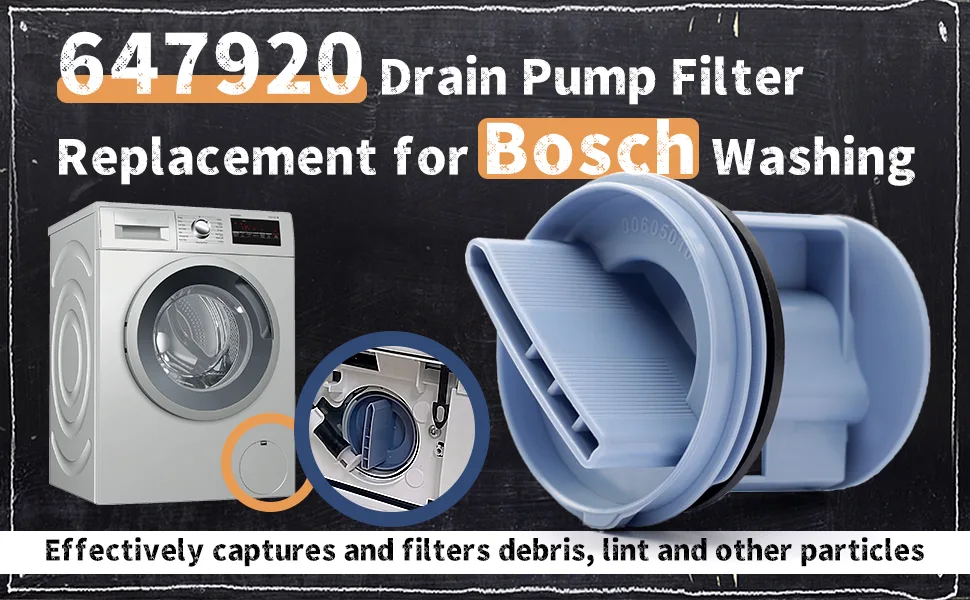
Image source: Bing (Web (fair-use with source credit))
Time to get your hands dirty. This is the core process that clears E04 in the majority of cases. Take your time and follow these in order.
Step 1: Unplug the washer. Remove power from the equation before working on any appliance that involves electricity and water. Pull the plug from the wall outlet. If your washer is hardwired, flip the corresponding breaker.
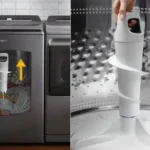
Step 2: Locate the filter access panel. It's at the bottom front of your machine, usually on the lower left or lower right corner. It looks like a small square or circular door, about six inches across. On most Bosch models, it's flush with the front and has a small notch or tab.
Step 3: Open the access panel. Insert your flathead screwdriver or a coin into the notch and gently pry the panel open. Some Bosch models use a small hinged door that swings down; others have a panel that pops off entirely. Either way, it's designed to open without much force.
If it's not budging, check that you're pressing the tab correctly rather than yanking.
Step 4: Position your towels and pan. Place your shallow pan directly underneath the filter opening. Surround it with towels. There's a small round knob or cap behind that access door.
When you remove it, water will drain out. Make sure your towel coverage extends a few inches beyond the pan to catch any splash.
Step 5: Remove the filter cap. Slowly twist the cap counterclockwise. Water will pour out, that's completely normal. Let it drain into your pan.
Once the flow slows to a trickle, fully unscrew the cap and pull it out.
Step 6: Clean the filter. Here's where the magic happens. The filter is a cylindrical mesh screen that catches coins, buttons, hair, lint, and stray socks. Using your hands, the needle-nose pliers, or the soft brush, remove all visible debris.
Pay close attention to the mesh itself. Lint can clog the fine weave even if no large objects are present.
Step 7: Inspect the filter housing. With the filter removed, stick your hand or a flashlight into the opening. There's a small impeller, the rotating fan blade of the drain pump, visible at the back of the cavity. Check for debris wrapped around it.
Loose threads and hair love to wrap around that impeller, so pull away anything you see.
Step 8: Replace the cap and panel. Screw the filter cap back in clockwise, hand-tight only. Don't overtighten it. Snap the access door back into place, plug the washer back in, and run a quick drain-and-spin cycle.
If everything goes cleanly without E04 reappearing, you're done.
If the code persists, move on to the next section. The pump filter was clean, so something else is blocking the path.
If the Filter Was Clean: Check the Drain Hose
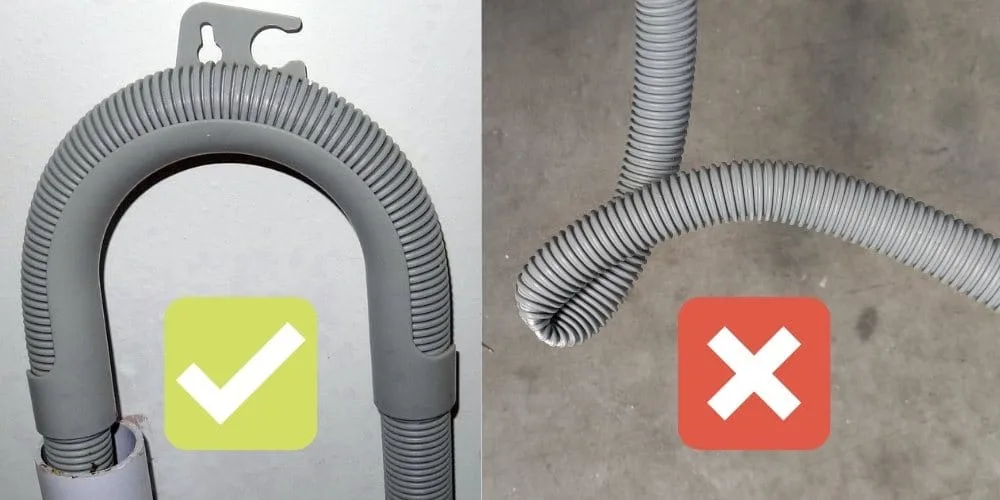
Image source: Bing (Web (fair-use with source credit))
If cleaning the filter didn't solve it, the next suspect is the drain hose. This is the corrugated plastic tube that runs from the back of your washer up to your wall drain or sink standpipe.
Step 1: Unplug the washer again. Safety first, always.
Step 2: Pull the washer away from the wall. You need access to the back of the machine. You'll see the drain hose connected to the rear panel, usually near the top.
Step 3: Check for kinks and pinches. Run your hand along the full length of the hose. Look for sharp bends, folds, or spots where the hose is compressed against the wall or the back of the machine. A kinked hose restricts water flow and triggers the same timeout error.
| Drain Hose Issue | Visual Sign | Fix |
|---|---|---|
| Kinked or folded | Sharp bend or crease in the hose | Straighten it out, reroute if needed |
| Pinched against wall | Flattened section | Pull washer forward, give the hose clearance |
| Clogged interior | Won't drain even when straight | Detach and flush with water |
Step 4: Straighten any kinks. Gently reshape the hose. If it's pinched behind the washer, reposition the machine so the hose has a clear, gentle curve.
Step 5: Check the standpipe or sink connection. If your washer drains into a standpipe (the vertical pipe behind your washer), make sure it's not blocked. Over time, lint and soap scum can build up inside that pipe. If you suspect a blockage, you can snake it from the top.
Step 6: Test the machine. Plug the washer back in and run a drain-and-spin cycle. If E04 doesn't reappear, you've fixed it.
If the drain hose is clear and the kinks are gone but the code persists, you're dealing with one of two remaining possibilities: a blocked pump or a failing drain pump.
The Problem Is Deeper: Pump and Internal Blockage
If you've cleaned the filter, checked the drain hose, and the machine still throws E04, the blockage is likely inside the pump itself or further down the drain line. This is less common but still manageable in some cases.
Check for a blocked pump. The impeller you saw earlier when cleaning the filter is the pump's rotating part. If a small object, like a coin, a bobby pin, or a broken piece of a toy, is wedged against the impeller housing, the pump can't turn freely, and the washer logs a timeout.
You can sometimes feel this by reaching into the filter housing while the machine is unplugged. Spin the impeller manually with your fingers. If it feels stuck or moves with resistance, something is jammed in there.
| Pump Condition | What You Feel | Next Step |
|---|---|---|
| Spins freely | Smooth rotation | Pump is probably fine |
| Spins with slight resistance | Could feel like debris | Inspect closer with a flashlight |
| Won't spin at all | Stuck solid | Likely blocked, clear if visible |
| Grinding or rough feel | Gritty, uneven rotation | Pump bearings may be failing |
If you can see the debris jammed in the impeller, carefully pull it out with your needle-nose pliers. That clears the blockage.
What if the pump is dead? If the impeller spins freely, the filter is clean, the drain hose is clear, and the machine still errors out, you're likely looking at a failed pump motor. This is the point where you need to decide: do you feel comfortable replacing a drain pump yourself, or should you call a professional?
When to Call a Professional
Not every repair is a DIY job. Here's how to know when to stop and bring in a pro.
Call a technician if:
- You've cleaned the filter, checked the hose, and the code still returns
- Water is pooling around the base of the washer
- You hear unusual grinding, buzzing, or humming sounds during the drain cycle
- Flashing error codes appear alongside E04
- Water isn't draining visibly even though the pump sounds like it's running
This is also the right choice if you're not comfortable working with appliances. There's no shame in calling for help. Drain pump replacement requires removing the front panel or tilting the machine, and that's riskier work. One wrong move and you could damage the door seal, the wiring harness, or the drum bearings.
| Reason to Call | Why |
|---|---|
| Code persists after all DIY steps | Likely pump motor failure or control board issue |
| Water leaking from the machine | Seal or hose failure, risk of water damage |
| Unusual sounds from the pump area | Debris in impeller or failing bearings |
| Standing water after a cycle completes | Drain path is completely blocked |
Preventing E04 From Coming Back
Once you've cleared the error, you probably don't want to see it again. Here's how to prevent it.
Clean the filter monthly. This is the single most effective habit. A quick filter check and rinse takes less than two minutes once you know where everything is. Set a reminder on your phone.
Don't overload the washer. Overloading puts extra stress on the drain pump. The machine has to work harder to extract water from a tightly packed drum, and that strain increases the likelihood of lint and debris compacting in the filter.
Use the right detergent. High-efficiency detergent is specifically formulated for front-load washers. Too much regular detergent creates excess suds, and suds can carry more lint and debris into the filter. If you notice recurring E04 codes, cut back on detergent and watch if the problem persists.
Empty pockets before washing. This sounds like common sense, but it's worth saying. Coins, keys, and other small items are the primary culprits for pump blockages. Get in the habit of checking every pocket before you toss clothes in.
Check the drain hose periodically. Every few months, pull the washer out and look at the drain hose. Make sure it hasn't been compressed by the machine being pushed back against the wall. Give it a little slack so it can maintain a smooth curve.
| Prevention Habit | Frequency | Time Required |
|---|---|---|
| Clean drain pump filter | Monthly | 2-3 minutes |
| Check pockets before loading | Every load | 30 seconds |
| Inspect drain hose for kinks | Every 3-6 months | 2 minutes |
| Use HE detergent only | Every wash | N/A |
| Verify washer isn't overloaded | Every load | N/A |
Final Thoughts
Bosch Washer Code E04 is a drainage timeout, and it's overwhelmingly a simple fix. The filter is almost always the culprit. You clean it, you reset the machine, and you go on with your day.
The drain hose is the second most common cause, and checking that takes minutes.
Only in a small percentage of cases is the problem the pump itself, and even then, replacement parts are relatively affordable if you choose to tackle it yourself. But if you're at all hesitant, a qualified appliance technician can handle it quickly.
The practical takeaway: don't panic when you see E04. Grab a towel, find your screwdriver, and work through the steps in order. Repeating the cycle after each fix tells you whether you've solved it or need to dig deeper.
Nine times out of ten, you'll be done before your coffee gets cold.

Similar Posts