Chest Freezer Not Freezing Troubleshooting
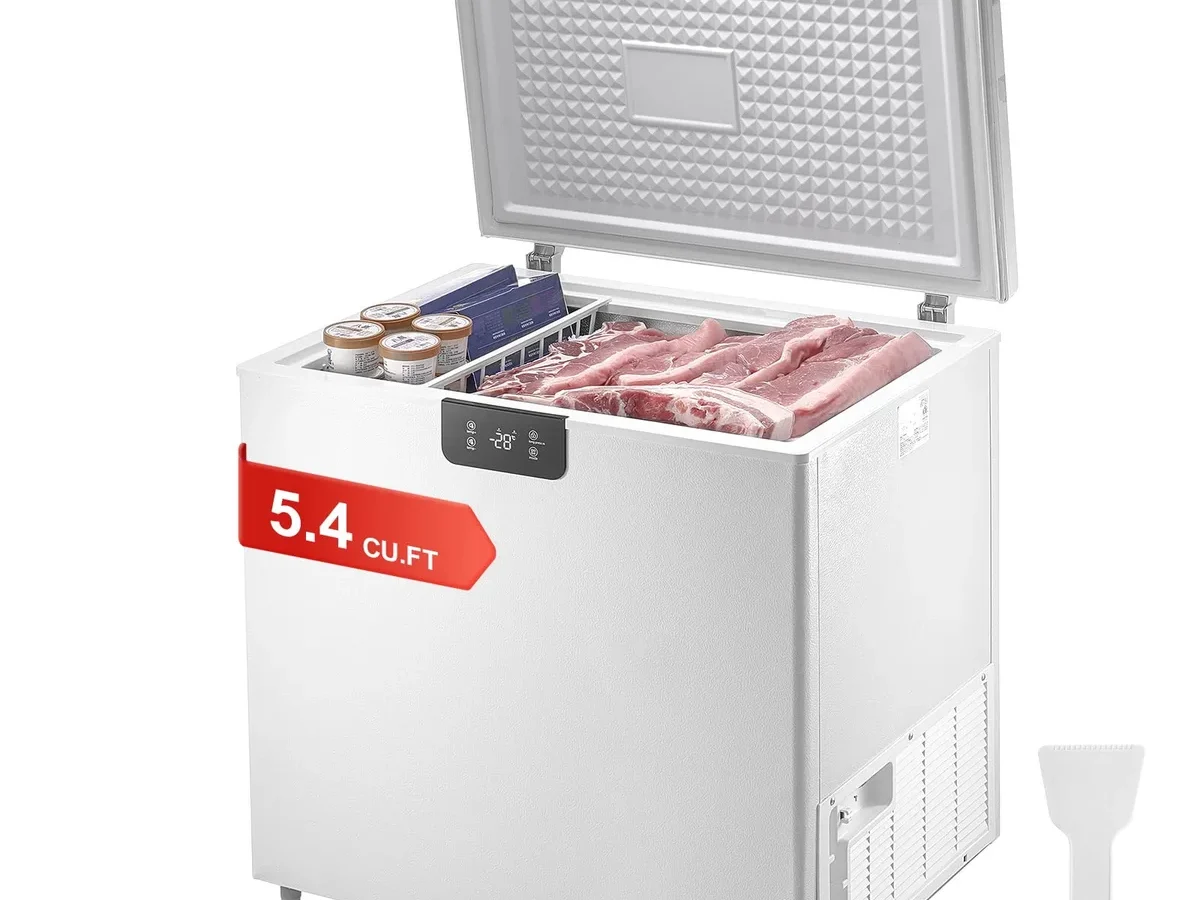
You walk to your chest freezer, pull the lid open, and instead of that rush of cold air, you hit a wall of room-temperature defeat. The milk jugs are soft, the frozen veggies are mush, and the meat you bought on sale is thawing fast. If you're reading this, you need the straight truth about chest freezer not freezing troubleshooting, and you need it before you lose hundreds of dollars in food.
Per USDA food safety guidelines, a closed freezer can keep food at safe temperatures for about 48 hours if it's full, or 24 hours if it's half-full. After that, the clock is ticking. The good news?
Most freezers that stop freezing have one of two simple failures, and you can often fix them yourself in under an hour. Let's walk through this step by step, starting with what matters most.
Quick Answer
Most chest freezers stop freezing because of dirty condenser coils or a failed start relay. Check the coils first. If they're clean, test the start relay.
These two causes account for roughly 80 percent of all "not freezing" calls. A relay costs about $10 to $15 and takes ten minutes to replace. If the compressor runs but the freezer stays warm, check the thermostat, defrost system, or a refrigerant leak.
Is It Safe to Save? Why Food Comes First
How to tell if your food is safe
Grab your phone and start a timer the moment you realize the freezer is warm. Your window for saving food is small. The USDA says perishable foods held above 40°F for more than two hours should be thrown out.
That includes meat, poultry, fish, eggs, dairy, and leftovers. Hard cheeses, butter, and most fruits can usually be saved, but use your nose and eyes.
Open the lid and look for the ice line. If the food touching the lid or the top layer is still frozen solid, you're in decent shape. If the top layer is mushy but the bottom layer still has ice crystals, you might be able to refreeze it, but the quality will suffer.
If everything is room temperature or smells off, cut your losses.
The two-hour rule explained
That two-hour window starts from when the freezer temperature first rose above 40°F, not from when you opened the lid. A full freezer stays cold longer than a half-empty one. If you open the lid every hour to check, you're letting cold air escape and shortening that window.
Resist the urge.
If you're unsure whether the power has been out long enough to cause problems, check for a thermometer. As of 2026, many modern freezers include a built-in temperature display. If yours doesn't, a standalone dial thermometer costs $8 to $12 and is the single best investment you can make for next time.
When to call it and toss it
Here's the hard rule: if any meat or seafood has been above 40°F for two hours or more, throw it out. Food poisoning from bacteria like Salmonella and E. coli doesn't always make food smell bad. Your nose is not a reliable safety tool.
Food safety experts consistently report that most people underestimate how fast bacteria multiply at room temperature.
If you're on the fence, err on the side of tossing it. Losing $100 worth of ground beef hurts. Losing a $500 emergency room visit hurts more.
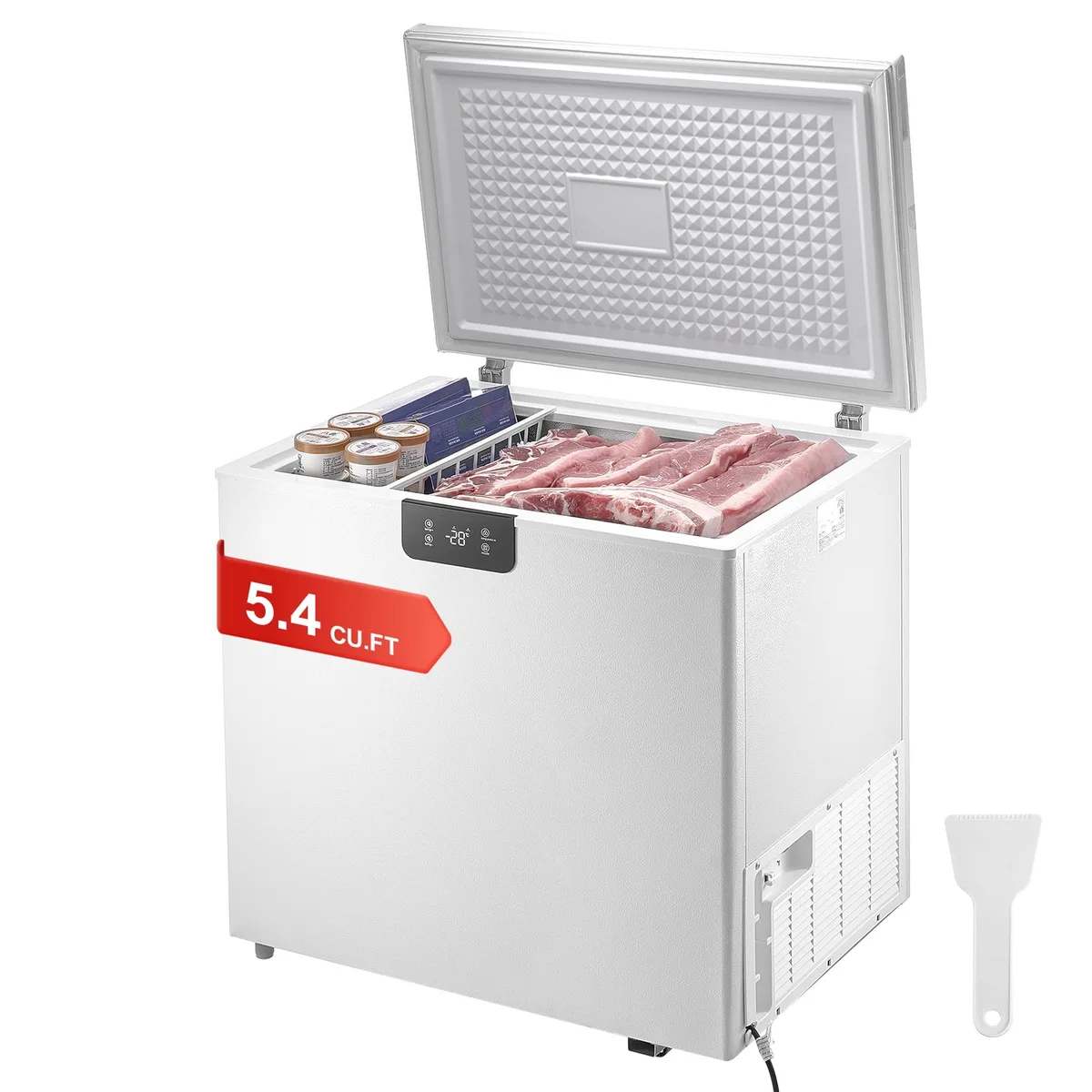
Image source: Bing (Web (fair-use with source credit))
The Two Most Common Reasons a Chest Freezer Stops Freezing
Dirty condenser coils: the most common fix
Condenser coils are the metal tubing, usually black or copper, that runs along the bottom or back of your freezer. They dissipate heat from the refrigerant. When they're coated in dust, pet hair, or garage grime, that heat can't escape.
The compressor works harder and harder until it either overheats and shuts off, or runs constantly without bringing the temperature down.
Pull the freezer away from the wall. Unplug it. Find the coils.
If you see a thick layer of dust, and you almost certainly will, you've found your problem. Use a vacuum with a brush attachment or a coil cleaning brush to clear them out. Do this twice a year going forward.
Here's what to look for when you inspect the coils:
- Light dust: a quick vacuum pass usually fixes it
- Thick matted dust or pet hair: use a stiff brush to loosen it first, then vacuum
- Greasy buildup (kitchen freezers): wipe with a degreaser and a cloth
- Coils behind a metal panel: unscrew the panel carefully and clean behind it
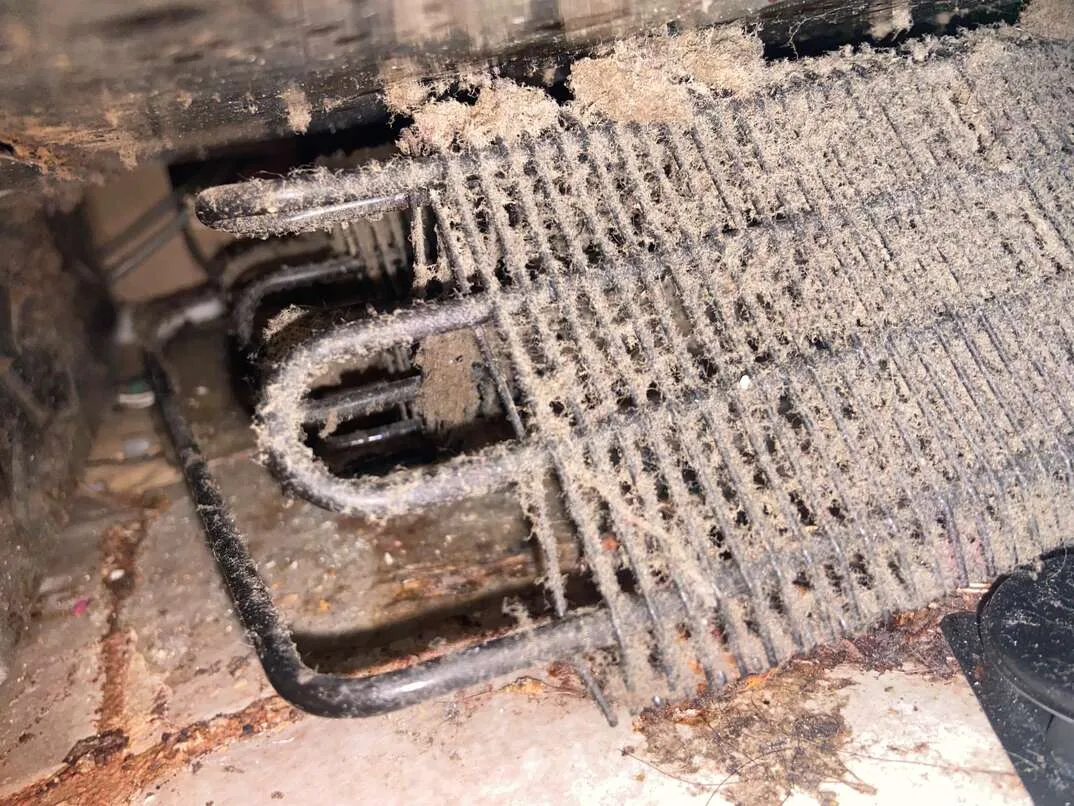
Image source: Bing (Web (fair-use with source credit))
Failed start relay: the $10 part that fails most
Every compressor has a start relay. It's a small plastic block, usually about the size of a matchbox, clipped onto the side of the compressor. It gives the compressor a jolt of electricity to get it running.
Over time, the internal components wear out. The compressor tries to start, fails, and clicks. You hear a click every few minutes, but the freezer never gets cold.
If you hear that clicking sound, the start relay is the prime suspect. You can order a replacement online for $10 to $15. Make sure you match the model number on the relay, they're not universal.
Unplug the freezer, remove the old relay using a flathead screwdriver, plug the new one in, and see if the compressor fires up.
How to tell which one you have
| Symptom | Likely Cause |
|---|---|
| Compressor silent, no hum or click | Power issue or dead compressor |
| Compressor hums but won't start | Start relay failure |
| Compressor clicks repeatedly | Start relay or overload protector |
| Compressor runs nonstop, freezer warm | Dirty coils or refrigerant leak |
| Freezer cold on bottom, warm on top | Airflow blockage or low refrigerant |
If the coils are clean and the start relay is working but the freezer still doesn't freeze, move to the next section for deeper diagnostics.
How to Test the Compressor and Start Relay Yourself
Safety first: unplug before you touch
Before you do anything inside the back panel or near the compressor, unplug the freezer. Seriously. The capacitor in some models can hold a charge even after unplugging, and a zap from a capacitor is no joke.
If you're nervous, use a screwdriver with an insulated handle and wear rubber-soled shoes.
Manufacturer specs confirm that the compressor compartment is accessible through a small panel on the back or bottom of most chest freezers. You'll need a screwdriver, usually a Phillips head or a 1/4-inch nut driver.
Testing the start relay with a multimeter
Find the start relay. It's clipped to the compressor and has two or three prongs. Remove it by pulling it straight off, it might need a gentle wiggle.
Set your multimeter to ohms (the Ω symbol). Touch one probe to the common terminal and the other to the run terminal. You should see a reading between 4 and 40 ohms, depending on the model.
Now test from common to the start terminal. That reading should be between 1 and 5 ohms. If you get infinite resistance (OL), the relay is dead.
If you get zero resistance (0.0), the relay is shorted. Either way, replace it.
Testing the overload protector
The overload protector is usually a small black or silver disc mounted on the compressor right next to the relay. It has a bimetallic strip that trips when the compressor gets too hot. To test it, remove it and check for continuity with your multimeter.
It should show near-zero resistance. If it's open, replace it.
What to do if the compressor tests fine
If the compressor has continuity and the start relay and overload protector test good, you've ruled out the easy fixes. That's a good thing. Now you know the problem is either in the control system or in the sealed refrigeration system.
Move on to the next section.
Here's a quick reference table for your multimeter tests:
| Component | Expected Reading | Failed Reading |
|---|---|---|
| Start relay (common to run) | 4-40 ohms | OL or 0.0 |
| Start relay (common to start) | 1-5 ohms | OL or 0.0 |
| Overload protector | Near 0 ohms | OL |
| Compressor windings | 2-20 ohms (varies) | OL or short to ground |
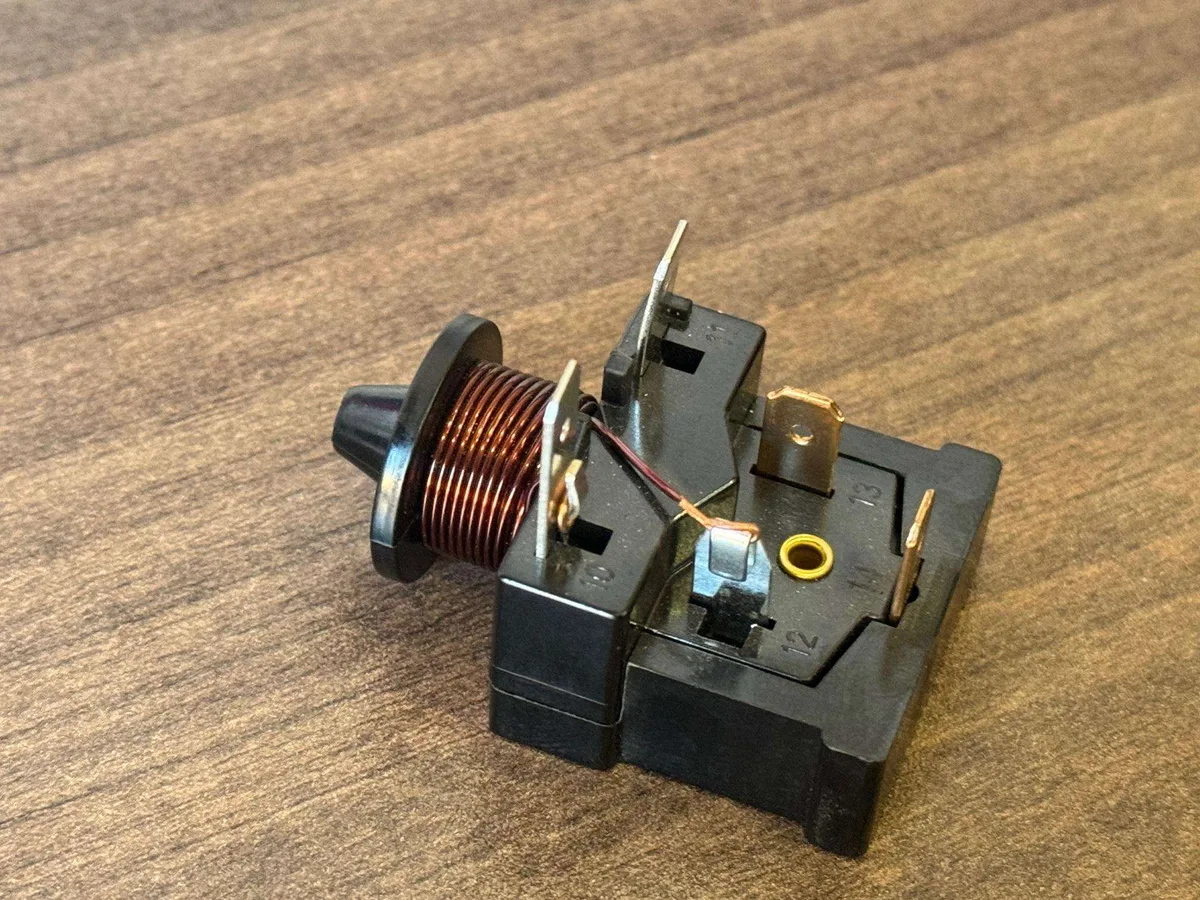
Image source: Bing (Web (fair-use with source credit))
The Lid Seal, Fan, and Airflow Problems Most People Miss
The dollar bill test for your lid seal
A failing lid seal lets warm air sneak in. That warm air carries moisture, which turns into frost. The frost builds up, blocks airflow, and makes the compressor run longer and longer.
You might not notice a bad seal because the freezer still feels cold, but it's slowly killing your efficiency.
Close the lid on a dollar bill. Try to pull it out. If it slides out easily, the seal is weak.
Do this in four or five spots around the lid. If any spot fails, clean the gasket with warm soapy water and check for cracks. A replacement gasket costs $20 to $50 and takes about 30 minutes to install.
Frost blocking the evaporator fan (auto-defrost models)
If you have an auto-defrost chest freezer, and not all do, there's an evaporator fan hidden behind an interior panel. That fan pulls air over the cold evaporator coils and pushes it into the main compartment. If the defrost heater fails, ice builds up on those coils.
Eventually the ice blocks the fan, and the freezer stops circulating cold air.
The compressor still runs. The coils still get cold. But no cold air reaches your food.
You'll hear the compressor humming with little to no airflow. The fix is to unplug the freezer, open the lid, and let it thaw completely, 12 to 24 hours depending on ice buildup. Once it's dry, the fan should spin freely again.
If it doesn't, the fan motor itself might be dead.
Overpacking kills airflow
You love filling that freezer to the brim. We get it. But chest freezers rely on cold air sinking and warm air rising.
When you cram every inch full, you block that circulation. The top of the freezer stays warm, and food near the lid thaws while the bottom stays frozen.
Leave at least an inch of space between the top layer of food and the lid. Don't stack bags tight against the walls. If you're a bulk shopper, use baskets to keep some air channels open.
It's a small change that makes a real difference.
Other airflow culprits
- A freezer stored in an unheated garage during winter can have issues. Below about 40°F ambient temperature, the compressor may not start at all.
- A freezer in direct sunlight or near a heat source has to work harder. Move it if you can.
- A freezer that's too far from the wall, less than three inches, can't vent heat properly. Pull it out and give it room to breathe.
When It's the Thermostat, Defrost System, or Control Board
How the thermostat works and how to test it
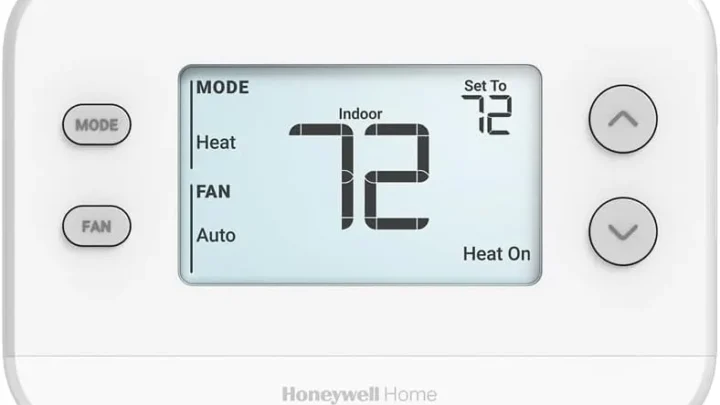
The thermostat tells the compressor when to run. It senses the air temperature inside the freezer and opens or closes a switch. When it fails, the compressor either runs constantly or never runs at all.
In either case, your food suffers.
To test it, you need a multimeter. Unplug the freezer. Locate the thermostat, it's usually behind a small plastic housing inside the freezer or mounted on the exterior control panel.
Remove the wires or use a jumper to isolate it. Set your multimeter to ohms. At room temperature, the thermostat should show continuity (near-zero ohms).
If you get infinite resistance, it's stuck open.
You can also test it by placing the sensing bulb in a glass of ice water. It should click and close the circuit at about 40°F. If it doesn't, replace it.
A universal chest freezer thermostat costs $15 to $30 and installs with two screws and a wire nut.
When the defrost system is the problem (auto-defrost models)
Auto-defrost freezers have a defrost timer, a defrost heater, and a defrost thermostat. The timer advances the freezer into a defrost cycle every 8 to 12 hours of compressor run time. The heater melts frost off the evaporator coils.
The thermostat ends the cycle when the coils reach about 50°F.
If any of these parts fail, the freezer either never defrosts (ice buildup) or runs in a defrost cycle that warms the food. The most common failure is the defrost timer. You can test it by turning the timer's knob with a screwdriver until you hear it click into defrost mode.
If the freezer doesn't warm up after 30 minutes, the timer or heater is bad.
Control board failures
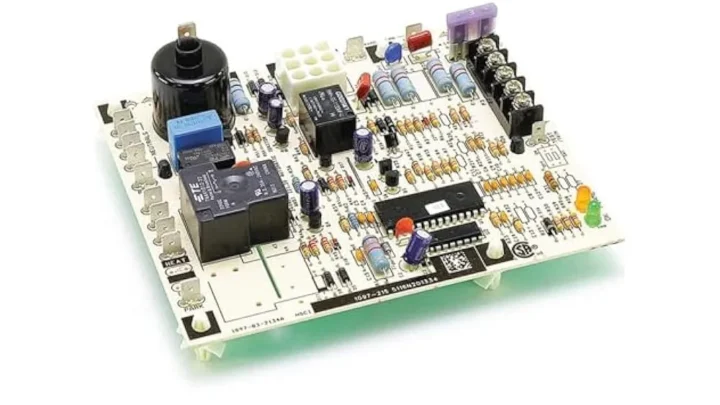
Some newer chest freezers have an electronic control board instead of a mechanical thermostat. These boards can fail from power surges, humidity, or age. Symptoms include erratic compressor behavior, flashing lights, or a completely dead unit.
Control board failures are harder to diagnose without a wiring diagram. If you've ruled out everything else, coils, relay, thermostat, defrost system, and the freezer still won't freeze, the control board is the next suspect. Replacement boards cost $40 to $80.
You'll need the exact model number from the rating plate inside the freezer.
If Nothing Has Worked: Refrigerant Leaks and When to Give Up
Signs of a refrigerant leak
A refrigerant leak is the most serious failure and the least DIY-friendly. The compressor runs. The coils get warm.
But the freezer never gets cold. You might hear a faint hissing sound from inside the walls. You might see an oily residue near a seam or joint.
Refrigerant is the lifeblood of your freezer's cooling system. It absorbs heat from inside and releases it outside through the condenser coils. When it leaks out, there's nothing to carry that heat away.
The compressor keeps running because the thermostat never tells it to stop.
Why R-600a changes the equation
As of 2026, most new chest freezers use R-600a (isobutane) refrigerant. It's more efficient and better for the environment than old R-134a. But it's also flammable.
The EPA requires that only certified technicians handle R-600a systems. DIY repairs on these units are not just risky, they can be dangerous.
If you have an older freezer with R-134a or R-12, a technician can sometimes fix a small leak and recharge the system. But the labor cost, typically $200 to $400, often exceeds the value of a used freezer.
Repair or replace: how to decide
| Factor | Repair | Replace |
|---|---|---|
| Freezer age | Under 5 years | Over 10 years |
| Repair cost estimate | Under $150 | Over $200 |
| Refrigerant type | R-134a or R-12 | R-600a |
| Energy efficiency | Older model | New Energy Star model |
| Food loss potential | Small load | Full freezer |
Here's a simple rule: if the repair costs more than half what a new freezer costs, replace it. A new 7-cubic-foot chest freezer runs $400 to $600 as of 2026. An energy-efficient model will pay back some of that cost in lower electricity bills within two to three years.
Maintenance That Prevents Failure in the First Place
Clean the coils twice a year
Set a recurring reminder on your phone. Clean the condenser coils every six months. If you have pets or store the freezer in a dusty garage, do it every three months.
It takes ten minutes and prevents the most common cause of compressor failure.
Check the lid seal every season
Run the dollar bill test every time the seasons change. Temperature swings in your garage or basement can cause the gasket to shrink or warp. A cheap gasket replacement now beats losing a freezer full of food later.
Keep the freezer mostly full
A full freezer stays cold longer during a power outage. If you don't have enough food to fill it, use milk jugs filled with water. They act as thermal mass and help maintain temperature.
Leave the jugs an inch of headroom so the ice can expand without cracking the plastic.
Use a standalone thermometer
The built-in thermometer on many freezers is not always accurate. Buy a $8 freezer thermometer and place it in the center of the main compartment. Check it monthly.
If it reads above 0°F for more than a day, you have a developing problem.
Listen for changes
Your freezer makes the same sounds every day. When it starts making a new sound, a click that wasn't there before, a hum that sounds strained, a rattling noise, that's your early warning. Investigate immediately.
Early catches save food and money.
Frequently Asked Questions
Why is my freezer running but not cold?
Dirty condenser coils are the most common cause. Clean them and see if the temperature drops. If the coils are clean, check the evaporator fan for ice buildup.
If the fan is free and the coils are clean, you may have a refrigerant leak.
Should I unplug my freezer to defrost it?
Yes, if there's more than a quarter-inch of frost buildup. Unplug the freezer, remove all food, and prop the lid open. Let it thaw naturally for 12 to 24 hours.
Never use a knife or ice pick to chip frost away, you can puncture the evaporator coils.
Why does my freezer click but not start?
That clicking sound is the start relay trying to engage the compressor. It usually means the relay has failed. Replace it with a new one matching your model number.
If the clicking continues after replacement, the compressor itself may be seized.
Can a dirty freezer cause it to stop freezing?
Absolutely. Dust and grime on the condenser coils prevent heat from escaping. The compressor works harder, runs hotter, and eventually fails or trips its overload protector.
Clean coils are the single most effective preventive maintenance step.
How long will food stay frozen if the power goes out?
A full freezer keeps food frozen for about 48 hours. A half-full freezer lasts about 24 hours. Keep the lid closed.
If the power is out longer than that, transfer food to a cooler with ice or a neighbor's freezer.
Is it worth repairing an old chest freezer?
It depends on the repair cost and the age of the freezer. If the repair costs less than half the price of a comparable new freezer, and the unit is less than 10 years old, repair it. Otherwise, replace it with an Energy Star model for better efficiency and reliability.

Similar Posts