Ge Dishwasher Not Draining
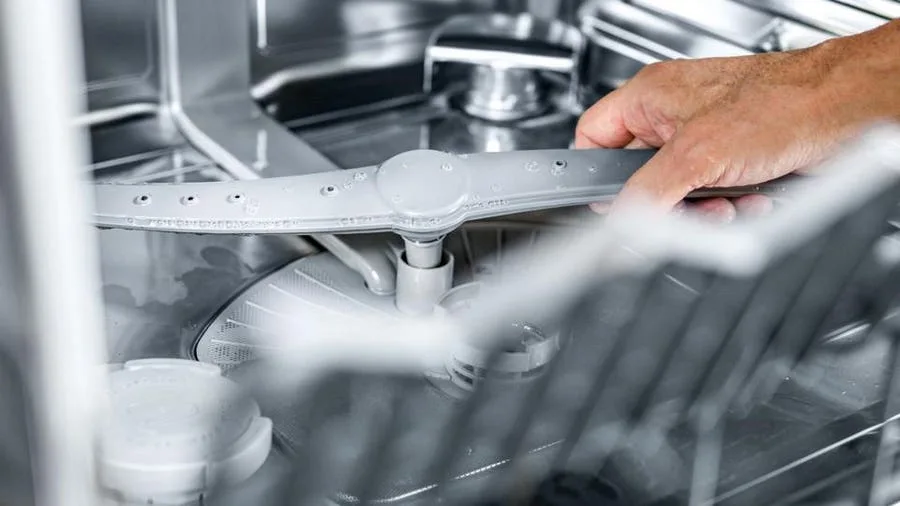
Image source: Bing (Web (fair-use with source credit))
Your GE dishwasher is full of water that just won't go down. You've already pressed cancel, maybe even unplugged it, and the water's still sitting there. It's frustrating, and honestly, it makes you want to call a repairman.
But here's the good news: you can fix most draining issues yourself in under an hour with basic tools. No plumbing experience required.
A GE dishwasher that won't drain usually comes down to one of four things: a clogged filter, a stuck check valve, a kinked drain hose, or a failed drain pump. The fix for each is straightforward, and I'll walk you through every step.
Let's start by figuring out what your dishwasher is actually telling you.
What Your Dishwasher Is Trying to Tell You
Before you pull anything apart, stop and listen. Your dishwasher gives you clear clues about what's wrong. Here's how to read them.
Water sitting at the bottom after a cycle. This is the classic symptom. Open the door and see a pool of water? Your drain pump isn't moving water out.
Keep in mind that a small amount of water in the bottom of the tub is completely normal. Most GE dishwashers hold about a quarter-inch of water in the sump area to keep the door seal lubricated. More than that means trouble.
The cycle stalls or times out. Modern GE dishwashers have sensors that detect when water isn't draining. When the control board doesn't get the right signal, it stops the cycle and flashes an error code. Common GE codes for draining problems:
| Error Code | Meaning |
|---|---|
| 7:45 or 7:30 | Drain time exceeded |
| C2 or C3 | Water level sensor / float switch fault |
| PD or P1 | Drain pump failure detected |
Gurgling or humming sounds. A gurgle usually means air is trapped in the drain line. That's often a kinked hose or a clogged air gap. A humming sound that lasts more than a couple of minutes means the pump motor is running but can't move water, which points to something physically blocking the impeller.
Water backing up into the sink. If water rises in your kitchen sink when the dishwasher runs, the issue is likely in the shared drain line or the garbage disposal connection. That's a different problem from a dishwasher-internal clog.
Here's your first decision point: does the tub have a lot of water or just a little? If it's a full tub, skip the filter check for now and head straight to the drain pump test. If it's a partial pool, start with the basics below.
That's the fastest path, and that's exactly what we're covering next.
First Checks Before You Open Anything
Let's knock out the easy stuff first. You'd be surprised how often the problem is something totally simple. Run through these three checks before you even think about taking things apart.
Reset the unit. GE dishwashers have a small computer that can get stuck in a fault state. Sometimes the drain cycle just needs a hard reset to clear the error code and force a drain. Unplug the unit from the wall (or trip the breaker) and wait a full 10 minutes.
A full 10 minutes. This drains the capacitors in the control board and forces a complete reboot.
Plug it back in, select the "Drain" or "Cancel" cycle, and see what happens. If you hear the pump kick on and water starts moving, you're done. If not, move on.
Check the garbage disposal. This is the single most common cause of dishwasher draining failure in homes that have a disposal. Your dishwasher drain hose connects to either the disposal or the sink drain line. If the disposal is clogged, or worse, if the knockout plug was never removed when the disposal was installed, water has nowhere to go.
Run the disposal for about 15 seconds with cold water flowing. If water backs up into the sink, you've found your problem. Stick a flashlight in there and check for food debris around the rubber flap where the dishwasher hose connects.
Inspect the air gap. That little chrome or plastic cylinder on the back of your sink is an air gap. It prevents dirty dishwater from siphoning back into your clean water supply, and it doubles as a trap for food particles. Pop the cap off and look inside.
If you see gunk, fish it out with a toothpick or a small brush.
Check the drain hose for kinks. This is a quick visual check. The drain hose runs from the dishwasher's pump to the sink drain or disposal, and it needs a smooth path. If it's kinked, bent sharply, or sagging in a U-shape, water can't flow out.
Straighten it out and make sure it has a consistent upward path.
Here's a quick reference for these first checks:
| Check | What to Look For | If You Find It |
|---|---|---|
| Hard reset | No change after 10 min unplugged | Move to next check |
| Garbage disposal | Water backing up, missing knockout plug | Clear disposal, remove plug |
| Air gap | Visible debris or clog | Clean with brush |
| Drain hose | Kinks, bends, or sagging | Straighten the hose |
If you've done all four of these and water is still sitting in the tub, it's time to get your hands wet. The next section covers the most common fix: the filter assembly.
The Most Likely Culprit: Cleaning the Filter and Check Valve
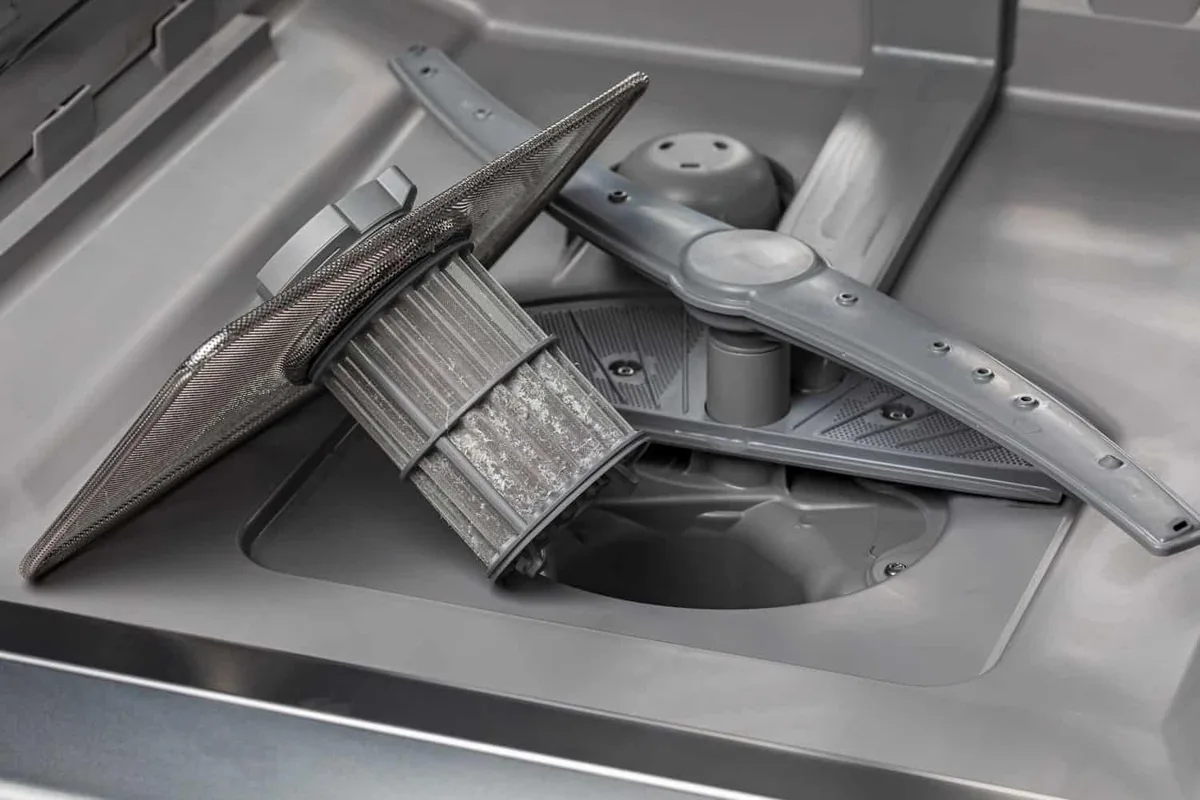
Image source: Bing (Web (fair-use with source credit))
This is where most GE dishwasher draining problems get solved. The filter assembly is the #1 cause of "won't drain" complaints, and it's also the easiest thing to clean. It just gets neglected because nobody knows it exists until something stops working.
What is the filter assembly? On most GE dishwashers manufactured after 2010, there's a two-part filter system located at the bottom of the tub. It consists of a fine mesh screen and a larger cylindrical coarse filter. During the wash cycle, food particles are ground up and flushed out.
When the filter gets clogged with stringy vegetables, bones, or bits of food packaging, water flow slows to a trickle.
Locating the filter. Open the dishwasher and pull out the bottom rack. You'll see a circular assembly at the bottom center of the tub. On most models, you'll need to twist the filter cap counter-clockwise to release it.
Some models have a bayonet-style lock, others have a screw-on cap.
Removing and cleaning. Twist the cap off and lift out the cylindrical coarse filter. You'll probably see the mesh screen underneath. Here's the honest truth: it's going to be gross.
That's okay. Don't be alarmed.
Rinse both pieces under running water. Use a soft brush or an old toothbrush to dislodge stubborn bits. Greasy residue comes off easily with a mixture of warm water and a few drops of dish soap.
Skip the bleach and harsh abrasives; they can damage the mesh and void your warranty.
The check valve. Right below the filter is a small rubber flap called the check valve. Its job is to stop water from flowing back into the tub after a drain cycle. When that flap gets stuck open with a piece of food or scale, water gravity-flows back into the bottom of your dishwasher.
That looks exactly like a draining failure, even though the pump works perfectly.
To inspect it, look down into the sump opening after you've pulled the filter. You'll see a black rubber flap. Push it gently with a wooden spoon or a silicone spatula.
It should flex and spring back. If it feels stiff, stuck, or has debris wedged under it, clean around it carefully.
A helpful trick: run a cycle with a cup of white vinegar in the detergent dispenser. The acid dissolves scale and mineral buildup that can make the valve stick.
Once you've cleaned the filter and freed the check valve, reassemble everything and run a short rinse cycle. If the water drains, congratulations, you just saved yourself a service call. If not, the problem is likely in the pump itself.
When the Drain Pump Meets an Obstruction
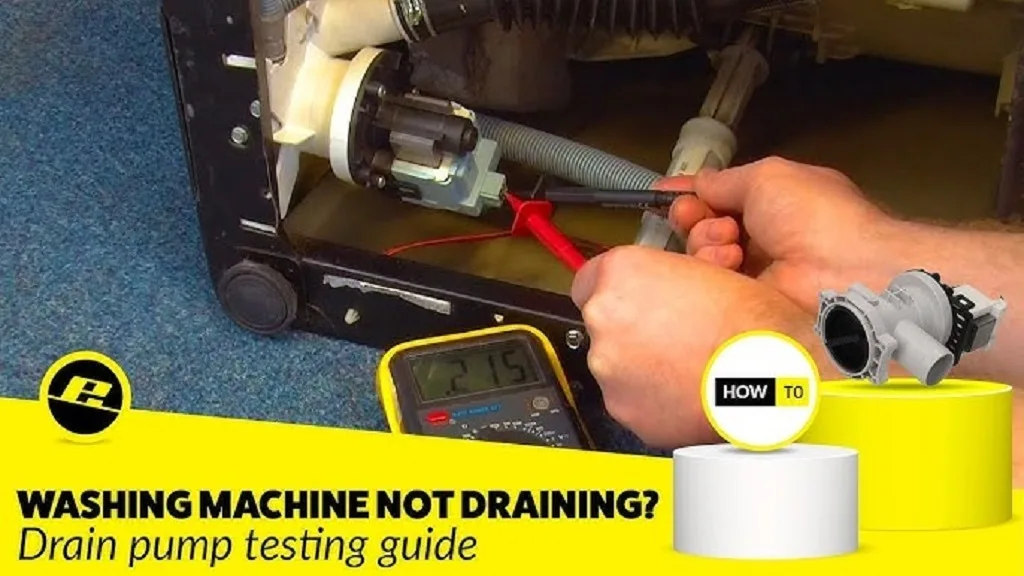
Image source: Bing (Web (fair-use with source credit))
Let's talk about the layer right below the filter: the sump and pump inlet. Even if your filter is spotless, debris can get past it and wedge itself into the pump housing.
How debris causes drainage failure. The pump uses an impeller, basically a small spinning fan blade, to push water out through the drain hose. When a piece of glass, a bone fragment, or a hard seed gets wedged between the impeller and the housing, the impeller can't spin. The motor tries to run, you hear a loud hum or buzz, but no water moves.
What you can do. With the dishwasher unplugged and the water supply shut off, reach into the sump area where the pump connects. Sometimes you can simply reach down and pull the obstruction free with a pair of long needle-nose pliers. If you can see it and grab it, that's the easiest fix.
Rotate the impeller by hand with a screwdriver to check for any remaining debris that's stuck.
If you can't see anything but the pump still won't turn, move the unit forward (more on that below) and inspect the pump housing directly. A small mirror and a flashlight help here. Clear any visible debris and manually rotate the impeller with a flathead screwdriver.
If it spins freely and the motor runs, you've avoided a costly replacement.
When the Drain Pump Motor Is Dead
If the filter is clean, the check valve moves freely, the sump is clear, and water still isn't leaving the tub, you're looking at the drain pump motor itself. This is the heart of the draining system, and when it fails, it needs to be replaced.
How the drain pump works. When the control board initiates a drain cycle, it sends power to the pump motor. The motor spins the impeller inside a plastic housing. The impeller creates suction, pulling water from the bottom of the tub and forcing it up the drain hose into your sink drain.
If the impeller is broken, the motor is dead, or something is jammed inside the housing, the pump can't do its job.
Testing the pump motor. This is where you need a multimeter and a little patience. If you've never used one, don't worry. We're just checking for continuity, which means testing whether the electrical circuit inside the motor is intact.
First, unplug the dishwasher. This is not optional. Water and electricity don't mix, and you're about to work near the base of the unit where spills happen.
Next, you need access to the pump. That means removing the lower access panel, the metal or plastic panel at the base of the dishwasher right below the door. On most GE models, it's held in place by two or three Phillips-head screws.
Remove them and set the panel aside.
You'll see the pump assembly: a black cylindrical housing with a hose connected to it. The pump motor is the part with two wires running to it. Label the wires with tape so you remember which goes where.
Disconnect them and set your multimeter to the ohms setting (the symbol that looks like a horseshoe omega).
Place one probe on each wire terminal. A healthy pump motor shows a reading between 10 and 30 ohms. If your multimeter reads "OL" (open loop) or a very high number, the motor's internal winding is fried, and the pump needs to be replaced.
Checking for a jammed impeller. Even if the motor has continuity, a chunk of glass or a bone fragment can lodge between the impeller and the housing, effectively freezing the pump. With the pump still in place but the power off, stick a screwdriver into the pump housing from the top (where the sump drains into it) and try to rotate the impeller. It should spin freely.
If it doesn't, you've got a foreign object stuck.
Removing the pump. If you have a dead motor or a jammed impeller you can't clear, you'll need to remove the pump assembly to fix it. This involves disconnecting the drain hose, the pump inlet, and usually removing a mounting bracket or two. The process varies by model, but here are the general steps:
- Disconnect power and water. Unplug the dishwasher and shut off the water supply under the sink.
- Remove the bottom rack and filter assembly. You'll need access to the sump from the top to disconnect the pump inlet.
- Tilt the dishwasher forward. Carefully pull the unit out from under the counter, just enough to access the back and bottom. Watch the drain hose and the power cord; don't pinch either.
- Disconnect the drain hose. Loosen the spring clamp that holds the hose to the pump outlet and pull it free.
- Unbolt the pump. Remove the screws or twist clips that hold the pump to the dishwasher tub.
- Pull the pump down and out. You may need to rotate it slightly to clear the inlet tube.
Once the pump is on your workbench, inspect the housing. Replacement pumps for most GE models cost between $45 and $90, which is dramatically cheaper than the $250 to $350 a repair technician will charge for parts and labor.
Before you order a new pump, check the impeller for debris one more time. If you find a bone fragment or a piece of glass wrapped around the impeller shaft, you can sometimes clear it, test the motor, and have a perfectly good pump. If the motor is truly dead, replace the pump.
Don't bother trying to rebuild the motor. It's not cost-effective, and you'll be back to square one in a month.
The Float Switch: A Hidden Culprit
Here's one that catches a lot of people off guard. GE dishwashers have a float switch located in the bottom of the tub. It's a small device that looks like an upside-down bowl or a mushroom cap.
Its job is to detect the water level. When the water rises to a certain point, the float rises and tells the control board to stop filling.
But the float switch also plays a role in thinking about draining. If the float gets stuck in the "up" position, the control board thinks there's too much water. To prevent flooding, it refuses to start a new cycle or a drain cycle.
The result? Your dishwasher has water in the bottom, but it won't start or drain.
How to check it. Open the dishwasher and look in the bottom corner. You'll see the float, a small plastic piece that should move up and down freely. Press it down with your finger.
It should move smoothly and spring back up. If it feels sticky or stuck, clean the area around it. Food debris or mineral scale can easily jam it.
How to fix it. Use a damp cloth to wipe around the float and the housing. If there's scale buildup, a 50/50 vinegar and water solution helps. Test the movement several times to make sure it's free.
That's usually all it takes.
GE Dishwasher Error Codes Related to Draining
If your GE dishwasher displays an error code, it's trying to tell you exactly what's wrong. Don't ignore it. Here are the most common draining-related codes and what they mean:
| Error Code | Meaning | Likely Fix |
|---|---|---|
| 7:45 or 7:30 | Drain time exceeded | Clogged filter, kinked hose, failing pump |
| C2 or C3 | Water level sensor / float switch fault | Stuck float, faulty sensor, stuck check valve |
| PD or P1 | Drain pump failure detected | Dead pump motor, jammed impeller |
| 6:30 | Fill time exceeded (can appear with drain errors) | Water supply valve, float stuck |
A specific note here: if you're getting a 7:45 code, the drain cycle started but couldn't finish within the allotted time. That's almost always a blockage somewhere in the drainage path. Work through the filter, hose, and pump checks in that order.
Tools You'll Need
Here's a quick list of everything you might need. Most of this you probably already own.
- Multimeter for testing the pump motor (any basic digital model from your hardware store under $20 will work)
- Phillips-head screwdriver for removing the access panel and pump
- Flat-head screwdriver for prying clips and rotating the impeller
- Needle-nose pliers for grabbing debris
- Old toothbrush or soft brush for cleaning the filter and check valve
- Bucket and old towels for catching water when you disconnect hoses
- Gloves because the sump area is messy and food debris can have sharp edges
- Flashlight since working space under the dishwasher is tight
Maintenance Tips to Prevent Future Clogs
Now that your dishwasher is draining properly, let's keep it that way. Preventive maintenance takes about five minutes a month and saves you from doing this again.
Scrape, don't rinse. You don't need to rinse dishes perfectly, but scrape off large food particles before loading. The filter can handle small stuff, but big chunks clog it faster.
Clean the filter monthly. Pull the filter assembly out once a month and rinse it under hot running water. If you have hard water, soak it in a vinegar solution for 10 minutes to dissolve scale.
Run a hot vinegar cycle. Once a month, put a cup of white vinegar in a dishwasher-safe bowl on the top rack and run a hot cycle. This breaks down grease and mineral deposits in the pump, hoses, and sump.
Use the right detergent. Cheap, low-quality detergent doesn't break down food properly, which means more work for your filter. High-quality tablets like Finish Quantum are worth the extra $5 a box. They contain rinse agents and enzymes that keep the system cleaner.
Check the air gap occasionally. Every few months, pop the cap off the air gap and give it a quick look. If you see debris, remove it before it becomes a blockage.
What It Costs to Fix
Here are the realistic costs, both if you do it yourself and if you hire someone. Most fixes fall under $100 DIY, and replacing the pump is still under $100 in parts. A professional will charge significantly more.
| Fix | DIY Cost | Professional Cost |
|---|---|---|
| Clean filter | Free | $150–$200 (service call + labor) |
| Unclog drain hose | Free | $150–$200 |
| Clear jammed impeller | Free | $150–$200 |
| Replace drain pump | $45–$90 (part) | $250–$350 (parts + labor) |
| Replace float switch | $20–$40 (part) | $180–$250 |
If your dishwasher is still under warranty (usually 1 year, and 5 years for the internal parts), many of these fixes are covered at no cost. Check your model's warranty status at GE's official site before you start.
When to Call a Professional
There's no shame in calling for backup. If you've worked through every step here and the water still won't drain, you're dealing with something more complex.
Electrical issues. If the control board is damaged, it won't send power to the pump even if the pump is fine. Testing and replacing control boards are jobs for a pro. This is rare, but it happens.
Wiring faults. Loose or corroded connections behind the unit can cause intermittent draining failures. If your dishwasher drains fine sometimes but fails other times, this could be the issue. A pro can check the wiring harness safely.
Plumbing issues. Sometimes the problem isn't the dishwasher at all. A blockage deep in your home's drain line requires professional drain cleaning. If you notice multiple drains in your kitchen backing up, this is likely your issue, and a plumber is your best bet.
Look for a certified appliance repair technician. Local independent shops and national chains like Sears Home Services both work on GE dishwashers. It's worth checking with the GE Appliance Parts & Services network for factory-certified service.
If you choose to use a local independent tech, check reviews on a general site like Yelp or Google. Expect to pay $70, $120 just for the service call, plus parts and labor on top of that.
Bottom Line
A GE dishwasher that won't drain is frustrating, but it's rarely a serious problem. In nearly every case, it's a clogged filter, a stuck check valve, a kinked hose, or a jammed impeller, all things you can fix yourself in under an hour with basic tools.
Start with the simple stuff: reset the unit, check the disposal, inspect the air gap, and straighten the hose. Then move to the filter and check valve. Test the pump if you need to, and replace it if it's dead.
You've got this. And if you need more help, GE publishes free service manuals for most models on its official support site. A quick search for your model number plus "service manual" gives you the exact diagrams and torque specs for your specific machine.

Similar Posts