Generac Generator Troubleshooting
Image source: Bing (Web (fair-use with source credit))
Your Generac has been sitting there for months, and the one time a storm knocks the power out, it won't start. Or maybe it starts up fine, but the lights in the house stay dark, which is somehow even more frustrating than no power at all. Whatever brought you here, troubleshooting a Generac is usually more straightforward than you'd think, provided you know what to check and in what order.
The good news? Most generator failures trace back to a handful of easily fixable causes. The key is to approach every issue methodically and safely.
We'll walk through the most common failure points, starting with the safest checks and moving toward the more technical ones, so you can get back online without an unnecessary repair bill.
Safety First: Two Hazards You Can't Ignore
Before you touch a single bolt, understand this: a generator is a small engine wired directly into your home's electrical panel. That means you're dealing with two serious hazards at once, rotating machinery and lethal voltage.
Your Generac's automatic transfer switch (ATS) exists for a reason. It physically isolates your home from the utility grid when the generator is producing power. If that switch is faulty or bypassed, you could backfeed electricity into the grid.
That's a genuine electrocution risk for line workers repairing the outage. Don't mess with the transfer switch internals unless you're a licensed electrician.
Carbon monoxide is the other silent killer. Generac's air-cooled standby generators burn gasoline, liquid propane, or natural gas, all of which produce CO as a byproduct. Never run the unit in an enclosed garage, even with the door open.
Keep it at least five feet from doors, windows, and vents.
One hard rule: if the generator is running, don't put your hands near the muffler, alternator, or any moving belts. The exhaust can reach 600 degrees Fahrenheit in under a minute. Wait for the unit to cool completely before performing any physical inspection.
What You'll Need
You don't need a full workshop. A basic socket set, a digital multimeter, and a pair of insulated gloves cover most situations. The multimeter is essential for checking battery voltage and testing components.
You can find one at any hardware store for under 30 dollars.
Generator Won't Start? Work Through These Checks
If your Generac refuses to crank, don't assume the engine is shot. Battery issues account for the overwhelming majority of no-start conditions in standby generators. Let's work through this logically, from simplest to most complex.
Step 1: Check the battery. A healthy 12-volt battery should read around 12.6 volts with the charger off. If it reads below 12.2 volts, it's likely too weak to crank the engine. Use your multimeter to test it.
If the voltage is low, try charging it. But honestly, if it's more than three years old, replace it. It's cheap insurance compared to a failed start during a storm.
Step 2: Check the fuel supply. This sounds obvious, but it's worth saying. Generac standby generators have a fuel shutoff valve. Make sure it's fully open.
If you run on propane or natural gas, check that the tank has fuel and the main supply valve is open. Don't assume; look. A partially closed valve starves the engine.
Step 3: Check the battery cables. A loose or corroded connection kills an otherwise perfect battery. Check the terminals for white or green corrosion. Tighten any loose connections.
Follow the cables to the frame ground, too. A bad ground connection causes all sorts of intermittent starting issues.
Step 4: Check the fuse. The control panel has a small fuse, often a red 15-amp blade fuse. If it's blown, the controller has no power at all. Pull it out and look at the metal strip inside.
If it's broken, replace it. This is a 2-dollar part that frequently causes a no-crank condition.
Step 5: Put the controller in manual mode. Press the "Manual" button on the controller. This forces the generator to start, bypassing the automatic logic. If it starts in manual mode, the problem is likely with the transfer switch settings or the controller's programming.
If it still won't start, the issue is upstream.
If you've checked all five of these and the engine still won't turn over, stop. You're entering territory that requires deeper diagnostic equipment, the starter motor, valve lash, or controller board could be at fault. We'll cover when to call a pro later.
Decoding Those Blinking Error Codes
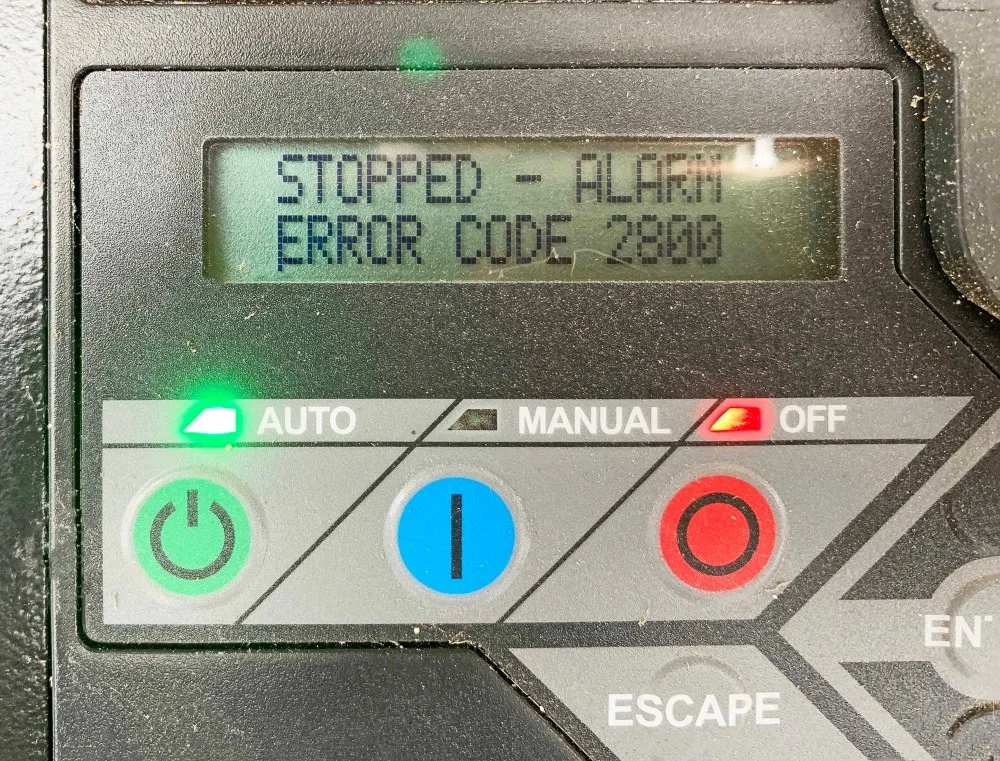
Image source: Bing (Web (fair-use with source credit))
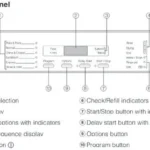
Your Generac has a built-in self-diagnostic system. When something goes wrong, the controller flashes a specific error code on the LCD screen. These aren't designed to confuse you; they're a map.
You just need to know how to read them.
Most modern Generac controllers, like the Nexus or Evolution models, display a two-digit numerical code. Each number corresponds to a specific fault condition. The code tells you what the generator detected, not necessarily what's wrong.
For example, a "No Crank" code means the engine didn't turn over when commanded. That's the symptom, not the cause. Your job is to figure out why.
Here's a quick rundown of the most common error codes you'll encounter:
| Error Code | Meaning | Likely Cause |
|---|---|---|
| Code 27 | No crank | Dead battery, loose cables, bad starter |
| Code 36 | Low charge rate | Faulty alternator or charging circuit |
| Code 41 | Low oil pressure | Low oil level, or a bad oil pressure switch |
| Code 49 | Overvoltage | Voltage regulator failure or loose wiring |
| Code 51 | Overspeed | Governor issues, or a blocked air intake |
| Code 55 | Transfer switch fault | ATS mechanism stuck or misaligned |
Code 27 (No Crank) is the most common. Check the battery and cables first. If those are fine, the starter solenoid or the starter motor itself might be bad.
A rapid clicking sound from the starter area points to a dead battery or bad solenoid.
Code 36 (Low Charge Rate) means your battery isn't being recharged while the engine runs. This usually points to a failed charging alternator or a broken wire in the charging circuit. With the engine running, battery voltage should climb to around 13.5 to 14.5 volts.
If it stays flat, you've found the culprit.
Code 49 (Overvoltage) is dangerous for your appliances. The voltage regulator is likely sending too much power to the generator's output. Don't run the unit until you fix this, it can fry your HVAC system and all your electronics.
One more thing: don't clear an error code without addressing the underlying issue. It's tempting to press the "Enter" button to reset the fault and try again. You can do that once.
If the code comes back, you have a genuine problem. Repeatedly clearing codes is how small issues turn into expensive repairs.
Generator Runs But No Power to the House: The ATS and Breakers
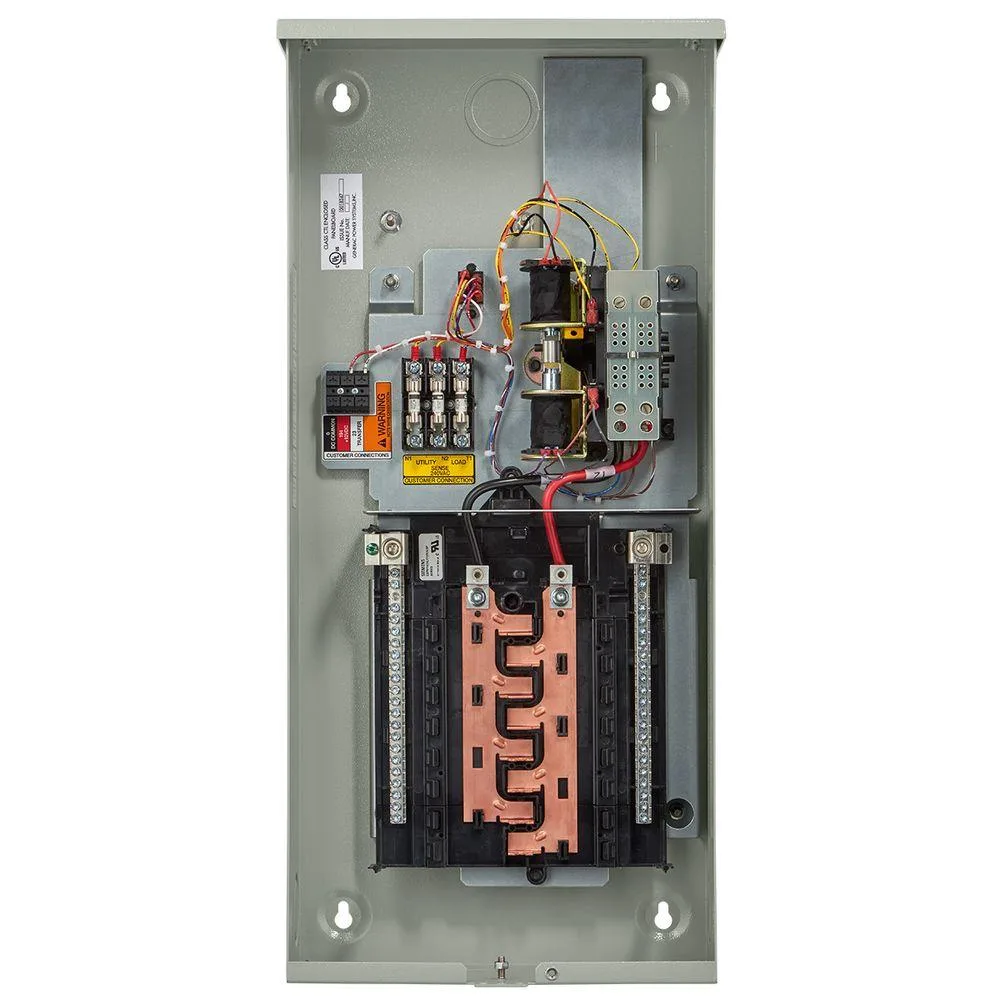
Image source: Bing (Web (fair-use with source credit))
So the engine is running. It sounds like a generator. But your house is still dark.
That's a specific and frustrating failure mode. It almost always points to the automatic transfer switch (ATS) or the generator's output breaker.
The ATS sits between your utility meter and your electrical panel. It does two jobs. First, it disconnects your home from the grid during an outage.
Second, it connects the generator's output to your panel. The failure is almost always in that switching mechanism.
Check the generator's main breaker first. It's a large breaker on the side of the generator, usually rated at 40, 50, or 100 amps. If it's tripped, the generator produces power but nothing gets out. Reset it by flipping it fully off and then firmly on.
Sometimes these breakers look fine but are actually tripped internally.
Check the ATS position. The switch should physically move between the "Utility" position and the "Generator" position. If it's stuck in the middle, that's your problem. The most common reason for a stuck transfer switch is a low or dead battery on the generator itself.
The ATS uses the generator's battery for its own control power. A weak battery can cause it to hesitate or fail to make the transition.
Check the ATS fuses and breakers. Most transfer switches have fuses or small breakers inside their control panel. Open the ATS enclosure and look for signs of a blown fuse. A melted plastic smell or a blackened fuse is a clear giveaway.
Replacement fuses are cheap and sold at any hardware store.
Here's the thing: if you're not comfortable working inside the ATS enclosure, don't. It has line voltage running to it from the utility. That's not something to mess with while you're tired during a storm.
If the generator breaker is fine and the fuses look okay, the problem is likely the controller logic or the ATS motor itself.
What about the utility disconnect? Some homes have a separate disconnect switch between the meter and the ATS. Check it. If it's in the off position, your house is isolated from everything.
Flip it on and see if the generator picks up the load.
If the generator runs, the breakers are set, and the ATS is in the correct position, yet you still have no power, the issue might be inside your main electrical panel. A tripped main breaker is possible, especially if the generator's initial surge was strong. Check the main breaker in your panel as well.
Surging, Stalling, and Low Voltage: Fuel and Electrical Issues
A generator that starts but surges, hunts, or stalls under load is a different beast than one that won't start. This points to fuel delivery or the engine's governing system, not just the battery. Let's break down the most common culprits.
Fuel pressure and volume issues. Your Generac needs a consistent supply of fuel to maintain stable RPM. If it's running on natural gas or propane, a clogged fuel line or a faulty fuel regulator will cause it to surge. The engine speeds up, chokes, slows down, and repeats the cycle.
That hunting behavior is a classic fuel starvation symptom.
Gasoline-powered units have their own quirks. Old gas is the top culprit. Ethanol-blended gas is notorious for absorbing moisture and gumming up carburetor jets.
If your tank has fuel that's been sitting for more than six months, drain it. Replace it with fresh, stabilized gas. Stale fuel is the most common cause of a Generac that runs rough or stalls.
Clean or replace the fuel filter. A clogged fuel filter restricts flow. Most Generac fuel filters are inline and cost a few dollars. If it looks dark, brown, or obviously dirty, swap it out.
A clean filter fixes a surprising number of surging issues.
Check the stepper motor and actuator. This is the part that controls engine speed. On many Generac models, a stepper motor adjusts the throttle based on load. If it's binding or failing, the engine can't maintain a steady RPM.
You might hear it clicking or struggling when the load changes. This is a more complex fix, but it's a known failure point.
Check the spark plug. An old spark plug causes weak ignition, especially under load. Pull it out and inspect the electrode. A healthy plug has a light tan or gray insulator.
If it's black and sooty, it's running too rich. If it's white and glazed, it's running too lean. Both conditions cause rough running.
Set the gap to the manufacturer's spec, which is typically around 0.030 inches for Generac engines.
Verify engine RPM. A generator must run at a precise speed, 3600 RPM at 60 Hz for most residential units. If the RPM is off, the frequency is off, and your appliances will misbehave. Lights might flicker.
Motors might run slow. Use a multimeter with a frequency setting to check the output, or check the controller's display for a tachometer reading if yours has one.
Low voltage under load. This is a different symptom. If the generator runs smooth at no load, but the lights dim when the AC kicks on, you're looking at an electrical problem. The voltage regulator is the primary suspect.
It's a small component that manages the alternator's output. A failing regulator can cause voltage to dip dramatically under load. This needs replacement by someone who knows what they're doing.
Check the air filter. A clogged air filter restricts airflow, which disrupts the fuel-to-air ratio. It's a two-minute fix that people overlook. Pull it out and hold it up to a light source.
If you can't see light through it, replace it. Clean it with soap and water if it's a foam filter, or just swap it for a new one.
When to Call a Professional
Knowing when to stop is just as important as knowing what to check. Some repairs are beyond the typical homeowner's toolkit, and that's okay. Call a certified Generac dealer if you encounter any of the following:
- The generator still won't start after checking battery, fuel, fuses, and manual mode. The problem could be in the starter motor, controller board, or engine mechanicals.
- Error codes repeat after you've addressed the obvious causes. That's the machine telling you the fix is deeper than surface level.
- You see any signs of electrical burning or melting. That's a fire risk, not a DIY project.
- The ATS is visibly damaged or stuck. The internals carry lethal voltage from the utility.
- You're not confident working with line voltage. There's no shame in hiring a licensed electrician.
A professional will have specialized diagnostic tools and factory training. They can read live data from the controller, test the alternator under load, and verify proper transfer switch operation. In many cases, the cost of a service call is far less than the cost of a botched DIY repair that fries your appliances or causes property damage.
Routine Maintenance That Prevents Most Problems
An ounce of prevention beats a pound of repair, especially when it comes to standby generators. A well-maintained Generac starts reliably when you need it most. Here's what a basic maintenance routine looks like:
- Run the generator monthly. Let it run under load for at least 30 minutes. This keeps the engine lubricated, charges the battery, and clears moisture from the system.
- Check the oil level monthly. Generac engines hold a specific amount of oil, and low oil triggers a fault code. Top it off with the manufacturer-recommended viscosity.
- Replace the oil annually. Even if you run the generator rarely, oil breaks down over time. Follow the manufacturer's schedule.
- Change the air filter annually. A clean filter maintains the correct fuel-to-air ratio and prevents rough running.
- Test the battery every six months. Check voltage and clean the terminals. Replace the battery every three to five years as a preventive measure.
- Inspect the fuel system annually. Look for leaks, cracks, or corrosion in fuel lines. Replace any damaged components immediately.
Following these steps won't guarantee zero issues, but it dramatically reduces the odds of a no-start when the power goes out.
Final Thoughts
Troubleshooting your Generac doesn't require an engineering degree. It requires a logical approach, a basic toolkit, and healthy respect for the hazards involved. Start with the simple checks, battery, fuel, breakers, and work your way up from there.
Most problems have straightforward fixes.
And when you hit the limit of what you can safely do, call a professional. That's not giving up; that's being smart. Your generator is protecting your home, your family, and your peace of mind.
Treat it with the care it deserves, and it'll do the same for you.

Similar Posts