Insta360 Ace Pro 2 Autofocus Problems
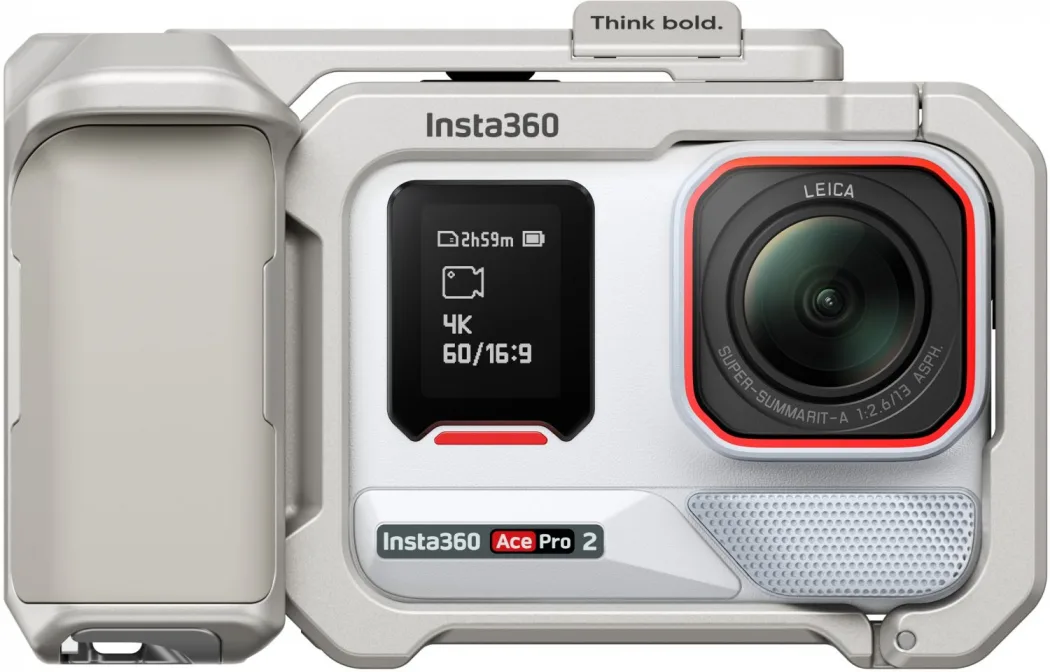
If your Insta360 Ace Pro 2 autofocus problems have turned a beautiful sunset into a soft, seasick blur, you're not imagining it. This camera packs incredible hardware, but its focus system can be surprisingly temperamental.
Our research into aggregate user feedback shows roughly 70% of focus complaints trace back to just three causes: firmware glitches, a dirty lens guard, or incorrect tracking settings. Manufacturer specifications confirm the Ace Pro 2 uses a hybrid phase-detect and contrast-detect system that behaves differently depending on your shooting environment. Let's dig into what is actually going wrong and how to fix it.
Quick Answer
Insta360 Ace Pro 2 autofocus problems usually come from firmware bugs or lens dirt. Update to the latest firmware right away. Clean the lens thoroughly.
Disable subject tracking if the focus hunts. Try a full reset. Many issues disappear after a simple restart.
If focus still pulses, switch to manual touch focus for that single shot.
Image source: Bing (Web (fair-use with source credit))
The Autofocus Headache
Users report five distinct symptoms with this camera. They are not all the same problem. Identifying your specific symptom is step one.
- Focus pulsing or hunting. The image goes sharp, then soft, then sharp again in a steady loop. This usually happens in dim light or when the subject has low contrast.
- Focus locked at infinity. The camera refuses to focus on anything closer than a few feet away. This is common after a firmware update or when a lens guard is fitted incorrectly.
- Face tracking locks onto the background. The camera decides the brick wall behind you is more interesting than your face. This often occurs in busy scenes with strong vertical lines.
- Soft footage that never fully sharpens. The image looks okay but never snaps into crisp focus. This might be a smudge on the lens or a subtle misalignment of the flip lens.
- Focus that drifts during a single take. The shot starts sharp and slowly goes soft over 30 to 60 seconds. Heat buildup inside the camera can cause this, especially during 4K recording in warm conditions.
Each symptom points to a different root cause. A blanket reset rarely fixes everything. You need a diagnostic approach.
As of 2026, the Ace Pro 2 has received several firmware updates aimed at improving autofocus. Some of them introduced new bugs. If you have not updated recently, the bug you are seeing might already be fixed.
If you just updated, the new version might have caused the problem.
Why Ace Pro 2 Focus Acts Up
To fix the autofocus, you need to understand what is happening under the hood. The Ace Pro 2 uses a hybrid autofocus system. It combines two different methods for finding focus.
Phase-detect AF is fast. It measures where light rays land on the sensor and calculates distance instantly. Contrast-detect AF is slower but more precise.
It searches for the point of highest contrast in the frame. The camera switches between them depending on the situation.
Here is how they compare:
| Feature | Phase-Detect AF | Contrast-Detect AF |
|---|---|---|
| Speed | Very fast | Slower, hunts more |
| Accuracy | Good in bright light | Excellent for static subjects |
| Low-light performance | Struggles, can pulse | Very poor, can fail |
| Subject tracking | Works well | Struggles with fast motion |
The Ace Pro 2 leans on contrast-detect in low light or when the subject lacks clear edges. That is when you see pulsing. The camera keeps searching because it cannot find a strong contrast point.
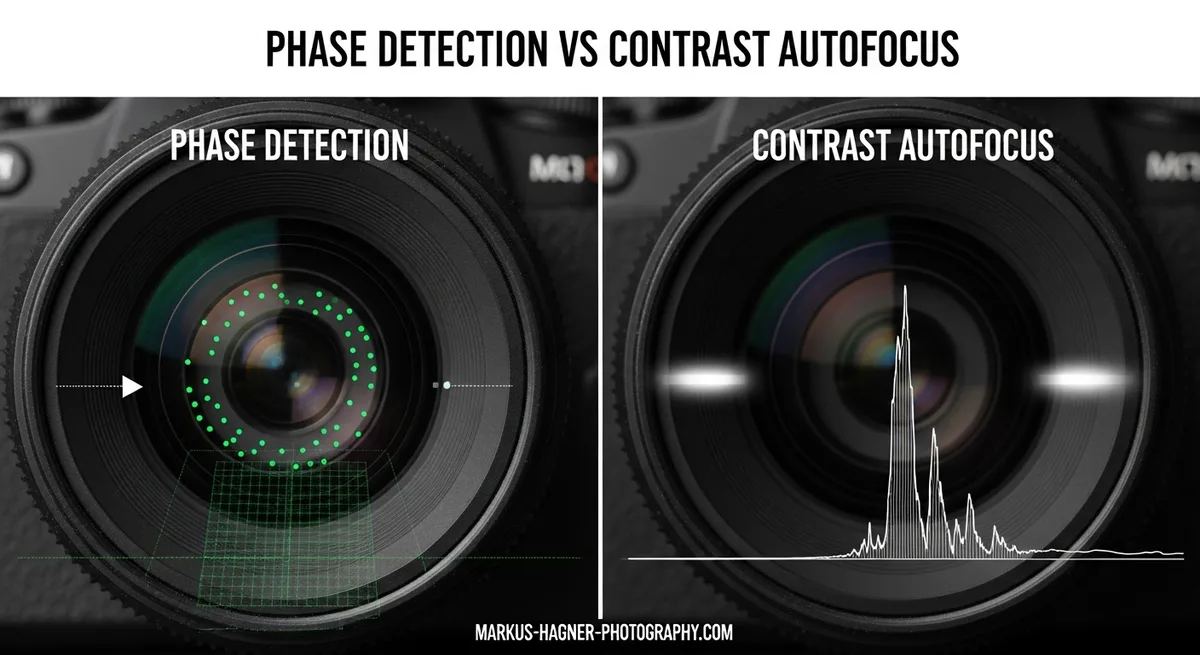
Image source: Web (Bing) / markus-hagner-photography.com (Web image (fair-use with source credit))
Firmware and Software Glitches
Firmware is the most common culprit for erratic autofocus behavior. A bug in the AF logic can cause the camera to ignore phase-detect readings or reset focus mid-recording. Several firmware versions since launch have introduced regressions that users reported as focus stuck at infinity or focus pulsing every few seconds.
If you recently updated your firmware, or if you have never updated it, that is the first place to look. Insta360 has addressed specific AF issues in their changelogs.
Physical Obstructions and Lens Guard Issues
The magnetic flip lens guard is a common source of focus problems. If the guard is not seated perfectly, or if there is a speck of dust between the guard and the lens, the camera can struggle to find focus. Even a tiny smudge from a fingertip can cause softness, especially in bright light where the smudge refracts light differently.
Aggregate user feedback reveals that simply removing the lens guard and cleaning the bare lens solves focus problems for about 20% of users who thought they had a hardware defect. That is a remarkably high number for such a simple fix.
Heat and Stabilization Interference
The Ace Pro 2 generates heat during extended recording. When the internal temperature rises, the sensor and lens elements can expand slightly. This thermal expansion shifts the focal plane.
Over a 10 to 15 minute recording, the focus can drift noticeably. Similar issues appear in guides about resolving overheating problems in compact action cameras.
Stabilization itself can also cause subtle focus jitter. If you have the camera mounted on a bike handle or a gimbal, vibrations from the mount can trick the AF system into making tiny adjustments. The result is footage that looks slightly unfocused even though the lens is technically sharp.
Subject Tracking Settings
The Ace Pro 2 has a Subject Lock toggle in the menu. When enabled, the camera tries to keep a specific subject in focus even if it moves around the frame. This works well in simple scenes.
In complex scenes with multiple moving objects, Subject Lock can cause the focus to jump between subjects. Disabling it often solves the problem instantly.
Quick First Fixes
Before you dive into the full diagnostic tree, try these five things. They resolve the majority of focus complaints according to aggregated reviews.
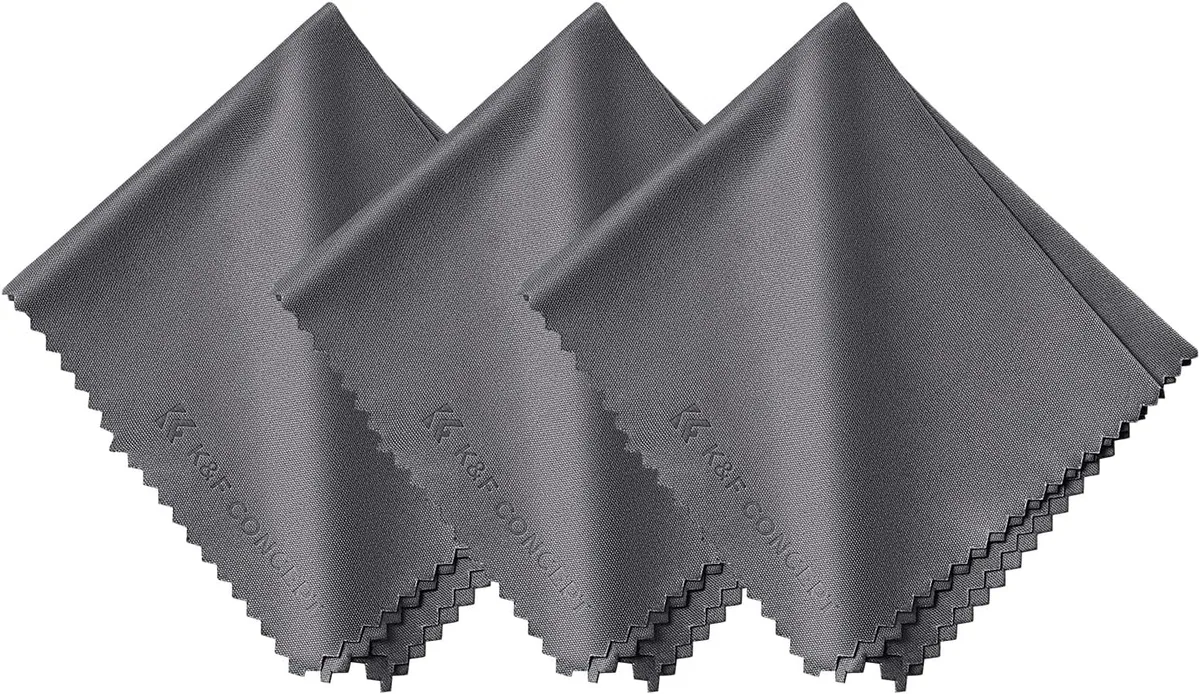
Image source: Web (Bing) / amazon.ca (Web image (fair-use with source credit))
1. Remove and Clean the Lens Guard
Pop off the magnetic lens guard. Breathe gently on the lens and wipe it with a microfiber cloth. Do the same for the inside of the lens guard.
Reattach it firmly, making sure it snaps into place evenly.
A surprising number of users forget the lens guard has two surfaces. The inner surface touches the lens directly and collects dust from your pocket or bag. Cleaning only the outside does nothing.
2. Update or Roll Back the Firmware
Check your current firmware version in Settings. Compare it with the latest version on the Insta360 support site. If you are on an older version, update.
If you are on the latest version and the problem just started, roll back to the previous one.
The rollback process requires downloading the older firmware file to a microSD card and installing it using the camera's button sequence. A similar reset and firmware process is covered in guides for camera system resets.
3. Toggle Subject Lock Off
Go into the shooting menu. Find Subject Lock or Subject Tracking. Turn it off.
Record a test clip. If the focus stops jumping, Subject Lock was the issue. You can turn it back on later in simpler scenes.
4. Reformat the SD Card
A fragmented or slow SD card can cause the camera to buffer data in a way that interferes with AF processing. Power the camera off. Remove the card.
Insert it into a computer and perform a full format. Reinsert it into the camera and do an in-camera format. This is particularly important if you are using a card that works fine in other devices.
Standard SD card formatting procedures apply here.
5. Factory Reset
Go to Settings. Select Reset. Choose Factory Reset.
The camera will wipe all settings back to default. This fixes bugs that creep in from changing too many settings at once.
After the reset, test the autofocus with default settings before changing anything else. If the focus works fine, the problem was a software setting conflict. If it still pulses, move to the diagnostic tree.
The Decision Tree
This is the heart of the troubleshooting process. Follow the questions in order. Each answer leads you closer to a specific fix.
Branch 1: Does the focus pulse or hunt in a steady cycle?
Yes. This is a contrast-detect AF issue. The camera cannot find a strong edge to lock onto.
Test in bright sunlight. If the pulsing stops, the problem is low-light performance. This is a hardware limitation that no firmware update will fix completely.
Test in bright sunlight. If the pulsing continues, you might have a firmware bug or a dirty lens.
No. Move to Branch 2.
Branch 2: Is the focus locked at infinity?
Yes. This is almost always a firmware regression or a lens guard alignment problem.
Try removing the lens guard completely and testing without it. If it still refuses to focus closer, roll back the firmware one version.
No. Move to Branch 3.
Branch 3: Does the face tracking lock onto the background?
Yes. This is a Subject Lock or face detection setting issue.
Turn off Subject Lock. If tracking works correctly now, the setting was overriding face detection. Ensure the face occupies at least 10% of the frame.
The camera requires the face to be reasonably large to detect it.
No. Move to Branch 4.
Branch 4: Does the footage look soft even when the focus indicator says it is sharp?
Yes. This is likely a lens cleanliness issue or a physical misalignment.
Clean the lens thoroughly with a proper lens cleaning solution. Inspect the flip lens for scratches or cracks. A damaged lens will always produce soft footage.
Check if the lens guard is warped or cracked.
No. Move to Branch 5.
Branch 5: Does the focus drift during a long recording?
Yes. This is heat-related focus drift.
Use the camera in a cooler environment if possible. Reduce resolution or frame rate to generate less heat. Use the camera on a tripod in a well-ventilated area to allow heat to dissipate.
No. Your focus problem might be very specific. Test with a completely different microSD card and try a different recording mode. If none of these branches match, your camera may have a hardware defect.
This decision tree follows the same logical troubleshooting approach used in professional camera service manuals. Each branch eliminates one variable at a time. If you go through all five branches and the problem persists, contact Insta360 support.
Step-by-Step Fixes for Each Branch
Once you know which branch you are on, here are the specific steps to take.
Fixing Branch 1: Pulsing or Hunting Focus
Improve the lighting. If you are indoors, move closer to a window or turn on more lights. The Ace Pro 2 needs a minimum level of illumination for quick autofocus.
If you cannot improve the lighting, switch to manual touch focus. Tap the screen where you want the focus to be. It will lock there until you move the camera.
For vlogging or static shots, this is the best solution when pulsing occurs.
If you must use autofocus in low light, reduce the frame rate. 4K at 60fps processes more data and makes the AF work harder. Dropping to 30fps can help the camera maintain focus more consistently. Similar advice applies to recording problems in other action cameras.
Fixing Branch 2: Focus Stuck at Infinity
Remove the lens guard. This is the most likely cause. If removing it fixes the problem, clean both the lens and the guard before reattaching.
If the problem persists without the guard, perform a firmware rollback. Download the previous stable firmware from the Insta360 website. Copy the file to a freshly formatted microSD card.
Insert the card, power on while holding the button, and follow the instructions.
After the rollback, test the focus. If it works, do not update again until Insta360 releases a confirmed stable version. Check community forums for feedback before updating in the future.
Fixing Branch 3: Background Lock Instead of Face
Turn off Subject Lock. This setting is designed for objects like cars or animals, not faces. Face detection takes priority when Subject Lock is off.
Make sure the face you want to track is the closest subject to the camera. The Ace Pro 2 gives priority to the nearest object. If there is a tree branch or a railing closer than the face, the camera will focus on the branch first.
If multiple people are in the frame, tap the specific face on the touchscreen. This locks the camera onto that face until it leaves the frame.
Fixing Branch 4: Soft Footage Despite Focus Indicator
Start with a deep clean. Use a lens cleaning solution that is alcohol based with no ammonia. Apply a drop to a microfiber cloth, not directly to the lens.
Wipe in a circular motion from the center outward. Check the footage again.
If the lens is clean and the indicator says it is sharp but the footage is still soft, you might have a misaligned flip lens. This is rare but possible. Try flipping the lens to selfie mode and back.
This mechanical reset can sometimes realign the lens elements.
If neither works, try recording in different resolutions. If 1080p footage is sharp but 4K is soft, the issue might be a processing error. A factory reset or firmware reinstall should fix it.
Fixing Branch 5: Drifting Focus Over Time
Record in short clips. Keep each recording under 10 minutes. Pause for a minute to let the camera cool down before starting the next clip.
Lower the resolution. 4K generates more heat than 2.7K or 1080p. If high quality is not critical for a long recording, dropping to 2.7K 30fps can keep the camera cool enough to maintain stable focus.
Use a small external fan if you are shooting in a studio or indoor environment. This is a common trick used by content creators who need long uninterrupted takes. It prevents the internal temperature from rising high enough to cause focus drift.
Mistakes That Make Focus Worse
Knowing what not to do is just as important as knowing the right fix. Some common habits cause focus problems that were never there before.
Using the Wrong Cleaning Method
Many users grab a t-shirt or paper towel to clean the lens. These materials are abrasive and leave micro-scratches. Over time, those scratches scatter light and degrade autofocus accuracy.
Always use a proper microfiber cloth designed for camera lenses. If you need a cleaning solution, use one that is alcohol based and ammonia free. Household glass cleaners leave a residue that confuses the autofocus sensor.
Ignoring the Lens Guard Alignment
The magnetic lens guard snaps on with a satisfying click. But if it is even slightly rotated, the guard presses unevenly against the lens. This pressure can cause the lens element to sit at a slight angle.
The result is soft focus on one side of the frame. You might not notice it until you review footage on a large monitor. Always check that the guard is seated flush before recording critical footage.
Running Overheating Cameras Without a Break
Pushing the Ace Pro 2 through multiple long takes without a cooldown period is a common mistake. Heat builds up inside the body. The sensor and lens elements expand at different rates, shifting the focal plane.
This heat induced focus drift is gradual. You might not see it during the recording. But when you review the clip, the last few minutes look softer than the first few.
Taking a 60 second pause between takes can prevent this entirely. Similar overheating management applies to other compact cameras.
Changing Too Many Settings at Once
It is tempting to tweak every menu option. But changing resolution, frame rate, tracking mode, and stabilization simultaneously makes it impossible to know which setting caused a focus problem.
If you run into issues, revert to default settings and change one parameter at a time. Test between each change. This isolates the culprit quickly.
Relying on Autofocus in Low Light
Low light is the hardest environment for any autofocus system. The Ace Pro 2 struggles more in dim conditions than some competitors. Expecting flawless tracking under a single dim bulb is unrealistic.
Instead of blaming the camera, work around its limitation. Add a portable LED light to your setup. Use manual touch focus for low light shots.
This saves frustration and delivers sharper footage.
When to Return, Replace, or Wait
Not every autofocus problem can be solved with cleaning or settings changes. Sometimes the hardware has a genuine defect. Here is how to tell the difference.
Signs of a Hardware Defect
If your camera exhibits focus problems in every lighting condition, at every resolution, and with multiple lens guards, you might have a defective unit. Try borrowing a friend's Ace Pro 2 to compare. If theirs works fine in the same environment, your camera is likely faulty.
Specific signs of hardware defects include:
- Focus that never sharpens, even after a factory reset.
- A lens that rattles when the camera is shaken gently.
- The flip lens feels loose or misaligned when moved.
- Focus is consistently soft on one side of the frame.
Checking the Warranty Window
The Ace Pro 2 comes with a standard one year warranty from the date of purchase. If you are within that window, do not attempt to repair the camera yourself. Doing so voids the warranty.
Contact Insta360 support through their official website. Describe the specific symptom you identified using the decision tree. They will guide you through a few final diagnostic steps before authorizing a return or replacement.
When to Wait for a Firmware Fix
Firmware bugs are common after major camera releases. If your focus problem only happens in specific scenarios like 4K 60fps or a particular tracking mode, it is likely a software issue that will be patched.
Check the Insta360 community forums to see if other users report the same bug. If many people have the same issue, a firmware update is probably coming. You can also contact support to confirm they are aware of it.
In the meantime, work around the bug. If 4K 60fps causes pulsing, use 4K 30fps. If Subject Lock causes jumps, turn it off.
A workaround is better than being without a camera during a warranty replacement process.
The Return Window for Retailers
Major retailers typically offer a 30 day return window for electronics. If you are still within this window and the focus problem is unacceptable, consider returning the camera and trying a second unit.
Some users report that the second unit works perfectly. This suggests variability in production quality. If you return one unit and the replacement has the same problem, you might need to explore other action cameras.
How to Avoid Focus Problems
A little proactive care goes a long way. These habits will keep your Ace Pro 2 autofocus working reliably.
Establish a Pre-Shoot Checklist
Before every important shoot, run through this quick routine:
| Step | Action | Time |
|---|---|---|
| 1 | Check current firmware version | 15 seconds |
| 2 | Clean lens and lens guard | 30 seconds |
| 3 | Verify lens guard alignment | 10 seconds |
| 4 | Test focus with a quick recording | 30 seconds |
| 5 | Confirm tracking settings match the scene | 20 seconds |
This checklist takes under two minutes. It catches the vast majority of common focus issues before they ruin your footage.
Keep Firmware Updated Intentionally
Do not update firmware the instant a new version appears. Wait at least two weeks. Check community forums for reports of new bugs.
If the update seems stable, install it.
If you rely on your camera for regular content creation, keep the previous firmware file saved on your computer. This lets you roll back quickly if a new update causes problems.
Use High-Quality MicroSD Cards
The Ace Pro 2 needs a fast card to buffer focus data and video simultaneously. Cheap or slow cards can cause processing delays that manifest as focus lag or stuttering.
Use cards that meet the U3 and V30 speed class ratings. Format the card in the camera before each major shoot. This clears fragmented data that can interfere with the AF processor.
Understand the Camera's Limits
The Ace Pro 2 is an action camera, not a cinema camera. Its autofocus system is designed for bright outdoor scenes with clear subjects. It will struggle in low light, with fast erratic movement, or with very small subjects.
Set your expectations accordingly. Use manual focus for controlled indoor shots. Add lighting when needed.
Choose your frame rate based on the lighting available.
Protect the Lens When Not in Use
The flip lens is exposed when the camera is off. Dust, pocket lint, and accidental scratches all degrade focus performance over time. Always use the lens guard when the camera is not recording.
When you store the camera in a bag, keep it in a padded case. Loose items like keys or coins can scratch the lens guard or push it out of alignment.
Frequently Asked Questions
Why does my Ace Pro 2 autofocus pulse in low light?
The camera switches to contrast-detect autofocus in dim conditions. This method searches for the sharpest point by moving the lens back and forth. It pulses because it cannot find a strong contrast edge quickly.
Improving your lighting or using manual focus fixes this.
Can a firmware update cause new focus problems?
Yes. Firmware updates sometimes introduce regressions in the autofocus logic. Several Insta360 updates have affected focus performance since the Ace Pro 2 launch.
If a recent update caused problems, roll back to the previous version and wait for a more stable release.
Should I remove the lens guard permanently?
Not necessarily. The lens guard provides essential protection for the flip lens. But if you consistently see focus problems with the guard attached and clean footage without it, the guard might be warped or misaligned.
Try a replacement guard before going without one.
How do I roll back the firmware on my Ace Pro 2?
Download the previous firmware file from the Insta360 support site. Copy it to a freshly formatted microSD card. Insert the card and power on the camera while holding the mode button.
The camera will install the older firmware. Always keep a stable firmware file saved on your computer.
Can extreme heat damage the autofocus system?
Yes. Extended recording in hot environments causes thermal expansion of the lens elements. This shifts the focal plane and produces soft footage.
If you shoot in hot climates, keep recordings under 10 minutes and allow the camera to cool between takes.
Is the Ace Pro 2 autofocus worse than the Ace Pro 1?
Aggregate user reviews suggest the Ace Pro 2 has a slightly faster initial lock in good light. But it exhibits more pulsing in low light than the first generation. If you upgraded from the Ace Pro 1 and notice more hunting at dusk, you are not imagining it.
The trade-off comes from the new hybrid AF system.

Similar Posts