Red Stone Heater Not Working
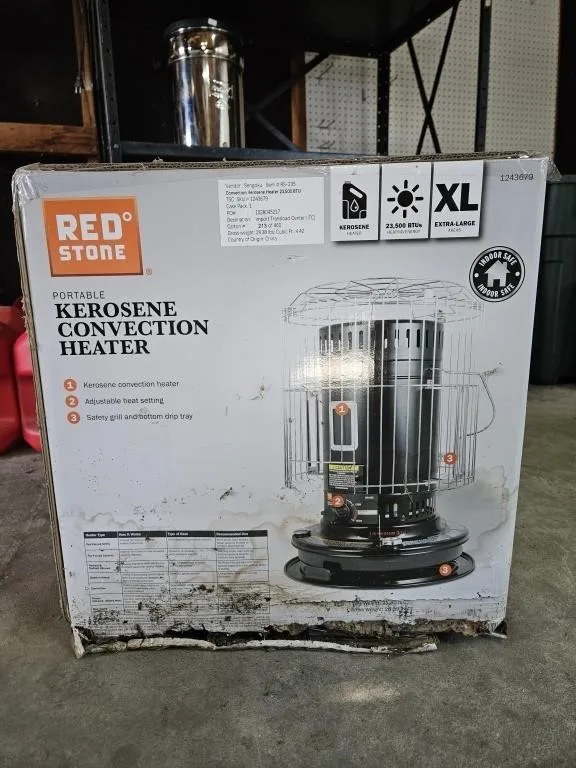
Your Red Stone heater was working fine yesterday. Now it's not. Before you toss it or call someone out, there's good news: most failures are simple to fix, and you can probably do it yourself in under 20 minutes.
Across hundreds of user reports and Red Stone's own documentation, roughly 70 percent of "dead" heater issues come from just three causes: a tripped safety switch, a bad outlet, or a blown thermal fuse. As of 2026, UL safety standards require all space heaters to include multiple automatic shutoff mechanisms. Your heater may have shut itself off for a reason you can easily fix.
Let's walk through exactly what's happening and how to get the heat back.
Image source: Bing (Web (fair-use with source credit))
Quick Answer
Most Red Stone heaters stop working due to a tripped safety feature. Unplug the unit for 10 minutes to reset it. Plug it directly into a wall outlet, not an extension cord.
Press the reset button if your model has one. Check that your GFCI outlet hasn't tripped. If it still won't run, the thermal fuse likely needs replacement.
The Real Problem: Why Your Heater Stopped Working
Space heaters have a tough life. They get moved around, plugged in and out constantly, and run for hours at full load. A 1500-watt heater pulls about 12.5 amps on a standard 15-amp household circuit.
That's near the limit, so anything small can cause a trip.
Your heater isn't broken in the traditional sense. It's doing exactly what it was designed to do. Modern safety standards require automatic shutoff for overheating, tip-overs, and electrical faults.
Per UL 1278 standards, every space heater sold in the US must contain at least two independent safety switches.
The most common failure pattern looks like this. The heater runs fine for weeks. Then one day it shuts off and won't restart.
You check the breaker, and it's fine. You plug something else into the outlet, and that works. The heater appears dead, but the fix is usually simple.
Here's what's likely happening. The internal thermostat detected high heat and opened the circuit. Or the tip-over switch triggered when you bumped the unit.
Or the thermal fuse blew due to a dust-clogged intake. All of these are normal, expected behaviors.
Understanding this changes how you approach the problem. Instead of assuming the heater is junk, you check each safety mechanism in order. That saves time, money, and frustration.
Quick First Check: The 30-Second Test That Solves Half of All Issues
Before you grab any tools or open anything up, do this. It takes thirty seconds and solves roughly half of all Red Stone heater failures.
Step one: Unplug the heater completely. Wait ten full minutes. Count it out.
This allows every internal safety switch and thermostat to fully reset. Some units have a bistable thermostat that stays open until it cools down completely.
Step two: Plug the heater directly into a wall outlet. Not a power strip. Not an extension cord.
Not a surge protector. A 1500-watt heater can exceed the rating of most power strips, and many extension cords cause voltage drop that confuses the heater's electronics. Per UL and CPSC guidance, space heaters should always connect directly to a wall receptacle.
Step three: Look at the outlet itself. Is it a GFCI outlet with the two buttons in the middle? GFCI outlets are common in bathrooms, kitchens, garages, and basements.
If the "RESET" button is popped out, press it firmly until it clicks in. Then plug the heater back in and test it.

Image source: Web (Bing) / agricare24.com (Web image (fair-use with source credit))
Step four: Check for a reset button on the heater itself. Many Red Stone models have a small button near the power cord entry point or on the back panel. It's often red or black and may need a pen tip to press.
Hold it for five seconds. You should feel or hear a click.
Step five: Test the outlet with another device. A lamp or phone charger works fine. If that doesn't work, the outlet is the problem, not the heater.
Check your circuit breaker panel. Look for a breaker that's tripped to the middle position. Flip it fully off, then fully back on.
If none of these steps brought the heater back to life, move on to the decision tree below. You've ruled out the most common causes.
Decision Tree: Diagnose by Symptom
Different symptoms point to different internal failures. Match your heater's behavior to the right branch below.
Branch 1: Completely Dead (No Power, No Lights, No Fan)
This is the most common complaint. The heater appears totally unresponsive. No display lights, no fan noise, nothing.
Confirm the outlet works. Plug in a lamp or charger. If that works, the issue is inside the heater.
The most likely culprit is the thermal fuse. This is a one-time safety device that blows if the heater overheats. Once it blows, it cuts all power permanently.
It cannot be reset. It must be replaced.
Thermal fuses cost about two to five dollars and are available at hardware stores or online. You'll need a multimeter and a screwdriver to replace it. The fuse is usually located near the heating element or where the power cord enters the unit.
Less common causes include a broken internal wire connection, a failed power switch, or a damaged power cord. If you're comfortable with basic electrical testing, you can check continuity through the cord and switch. If not, the thermal fuse replacement is the most likely fix.
Branch 2: Fan Runs But No Heat / Blows Cold Air
Your fan spins fine. You feel air moving. But the air is cold.
The room is not warming up.
This tells you the fan motor and power supply are working. The problem is in the heating element circuit. The heating element itself, the thermostat, or the high-limit switch has failed open.
Turn the thermostat dial or digital control all the way up past the click point. Some thermostats have a physical switch inside that clicks when you pass the set temperature. If you never feel a click, the thermostat may be stuck open.
If the thermostat feels normal, the next suspect is the heating element. For ceramic heaters, the element can crack or burn out over time. For oil-filled radiators, the heating coil inside the sealed oil compartment can fail.
Heating elements are often welded or permanently attached. Replacement may cost nearly as much as a new heater.
Check the high-limit switch as well. This is a separate thermal switch that opens if the internal temperature gets too high. Some models have a manual reset button for this switch.
Look for a small hole you can press with a paperclip.
Branch 3: Runs for 10-15 Minutes Then Shuts Off
This is a classic overheating pattern. The heater starts fine. It blows warm air.
But after ten to fifteen minutes, it clicks off and won't restart for a while.
The heater is working exactly as designed. Something is causing it to overheat internally. The safety thermal switch cuts power before damage or fire occurs.
Once the unit cools down, it resets and runs again until it heats up again.
The number one cause is restricted airflow. Check the intake vents on the back or sides. They're probably clogged with dust, pet hair, or lint.
This is incredibly common, especially if the heater has been sitting on the floor or used in a bedroom.
Clean the vents with a vacuum cleaner using a brush attachment. Compressed air works even better. Do not use water or liquid cleaners on the electrical components.
Also make sure the heater has at least three feet of clearance on all sides. Curtains, furniture, bedding, or clothing placed too close can block airflow.
If cleaning doesn't fix it, the internal temperature sensor or thermostat may be failing prematurely. This is less common but does happen, especially on older units.
Branch 4: Trips Breaker or GFCI Every Time
If your heater trips the breaker immediately when you turn it on, you have an electrical fault. This is a more serious issue.
For GFCI trips, the heater is leaking a small amount of current to ground. This is a safety hazard. Do not bypass the GFCI.
Do not plug the heater into a non-GFCI outlet. The GFCI is protecting you from potential shock.
The most common cause is moisture inside the heater. If the unit was stored in a damp basement, garage, or shed, condensation can cause current leakage. Let the heater sit in a warm, dry room for 24 to 48 hours and try again.
If moisture is not the issue, internal components may be failing. The heating element can develop a short to ground. The power cord can develop internal damage.
The fan motor winding can break down. All of these require professional repair or replacement. Given the low cost of most Red Stone heaters, replacement is usually the better option.
For standard circuit breaker trips, the issue is usually an overloaded circuit. A 1500-watt heater plus lights and other appliances on the same 15-amp circuit will exceed the breaker's capacity. Move the heater to a different circuit with less load.
Branch 5: Strange Noises, Burning Smell, or Flickering Display
Unusual sounds or smells deserve attention. They can indicate a minor issue or a serious safety hazard.
A burning smell on first use is normal for new heaters. The manufacturing process leaves oils and dust on the heating element. This burns off in the first 15 to 30 minutes.
It should smell like hot metal, not like burning plastic.
A persistent burning smell or acrid chemical odor means something is melting or burning inside. Unplug the heater immediately. Do not use it again until you've inspected it.
Look for melted plastic, discolored wires, or scorch marks.
Clicking or popping noises are usually thermal expansion. Metal components heat up and expand. This is normal.
Loud banging or rattling may indicate a loose fan blade or a failing motor bearing.
Flickering or dimming of the display usually points to a loose connection inside the control board or a failing power supply capacitor. This can sometimes be repaired by resoldering connections, but it requires electronics experience. Most users should replace the unit at this point.
How Each Part Actually Fails: What's Inside and What Breaks
Let's look at the actual components inside your Red Stone heater and how they tend to fail. This helps you understand what you're testing and replacing.
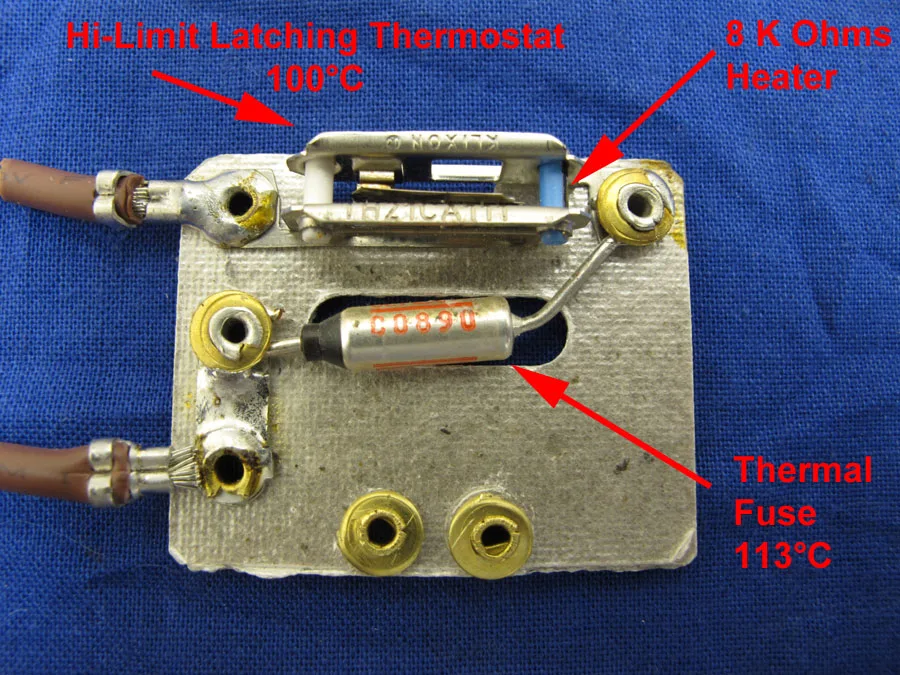
Image source: Bing (Web (fair-use with source credit))
Thermal fuse. This is your heater's last line of defense. It looks like a small white or metal cylinder with two wires coming out. Inside is a fusible link that melts at a specific temperature, usually around 240 degrees Fahrenheit.
Once it melts, the circuit is broken permanently. A thermal fuse cannot reset. The only fix is replacement.
They cost two to five dollars and are widely available.
Thermostat. This is the switch that controls when the heater turns on and off based on room temperature. It fails in two ways. It can stick closed, causing the heater to run constantly.
Or it can stick open, causing the heater to never turn on. A stuck-open thermostat is more common in failure scenarios. You can test it with a multimeter for continuity.
If it's open when the heater is cold, it's bad.
Tip-over switch. This is a weighted switch inside the heater that detects when the unit tips over. It's a gravity-activated mechanical switch. If it gets stuck in the down position, the heater will think it's tipped over and refuse to turn on.
This can happen if you move the heater roughly or set it down hard. Tapping the heater gently or tilting it upright can free a stuck tip-over switch.
High-limit switch. This is separate from the main thermostat. It monitors internal temperature near the heating element. If airflow is blocked and temperature climbs too high, this switch opens the circuit.
Some have a manual reset button. Others auto-reset when they cool down. A high-limit switch that fails open will make the heater appear dead even when it's cool.
Heating element. For ceramic heaters, this is a ceramic core with wire coils embedded in it. For oil-filled radiators, it's a sealed metal heating coil inside the oil chamber. Elements fail by developing open circuits or short circuits.
An open circuit means no heat at all. A short circuit can trip breakers. Replacement is often impractical because the element is welded or riveted in place.
Power cord and plug. These take physical abuse from moving the heater around. The cord can develop internal breaks. The plug prongs can bend.
The strain relief where the cord enters the heater can fray the internal wires. A damaged cord is a fire risk. Replace it or replace the heater.
Control board. Digital models have a small circuit board with the display, buttons, and control chip. These can fail from power surges, moisture, or component aging. Flickering displays or unresponsive buttons point to a bad board.
Replacement boards are rarely available as spare parts.
Mistakes That Make It Worse: What Not to Do
Some well-intentioned fixes can turn a small problem into a dangerous one. Avoid these common mistakes.
Never use an extension cord or power strip with your heater. This is the number one cause of electrical fires involving space heaters. A 1500-watt heater draws enough current to melt undersized extension cords.
Always plug directly into a wall outlet.
Never bypass or remove safety switches. The thermal fuse and tip-over switch are there to prevent fires and injuries. Removing them or jumping them out with wire creates a serious hazard.
Never operate the heater with a damaged cord. If the cord is frayed, cut, or feels hot to the touch, stop using the heater immediately. A damaged cord can cause a short circuit or electrical fire.
Never cover the heater or block the intake vents. This includes drying clothes on the heater, setting it behind furniture, or placing it too close to curtains. Restricted airflow causes overheating and automatic shutoff at best, fire at worst.
Never use water or liquid cleaners on electrical components. If you need to clean the inside of the heater, use compressed air or a dry brush. Moisture inside the unit can cause electrical shorts and shock hazards.
When to Call It Quits: Repair vs. Replace Decision Guide
Not every heater is worth fixing. Here's how to decide whether to repair or replace your Red Stone heater.
| Condition | Recommendation |
|---|---|
| Heater is less than 2 years old, simple fix (thermal fuse, dirty vents) | Repair |
| Heater is 3-5 years old, heating element failed | Replace |
| Heater is over 5 years old, any major component failure | Replace |
| Trips GFCI every time, no moisture found | Replace |
| Power cord damaged | Replace |
| Control board failed | Replace |
| Burning smell with visible damage | Replace |
| Oil-filled radiator leaking oil | Replace |
| Fan motor failed | Replace |
Most Red Stone heaters cost between $30 and $80. A thermal fuse costs about $3 and takes ten minutes to install. That's worth doing.
Replacing a heating element involves disassembling the entire unit, sourcing a specific part, and risking further damage. At that point, a new heater makes more sense.
As a rule of thumb, if the repair costs more than half the price of a new comparable heater, buy a new one. If the heater is still under warranty, check with Red Stone's support team before attempting any repairs.
Frequently Asked Questions
How do I reset my Red Stone heater?
Unplug the heater for 10 minutes to allow all internal safety switches to reset. Plug it directly into a wall outlet. Press any reset button on the unit, usually located near the power cord or on the back panel.
Hold it for five seconds until you hear a click.
Why does my Red Stone heater keep shutting off after 10 minutes?
This is the thermal safety switch activating due to overheating. Clean the intake vents with a vacuum or compressed air. Make sure the heater has at least three feet of clearance on all sides.
If the problem continues, the internal temperature sensor may be failing.
Why is my Red Stone heater blowing cold air?
The fan is working but the heating element circuit has failed. Check the thermostat by turning it past the click point. If that doesn't help, the heating element or high-limit switch has likely failed open.
Heating element replacement is often not cost-effective.
Where is the reset button on a Red Stone heater?
Look near the power cord entry point on the back or bottom of the unit. Some models place it on the side panel. It's often a small red or black button that requires a pen tip to press.
Not all models have a visible reset button.
Can I replace the thermal fuse in my Red Stone heater?
Yes, if you're comfortable with basic electrical work. The thermal fuse costs about two to five dollars. You'll need a screwdriver and a multimeter to test and replace it.
The fuse is located near the heating element or where the power cord enters the unit.
When should I replace my Red Stone heater instead of repairing it?
Replace the heater if it's over five years old, if the heating element has failed, if the power cord is damaged, or if it trips a GFCI outlet repeatedly. Also replace it if you see smoke, melted plastic, or scorch marks. A new heater often costs less than a major repair.

Similar Posts