Pictures Of Cat Eye Problems
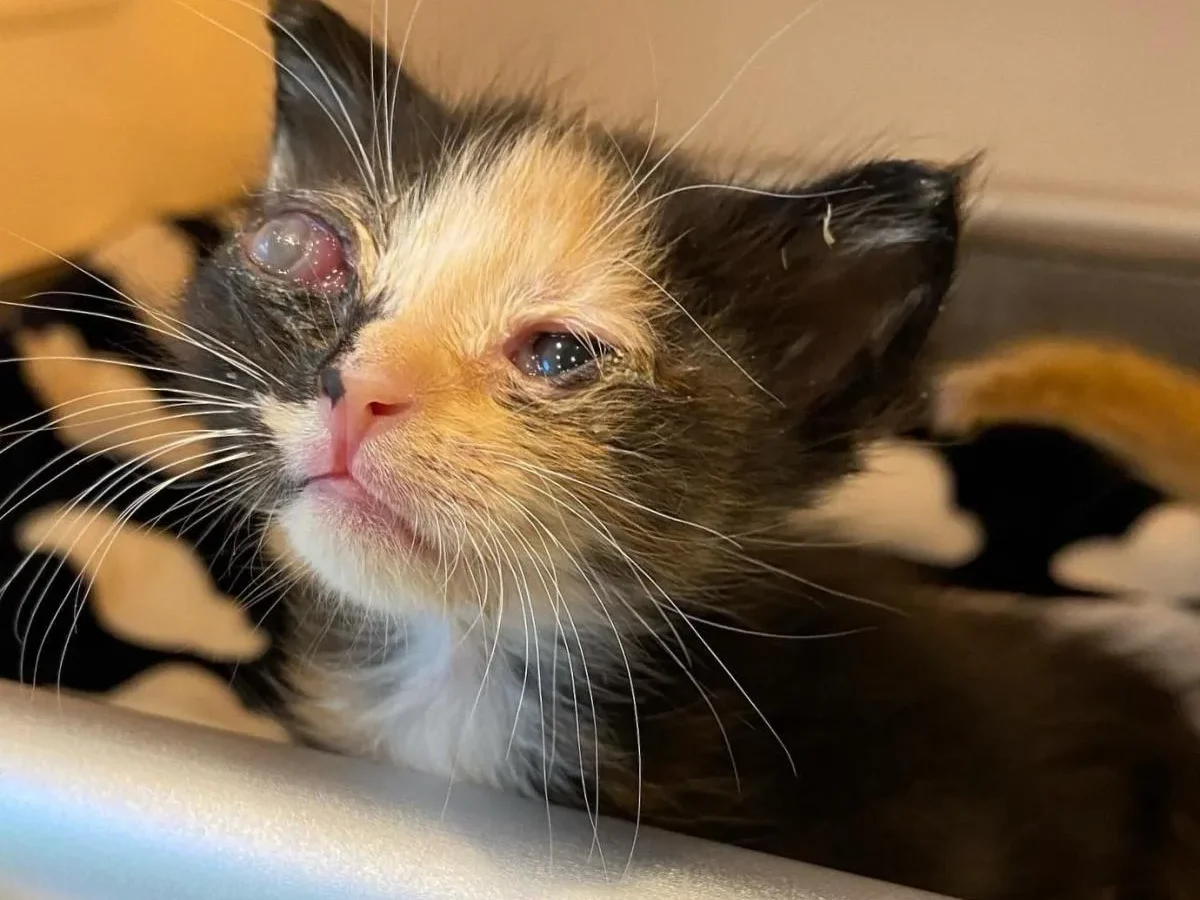
You love your cat. You watch them like a hawk. So when you notice something off about their eye, your first instinct is probably to grab your phone and snap a picture.
"Pictures Of Cat Eye Problems" is one of the most searched phrases in pet health for a reason. It feels like the fastest way to get an answer.
Here's the hard truth: no photo can replace a vet's exam. But that doesn't mean your picture is useless. A well-taken photo can help your vet triage faster, track changes overnight, and sometimes even catch a problem early.
The challenge is knowing what you're actually looking at. As of 2026, feline eye disease accounts for roughly 10 to 15 percent of all cat veterinary visits, and many of those cases could have been caught sooner with better owner awareness. Let's walk through what those photos really show you, and more importantly, what they don't.
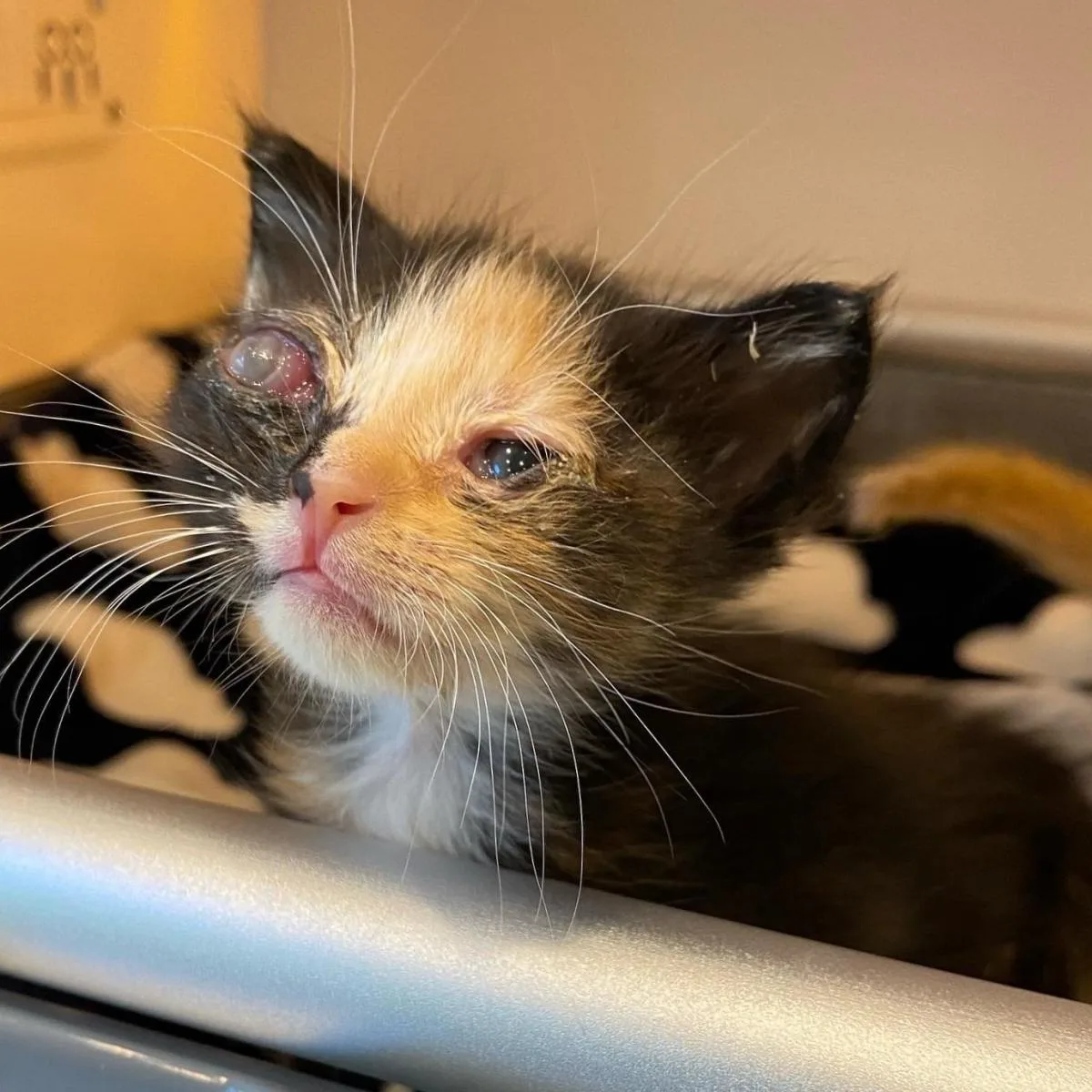
Image source: Bing (Web (fair-use with source credit))
Quick Answer
Pictures help you identify visible symptoms. They do not diagnose the underlying cause. Use photos to document squinting, discharge, cloudiness, or redness.
Send them to your vet before an appointment. Never use a photo to decide whether to treat at home. Eye problems in cats can turn serious in hours.
Why a Photo Cannot Replace a Vet (But Still Matters)
A photograph is a snapshot of a single moment. It captures surface appearance. It cannot measure intraocular pressure, detect a corneal ulcer under stain, or tell you whether redness means inflammation or infection.
Here is what a photo can actually do:
- Help you describe what you are seeing when you call the vet
- Give your vet a visual baseline if the problem changes
- Allow you to monitor progression overnight or over a weekend
- Catch subtle changes you might miss with the naked eye
The biggest mistake cat owners make is assuming a normal looking eye photo means everything is fine. Some of the most dangerous eye conditions in cats, like early glaucoma or uveitis, can look deceptively mild in a picture. Cats are masters of hiding pain.
By the time you see obvious distress, the condition may already be advanced.
So take the photo. But treat it like a tool for communication, not a substitute for a diagnosis.
The 7 Most Common Cat Eye Problems You'll See in Photos
When you scroll through pictures of cat eye problems online, you will see the same handful of conditions over and over. Here is what each one actually looks like and what it means.
Conjunctivitis (Pink Eye)
This is the most common eye problem in cats. The conjunctiva, the pink tissue lining the eyelid, becomes inflamed. In a photo, you will see redness along the eyelid rims, squinting, and clear or slightly colored discharge.
Feline herpesvirus causes most cases. It is highly contagious between cats but not to humans.
Corneal Ulcer
A scratch or erosion on the cornea surface. In photos, the eye often looks cloudy or hazy in one spot. The cat will squint hard and may paw at the eye.
You might see a bluish tint to the cornea if the ulcer is deep. This is painful. It requires immediate veterinary attention because ulcers can perforate the eyeball.
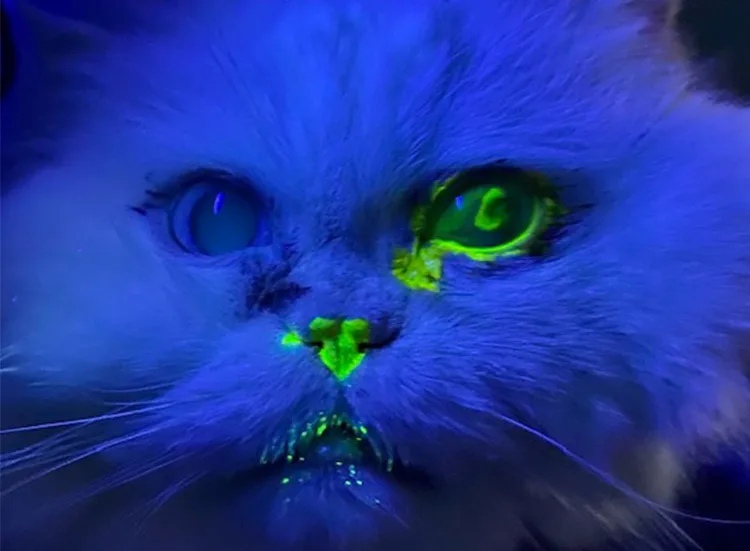
Image source: Bing (Web (fair-use with source credit))
Feline Herpesvirus
This is the underlying cause of most upper respiratory infections and many eye problems in cats. Photos often show watery eyes, mild redness, and a squint. The key sign is that symptoms come and go, often triggered by stress.
Moving homes, new pets, or boarding can cause a flare. There is no cure, but flare-ups are manageable.
Glaucoma
Increased pressure inside the eye. In photos, the eye may appear bulging or larger than the other eye. The cornea can look cloudy or blueish.
The pupil may be fixed and dilated. Glaucoma is an emergency. Pressure builds fast and causes permanent blindness within 24 to 72 hours if untreated.
Uveitis
Inflammation inside the eye. Photos often show a red eye, a constricted or irregular pupil, and a cloudy appearance. The eye may look darker or different in color than the other eye.
Uveitis is painful and can signal underlying diseases like FIP, toxoplasmosis, or cancer.
Cherry Eye
A prolapsed gland of the third eyelid. You will see a pink or red fleshy bump in the inner corner of the eye. It looks alarming but is not usually an emergency.
However, it can cause dryness and irritation long term. Some breeds, especially Persians and Himalayans, are more prone to this.
Entropion
The eyelid rolls inward, causing lashes to rub against the cornea. Photos show squinting, tearing, and sometimes a visible inward curl of the lower lid. This is painful and can cause corneal ulcers.
Brachycephalic flat-faced breeds are most at risk.
How to Spot the Difference Between Emergency and Not-Emergency
This is the most important skill you can develop as a cat owner. Not every red eye is an emergency. But some signs mean you need to move fast.
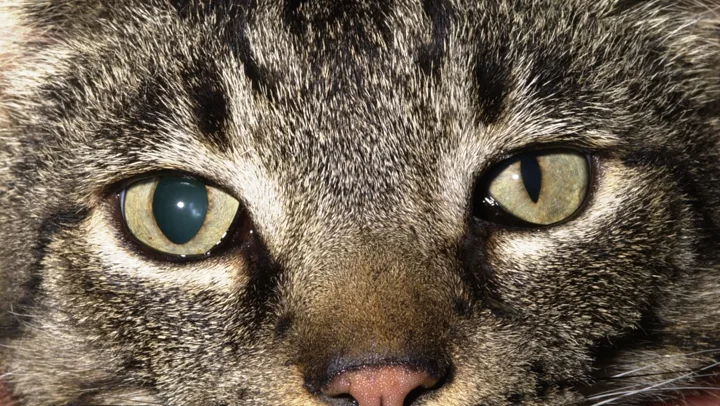
Image source: Bing (Web (fair-use with source credit))
The Squint Test
A cat that is squinting one eye closed or nearly closed is in pain. This is called blepharospasm. Mild squinting with clear discharge and no cloudiness can sometimes wait for a regular vet appointment.
A cat that cannot open the eye at all needs emergency care.
Discharge Color Matters
Clear or slightly watery discharge is common with herpesvirus flare-ups and allergies. Thick yellow or green discharge suggests a bacterial infection. Blood-tinged discharge is always an emergency.
Pupil Size Asymmetry
This is called anisocoria. If one pupil is noticeably larger or smaller than the other, that is a red flag. It can indicate glaucoma, uveitis, Horner's syndrome, or neurological damage.
This requires same-day veterinary attention.
Third Eyelid Showing
The third eyelid, or haw, normally stays tucked in the inner corner. When it protrudes across the eye, it can signal pain, dehydration, or systemic illness. If both eyes show it, that often points to a whole-body issue rather than a local eye problem.
The Emergency Checklist
| Sign | Action |
|---|---|
| Eye bulging or enlarged | Emergency vet immediately |
| Sudden blindness or bumping into things | Emergency vet immediately |
| Green or yellow thick discharge | Same-day vet appointment |
| Blood in or around the eye | Emergency vet immediately |
| Pupil asymmetry | Same-day vet appointment |
| Cat pawing at eye repeatedly | Same-day vet appointment |
| Cloudy or blue tinted cornea | Emergency vet if sudden |
| Mild squint with clear discharge | Schedule regular vet visit |
How to Take Vet-Quality Photos of Your Cat's Eye
A blurry, dark, or flash-distorted photo is worse than no photo at all. It can mislead your vet or give false reassurance. Here is how to get usable images.
Lighting Is Everything
Use indirect natural light. Position your cat near a window with diffused sunlight. Do not use a direct flash.
Flash creates glare on the cornea, washes out redness, and can constrict the pupil artificially, hiding anisocoria.
The Angle Matters
Take two photos every time. One straight-on shot showing both eyes side by side. One profile shot of the affected eye.
The straight-on shot lets your vet compare pupil size and symmetry. The profile shot shows discharge patterns and eyelid position.
How to Restrain Safely
Wrap your cat in a towel like a burrito. Leave only the head exposed. Sit on the floor with the cat in your lap.
Have a second person hold the phone. This prevents squirming and keeps both hands free.
Opening the Eyelid
Do not pry the eye open from the top and bottom at once. This hurts and triggers a strong blink reflex. Instead, gently place your thumb near the lower eyelid and wait.
Most cats will blink and then briefly keep the eye open. Snap the photo during that moment.
What to Avoid
- Do not use flash
- Do not hold the phone too close (causes distortion)
- Do not take photos while the cat is stressed or struggling
- Do not clean the eye before photographing unless discharge blocks the view
- Do not assume a clear photo means a healthy eye
The best photo shows the eye clearly, in good light, with both eyes visible for comparison. That single image can save your vet time and help them decide whether you need to come in immediately.
Common Mistakes Cat Owners Make with Eye Problems
Even well-meaning owners make mistakes. Here are the ones that cause the most harm.
Using Human Eye Drops
This is the most dangerous mistake. Many human eye drops contain steroids or preservatives that are toxic to cats. Steroid drops on a corneal ulcer can cause rapid worsening and even rupture.
Never put anything in your cat's eye that was not prescribed by a veterinarian.
Waiting One More Day
A squinting eye at 8 PM often looks worse by morning. Corneal ulcers can deepen overnight. Glaucoma can cause irreversible vision loss in less than 24 hours.
If you see squinting, cloudiness, or pupil asymmetry, do not wait for a convenient appointment.
Cleaning the Eye Wrong
Using cotton balls or tissues can scratch the cornea. Using unclean hands can introduce bacteria. If you must clean, use a sterile saline rinse and a soft gauze pad.
Wipe from the inner corner outward. Use a fresh pad for each eye.
Treating for Allergies
Cat eye allergies are actually quite rare. Most red, watery eyes in cats are caused by herpesvirus or infection. Treating with over-the-counter allergy drops delays proper care and may make things worse.
Ignoring Recurring Symptoms
If your cat gets eye infections every few months, that is not normal. It likely points to latent feline herpesvirus or an underlying condition like entropion. A one-time treatment stops the flare, but it does not address the root cause.
When to Go to the Emergency Vet (No Photo Needed)
Some signs are so serious that you should skip the photo and go straight to the vet.
- Eye bulging or visibly enlarged compared to the other eye
- Sudden blindness or bumping into walls
- Blood in the eye or coming from the eye
- Eye injury from a cat fight or trauma
- Cat screaming or vocalizing with eye pain
- Eye that looks like it might rupture (cornea appears to bulge forward)
The 24-Hour Rule
Any change in your cat's eye that persists for more than 24 hours requires a vet visit. Even if the photo looks fine. Even if your cat is eating and acting normal.
Cats hide pain extremely well. By the time you notice a problem, it has often been there for days.
Breeds at Higher Risk
Persians, Himalayans, and other brachycephalic breeds have shallow eye sockets and protruding eyes. They are more prone to corneal ulcers, entropion, and cherry eye. If you own one of these breeds, any eye symptom should be taken more seriously.
Follow-Up Is Not Optional
Even after treatment, eye problems can come back. Glaucoma patients need lifelong monitoring. Herpesvirus cats need stress management.
Corneal ulcers need a recheck to ensure healing is complete. Skipping follow-up visits is one of the fastest ways to lose your cat's vision.
Frequently Asked Questions
Can I send my vet a photo instead of coming in?
Many vets accept photos for triage. Call first and ask. A photo can help them determine urgency.
But most eye conditions still require an in-person exam with a slit lamp and stain test. You will likely need to come in.
What does normal cat eye discharge look like?
A small amount of clear, watery discharge that dries into a brownish crust is normal, especially in flat-faced breeds. Thick yellow, green, or bloody discharge is not normal. Neither is discharge that pools at the corner and does not dry.
How do I know if my cat is in eye pain?
Squinting is the number one sign. Others include pawing at the eye, rubbing the face on furniture, avoiding bright light, and hiding more than usual. A cat that holds the affected eye closed is in significant pain.
Is cat eye infection contagious to other cats or humans?
Feline herpesvirus and calicivirus are highly contagious between cats but not to humans. Bacterial infections are also cat-to-cat contagious. Always wash your hands after handling a cat with eye discharge, especially if you have multiple cats.
Can cat eye problems go away on their own?
Some mild herpesvirus flare-ups can resolve without treatment. But you cannot know which ones will and which will worsen. Corneal ulcers, glaucoma, and infections do not resolve on their own.
Waiting to see is risky. A vet visit is the safer choice.

Similar Posts