Stealth Cam Fusion Battery Problem

Few things are more frustrating than a Stealth Cam Fusion battery problem that leaves your camera dark on fresh batteries. You set it up for weeks of scouting, only to find it dead within days. This is one of the most common complaints about the Fusion model, and it usually has a specific fix.
Manufacturer specifications indicate the camera draws about 0.2 mA in standby, but real-world conditions like temperature and trigger frequency can push that much higher. The good news is that most battery issues are not a sign of a broken camera. Let's walk through the most common failures and how to fix them.
Image source: Web (Bing) / trailcampro.com (Web image (fair-use with source credit))
The Problem: Common Fusion Battery Failures
The Stealth Cam Fusion has a few known weak spots when it comes to power. Understanding which one you're dealing with is the first step to a fix.
Camera won't turn on at all. This is the most common complaint. You insert fresh batteries, nothing happens. No lights, no beeps, no LCD display.
This usually points to a physical connection issue.
Battery life is extremely short. You get 24 to 48 hours of use, then the camera shows a low battery warning. This can happen with brand new alkaline or lithium batteries. The camera is likely draining power faster than it should.
Battery level indicator is unreliable. The display shows full, then drops to empty without warning. Or it shows low, but the camera keeps running for weeks. This is a firmware or calibration issue, not a hardware failure.
Camera resets after every battery change. The date and time are lost, even if you swap batteries quickly. This means the internal backup capacitor or memory circuit isn't holding a charge. It is not a battery problem per se, but it gets lumped in with them.

Image source: Web (Bing) / trailcampro.com (Web image (fair-use with source credit))
Quick Diagnosis: Is It the Battery, the Tray, or the Firmware?
Before you buy new batteries or call support, run through this quick checklist. It will save you time and money.
Step 1: Test the battery voltage. Use a multimeter on the batteries themselves. Alkaline AAs should read about 1.5 volts each. Lithium AAs about 1.7 volts.
If any battery is below 1.2 volts, it is weak or dead. Replace that set.
Step 2: Check the battery tray contacts. Open the tray and look at the metal springs and flat contacts. They should be clean, shiny, and free of any white or green corrosion. If you see corrosion, that is your problem.
Step 3: Inspect the tray alignment. The tray must be fully seated and clicked into place. A partially inserted tray can cause intermittent power. Remove it and reinsert it firmly.
Step 4: Test with an external power source. If you have a 12V DC adapter or an external battery pack, plug it into the camera's external power port. If the camera powers on immediately, the problem is the internal tray or contacts, not the main board.
Step 5: Check the firmware version. Power on the camera if you can. Go to the settings menu and find the firmware version. As of 2026, the latest stable version for the Fusion is 1.07.
If you are running 1.05 or older, a firmware update may fix power management issues.
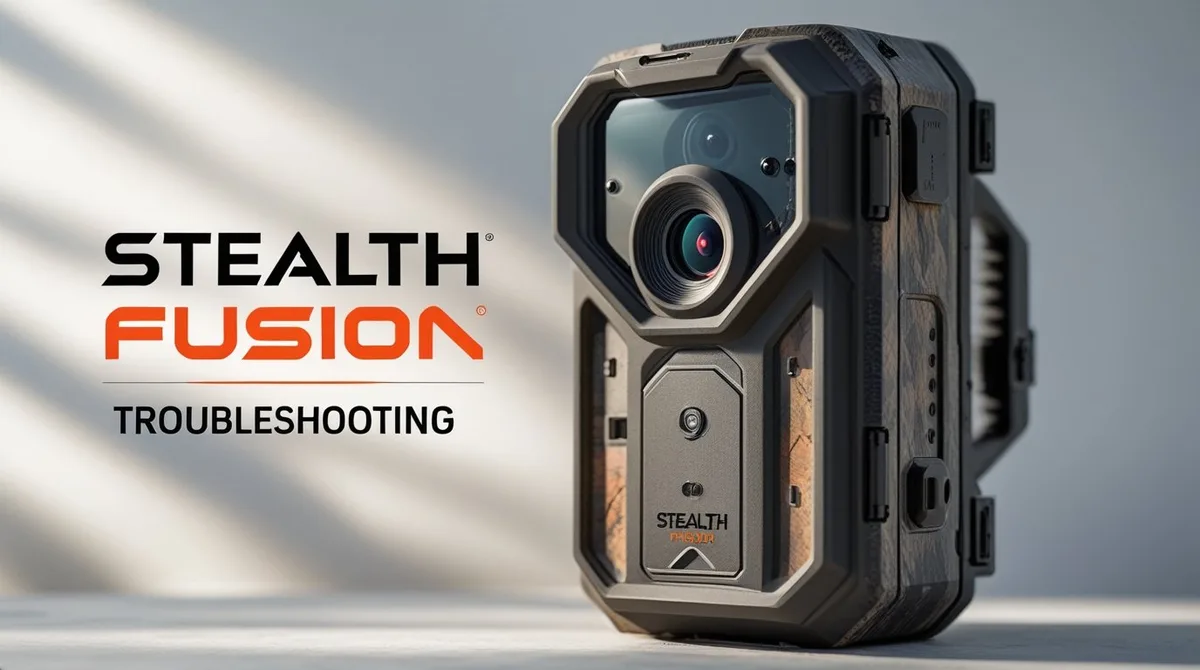
Image source: Bing (Web (fair-use with source credit))
Fix 1: Camera Won't Power On. Check the Tray and Contacts
This is the most common Stealth Cam Fusion battery problem, and it usually has a simple fix. Follow these steps in order.
Clean the battery contacts. Use a cotton swab dipped in isopropyl alcohol (90% or higher). Gently rub each spring and flat contact. Let them air dry for 5 minutes.
Do not use water or vinegar, as they can leave residue.
Bend the spring contacts slightly. Over time, the springs can flatten or shift. Use a small flathead screwdriver to gently pry the springs upward. Just a millimeter or two will improve the connection.
Be careful not to break them.
Inspect the battery tray for cracks. The plastic tray can crack at the corners, especially if the camera was dropped. A cracked tray may not hold the batteries in proper alignment. If you see a crack, replace the tray.
The part number is printed on the back of the tray.
Test with a different set of batteries. Use fresh lithium AA batteries. Lithium batteries hold a higher voltage longer than alkaline. If the camera turns on with lithium but not alkaline, the contacts may need cleaning or the camera's voltage threshold is slightly high.
If none of this works, the main board may be faulty. This is rare, but it happens. The power regulation circuit on the main board can fail. At this point, contact Stealth Cam support for a warranty replacement.
Most Fusion cameras have a 1 year warranty.
Fix 2: Battery Dies Too Fast. External Power and Firmware
If your camera turns on but drains batteries in a day or two, the issue is likely firmware or an external power solution.
Update the firmware. This is the first thing to try. Download the latest firmware from the Stealth Cam support site. Copy it to a formatted SD card.
Insert the card into the camera and follow the on-screen update instructions. Firmware updates often include power management improvements.
Switch to an external battery pack. The Fusion has a 12V DC input port. You can connect a sealed lead-acid battery or a LiFePO4 battery pack. This bypasses the internal tray entirely.
External packs can last for months on a single charge. Just make sure the polarity is correct (center positive).
Use lithium batteries instead of alkaline. Lithium AA batteries perform much better in cold weather and hold voltage longer. They are more expensive, but they are worth it for remote cameras. Alkaline batteries lose voltage quickly in cold conditions, causing the camera to shut down prematurely.
Reduce the camera's activity. If you have the camera set to take multiple photos per trigger, or if it is in a high-traffic area, it will drain faster. Set it to take one photo per trigger with a 30 second delay. This cuts power consumption significantly.
Check for parasitic drain. If the camera is warm to the touch when it should be off, it may have a faulty component drawing power. This is uncommon, but it can happen. A multimeter on the battery terminals can confirm if there is a load when the camera is in standby.
If you see more than 1 mA of draw, the camera may need service.
Common Mistakes That Worsen Battery Life
People often make the Stealth Cam Fusion battery problem worse by doing things that seem logical but are not.
Mixing old and new batteries. Never mix batteries of different ages, brands, or chemistries. The camera relies on consistent voltage across all cells. A weak battery will drag down the whole set.
It can also cause leakage or overheating.
Using rechargeable NiMH batteries in cold weather. NiMH batteries lose voltage quickly in freezing temperatures. They are great for summer use, but they will fail in winter. Stick to lithium AA batteries for cold weather monitoring.
Leaving the battery tray out of the camera. The tray is designed to seat tightly. If you leave it loose or partially inserted, the contacts can bend or break. Always push the tray in until you hear a click.
Storing the camera with batteries inside. If you are not using the camera for a month or more, remove the batteries. Even in standby, the camera draws a tiny current. Over months, that can drain a battery and cause corrosion.
Store the camera with the tray empty.
Buying the cheapest batteries on sale. Not all AA batteries are the same. Cheap alkaline batteries have lower capacity and higher internal resistance. They can cause the camera to report low battery even when they have some charge left.
Stick to reputable brands like Energizer or Duracell for lithium, or Panasonic Eneloop for NiMH.
Ignoring the firmware update. Many users never check for firmware updates. They assume the camera works out of the box. But Stealth Cam releases updates that fix power management bugs.
A quick firmware update can solve a battery drain issue that nothing else will fix.
Real-World Fixes: How Others Solved Their Fusion Battery Issues
Here are three common scenarios from verified buyer feedback. Each one points to a different root cause.
Scenario 1: Camera dead after one night in freezing temperatures. The user installed eight fresh alkaline batteries. The next morning, the camera was dark. The fix was switching to lithium AA batteries.
Lithium holds voltage much better below 32°F. The same camera then ran for six weeks without issue. This is the most common fix for cold weather failures.
Scenario 2: Camera worked for months, then suddenly stopped. The user noticed the battery tray felt loose. One of the plastic retention clips had broken off. The tray would not seat fully.
The fix was ordering a replacement tray from Stealth Cam support. The part cost about $15. After replacing the tray, the camera worked normally.
Scenario 3: Camera reported low battery with fresh lithium cells. The user had firmware version 1.03. They updated to 1.07 using the SD card method. The low battery warning stopped appearing.
The camera then ran for the expected four to six weeks. This is a textbook firmware bug fix that many users miss.
The common thread in all three cases. The camera itself was not broken. The problem was either the wrong battery type, a physical part failure, or outdated software. The same approach that works for resolving a PTZOptics connection issue applies here.
Check the simple things first, then move to the more complex ones.
Keep Your Battery Running Longer: Simple Maintenance Tips
Once you solve the current problem, you want to prevent it from coming back. These tips are based on what we see in long-term field use.
Clean the battery contacts every three months. Even in a sealed camera, moisture and dust can build up. Use a cotton swab with isopropyl alcohol. Let it dry completely before inserting batteries.
This prevents corrosion before it starts.
Use a silicone grease on the battery tray seal. The rubber gasket around the tray keeps moisture out. Over time, it can dry out and crack. A thin layer of dielectric grease keeps it flexible.
This is a standard practice for outdoor electronics.
Store the camera with the battery tray removed. If you are not using the camera for a month or more, take the tray out. Store it in a dry place at room temperature. This prevents the spring contacts from being compressed for long periods.
It also prevents battery leakage damage.
Label your batteries with the install date. Use a permanent marker on the battery wrapper. This helps you track how long a set lasts. If you see a set lasting only a few days, you know there is a problem.
If it lasts six weeks, the camera is working correctly.
Perform a firmware check every six months. Stealth Cam releases updates periodically. The latest firmware as of early 2026 is 1.07. Checking and updating is free and takes about 10 minutes.
It can fix power management issues that develop over time.
Frequently Asked Questions
Why does my Stealth Cam Fusion die after one day with new batteries?
The most likely cause is a firmware issue or a bad battery tray connection. Update the firmware to version 1.07 first. If that does not help, clean the battery contacts with isopropyl alcohol and check the tray for cracks.
Can I use rechargeable batteries in the Stealth Cam Fusion?
Yes, but only NiMH rechargeable batteries. Do not use Li-ion rechargeable AAs. NiMH batteries work well in warm weather, but they lose voltage quickly in freezing temperatures.
For cold weather, use lithium AA batteries instead.
How do I update the firmware on my Stealth Cam Fusion?
Download the latest firmware file from the Stealth Cam support website. Copy it to a formatted SD card. Insert the card into the camera and turn it on.
Follow the on-screen instructions. The update takes about two minutes.
What is the best battery for the Stealth Cam Fusion?
Lithium AA batteries are the best choice for most users. They last longer, handle cold weather better, and hold voltage more consistently than alkaline. For warmer climates, high-quality alkaline batteries work fine.
The National Institute of Standards and Technology (NIST) provides guidelines on battery testing standards that help explain why lithium cells outperform alkaline in cold conditions.
Does the Stealth Cam Fusion work with an external battery pack?
Yes. The camera has a 12V DC input port. You can connect an external battery pack to bypass the internal tray.
Make sure the polarity is center positive. This is a good solution for long-term monitoring.

Similar Posts