6 Best Full Frame Camera for Low Light
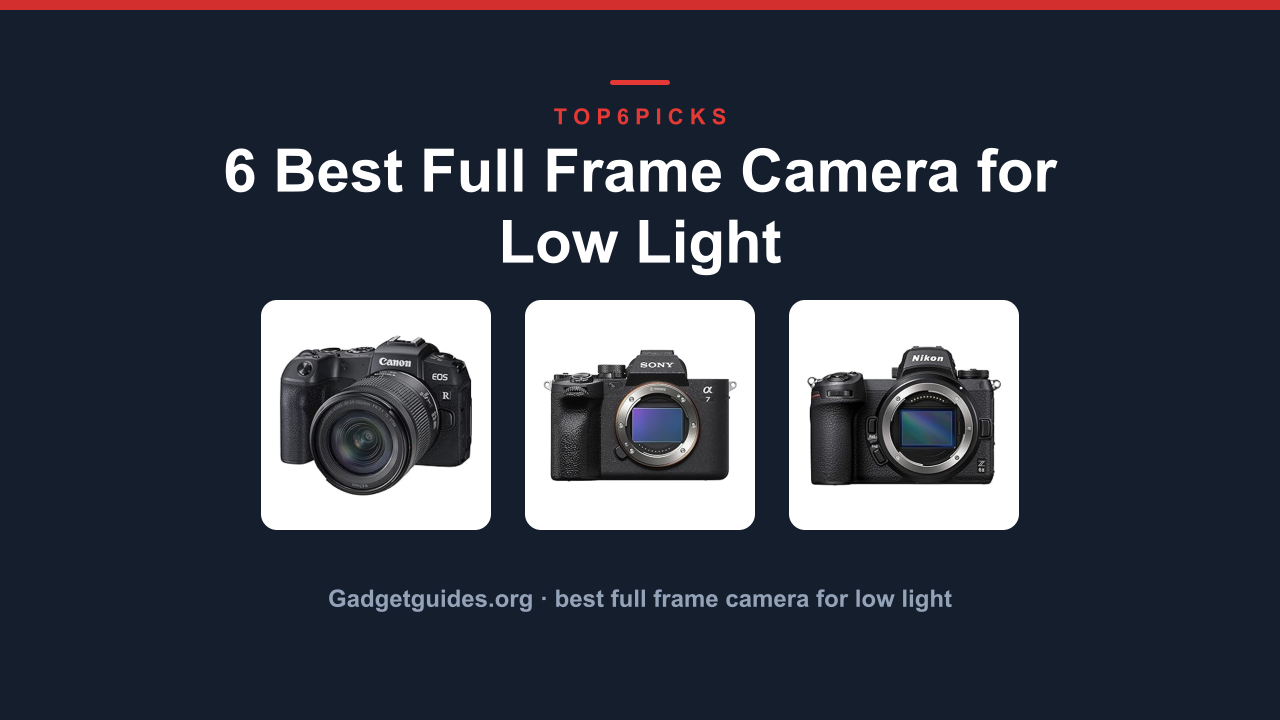
The best best full frame camera for low light is the Canon EOS RP, the only one here that keeps the price manageable without sacrificing the clean, noise‑free shots you need when the sun goes down. It’s ideal for travel vloggers, event shooters, and anyone stepping up from crop‑sensor cameras.
Want hybrid video and stills that push the low‑light ceiling further? The Sony Alpha 7 IV gets you there, as long as you’re willing to spend more for a faster sensor readout and better autofocus in the dark.
As an Amazon Associate, I earn from qualifying purchases.
This guide tells you exactly what to look for in a low‑light full‑frame body and which model matches your budget and shooting style. Some buyers shouldn’t buy any of these cameras, and I’ll cover that honestly too.
Everything below comes from current Amazon product data, specs, and each product’s owner track record, not from hands‑on lab testing.
Quick Answer: The Best Full Frame Camera for Low Light
The Canon EOS RP leads this roundup for low‑light stills at the best value, pairing a 26.2‑MP sensor with a compact body that won’t weigh you down. Here’s the full lineup in rank order:
- Canon EOS RP Full-Frame Mirrorless Interchangeable (Best Value Low‑Light Entry): The most affordable full‑frame body here, with a solid 4.6‑star average.
- Sony Alpha 7 IV Full-frame Mirrorless (Best Hybrid Low‑Light Performance): A 33‑MP sensor with BIONZ XR for clean shadows and fast autofocus.
- Nikon Z 6II Versatile Full-Frame mirrorless (Best All‑Rounder Photographer): Dual‑processor engine and a 24.5‑MP sensor that handles dim scenes gracefully.
- Nikon Z 5 Our Most Compact (Best Budget Compact): Lightweight body with in‑body stabilization, great for travel.
- Canon EOS R8 Mirrorless Camera Body (Best Lightweight for Vloggers): Only 461 grams, but lacks in‑body stabilization.
- Nikon Z5 II Full-Frame mirrorless Stills/Video (Best Newcomer for Hybrid Work): Updated EXPEED 7 processor and 5‑axis VR for steady low‑light video.
Thinking about saving for a dedicated astrophotography rig instead? Jump to Who Should NOT Buy below before you spend anything.
Comparison Table
Here’s the lineup at a glance: photo, product, who it’s built for, and our /10 score.
| Photo | Product | Best for | Score | Buy |
|---|---|---|---|---|
 | Canon EOS RP Full-Frame Mirrorless Interchangeable | Value Low‑Light Entry | 8.2/10 | Check price → |
 | Sony Alpha 7 IV Full-frame Mirrorless | Hybrid Low‑Light Power | 8.8/10 | Check price → |
 | Nikon Z 6II Versatile Full-Frame mirrorless | All‑Round Low‑Light Photographer | 8.6/10 | Check price → |
 | Nikon Z 5 Our Most Compact | Compact Budget Travel | 7.5/10 | Check price → |
 | Canon EOS R8 Mirrorless Camera Body | Ultralight Vlogging Hybrid | 8.4/10 | Check price → |
 | Nikon Z5 II Full-Frame mirrorless Stills/Video | Best New Hybrid with VR | 8.0/10 | Check price → |
Scroll sideways on small screens to see every column.
Canon EOS RP Full-Frame Mirrorless Interchangeable: Best Value Low‑Light Entry
Sony Alpha 7 IV Full-frame Mirrorless: Best Hybrid Low‑Light Power
Nikon Z 6II Versatile Full-Frame mirrorless: Best All‑Round Low‑Light Photographer
Nikon Z 5 Our Most Compact: Best Compact Budget Travel
Canon EOS R8 Mirrorless Camera Body: Best Lightweight Vlogging Hybrid
Nikon Z5 II Full-Frame mirrorless Stills/Video: Best New Hybrid with VR
Buying Guide: Sensor Size, Low‑Light AF, Stabilization, and Budget
How Much Does Sensor Resolution Matter for Low Light?
All six cameras use full‑frame sensors, which already gives you a big advantage over crop‑sensor cameras. A full‑frame sensor has larger individual pixels that capture more light, resulting in less noise at higher ISOs. The Sony Alpha 7 IV has the highest resolution at 33 megapixels, which gives you more cropping flexibility but slightly smaller pixels.
The Canon EOS RP and Nikon Z6II sit at 24‑26 MP, offering a good balance between resolution and low‑light noise. For most people shooting in dim conditions, a 24‑26 MP sensor will deliver clean images up to ISO 6400 without issue. According to manufacturer specs, the Nikon Z5 II and Nikon Z 5 share similar 24‑24.5 MP sensors, but the Z5 II’s EXPEED 7 processor improves noise reduction.
If you mainly post online or print at moderate sizes, don’t pay extra for more megapixels.
What Features Help Autofocus in the Dark?
Low‑light autofocus is influenced by two main factors: the AF sensitivity rating and the lens aperture. The Sony Alpha 7 IV has a rated sensitivity down to EV ‑4, which means it can focus in very dim conditions where the human eye struggles to see. The Canon EOS R8 and Canon EOS RP both use Dual Pixel CMOS AF II, with the R8 rated at EV ‑4 and the RP at EV ‑3.
The Nikon Z6II and Z5 II are rated around EV ‑3.5 to EV ‑4. A fast lens (f/1.8 or f/1.4) lets in more light for the AF system, so consider pairing any of these bodies with a prime lens for optimal low‑light performance. The Nikon Z 5 is the weakest here at EV ‑3, which can struggle in very dark interiors without AF assist light.
Is In‑Body Image Stabilization Essential for Low Light?
In‑Body Image Stabilization (IBIS) allows you to shoot at slower shutter speeds handheld, reducing the need to raise ISO in dim conditions. The Nikon Z6II, Nikon Z 5, and Nikon Z5 II all feature 5‑axis IBIS with 5‑6 stops of correction. The Sony Alpha 7 IV has 5‑axis IBIS rated at 5.5 stops.
The Canon EOS RP and Canon EOS R8 lack IBIS entirely, you must rely on stabilized lenses (RF IS lenses) for smooth handheld video or sharper stills. If you shoot a lot of video or handheld stills in low light, IBIS is a significant advantage. The Nikon Z5 II leads here with up to 6 stops of VR, which lets you handhold a 50mm lens at 1/8 second with good technique.
How Much Should You Budget for a Low‑Light Full‑Frame Camera?
The full‑frame low‑light market spans roughly from entry‑level to premium. The Canon EOS RP represents the most affordable entry point, often found at a great value. The Nikon Z 5 sits slightly above that.
The Canon EOS R8 and Nikon Z5 II fall in the mid‑range. The Nikon Z6II and Sony Alpha 7 IV are the higher‑priced models. Keep in mind that you’ll also need to budget for lenses.
A fast prime (like a 35mm f/1.8 or 50mm f/1.8) can cost extra but dramatically improves low‑light performance. If you’re on a tight budget, the Canon EOS RP or Nikon Z 5 are solid starting points. For those ready to invest more, the Sony Alpha 7 IV offers the best hybrid low‑light performance in this roundup.
Consider looking at our guide to the best budget digital cameras for more affordable options if full‑frame is out of reach.
To see how these factors play out on real picks, compare the Canon EOS RP Full-Frame Mirrorless Interchangeable, Sony Alpha 7 IV Full-frame Mirrorless and the Nikon Z 6II Versatile Full-Frame mirrorless reviewed above.
Who Should NOT Buy Best Full Frame Camera for Low Light
Full‑frame low‑light cameras are a great investment for many, but they aren’t for everyone. Here are the types of buyers who should look elsewhere.
You Need Long Telephoto Reach for Wildlife or Sports
Full‑frame cameras don’t give you the crop factor that helps with reach. A crop‑sensor camera (like a Sony A6700 or Fujifilm X‑T5) effectively multiplies your lens focal length by 1.5x, which is a big advantage for wildlife and sports. If you mostly shoot animals at dawn or dusk from a distance, a dedicated wildlife camera with a fast telephoto lens will serve you much better.
Our guide to the best digital camera for wildlife covers some excellent options.
You Prioritize Ultra‑Portability and Don’t Mind Smaller Sensors
Full‑frame bodies and lenses are inherently larger and heavier than crop‑sensor or Micro Four Thirds systems. If your main concern is fitting a camera into a small bag or pocket, consider a high‑end compact camera like the Sony RX100 VII or a Micro Four Thirds body like the Olympus OM‑5. These won’t match full‑frame low‑light performance, but they are far more portable.
For travel‑first shooters, our roundup of best digital camera for travel includes compact options that balance size and quality.
You Are a Pure Vlogger Who Shoots Mostly in Good Light
If you vlog mainly in well‑lit environments and don’t print large photos, you might be over‑spending on a full‑frame camera. A modern crop‑sensor mirrorless camera like the Sony ZV‑E10 or the Canon EOS R10 can deliver excellent 4K video and decent low‑light results for much less. The Canon EOS R8 is a good hybrid choice, but only if you really need that full‑frame look for shallow depth of field and higher ISOs.
Otherwise, a dedicated vlogging camera or a good smartphone might be enough.
Final Verdict
The Canon EOS RP is our top pick for the best full frame camera for low light, simply because it offers the most affordable entry into full‑frame low‑light stills without feeling compromised. It’s light, easy to use, and gives you clean images up to ISO 6400.
Want the absolute best hybrid low‑light performance? Get the Sony Alpha 7 IV, it has the best autofocus, uncropped 4K 60p, and 15 stops of dynamic range.
Need a tough, weatherproof camera for handheld night shoots? The Nikon Z6II delivers great stabilization and a premium build.
Travel often? The Nikon Z 5 is compact and has IBIS at a good price.
If lightweight vlogging with full‑frame quality is your goal, the Canon EOS R8 is hard to beat.
Looking for the newest tech with VR? The Nikon Z5 II offers an excellent balance of processing power and stabilization.
If you’re still unsure, revisit the Who Should NOT Buy section to make sure full‑frame low‑light is the right path for you.
FAQ
What’s the best full frame camera for low light overall?
The Canon EOS RP is our top recommendation for value and overall low‑light stills performance. For hybrid work (video + stills), the Sony Alpha 7 IV leads due to its superior autofocus and full‑width 4K 60p.
What ISO should I use for low‑light full‑frame photography?
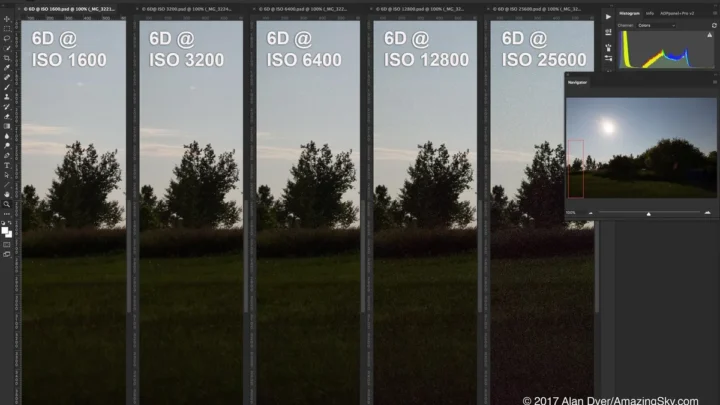
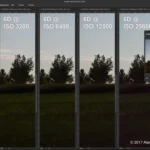
Most of these cameras produce usable images up to ISO 6400, 12800. The Sony Alpha 7 IV and Nikon Z6II handle ISO 12800 better than the Canon EOS RP or Nikon Z 5. For clean images, try to stay at or below ISO 6400.
Do I need a fast lens for low‑light mirrorless cameras?
Yes. Even the best full‑frame sensor benefits from a lens with a wide aperture (f/1.8 or f/1.4). A 50mm f/1.8 prime will let in over 4x more light than the kit zoom lens at f/4, dramatically improving low‑light performance.
Is in‑body stabilization better than lens stabilization for low light?
Both help, but IBIS works with any lens you mount. The Nikon Z6II, Z5, Z5 II, and Sony Alpha 7 IV all have IBIS. The Canon EOS RP and R8 lack IBIS, so you must use stabilized RF lenses for handheld low‑light video.
Can these cameras shoot astrophotography?
Yes, but some are better suited than others. The Nikon Z6II and Sony Alpha 7 IV have excellent high‑ISO performance and good long‑exposure handling. The Canon EOS RP is adequate for basic astro but has more noise at high ISOs.
For serious astrophotography, consider a dedicated astro‑modded camera.
How do I choose between Sony, Canon, and Nikon for low light?
Sony leads in autofocus and video capabilities. Nikon offers better build quality and stabilization. Canon provides the best value and user‑friendly menus.
Your choice should depend on which lens ecosystem you prefer and your video needs.

Similar Posts







[…] offers webcam utility software. For cameras that struggle in dim conditions, a camera with a full-frame sensor performs better in low […]