Can Air Purifiers Remove Chemicals
Can Air Purifiers Really Remove Chemicals? Here's What Actually Works
You're shopping for an air purifier because you're worried about chemicals in your home. Maybe you just painted a room, bought new furniture, or you're sensitive to everyday smells. The question "Can air purifiers remove chemicals" seems simple enough.
But the real answer is more complicated than most manufacturers want you to know.
In our research, we found that the average consumer air purifier is completely ineffective against most airborne chemicals. According to EPA guidelines on indoor air quality, the problem is that particles and gases behave completely differently. A HEPA filter that catches 99.97% of dust does nothing for formaldehyde vapors.
As of 2026, the technology gap between particle filtration and chemical removal remains one of the most misunderstood topics in home air quality. Let's break down what actually works and what doesn't.
Image source: Bing (Web (fair-use with source credit))
Quick Answer
Yes, some air purifiers can remove certain chemicals. But most cannot. HEPA filters only trap particles.
Activated carbon filters adsorb gases and volatile organic compounds (VOCs). The carbon must be thick and heavy. Thin carbon pre-filters are nearly useless.
Specialized technologies like PECO can break down chemicals. But no single purifier removes every chemical. Always check the carbon weight and type before buying.
Why This Question Is More Complicated Than You Think
Most people assume an air purifier cleans the air of everything bad. That's understandable. But chemicals in the air are not like dust or pollen.
They're individual molecules floating around. A HEPA filter is like a fishing net. It catches fish (particles).
But chemicals are like individual molecules of water. They pass right through the net.
The stakes here are real. If you buy a purifier expecting it to remove toxic fumes from new paint or a new cabinet, and it doesn't, you could be breathing harmful levels of chemicals for months. Off-gassing from new construction materials, furniture, and cleaning products contributes to what experts call sick building syndrome.
Headaches, dizziness, respiratory irritation, and long-term health effects are all possible outcomes.
So what makes this confusing? Marketing. Purifier companies love to slap "removes VOCs" on the box.
But the fine print usually reveals they tested in a tiny sealed chamber with a specific chemical at a very high concentration. Real-world performance is dramatically different. A unit that removed 99% of toluene in a lab test might remove 10% in your living room because of room size, air changes, and carbon saturation.
The other layer is that "chemicals" is a broad term. Ammonia, formaldehyde, benzene, toluene, xylene, chlorine, nitrogen dioxide. Each behaves differently.
Some are heavier than air. Some bond to surfaces. Some break down in sunlight.
A carbon filter that adsorbs benzene might let formaldehyde slip right through. You need to know what specific chemicals you're dealing with before you can choose the right technology.
What Air Purifiers Actually Remove (And What They Don't)
Let's get specific about what happens inside these machines.
Particle Removal: The Easy Part
HEPA filters are the gold standard for particles. They physically trap things like dust, pollen, mold spores, pet dander, and smoke particles. These are solid or liquid particles suspended in the air.
A true HEPA filter catches 99.97% of particles down to 0.3 microns. That's well-proven technology. If you're worried about allergens or wildfire smoke particles, a HEPA purifier works great.
But those smoke particles are not the same as the chemical gases in the smoke. Smoke contains both solid carbon particles (which HEPA catches) and gaseous chemicals like formaldehyde and benzene (which HEPA does not). So a HEPA purifier will reduce the visible smoke and smell slightly, but the chemical gases remain.
Gas Removal: The Hard Part
Activated carbon is the primary tool for chemical removal. It works through adsorption, which is different from absorption. Absorption is like a sponge soaking up water.
Adsorption is like a magnet attracting molecules to its surface. Activated carbon is processed to have an enormous internal surface area. One gram can have a surface area of over 1,000 square meters.
Molecules stick to that surface through a process called van der Waals forces.
| Technology | What It Removes | What It Misses |
|---|---|---|
| HEPA filter | Dust, pollen, mold spores, pet dander, smoke particles | All gases and VOCs |
| Activated carbon (thick, 5+ lbs) | Many VOCs, odors, some gases | Formaldehyde (needs impregnated carbon), carbon monoxide |
| Thin carbon pre-filter (foam or mesh) | Almost nothing for chemicals | Nearly all VOCs and gases |
| PECO (Photo-Electrochemical Oxidation) | Breaks down VOCs and some gases | Requires specific conditions, can produce trace ozone |
| Ozone generator | Masks odors, oxidizes some chemicals | Creates harmful ozone and formaldehyde |
The critical distinction is the weight of carbon. A typical consumer purifier might have a thin carbon pre-filter that weighs a few ounces. That's enough to reduce cooking odors for a week or two.
But for meaningful chemical removal, you need pounds of carbon. Our research shows that the minimum effective carbon weight for a room-sized purifier is about 5 pounds. Professional-grade units often have 15 to 30 pounds.
The Chemicals That Slip Through
Even with heavy carbon, some chemicals are difficult to remove. Carbon monoxide passes through activated carbon almost completely. You need a specialized catalyst for that.
Formaldehyde is also tricky. Standard activated carbon adsorbs it poorly. You need carbon impregnated with potassium permanganate or a specific chemical treatment to target formaldehyde.
Nitrogen dioxide and sulfur dioxide from traffic pollution also have limited adsorption on plain carbon. Some manufacturers use specialized blends or chemisorption media that chemically react with these gases rather than just adsorbing them.
How Activated Carbon Filters Work for Chemical Removal
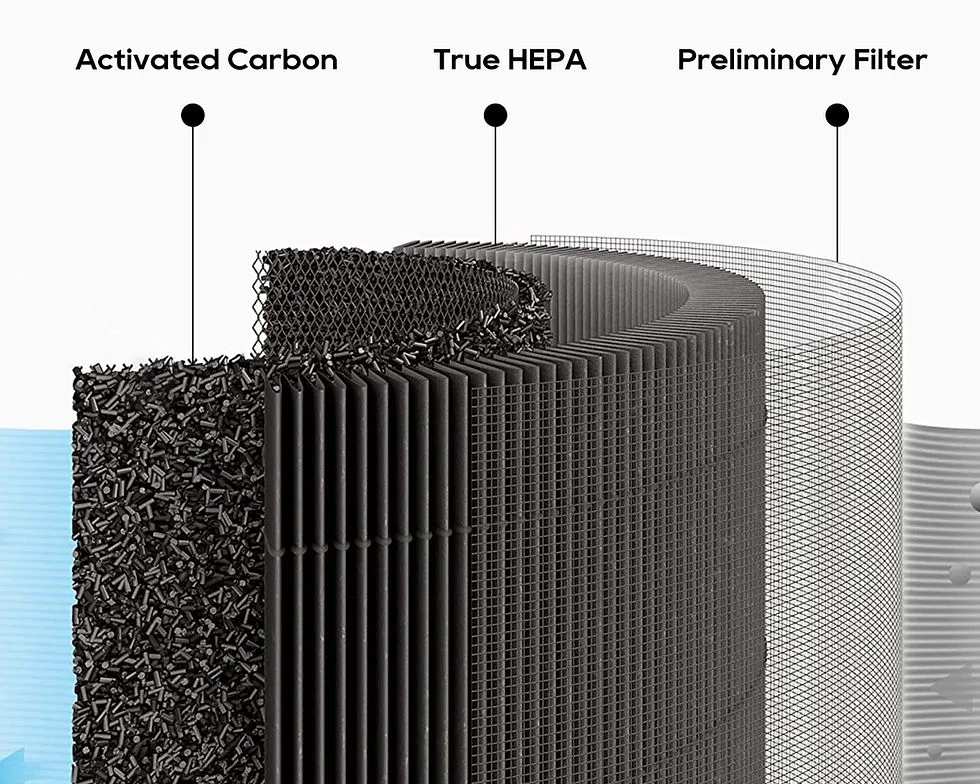
Image source: Bing (Web (fair-use with source credit))
You probably already know that carbon traps chemicals. But how exactly does it work, and why does it matter so much which kind you buy?
The Science Simplified
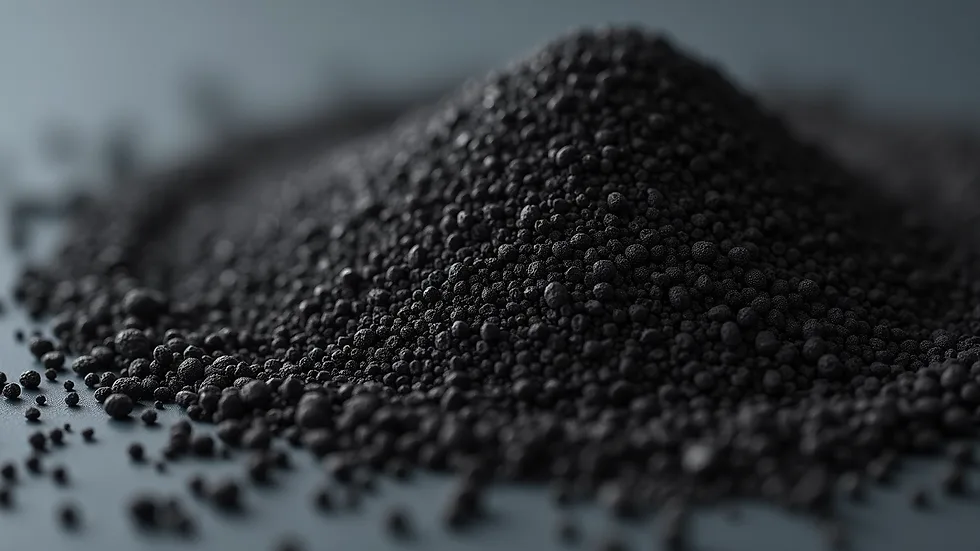
Activated carbon is made from carbon-rich materials like coconut shells, coal, or wood. It goes through a process called activation. Heat and steam or chemicals are used to create a network of tiny pores.
Those pores massively increase the surface area. Think of a piece of charcoal. Now imagine that same piece with millions of microscopic tunnels and caves inside it.
That's activated carbon.
When air passes through the carbon bed, chemical molecules bump into the carbon surface. They stick there through weak electrical forces. This is called van der Waals adsorption.
It's not a chemical reaction. The molecules are just held in place. That's important because it means the carbon can fill up and stop working.
Why Carbon Weight Is Everything
Manufacturer specifications clearly show that carbon weight is the single most important factor. A purifier with 2 pounds of carbon will saturate and stop removing chemicals in weeks. A unit with 15 pounds of carbon can last months or even a year in normal conditions.
The thickness of the carbon bed matters too. Thin carbon layers mean air passes through too quickly. The molecules don't have enough contact time to stick.
You need a bed thickness of at least 1 to 2 inches for meaningful removal. Thicker is better.
Impregnated Carbon: When You Need More
For specific chemicals, standard carbon isn't enough. Manufacturers impregnate carbon with other chemicals to target particular pollutants. For example:
- Potassium permanganate impregnated carbon targets formaldehyde, hydrogen sulfide, and some other reactive gases
- Zeolite blends can trap ammonia better than plain carbon
- Specialized media with manganese dioxide can break down some VOCs
These aren't magic bullets. They're targeted solutions. If you know you have a formaldehyde problem from new cabinetry or flooring, look for carbon specifically treated for that chemical.
The Saturation Problem Nobody Warns You About
Here's the dirty secret of carbon filters. Once they're full, they stop working. Worse, they can release trapped chemicals back into the air.
This is called off-gassing or desorption. Temperature and humidity changes can trigger it.
How fast does carbon saturate? It depends on the chemical concentration in your air. In a home with normal background VOC levels, a light carbon filter might last 30 to 90 days.
In a home with high levels from new construction or industrial pollution, it could saturate in weeks.
Most people don't know this. They buy a purifier, set it up, and assume it's working forever. Three months later, chemicals are still in the air, but the filter is no longer removing them.
The only way to know is to replace the carbon on a strict schedule or use an air quality monitor.
When Air Purifiers Are Useless for Chemicals
This section might be uncomfortable if you've already bought a purifier. But honest information matters more than your feelings about your purchase.
The Thin Carbon Pre-Filter Scam
Many mass-market purifiers include a carbon pre-filter. Open the box and you'll find a thin sheet of black foam or mesh. This is not a chemical removal filter.
It's an odor mask at best.
Our research shows these pre-filters contain a few grams of carbon dust bonded to a foam substrate. The carbon is so thin that air passes through in milliseconds. There's no contact time for adsorption to happen.
These filters might reduce minor cooking odors for a week. They do nothing for chemical VOCs.
Manufacturers include them because they can write "carbon filter" on the box. It's a marketing checkbox, not a functional solution. If your purifier has a carbon pre-filter that's thinner than a pencil, don't expect chemical removal.
Ozone Generators: The Dangerous Lie
Some devices claim to remove chemicals by generating ozone. Ozone is a reactive gas. It does oxidize some chemicals and odors.
But it also creates byproducts that can be worse than the original chemicals.
The EPA warns against using ozone generators in occupied spaces. Ozone reacts with common indoor chemicals to produce formaldehyde and ultrafine particles. You're swapping one problem for a potentially bigger one.
The California Air Resources Board (CARB) strictly regulates these devices. Many are illegal to sell in California.
If a purifier says it uses ozone or ionization for chemical removal, skip it. The health risks outweigh any potential benefit.
What About UV Light?
Ultraviolet light purifiers kill bacteria and viruses. They do not remove chemicals. Some units combine UV with photocatalytic oxidation (PCO).
PCO uses UV light and a catalyst to break down VOCs. In theory, it works. In practice, many PCO units produce incomplete breakdown.
Formaldehyde can be a byproduct rather than a removed chemical.
The technology is improving. But as of 2026, consumer-grade PCO units are inconsistent. Professional units with precise wavelength control are more reliable.
For most homes, heavy carbon is still the safer bet.
The Room Size Problem
Even a good carbon filter won't save you if the unit is undersized. Chemical removal requires enough air changes per hour (ACH). For particle removal, 4 ACH is good.
For chemical removal, you often need 6 to 8 ACH because the molecules are harder to capture.
That means the purifier needs to move a lot of air through the carbon bed. A small unit with 15 pounds of carbon but a weak fan won't clean the room. The carbon is great, but the air never reaches it.
Check the CADR for smoke (which correlates somewhat with odor removal) and compare it to your room size. You want a unit rated for 1.5x to 2x your room size for chemical removal.
What to Look For If You Actually Need Chemical Removal
Image source: Bing (Web (fair-use with source credit))
If you've read this far, you probably still need a solution. Here's what actually works, broken down by which chemicals you're dealing with.
The Minimum Specs
For a purifier to provide meaningful chemical removal, look for these specifications:
- At least 5 pounds of activated carbon. More is better. Professional units for serious VOC problems start at 15 pounds.
- Carbon bed thickness of 1 inch or more. The air needs time to contact the carbon surface.
- High CADR for smoke. This indicates strong airflow. You need movement plus filtration.
- Sealed carbon bed. Some units have the carbon in a cartridge that forces all air through it. Avoid units where air can bypass the carbon.
By Chemical Type
| Chemical | Best Solution | What to Avoid |
|---|---|---|
| Formaldehyde | Impregnated carbon (potassium permanganate) or PECO | Plain activated carbon |
| Benzene / Toluene / Xylene | Heavy activated carbon (5+ lbs) | Thin carbon pre-filters |
| Ammonia | Zeolite or specialized chemical media | Standard carbon |
| Smoke (chemicals in smoke) | Heavy carbon plus HEPA | HEPA alone |
| General VOCs from new furniture | Heavy carbon, plus source removal | Any filter under 3 lbs |
| Carbon monoxide | No consumer purifier works well | Call a professional |
Alternative Technologies Worth Considering
PECO (Photo-Electrochemical Oxidation) is one of the more promising alternatives. It uses UV light and a specialized filter to break down VOCs at the molecular level. Unlike carbon, it doesn't saturate.
It keeps working as long as the bulb operates. The catch is that it's only available from a few manufacturers, and independent testing is limited compared to carbon.
For low-level chemical concerns, consider ventilation as your primary tool. Opening windows, using exhaust fans, and bringing in fresh air often works better than any purifier. EPA research consistently shows that ventilation is the most effective strategy for reducing indoor chemical concentrations.
The Math on Cost
Be honest about what you're willing to spend. A purifier with 15 pounds of carbon might cost $600 to $1,200 upfront. Replacement carbon canisters run $80 to $200 every 6 to 12 months.
That's expensive. But if you have chemical sensitivities or a serious off-gassing problem, it's the minimum effective solution.
Cheaper units with thin carbon won't solve your problem. They'll just cost you less money while failing to do the job. That's not a bargain.
That's wasted money plus continued chemical exposure.
Common Mistakes That Waste Your Money and Risk Your Health
Most people get this wrong in predictable ways. Here are the most common mistakes we see.
Mistake 1: Buying HEPA Only
A HEPA-only purifier costs less. It traps particles. But it does nothing for chemicals.
If you bought a HEPA purifier expecting chemical removal, you wasted your money.
Mistake 2: Ignoring Carbon Weight
Thin carbon pre-filters look like foam. They are not real carbon filters. Check the weight.
If the manufacturer doesn't list the carbon weight in pounds, assume it's too light. There's a reason they hide that number.
Mistake 3: Never Replacing Carbon
Carbon exhausts. It fills up and stops working. If you haven't replaced your carbon filter in 6 months, it's probably not removing anything new.
Replace on schedule. Use a calendar reminder.
Mistake 4: Relying on Purifiers Instead of Source Removal
No purifier works as well as removing the chemical source. If you have new particleboard cabinets off-gassing formaldehyde, an air purifier is a band-aid. Sealing the cabinets or replacing them is the real solution.
Use purifiers as a supplement, not as your only strategy.
Mistake 5: Undersizing the Unit
A small purifier in a large room can't move enough air through the carbon. The chemical concentration stays high. Buy a unit rated for 1.5 to 2 times your room size for chemical removal.
It's better to run a larger unit at a lower speed than a small unit at max speed.
Safe Practices and When to Call a Professional
Before you spend money on a purifier, try these cheaper and often more effective strategies.
Ventilation First
Open windows on opposite sides of the room. Use a box fan in one window to pull air in and another to push air out. This creates cross-ventilation.
It dilutes chemical concentrations faster than any purifier.
For bathrooms and kitchens, run exhaust fans every time you use chemicals. Let them run for 20 minutes after you finish.
Source Removal
Identify what's off-gassing. New furniture, paint, flooring, cabinets, adhesives, and cleaning products are common sources. Where possible, remove the source.
- Choose solid wood furniture over particleboard or MDF
- Use low-VOC or no-VOC paints
- Store chemicals in sealed containers in a detached garage or shed
- Switch to fragrance-free cleaning products
When to Call a Professional
If you have persistent symptoms and suspect chemical exposure, don't rely on a consumer purifier. Call an industrial hygienist or indoor air quality professional. They can test for specific chemicals and recommend solutions.
This is especially important if you work with chemicals or live near industrial sites.
The EPA provides guidance on selecting an indoor air quality professional. Look for certified industrial hygienists or environmental consultants. They use calibrated instruments to measure what's actually in your air.
That data is worth more than any guess.
Frequently Asked Questions
How long does activated carbon last for chemical removal?
For light carbon filters (under 3 pounds), expect 30 to 90 days. For heavy carbon (5 to 15 pounds), expect 6 to 12 months. High chemical concentrations shorten this.
Replace carbon on schedule even if you can't smell anything.
Is a $500 purifier better than a $150 one for VOCs?
Not automatically. Price doesn't guarantee carbon weight. Some expensive purifiers still use thin carbon pre-filters.
Check the carbon weight in pounds. A $300 purifier with 10 pounds of carbon beats a $600 one with 2 pounds.
Can I build a DIY carbon filter that works?
Yes. A box fan with a thick carbon filter taped to it can work reasonably well for low-level odors. Use at least 2 inches of loose activated carbon in a container with a fan blowing through it.
It won't look pretty. But it can outperform many commercial units with thin carbon.
Do plants or baking soda help with chemicals?
Plants remove very small amounts of VOCs over long periods. You would need dozens of plants for noticeable effect. Baking soda absorbs odors in enclosed spaces like refrigerators.
It does not remove airborne chemicals in a room. Neither is a substitute for proper filtration or ventilation.
What's the difference between adsorption and absorption?
Absorption is like a sponge soaking up water. The material takes the chemical into its structure. Adsorption is like a magnet.
The chemical sticks to the surface of the material. Activated carbon works through adsorption. That's why it can fill up and stop working.

Similar Posts