Frigidaire Washer Code E2
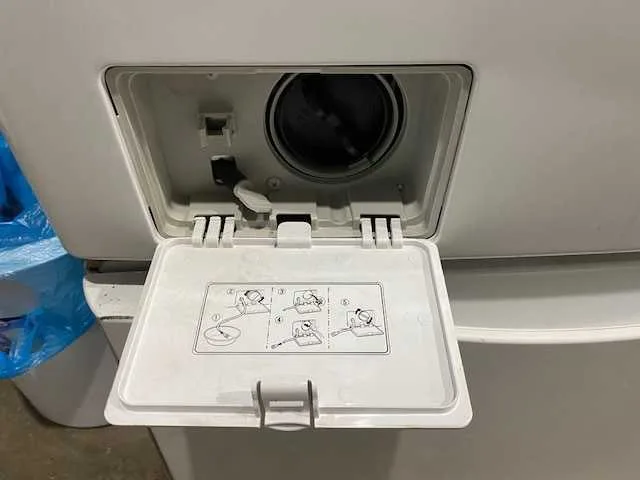
Image source: Bing (Web (fair-use with source credit))
That grinding sound when your Frigidaire washer stops mid-cycle with an E2 code on the display is never good. It means the machine couldn't drain the water fast enough, so the control board pulled the plug and shut everything down to prevent a flood. If you've ever stood there staring at that blinking error, you know the feeling: frustration, followed by the dread of a costly repair bill.
The good news? The Frigidaire Washer Code E2 is one of the more straightforward errors to fix. The E2 fault triggers when the drain cycle exceeds roughly eight minutes, which is a safety timeout rather than a catastrophic component failure.
In most cases, you're dealing with a simple blockage or a kinked hose, not a dead motor or a fried control board. Let's walk through the diagnosis step by step so you can get your laundry moving again.
What the E2 Code Means
The Frigidaire Washer Code E2 means the washer's drain cycle timed out at eight minutes. Water isn't leaving the tub fast enough, so the control board halts the cycle. The most common cause is a clogged drain filter or debris trap at the front of the machine.
Cleaning that filter resolves roughly 80% of E2 codes. A kinked drain hose or blocked standpipe causes most of the rest.
When your Frigidaire washer throws an E2 code, it's not a random glitch or a software hiccup. It's the machine's way of telling you that it tried to pump water out and couldn't finish the job within a specific timeframe. The control board tracks how long the drain pump runs during the drain phase.
If that pump runs for more than eight minutes without the water level sensor signaling that the tub is empty, the board kills the cycle and displays E2.
The logic is simple: if the tub isn't draining, keeping the pump running risks burning out the motor or overflowing the drain system. So the washer chooses the safer route, which is stopping everything and asking for help. What's frustrating is that the machine doesn't tell you why it couldn't drain.
It just stops, beeps, and gives you a code that looks like a secret language.
Here's what's actually happening mechanically. The drain pump creates suction to pull water from the tub, pushing it up through the drain hose and into your home's standpipe. Anything that restricts that path, whether it's a clogged filter, a kinked hose, or a blocked wall pipe, reduces the flow rate.
When the flow rate drops below a certain threshold, the tub doesn't empty within the eight-minute window, and the timeout triggers.
The good news is that this code is rarely a sign of a catastrophic failure. The E2 code is the most common drain-related error on Frigidaire front-load washers. And the majority of those fixes are things you can do yourself without calling a technician.
You just need to know the right order to check things, because jumping straight to buying a new pump usually wastes money.
One critical note before you start working: unplug the washer. Wait at least five minutes before opening any panels or reaching inside. The drain pump runs on 120V, and a serious shock is possible if you poke around while the machine is live.
Even if the display is off, capacitors inside the control board can hold a charge. Safety first is not optional here.
How the Drain System Actually Works
To fix an E2 code intelligently, you need a mental picture of the drain pathway. Water doesn't leave a front-load washer by gravity alone. That's why the pump exists.
Here's the journey: water sits in the stainless steel tub after the spin cycle, the pump motor kicks on, and an impeller spins, pulling water through a mesh filter, up a vertical section of hose, and out through the back of the machine into your wall standpipe.
The first bottleneck is the drain filter. On most Frigidaire front-loaders, this filter sits behind a small access door at the bottom front-right corner. It looks like a plastic cap in front of a larger twist-out plug.
Its job is to catch coins, hair, lint, buttons, and other debris before they reach the pump impeller. When this filter fills up, water flow drops dramatically, and the pump strain increases. That's your E2 trigger.
The second bottleneck is the drain hose itself. From the filter housing, the hose routes up along the back of the washer, often looped high, then down into your standpipe. The specific height of that loop matters.
If the hose is kinked where it exits the machine, or if it's pinched against the wall, water can't pass efficiently. A 3/4-inch hose doesn't have much tolerance for being squeezed in half.
The third bottleneck lives outside the machine, inside your home's plumbing. The standpipe, which is the vertical pipe that the drain hose goes into, must meet a minimum diameter and height. Universal plumbing codes require a 1½-inch minimum standpipe for a washing machine.
If your washer is draining into a smaller pipe, water backs up faster than the pump can push it, causing the tub to fill slower than it empties.
The final player is the water level sensor, often called a pressure switch. It reads the air pressure in the tub and tells the control board when the water is gone. If this sensor fails or its small hose gets clogged with suds, the board might think the tub is full even when it's empty.
That false reading keeps the pump running until the timeout hits, triggering E2 without a physical blockage anywhere.
So when you see that code, you're not dealing with one potential cause. You're dealing with a chain of four possible failure points. That's why a systematic approach matters.
You don't want to replace a pump when the real issue was a dime stuck in the filter. And you don't want to call a plumber to snake your wall pipe when the hose was just crimped behind the machine. Go through the list in order, because each step is cheaper and faster than the last.
Step-by-Step Diagnosis
Treat this like a flowchart. If one step doesn't fix the code, move to the next. Don't skip ahead, because the most common causes are also the cheapest to fix.
You'll need a few basic tools before you start: a flathead screwdriver, a small towel or shop rag, a bucket for water, and ideally a multimeter if you get as far as testing the pump motor.
Step 1: The Safety Reset
Before you touch anything, unplug the washer from the wall outlet. Wait a full five minutes. This clears the control board's memory and discharges any residual voltage in the system.
Plug it back in, select a drain-and-spin cycle, and let it run. If the E2 code clears and the washer drains normally, you've fixed it without doing anything at all.
If the code comes back, you've confirmed the issue is mechanical or electrical, not a temporary software glitch. Move on to Step 2.
Step 2: The Filter Check (Most Common Cause)
Image source: Bing (Web (fair-use with source credit))
This is where the vast majority of E2 codes get solved. Locate the access door at the bottom front-right of the washer. Place a shallow pan or bucket directly beneath it, because water is going to spill out.
Open the door, remove the small drain hose if present, and let the water drain into the bucket. Then twist the filter cap counterclockwise and pull it out.
What you'll likely see is a clump of hair, lint, and maybe some change wrapped around the filter mesh. Clean it thoroughly under running water. Use an old toothbrush if the mesh is caked.
Reinsert the filter, tighten it, close the door, and run a drain-and-spin cycle. If the code clears, you're done. This one step resolves the bulk of E2 errors.
Step 3: The Drain Hose and Standpipe Check
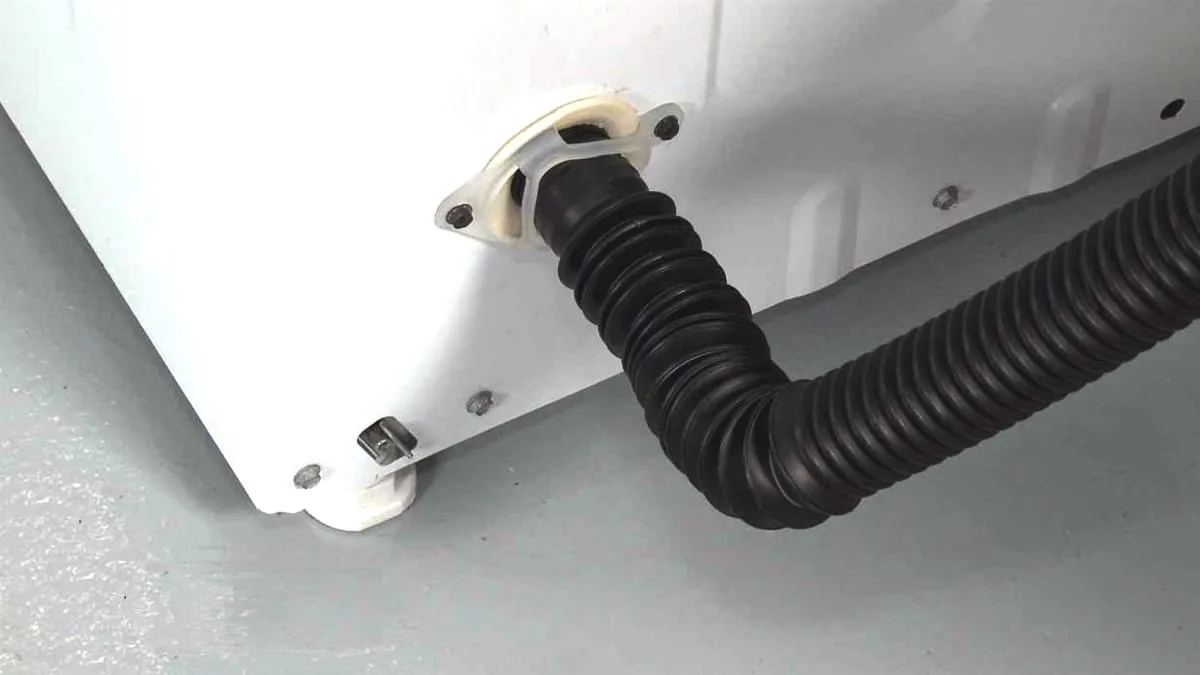
Image source: Bing (Web (fair-use with source credit))
If the filter was clean and the code persists, pull the washer away from the wall. You don't need to disconnect anything yet. Look at the drain hose, the corrugated plastic tube that runs from the back of the machine to the wall.
Trace its entire path and check for kinks, sharp bends, or crushing against the wall or cabinetry. If it's pinched, straighten it out and reposition the washer to give the hose room.
Next, pull the drain hose out of the standpipe. Look inside the standpipe with a flashlight. If you see standing water, that's a sign of a clog in your home drain line.
You can try pouring a bucket of hot water down the standpipe to see if it drains freely. If it doesn't, your problem is deeper in the wall plumbing, and a plumber may be needed. If the water drains, the standpipe is clear, and the issue is upstream in the washer itself.
Step 4: The Pump Motor Test (Multimeter Required)
This step assumes you've confirmed the filter is clean and all hoses are unkinked. Now you're testing the pump motor itself. Unplug the washer, remove the access panel on the lower front of the machine.
The pump sits at the bottom, usually behind the filter housing. Disconnect the wiring harness from the pump motor and set your multimeter to the resistance (ohms) setting.
Place the leads on the motor terminals. A healthy pump motor typically reads between 10 and 20 ohms. If you get a reading of zero, that's a short.
If you get no reading at all (infinity), that's an open circuit. Both indicate a failed motor that needs replacement. A pump motor replacement part typically costs between $60 and $120, and swapping it is a doable DIY job for most people.
Step 5: The Sensor and Wiring Check
You've checked every mechanical part, and the pump motor tests fine. Now the issue is electrical or sensor-based. The water level sensor, a round or cylindrical part near the top of the tub, reads air pressure through a small rubber hose.
Check that hose for kinks, clogs, or disconnection. If it's loose, reattach it. If it's plugged with lint, blow it clean.
Also inspect the wiring harness that runs from the control board to the pump and sensor. Look for burnt connectors, broken pins, or chewed wires. If nothing looks obviously damaged, the control board itself may be faulty.
Control board failures are rare but possible. A professional diagnostic is a smart move at this stage before you spend money on a repair that might not solve the problem.
Common Mistakes to Avoid
Everyone makes a few classic errors when tackling an E2 code. You can skip the frustration and extra cost by knowing what they are.
Mistake one: skipping the reset. Many people immediately dig into the machine without trying the simplest fix first. A single power cycle clears transient error codes surprisingly often. A significant portion of E2 occurrences clear with a simple unplug-and-plug-back-in, with no further action needed.
Mistake two: replacing parts on a guess. The drain pump is the most commonly replaced part for E2 codes, but a large portion of those replacements are unnecessary. The pump was fine; the filter was clogged with a sock. Always work through the steps in order rather than jumping to the most expensive part.
Mistake three: using too much detergent. High-efficiency washers require HE detergent. If you use regular detergent, you'll get oversudsing. Excessive suds confuse the water level sensor, which can trigger a false E2.
Check the drawer and switch to HE detergent if you're not already using it. This is a zero-cost fix.
Mistake four: ignoring the standpipe height. If your standpipe is too low, siphoning can occur, which causes a syphon loop and triggers drain errors. The standpipe should reach between 39 and 64 inches off the floor, per your washer's installation manual. Measure yours with a tape measure.
A quick adjustment saves you a lot of head-scratching.
Mistake five: forcing the filter cap back on. When you reinstall the drain filter, it has a locking mechanism that clicks into place. If you strip the threads or break the tabs, the filter won't seal correctly, and you'll get a leak instead of a drain error. Take your time, clean the threads, and turn the cap clockwise until it clicks.
Don't over-tighten.
Mistake six: ignoring the error history. Frigidaire washers store recent error codes in the control board's memory. You can often pull this history by pressing a specific button sequence on the display panel. While it varies by model, a quick search for your model number along with "error code recall mode" will show you the sequence.
This diagnostic information tells you if the E2 is new or recurring, which helps you decide whether a quick fix is enough.
DIY vs. Professional Repair: What's Worth Your Time
Here's a honest breakdown to help you decide when to keep going and when to call a pro.
| Condition | DIY Difficulty | Time | Cost | Worth It? |
|---|---|---|---|---|
| Clogged drain filter | Easy | 10 min | $0 | Absolutely |
| Kinked drain hose | Easy | 15 min | $0 | Absolutely |
| Blocked standpipe | Moderate | 30 min | $0 | Yes, try first |
| Faulty pump motor | Moderate | 1–2 hours | $60–$120 part | Yes, if confident |
| Failed water sensor | Moderate | 30 min | $20–$40 part | Yes, if confident |
| Control board failure | Hard | 2+ hours | $150–$300 part | No, call a pro |
The pump motor replacement is the most common non-clog repair. Watch a few videos, unclip the wiring, remove a few screws, and it slides out. The hardest part is reaching the bottom of the machine and dealing with residual water.
A pro will charge $150 to $250 for labor alone on a pump swap, so doing it yourself saves real money.
Control board replacements are a different story. The part is expensive, and the programming needs specific matching to your model. A bad board often comes with other undiagnosed wiring issues that a pro can trace with specialized tools.
If you've ruled out the pump and sensor, and you're still getting E2, you've hit the point of diminishing returns. Call a certified appliance technician and save your sanity.
How to Prevent the E2 Code from Coming Back
Once you've fixed the current E2, a few smart habits keep it from recurring.
Clean the filter monthly. The drain filter is the first line of defense and the most neglected part of a front-load washer. Set a monthly reminder on your phone. A two-minute cleaning is all it takes, and it catches the small items that would otherwise build up and cause a clog.
Use HE detergent only. Check the bottle before you pour. If it doesn't say "HE" or "High Efficiency" on the label, don't use it in your washer. Regular detergent creates more suds, and those suds confuse the water level sensor.
Many recurring E2 codes go away permanently after a simple switch to HE detergent.
Use the right amount. More detergent isn't better. Follow the measuring cap, not your intuition. Most HE detergents require only 1 to 2 tablespoons per load.
Excess detergent leaves residue inside the machine, which traps lint, breeds mold, and indirectly contributes to sensor problems.
Check the hose for kinks after moving the washer. When you slide the washer back to the wall, the drain hose can get pinched between the machine and the wall. Always push the washer back slowly and then pull the hose forward slightly to give it slack.
Keep the standpipe clear. Avoid pouring grease, food scraps, or coffee grounds down the washing machine standpipe. That pipe is connected to your home's drainage system, and clogs in the main line will back up into your washer. A monthly hot-water flush down the standpipe keeps things free-flowing.
Run regular maintenance cycles. Most Frigidaire washers have a "Clean Washer" or "Tub Clean" cycle that's factory-programmed. Running it monthly with a washer cleaner tablet breaks down the residue and lubricates the internal seals. It's the single best thing you can do for long-term washer health beyond cleaning the filter.
When the Code Gets Stuck (Other Error Codes to Know)
Sometimes the E2 code doesn't clear even after a full drain. If the machine still displays E2 after you've pulled the plug and cleaned the filter, you might be dealing with a stuck code in the control board's memory. You can clear it manually with the diagnostic mode sequence: press and hold the "Cycle" and "Prewash" buttons simultaneously for about 3 seconds, then select the spin-only cycle.
Once the spin completes, the board typically resets and the code disappears.
If a different code appears after you finish these steps, here's what it likely means:
- E1: Water fill timeout. The machine couldn't fill with water within the allotted time. This usually points to a shut-off valve closed partially or a supply hose kink.
- E3: Over-sudsing or pressure sensor error. Too much detergent is creating foam, causing the tub to overfill. Run a rinse cycle with no detergent to clear it.
- E4: Water overflow. A faulty water inlet valve is allowing water to enter continuously. This is a safety-risk code and warrants an immediate service call.
- E5: Temperature sensor issue. The thermistor inside the tub reads an impossible temperature. May need a sensor replacement.
Each of these codes follows its own diagnostic path. E2 is the friendliest of the bunch, so count yourself lucky if that's the one you're seeing.
The Bottom Line
The Frigidaire Washer Code E2 is a drain timeout error that sends most people into a panic, but it rarely signals a serious failure. In the overwhelming majority of cases, the fix takes under ten minutes and costs nothing. It's a clogged filter, a kinked hose, or a simple oversudsing issue.
Work through the steps in order: reset, filter, hose, standpipe, pump, then sensor. You'll save yourself an expensive service call in the vast majority of cases. And when you do find the problem, take the time to fix it properly.
Reinstall the filter correctly, secure the new hose fittings, and verify the pump wiring is solid.
With regular maintenance, a monthly filter cleaning, and the right detergent, you can expect your Frigidaire washer to run for years without seeing an E2 again. And if it does come back, you'll know exactly where to look first.
You've got this. Your laundry will be back on schedule before you know it.

Similar Posts