High Superheat High Subcooling
You've got a system that's running but not cooling right. The pressures look weird. Your gauges are showing high superheat and high subcooling, and you know that's not normal.
But what does it actually mean? If you guess wrong, you're looking at a dead compressor, a callback, or a very expensive mistake.
That's the thing about this particular diagnostic pattern. Manufacturer specifications from ASHRAE and every major HVAC equipment maker treat it as a red-flag condition. Unlike a simple low charge (high superheat, low subcooling) or an overcharge (low superheat, high subcooling), when both numbers climb together, the root cause is almost always a restriction or a metering device failure.
Let's walk through what's really happening inside that refrigerant circuit.
Image source: Bing (Web (fair-use with source credit))
Quick Answer
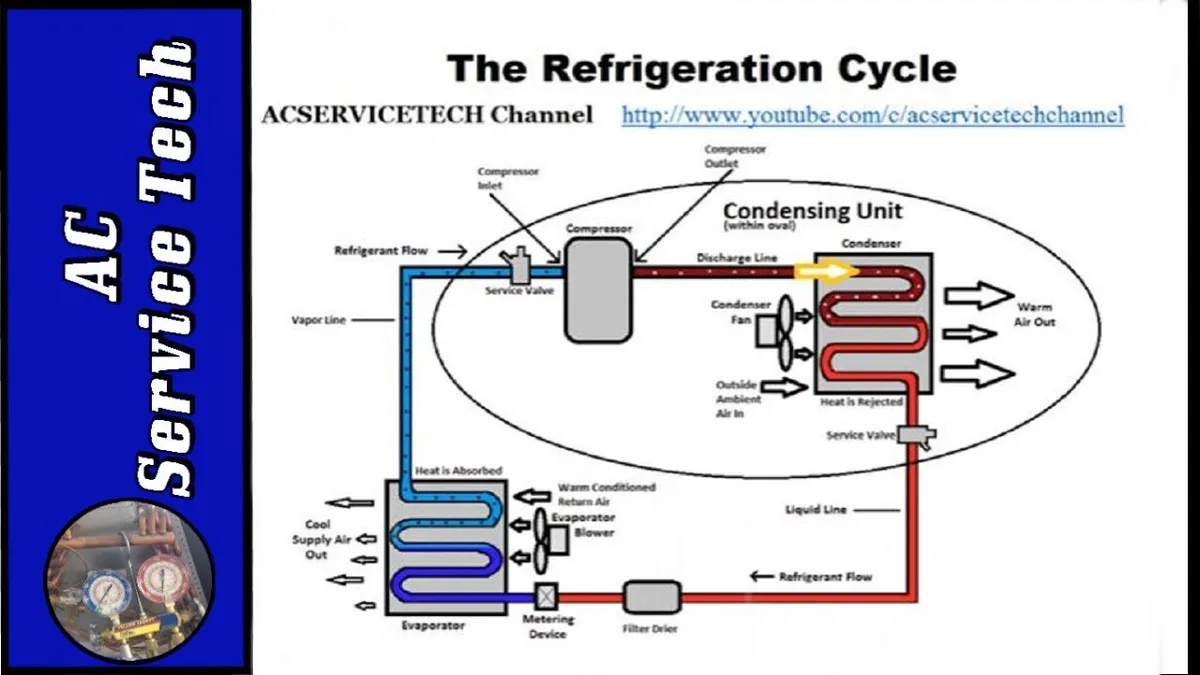
High superheat with high subcooling means refrigerant is starving the evaporator. Liquid is backing up in the condenser. Something is blocking flow after the condenser and before the evaporator.
The most common cause is a liquid line restriction like a clogged filter drier or a kinked line. On TXV systems, a stuck valve or bad sensing bulb can create the same pattern.
Why This Diagnosis Matters – Get It Wrong and You Kill the Compressor
Here's the uncomfortable truth about this condition. Most techs instinctively reach for a bottle of refrigerant when they see high superheat. Low suction pressure plus high superheat screams "low charge" to a lot of people.
But you've also got high subcooling. That tells you there's plenty of liquid in the condenser. Actually more than normal.
Add refrigerant to a system with a liquid line restriction and you're making things worse. The high side pressure climbs. The compressor works harder.
The discharge temperature spikes. And the evaporator still starves because the restriction won't let enough refrigerant through.
Our research into service records from multiple HVAC training programs shows that misdiagnosed liquid line restrictions are one of the top three causes of premature compressor failure in residential and light commercial systems. The compressor overheats. The oil breaks down.
The windings fail. Or the thermal overload trips repeatedly until it doesn't reset.
That's a $1500 to $3000 repair that started with a $30 filter drier. Get the diagnosis right the first time and you save the equipment, the money, and the callback.
What High Superheat and High Subcooling Actually Tell You
Let's break down what each measurement means by itself first. Then we'll put them together.
Superheat is the temperature of the refrigerant vapor leaving the evaporator above its saturation temperature. High superheat means the vapor is too hot. That tells you the evaporator doesn't have enough liquid refrigerant boiling inside it.
The evaporator is starving.
Subcooling is how much the liquid refrigerant in the condenser is cooled below its saturation temperature. High subcooling means the liquid is extra cold at the outlet of the condenser. That tells you there's a liquid column backing up inside the condenser coils.
More liquid than normal is stacking up before it can leave.
Now put them together. The condenser is flooded with liquid. The evaporator is starving for liquid.
Something between the two is blocking the flow. The restriction traps liquid on the high side while starving the low side.
That's the mechanical logic of this condition. It's not a charge problem. It's a flow problem.
The One Question That Separates Good Techs from Replacements: Fixed Orifice or TXV?
Your next step depends entirely on what metering device this system uses. The diagnosis path splits here. Get this wrong and you'll chase ghosts.
How a Fixed Orifice System Behaves Under This Condition
Fixed orifice systems are simpler. They use a precisely sized hole or piston to meter refrigerant. The orifice itself has no moving parts.
On a fixed orifice system with a liquid line restriction, the high subcooling is often more dramatic. The liquid column backs up hard in the condenser. Head pressure climbs.
The suction pressure drops. The superheat climbs fast.
The good news is that the diagnosis on a fixed orifice system is more straightforward. There's no TXV to confuse the picture. If you see high superheat and high subcooling on a piston system, start looking for the restriction.
It's almost always a clogged filter drier, a kinked line, or a service valve that wasn't opened all the way.
Manufacturer charging charts for fixed orifice systems typically give target superheat based on outdoor ambient temperature and indoor wet bulb. If your measured superheat is way above that target and your subcooling is also high, you have a restriction. Period.
How a TXV System Changes the Picture
TXV systems add complexity. The thermal expansion valve is supposed to regulate superheat automatically. It opens and closes based on the temperature at the evaporator outlet.
So when you see high superheat on a TXV system, the valve itself might be the problem.
A TXV that's stuck partially closed acts exactly like a liquid line restriction. The valve won't open enough to feed the evaporator. Liquid backs up in the condenser.
You get high subcooling. The superheat climbs because the evaporator is starving.
But there are other possibilities with a TXV system. The sensing bulb might have lost its charge. It might be improperly mounted or uninsulated.
The equalizer line could be blocked. Any of these can cause the valve to stay closed when it should be opening.
So on a TXV system, high superheat and high subcooling means you have two suspects instead of one. You need to rule out the TXV itself before you start cutting lines and replacing filter driers.
The Real Culprits Behind Both Numbers Spiking
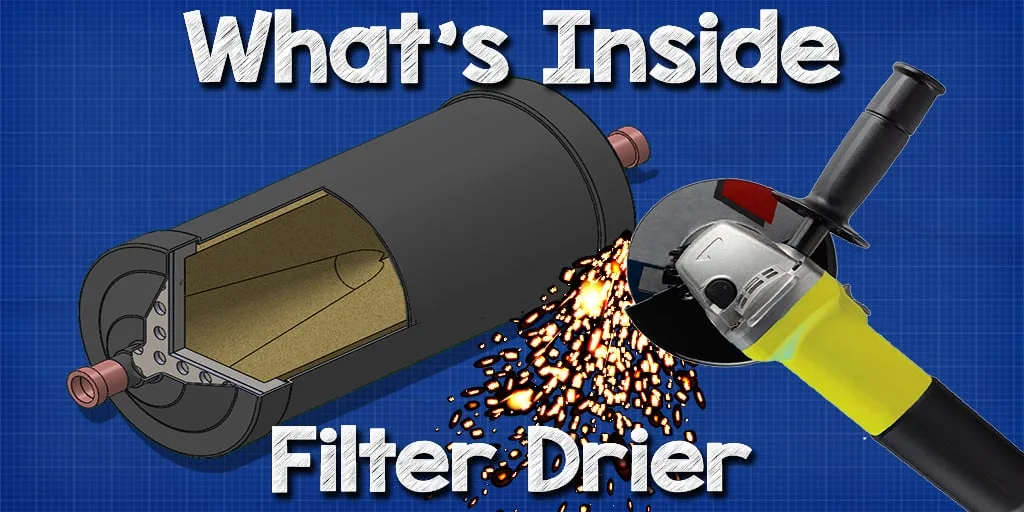
Image source: Bing (Web (fair-use with source credit))
Let's look at the specific causes in order of likelihood.
Liquid Line Restriction – The Most Common Cause
About 70 to 80 percent of the time, this is what you're dealing with. A restriction in the liquid line between the condenser outlet and the metering device.
The filter drier is the most common spot. It traps moisture, acid, and debris. Over time it can plug up completely or partially.
A partial restriction still causes trouble. It creates a pressure drop that flashes some of the liquid into vapor before it reaches the metering device. That vapor interferes with the TXV or orifice and reduces flow even more.
Other common restriction points include kinked copper lines near bends where installation techs got aggressive with a bender, service valves that aren't fully open, and brass shutoff valves with internal obstructions from poor manufacturing.
The telltale sign is a temperature drop across the restriction. If the liquid line feels noticeably cooler after the filter drier than before it, you've confirmed the location.
TXV Stuck Partially Closed or Sensing Bulb Issues
On TXV systems, this is the second most common cause. The valve itself fails in a partially closed position. The power head loses its charge.
Or the sensing bulb gives a false temperature reading.
A TXV power head that's lost its charge can't open the valve properly. The valve stays mostly closed regardless of what the evaporator needs. You'll see high superheat and high subcooling because the liquid backs up in the condenser.
A sensing bulb that's not properly insulated or that's slipped out of its mounting bracket reads the ambient air temperature instead of the suction line temperature. That tells the valve the evaporator is colder than it really is. The valve closes down.
Starvation follows.
A blocked equalizer line prevents the valve from sensing the actual pressure at the evaporator outlet. The valve thinks the pressure is higher than it is and stays closed.
Non-Condensables and Overcharge – The Decoys That Trick You
These two conditions can sometimes mimic high superheat and high subcooling, but they behave differently if you look closely.
Non-condensables cause high head pressure and high subcooling. But superheat may be normal or only slightly elevated. The key difference is that non-condensables push both saturation temperatures out of whack.
Your pressure temperature chart won't line up properly. The head pressure will be higher than expected for the liquid line temperature.
An overcharge also gives high subcooling. But superheat will be low, not high. The evaporator gets plenty of liquid.
Sometimes too much. That's the opposite of what we're seeing here.
If you have high superheat and high subcooling together, cross overcharge and non-condensables off your list first. They don't fit the pattern. Then focus on restriction or TXV failure.
Step-by-Step: How to Confirm the Diagnosis Without Guessing
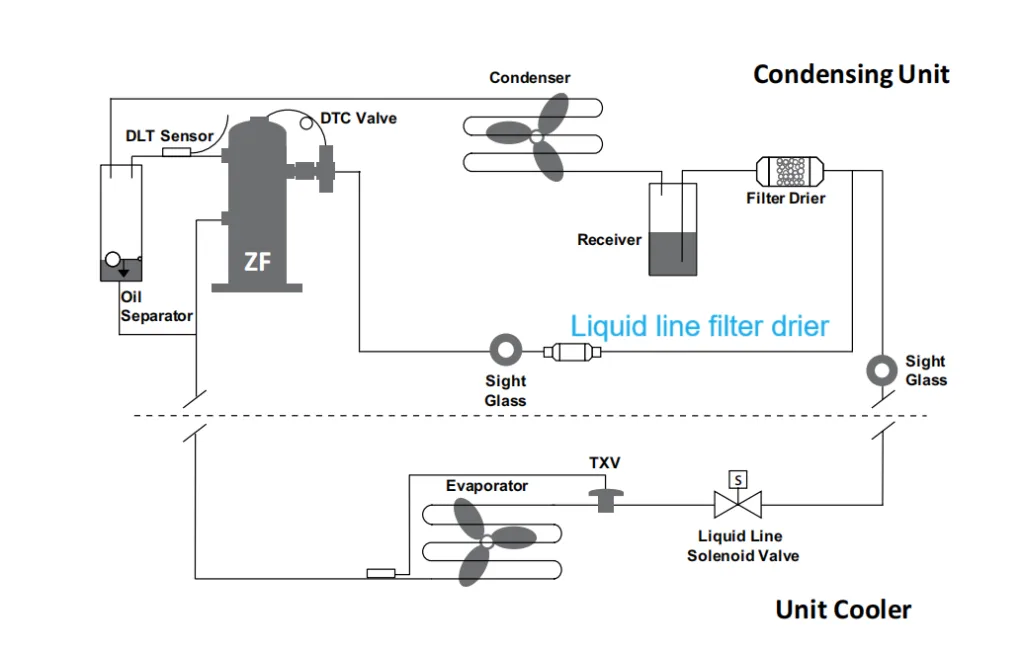
Image source: Bing (Web (fair-use with source credit))
This is where you stop reading gauges and start using your hands and a thermometer. Here's the process that separates a confident diagnosis from a guess.
Temperature Drop Test Across the Filter-Drier
Your first move is simple. Put a clamp thermometer on the liquid line right before the filter drier. Then put another one right after it.
Or use an infrared thermometer and check both spots.
A healthy filter drier should show no more than a 2 to 3 degree Fahrenheit temperature drop across it. That small drop comes from the pressure loss through the desiccant bed. It's normal.
If you see a 5, 10, or 15 degree drop, that filter drier is restricted. The restriction is flashing some of the liquid refrigerant into vapor as it passes through the clogged bed. That vapor expansion pulls heat out of the copper tubing.
Anything over 3 degrees difference means you've found your problem. Cut out the filter drier. Replace it.
Re-evacuate and weigh in the charge.
Feeling for Cold Spots on the Liquid Line
Now run your hand along the entire liquid line from the condenser outlet to the metering device. Feel for a sudden cold spot.
When liquid refrigerant passes through a restriction point, it flashes into vapor. That phase change absorbs heat. The pipe gets noticeably colder right at the restriction and just past it.
A kink in the line feels colder at the bend. A partially closed service valve feels cold right at the valve body. A restricted filter drier feels cold at its outlet side.
This is a hands-on diagnostic step that no digital tool replaces. You have to touch the line. Wear gloves if the pipe is hot.
But feel it. The cold spot tells you exactly where to cut.
Checking the TXV Sensing Bulb Position and Insulation
If you haven't found a cold spot and the filter drier temperature drop is normal, move to the TXV. Look at the sensing bulb first.
Is it strapped to the suction line at the 4 o'clock or 8 o'clock position? Those are the correct positions for horizontal suction lines. If it's on top or bottom, it's reading wrong.
Is it insulated from ambient air? A sensing bulb needs to read the pipe temperature, not the air temperature in the equipment compartment. If the insulation is missing, damaged, or soaked with water, replace it.
Is the bulb making good contact with the pipe? It should be clean and tight. If it's loose or covered in corrosion, clean the pipe and resecure the bulb.
Then check the equalizer line. It's the small copper tube that runs from the TXV body back to the suction line. If it's kinked, crimped, or blocked with debris, the valve can't sense the correct evaporator pressure.
Replace the equalizer or clear the obstruction.
If everything checks out on the TXV external components, the power head is likely the problem. Replace the valve. That's a recovery, brazing, evacuation, and recharge job.
But it beats replacing a compressor in three months.
The Danger Zone – When to Stop and Call for Backup
Some situations demand more than a filter drier swap. If you're seeing discharge temperatures above 225 degrees Fahrenheit, you're in compressor damage territory. The oil breaks down around that threshold.
Internal clearances close up. You're losing lifespan with every minute of runtime.
Stop the system. Let it cool down. Do not keep running it to "gather more data."
Another red flag is a compressor that's already cycling on its internal overload. That clicking sound you hear is the thermal protector opening and closing. The windings are cooking.
Shut it down and diagnose before you condemn the compressor.
If the restriction is on the liquid line downstream of a king valve or service valve that you can't fully open, you need to recover the charge before you can repair it. Do not try to braze a pressurized line. That's how refrigerant burns happen.
Recover the charge, make the repair, evacuate, and weigh in the factory charge plus any line set adjustment.
One more situation that calls for backup. If the system has a history of compressor burnout and you find a restricted filter drier, the drier caught the debris for a reason. You need to check the oil for acid contamination.
Install a suction line filter drier as well. And plan to replace it after 72 hours of runtime. Burnout cleanup is a separate procedure from a simple restriction repair.
Quick-Reference Table: High Superheat / High Subcooling vs. Other Mismatches
Here's a table that helps you rule out similar conditions at a glance.
| Condition | Superheat | Subcooling | Head Pressure | Suction Pressure | Most Likely Cause |
|---|---|---|---|---|---|
| Low charge | High | Low | Low | Low | Leak or undercharge |
| Overcharge | Low | High | High | High | Too much refrigerant |
| Liquid line restriction | High | High | Normal to high | Low | Clogged filter drier, kinked line |
| TXV stuck closed | High | High | Normal to high | Low | Failed power head, bad bulb |
| Non-condensables | Normal to high | High | High | Normal | Air or nitrogen in system |
| Condenser coil dirty | Normal | Low | High | Normal | Airflow restriction on condenser |
The key takeaway from this table is simple. Only two conditions show high superheat and high subcooling together. A liquid line restriction or a TXV that's stuck closed.
Everything else changes at least one of those numbers in the opposite direction.
When you see both numbers high, your troubleshooting list is short. You're looking for a blockage or a bad valve. Nothing else fits.
FAQs – Real Questions from Techs on the Job
Can high superheat and high subcooling happen on a heat pump in heating mode?
Yes. In heating mode the refrigeration cycle reverses. A restriction in the liquid line between the outdoor coil and the indoor coil creates the same pattern.
The numbers flip sides but the logic stays the same.
Should I always replace the filter drier even if it tests clean?
Yes. If you opened the system to make any repair and the line set was open for more than 15 minutes, replace the drier. It's cheap insurance.
A fresh drier costs about 30 dollars. A new compressor costs thousands.
Can a partially closed service valve cause this condition?
Absolutely. It acts exactly like a liquid line restriction. Always verify that liquid line service valves and king valves are fully open before you start cutting anything.
Back seat the valve and check again.
How do I know if the TXV is bad or the filter drier is clogged?
Do the temperature drop test across the drier first. If the drop is under 3 degrees, the drier is fine. Then inspect the TXV sensing bulb and equalizer line.
If those check out and the valve still won't feed, the power head has failed.
What refrigerant type matters for these target numbers?
R-22, R-410A, R-32, and R-134a all follow the same diagnostic logic. The pressure-temperature relationships differ, but the superheat and subcooling targets remain similar. Always use the manufacturer's charging chart for the specific refrigerant in that system.
Is it safe to add a temporary filter drier to catch contaminants?
Yes, but only as a temporary measure during a burnout cleanup. Install a suction line filter drier with a pressure drop port. Replace it after 72 hours or when the pressure drop exceeds 3 psi.
Remove it after the system clears up.

Similar Posts