Dometic Rv Furnace Troubleshooting
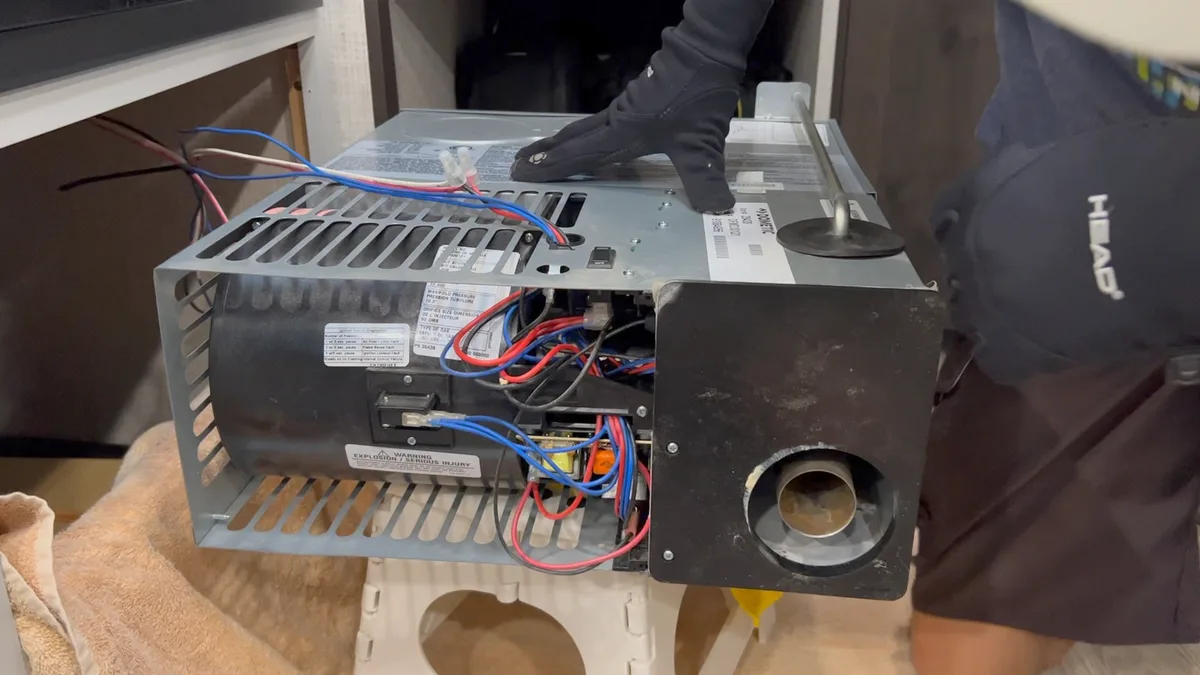
Image source: Bing (Web (fair-use with source credit))
Why a Cold Furnace Is an Emergency (Read This First)
Dometic RV furnace troubleshooting starts with one uncomfortable truth: your furnace is the most safety-critical appliance in your rig. When it fails, you're not just cold. You're possibly dealing with carbon monoxide, a propane leak, or a fire risk.
As of 2026, RVIA standards require all propane appliances to meet strict combustion and ventilation requirements. Your Dometic furnace was built to those specs, but only when every component works correctly.
Quick Answer: Three things shut down a Dometic furnace more than anything else. The sail switch fails to detect airflow. The igniter can't spark.
Or the 12V battery voltage drops below 10.5 volts under load. Check those three in order before swapping any parts. The fix is often a cleaning, not a replacement.
Why a Cold Furnace Is an Emergency (Read This First)
An RV furnace isn't like a space heater you can ignore for a while. It's a sealed combustion appliance that pulls fresh air from outside, burns propane, and vents exhaust back outside. The living space stays separate from the flame.
But that separation depends on gaskets, seals, and airflow paths that degrade over time.
A furnace that fails to light isn't just an inconvenience. It means propane is flowing somewhere it shouldn't be, or the safety lockout has tripped because something is wrong. Either way, the failure mode matters.
A furnace that clicks but won't light usually has a fixable problem. A furnace that lights and then fills the RV with exhaust requires immediate shutdown.
Before you touch anything, understand this: every Dometic furnace sold in North America meets NFPA 1192 standards. That standard covers gas line integrity, combustion air supply, and carbon monoxide detection. If your furnace doesn't have a working CO detector nearby, stop.
Install one first. Per NFPA 1192, the detector must be within 10 feet of the furnace and below ceiling level.
If your CO alarm is going off while the furnace runs, shut off the propane at the tank immediately. Open all windows and vents. Leave the RV.
That's not a troubleshooting step. That's an evacuation.
The Two Things That Must Be Right Before Anything Else
Is the Propane Flowing?
The first check is embarrassingly simple. Make sure the propane tank isn't empty. RVers swap tanks, close valves during travel, and forget to open them again more often than you'd think.
If your furnace worked last trip and doesn't now, check the tank level first.
Turn the tank valve fully counterclockwise. Partial opening restricts flow and can cause the furnace to cycle on and off. Some Dometic models require higher propane pressure than others.
The standard LP regulator on an RV should output 11 to 14 inches water column at the furnace inlet. Below 11 inches, the gas valve won't open fully and the flame sputters.
If the tank is full and the valve is open, check for air in the lines. Every time you disconnect and reconnect a propane tank, air enters the system. The furnace might take three or four ignition attempts to purge that air.
That's normal. Let the furnace cycle through its lockout sequence without interfering. If it still doesn't light after five attempts, move on.
Is the Battery Strong Enough?
Your Dometic furnace runs entirely on 12V DC power. The control board, the blower motor, the igniter, and the gas valve all draw from the house battery. When the voltage drops too low, the control board gets confused.
It may attempt ignition but fail to keep the gas valve open.
Manufacturer specs indicate the furnace needs at least 11.5 volts with no load and 10.5 volts under load. Under load means while the blower motor is running. If your battery shows 12.3 volts at rest but drops to 9.8 volts when the blower kicks on, you've found the problem.
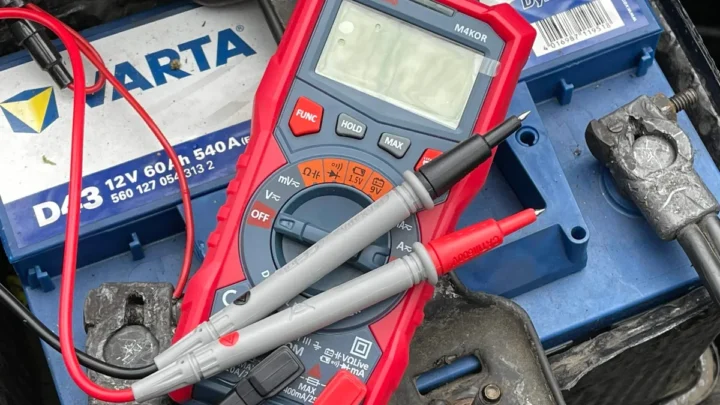
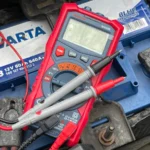
A simple multimeter check tells you instantly. Set it to DC voltage. Touch the probes to the positive and negative terminals of the battery.
Turn on the furnace thermostat. Watch the voltage while the blower runs. If it dips below 10.5 volts, charge the battery or replace it before troubleshooting anything else on the furnace.
Don't forget the fuse. The furnace has at least one inline fuse, usually a 15A or 20A blade fuse near the battery or on the control board itself. A blown fuse looks fine to the eye but breaks continuity.
Test it with the continuity setting on your multimeter. Replace blown fuses with the exact same amperage. Never jump a fuse with foil or wire.
That's how fires start.
Propane and Power Check Table
| Check | What to Look For | Tool Needed | Pass/Fail |
|---|---|---|---|
| Tank valve | Fully open (counterclockwise) | None | Pass if full open |
| LP pressure | 11-14 inches water column | Manometer | Pass if in range |
| Battery voltage (no load) | 11.5V or higher | Multimeter | Pass if ≥ 11.5V |
| Battery voltage (blower running) | 10.5V or higher | Multimeter | Pass if ≥ 10.5V |
| Inline fuse | Continuity between ends | Multimeter (continuity mode) | Pass if beeps |
How Your Dometic Furnace Actually Works (The Parts That Break)
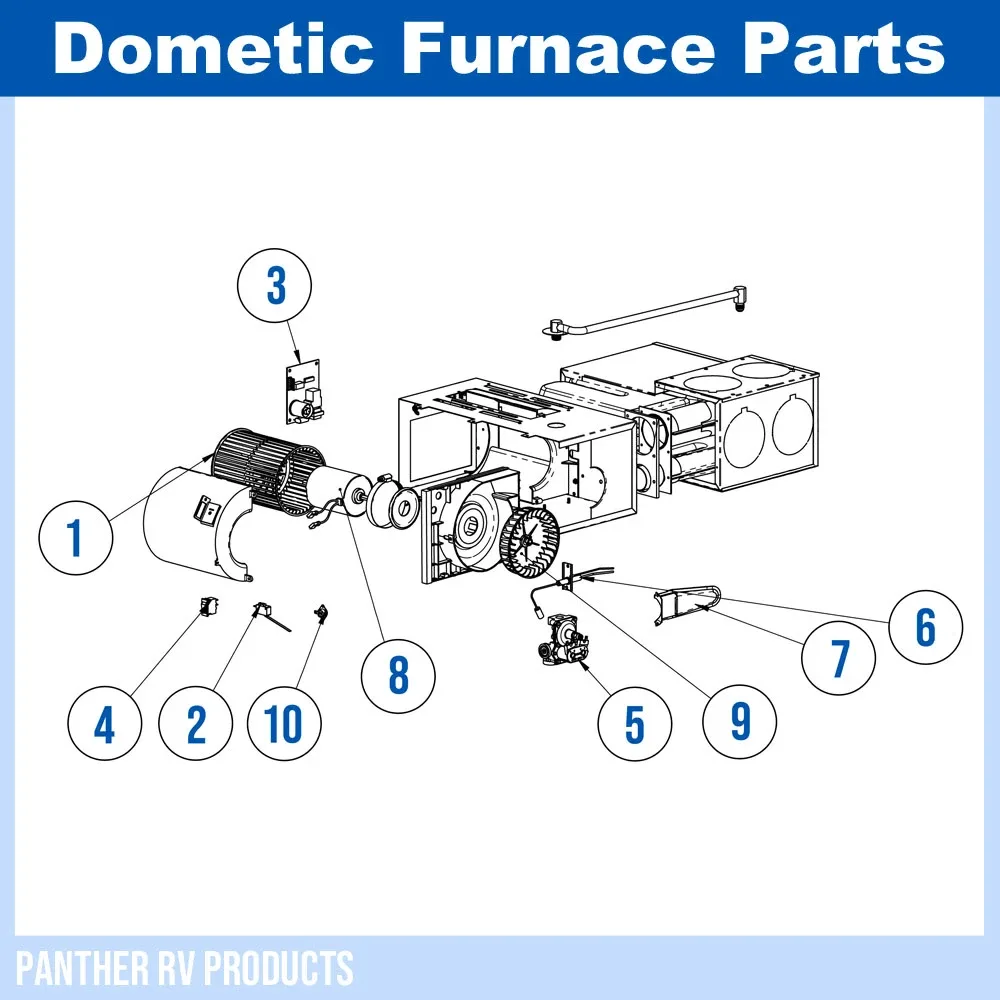
Image source: Bing (Web (fair-use with source credit))
An RV furnace looks complicated, but it's a simple machine with five critical parts. Understanding how they work together makes troubleshooting obvious.
The Control Board is the brain. It receives a signal from the thermostat, turns on the blower motor, waits for airflow confirmation from the sail switch, then opens the gas valve and fires the igniter. If the flame doesn't register, it closes the gas valve and tries again two or three times before locking out.
The Sail Switch is a mechanical airflow sensor. It sits in the airstream of the blower motor. When the blower pushes enough air, the sail (a small plastic flap) moves and closes an electrical circuit.
That circuit tells the control board it's safe to open the gas valve. No airflow means no gas. That's a safety feature, and it fails more than any other part.
The Igniter is a spark electrode. It creates a high-voltage spark across a small gap to ignite the propane coming from the burner tube. The gap must be between 1/8 and 1/4 inch.
Too wide, the spark jumps to the furnace body instead of the gas. Too narrow, the flame drowns the spark.
The Gas Valve is an electromagnetic solenoid. When the control board sends power, the valve opens and propane flows to the burner. If the flame sensor doesn't detect a flame within a few seconds, the control board cuts power and the valve snaps shut.
The High-Limit Switch is a thermal cutoff. If the furnace overheats from restricted airflow or a blocked vent, the switch trips and breaks the circuit. Most Dometic models have a manual reset button on the switch.
You push it to reset, but only after fixing what caused the overheating.
Common Failure Points by Part
| Part | Failure Mode | Symptoms | Fix |
|---|---|---|---|
| Control board | Corrosion, blown capacitor | No power to blower, rapid cycling | Replace with exact Dometic part |
| Sail switch | Stuck, broken flap, dirty contacts | Blower runs but furnace won't light | Clean or replace |
| Igniter | Cracked ceramic, incorrect gap | Clicking sound but no ignition | Clean gap, replace if broken |
| Gas valve | Failed solenoid, debris | No gas flow, faint propane smell | Professional replacement only |
| High-limit switch | Auto-reset fail, manual trip | Furnace runs 2 minutes then shuts off | Reset button, then check airflow |
The Most Common Failure: Furnace Clicks But Won't Light
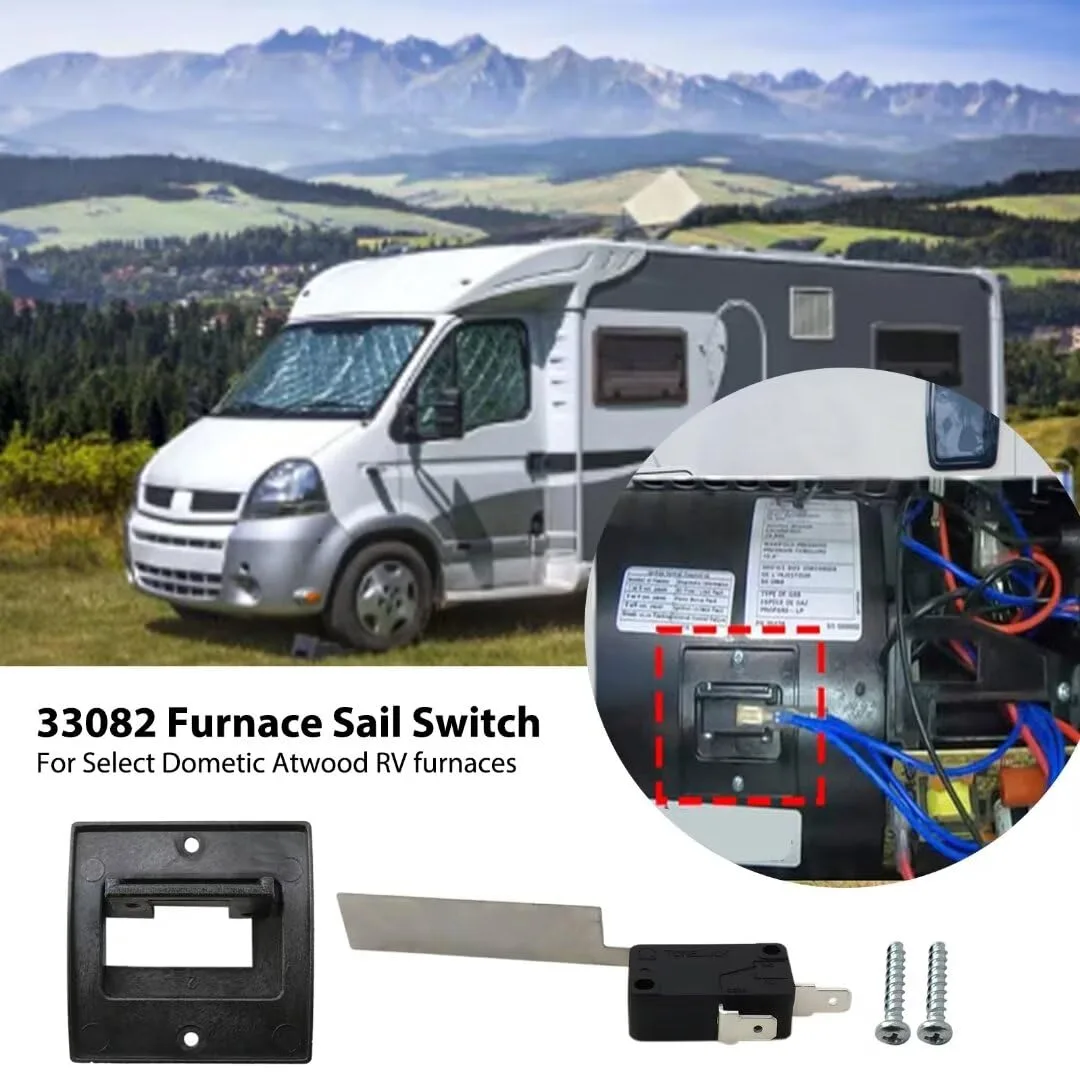
Image source: Bing (Web (fair-use with source credit))
This is the call we hear most. You turn up the thermostat. The blower starts.
You hear a click from the gas valve. Then a ticking sound from the igniter. And then nothing.
Silence. The blower runs for a minute and stops. Repeat.
That's the control board cycling through its ignition sequence and failing. Dometic control boards typically attempt ignition three times before locking out. After lockout, you must turn the thermostat off and back on to reset the sequence.
Why It's Not Lighting
The sail switch is the number one culprit. When the blower motor runs, it must push enough air to move the sail switch flap. If the sail switch doesn't close its circuit within about 15 seconds, the control board never sends power to the gas valve.
The igniter never fires because the board never reached that step in the sequence.
Here's how to test it. Locate the sail switch inside the furnace housing. It's a small rectangular block with two wires and a plastic arm that extends into the airstream.
With the furnace off, gently push the sail switch arm. It should move freely and click when fully depressed. If it's stiff or stuck, clean the pivot point with electrical contact cleaner.
With the furnace running, listen for the click of the sail switch closing. If the blower runs but you never hear a click, the sail switch isn't making contact. You can temporarily bypass it with a jumper wire to confirm.
But never run the furnace with the sail switch bypassed permanently. That bypass is for diagnosis only.
If the sail switch clicks, move to the igniter. Remove the igniter from the burner tube bracket. Inspect the ceramic body for cracks.
A cracked igniter still sparks but the spark may jump to the furnace body instead of the gas. Clean the electrode tip with fine sandpaper. Check the gap with a feeler gauge.
It should be 1/8 to 1/4 inch.
The Spark Test
Turn the furnace on and watch the igniter from a safe distance. You should see a bright blue spark jumping from the electrode tip to the burner tube. If the spark is weak or orange, the igniter is failing or the voltage from the control board is low.
A strong spark that doesn't ignite means the gas valve isn't opening.
Test the gas valve by listening for a distinct metallic thunk when the control board sends power. If you hear the click of the valve but no gas flows, the valve is either clogged with debris or the solenoid has failed. This is not a DIY repair.
A gas valve that sticks open is a fire hazard. Replace it or have it replaced by a certified RV technician.
Flame Sensor Lockout
Some Dometic models use a flame sensor instead of a thermocouple. The sensor sits in the flame and detects heat through electrical conductivity. If the sensor is covered in carbon buildup, it won't detect the flame and the control board shuts the gas valve off immediately.
Clean the flame sensor with a fine abrasive pad or emery cloth. Don't use sandpaper that leaves grit. Reinstall and test.
If the furnace lights and stays lit, the sensor was the issue.
Other Common Troubleshooting Scenarios (Cold Air, Shuts Off, Odors)
Furnace Blows Cold Air Only
The blower runs but no heat comes out. This usually means the gas valve never opened or the flame went out immediately. Start with the same sail switch test from the previous section.
If the sail switch is fine, check the igniter gap. Then test the gas valve.
A less common cause is a frozen or blocked propane regulator. In cold weather, moisture in the propane tank can freeze the regulator diaphragm. The furnace gets some gas but not enough to sustain a flame.
If the furnace works intermittently in cold weather or after the first tank of the trip, replace the regulator.
Furnace Runs for Two Minutes Then Shuts Off
This is the high-limit switch tripping. The furnace is overheating because airflow is restricted. Check the exterior vent cover for mud dauber nests, spider webs, or debris.
In our research, blocked vents cause more repeated lockouts than any component failure.
Remove the exterior vent cover. Look into the combustion chamber area with a flashlight. Clear any obstructions.
If the vent is clean, check the interior return air grille. Furniture, bedding, or curtains blocking the return air grille starves the furnace of recirculated air. Move anything that's within two feet of the grille.
After clearing obstructions, press the manual reset button on the high limit switch. If the button doesn't click when pressed, the switch has failed open. Replace it with the exact Dometic part number from your model plate.
Propane Smell or Carbon Monoxide Alarm
This is the one that stops all troubleshooting. If you smell propane near the furnace, shut off the gas at the tank immediately. Vent the RV completely.
Do not operate any electrical switches, including lights or thermostats. Propane is heavier than air and pools in low spots. A spark from a light switch or thermostat relay can ignite it.
If the carbon monoxide alarm sounds while the furnace is running, shut everything down. Even if the alarm stops, the furnace has a combustion problem. Possible causes include a blocked exhaust flue, a cracked heat exchanger, or incorrect air-to-fuel mixture.
Any of these require professional inspection. Do not use the furnace again until a certified technician certifies it safe.
Furnace Cycles On and Off Rapidly
This is called short cycling. The thermostat tells the furnace to heat, the furnace lights for a few seconds, then shuts off, then tries again. This pattern usually points to a failing thermostat or a loose connection in the thermostat wire.
Check the thermostat first. If it's a mechanical model with a mercury switch, the switch may be sticking. Tap the thermostat gently.
If the furnace stops cycling, replace the thermostat. If it's a digital thermostat, replace the batteries. Low battery voltage in the thermostat causes erratic signals.
If the thermostat tests fine, check the wire connections at both ends. A loose wire causes the thermostat signal to drop out intermittently. Tighten screw terminals.
Replace corroded wire connectors.
Mistakes That Could Cost You (Or Hurt You)
Bypassing the Sail Switch Permanently
That jumper wire we mentioned earlier is for diagnosis only. Leaving it in place means the furnace can open the gas valve with no airflow. That's a recipe for a fire or carbon monoxide poisoning.
If the furnace overheats without airflow, the heat exchanger can crack. A cracked heat exchanger leaks exhaust into your living space.
Skipping the Gas Leak Check
After any repair involving the gas line, you must check for leaks. Mix one part dish soap with three parts water. Brush it on every fitting you touched.
Bubbles mean a leak. Tighten the fitting and retest. This takes five minutes and it can save your life.
Operating With the Access Panel Off
We understand the temptation. The panel is off, you're testing, and the furnace cycles. But running a Dometic furnace without the access panel installed is dangerous.
The panel directs the airflow across the sail switch. Without it, the combustion chamber can overheat and the exhaust can recirculate into the RV.
Using the Wrong Replacement Parts
Dometic furnaces are not universal. A control board from a different brand won't work. Even within Dometic, different models use different boards.
Match the exact part number from your model plate. The model plate is inside the furnace housing, usually near the gas valve. Write those numbers down before you shop.
Ignoring Freeze Damage
Water in the propane lines freezes and expands. That can crack the gas valve body. A cracked gas valve leaks propane whenever the tank is open.
If your RV sat through winter without proper winterization, inspect the gas line fittings and valve for frost or corrosion before you power up the furnace.
The Step-by-Step Troubleshooting Workflow (Down and Dirty)
Phase One: Safety Checks
Start with the basics. Confirm the propane tank is at least one-quarter full and the valve is fully open. Verify your carbon monoxide detector works by pressing the test button.
Check the battery voltage at rest and under load. If it drops below 10.5 volts with the blower running, charge or replace the battery first.
Phase Two: Visual Inspection
Shut off the furnace and let it cool. Remove the exterior vent cover. Look for spider webs, mud dauber nests, and debris in the combustion intake and exhaust flue.
Clear anything you find. Inspect the burner tube for rust and carbon buildup. Remove the access panel and check for loose wires, corroded connections, and signs of mice.
Phase Three: Component Testing
Turn the furnace back on. Listen for the sail switch click within a few seconds of the blower starting. No click means the sail switch is stuck or the blower isn't producing enough airflow.
Next, watch for the igniter spark. No spark means a bad igniter, incorrect gap, or failed control board. A spark with no flame means the gas valve isn't opening.
Phase Four: The Dometic Lockout Reset
Dometic control boards lock out after three failed ignition attempts. To reset, turn the thermostat to off. Wait 30 seconds.
Turn it back to heat and set the temperature above the current interior temperature. If the furnace fails again after three attempts, you've confirmed a hardware problem. Stop cycling it.
Repeated attempts can flood the burner with unburned propane.
Quick Reference Decision Guide
| Symptom | Test | Likely Fix |
|---|---|---|
| Blower runs, no click | Push sail switch manually | Clean or replace sail switch |
| Click, no spark | Check igniter gap | Clean gap to 1/8-1/4 inch |
| Spark, no flame | Listen for gas valve thunk | Call a technician |
| Flame, then shutoff | Check exterior vent | Clear blockage, reset high limit |
| No power at all | Test fuses and voltage | Replace fuse or charge battery |
When to Call a Pro (The Line You Don't Cross)
Gas Valve and Heat Exchanger Work
A failed gas valve is not a DIY repair. The valve controls raw propane flow. Get it wrong and you're venting flammable gas into your rig.
Heat exchanger replacement is equally serious. A cracked exchanger leaks carbon monoxide, and you can't always see or smell it. Both jobs require a certified RV technician.
Persistent Carbon Monoxide Alarms
If your CO detector goes off while the furnace runs, stop using the furnace. Even after clearing the vents and checking the flame color, the underlying cause may be invisible. Have a professional combustion analysis done.
They'll measure CO output with a calibrated sensor and confirm the furnace burns clean.
Control Board Diagnostics
Replacing a control board is straightforward on paper. Diagnosing a board correctly is the hard part. Control boards fail from moisture, corrosion, and power surges.
But they also fail because a component before them is pulling too much current. If you replace the board without finding the root cause, the new board can fail within weeks. A technician will test the blower motor draw and sail switch resistance before installing a replacement.
Manufacturer Recalls
Dometic has issued recalls on specific furnace models in the past. The issues involved control boards that could overheat. Check your model and serial number against the Consumer Product Safety Commission recall database.
If your furnace is under an active recall, the repairs are free. Never attempt to fix a recalled component yourself.
Frequently Asked Questions
Why does my Dometic RV furnace click but not ignite?
The blower is running and the igniter is trying, but the gas valve isn't opening or the spark isn't reaching the gas. Check the sail switch first. Then inspect the igniter gap.
If both are fine, the gas valve or control board is failing. That requires a professional.
How do I reset my Dometic furnace?
Turn the thermostat to off and wait 30 seconds. Then turn it back to heat and raise the set temperature. This clears the control board lockout.
If your furnace has a manual reset high-limit switch, press the small red button on the switch when the furnace is cool.
What does it mean when my RV furnace runs but blows cold air?
The gas valve isn't opening or the flame is going out immediately. Test the sail switch, then check for a clogged burner or blocked flue. If those are clear, the gas valve or control board is likely failing.
Schedule a professional repair.
Why does my furnace shut off after a few minutes?
That's the high-limit switch tripping from overheating. Check the exterior vent for blockages and clear anything near the interior return grille. Press the reset button on the high-limit switch and retest.
If it trips again, you likely have a failing blower motor.
Is it safe to run my RV furnace without the access panel?
No. The panel is part of the safety system. It ensures proper airflow across the sail switch and keeps exhaust from recirculating.
Running the furnace without it can cause overheating, carbon monoxide leaks, and component damage. Always reinstall the panel before operation.
Your Action Plan and Long-Term Maintenance
Before Every Camping Season
Start with a complete inspection. Replace the 12V battery if it's more than three years old or fails a load test. Visually check the exterior vent cover for insects and debris.
Test the propane system with a leak detector solution. Verify the carbon monoxide alarm with its test button. A fresh battery and clean vents prevent most common failures.
Monthly Maintenance During Full-Time Use
Listen to your furnace when it cycles. A change in blower sound often signals a developing issue. Check the battery voltage once a month.
Clean the exterior vent cover with a soft brush. Keep the interior return grille clear of bedding, towels, and window curtains. Good airflow is what keeps the sail switch happy.
End of Season Storage
Clean the burner tube and flame sensor before storage. Apply dielectric grease to wire connectors to prevent corrosion over the winter. Blow the dust out of the control board area with compressed air.
Then shut off the propane at the tank. If you skip winterization, moisture in the gas lines can freeze and crack the valve.
What You Should Carry for Field Repairs
Keep a small kit in your RV. A multimeter, a basic screwdriver set, electrical contact cleaner, and a spare sail switch. These cost less than a single service call.
With them, you can fix the two most common furnace failures in under an hour. If you carry a spare Dometic control board matched to your model, you reduce downtime to nearly zero.
Final Thoughts on the 10.5V Rule
The single most common cause of a no-light condition is low voltage. Every Dometic furnace troubleshooting manual lists it first. The blower sounds normal even at 9.5 volts.
It just spins slower. The sail switch doesn't close. The furnace never tries to light.
Before you buy any parts, charge the battery and test again. You might save yourself a hundred dollars and an afternoon of frustration.

Similar Posts