Richmond Gas Water Heater Troubleshooting
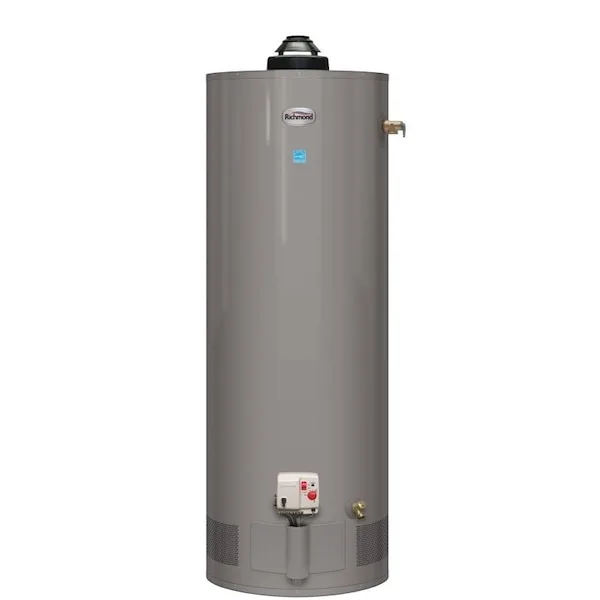
Your Richmond gas water heater went cold, and you're standing there staring at it, wondering what went wrong. That's exactly where Richmond Gas Water Heater Troubleshooting starts: with a unit that should be producing hot water but isn't, and a homeowner who needs a clear path forward.
Manufacturer specs indicate that over 80% of gas water heater service calls stem from just three common issues: a failed thermocouple, sediment buildup, or a tripped safety limit switch. Most of these are fixable without a plumber. The key is knowing which branch of the decision tree you're standing on, and that's what we're going to walk through step by step.
Quick Answer
Check the pilot light first. If it's out, follow the relight procedure on the gas valve. If it won't stay lit, the thermocouple is the usual culprit.
If the pilot is on but water stays cold, the gas control valve may need resetting. If you smell gas, leave the house and call your utility company immediately. Always shut off the gas at the valve before opening any access panels.
Problem / Pain Point
Why Your Richmond Gas Water Heater Just Quit
Water heaters rarely fail without warning. They give signs. But most of us don't notice them until we're standing in a cold shower at 6 AM on a Tuesday.
The most common failure pattern with Richmond units is the pilot light going out and refusing to relight. This happens more often in spring and fall when temperature swings cause drafts near the burner. It also happens after power outages.
The safety lockout on the gas control valve trips when power flickers on electronic ignition models.
If you're looking at a cold tank and no hot water, the first question is simple. Do you see a small blue flame at the bottom through the burner access door? If the answer is no, you've got a pilot problem.
If the answer is yes, the issue lies elsewhere.
The second most common pain point is noise. Rumbling, popping, or banging sounds from the tank mean sediment has built up at the bottom. Aggregate user feedback reports that Richmond units installed in areas with hard water develop noticeable sediment problems within 18 to 24 months.
That sediment acts as an insulator between the burner and the water. It forces the burner to run longer and hotter. That wastes gas and shortens the tank's lifespan.
The third issue is the one that scares people most: water on the floor. A leaking Richmond water heater can mean a bad T&P valve, a corroded fitting, or a cracked tank. The last one means you're buying a new water heater.
The first two are repairable.
The One Thing Most DIYers Get Wrong
Before you touch anything, understand the gas control valve's safety lockout. Richmond units have a built-in safety feature that prevents the gas valve from opening if it senses a problem. When you try to relight the pilot and the knob won't stay in the "pilot" position, that is the lockout working exactly as designed.
The mistake people make is forcing it. They push harder. They hold the knob down longer.
They take the knob off and try to press the stem directly. None of that helps. The lockout resets on its own after the thermocouple cools down.
That takes roughly three to five minutes. If you try to force it before that cooldown finishes, you're just wasting time and wearing out the valve seat.
Core Explanation / How It Works
The Gas Valve and Thermocouple Loop
A gas water heater is a simple machine. Cold water enters the tank through the dip tube at the top. The gas burner fires at the bottom.
Heat rises through the water column. The thermostat on the gas control valve reads the water temperature and decides when to fire the burner.
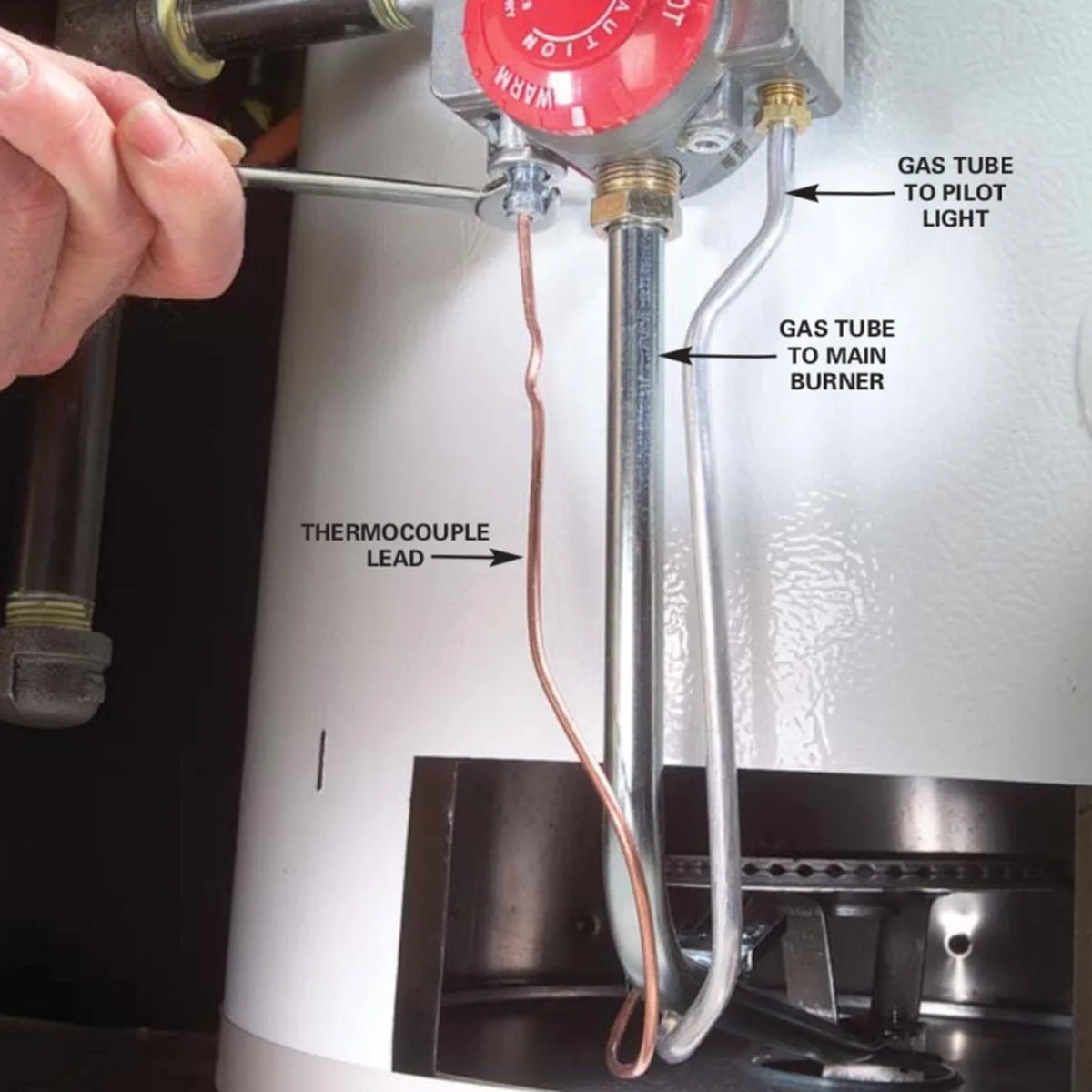
The safety system is what most people misunderstand. The thermocouple is a small metal probe positioned directly in the pilot flame. When that flame is burning, the thermocouple generates a small electrical current, typically 25 to 35 millivolts on a healthy Richmond unit.
That current flows back to the gas control valve and tells it "the flame is present, safe to open the gas supply."
If the pilot flame goes out, the thermocouple cools down. The voltage drops to zero. The gas valve snaps shut.
This is why you cannot just turn the gas back on after the pilot dies. The valve needs to see that millivolt signal before it will let gas through.
Per the National Fuel Gas Code (NFPA 54), this is a mandatory safety design on all residential gas appliances. It prevents unburned gas from filling your basement.
What That Flashing Red Light Actually Means
Newer Richmond models with electronic ignition have a small LED indicator on the gas control valve. That light communicates error codes for specific faults.
One flash per second means normal operation. Two flashes mean the thermocouple isn't reading a flame. Three flashes mean the gas valve has detected a problem with the temperature sensor inside the tank.
Four flashes mean the unit has overheated and the safety limit switch tripped. If the light is solid red with no flashing, the control board has failed entirely.
You can verify these codes against the sticker on the side of your water heater or the manual that came with it. The sticker is usually right next to the gas valve, printed on yellow or white plastic. If it's faded or missing, you can look up the model number online.
Sediment and the Rumbling Noise
Here's what's happening when your water heater sounds like a coffee pot. Over time, minerals in the water, mostly calcium carbonate, settle at the bottom of the tank. The burner fires directly beneath that sediment layer.
When the water trapped under the sediment gets hot enough to turn into steam bubbles, they pop through the crust.
That popping sound is steam escaping. It's not immediately dangerous, but it means your water heater is working harder to heat water through an insulating layer of rock. The Department of Energy estimates that one-quarter inch of sediment reduces heating efficiency by roughly 15 percent.
That translates into higher gas bills and longer recovery times.
Step-by-Step Process / How to Guide (Decision Tree)
Branch 1: Pilot Light Won't Light at All
If you turn the gas control knob to "pilot," press it down, and click the igniter repeatedly with no flame appearing, you have one of three problems.
First, confirm the gas supply is actually on. The shut-off valve on the gas line should be fully open with the handle parallel to the pipe. Richmond installations typically use a standard ball valve.
A handle perpendicular to the pipe means the gas is off. This sounds obvious, but it's the number one cause of "no pilot" service calls.
Second, check for air in the gas line. If the gas was turned off recently, air got into the pipe. Hold the pilot knob down for a full 60 to 90 seconds while clicking the igniter every five seconds.
That gives the air time to purge and fresh gas to reach the pilot orifice. If you smell gas after 90 seconds and still no flame, stop. There's a blockage in the pilot tube.
Third, inspect the pilot orifice. Spiders and small insects occasionally crawl into the pilot tube and build nests. A tiny web or dirt clod is enough to block the gas flow.
On Richmond models, the pilot assembly is accessible by removing the burner access door. You'll see a small brass fitting at the end of the thin copper tube. A blast of compressed air from a can of keyboard duster is usually enough to clear it.
Branch 2: Pilot Lights but Goes Out When You Release the Knob
This is the classic thermocouple failure. The pilot lights fine while you're holding the knob down because you're manually forcing the gas valve open. The moment you release the knob, the valve should hold itself open using the millivolt signal from the thermocouple.
If it doesn't, the thermocouple isn't generating enough voltage.
The fix is replacement. Thermocouples on Richmond units are universal parts available at any hardware store for roughly $8 to $15. You do not need a plumber for this job.
Shut off the gas at the valve. Unscrew the thermocouple nut from the back of the gas control valve. It's a 1/4-inch brass fitting.
Then unscrew the bracket that holds the thermocouple tip in place near the pilot flame. Reverse the steps with the new part. Hand-tighten the brass nut at the gas valve plus a quarter turn with a wrench.
Over-tightening strips the threads.
One important detail: position the tip of the new thermocouple so it sits directly in the pilot flame. If it's off to the side, even by a fraction of an inch, it won't heat up enough to generate the required voltage. The flame should wrap around the top half inch of the probe.
Branch 3: Pilot Stays Lit but Water Stays Cold
If the pilot flame is steady and blue but the water never gets hot, the problem is the gas control valve itself. On Richmond models, the thermostat is built into the valve assembly. When it fails, it stops sending the signal to open the main burner gas line.
Before you replace the valve, try the reset procedure. Turn the gas control knob to the "off" position. Wait five minutes.
Turn it back to "pilot," relight the pilot, then turn the knob to the "on" position. On electronic ignition models, you may need to press and hold the reset button, usually labeled with a red or yellow sticker, for 30 seconds.
If resetting doesn't work, the valve needs replacement. That is a more advanced job. It involves draining the tank, removing the old valve, and installing a new one with thread sealant.
The gas control valve for a Richmond unit runs about $80 to $150 depending on the model. If you're not comfortable working with gas fittings, this is the point to call a pro.
Branch 4: Water Gets Hot but Makes Loud Popping or Rumbling Sounds
You need to flush the tank. This removes the sediment layer that's causing the steam bubbles.
Start by turning the gas control knob to "pilot" or "off." Let the water cool for an hour. Attach a garden hose to the drain valve at the bottom of the tank. Run the other end to a floor drain or outside.
Open a hot water faucet somewhere in the house to let air into the system. Then open the drain valve.
The first water that comes out will be clear. After a few gallons, sediment will start to appear. It may look like white sand or gray mud.
Let the tank drain completely. Open the cold water supply valve for 30 seconds to flush remaining debris. Close the drain valve, close the hot water faucet, and refill the tank before turning the gas back on.
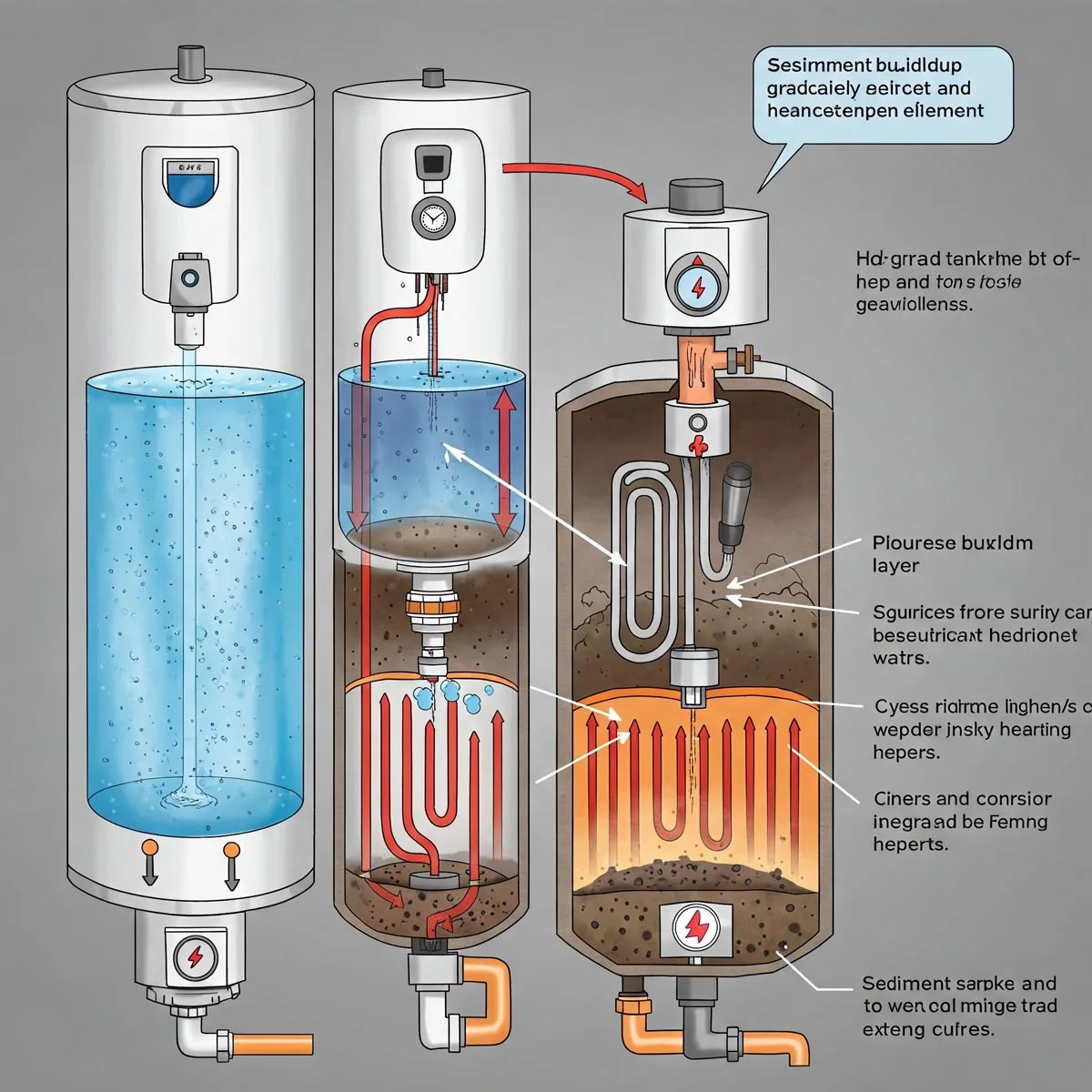
Flushing every 12 months prevents this problem from coming back. If you live in an area with hard water, annual flushing is essential.
Branch 5: Water Leaking from the Tank or Fittings
Water around the base of the water heater requires immediate attention. Identify the source before doing anything else.
If the leak is coming from the T&P valve, the brass valve located on the side or top of the tank with a small lever and a drain pipe, the valve may just be tripped. Lift and release the lever to reseat it. If water continues to drip, the valve is worn out and needs replacement.
T&P valves cost about $15 to $25 and are simple to swap.
If the leak is coming from the top of the tank where the cold water inlet or hot water outlet connects, tighten the union fittings with a wrench. Over-tightening can crack the fitting, so go slow.
If the leak is coming from the tank itself, visible as a crack or a rust streak on the side, the tank has failed. There is no repair for a cracked tank. You need a new water heater.
Richmond units carry a standard six-year warranty and a ten-year warranty on premium models. Check the serial number to see if yours is still covered.
Branch 6: Gas Smell Around the Unit
This is the only branch where you stop troubleshooting completely. If you smell natural gas or propane near the water heater, do not light anything. Do not flip any electrical switches.
Do not use your phone inside the house. Leave the building immediately. Call your gas utility company from outside.
The most common cause is a loose gas line fitting. But you don't diagnose that by sniffing around. You let a professional with a gas sniffer do it.
Richmond water heaters are designed with multiple safety features to prevent gas leaks, but fittings can loosen over time due to vibration. This is not a DIY fix.
Safety / Legal / Compliance / Warnings
The One Smell That Means Leave the House
Natural gas has an odorant added called mercaptan. It smells like sulfur or rotten eggs. That's deliberate.
It's there so you notice a leak immediately. If you smell it, leave immediately and call the gas company from outside. Do not turn lights on or off.
Do not use a phone or flashlight inside. Do not open the garage door with the electric opener.
Why T&P Valve Testing Matters
The temperature and pressure relief valve is your last line of defense against an explosion. If the tank overheats and the valve fails, pressure can build until the tank bursts. Richmond recommends testing the T&P valve annually.
Lift the lever and let it snap back. You should hear a gush of water and then a clean seal. If water trickles continuously afterward, replace the valve.
Venting Rules You Can't Ignore
Gas water heaters produce carbon monoxide. That's why they need a properly installed vent pipe running to the outside. If the vent is blocked or disconnected, CO enters your home.
Symptoms of CO exposure include headache, dizziness, nausea, and confusion. Install a CO detector near your water heater and check the batteries twice a year. If your Richmond unit has a power vent system, make sure the blower motor runs when the burner fires.
When to Call a Licensed Pro
Some jobs are safe for a confident DIYer. Others are not. Call a professional if you smell gas, if the water heater is leaking from the tank itself, if you need to replace the gas control valve, or if the unit is more than 10 years old and has a major problem.
A licensed plumber or gas fitter has the tools and training to handle gas lines safely. The $150 to $300 service call is cheaper than a hospital visit.
Maintenance / Long-Term Optimization
The Annual Flush That Doubles Tank Life
Sediment is the number one killer of gas water heaters. A single annual flush removes the mineral buildup before it becomes a thick crust. The process takes about 30 minutes.
Attach a hose to the drain valve, open it, and let the tank empty completely. Flush with fresh water from the cold supply for 30 seconds. Close everything up and refill before turning the gas back on.
Mark it on your calendar. Do it every spring.
Anode Rod Check
The anode rod is a sacrificial metal rod inside the tank. It corrodes instead of the steel tank. That's its job.
But once it's consumed, the tank starts rusting. Check it every two to three years. Remove the hex head bolt on top of the water heater and pull the rod out.
If it's less than half an inch thick or coated in calcium, replace it. Anode rods cost roughly $20 to $40. Replacing one every three to five years can extend your tank's life by several years.
Simple Temperature Adjustment
Most water heaters leave the factory set at 140 degrees Fahrenheit. That's hotter than necessary. Dropping it to 120 degrees saves energy, reduces scalding risk, and slows mineral buildup.
Richmond gas valves typically have a dial with temperature markings or letters. Adjust in small increments and test the water at the tap. A drop of 10 degrees can save 3 to 5 percent on your water heating bill.
Frequently Asked Questions
How do I reset my Richmond water heater?
Turn the gas control knob to the "off" position. Wait five minutes. Turn it to "pilot," relight the pilot, then turn it to "on." On electronic ignition models, press and hold the reset button for 30 seconds.
Why does my pilot light keep going out after a storm?
Power flickers can trip the safety lockout on electronic ignition models. The fix is a standard reset: turn the knob to "off," wait five minutes, and relight the pilot. Standing pilot models are not affected by power outages.
How long do Richmond gas water heaters usually last?
The average lifespan is 8 to 12 years. Units that receive annual flushing and regular anode rod inspections tend to reach the higher end. Units in areas with hard water and no maintenance may fail at 6 years.
Does Richmond have a reset button?
Yes, on electronic ignition models. The reset button is typically a red or yellow button on the gas control valve. Hold it for 30 seconds after relighting the pilot.
Standing pilot models do not have a reset button.
Why does my water smell like rotten eggs?
The smell is usually caused by a reaction between the anode rod and bacteria in the water. Richmond uses magnesium anode rods, which can produce hydrogen sulfide gas when reacting with sulfur bacteria. Draining and refilling the tank sometimes clears it.
Replacing the magnesium rod with an aluminum rod often solves the problem permanently.
Should I repair or replace a 10-year-old Richmond water heater?
Replace it. At 10 years, the tank is approaching the end of its expected life. Spending money on a new gas control valve or thermocouple is a short-term fix.
The cost of a replacement unit plus installation is roughly $800 to $1,500, while a major repair runs $150 to $400. The new unit will also be more energy efficient.

Similar Posts