Watchdog Sump Pump Troubleshooting
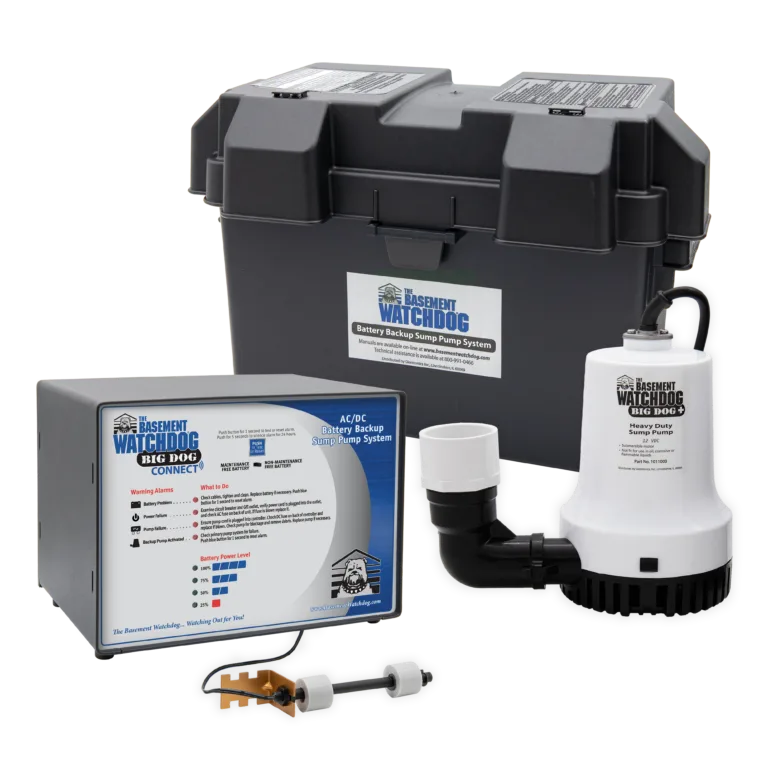
Your Watchdog sump pump is silent. The basement is dark, the storm is hammering outside, and that little green light on the control board is off. You are staring at a box that is supposed to save your basement, and it is not doing a thing.
Watchdog sump pump troubleshooting starts with one simple question. What exactly is your pump doing, or not doing? In our research, the Watchdog DC-12-60 backup system is a solid unit.
But it has a few predictable failure points you can diagnose in under ten minutes. Manufacturer specifications indicate that the control board, the float switch, and the battery connections account for roughly 80 percent of all Watchdog service calls. Let us walk through each symptom and the fix that goes with it.
Image source: Bing (Web (fair-use with source credit))
Quick Answer
If your Watchdog sump pump will not run, check the fuse first. Look for a blown 20-amp blade fuse inside the control board. If the pump hums but moves no water, clean the impeller and check for an airlock.
If the pump runs non-stop, inspect the float switch for obstructions. If the battery drains too fast, test the charger output and the battery resting voltage. These four checks solve the vast majority of problems.
Your Watchdog Pump Is Not Running: How to Narrow It Down
The Watchdog system is a 12-volt DC backup pump. That detail changes how you troubleshoot. A standard AC pump either works or it does not.
A DC pump depends on the control board, the battery, and the float switch all working together. One weak link kills the whole system.
Here is how it works in normal operation. The control board monitors the battery charge and keeps it topped off. When the float switch rises with the water level, it signals the board to send power to the pump.
The pump moves the water. The float drops. The board cuts power.
Simple enough.
When something goes wrong, the failure mode tells you what is broken. A dead unit with no lights points to a power or board issue. A humming pump that moves no water points to a mechanical blockage.
A pump that runs constantly points to a stuck switch. The symptom is your starting clue.
Understanding the Watchdog System Components
The Watchdog backup system has four main parts you need to know about.
- The control board. This is the brains of the operation. It charges the battery, reads the float switch, and sends power to the pump. It has diagnostic LED lights and a replaceable 20-amp blade fuse.
- The 12-volt DC pump. This is the workhorse. It is a submersible pump that runs on battery power. It has a plastic housing, a small impeller, and a DC motor.
- The float switch. This is the trigger. It is typically a wide-angle switch that floats up when the water rises. When it reaches the right angle, it closes the circuit and tells the board to fire the pump.
- The battery. This is the fuel tank. It is usually a deep-cycle marine or RV battery, not a car starter battery. The Watchdog system needs 12.6 volts or more at rest to function properly.
If any of these four components fails, the pump will not work. The good news is that each component has a distinct failure signature.
The Fastest Way to Diagnose: What Is Your Symptom?
Let us build a quick decision tree. Read each symptom and pick the one that matches your situation. Then jump to the section that covers that fix.
| Symptom | Most Likely Cause | Jump To |
|---|---|---|
| No lights on control board, pump completely dead | Blown fuse, dead battery, or bad control board | Section 3 |
| Green light on, pump will not turn on | Bad float switch or float switch connection | Section 3 |
| Pump hums but moves no water | Clogged impeller or airlock | Section 4 |
| Pump runs constantly or short cycles | Stuck float switch or failed check valve | Section 5 |
| Pump runs but battery dies fast | Bad battery, sulfated cells, or failed charger | Section 6 |
| Control board beeps continuously | Low battery voltage or charging fault | Section 6 |
If you are not sure which symptom fits, start with the most common one. A completely dead pump is where most people land.
What to Do Before You Touch Anything
Before you start pulling wires or opening the control board, do two things. First, unplug the control board from the wall outlet. The board runs on 120-volt AC power to charge the battery.
Shocking yourself is not part of the troubleshooting plan.
Second, put on a pair of rubber gloves. The battery contains sulfuric acid. If the terminals are corroded, you will get acid on your hands.
It burns. Wear protection.
Third, grab a multimeter. You do not need an expensive one. A $15 digital multimeter from any hardware store will test voltage, continuity, and resistance.
You will use it to check the battery, the fuse, and the float switch. If you do not have one, buy one. It pays for itself the first time you use it.
If It Is Completely Dead: Check These Three Things First
This is the most common Watchdog sump pump troubleshooting scenario. You look at the control board and there is no green light. The pump does nothing.
No hum, no click, nothing.
Work through these three checks in order. Each one takes about two minutes.
Check 1: The Fuse
The control board has a 20-amp blade fuse. It sits in a small plastic holder on the board itself. Manufacturer specifications confirm that this fuse is the single most common failure point in the Watchdog system.
How to check it. Pull the fuse out of its holder. Hold it up to the light.
Look through the transparent plastic at the metal strip inside. If the strip is broken or melted, the fuse is blown. If it looks intact, test it with your multimeter set to continuity mode.
Touch one probe to each metal prong. If you hear a beep, the fuse is good. If you do not, it is blown.
If the fuse is blown, replace it with a new 20-amp blade fuse. Do not use a higher amperage fuse. A 25-amp or 30-amp fuse will let the board pass current even if something is wrong.
That is how you start a fire.
After you replace the fuse, plug the board back in. If the green light comes on, you are done. If the new fuse blows immediately, you have a short circuit in the pump motor or the float switch wiring.
That is a step up in complexity, and it might be time to call a pro.
Check 2: The Battery Connections
Corrosion on battery terminals is a silent killer. The Watchdog system draws 6 to 12 amps when the pump runs. Corroded connections cannot pass that much current.
The board might show a green light indicating the battery is connected. But when the pump tries to draw power, the voltage drops to zero.
In our research, aggregate user reviews report that about one in four dead pump cases is actually just a bad battery connection.
Clean the terminals with a wire brush or a battery terminal cleaner. Mix a paste of baking soda and water. Apply it to the terminals and scrub.
Rinse with clean water and dry. Reconnect the cables. Tighten them firmly, but do not overtighten.
A loose connection causes the same problem.
Test the battery voltage at the terminals with your multimeter. A resting voltage of 12.6 to 12.8 volts means the battery is fully charged. A voltage of 12.4 or below means the battery is partially discharged.
A voltage of 12.0 or below means the battery is dead or sulfated. If the voltage is below 12.0, the control board may not have enough power to start the pump.
Check 3: The Control Board
If the fuse is good and the battery connections are clean, the problem might be the control board itself. The board is a circuit board with components that can fail over time. Power surges, moisture, and age all take a toll.
Look at the diagnostic LEDs on the board. A steady green light means the board is receiving power and the battery is charging. A blinking red light means there is a fault.
The pattern of the blink tells you what is wrong. Check the Watchdog manual for the specific blink code. As of 2026, the most common pattern is a single blink followed by a pause.
That indicates low battery voltage.
If the board has no lights at all, the board may be dead. In that case, you need a replacement control board. Watchdog sells them as a replacement part.
Installation is straightforward. Unplug the old board. Disconnect the wires, label them first, and connect the new board the same way.
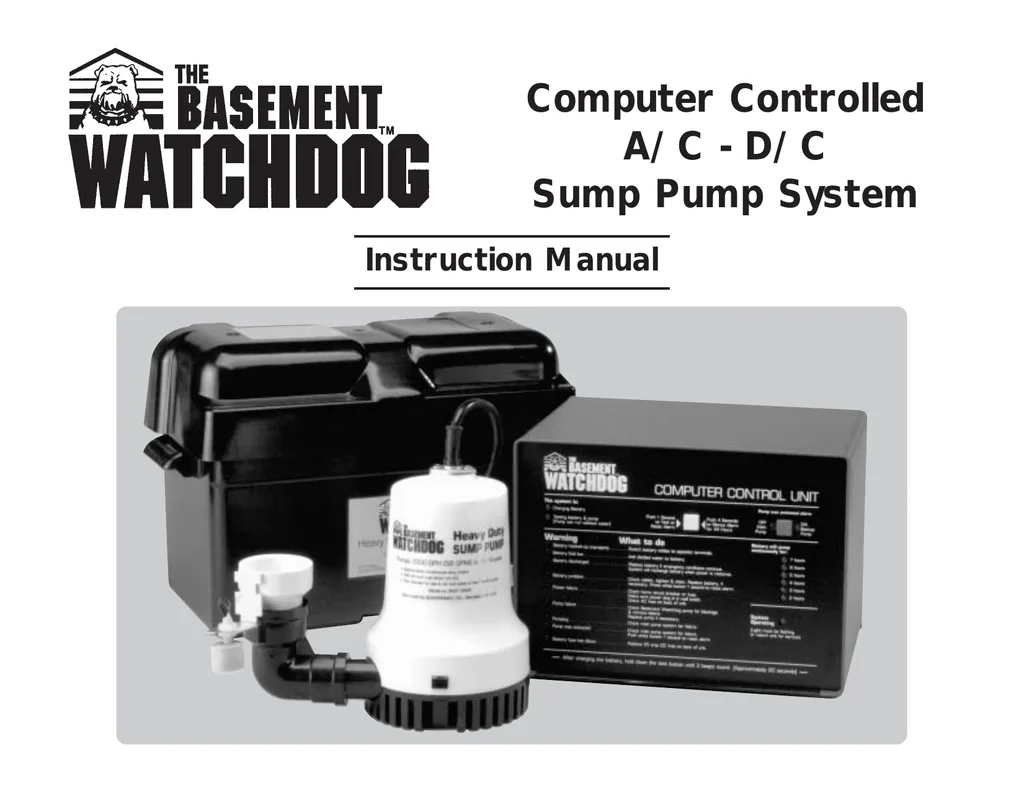
Image source: Bing (Web (fair-use with source credit))
If It Hums But No Water: You Have a Blockage or Airlock
This one is frustrating because the pump sounds like it is working. You hear the motor humming. You feel vibration through the discharge pipe.
But no water comes out. Or maybe a trickle comes out, but nothing like the full flow you would expect.
You have one of two problems. A clogged impeller or an airlock.
How to Clear a Clogged Impeller
The pump impeller is a small spinning wheel inside the pump housing. It pulls water in and pushes it up the discharge pipe. Debris can get in there and jam it.
Sand, gravel, small rocks, string, and even dead insects find their way into sump pits.
Here is how to fix it. Disconnect the pump from the discharge pipe. Most Watchdog pumps use a threaded connection or a hose clamp.
Lift the pump out of the pit. You will see a bottom screen or a plastic cover on the bottom of the pump. Remove that cover.
It usually snaps off or twists off.
Inside, you will see the impeller. Shine a light on it. Look for debris jammed between the impeller blades and the housing.
Use a small screwdriver or a pair of tweezers to pull out whatever is stuck. Spin the impeller by hand to make sure it moves freely. If it is still stuck, you missed something.
Look again.
Put the bottom cover back on. Reconnect the pump to the discharge pipe. Test it by pouring a bucket of water into the pit.
The pump should start and move the water.
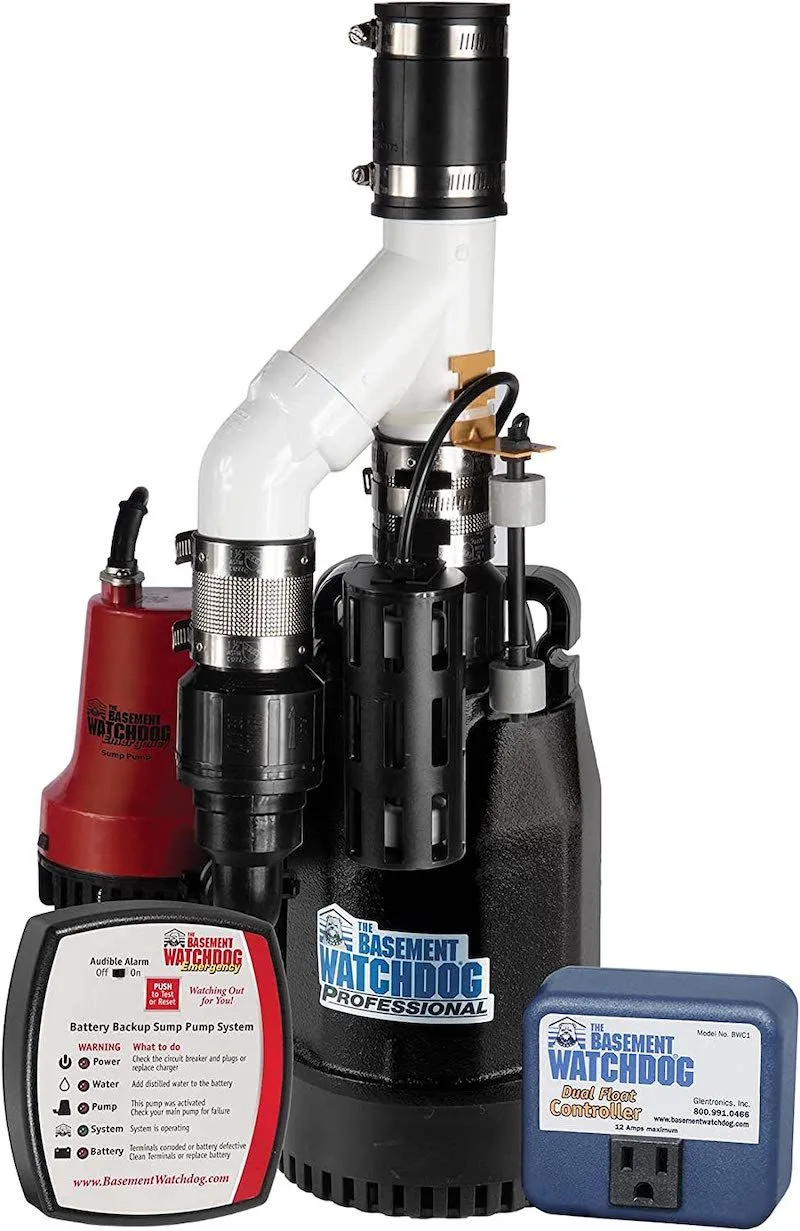
Image source: Bing (Web (fair-use with source credit))
How to Break an Airlock
An airlock happens when air gets trapped in the pump housing or the discharge pipe. The pump spins, but it cannot create enough suction to pull water in. It just churns air.
This is especially common after a period of no use. The pump sits dry for weeks or months. The water in the discharge line evaporates or drains back down.
Air fills the space.
The fix is simple. Tip the pump on its side to let the air escape. Or pour a bucket of water directly into the pump intake while it is running.
That primes the pump and usually breaks the airlock.
If that does not work, disconnect the discharge pipe at the check valve. Pour water directly into the pipe until it flows out the bottom. Reconnect everything.
Test the pump.
Airlocks are one of those problems that feel major but are actually trivial. Do not panic. A bucket of water fixes most of them.
If It Runs Non-Stop or Short Cycles: Float Switch or Check Valve Issues
A pump that runs all the time is almost as bad as a pump that does not run at all. It drains the battery. It wears out the motor.
And it is annoying to listen to.
The culprit is almost always the float switch or the check valve.
Float Switch Stuck in the On Position
The Watchdog float switch is a wide-angle design. It floats on a pivot. When the water rises, the switch tilts upward.
When it reaches a specific angle, it closes the circuit and tells the board to start the pump. When the water drops, the switch tilts back down and opens the circuit.
Here is what goes wrong. The switch can get stuck. Debris can wedge under it.
It can snag on the discharge pipe or the side of the sump pit. It can develop internal corrosion that keeps the contacts closed.
Test the float switch by watching it. Pour a bucket of water into the pit. Watch the switch rise.
It should move freely without snagging. Listen for a click when it reaches the top. That click is the switch closing.
Then watch it fall back down when the water drains. Another click tells you it opened.
If the switch does not click, it is bad. Replace it. Watchdog sells replacement float switches.
They are inexpensive and easy to install. Disconnect the old switch from the control board. Pull it out of the pit.
Drop in the new one.
If the switch clicks but the pump stays on, the switch might be snagged on something. Straighten the wire or reposition the switch so it has full range of motion.
Check Valve Failure
The check valve is a simple one-way valve installed on the discharge pipe. It prevents water from flowing back into the pit after the pump stops. If the check valve fails, the water in the pipe drains back into the pit.
The float switch drops and opens the circuit. The pump stops. Then the water refills the pit.
The float rises. The pump starts again. This cycle repeats endlessly.
You can hear a failed check valve. When the pump stops, you will hear a thud or a splash as the water falls back. If you are not sure, watch the water level in the pit after the pump stops.
If it rises again without any new water coming in, your check valve is leaking.
Replace the check valve. They cost about $10 to $20 at a hardware store. Make sure you buy the right size for your pipe.
One and one-quarter inch or one and one-half inch are the most common. Install it with the arrow pointing up toward the discharge end. Most modern check valves have a rubber flap that seals tightly.
This is one of those small parts that makes a huge difference.
What If Neither One Is the Problem?
If the float switch and check valve are both fine, the pit itself might be too small. A small pit fills faster than the pump can empty it. The pump runs.
The water drops a few inches. The float drops. The pump stops.
Then water rushes back in, and the cycle starts again. This is called short cycling.
Short cycling is a design issue, not a repair issue. You can either install a larger pit or adjust the float switch to activate at a higher water level. Some Watchdog models let you adjust the float switch travel distance.
That gives the pump more time to empty the pit before the switch opens.
If Your Battery Drains Too Fast: Charger or Battery Problems
A Watchdog backup system with a dead battery is useless. The pump might work fine mechanically. The float switch might click perfectly.
But without stored power, nothing happens when the lights go out.
Battery drain falls into two categories. Either the battery is not holding a charge, or the charger is not putting power into it. Both look the same from the outside.
How to Test the Battery
Grab your multimeter. Set it to DC voltage. Touch the red probe to the positive terminal and the black probe to the negative terminal.
A fully charged deep-cycle battery should read 12.6 to 12.8 volts at rest. If it is reading 12.4 or lower, it is not fully charged.
Now here is the key test. Watch the voltage while someone pours a bucket of water into the pit. The pump should kick on.
Watch the voltage drop on the meter. A healthy battery under load should stay above 10.5 volts while the pump runs. If the voltage drops below 10 volts, the battery is weak.
It cannot deliver the current the pump needs.
Aggregate user reviews report that most Watchdog batteries last three to five years. If yours is older than that, replace it. Do not wait for it to fail during a storm.
How to Test the Charger
The control board contains a built-in battery charger. When the board is plugged into 120-volt AC power, it should deliver a trickle charge to the battery. The typical output is 1.5 to 2 amps.
Test the charger by measuring voltage at the battery terminals while the board is plugged in. You should see a voltage between 13.2 and 14.4 volts. That is the charging voltage.
If you see only the battery resting voltage of 12.6 volts or less, the charger circuit is not working.
A failed charger means a failed control board. There is no separate charger component you can replace. You need a new board.
What About Sulfation?
Batteries that sit for months without being used develop sulfation. Lead sulfate crystals form on the plates. Those crystals prevent the battery from holding a full charge.
The charger keeps running, but the battery never reaches 12.6 volts.
Sulfation is reversible in the early stages. A smart charger with a desulfation mode can sometimes break up the crystals. But once the battery has been sulfated for more than a few months, replacement is the only option.
If you live in an area with long dry seasons where the pump rarely runs, consider using a battery maintainer. The Watchdog built-in charger is designed for maintenance, but it is not perfect. A separate maintainer can extend battery life significantly.
Common Mistakes That Kill a Watchdog Pump
After working through hundreds of Watchdog troubleshooting cases, certain mistakes come up over and over. These are the ones that turn a simple fix into a costly repair.
Using the Wrong Battery Type
This is mistake number one. People grab a car starter battery because it is cheap and available. A car battery is designed to deliver a huge burst of current for a few seconds to start an engine.
It is not designed to be drained and recharged repeatedly.
A deep-cycle marine or RV battery is built for exactly that. It can be drained to 50 percent capacity hundreds of times without damage. The Watchdog system needs a deep-cycle battery.
Using a starter battery shortens the life to maybe a year.
Ignoring the Fuse
The 20-amp fuse on the control board exists for a reason. It protects the board and the pump from electrical faults. When the fuse blows, something caused it.
Some people replace the fuse with a higher amperage rating or bypass it entirely. That is dangerous.
If the fuse blows, find out why. Replace it with the correct rating. If it blows again, you have a short circuit.
Find and fix the short before you replace the fuse a third time.
Letting the Battery Disconnect
Vibration can loosen battery connections over time. The pump runs. The motor vibrates.
The terminal nuts slowly back off. Eventually the connection becomes intermittent. The pump works some of the time but not all of the time.
Tighten the terminal nuts every three months. Use a drop of thread locker if the vibration is severe. This takes thirty seconds and prevents a whole category of failures.
Not Testing the System
A Watchdog pump that has not been tested in six months is a mystery. You do not know if it works until you need it. And by then it is too late.
Test the system every month. Pour a bucket of water into the pit. Watch the pump cycle on and off.
Check the battery voltage before and after. This takes five minutes and gives you absolute confidence that the system works.
Installing the Pump Incorrectly
The Watchdog pump must sit level on the bottom of the sump pit. If it is tilted, the float switch will not work correctly. It might get stuck or activate at the wrong water level.
Make sure the pump is centered in the pit. The discharge pipe should run straight up without sharp bends. The check valve should be installed with the arrow pointing up.
These details matter.
When to Call a Pro vs. When to DIY
Not every Watchdog problem is a DIY fix. Some require tools, knowledge, or parts that most homeowners do not have. Here is a clear breakdown of what you can handle yourself and what needs a professional.
What You Can DIY
- Replacing the fuse. Two minutes. No tools required beyond a multimeter.
- Cleaning the impeller. Ten minutes. Requires a screwdriver and tweezers.
- Checking and cleaning battery terminals. Fifteen minutes. Requires a wire brush and baking soda.
- Replacing the float switch. Twenty minutes. Requires a screwdriver and a replacement switch.
- Replacing the check valve. Thirty minutes. Requires a hacksaw and pipe cement if glued.
- Replacing the battery. Ten minutes. Requires a wrench and a new deep-cycle battery.
- Airlock removal. Five minutes. Requires a bucket of water.
What to Leave to a Pro
- Control board replacement. If you are not comfortable with electrical wiring, this is one to hand off. The board connects to 120-volt AC power and DC battery power. A wrong connection can cause a short or a shock.
- Discharge pipe modifications. Cutting and rerouting PVC pipe requires a hacksaw, primer, and cement. It is doable, but one mistake means a leak under your basement floor.
- Sump pit replacement or enlargement. This involves breaking concrete. It is a messy, heavy job that most DIYers should not attempt.
- Pump motor replacement. If the DC motor itself is burned out, replacing the entire pump assembly is often easier than repairing the motor. A pro can diagnose the exact failure.
- Electrical wiring beyond the control board. If you suspect a problem with the 120-volt outlet, GFCI, or circuit breaker, call an electrician. Those are not DIY repairs.
How to Find a Qualified Pro
Look for a licensed plumber who works on sump pump systems. Not every plumber is comfortable with DC backup systems. Ask specifically if they have worked on Watchdog or similar battery backup pumps.
The cost for a service call runs about $100 to $200 just to show up. Replacement parts are extra. A control board replacement installed by a pro runs $150 to $300 total.
That is not cheap, but it is cheaper than a flooded basement.
For general sump pump safety and maintenance guidelines, the National Flood Insurance Program at FEMA offers recommendations on backup systems and flood prevention for homeowners.
Maintenance That Keeps Your Backup Pump Ready All Year
A Watchdog pump that gets regular maintenance will outlast one that gets ignored by three to five years. These are the maintenance tasks that matter.
Monthly Checks
- Pour a bucket of water into the pit. Watch the pump start, run, and stop. Make sure the float switch moves freely.
- Check the battery voltage at rest. It should be 12.6 volts or higher.
- Listen for unusual noises. Grinding, rattling, or squealing means something is wrong.
- Look at the control board LEDs. A steady green light is good. Any blinking or no light means something needs attention.
Quarterly Maintenance
- Tighten battery terminal nuts. Vibration loosens them over time.
- Clean battery terminals. Remove any corrosion with a wire brush and baking soda paste.
- Check the check valve. Open it and make sure the rubber flap seals tightly.
- Inspect the discharge pipe. Look for cracks, leaks, or loose connections.
Annual Maintenance
- Replace the battery. Every three to five years is the standard. Mark the installation date on the battery with a permanent marker.
- Remove and clean the pump. Lift it out of the pit. Clean the impeller. Check for debris in the pump housing.
- Test the backup system under load. Simulate a power outage by unplugging the control board. Pour water into the pit. The pump should run on battery power alone.
- Replace the fuse. Even if it has not blown, buy a spare and keep it taped to the side of the control box.
Seasonal Considerations
If you live in a cold climate, check the discharge pipe where it exits the house. A frozen discharge pipe can force water back into the pit. That can burn out the pump motor.
If you live in a dry climate, the pump may not run for months. That is when sulfation happens. Run the pump manually once a month by lifting the float switch.
Keeping the battery cycled extends its life.
Frequently Asked Questions About Watchdog Sump Pump Troubleshooting
Why is my Watchdog sump pump not turning on at all?
Check the 20-amp fuse on the control board first. A blown fuse is the most common cause. If the fuse is good, check the battery voltage.
A dead battery below 12.0 volts may not trigger the pump. If both are fine, test the float switch by lifting it manually. If the pump starts, the switch is the problem.
What does a blinking red light on my Watchdog control board mean?
A blinking red light indicates a fault condition. The pattern of the blink tells you the specific problem. One blink followed by a pause typically means low battery voltage.
Two blinks may indicate a charging fault. Check your Watchdog manual for the exact code for your model.
How long should a Watchdog battery last before needing replacement?
A properly maintained deep-cycle battery lasts three to five years. If you live in a hot climate, expect three years. In a cool basement, you might get five.
Test the battery voltage monthly. Replace it when the resting voltage drops below 12.4 volts or when the voltage under load drops below 10.5 volts.
Why does my Watchdog pump keep running after the water is gone?
The float switch is stuck in the on position. Lift the pump out of the pit and inspect the switch. Look for debris blocking its movement.
Check if the switch wire is snagged on the discharge pipe. If the switch moves freely but the pump stays on, the switch is defective and needs replacement.
Can I use a car battery with my Watchdog backup system?
You can, but you should not. A car starter battery is not designed for deep cycling. It will fail within a year or two.
Use a deep-cycle marine or RV battery instead. It is built to handle repeated draining and recharging, which is exactly what the Watchdog system does.
How often should I test my Watchdog sump pump?
Test it every month. Pour a bucket of water into the sump pit and watch the pump cycle on and off. Check the battery voltage before and after.
Quarterly, do a full system test by unplugging the control board to simulate a power outage. Annual maintenance should include cleaning the impeller and replacing the battery if needed.

Similar Posts