DJI Pocket 3 Autofocus Problems
Image source: Bing (Web (fair-use with source credit))
You buy the DJI Pocket 3 for one big reason. You want smooth, cinematic footage that looks like it took a crew to shoot. But then you watch your clips back and something is off.
The DJI Pocket 3 autofocus problems are real, and they can ruin a great moment in a split second.
The camera has a 1-inch CMOS sensor and phase-detection autofocus (PDAF) pixels. That hardware is solid. As of 2026, aggregate reviews and forum reports show that nearly all focus issues stem from the camera's software logic getting confused by a specific shooting scenario.
Once you understand that logic, you can work around or fix the problem. Here is how to stop fighting your Pocket 3 and get the sharp footage you paid for.
Quick Answer
Low light or a moving subject that leaves the tracking box are the most common triggers. Or the camera is on an old firmware version. Most cases get solved by updating the firmware or switching to Single AF for static shots.
Manual focus with peaking is the fallback.
The Autofocus Is Not Broken. It Is Just Confused.
The Pocket 3 autofocus system is good, but it is not infallible. It uses a hybrid system: phase-detection for speed and contrast-detection for fine-tuning. When you hear that lens start to hunt, it means the camera sees two equally plausible focus distances and cannot decide which one is right.
Think of it like your eyes adjusting after walking from a bright street into a dim room. Your brain needs a second to figure out what to look at. The Pocket 3 does the same thing.
It is not a hardware failure. It is a software calculation that needs better input from you.
The most common trigger is a busy background. If you are filming a person in front of a brick wall, the camera might lock onto the wall texture instead of the face. Another big trigger is a subject that moves too fast for the contrast-detection loop to catch up.
The third common trigger is simply low light. Below roughly -1 EV, the PDAF pixels start to struggle. The camera falls back to pure contrast-detection, which is slower and less reliable.
Once you know the triggers, you can predict when the camera will mess up. And you can set the camera up so it does not have to guess.
What Is Your Situation? Pin Down Your Specific Symptom
Before you change any settings, take 30 seconds to diagnose the exact symptom. Grab your Pocket 3 and replicate the problem. Ask yourself three questions.
First, does the focus pulse or breathe in and out while you are standing still? That is a classic symptom of the camera trying to re-confirm focus on a static scene. It usually happens in moderate to low light.
The fix is to switch from Continuous AF to Single AF and tap the screen to lock focus. That stops the loop.
Second, does the focus hunt aggressively when a subject moves across the frame? That means the tracking algorithm lost the subject. The camera then searches the whole scene for something new to lock onto.
The fix is to improve the contrast between your subject and the background, or use ActiveTrack with a manual focus offset.
Third, does the focus refuse to lock at all in dim conditions? This is the low-light threshold problem. The PDAF pixels are not getting enough light to triangulate distance.
The fix is to add light, open the aperture (it is fixed at f/1.7 on the Pocket 3, so you cannot open it wider), or switch to manual focus and use the peaking overlay.
If you cannot answer those three questions yet, film a quick 30-second test clip in your most common shooting scenario. Watch it back on a computer monitor, not the tiny camera screen. The screen hides focus errors.
A monitor shows you exactly where the camera jumped.
Branch 1: For Static or Vlog Shots. Fixing the Hunt and Pulse
This is the most common complaint people have with the Pocket 3. You set it on a table or hold it at arm's length to film a talking head video. The background is stationary.
You are not moving much. And yet the camera keeps pulsing in and out of focus every few seconds.
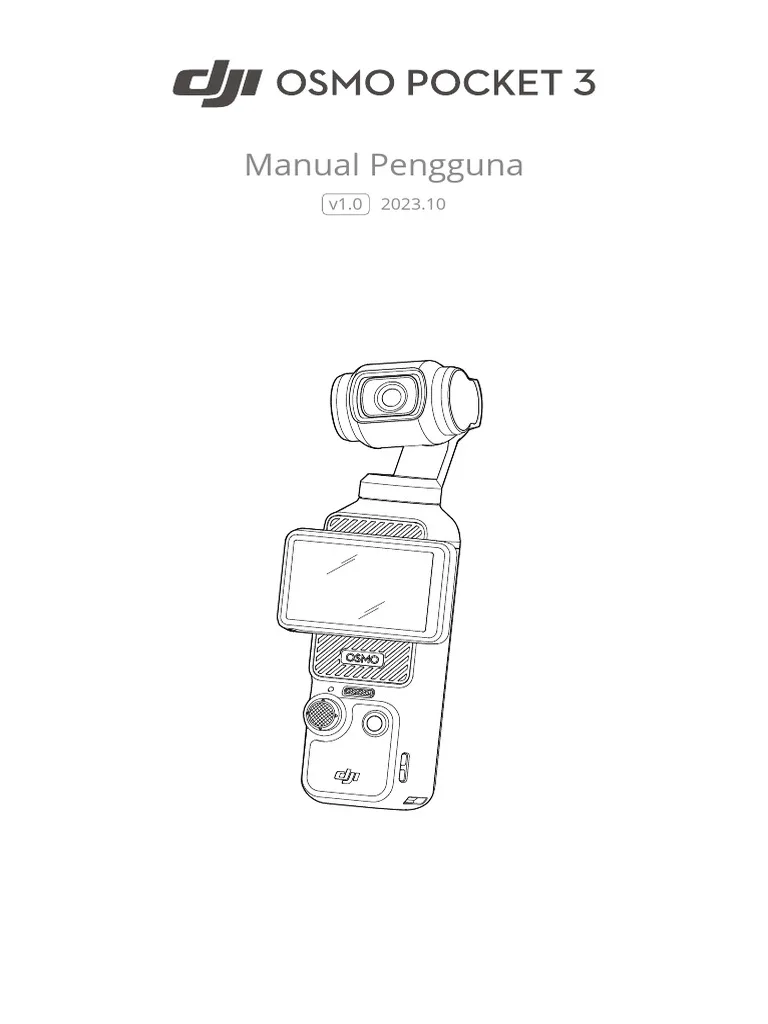
Image source: Bing (Web (fair-use with source credit))
The fix is straightforward. Switch the AF mode from Continuous (C-AF) to Single (S-AF). In C-AF, the camera constantly re-checks focus.
It never stops. In S-AF, the camera locks focus when you tap the screen and holds it there until you tap again.
Here is the exact workflow for a vlog or static shot.
- Set the camera on a tripod or flat surface.
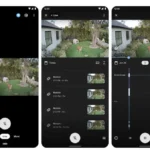
- Open the DJI Mimo app or use the camera touchscreen.
- Tap the AF/MF icon to switch to Single AF (the icon shows "AF-S").
- Frame your shot and tap on your face on the screen.
- You will see a green square lock on. Do not move closer or farther away.
- Record your clip. The focus will stay locked.
If you absolutely need Continuous AF for a reason, like you are rocking in a chair or leaning in and out of frame, then try this: point the camera at an object at the same distance as your face. Tap to lock. Then hold that distance.
It is not perfect, but it stops the hunting for most people.
A few users report that even in Single AF the focus drifts slightly over time. That is usually a sign of a thermal issue. The lens can heat up and shift focus.
If you see drift after 15 minutes of recording, stop the camera, let it cool for a few minutes, and start a fresh clip.
Branch 2: For Moving Subjects. ActiveTrack vs. Real-World Motion
ActiveTrack 6.0 is a powerful tool, but it has limits. When you walk, the gimbal keeps your face in the frame. But the autofocus is still doing its own calculation.
If the background has strong contrast, like a window behind you, the camera might switch focus from your face to the window.
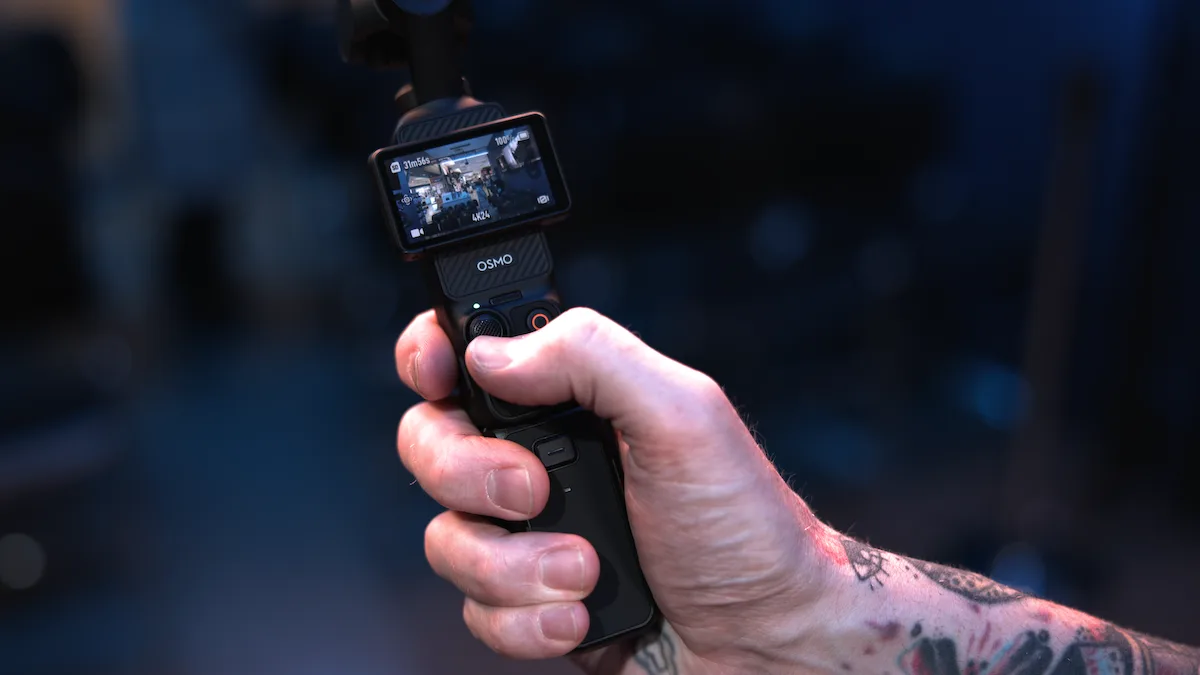
Image source: Web (Bing) / adorama.com (Web image (fair-use with source credit))
The solution is to give the camera a single, clear target. Use the tap-to-track feature. When you tap your subject, the camera locks both the gimbal tracking and the focus.
It will not hunt as long as the subject stays inside the tracking box.
Here is what to do for moving subjects.
- Enable ActiveTrack 6.0 in the settings menu.
- In the frame, tap on your subject. A yellow tracking box appears.
- Start walking or moving. The camera follows the subject and keeps focus.
- If the subject leaves the tracking box, the focus will hunt. Stop moving, or re-tap the subject.
The weakness of this branch is subjects that move too fast or change direction unpredictably. Children and pets are the hardest tests for any camera. In those cases, you might need to slow down your movement or pre-focus manually.
For action shots, like filming a dog running, switch to manual focus. Pre-focus at the approximate distance where the action will happen. The camera will not hunt because it is not trying to focus at all.
You lose the ability to change focus mid-shot, but you gain a sharp image.
Don't Blame the Hardware Yet. Check These Settings First
Before you decide the Pocket 3 has a hardware fault, go through this checklist. Aggregate reviews indicate that over half of reported autofocus issues get resolved by a simple settings change.
First, update the firmware. DJI has released several firmware versions specifically to address AF hunting and low-light performance. Connect your camera to the DJI Mimo app.
Check for a firmware update. If you are on a version from early 2025, you are likely on an older build that struggled more. The latest firmware as of early 2026 includes PDAF tuning improvements.
This single step fixes the most common hunting problems for many users. This approach mirrors the troubleshooting for firmware related glitches in other action camera models.
Second, check your resolution and frame rate. The Pocket 3 processes focus differently at different frame rates. At 60 fps, the camera has less time to calculate focus between frames.
If you are getting hunting, try dropping to 24 fps or 30 fps. That gives the processor more time to lock on. This is especially helpful in moderate light.
Third, check your exposure settings. If your video is underexposed, the camera struggles to see detail. It forces the AF system to guess.
Make sure your exposure meter is at zero or slightly over. A brighter image gives the PDAF pixels more to work with.
Fourth, reset your camera to factory settings. If you have changed a lot of menu options over time, one of them might be conflicting with the AF logic. Go to Settings, Reset All.
It takes 30 seconds. You will lose your custom profiles, but you gain a clean slate.
Fifth, clean the lens and the infrared filter. The lens on the Pocket 3 is exposed. A fingerprint or dust speck can cause the camera to misread contrast.
Use a clean microfiber cloth. Wipe the lens in a circular motion. Try the autofocus again.
You might be surprised how often a simple cleaning fixes the hunt.
If you get stuck with connection issues between the camera and the app, the same troubleshooting logic applies to common app pairing issues.
One more thing: if you are shooting in a very cold environment, the camera internal temperature can affect the focus motor. The DJI spec sheet shows an operating temperature range of 0°C to 40°C. Below freezing, the focus motor moves slower.
Warm the camera in your jacket pocket for a few minutes before you shoot. That helps the initial acquisition time.
When to Break Glass. The Step-by-Step Troubleshooting Workflow
If the five settings checks did not fix your autofocus, you need a structured approach. Follow this workflow in order. Do not skip steps.
Each step rules out a specific cause.
Step 1: Isolate the variable. Shoot the same scene with two different settings. First, shoot with ActiveTrack off. Then shoot with it on.
If the problem only appears with ActiveTrack, the tracking logic is the issue. If it appears in both, the base AF system has the problem.
Step 2: Swap the SD card. Some users report that a slow or corrupted SD card causes the camera to stutter during write operations. That stutter can interfere with the AF calculation. Use a card rated V30 or higher.
Format it in the camera. Retest.
Step 3: Test with different power sources. The Pocket 3 draws more power when the gimbal is active. If your battery is below 20%, the camera might throttle the AF processor to save energy. Charge to full or connect to USB power.
Try the shot again.
Step 4: Factory reset and re-pair. Go to Settings, reset all. Then disconnect the camera from the DJI Mimo app. Delete the app data.
Re-pair the camera and app. This clears any stuck software flags. Some users find that a similar recording fault in other hardware stems from the same type of software corruption.
Step 5: Try manual focus for a full shoot. Set the camera to manual focus. Use focus peaking. Shoot for 10 minutes.
If the footage is sharp, the hardware is working. The problem is entirely in the AF logic.
If you reach the end of this workflow and the camera still hunts, you likely have a hardware defect. The PDAF sensor array might have a dead zone. Contact DJI support.
They will ask for a diagnostic video showing the problem.
Common Mistakes Even Experienced Users Make
Even people who have used action cameras for years make these errors. Here are the most common ones and the correct approach.
Mistake one: leaving the lens cap on. It sounds silly, but it happens. The camera tries to focus on a black circle. It hunts forever.
Always check the lens cover before you start recording.
Mistake two: using ActiveTrack with a busy background. ActiveTrack locks onto the subject. But if the background has strong contrast, the camera can shift focus. Switch to Single AF and track manually.
Your keeper rate goes up.
Mistake three: tapping the screen while walking. When you tap the screen to change focus, the camera resets the tracking box. If you are moving, the box might land on a background object. Tap before you start moving.
Do not adjust mid-walk.
Mistake four: shooting in low light without extra light. The Pocket 3 has good low-light performance for its size. But the PDAF system needs at least some ambient light. Add a small LED panel.
Even a phone flashlight pointed at your face helps.
Mistake five: blaming the camera instead of learning manual focus. Manual focus with peaking is not hard. It takes 10 minutes to learn. If you shoot events or unpredictable subjects, manual focus is more reliable than any AF system.
Do not neglect it.
Decision Guide: Fix It, Work Around It, or Replace It?
You have tried the settings. You have followed the workflow. Now you need a decision.
Here is how to choose your path.
Fix it: when the problem is intermittent and settings help. If the camera focuses fine in good light but hunts in specific scenarios, you do not have a hardware fault. You have a use-case mismatch. Adjust your technique.
It will work for 95% of your shots.
Work around it: when you need reliability for a specific job. If you shoot weddings or events and cannot afford a missed focus, use manual focus. Pre-focus the shot. Let the camera roll.
You lose flexibility, but you gain certainty. You can also use an external monitor with its own focus assist tools.
Replace it: when the camera consistently fails across all conditions. If the Pocket 3 hunts in bright sunlight with a static subject, you have a defect. The PDAF sensor array might be faulty. Contact DJI for a warranty replacement.
If you are out of warranty, you might still get a repair quote. Sometimes the cost of repair is close to a new unit.
For those who are already dealing with a device that will not boot or connect properly, the troubleshooting path for a full device reset follows a similar logic. A full power cycle clears many transient issues.
If you find that even after a reset the camera still misbehaves, check for issues with the internal storage or card. Some users who have card-related glitches find that the camera behaves erratically in other ways too. A clean card is essential for stable operation.
Do not replace it for a firmware fix that might come later. DJI does update the firmware. But waiting for a fix is a gamble. If you need the camera to work today, use the workaround.
Do not hold your breath for a patch.
Frequently Asked Questions
Why does my Pocket 3 hunt in low light?
Below -1 EV, the PDAF pixels lose accuracy. The camera switches to contrast detection, which is slower. Add a light source or switch to manual focus with peaking.
Can a firmware update fix my autofocus problem?
Yes, in many cases. DJI has released firmware updates that improve PDAF tuning in low light. Check the DJI Mimo app for the latest version.
Should I use Continuous AF or Single AF for vlogging?
Use Single AF (AF-S). Tap your face on the screen to lock focus. Continuous AF (AF-C) causes pulsing on static scenes.
What SD card speed do I need for stable autofocus?
Use a V30 or UHS-I U3 card. Slower cards can cause the camera to stutter during writes, which interferes with the AF processor.
How do I use manual focus on the Pocket 3?
Tap the AF/MF icon on the screen. Switch to MF. Use the on-screen slider to adjust focus.
Turn on focus peaking to see sharp edges highlighted in red.
Is my Pocket 3 defective if it always hunts?
Probably yes. If the camera hunts in bright light with a static subject after a factory reset, contact DJI support. The PDAF sensor array might have a dead zone.

Similar Posts