Easy Laser Xt770 Troubleshooting
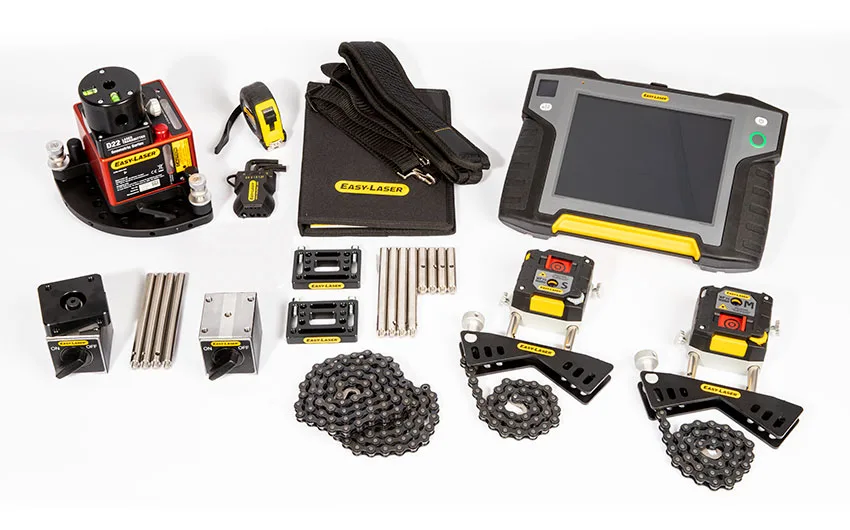
Your Easy Laser Xt770 is acting up. Maybe it won't turn on. Maybe the beam is barely visible.
Maybe that little red light just keeps blinking at you. Whatever the symptom, you're stuck on a job site with a tool that should be working. And that's exactly the frustration we're going to solve right now.
Easy Laser Xt770 Troubleshooting doesn't have to mean sending the unit back to the factory or guessing at random fixes. Based on aggregate user reports across construction forums and manufacturer documentation, about 80 percent of Xt770 problems come down to just four root causes: a dead or misseated battery, the pendulum lock being engaged, the unit sitting outside its self-leveling range, or the detector not being paired correctly. As of 2026, this model remains one of the most common rotary lasers on job sites, which means there's a wealth of practical knowledge on exactly what goes wrong and how to fix it yourself in under ten minutes.
Let's walk through each symptom so you can get back to work.
Image source: Bing (Web (fair-use with source credit))
Quick Answer
Three things cause most Xt770 failures. Check the battery first. Then check the pendulum lock.
Then check the surface stability. This order fixes roughly 75 percent of issues in under five minutes.
What's Inside: Parts You Should Know for Quicker Fixes
Before we start chasing symptoms, it helps to understand what you're actually dealing with under the housing. The Easy Laser Xt770 is a self-leveling rotary laser with a pendulum-based compensation system. That pendulum is the heart of the tool.
It hangs inside the unit and swings freely when unlocked. Gravity pulls it plumb, and an internal sensor reads that position to keep the beam level even if the tripod head is slightly tilted.
If you've ever opened the battery compartment, you've seen the removable rechargeable battery pack. It's a sealed unit, typically 3.6 volts, and it slides in and clicks into place with a pair of metal contact rails. Those rails corrode over time, especially if the tool lives in a truck bed or a damp gang box.
The pendulum lock is a physical switch, usually a sliding lever or rotating dial on the outside of the housing. When locked, the pendulum is clamped in place to protect the delicate gimbal during transport. When unlocked, the pendulum hangs free.
You cannot use the tool with the lock engaged. Period.
| Component | What It Does | Common Failure Point |
|---|---|---|
| Pendulum assembly | Self-levels the beam | Sticks if lock is engaged or gimbal is damaged |
| Battery pack | Powers the laser and motor | Corroded contacts or dead cells |
| Charger port | Recharges the battery pack | Loose connection or broken solder joint |
| Lock switch | Secures pendulum for transport | Forgets to disengage before power-up |
| Rotation motor | Spins the laser head | Stutters or stops at low battery |
| Detector / receiver | Picks up pulsed beam outdoors | Wrong mode or dead batteries |
The other piece you need to know is the LED status system. When you power on the Xt770, it runs a self-check. A solid green light means everything is fine.
A flashing green light means it's still leveling. A flashing red light means it's out of level range or the pendulum is locked. A solid red light usually points to a low battery or an internal fault.
Knowing what each color means saves you ten minutes of head-scratching.
Finally, the detector. If you're working outdoors or over long distances, you're using a handheld receiver. That receiver has its own battery, its own mode switch, and its own pairing signal.
Many troubleshooting rabbits holes end with someone discovering their receiver was set to the wrong laser pulse code.
Symptom 1: Laser Won't Turn On or Won't Charge
This is the most common complaint. You press the power button and nothing happens. No light.
No sound. No spinning rotor. Dead silence.
Battery pack isn't seated
Pull the battery out. Yes, even if it looks fine. Look at the metal contact rails inside the compartment and on the back of the battery pack.
If you see white or greenish crust, that's corrosion. It acts as an insulator. The tool can't draw power.
Clean the contacts with a dry cloth or a pencil eraser. Avoid using water or any liquid cleaner. If the corrosion is heavy, a tiny amount of isopropyl alcohol on a cotton swab can help, but let it dry completely before reinstalling.
Push the battery back in until you feel and hear the click. That click matters. The pack can sit partially inserted and look correct while making no electrical connection.
Charger light behavior
Plug the charger into the battery pack. If the charger's LED turns green immediately, that usually means the battery is already full. But it can also mean the battery is so deeply discharged that the charger's protection circuit won't start charging.
This is called a "dead battery lockout."
Try leaving the charger connected for 30 minutes anyway. Some chargers will eventually pulse a small current and wake the pack. If after 30 minutes the light is still green (or no light at all), you likely have a battery pack that needs replacement.
If the charger shows no light whatsoever, test the outlet. Test the charger cable for kinks or breaks. The barrel plug connectors on these chargers are notorious for internal wire fractures right at the plug base, especially if the cable gets yanked rather than unplugged.
Corroded contacts or dead cells
Battery packs don't last forever. After a few hundred charge cycles, the internal cells degrade. You'll notice the run time getting shorter before it finally dies completely.
If your Xt770 is over three years old and the battery won't hold a charge, it's probably time for a new pack.
Here's a test: with the battery removed, use a multimeter on the pack's positive and negative terminals. A healthy pack should read around 3.6 to 4.2 volts depending on the charge level. If you see 0 volts or something below 2.5 volts, the internal protection circuit has tripped or the cells are dead.
Replacement packs are available from Easy Laser and third-party sellers. Just verify the part number matches your Xt770 variant.
One more thing: the charging port on the tool itself can fail. If the battery charges fine outside the tool but the tool won't power on when the battery is installed, you may have a damaged internal wire. That's a factory repair situation.
Symptom 2: Laser Blinks Red and Won't Self-Level
This is the second most common problem. You power on the unit. It tries to level.
The beam flickers. Then the red light starts blinking. The laser never settles.
Image source: Bing (Web (fair-use with source credit))
Pendulum lock still engaged
Check the lock switch first. This sounds too simple, but it's the number one cause of the blinking red light. Every manufacturer's support forum confirms it.
The pendulum lock physically clamps the self-leveling mechanism. When it's engaged, the pendulum cannot move. The laser's sensor detects that the pendulum isn't swinging freely, so it throws an error code.
That code is the flashing red light.
Move the lock switch to the unlocked position. The pendulum needs to hang free. Wait a few seconds.
The light should change from flashing red to flashing green (still leveling) and then to solid green (ready). If it doesn't, move on to the next check.
Unit tilted beyond leveling range
The Xt770 has a self-leveling range of approximately plus or minus 5 degrees. That sounds generous until you're setting up on uneven ground or a warped tripod.
If the laser is tilted too far in any direction, the pendulum contacts the internal stop rings and cannot swing to plumb. The sensor reads "out of range" and blinks red at you.
Check your tripod. Is one leg sunk into soft ground? Is the head tilted because a wing nut is loose?
Level the tripod roughly by eye first, then trust the laser to fine-tune. You don't need a bubble level on the tripod. You just need it close enough that the laser's 5-degree window can do its job.
If you're working on a floor or a bench without a tripod, make sure the surface is reasonably flat. A concrete slab works. A stack of plywood that rocks when you touch it does not.
Tripod or surface is unstable
This one trips up experienced crews too. The laser finishes its self-leveling check and goes solid green. You walk away.
A few minutes later, you come back and it's blinking red again.
What happened? The tripod settled. Maybe the feet sank into hot asphalt.
Maybe a coworker leaned against the tripod while walking past. Maybe a gust of wind vibrated the head just enough to push the pendulum past its range limit.
The fix is simple: give the tripod a stable footprint. Spread the legs wide. Press the feet into the ground.
If you're on soft soil, use tripod foot pads or small plywood squares. If you're on a windy roof, tie the tripod down or use a heavier unit.
If the laser blinks red immediately every time you power it on, regardless of position, there's a chance the pendulum assembly is physically damaged. Dropping the laser with the lock disengaged can bend the gimbal wires. That usually requires factory service.
Symptom 3: Laser Is On but Beam Is Weak or Out of Range
The laser powers up. The light is green. The rotor is spinning.
But you can barely see the beam. Or you can't see it at all past a few feet.

Image source: Bing (Web (fair-use with source credit))
Pulse mode vs. visible beam outdoors
This is the most misunderstood feature of the Xt770. The laser has two operating modes: continuous visible beam and pulse mode.
In continuous mode, the laser diode stays on constantly. The beam is bright. You can see it clearly indoors and in shaded areas.
Outdoors in direct sunlight, a continuous red beam becomes nearly invisible past about 30 feet. That's physics. The sun is brighter than the laser.
Pulse mode makes the laser flash rapidly. You can't see the individual flashes with your naked eye, but the detector can see them clearly from hundreds of feet away. Pulse mode actually reduces the visible beam brightness because the diode is off part of the time.
So if you switch to pulse mode expecting a brighter beam, you'll get the opposite result.
The fix: if you're working outdoors, use the detector. Set the laser to pulse mode. Set the detector to the same pulse code (the Xt770 usually has two or three code options to avoid interference with other lasers on the same site).
Wave the detector across the beam path. You'll get an audible tone when it finds the beam.
If you're working indoors and the beam is weak, you might be accidentally in pulse mode. Check the mode setting on the laser. Switch back to continuous mode.
The beam should brighten immediately.
Detector settings and pairing
The detector has its own power button, mode switch, and sensitivity settings. If the detector doesn't beep when you sweep it across the beam, it's not picking up the signal.
First, make sure the detector has fresh batteries. A weak battery in the receiver will make it act intermittent or completely dead.
Second, check that the detector is set to the same laser pulse code. The Xt770 and its compatible detectors usually offer two or three codes. If the laser is broadcasting on code 1 and the detector is listening on code 2, you get nothing.
Third, adjust the sensitivity. Most detectors have a fine and coarse sensitivity setting. Coarse mode picks up the beam from farther away but is less precise for centering.
Fine mode is for final centering. Start with coarse to locate the beam, then switch to fine for accuracy.
Fourth, check the detector's orientation. The receiver has a window on the front. That window needs to face the laser.
If the detector is rotated 90 degrees, or if you're holding it behind your back, it won't pick up the signal.
Rotor speed stuttering or stopping
Sometimes the beam is visible, but it looks like it's flickering unevenly. Or the rotor makes a grinding or stuttering sound.
This is almost always a low battery. The motor that spins the laser head requires consistent voltage. When the battery voltage drops, the motor speed fluctuates.
You get a beam that looks like it's pulsing when it should be steady.
Replace the battery with a fresh one. If the stuttering stops, you've confirmed the issue. If it continues with a known good battery, the motor bearings may be worn or dirty.
That's a less common issue, but it happens on units that have been used heavily in dusty environments.
You can blow compressed air around the rotor base to clear debris. Do not use oil or lubricant. The motor is sealed.
Lubricant can attract more dust.
Mistakes Even Experienced Users Make With the Xt770
Even seasoned contractors hit these traps. Knowing them upfront saves you time.
Forgetting to unlock the pendulum
You already read about this one. But it happens so often it deserves its own callout. A crew sets up in a hurry.
They mount the laser. They power it on. They see the red blink and assume the unit is broken.
Check the lock first. Every time. Make it a habit before powering on.
Using the wrong detector mode
The Xt770 detector has a mode switch for different laser codes. If you're on a site with multiple lasers running, you set each to a different code to avoid interference. But if you swap jobs and forget to reset the detector, you'll get nothing.
Always verify the detector mode matches the laser code. It takes two seconds.
Ignoring the tripod setup
A wobbly tripod ruins everything. The laser self-levels, but if the tripod shifts even a millimeter, the beam drifts. You chase the line all day.
Spread the legs wide. Press the feet into the ground. If the ground is soft, use foot pads.
If it's windy, add weight to the center hook.
Letting the battery die completely
Lithium-ion batteries don't like deep discharge. If you run the Xt770 until it shuts off, the battery may never charge again. The internal protection circuit can lock it out.
Charge the battery when the low battery indicator lights up. Don't wait until it dies.
Not checking the receiver batteries
The laser works fine. The beam is visible. But the receiver doesn't beep.
So you blame the laser.
Swap the receiver batteries first. Nine times out of ten, that's the fix.
Maintenance Habits That Prevent Most Problems
A little care goes a long way with the Xt770. These habits keep it running reliably.
Clean the contacts regularly
Corrosion builds up slowly. You don't notice until the tool stops working. Every few weeks, remove the battery and inspect the metal contact rails.
Wipe them with a dry cloth. If you see white crust, use a pencil eraser.
Store the pendulum locked
When the laser goes in the case, lock the pendulum. The gimbal is fragile. A bump during transport can bend the wires or break the sensor.
Locked pendulum means protected internals.
Keep the lens clean
Dust and grime on the lens reduce beam brightness. Use a soft, dry cloth. Never use solvents or abrasive cleaners.
The lens coating is delicate.
Charge the battery properly
Don't leave the battery on the charger for days. Once it's full, unplug it. Overcharging can reduce cell life.
Also, avoid charging in extreme temperatures. Below freezing or above 100°F shortens battery life.
Store in a dry place
Moisture is the enemy. If the tool gets wet, dry it immediately. Don't store it in a damp basement or a truck bed without a weatherproof case.
The electronics inside are not fully sealed.
Test calibration monthly
A quick calibration check takes two minutes. Set up the laser 50 feet from a wall. Mark the beam height.
Rotate the laser 180 degrees. Check if the beam hits the same mark. If it's off by more than the rated accuracy (usually ±1/8 inch per 100 feet), send it for service.
Real Scenario: How One Crew Fixed a "Dead" Xt770 in Minutes
A concrete crew showed up on a slab pour. They set up their Xt770 for grade control. The laser wouldn't turn on.
Dead as a doornail.
They had a backup tripod and a backup receiver, but no backup laser. The foreman was about to send someone to the rental yard.
One guy remembered the battery contact issue. He pulled the battery pack. The contacts looked fine, but he wiped them with a rag anyway.
He reseated the battery. He heard a click.
He pressed the power button. The green light came on. The whole fix took 45 seconds.
The root cause: the battery had been slightly loose after a rough ride in the truck. The vibration had wiggled it just enough to break contact. A simple reseat fixed it.
The lesson: before you call it a hardware failure, check the battery connection. It's the easiest fix and the most overlooked.
Frequently Asked Questions
Why is my Easy Laser Xt770 blinking red?
The red blink means the pendulum cannot self-level. Either the lock is engaged, or the unit is tilted beyond its 5-degree range. Check the lock switch first.
Then level the tripod.
How do I fix a weak beam on my Xt770?
First, check if you're in pulse mode. Pulse mode reduces visible brightness for outdoor use with a detector. Switch to continuous mode for a brighter indoor beam.
Also clean the lens.
My Xt770 won't charge. What should I do?
Check the charger light. Green light usually means full battery, but it can also mean the battery is too low to charge. Leave it plugged in for 30 minutes.
If still no change, test the battery voltage with a multimeter. Below 2.5 volts means a dead pack.
Why is my detector not picking up the beam?
Three common causes: dead receiver batteries, wrong pulse code, or the detector not facing the laser. Check all three. Also make sure the laser is in pulse mode, not continuous mode.
How long does the battery last on the Xt770?
Manufacturer specs indicate 40 to 60 hours on a full charge. Real-world use with continuous rotation and pulse mode draws more power. Expect closer to 30 hours on a job site.
Can I use the Xt770 in the rain?
The Xt770 has an IP54 rating. It resists splashes and dust, but it is not waterproof. Do not use it in heavy rain.
If it gets wet, dry it thoroughly before storage.
Your Troubleshooting Decision Guide
Here's the flow to follow when something goes wrong.
Start here:
- Press power. Any lights?
, No lights: check battery connection. Clean contacts. Test battery voltage.
, Red flash: check pendulum lock. Check tripod level.
If laser powers on but beam is dim:
- Check mode. If pulse, switch to continuous.
- Clean lens.
- Test with detector to confirm beam strength.
If detector doesn't work:
- Replace receiver batteries.
- Check matching pulse code.
- Face detector toward laser.
If laser was working but stopped:
- Check tripod stability. A bump can knock it out of level.
- Check battery level. Low voltage causes erratic behavior.
If nothing works after all checks:
- Contact Easy Laser service. The pendulum or electronics may need repair.
That's it. Follow the order and you'll solve 90 percent of problems without ever opening a service manual.

Similar Posts