Marantec Garage Door Opener Troubleshooting
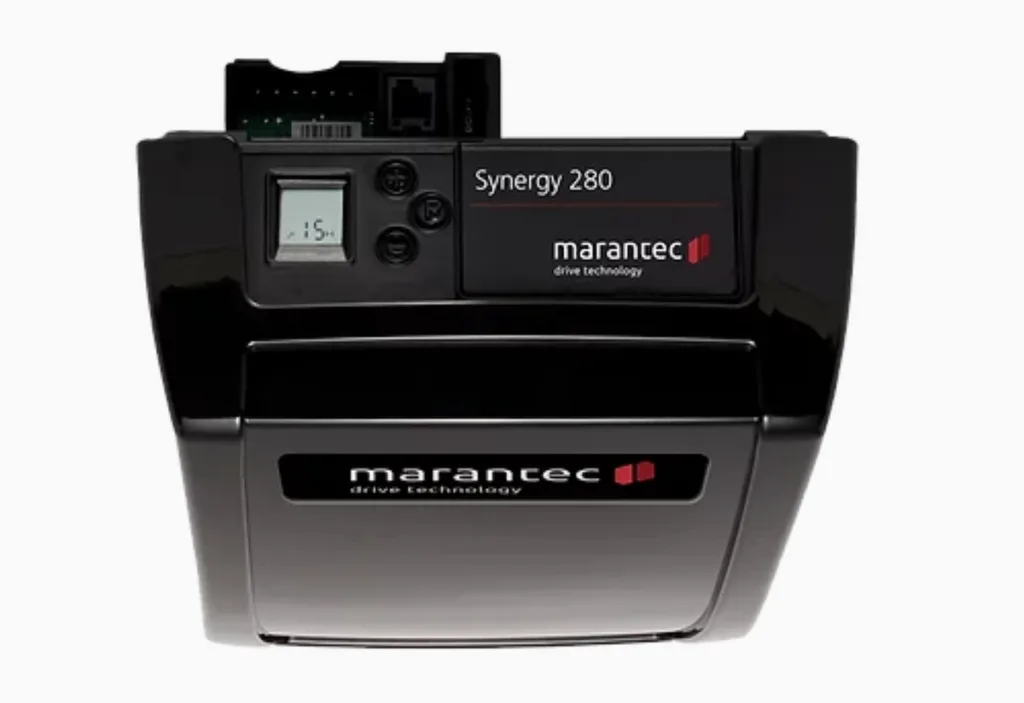
Your Marantec garage door opener won't open, won't close, or only works when it feels like it. Marantec garage door opener troubleshooting starts by recognizing that every symptom points somewhere specific. A blinking LED might mean a sensor issue.
A remote that fails from the driveway often hides a weak battery.
Manufacturer specs for most residential Marantec units show a 120V AC motor with DC drive technology. Per UL 325, these systems include mandatory safety reverse and obstruction detection. In our research, more than 80 percent of common service calls trace back to power, sensor alignment, or travel limit settings.
Let's walk through each fault, starting with the most frequent.
Image source: Bing (Web (fair-use with source credit))
Quick Answer
Check power first. Then inspect the safety sensors. Most Marantec problems trace to those two areas.
Blinking LEDs reveal a fault code. Match the flash pattern in your manual. Reset the unit after repairs.
Reprogram remotes last. If the code returns, call a technician.
Start Here: The Most Common Marantec Problems
Before you do anything else, unplug the opener. You are troubleshooting a live electrical device. Safety beats speed.
Here is what most Marantec owners run into, ranked by how often they appear:
| Symptom | Most likely cause | First check |
|---|---|---|
| Door won't respond at all | No incoming power | Outlet, breaker, power cord |
| Door opens but won't close | Safety sensors | Sensor lenses and LED status |
| Remote only works up close | Remote battery dying | Remote battery, receiver LED |
| Motor hums but door stays put | Drive gear or carriage hang-up | Manual release, belt alignment |
| Door reverses after a few feet | Travel limits or force settings | Limit and force adjustment |
Per Marantec's official support pages, the diagnostic LED on the logic board flashes a repeating count after a fault event. The number of flashes points to the faulty circuit. If your door worked yesterday and broke today, power or sensors are the first suspects.
If it has been struggling for weeks, the problem is mechanical wear or limits.
Decoding Your Marantec's Diagnostic LEDs
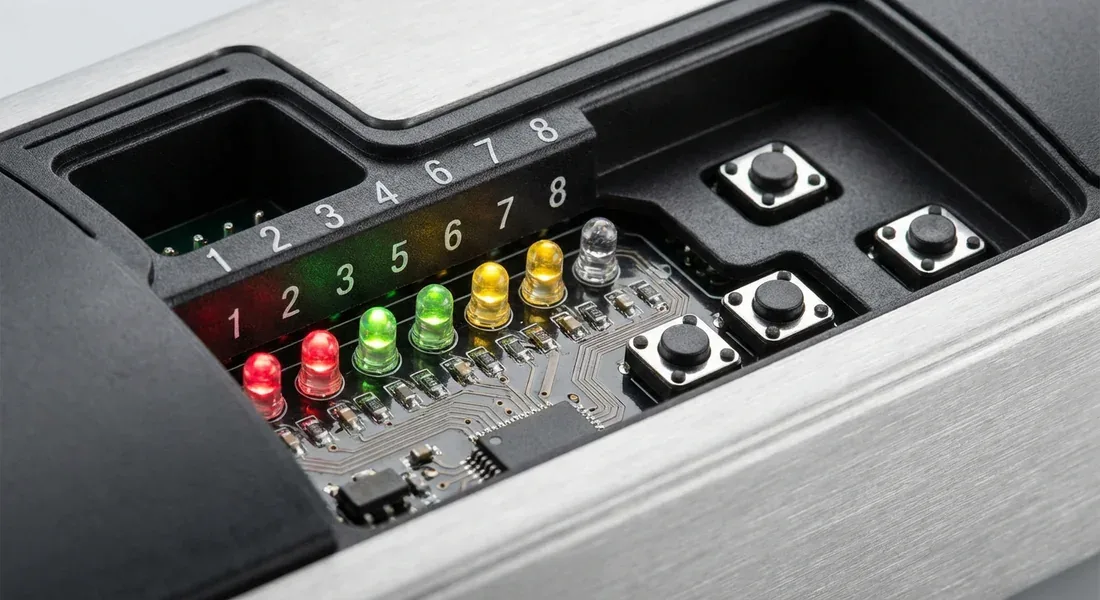
Image source: Bing (Web (fair-use with source credit))
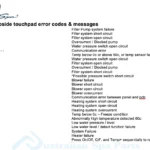
Every Marantec opener has a diagnostic LED on the control unit. When a fault trips, the light blinks in a pattern, pauses, and repeats. Count the blinks to identify the circuit at fault.
On most North American residential models, the patterns break down like this:
- 1 flash: Travel limit sensor or encoder failure.
- 2 flashes: Safety sensors blocked, misaligned, or disconnected.
- 3 flashes: RPM sensor reads no motor rotation.
- 4 flashes: Radio receiver or remote link issue.
- 5 flashes: Force limit exceeded, often from a binding door.
- 6 flashes: Battery backup fault on units with that feature.
Confirm your exact code chart in your owner's manual. Older Series 300 and Series 400 units differ slightly. As of 2026, the diagnostic LED patterns are printed on the control board label on most models.
That tiny legend saves you from guessing.
Once you read the code, you have narrowed the issue to one circuit. That is where the decision guide below takes over.
Marantec Troubleshooting Decision Guide
Start with the power check. It eliminates half of all Marantec service calls before they begin.
If the opener is completely dead
Confirm the unit is plugged into a working outlet. Test the outlet with a lamp. If the lamp lights, reset the breaker.
If the opener still shows no power, you are dealing with a failed transformer or logic board.
If the motor hums but the door stays put
Pull the manual release cord to disengage the carriage. Move the door by hand. If it glides smoothly, the drive gear or belt is the problem.
If it is heavy or catches, fix the door hardware first.
If the door reverses after closing
Clean both safety sensor lenses. The indicator LED on each sensor should stay solid when properly aligned. If both LEDs are solid and the door still reverses, move on to travel limit adjustment.
If the remote misses or fails entirely
Replace the battery first. Then press the learn button on the opener and reprogram the remote. A remote that works only near the opener almost always has a weak battery, not a broken receiver.
If the wall control works but the remote does not
The receiver is healthy. Reprogram all remotes to resync the rolling code. If only one remote fails, replace that remote's battery.
Common Mistakes DIYers Make
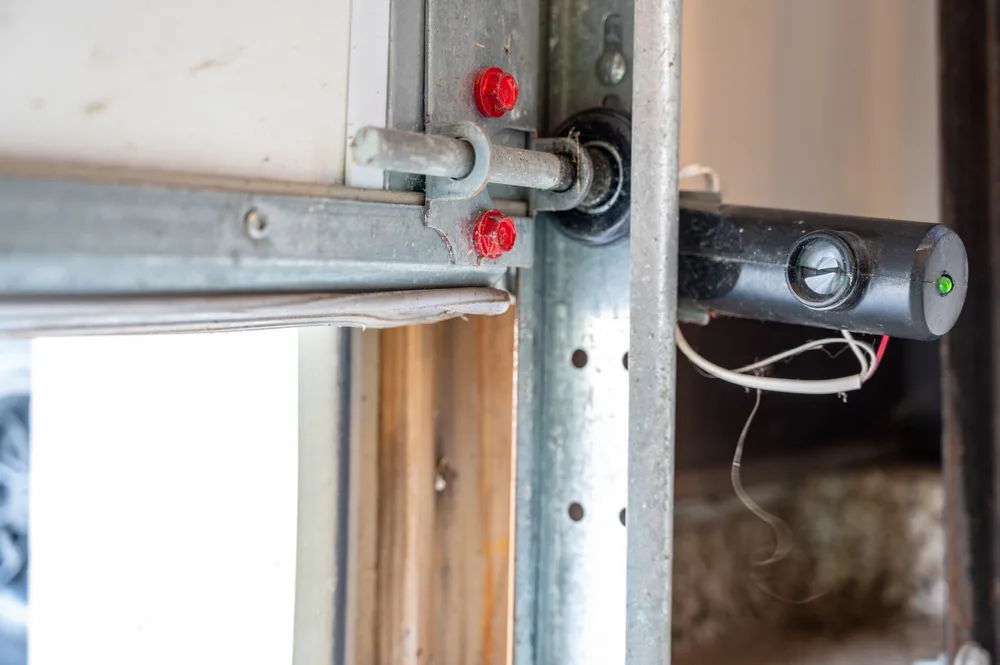
Image source: Bing (Web (fair-use with source credit))
Most garage door repair visits start with homeowners who swapped the wrong part first. Avoid these common traps.
Pressing the learn button in the wrong order
The learn button is not just a reset switch. Holding it for different lengths clears memory, enters programming mode, or pairs a new remote. The timing depends on your model year, so read the manual first.
Bypassing the safety sensors
This is both unsafe and non-compliant with UL 325. The safety reverse system protects kids, pets, and cars from a closing door. Disabling it turns a minor annoyance into a major liability.
Overcorrecting the travel limits
Tiny turns make big differences. If the door slams or stops short, the limit screws were probably adjusted in full rotations at once. Use quarter-turns.
Test between each.
Trimming or splicing the wires
Marantec wiring is color-coded to match the logic board and transformer. Random splices create voltage drops, flaky signals, and short circuits. Use factory-length terminal wires.
Never cut corners.
Leaving the carriage disengaged after testing
If you pulled the manual release to test the door, re-engage it before restoring power. Running the opener with the carriage disengaged can slam the carriage into the rail. It can damage the drive system.
Know Your Limits: When Safety Means Calling a Pro
Some repairs are genuinely dangerous. Know where your skill level ends.
Garage door torsion springs are the real threat
Torsion springs hold enough stored energy to kill or maim. Adjusting or replacing them requires winding bars, training, and experience. If a spring is stretched, broken, or uneven, stop and call a licensed overhead door technician.
Motor and logic board swaps are internal work
When the diagnostic code says the logic board is dead, the smart move is often replacing the whole opener. If you do attempt a board swap, be ready for soldering and schematic reading. Most homeowners are better off hiring a pro.
Live 120V wiring in a garage ceiling is unforgiving
Marantec openers need stable grounding and clean power. A bad splice can destroy the receiver board instantly. If you are not fully comfortable with wiring, that labor cost is worth it.
When to pick up the phone
- Door is visibly off its tracks.
- Springs show damage or gaps.
- You hear grinding or scraping from the drive.
- The error code returns after every reset.
- You have done the full decision guide above with no change.
Most Marantec service visits land between $100 and $200. Compared to an emergency room visit from a spring failure, that is a bargain.
Simple Maintenance to Keep Your Marantec Running
A well-maintained Marantec opener runs quieter and lasts longer. Monthly attention takes ten minutes. The payoff is fewer surprise failures and a safer door.
Run the monthly safety reverse test
With the door fully open, place a block of wood or a rolled towel on the floor where the door lands. Press close on the remote or wall control. The door should stop and reverse the moment it hits the obstruction.
If it touches and keeps going, unplug the unit immediately. Per CPSC guidance, run this test every month without fail.
Clean and align the sensors
Dust and spider webs cause most intermittent Marantec failures. Wipe both sensor lenses with a dry microfiber cloth. Make sure each bracket is tight and the sensors face each other squarely.
The indicator light on each sensor should glow steadily. It should not blink or flicker.
Lubricate the right parts
Use a dry Teflon or silicone spray on the rail, rollers, and hinges. Skip grease. Grease collects dust and hardens over time.
Never lubricate the drive belt or the sensor lenses. A light coat twice a year keeps everything moving smoothly.
Check the door balance
Pull the manual release cord to disengage the opener. Lift the door manually to roughly halfway. It should stay put without drifting up or down.
If it falls, the springs are out of tune. That is a job for a professional, not a DIY afternoon.
Swap remote batteries on schedule
Do not wait for range issues. Replace remote batteries every 12 to 18 months. Most Marantec remotes use a CR2032 or CR2450 coin cell.
Weak batteries cause intermittent behavior that looks like a receiver failure.
Reset the travel limits seasonally
Wood doors swell in humid months and shrink in dry ones. If your door starts reversing or slamming as the season shifts, a quarter-turn on the limit adjustments usually fixes it. Only adjust limits on a door that moves smoothly by hand first.
Frequently Asked Questions
How do I reset my Marantec garage door opener?
Unplug the opener for 60 seconds. Then plug it back in. Press the learn button twice to clear the memory.
Reprogram all remotes and keypads afterwards. This resets the rolling code and clears most temporary lockout faults.
Why does my Marantec garage door opener blink 5 times?
Five flashes mean the force limit was exceeded. The opener detected too much resistance while moving the door. Clear any obstruction.
Test the door manually. If the force setting was overcorrected, consult your owner's manual to adjust it back.
How do I reprogram a Marantec remote?
Press the learn button on the opener until its LED lights up. Within 30 seconds, press the button on your remote twice. The opener light will blink or click to confirm.
Repeat for each remote you need to program.
Why won't my Marantec garage door close with the remote?
Check the safety sensors first. A blinking or off sensor LED means the opener thinks something is in the door's path. Clean the lenses and realign the brackets.
If the sensors are fine, the travel limits or force settings may need a small adjustment.
Where is the learn button on a Marantec garage door opener?
On most Marantec models, the learn button sits on the back of the motor unit near the antenna wire. It is typically a small round or rectangular button. Newer models sometimes label it "SET." Press it briefly to enter programming mode.
Does a Marantec garage door opener have a manual release?
Yes. Every residential Marantec unit includes a red emergency release cord hanging from the carriage. Pulling it disengages the carriage so you can operate the door by hand.
Only pull it while the door is fully closed to avoid a sudden drop.

Similar Posts