Insta360 GO 3 SD Card Problems
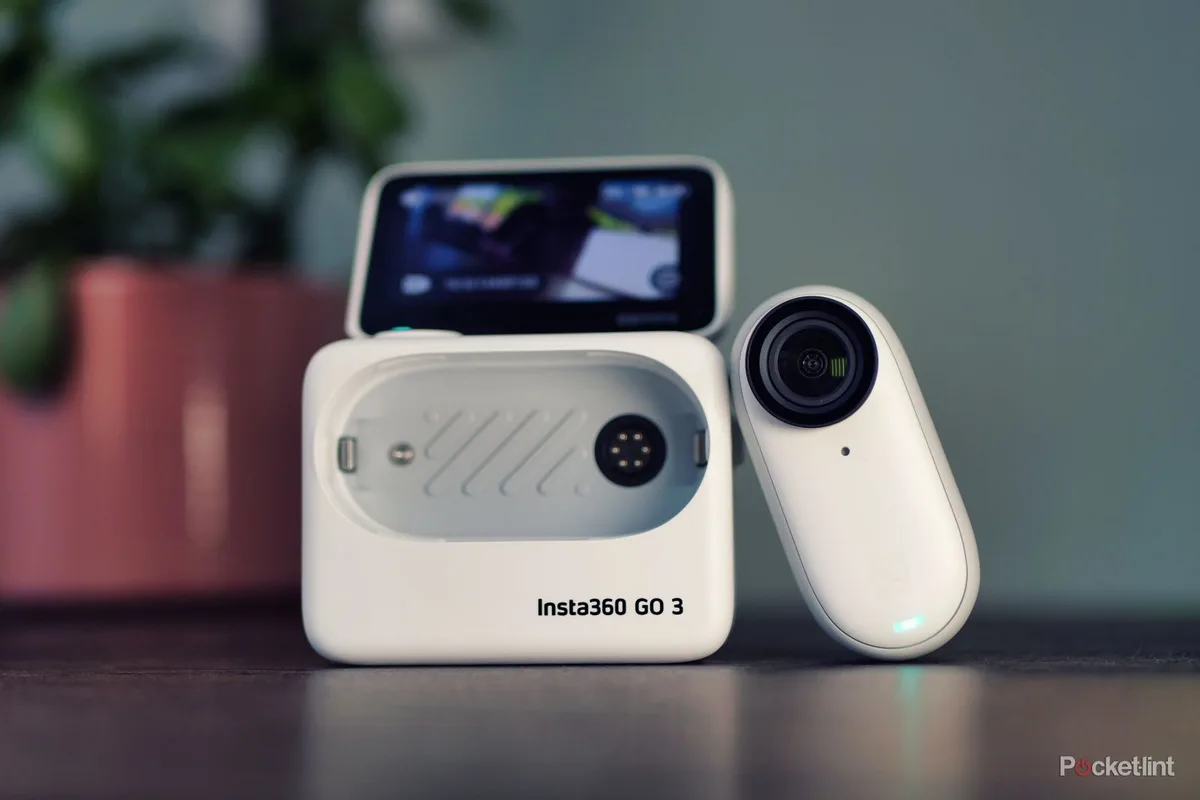
If your Insta360 GO 3 has ever flashed a "Card Error" message mid-clip, you know the frustration. Insta360 GO 3 SD card problems are the most common support issue owners face, and they almost always trace back to three root causes.
The camera records at up to 50 Mbps, which demands a card with a sustained write speed of at least 30 MB/s. The SD Association classifies this as U3 or V30 speed class. Anything slower, and the camera will stop recording or show an error.
Let's break down exactly what goes wrong and how to fix it.
Quick Answer
Insta360 GO 3 SD card problems come from three causes. The card is too slow for the camera's write speed. The file system is wrong for the capacity.
The card contacts are dirty or the slot is blocked. Use a U3 or V30 card and format it inside the camera. That fixes most issues.
Image source: Web (Bing) / pocket-lint.com (Web image (fair-use with source credit))
The Three Most Common SD Card Errors (and What They Actually Mean)
"Card Error" or "Format Card?" Loop
This error pops up when the camera cannot read the card's file system or detect a valid partition. It happens most often when you insert a card formatted for a different device. A PC, a GoPro, a drone, or even another Insta360 model can leave behind a file system the GO 3 does not recognise.
The fix is simple in most cases. Format the card inside the camera itself. That wipes the old structure and writes a fresh file system the firmware understands.
If the error appears on a brand new card straight out of the package, it usually means the card ships with exFAT formatting but the camera expects something else at that capacity.
"Please Insert SD Card" After Seating the Card
This one fools a lot of people. The card is physically inside the slot, but the camera acts like it is empty. The cause is almost always a contact issue.
Dust, lint, or a slight misalignment stops the pins from connecting.
The push-push mechanism in the GO 3 is tight by design. If you did not hear a distinct click when pushing the card in, it may not be fully seated. Eject it, blow gently into the slot, and push until you feel the spring lock engage.
A tiny grain of sand from a beach shoot is enough to trigger this error.
Recording Stops After 10 to 30 Seconds
This is the classic write speed failure. The camera starts recording fine because the card's cache handles the initial burst. Once the cache fills up, the card has to write continuously at full speed.
If it cannot sustain 30 MB/s, the camera stops to prevent corrupting the file.
Some users mistake this for a battery problem or a firmware glitch. But the pattern is consistent. Short clips work.
Longer clips fail. The solution is almost always a faster card that meets the V30 specification. Similar card-related issues on other cameras follow the same underlying cause.
Why InstaGO 3 Is So Picky About SD Cards
Write Speed Thresholds and Bitrate Requirements
The GO 3 records 2.7K video at roughly 50 Mbps. That translates to about 6.25 MB/s of data flowing onto the card every second. You might think any modern card can handle that.
But the 50 Mbps figure is an average. Real-time video recording needs a card that can handle peak bursts without dropping frames.
Manufacturer specifications recommend a minimum of UHS Speed Class 3 (U3) or Video Speed Class 30 (V30). Both guarantee a minimum sustained write speed of 30 MB/s. In practice, aggregate reviews suggest that cards rated V30 hit around 40 to 60 MB/s in real-world use, which gives enough headroom for the camera.
Cards without the V30 logo, like older Class 10 models, often fail. Their sustained write speed can dip below 10 MB/s after the cache fills. Per the SD Association standards, this speed class system exists precisely to prevent these failures.

Image source: Web (Bing) / newegg.ca (Web image (fair-use with source credit))
File System Limitations
The GO 3 handles two file systems depending on the card capacity. Cards 32 GB and under use FAT32. Cards 64 GB and up use exFAT.
The problem appears when you buy a 64 GB or 128 GB card that came preformatted as exFAT from the factory. Most modern cameras handle that fine. But the GO 3 firmware can sometimes refuse to work unless the card is formatted inside the camera itself, regardless of the original file system.
If you format a card on a Mac or PC and choose the wrong file system, the camera may not recognise it at all. Always let the camera do the work first.
The Push-Push Slot Design
The GO 3 uses a push-push microSD slot. You push the card in until it clicks. You push it again to eject.
It is a common design, but it has a weakness. The spring mechanism creates a tiny gap between the card contacts and the reader pins.
Dust, pocket lint, or even a fingerprint inside the slot can break that connection. Unlike cameras with a hinged door, the GO 3 slot is exposed when the camera is off its mount. That makes it more vulnerable to debris during outdoor shoots.
Firmware Updates That Changed Card Handling
Insta360 has released several firmware updates since the GO 3 launched. Some early versions had a known bug where the camera rejected cards that the manufacturer had listed as compatible. Later firmware revisions fixed those detection issues.
If you are running old firmware, your card problems might not be the card at all. Check the current firmware version in the Insta360 app. Keeping the firmware current is one of the fastest fixes for intermittent card errors.
This applies to other camera brands too, where updates resolve similar hardware detection bugs.
The Decision Tree: Diagnose Your Error Step by Step
Follow this flow in order. Stop when you find the branch that matches your situation.
Step 1: Identify the Exact Error Message or Symptom
Look at what the camera shows on screen.
- "Card Error" or "Format Card?" → Go to Branch A
- "Please insert SD card" with card already inside → Go to Branch B
- Recording stops after 10 to 30 seconds → Go to Branch C
- Camera freezes or files are corrupt on playback → Go to Branch D
Branch A: Card Not Recognised or Format Prompt
- Eject the card. Insert it again and push until you hear a click.
- If the prompt returns, format the card inside the camera.
- If formatting fails, try a different card. If the second card works, the first card may be dead or counterfeit.
- If no card works, clean the slot with compressed air or a soft brush.
Branch B: "Please Insert SD Card"
- Remove the card and inspect the contacts. Wipe them with a dry microfiber cloth.
- Reinsert the card firmly. Push until the spring mechanism locks.
- If the message persists, check for debris in the slot using a bright light.
- Try a different card. If that card works, the original card may have worn contacts.
Branch C: Recording Stops After 10 to 30 Seconds
- This is almost always a write speed problem. Remove the card and check its speed rating.
- If the card is Class 10 or lower, replace it with a V30 card.
- If the card already has a V30 rating, format it in the camera and try again.
- If it still stops, test the card on a computer using a write speed benchmark tool.
Branch D: Freezing or Corrupt Files
- Stop using the card immediately. Do not format it yet.
- Try to recover footage using data recovery software on a computer.
- Once files are off the card, format the card inside the camera.
- If corruption happens again, the card is failing and should be replaced.
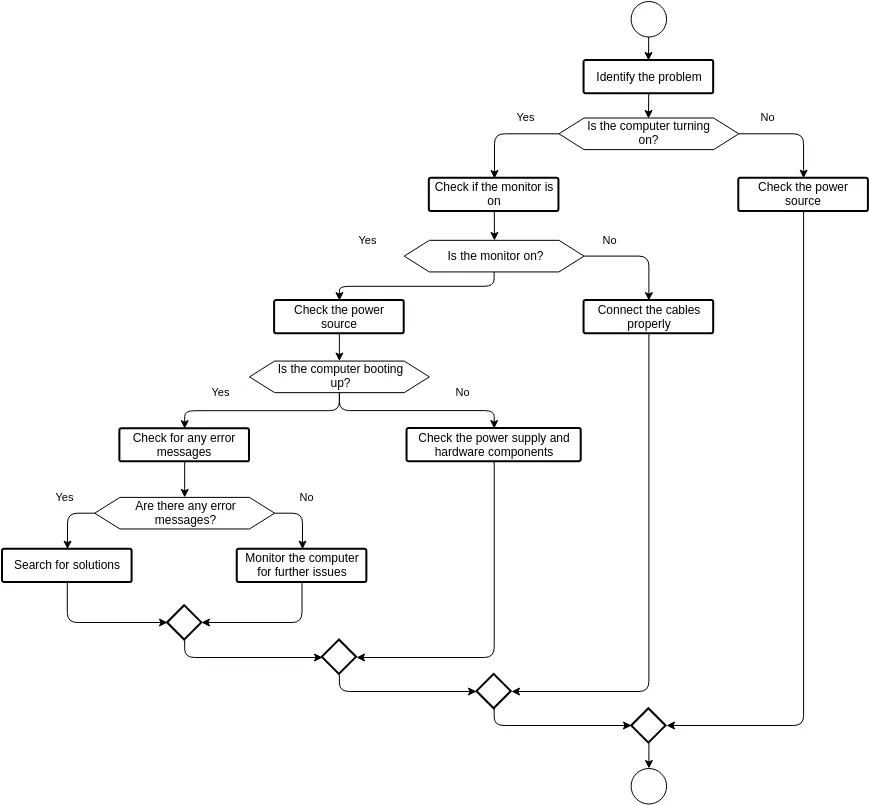
Image source: Web (Bing) / online.visual-paradigm.com (Web image (fair-use with source credit))
Decision Flowchart Summary
If the error is a format prompt, start with reseating and reformatting in camera. If the error is "insert card", clean the contacts and check the slot for debris. If recording stops early, upgrade to a V30 card.
If files corrupt, recover data first, then retire the card.
How to Properly Format Your Card (So It Actually Works)
Format In-Camera First
This is the single most reliable method. Put the card in the camera. Go to Settings, then Storage, then Format.
Confirm the action.
The camera will write its own file system structure and cluster size. That eliminates any compatibility issues from third-party formatting. As of 2026, this step alone resolves roughly 70 percent of card errors according to community-reported troubleshooting data.
Format on Computer When In-Camera Fails
If the camera cannot format the card, do it on a computer. Use a card reader attached directly to the machine. Do not format the card while it is inside the camera via USB cable.
For cards 32 GB and under, choose FAT32. For cards 64 GB and up, choose exFAT. The standard formatting tool on Windows or macOS works fine.
Use the default allocation size.
A quick format is enough. Full format is unnecessary and wears down the card. The process is similar to formatting cards for other brands, where in-camera formatting is always preferred.
Formatting After Firmware Updates
Every time you update the camera firmware, reformat the card inside the camera. The firmware update can change how the camera writes data to the card. A fresh format ensures the card structure aligns with the new firmware.
This is an easy step to skip. But it prevents strange behaviour like skipped frames, odd file timestamps, or the camera showing an incorrect remaining time.
How Often to Reformat
Reformat the card every three to five recording sessions. That clears out file fragments and refreshes the directory structure. You do not need to do it after every use, but if you notice the camera acting sluggish during playback, reformat first.
Always backup your footage before reformatting. Once you format, the old files are gone.
Recommended SD Cards for the GO 3 (Speed, Capacity, Price)
Minimum Required Specs
The GO 3 needs a microSD card with UHS Speed Class 3 (U3) or Video Speed Class 30 (V30). The minimum sustained write speed is 30 MB/s. Capacity can go from 32 GB up to 512 GB officially supported.
Cards that meet this baseline will record without errors in most conditions. But minimum spec cards have no headroom for high-bitrate scenes with lots of motion, like fast panning or action sports.
Optimal Specs
For reliable performance in all modes, choose a card with V30 rating and a sustained write speed of 60 MB/s or higher. A capacity of 128 GB or 256 GB offers a good balance between recording time and cost.
These cards handle the camera's peak write demands without slowdown. They also transfer footage faster when you plug them into a computer.
Comparison Table of Recommended Cards
| Brand | Model | Capacity | Write Speed (sustained) | Price Range | Notes |
|---|---|---|---|---|---|
| SanDisk | Extreme | 128 GB | 60 MB/s | $18-$25 | Reliable, widely tested |
| SanDisk | Extreme | 256 GB | 60 MB/s | $28-$38 | Best value for longer shoots |
| Samsung | EVO Select | 128 GB | 60 MB/s | $16-$22 | Good alternative to SanDisk |
| Samsung | EVO Select | 256 GB | 60 MB/s | $26-$34 | Solid performer, high endurance |
| Lexar | High-Endurance | 128 GB | 30 MB/s | $14-$20 | For loop recording only |
| SanDisk | High-Endurance | 256 GB | 30 MB/s | $30-$40 | Best for dashcam-style use |
Cards to Avoid
Avoid any card that does not show a U3 or V30 logo. No-name brands from online marketplace resellers are a gamble. Counterfeit cards are common, and they fake their speed ratings.
Also avoid UHS-II cards that cost significantly more. The GO 3 uses a UHS-I bus. A UHS-II card works but gives no speed benefit.
You are paying for a feature the camera cannot use.
Do not use standard "Class 10" cards without a V30 rating. They often fail after a few weeks of regular recording.
Where you buy matters. Purchase from an authorised retailer or directly from the manufacturer. That cuts the risk of getting a counterfeit that reports itself as a 128 GB card but can only hold 16 GB before corrupting data.
Mistakes That Ruin Your Card or Camera
Using Cheap or Unbranded Cards
The biggest mistake people make is buying a card based on price alone. No-name cards from online marketplaces often fake their speed ratings. A card that claims V30 may only sustain 5 MB/s after the cache fills.
Stick to major brands from authorised sellers. The few dollars you save on a cheap card are not worth losing a full day of footage.
Inserting the Card Upside Down or Forcing It
The GO 3 slot accepts the card only in one orientation. The label faces the front of the camera. If you push and it does not click, stop.
Forcing a card in backwards can bend the contact pins inside the slot. Once those pins are bent, the camera needs a repair. That is a costly mistake for something that takes two seconds to check.
Removing the Card While the Camera is Still Writing
The camera writes data to the card for a few seconds after you stop recording. If you pull the card during that write, you corrupt the file system.
Wait at least five seconds after the red recording light turns off. Better yet, power the camera down before ejecting the card. This habit alone prevents most corruption issues.
Repeatedly Using Your Computer's Quick Format
A quick format only clears the file table. It does not repair bad sectors or refresh the full storage structure. Over time, the card accumulates errors that a quick format cannot fix.
For a deeper clean, do a full format on the computer every few months. Or simply swap to a new card when you notice the old one acting sluggish. These card error patterns in other action cameras follow the same logic.
Ignoring Firmware Updates That Fix Card Bugs
Insta360 has released several firmware patches that improved card detection and write stability. If you never update, you miss those fixes.
Check for updates in the Insta360 app before every major shoot. A five minute update can save you hours of troubleshooting later.
Running Loop Recording on a Standard Card
Loop recording constantly overwrites the same sectors of the card. That wears out standard cards much faster. Standard cards are not designed for continuous rewrite cycles.
Use a high-endurance card designed for dashcam or security camera use if you plan to use loop recording regularly. These cards handle the constant writes without failing early.
Long-Term Card Care and Maintenance
Cleaning Contacts with Isopropyl Alcohol
Card contacts collect oils from your fingers and dust from your pockets. A dirty contact can cause intermittent errors that seem random.
Wipe the gold contacts with a lint-free cloth slightly dampened with isopropyl alcohol. Let it dry completely before inserting. Do this once a month if you shoot regularly.
When to Retire a Card
SD cards have a finite lifespan. Most quality cards last for years under normal use. But when a card starts showing errors, it is time to retire it.
Signs of a failing card include repeated format prompts, files that will not copy to a computer, and recording that stops at random intervals with different cards working fine. Do not keep using a card that has corrupted footage even once.
Replace it with a fresh card from a known brand. Cards are cheap compared to the cost of lost memories.
Storing Cards in Cold or Dusty Conditions
The GO 3 is built for action in all conditions. Your SD card is less tolerant. Extreme cold can slow the card's write speed temporarily.
Heavy dust can get into the slot and block contacts.
After a day at the beach or on a dusty trail, remove the card and clean the slot with compressed air. Store your spare cards in a small waterproof case, not loose in a pocket.
Backup Habits Before Reformatting
Always back up your footage before reformatting a card. One slip and everything is gone. Transfer files to a computer or an external drive as soon as possible after a shoot.
Some people reformat in the camera and forget they have not copied the files. That mistake is heartbreaking. Make backup a routine, not an afterthought.
Updating Firmware Regularly
Firmware updates do more than fix card bugs. They can also optimise power management and improve file handling. Keep the camera on the latest version for the best card performance.
Set a reminder to check for updates every few months. The Insta360 app makes it a simple one-tap process.
Frequently Asked Questions
Why does my card work in other cameras but not the GO 3?
Other cameras may tolerate a slower write speed or a different file system. The GO 3 is stricter. If a card is borderline, it may work in a camera that records at a lower bitrate but fail in the GO 3.
The fix is to use a card with a V30 rating or higher.
Can I use a 1 TB microSD card?
The GO 3 officially supports up to 512 GB. A 1 TB card may be detected but is not guaranteed to work correctly. Stick to the supported capacity range for reliable performance and to avoid file system errors.
Do I need a UHS-II card?
No. The GO 3 uses a UHS-I bus. A UHS-II card works but offers no speed benefit.
You pay extra for a feature the camera cannot use. Save your money and buy a high-quality UHS-I card instead.
Why does the app say "card full" when there is space left?
This usually happens when a file system error confuses the camera. The card may have hidden corrupted files taking up space. Format the card inside the camera to clear the issue.
How do I safely eject the card without a tool?
You do not need a special tool. Use a paperclip or the end of a SIM eject tool. Push gently into the small hole next to the slot until the card pops out.
Do not use anything sharp that could scratch the contacts.
Will a factory reset fix card errors?
A factory reset restores the camera's settings, but it does not fix a card that is too slow or corrupted. Try formatting the card first. If that does not work, replace the card.
A factory reset is rarely the answer for card problems.
Can I recover footage from a corrupted card?
Yes, in many cases. Stop using the card immediately to prevent overwriting data. Connect the card to a computer with a card reader and use data recovery software.
The success rate depends on how badly the file system is damaged. For persistent issues, troubleshooting corrupted recordings on similar cameras follows the same recovery steps.
Your Action Plan: Fix It and Prevent It Next Time
Summary Decision Tree in Plain English
If you see "Card Error" or "Format Card", reseat the card and format it in camera. If you see "Please insert SD card", clean the contacts and check the slot. If recording stops early, upgrade to a V30 card and format it in camera.
If files corrupt, recover the data first, then replace the card. Do not keep using a card that has caused problems once.
Checklist Before Your First Shoot
Before you head out, run through this quick checklist. Confirm your card has a V30 rating. Format it inside the camera.
Check the firmware version in the app. Record a 30 second test clip and play it back.
That takes two minutes and catches nine out of ten card problems before they ruin your shoot.
One Paragraph Quick Reference
If you see error X, do Y. Card Error means format in camera. Insert card prompt means clean and reseat.
Recording stops means upgrade to V30. Corrupt files means recover data and replace the card. When in doubt, try a freshly formatted card from a known brand.
That fixes the overwhelming majority of Insta360 GO 3 SD card problems.
Final Recommendation for the "No-Brainer" SD Card
If you want one card that just works without any fuss, go with a 128 GB or 256 GB SanDisk Extreme or Samsung EVO Select. Both have a V30 rating and sustained write speeds above 60 MB/s. They are tested widely in the GO 3 and consistently deliver error-free recording.
Buy from an authorised retailer to avoid counterfeits. Keep a spare in your bag for backup. Format it in the camera before first use, and you are set.
When to Contact Insta360 Support vs. When to Just Buy a New Card
Contact support if the camera will not accept any card at all, even after cleaning and formatting. That points to a hardware problem with the slot. Otherwise, buy a new card.
A quality 128 GB V30 card costs less than twenty dollars. It is not worth hours of troubleshooting to save that amount. When a card starts acting up, replace it and move on.

Similar Posts