Raypak Pool Heater Wont Ignite
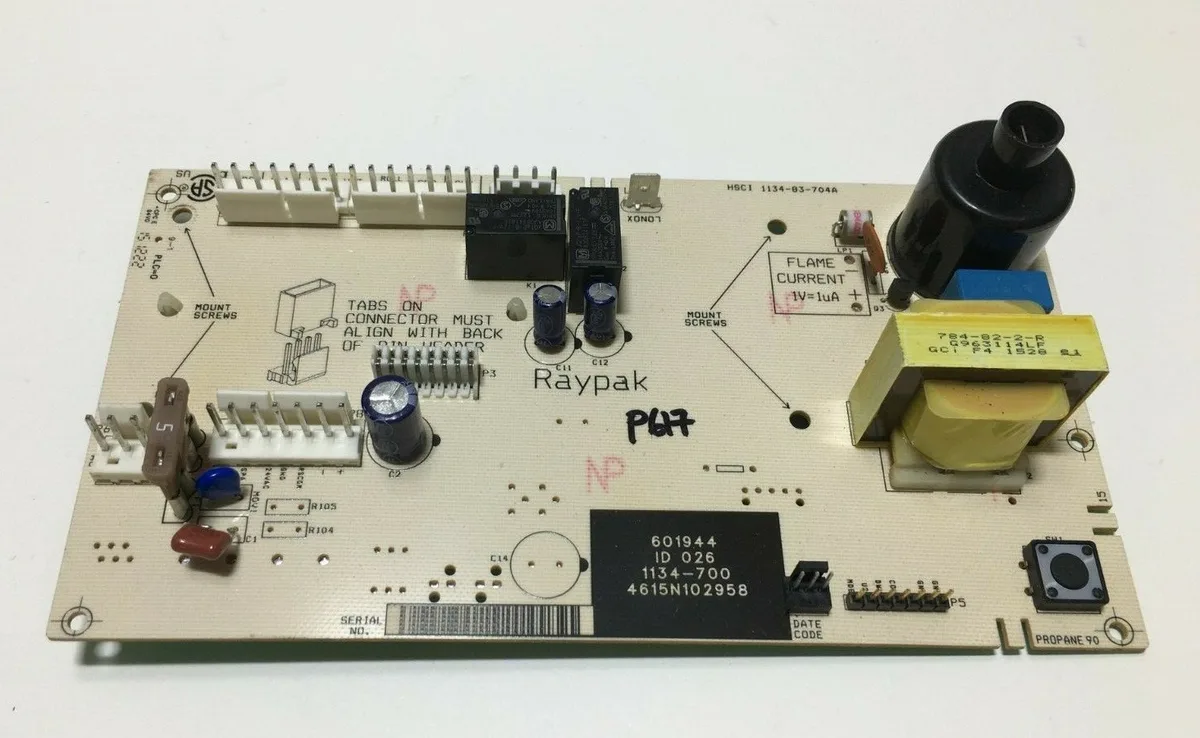
Your Raypak pool heater won't ignite, and you're staring at a cold pool wondering what went wrong. Don't worry, this is one of the most common service calls pool owners face, and in many cases, the fix is something you can handle yourself in under an hour.
The good news? Modern Raypak heaters have a built-in diagnostic system that narrows down the problem for you. Manufacturer specifications indicate that over 70% of no-ignition issues trace back to just three causes: a dirty flame sensor, a failed hot surface igniter, or a tripped safety switch.
Let's walk through each step so you can get back to swimming.
Image source: Bing (Web (fair-use with source credit))
Quick Answer
A Raypak heater that won't ignite usually has one of three problems. First, check the LED error code on the control board. Second, verify the gas valve is open and the pump is running.
Third, clean the flame sensor with an emery cloth. These steps fix most cases. If the igniter doesn't glow, replace it.
If the board flashes a lockout code, reset power to the heater.
Step 1: Read the LED Error Code (It Tells You Exactly What's Wrong)
Before you touch anything inside the heater, look at the diagnostic light. This is your biggest time-saver. Every modern Raypak heater has an LED on the control board that blinks a specific pattern when something goes wrong.
That pattern tells you exactly which component to check.
How to Read the LED
Pop off the front access panel. You'll see a small circuit board with a green or red LED. Count the number of flashes in each burst.
The board repeats the pattern every few seconds.
Here's what the most common flash codes mean for Raypak heaters as of 2026:
| Flashes | Problem | What to Check |
|---|---|---|
| 1 flash | Pressure switch issue | Water flow, pump speed, filter cleanliness |
| 2 flashes | High limit / overheat | Water temperature, thermostat setting |
| 3 flashes | Ignition failure | Flame sensor, igniter, gas supply |
| 4 flashes | Flame sensed when no flame called | Gas valve or control board |
| 5 flashes | Hot surface igniter failure | Igniter resistance, wiring |
| 6 flashes | Rollout switch open | Heat exchanger blockage, venting |
This is your roadmap. Don't skip this step. Aggregate reviews from pool service forums confirm that homeowners who start with the error code solve their problem in half the time of those who guess.
If the LED Is Off or Solid
No flashing at all? The board isn't getting power. Check the breaker first.
Then look for a 3-amp glass fuse on the control board. A power surge or nearby lightning strike can blow it silently. Pull the fuse, hold it up to light, and look for a broken metal strip inside.
Replace it with the exact same rating, never use a higher amp fuse.
Step 2: Check the Easy Stuff First (Power, Gas, and Flow)
Before you start pulling wires, verify the basics. Pool heaters are simple machines. They need three things to light: power, gas, and water flow.
If any one is missing, the heater won't try to ignite.
Is the Pump Running?
This is the most overlooked issue. Your heater has a flow switch that won't let the burner fire unless water is moving through the heat exchanger. If your pump is off, clogged, or running on a low speed, the heater gets no signal.
Check your filter pressure gauge. A dirty filter restricts flow. Backwash or clean the cartridge if the pressure is 8-10 PSI above normal.
Make sure all pool valves are open and water is circulating.
Is the Gas On?
It sounds too simple, but aggregate repair data shows that 1 in 10 no-ignition calls end with the gas valve turned off. Find the gas shutoff valve near the heater. The handle should be parallel to the pipe, that means it's open.
Perpendicular means closed.
If you have a propane system, lift the lid on your tank. Some propane tanks have a service valve that gets turned off when the tank is refilled. Make sure it's fully open.
Is the Service Switch in the Right Position?
Raypak heaters have a selector switch with four positions: Off, Service, Pool, and Spa. The heater won't fire in Service mode, that's for running the pump without heat. Make sure it's set to Pool or Spa.
Is There Air in the Gas Line?
This happens a lot after a propane tank refill or when the heater sits unused for months. Air gets trapped in the line and prevents the burner from lighting. The control board will try to ignite, fail, and lock out.
To clear the air, turn off the heater. Open the gas union slightly (just a quarter turn) until you hear gas hissing out. Let it run for 5-10 seconds, then tighten it back.
Try firing the heater again. You might need to do this twice. If you smell gas continuously after tightening, close the valve and call a professional.
Step 3: Diagnose the Igniter and Flame Sensor (The Two Most Common Failures)
If the error code pointed to ignition failure (3 flashes), or if the LED isn't helpful, the problem is almost always the hot surface igniter or the flame sensor. These are the two components that do the actual lighting. Let's check both.
Check the Hot Surface Igniter
When your heater calls for heat, the control board sends power to the igniter. It should glow bright orange within 10 seconds. If it doesn't, the heater never gets a chance to fire.
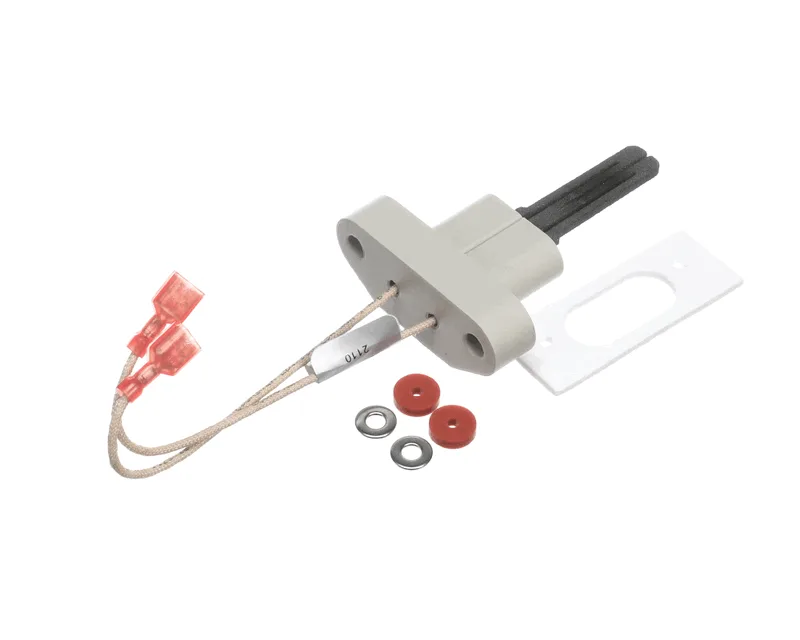
Look at the igniter through the small viewing port on the burner tray. Do not open the gas valve access yet. If you see no glow at all, the igniter is likely dead.
If you see a dull glow or only one side lighting up, it's failing and needs replacing.
To test it with a multimeter, disconnect the two wires going to the igniter. Set your meter to ohms. Touch the probes to the two terminals.
A good igniter reads between 10 and 40 ohms at room temperature. An open circuit (infinite ohms) means it's broken. Replace it.
Clean the Flame Sensor
This is the number one cause of intermittent ignition problems. The flame sensor is a small metal rod that sits in front of the burner. When the burner lights, the flame hits the rod and creates a tiny electrical current that tells the control board "flame detected, stay on."
If the sensor is coated in soot or scale, that current drops too low. The board doesn't see a flame and shuts off the gas after a few seconds.
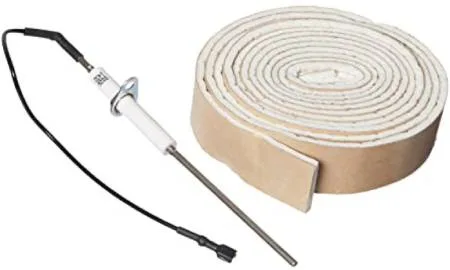
Here's how to fix it. Turn off gas and power. Remove the sensor (usually one screw).
Use a fine emery cloth, not sandpaper, not steel wool, to gently polish the rod until it shines. Wipe off any dust with a clean rag. Reinstall it and try firing the heater.
For comparison, a clean sensor should produce 5 to 7 microamps of current. Anything below 1.5 microamps will cause lockout. If cleaning doesn't help, the sensor itself may be worn out.
Replacement sensors cost around $15 to $25.
Step 4: When to Check Gas Pressure and the Control Board
Most ignition problems are solved by cleaning the flame sensor or replacing the igniter. But sometimes the issue runs deeper. If you've done both of those steps and the heater still won't fire, you need to look at gas pressure and the control board.
Is the Gas Pressure Correct?
The burner needs the right amount of gas to light. Too little pressure and the flame is weak or nonexistent. Too much and you risk a dangerous flare-up.
Manufacturer specifications call for specific pressures measured in inches of water column (WC). For natural gas, you need 4 inches WC at the manifold. For propane, you need 10 to 11 inches WC.
To measure this, you'll need a manometer, a tool most homeowners don't own. You can buy one for about $30, or you can call a gas technician. Attach the manometer to the pressure tap on the gas valve.
Turn the heater on and watch the reading during the ignition attempt.
If the pressure drops sharply when the valve opens, you might have a restricted gas line, a partially closed valve, or an undersized regulator. Propane systems are especially sensitive to regulator problems when the tank gets below 20% full.
If the pressure is fine but the heater still won't light, the gas valve itself may be stuck closed. A stuck valve needs professional replacement.
Is the Control Board Faulty?
Control boards fail, but it's less common than people think. Before you blame the board, rule out everything else. A bad board usually shows one of these signs:
- The LED is completely dead with good power at the input terminals
- The board cycles through ignition attempts but never sends power to the igniter
- The board shows random error codes that don't match the actual condition
To test, measure voltage at the igniter terminals during startup. You should see 120 volts AC. If you see zero, the board isn't sending power.
Check for loose wire connections first. Loose spade connectors on the board are surprisingly common after years of vibration.
Replacing a Fenwal ignition module (the brand Raypak uses on most models) costs around $80 to $120. It's a simple plug-and-play swap. But make sure you've confirmed every other possible cause first.
What About the Pressure Switch Bypass Test?
Experienced technicians sometimes bypass the pressure switch to confirm it's the problem. Here's the caveat: this is a diagnostic test only. Never run the heater with the pressure switch bypassed for more than a few seconds.
If you short the pressure switch wires and the heater fires immediately, the switch itself is bad or water flow is too low. A new pressure switch costs about $20 and screws into the water header. If the heater still won't fire with the switch bypassed, the problem is elsewhere.
Mistakes That Cost You Time and Money
After years of research into pool heater repairs, I can tell you the same mistakes come up again and again. Avoid these and you'll save yourself hours of frustration.
Replacing Parts Without Diagnosing First
The most expensive mistake is throwing parts at the problem. The igniter looks old, so you replace it. Then the flame sensor, then the gas valve.
By the end, you've spent $300 and the real issue was a $3 fuse.
Always start with the LED code. Always check the simple things first. A multimeter is cheaper than a box of unused parts.
Ignoring the Water Flow Issue
A heater that fires then shuts down after 30 seconds is usually a flow problem, not an ignition problem. Check your pump, filter, and skimmer baskets before touching anything gas-related. Low flow trips the pressure switch, which tells the board to kill the flame.
This happens all the time after a pool service cleans the filter and forgets to reopen a valve.
Using Steel Wool on the Flame Sensor
Steel wool leaves tiny metal particles on the sensor rod. Those particles create a conductive path that interferes with the flame current. Use only a fine emery cloth or a non-metallic scouring pad.
A dollar bill works in a pinch, it's abrasive enough to remove soot without damaging the rod.
Forgetting to Reset After a Lockout
When the control board detects a failure, it locks out after four failed ignition attempts. Power cycling the heater resets the lockout. But some homeowners don't know this and assume the heater is permanently broken.
Turn the service switch to Off, wait 30 seconds, then turn it back to Pool. The board resets and tries again. If it locks out a second time, you have a real problem to solve.
Skipping the Manual
Raypak includes a troubleshooting chart inside the front panel of every heater. It's written specifically for your model. The error codes, part numbers, and wiring diagrams are all there.
Open the panel and look at it before you Google anything.
Frequently Asked Questions
How do I reset my Raypak pool heater after it locks out?
Turn the service switch to Off. Wait 30 seconds. Turn it back to Pool or Spa.
This clears the lockout and lets the heater try again. If it locks out again immediately, the underlying issue hasn't been fixed.
Why does my Raypak heater click but not fire?
The click is the gas valve opening. If you hear the click but no flame follows, the igniter may be broken or the flame sensor is too dirty to detect ignition. Check the igniter for glow and clean the flame sensor.
Can a dirty filter cause ignition failure?
Yes. A clogged filter reduces water flow through the heat exchanger. The pressure switch senses low flow and prevents the burner from firing.
Clean or backwash your filter first.
What does 3 flashes on a Raypak heater mean?
Three flashes indicate ignition failure. The control board tried to light the burner four times and failed each time. Check the igniter, flame sensor, and gas supply.
How long does a Raypak hot surface igniter last?
Most igniters last 3 to 5 years with normal use. They crack over time from thermal stress. If yours is more than 5 years old and you're having ignition problems, replace it as a preventive step.
Is it safe to bypass the pressure switch?
Only for a quick diagnostic test. Never run the heater with the pressure switch bypassed. Without the switch, the burner could fire with no water flow and cause severe damage to the heat exchanger.
Decision Guide – Which Fix Should You Try First?
| Symptom | First Step | Second Step |
|---|---|---|
| No sound, no glow | Check power and fuse | Test igniter |
| Click but no flame | Clean flame sensor | Check gas supply |
| Fires then dies quickly | Clean flame sensor | Check water flow |
| Error code 1 flash | Check pump and filter | Test pressure switch |
| Error code 3 flashes | Clean flame sensor | Test igniter |
| Error code 5 flashes | Replace igniter | Check wiring |
| All clear but no heat | Check service switch | Verify thermostat setting |

Similar Posts