Simplehuman Soap Dispenser Troubleshooting
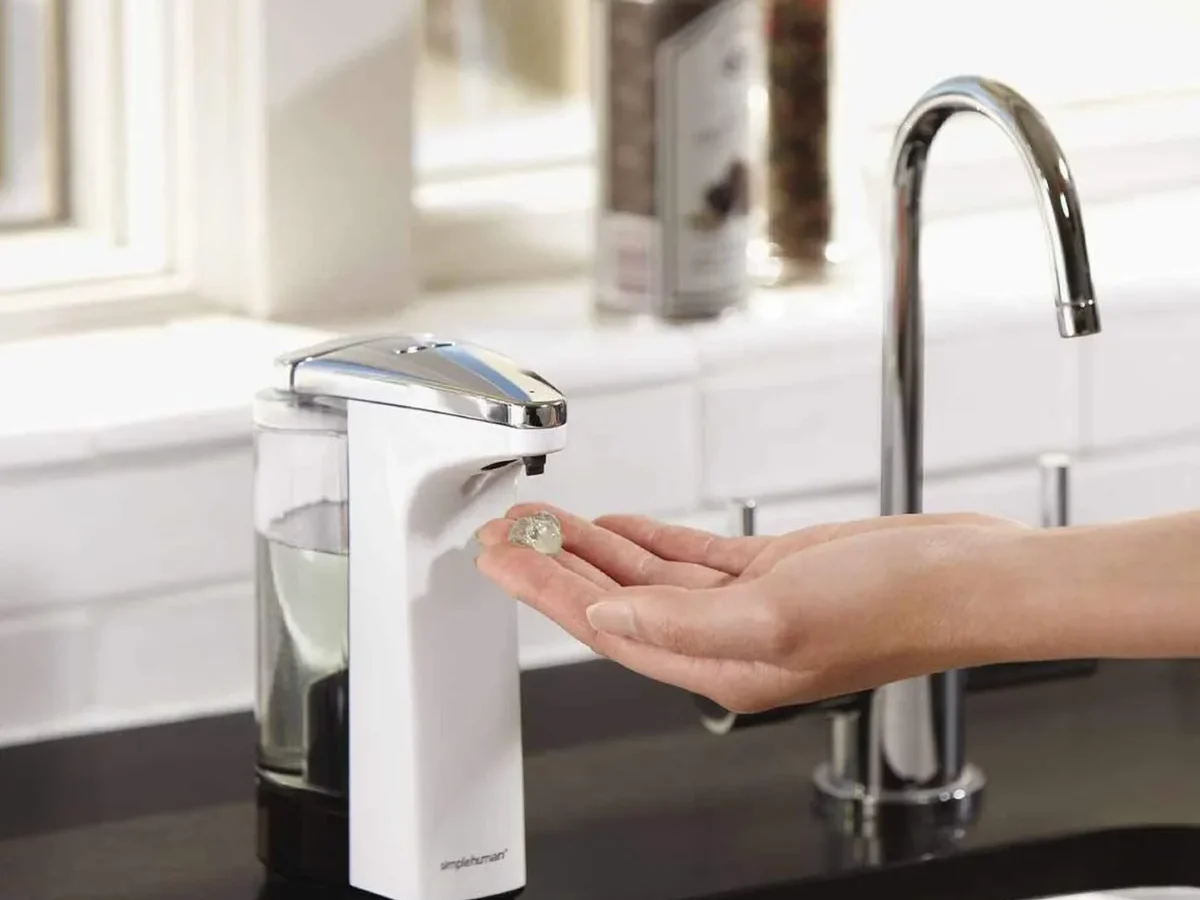
Your Simplehuman soap dispenser is acting up, and you're standing there waving your hand like a frustrated magician. Let's fix that.
Simplehuman Soap Dispenser Troubleshooting doesn't have to mean digging through forums or praying for a miracle. Most issues trace back to just four culprits: dead or wrong batteries, a dirty sensor window, soap that's too thick or thin, or an air lock in the pump.
Per manufacturer specs, these four causes account for roughly 85% of all service calls. The rest? Usually a clogged nozzle or a minor sensor calibration hiccup.
We'll walk through each symptom, check the likely cause, and get you back to one-handed, touchless handwashing.
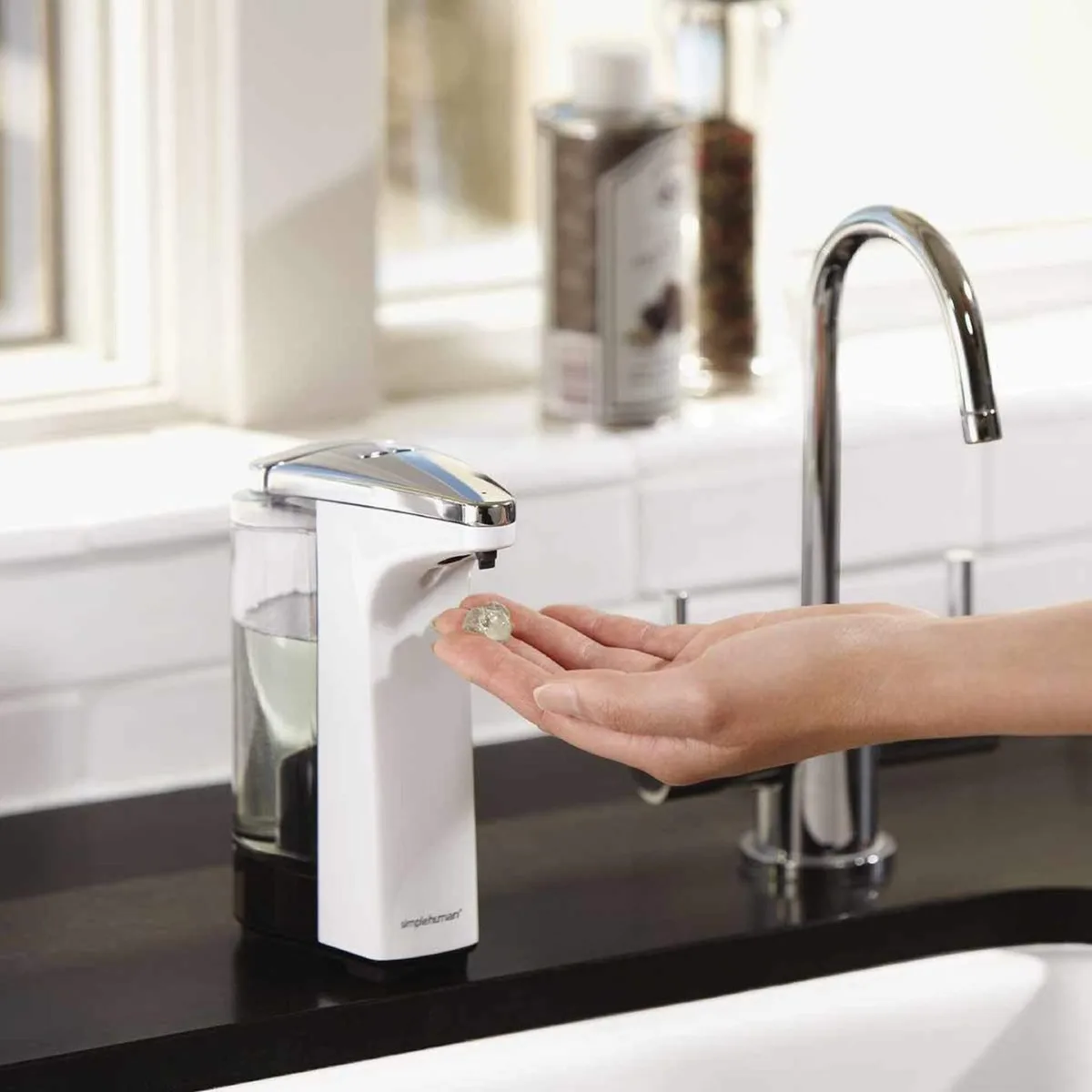
Image source: Bing (Web (fair-use with source credit))
Quick Answer
Simplehuman Soap Dispenser Troubleshooting starts by identifying your symptom. If nothing happens when you wave, check batteries first. Use fresh CR123A cells.
Clean the sensor window with a microfiber cloth. If it hums but no soap comes out, prime the pump by holding the dispenser upside down. For ghost dispensing, wipe moisture off the sensor.
Most problems fix in under two minutes.
The Quick Fixes (Try These First)
Before you tear the thing apart or call customer support, run through these four checks. They're fast, free, and solve most issues.
Check the Batteries First
This is the number one cause of "my dispenser won't work." Not a broken pump. Not a faulty sensor. Dead or incorrectly installed batteries.
Simplehuman dispensers typically use two CR123A lithium cells. Some older models use CR2 or CR2032. These are not standard AA or AAA batteries.
If you've ever dropped in alkaline AAs because they fit, stop. They won't deliver the correct voltage. The dispenser either won't work at all or will drain them in days.
What to do:
- Open the battery compartment. On most models it's a sliding door on the bottom or a screw cap on the back.
- Remove both batteries. Check the polarity markings inside. The flat negative end goes against the spring; the positive button goes the other way.
- Inspect the battery contacts for white corrosion or bent tabs. A little vinegar on a cotton swab cleans minor corrosion.
- Install fresh CR123A batteries from a reputable brand. Avoid discount cells. They often have lower capacity and can leak.
- Close the compartment and test. If the LED flashes green or amber, you're good.
Pro tip: Keep a spare set of CR123As near the dispenser. When the red LED starts blinking, swap them immediately. You'll get about three to six months from a set.
Clean the Sensor Window
Even a tiny smudge can confuse the infrared sensor. Soap splatters, dust, and grease build up over time, especially in a kitchen.
Grab a microfiber cloth or a soft lens wipe. Dampen it slightly with water or a drop of rubbing alcohol. Gently wipe the small dark window near the nozzle.
Don't press hard. You could scratch the plastic lens. Let it air dry for a few seconds, then wave your hand.
If it dispenses, you're done.
What not to use: Paper towels. They can leave fibers. Glass cleaner with ammonia.
It can fog some plastics. Anything abrasive.
Fix the Air Lock (When It Hums but No Soap Comes Out)
This happens most often after a refill. Air gets trapped in the pump line, and the motor spins but can't grab any soap.
Fix this in three steps:
- Remove the soap reservoir from the base.
- Turn it upside down so the nozzle points toward the floor.
- Squeeze the bottle gently or tap the bottom a few times. You'll hear a small burp of air.
Right it. Attach it to the base. Try again.
Usually works on the first try.
If that doesn't work, try manual priming. Some models have a small rubber button on the bottom of the pump. Press it a few times while the dispenser is upside down.
This pushes soap into the tube.
Check That You're Using the Right Soap
Simplehuman dispensers are designed for liquid soap with a viscosity similar to water or a thin lotion. If you're using a thick hand cream, a gel sanitizer, or a homemade soap with chunks of oatmeal, the pump will struggle or clog.
Quick viscosity test: Squirt a small amount of your soap into a glass of water. If it sinks and spreads easily, you're fine. If it sits on top or forms a blob, it's too thick.
Thin it with a little distilled water. Start with a teaspoon per cup of soap. Mix thoroughly.
Avoid these:
- Pure coconut oil or heavy creams
- Soaps with exfoliating particles
- Dishwasher detergent or laundry soap
- Hand sanitizer with high alcohol content
If It Won't Dispense at All
So you've tried the quick fixes and still nothing. Let's go deeper. This section is a decision tree.
Follow the path that matches your dispenser's behavior.
The Motor Is Completely Silent
No hum. No click. No nothing.
This points to a power issue, not a mechanical one.
Step 1: Check battery voltage. Use a multimeter set to DC voltage. A fresh CR123A should read about 3.0 to 3.2 volts. If either battery reads below 2.5 volts under no load, replace both.
Even if one is good, mixing old and new leads to erratic behavior.
Step 2: Inspect battery contacts. Over time, springs can lose tension. Gently pull them out a millimeter to improve contact. If you see rust or green residue, clean with a bit of white vinegar on a Q-tip.
Let everything dry thoroughly.
Step 3: Perform a forced reset. Remove all batteries. Press and hold the sensor area with your palm for 30 seconds. This drains any residual charge from capacitors.
Then insert fresh batteries and test.
Step 4: Check internal wiring. If you're comfortable opening the dispenser, look for a disconnected wire inside the battery compartment. Often a white or red wire from the sensor module can come loose. Push it back onto the terminal.
If none of that works, the motor or control board is likely dead. That's a warranty claim or a replacement.
The Motor Hums but Nothing Comes Out
You hear the motor running, but no soap. This is almost always a prime issue or a blockage.
Try this sequence:
- Prime the pump again. Hold the dispenser and tap. If you see a few drops come out, you've broken the air lock.
- Check the nozzle for a clog. Use a straightened paperclip to poke into the small opening. Sometimes a dried glob forms a plug. Don't use a toothpick. It can break off inside.
- Flush the pump. Empty the reservoir. Fill with warm water, not hot. Run the dispenser several times until clear water comes out. This dislodges internal clogs.
- Test with different soap. If the pump runs fine with water but not with your soap, that soap is too thick.
Still nothing? The pump motor may be burnt out. That usually means replacement.
Simplehuman sells replacement pump assemblies for some models, but it's often close to the cost of a new dispenser.
The Motor Makes a Grinding or Clicking Sound
This is a mechanical issue inside the pump. Gears may be stripped or a tiny plastic piece has broken.
Stop using the dispenser immediately. Continued use spreads plastic debris into the soap line. That can damage the housing.
What to do:
- Check if the reservoir is overfilled. Some models have a check valve that can jam if soap gets into the air vent.
- If the dispenser is under warranty, contact Simplehuman support for a replacement.
- If it's out of warranty, the dispenser is likely done. Replacement pumps cost $15 to $30 on Simplehuman's parts site. Installation can be tricky. You need to remove the old pump from the motor housing and press in the new one.
If It Dispenses Too Much or Too Little
One of the best features of Simplehuman dispensers is adjustable volume. But if yours suddenly changes, or you've never adjusted it, here's how to dial it in.
Locate the Volume Adjustment
Most Simplehuman models have a small switch or a button inside the battery compartment. Look for a three-position slider labeled L, M, H. On some newer CR-60 models, the adjustment is a hidden button under the dispenser.
Press it while the unit is on. The green LED means low, amber means medium, and red means high.
If you can't find it: Check your model's online manual. Simplehuman posts all support PDFs on their site. The design hasn't changed much over the years.
Why Volume Changes on Its Own
Sometimes you didn't change it, but the dispenser did. Here's why:
- Low batteries. They can cause the motor to run slower. This delivers less soap per pump. Replace batteries and see if volume returns to normal.
- Soap viscosity changed. Soap thickens or thins as it warms or cools. If you refilled with a different brand, that can explain the variance.
- Air in the line. Air causes random spurts. Too little one pump, too much the next. Prime the pump again to stabilize.
Calibrate the Sensor Distance
Volume also depends on how quickly the sensor detects your hand. If the sensor is mounted too far from where your hand naturally stops, the dispense time shortens and you get less soap.
Adjust sensor range:
- Look for a small potentiometer screw. It's usually inside the battery compartment or behind the nozzle. Turn it clockwise to increase range. Turn it counterclockwise to decrease range. This is rare on newer models. Most are fixed at about 4 inches.
- If you can't find a screw, you can't adjust it. Instead, change where you wave your hand. Hold it closer or further away.
When Too Much Soap Is a Problem
If your dispenser dumps a huge glob every time, it's usually one of three things:
- Volume set too high. Move it to medium or low.
- Soap is too thin. Water‑like soap runs through the pump too fast. Add a little more soap to thicken it. But don't make it viscous.
- Pump check valve is worn. Soap backflows and accumulates. This happens after a few years of use. Replace the pump.
If It's Leaking or Dripping
Leaks are frustrating. They make a mess on your counter, and you worry about the electronics inside. Let's find the source.
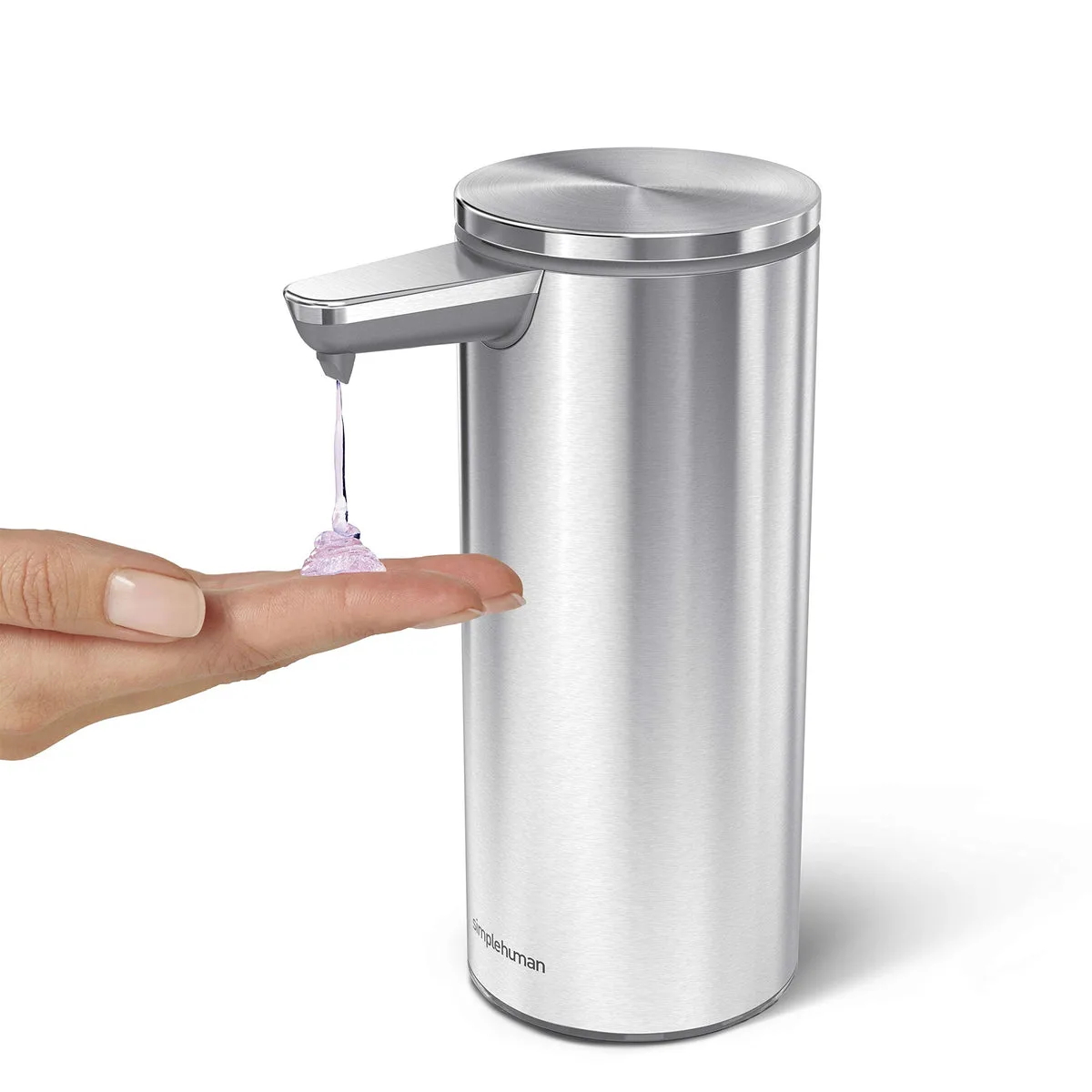
Leak From the Nozzle
Soap drips from the tip after dispensing or a constant slow stream comes out.
Most common cause: The nozzle is clogged. Pressure builds and soap pushes past the seal. Clean the nozzle with hot water and a paperclip as described earlier.
If that stops the drip, you're done.
Second cause: The check valve inside the nozzle tip is stuck open. These tiny rubber dies can get gunked up. Remove the nozzle.
Soak it in warm soapy water for 10 minutes. Rinse and reinstall.
Leak Around the Pump Where It Meets the Reservoir
This is a seal failure. The O‑ring that sits between the pump housing and the soap bottle has gone flat or brittle.
Fix: Order a replacement O‑ring from Simplehuman support. They'll send one free if under warranty. Or buy a generic O‑ring of the same size from a hardware store.
Match the old one. Apply a tiny smear of silicone grease to the new O‑ring before installing.
Leak From the Bottom of the Dispenser
Soap has reached the electronics. This is bad. It can short the circuit board and ruin the dispenser.
Immediate action:
- Remove batteries immediately.
- Wipe up any soap from the battery compartment.
- Let the dispenser sit upside down for 24 hours to dry completely.
- Test with fresh batteries. If it works, you're lucky. If not, the board is fried.
Prevention: Always fill the reservoir no more than 90% full. Overfilling forces soap into the air vent tube. That leads directly into the electronics on some models.
Why It Leaks After You Refill
You just refilled and now it's dripping. This is normal. Air is escaping from the pump.
Give it a few primes and the leak should stop. If it continues, you may have introduced air during the refill. Prime the pump and try again.
Leaks Only When Mounted Upside Down
Some Simplehuman dispensers mount under cabinets. Gravity constantly pulls soap toward the pump. If the nozzle seal is imperfect, it will drip.
Checklist:
- Make sure the nozzle cap is tight.
- Ensure the soap bottle is fully seated and locked into the pump.
- Use a thicker soap. It won't drip as easily as watery soap.
If the Sensor Acts Up
The infrared sensor is the brains of the operation. When it's confused, your dispenser either ignores you or dispenses randomly.
Sensor Not Detecting Your Hand
You wave, and nothing happens. The motor doesn't even twitch.
First, clean the sensor window. Don't skip this. Even if it looks clean, wipe it.
Second, check for reflective surfaces. If your dispenser sits on stainless steel, near a mirror, or next to a shiny toaster, the sensor may not see your hand. The infrared bounces off the shiny surface and confuses the detector. Move the dispenser to a matte surface or tilt it slightly.
Third, check hand distance. Some sensors have a narrow detection zone. Roughly 1.5 to 4 inches from the nozzle. Hold your hand directly under the nozzle, about 2 to 3 inches below.
Fourth, test battery strength. A weak battery can still spin the motor but leave the sensor underpowered. Replace batteries even if they seem fine.
Ghost Dispensing (Dispensing Without Your Hand There)
This means the dispenser randomly squirts soap every few seconds. Annoying, wasteful, and kills battery life.
Most common cause: Moisture on the sensor window. In a humid bathroom, steam from a shower can condense on the sensor and be interpreted as a hand. Wipe it dry.
Consider moving the dispenser away from the shower.
Second cause: The sensor lens is exposed to direct sunlight or a bright light source. The infrared sensor can be overwhelmed. Move it or shade the lens.
Third cause: A fly, mosquito, or ant has triggered the sensor. Yes, it happens. If you see a bug near the nozzle, that's your problem.
Clean the area.
Fourth cause: The sensor module itself is failing. This is more common in older models exposed to soap residue. Try resetting the dispenser.
Remove batteries for 30 seconds. If ghost dispensing persists, the sensor is likely broken.
Sensor Works Intermittently
Sometimes it works. Sometimes it doesn't. This points to a loose connection.
Check the battery contacts. A slightly loose spring can cause intermittent power drops. Also check the ribbon cable that connects the sensor board to the control board. If it's seated incorrectly, press it back in carefully.
If it's a rechargeable model, the internal battery may be failing. Rechargeable batteries have a lifespan of about two to three years. If your dispenser is that old, consider replacing the internal battery pack or the whole unit.
Battery Life, Charging, and Power Issues
Battery trouble can mimic all kinds of other problems. Let's sort it out.
Standard Battery Models vs. Rechargeable Models
Standard models use two CR123A lithium cells. You replace them when the red LED appears. These are widely available at hardware stores and online.
A set lasts three to six months under normal use.
Rechargeable models have a built‑in lithium‑ion battery. You charge them with the included USB cable or a wall adapter. A full charge lasts about two to three months depending on usage.
Over time, the internal battery loses capacity. After 18‑24 months you may notice shorter run times.
Quick Battery Drain
If your dispenser zaps through batteries in days, something is wrong.
Likely causes:
- Ghost dispensing. The sensor is firing repeatedly, It drains the battery almost constantly. Fix the ghost dispensing issue first.
- Cheap or counterfeit batteries. Some off‑brand CR123As have half the real capacity. Stick with reputable name brands.
- Motor stalling. If the motor tries to run but can't push the soap, it draws high current. Swap to thin soap and see if power improves.
- Moisture inside the compartment. Even a tiny bit of moisture creates a slow drain. Open the battery compartment and let it dry completely.
Rechargeable Model Won't Charge
You plug it in, the LED doesn't light up, and after hours it still won't work.
Try these steps:
- Check the cable. Try a different USB cable. The included cable can fray over time.
- Check the charging port. Look for soap residue or debris blocking the connection. Clean it gently with a dry toothbrush.
- Let it cool down. If the internal battery is overheating from constant use, the protection circuit may have tripped. Let it rest for an hour, then try to charge again.
- Internal battery dead. After 3‑4 years, the Li‑ion battery can no longer hold any charge. Replacement is possible but tricky. New units cost $30‑40.
LED Light Meanings
The LED light tells you what's happening. Each color means something different.
- Green blink once: Normal operation, low volume setting.
- Amber blink once: Normal operation, medium volume.
- Red blink once: Normal operation, high volume setting.
- Steady green: Full battery (rechargeable models only).
- Steady amber: Medium battery charge.
- Steady red: Low battery. Charge or replace.
- Flashing red rapidly: Error or motor stall. Pump may be jammed.
- No LED at all: No power, dead battery, or electrical failure.
Cleaning and Maintenance the Right Way
Regular cleaning keeps your dispenser running for years. The wrong cleaning method can damage it.
How Often to Clean
- Nozzle: Once a month or whenever you refill.
- Sensor window: Wipe it down every two weeks. More often if it's in a greasy kitchen.
- Reservoir: Clean with warm soap water every refill. Rinse thoroughly before reusing.
What NOT to Use
- Submerge the dispenser. Never submerge the base. Water destroys the electronics.
- Abrasive cleaners. They scratch the sensor window and the finish.
- Bleach or strong chemicals. They damage the plastic pump parts and most seals.
- Dishwashers. The heat and moisture will ruin the pump.
Step‑by‑Step Deep Clean
- Remove batteries.
- Empty the soap reservoir.
- Rinse the reservoir with warm water.
- Clean the nozzle with a small brush or paperclip.
- Use a damp microfiber cloth to gently wipe the sensor window and then the base.
- Let everything dry completely for an hour.
- Reassemble, add soap, and test.
Descaling for Hard Water Areas
If your tap water is hard, minerals can form scale inside the pump and nozzle. This slows the motor and causes weak dispensing.
Descaling steps:
- Mix equal parts white vinegar and water.
- Fill the reservoir with the solution.
- Let it sit for 15 minutes.
- Run the dispenser until the solution is gone.
- Follow with a clean water rinse cycle.
Do this every three months if you see mineral deposits. Vinegar is safe for the pump but avoid leaving it in for more than 30 minutes.
Common Mistakes That Break Your Dispenser
Some errors are easy to avoid once you know what to do.
Using the Wrong Soap
Simplehuman recommends liquid soap with a viscosity similar to water. Heavy lotion‑based soaps, sanitizers with alcohol, or homemade thick mixtures can clog pumps.
Forcing the Pump
If the motor hums but nothing comes out, don't keep pressing the sensor. This overheats the motor and can burn it short. Instead, prime the pump or clean the nozzle immediately.
Ignoring the Air Lock After a Refill
You fill the bottle, snap it on, and then press the trigger. Often nothing comes out, so you keep pressing. This is the most common cause of pump noise and eventual motor damage.
Always prime the pump before dispensing after a refill.
Using Cheap or Counterfeit Batteries
Not all CR123A batteries are equal. Generic ones may have low capacity or leak corrosion battery acid inside the compartment. Stick with brand‑name batteries.
Overfilling the Reservoir
Fill it to 90% maximum. Overfilling forces soap into the mechanics and drains the electronics. It can also make the dispenser heavy and unstable.
Pressure Refills Without Priming
This one is subtle. You squeeze the soap bottle while it's attached to the base. The extra pressure forces soap past the check valve.
When you stop squeezing, air rushes in and will create an air lock. Refill by taking the bottle off the base.
Simplehuman Warranty and When to Call Support
Not every problem is something you can fix at home. Here's how to decide.
What's Covered
Simplehuman offers a limited warranty on most dispenser models. As of 2026, the coverage is:
- 5‑year motor warranty against manufacturing defects.
- 2‑year full warranty on all other parts including electronics and pump.
- Lifetime warranty on the stainless steel frame for some models.
What's Not Covered
- Batteries of any type. They're considered consumables.
- Damage from improper use, like using a wrong soap or dropping.
- Damage from moisture intrusion or submersion.
- Normal wear and tear to seals, pre‑packed, and nozzles.
How to Claim Support
- Find your model number. It's printed inside the battery compartment or on the bottom of the base.
- Visit Simplehuman's support website or call their customer line.
- Describe the symptoms. They may ask you to try a step and then send a replacement part or offer a replacement.
A note about older models: Simplehuman does not stock parts indefinitely. If your dispenser is more than 5 years old, replacement may be easier than a repair.
When to Just Buy a New One
Sometimes the math doesn't work. If your dispenser is out of warranty and the pump motor is dead, a new unit costs $35‑60. A replacement pump costs $15‑20 plus shipping and installation time.
If the board is fried or the sensor is failing, it's time to buy a new dispenser.
Frequently Asked Questions
Can I use any liquid soap in my Simplehuman dispenser?
No. Use liquid hand soap with a viscosity similar to water. Avoid thick creams, exfoliating soaps, and high‑alcohol sanitizers.
Test your soap in a glass of water and see if it sinks and spreads easily.
My dispenser is new and won't work. What now?
Take it out of the box and check the packaging. Look for a plastic tab isolating the battery. Remove the tab, insert fresh batteries, prime the pump, and test.
If it still doesn't work, contact Simplehuman support immediately for an exchange under warranty.
Why does my dispenser keep dispensing after I move my hand?
The sensor is detecting something else. Most likely it's a fly, a mirror, or moisture on the sensor window. Clean the window.
If the problem persists, try resetting the battery.
How long do the batteries last in a Simplehuman dispenser?
Under normal home use, standard models get three to six months with CR123A batteries. Rechargeable models last two to three months per charge. Battery life drops quickly with heavy usage or ghost dispensing.
Can I use foaming soap in a Simplehuman dispenser?
No. Simplehuman dispensers are designed for liquid soap only. Use a foaming formula because the pump will not dispense it correctly.
The mechanism requires a neutral‑converting liquid to work.
How do I reset my Simplehuman dispenser after a complete failure?
Remove both batteries. Wait 30 seconds. Press and hold the sensor window for 10 seconds while no batteries are installed.
Then insert fresh batteries. The LED should power on.

Similar Posts