Whirlpool Whes33 Water Softener Troubleshooting
Your Whirlpool WHES33 water softener was working fine last month. Now you're staring at an error code, or maybe there's hard water sneaking back into your taps, or the unit just won't stop draining. That frustrating moment when something's clearly wrong but you're not sure where to start, we've all been there.
Whirlpool WHES33 water softener troubleshooting usually comes down to just a handful of common problems. Aggregate user reports and manufacturer documentation point to five issues that account for roughly 80 percent of service calls. As of 2026, the WHES33 remains one of the most popular household softeners in North America.
Its design is remarkably consistent once you understand how the pieces fit together. Let's walk through each problem in the order you should check them.
Quick Answer
Most WHES33 problems trace to four causes. A salt bridge blocks brine from reaching the resin. A clogged Venturi assembly stops the draw cycle.
The bypass valve is in the wrong position. Or a failed drive motor halts regeneration. Check those four things in that order before calling for help.
The Five Most Common WHES33 Problems (And How to Spot Yours)
Before you start taking things apart, you need to match your symptom to the right fix. The WHES33 is a demand-initiated regeneration system. It measures water usage and regenerates only when needed.
That's great for efficiency, but it means the problem might not show up until days after the actual failure.
Here's a quick diagnostic table. Find your symptom in the left column, then check the most likely cause.
| Symptom | Most Likely Cause | What to Check First |
|---|---|---|
| Hard water coming through | Salt bridge or resin fouling | Brine tank for solid salt crust |
| Unit won't stop draining | Stuck rotor valve or bad control board | Bypass valve position, then Venturi |
| Error code on display | Drive motor failure or sensor issue | Power cycle, then motor test |
| No water pressure after regen | Clogged Venturi screen or brine line | Nozzle and Venturi disassembly |
| Salt not dissolving | Salt mushing or wrong salt type | Break up crust, switch to solar salt |
Image source: Bing (Web (fair-use with source credit))
Use this table as your starting point. If your symptom isn't here, the problem likely falls into one of the broader categories we'll cover next.
The Hard Water Breakthrough: Why Your Softener Stopped Softening
This is the most common complaint. You notice soap doesn't lather well. Spots show up on glassware.
Your water heater starts building scale faster than it should. The softener is running through its cycles, but the water coming out is still hard.
Is there a salt bridge?
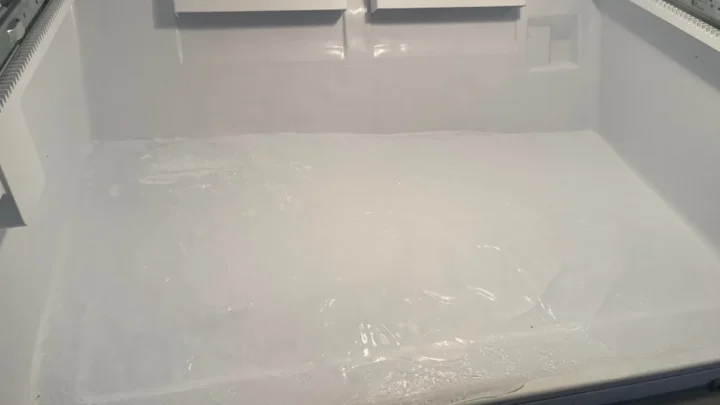
Go look at your brine tank right now. Open the lid and poke a long broom handle straight down into the salt. If you hit a hard crust after an inch or two but nothing underneath, you've got a salt bridge.
That hollow space beneath the crust means the salt can't reach the water to make brine. Without brine, the resin beads can't regenerate.
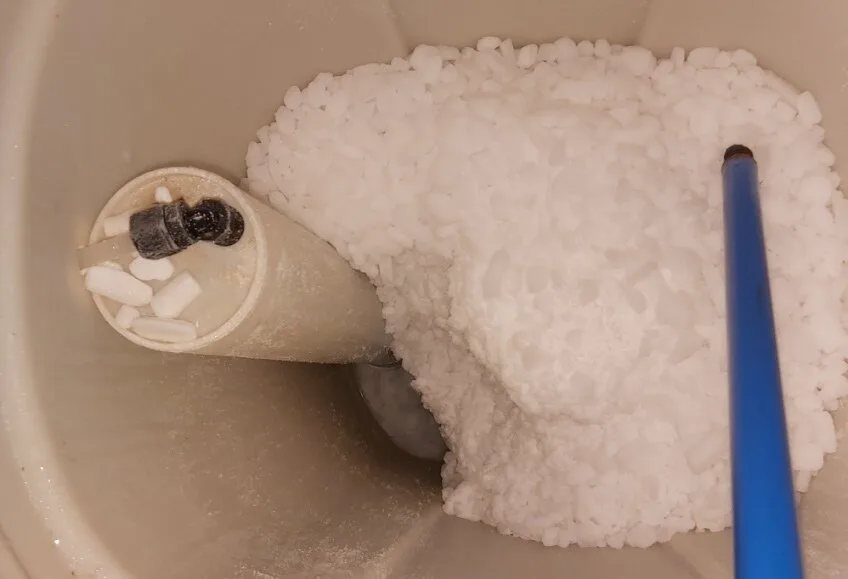
Image source: Bing (Web (fair-use with source credit))
Break the bridge by pushing the broom handle through it in several spots. Break it into pieces small enough to fall to the bottom. Then run a manual regeneration cycle.
If the crust reforms within a few weeks, switch to pellet salt or solar salt rather than rock salt. Rock salt contains more insoluble material that encourages bridging.
Could the resin be fouled?
If there's no bridge and the salt looks fine, the resin beads themselves might be coated with iron or sediment. The WHES33 is rated for water with up to 2 parts per million of iron. Above that, the resin gradually loses its ability to swap sodium for hardness minerals.
The fix is a resin cleaner additive. You can find these at most hardware stores. Follow the instructions on the bottle.
Usually you pour it into the brine well and run a manual regeneration. If the problem returns quickly, your resin is likely shot and the tank needs replacement.
Is the hardness setting correct?
This one's easy to overlook. If someone in the house changed the programming by accident, or if your water hardness has changed, the softener might be regenerating too infrequently. Well water can fluctuate seasonally.
Check the display. The hardness setting should match your actual water test results. If you don't have a recent test, pick up a simple hardness test strip from any home improvement store.
They cost about ten dollars and give you a reading in thirty seconds.
The Never-Ending Regeneration: Stuck in a Continuous Cycle
Sometimes the softener starts regenerating and just won't stop. The display might show a cycle that's been running for hours. Or the motor keeps humming long after it should have stopped.
Is the rotor valve stuck?
The rotor valve is the heart of the WHES33's control system. It rotates through different positions to direct water flow through the resin tank, the brine line, and the drain. If that valve sticks mid-cycle, the unit stays in regeneration forever.
The most common cause is debris in the valve body. Sediment from the incoming water supply can wedge between the rotor and the seal. You'll need to remove the four screws on the valve cover, pull the rotor assembly out, and inspect it for grit or scratches.
Clean it with a soft cloth and a little dish soap. Reassemble and run a manual cycle.
Has the drive motor failed?
If the rotor moves freely but the unit still won't advance, the drive motor might be the problem. You can hear this one. The motor will make a grinding or clicking noise, or it'll hum without turning.
The WHES33 uses a small synchronous motor that costs roughly 30 to 50 dollars and takes about twenty minutes to replace. Remove the two screws holding the motor bracket, unplug the wiring harness, and swap in the new one. Mark the gear position before you remove the old motor so you align the new one correctly.
What about the control board?
A bad control board is less common but it happens. If power surges or voltage spikes hit the board, it can lose its programming or stop sending signals to the motor. Try unplugging the unit for five minutes and plugging it back in.
If that fails and everything else checks out, the board likely needs replacement. Part numbers are printed directly on the board.
Water Running to Drain Non-Stop: Where to Check First
This one is alarming. Water just keeps flowing to the drain, sometimes for hours or even days. Your water bill spikes and the softener seems to be doing nothing useful.
Is the bypass valve in the wrong position?
The WHES33 has an integrated bypass valve with three positions: service, bypass, and diagnostic. If someone accidentally turned it to the diagnostic position, the unit will continuously route water to the drain. The handle should be aligned with the inlet and outlet pipes for normal operation.
Could the brine float be stuck?
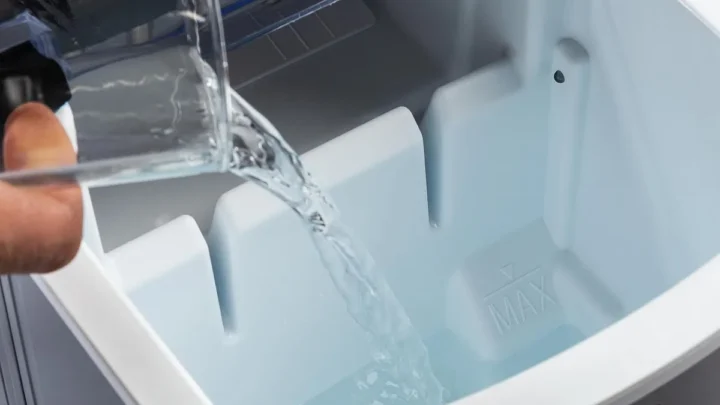
Inside the brine tank, a float assembly controls how much water enters during the brine fill cycle. If that float gets stuck in the open position, water keeps pouring in. Eventually it overflows into the brine tank and drains out the overflow line.
Take the brine tank lid off and watch the float during a regeneration cycle. If it doesn't rise as the water level climbs, the float mechanism is jammed. Clean the float stem and make sure it moves freely.
Is the Venturi leaking?
The Venturi assembly draws brine from the tank into the resin. If any of its seals or gaskets are worn, water can bypass the brine and go straight to drain. We'll cover Venturi cleaning in detail in a separate section because it's so common.
Code Red: Interpreting Error Messages on the Display
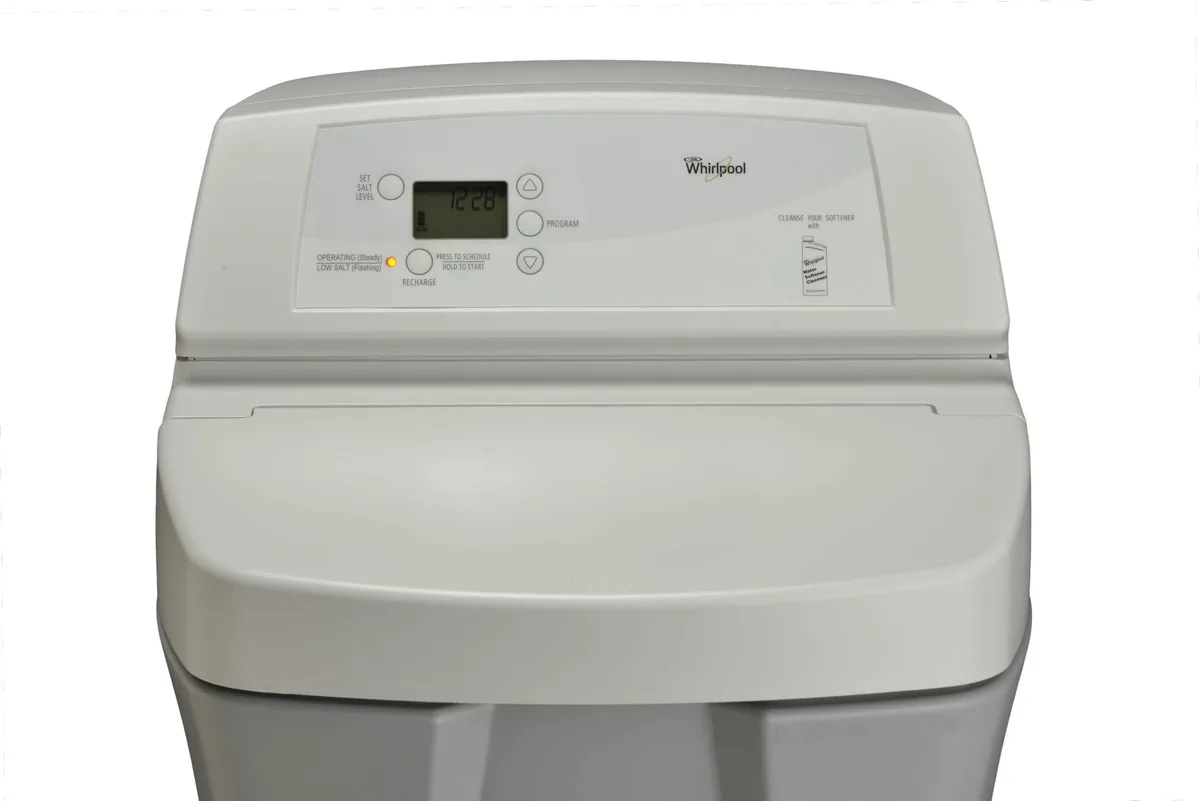
The WHES33's display is simple but it communicates clearly if you know what to look for.
What does a flashing time display mean?
Flashing time of day usually means the unit lost power at some point and reset. This is common after a brief outage. Just reset the clock.
If it keeps flashing, the backup battery (a small coin cell inside the control panel) might be dead. Replace it with a CR2032 battery.
What does "Err" mean?
An "Err" code typically indicates a sensor failure or a motor fault. Follow the same steps as for the stuck regeneration. Check the drive motor first, then the rotor valve.
If the code appears immediately on startup, the control board may be damaged.
What about a blank display?
No display at all usually means no power. Check the outlet with a lamp or multimeter. If the outlet works, the transformer may have failed.
The WHES33 uses a 24-volt DC transformer that plugs into a standard wall outlet. They're inexpensive and easy to swap. Just make sure you buy one rated for the WHES33 specifically.
The Venturi and Brine Line: Your Most Likely Culprit
The Venturi assembly and brine line cause more WHES33 problems than any other single part. If you've checked everything else and the softener still isn't working right, this is where you'll find the fix.
How the Venturi works
The Venturi creates suction using water pressure. As water flows through a narrow passage, it speeds up and drops in pressure. That pressure drop pulls brine from the tank into the resin chamber.
It's a simple design with no moving parts. That's good for reliability, but it means any blockage stops the brine draw entirely.
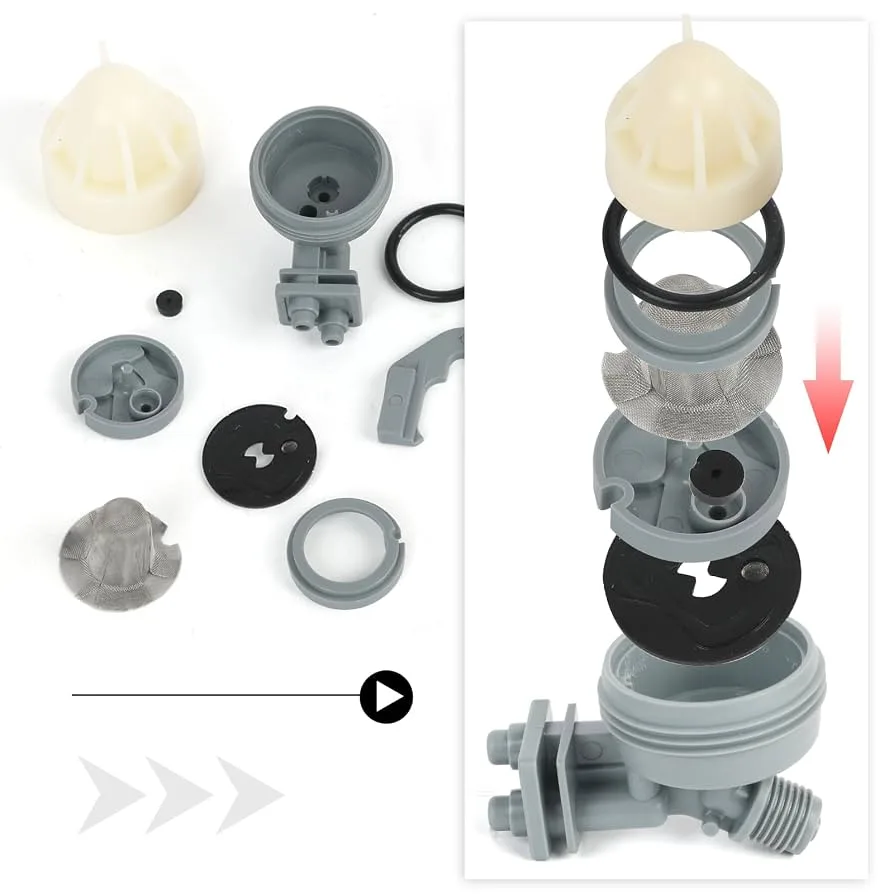
Image source: Bing (Web (fair-use with source credit))
How to clean the Venturi assembly
Cleaning the Venturi takes about fifteen minutes. Here's the process:
- Turn the bypass valve to the bypass position.
- Unscrew the cap on the Venturi housing. It's the plastic assembly with tubes running to the brine tank.
- Pull out the nozzle and Venturi insert. Notice the tiny screen inside the housing. That screen is the most common blockage point.
- Rinse all parts with warm water. Use a soft brush or an old toothbrush on the screen.
- If you see mineral deposits, soak the parts in white vinegar for thirty minutes.
- Reassemble in the exact reverse order. Make sure the o-rings are seated properly.
- Return the bypass to service position and run a manual regeneration.
Is the brine line kinked or blocked?
The brine line is the small tube connecting the Venturi to the brine tank. Follow its entire length and check for kinks, bends, or compression. If the tube is pinched, brine can't flow.
Straighten it out or replace it if it's permanently crimped.
Sediment can also collect inside the brine line over time. Disconnect both ends and blow through it. If you feel resistance, flush it with water or replace it.
The tube is inexpensive and available at any hardware store.
When to replace the Venturi assembly
The plastic parts in the Venturi can wear out after years of use. If the seals are cracked or the plastic is warped, cleaning won't help. A replacement Venturi assembly for the WHES33 costs about 25 to 40 dollars.
It comes with new o-rings and gaskets. Replace the whole assembly if the old one shows any signs of wear.
Mistakes That Cost You Time and Money (And How to Avoid Them)
After years of research into user experiences with the WHES33, certain mistakes show up again and again. Avoid these and you'll save yourself hours of frustration.
Overfilling the brine tank
More salt isn't better. The WHES33 only needs enough salt to cover the water in the brine tank. Filling it to the top causes salt mushing, where the bottom layer dissolves into a hard sludge that won't break up.
Keep the salt level below the top of the brine well, usually about halfway up the tank.
Ignoring the iron limit
The WHES33 handles up to 2 ppm of iron. If your water tests higher, you need a separate iron filter upstream of the softener. Iron fouling is permanent damage to the resin.
Once the beads are coated, no amount of cleaning restores full capacity.
Using the wrong salt type
Rock salt is cheap but it causes problems. It contains higher levels of insoluble material that accumulate in the brine tank and clog the Venturi screen. Use solar salt or evaporated pellet salt instead.
They're cleaner and reduce maintenance.
Skipping the manual regeneration test
When you make a repair, always run a manual regeneration to verify the fix. The WHES33 makes this easy. Hold the "Regen" button for three seconds, then let it complete a full cycle.
Watch the water flow and listen for the motor. If anything sounds wrong, you caught it early.
Forgetting to check the bypass valve
This one is embarrassing but common. After maintenance, people forget to return the bypass valve to the service position. The softener runs but doesn't soften because water bypasses the resin entirely.
Always double-check the handle position before walking away.
Frequently Asked Questions
How often should I clean the Venturi on my WHES33?
Clean the Venturi once per year as preventive maintenance. If you have hard water with iron, clean it every six months. A dirty Venturi is the most common cause of poor brine draw.
Why does my WHES33 show an error code after a power outage?
The control board resets during power loss. If the clock flashes, just reset the time. If an error code appears, the outage may have damaged the board.
Try unplugging for five minutes, then plug back in. If the error returns, the board may need replacement.
Can I use potassium chloride instead of salt in my WHES33?
Yes, but you need to adjust the hardness setting. Potassium chloride is less efficient than sodium chloride. Set the hardness to twice the actual value to compensate.
Potassium chloride also costs more than salt.
How long should a regeneration cycle take on the WHES33?
A full regeneration cycle takes about two hours. If it runs much longer or much shorter, something is wrong. Check for a stuck rotor valve or a clogged Venturi.
What does it mean when my WHES33 beeps continuously?
Continuous beeping usually indicates a fault condition. Check the display for an error code. If no code shows, the control board may be malfunctioning.
Try a power cycle first.
Is it normal to have water in the brine tank?
Yes. The brine tank holds water at all times. The level should be below the salt.
If water is overflowing or the tank is nearly full, check the brine float and the Venturi assembly.

Similar Posts