Canadian Vs American Thanksgiving
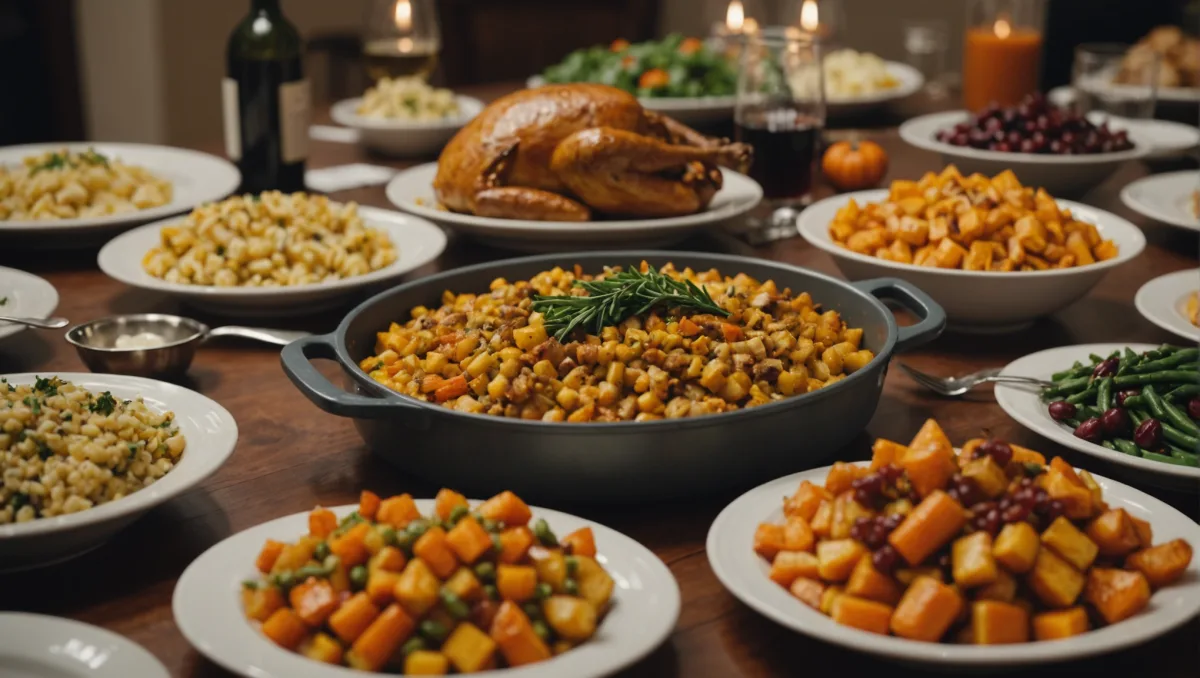
Image source: Bing (Web (fair-use with source credit))
Let’s be real. You’re probably here because you’ve seen both holidays pop up on your calendar and you’re wondering what actually separates them. Whether you’re a dual citizen trying to plan family visits, an expat missing one version of the day, or just someone who loves a good roast turkey, the Canadian Vs American Thanksgiving question deserves a straight answer.
These two holidays share a name and a bird. But the vibe, the history, and even the side dishes tell two very different stories.
The timing gap alone changes everything. As of 2026, Canadian Thanksgiving falls on the second Monday of October. The American version lands on the fourth Thursday of November.
That five-week difference might sound minor, but it shapes the food, the weather, the travel chaos, and the entire cultural mood of the day.
Let’s break down what each celebration really looks like.
Quick Answer
Canadian Thanksgiving happens in October. American Thanksgiving happens in November. Canada celebrates on the second Monday of October.
America celebrates on the fourth Thursday of November.
The Canadian holiday focuses on the harvest and relaxation. The American holiday is a bigger national event with parades, football, and Black Friday. Both share turkey, stuffing, and gratitude as the core themes.
Why This Comparison Actually Matters
Who Celebrates Which, and Why It Gets Confusing
Here’s where things get tricky for anyone living near the border or with family in both countries. The holidays genuinely overlap in confusing ways.
Canadian Thanksgiving always lands on the second Monday of October. That means it can fall anywhere from October 8 to October 14. Most schools and workplaces give people the Monday off, which creates a long weekend.
Many Canadians tack on the Friday before or the Tuesday after to make it a four-day break.
The timing connects directly to the Canadian harvest season, which wraps up earlier than the American one because of the more northern climate.
American Thanksgiving is locked to the fourth Thursday of November. The earliest possible date is November 22, and the latest is November 28. President Franklin D.
Roosevelt officially fixed this date in 1941 when he signed a joint resolution from Congress into law.
The American holiday effectively kicks off the entire holiday shopping season. It has become a massive cultural and economic event in ways the Canadian version simply hasn’t.
The confusion usually starts when someone from the United States hears a Canadian friend mention Thanksgiving in early October. Their first reaction is often, “Wait, that’s way too early.” Meanwhile, Canadians visiting the US in late November wonder why everything turns into a retail frenzy.
Both reactions are valid. The two holidays have diverged so much in purpose and scale.
The One Question That Decides Everything
If you only take one thing from this article, let it be this question: are you celebrating the harvest, or are you celebrating the start of the winter holiday season?
That single distinction explains almost every difference between the two days.
The Canadian version stays closer to its agrarian roots. It’s quieter, smaller, and more focused on the immediate family. The American version has grown into a sprawling national spectacle that includes massive parades, professional football games, and the unofficial launch of Christmas shopping.
Keep that core distinction in mind. It will help you understand why the menus differ, why the travel patterns are different, and why one holiday feels like a cozy dinner while the other feels like a full-blown cultural event.
The Core Difference: It’s All About the Date and the Season
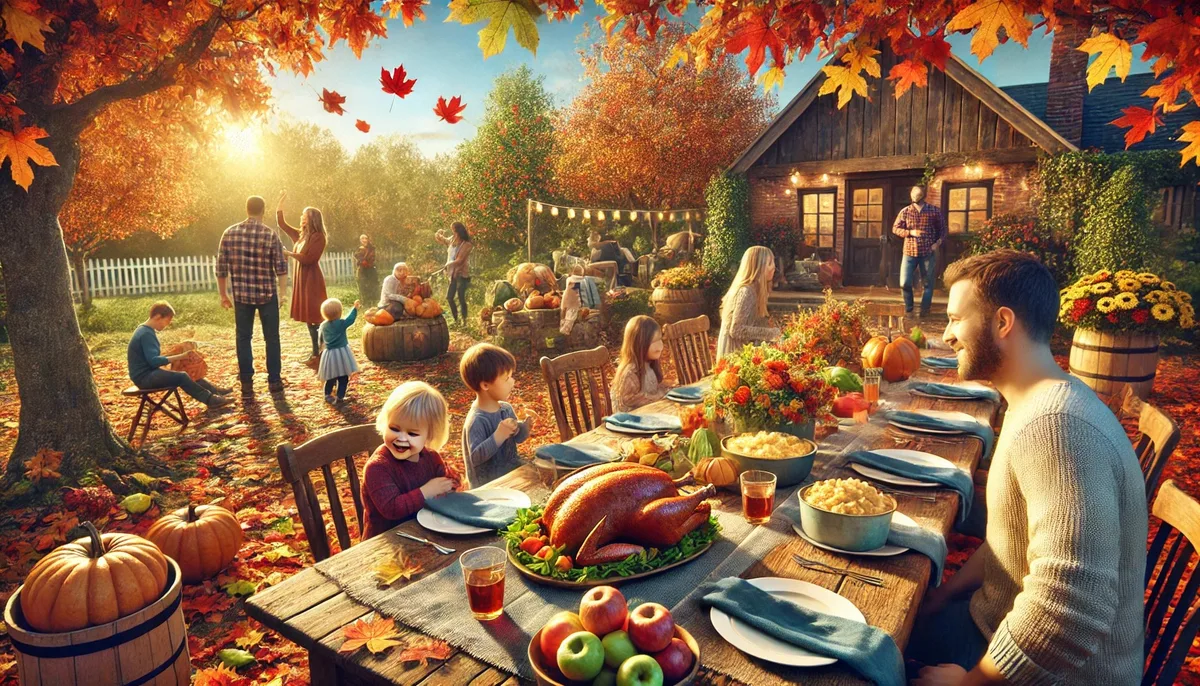
Image source: Bing (Web (fair-use with source credit))
Canadian Thanksgiving: The October Harvest Pause
Picture this. The leaves have turned orange and red. There’s a crisp bite in the air.
The growing season has officially ended, and the root vegetables and squash have been pulled from the ground. That’s the context for Canadian Thanksgiving.
Because it falls in early October, the Canadian holiday is essentially a pause to breathe after the harvest rush. It’s not the start of a bigger season. It’s the end of one.
Farmers in Canada typically wrap up their main harvest by late September or early October, so the holiday lands at a natural point of completion and rest.
The weather plays a huge role in how the day feels. October in most of Canada can be mild but unpredictable. You might get a sunny, crisp day perfect for a post-dinner walk.
Or you might get rain, wind, or even an early dusting of snow in the Prairie provinces or northern Ontario.
Aggregate reports from Canadian weather services indicate that average temperatures in early October range from about 5°C to 15°C depending on the region. Outdoor gatherings are possible but never guaranteed.
That uncertainty pushes the celebration indoors more often than not. The table becomes the centerpiece because the backyard isn’t a reliable option. It’s also why Canadian Thanksgiving menus lean heavily on root vegetables.
These are the foods that are actually in season and available locally at that time of year.
The long weekend structure also changes the pace. Because Monday is the holiday, Canadians get a full three-day weekend to travel, cook, and recover. Many families use the Sunday for the main meal, which gives everyone Monday to relax, go for a hike, or simply enjoy the last bit of fall before winter sets in.
It’s a slower, more sustainable kind of celebration.
American Thanksgiving: The Late-November National Marathon
Now flip the calendar forward about six weeks. The leaves are mostly gone. The air is colder, sometimes brutally so in the northern states.
And the entire country is about to shift into high gear for the holidays.
American Thanksgiving doesn’t just close out the harvest season. It marks the beginning of the most intense retail and travel period of the year.
The Thursday holiday is immediately followed by Black Friday, which for decades has been the biggest shopping day in the United States. Even with the rise of online shopping and Cyber Monday, the cultural association between Thanksgiving and shopping remains powerful.
The late November date also means the holiday sits right at the doorstep of Christmas. Homes go from autumn decor straight into winter decorations. Christmas music starts playing on the radio the moment the turkey is carved.
Aggregated retail data shows that American consumers spend tens of billions of dollars during the Thanksgiving weekend alone. That tells you just how commercially charged the holiday has become.
The weather in late November is far more unpredictable and often harsher than October. Snowstorms are common in the Midwest and Northeast. Flight delays spike because millions of Americans travel long distances to be with family.
According to the U.S. Department of Transportation, the Thanksgiving period consistently ranks as one of the busiest travel windows of the year. Tens of millions of people fly or drive to reach their destinations.
That scale of movement simply doesn’t exist in Canada for their October holiday.
Because the American holiday is so entrenched in the national calendar, everything shuts down. Schools close for the entire week in many districts. Federal offices close.
Even some private businesses give employees the full week off. It’s a true national pause, but it’s a busy one, filled with obligations, travel, and social events.
What That Timing Shift Does to the Vibe
Here’s how the date difference translates into real life.
Canadian Thanksgiving feels personal. You might have 8 to 12 people around the table. There’s no parade on TV that everyone feels obliged to watch.
There’s no massive football game that dominates the afternoon conversation. The day moves at the pace of the host, not the pace of broadcast schedules.
American Thanksgiving feels communal and high-energy. You might have 15 to 30 people, with kids running around, multiple tables set up, and a television blaring somewhere in the background.
The Macy’s Thanksgiving Day Parade, which has run since 1924, draws millions of viewers each year. The NFL Thanksgiving games are a tradition that dates back to 1934. These are national rituals that connect millions of people simultaneously, even if they’re in completely different states.
Neither vibe is objectively better. It just depends on what you’re looking for.
If you want a low-key, food-focused gathering with close family, the Canadian version delivers that. If you want a loud, festive, culturally immersive day with roots in national traditions, the American version is your match.
One more practical point. Because Canadian Thanksgiving is in October, it doesn’t collide with any other major holidays. It stands alone.
The American version, by contrast, is part of a continuous holiday marathon that runs from late November through New Year’s Day. That gives the American holiday a different kind of intensity. It’s not an endpoint.
It’s the opening act for everything that follows.
The Historical Divide: Pilgrims vs. Explorers
To understand why these holidays feel so different, you need to know where they came from. The origin stories are completely different.
The American Story: Plymouth, Turkey, and the National Myth
When Americans think about the first Thanksgiving, one image dominates. The Pilgrims at Plymouth Plantation in 1621, sitting down with Wampanoag Native Americans to share a harvest feast.
This story has been taught in American schools for generations. It forms the emotional core of the holiday.
The historical reality is a bit more complicated, but the myth is powerful. The 1621 feast lasted three days and included venison, seafood, and various wild fowl. Turkey was probably present, but it wasn’t the star of the show.
The Pilgrims were celebrating a successful corn harvest after a brutal first winter that killed nearly half of their colony. The Wampanoag, led by a leader named Massasoit, attended the feast. This was likely part of a larger diplomatic and military alliance rather than a simple friendly gathering.
The holiday didn’t become an annual event until much later. Various colonies and states held their own thanksgiving days at different times.
It wasn’t until 1863, in the middle of the Civil War, that President Abraham Lincoln declared Thanksgiving a national holiday. He set it on the last Thursday of November. The goal was to create a unifying moment for a divided nation.
That political context is often lost in the modern celebration. But it’s crucial to understanding why the American holiday has such a strong national identity.
Over the decades, Thanksgiving became intertwined with American concepts of family, abundance, and homecoming. The “Turkey Day” traditions we know today, the parades, the football games, the canned cranberry sauce, solidified in the 20th century. It’s a holiday that celebrates the idea of America as much as the actual harvest.
The Canadian Story: Frobisher, Champlain, and a Much Longer Timeline
Here’s where most people get genuinely surprised. The first Thanksgiving in North America wasn’t in Plymouth. It was in Canada, and it happened decades earlier.
The Canadian origin story goes back to 1578. English explorer Martin Frobisher held a feast in Nunavut, in the Canadian Arctic, to give thanks for the safe arrival of his fleet. That meal is widely recognized as the first Thanksgiving celebration in North America.
It predates the Plymouth feast by 43 years.
Later, French settlers led by Samuel de Champlain also held harvest celebrations in the early 1600s in what is now Nova Scotia and Quebec. These feasts were called “Ordres de bonne chose,” which roughly translates to “orders of good cheer.”
They were practical gatherings meant to share food and foster goodwill among the settlers, and in some cases, with the Indigenous peoples in the area. Champlain’s feasts included not just food but also games and entertainment, making them social events rather than purely religious or agricultural observances.
Canadian Thanksgiving didn’t become an official holiday until 1879. Even then, it was initially celebrated on a Thursday in November, similar to the American model.
It wasn’t until 1957 that the Canadian Parliament formally fixed the date to the second Monday of October. The official declaration stated that the day is set aside to “give thanks for the bountiful harvest with which Canada has been blessed.”
That’s a big difference in framing. The American holiday has a heroic, survival-focused origin story with a strong national mythology. The Canadian holiday has a more practical, administrative origin.
It was less about founding myths and more about recognizing a natural seasonal rhythm.
That difference in origin stories is why the two holidays feel so different in character.
Why This History Shapes Everything Else
History doesn’t just live in textbooks. It shapes how people act at the dinner table.
The American narrative centers on survival, community, and national unity. That’s why the holiday feels bigger, louder, and more patriotic. It’s baked into the cultural DNA.
When Americans gather for Thanksgiving, they’re not just eating a meal. They’re participating in a shared story about resilience and togetherness.
The Canadian narrative centers on the land and the harvest. That’s why the Canadian holiday feels more grounded and regional. There’s less emphasis on a singular national myth and more on local agricultural cycles.
In Quebec, for example, the holiday has a distinctly French-Canadian flavor. Different dishes and a slightly different cultural tone set it apart from the rest of Canada.
The history also explains the religious undertones. Both holidays have Protestant roots. But the American version became more explicitly about national gratitude, while the Canadian version stayed closer to a general sense of thankfulness for the natural world.
You’ll hear “blessings” at both tables. The framing is just generally less religious in Canada.
Thanksgiving Dinner: Same Turkey, Different Table
Let’s talk about the food, because honestly, that’s what most people care about. The good news is that the centerpiece is largely the same.
Roast turkey is the undisputed king at both Thanksgiving tables. Aggregate food consumption data suggests that Americans eat somewhere in the neighborhood of 46 million turkeys on Thanksgiving. Canadians eat around 2.5 to 3 million of their own.
That’s a lot of bird, either way.
Stuffing or dressing, depending on where you’re from, is also a universal requirement. Mashed potatoes with gravy, cranberry sauce, and some form of green bean casserole or roasted vegetables show up at both celebrations.
Pumpkin pie is the classic dessert on both sides of the border.
Those shared items create a baseline. If you’re an American attending a Canadian Thanksgiving dinner, you’ll recognize the core structure immediately. If you’re a Canadian attending an American one, same thing.
The skeleton of the meal is essentially identical.
It’s the extras where the two countries diverge.
The Stuffing vs. Dressing Debate (Yes, It’s Real)
Before we go further, we have to address the biggest regional split within both countries: stuffing versus dressing.
Stuffing is cooked inside the turkey cavity. It absorbs the juices and gets a crispy, almost meaty texture on the outside. Dressing is baked separately in a casserole dish.
It’s softer, more bread-like, and often has a more uniform texture.
In the United States, the split is largely geographic. Southern states overwhelmingly prefer dressing, often made with cornbread. Northern states lean toward bread-based stuffing cooked inside the bird.
The debate can start genuine family arguments.
In Canada, the preference tends to lean toward stuffing. But there’s a significant regional variation.
In the Maritime provinces, you’ll find a stronger influence of Acadian and Scottish cooking traditions. In Quebec, bread-based stuffing often includes pork or sausage, giving it a richer, more savory profile. Canadian stuffing also frequently includes ingredients like apples or dried cranberries to reflect the fall harvest.
Regional Sides: Canadian Roots vs. American Casseroles
Here’s where the two countries really start to show their distinct personalities.
Canadian Thanksgiving tables often feature dishes that reflect the national palate. You’ll see roasted root vegetables like parsnips, turnips, carrots, and potatoes, all drizzled with maple syrup or butter. Butternut squash soup is a common starter.
Brussels sprouts, roasted with bacon or chestnuts, appear frequently.
In some households, particularly in Quebec, tourtière, a savory meat pie, makes an appearance as a side dish or an alternative main. Many Canadian families also serve a platter of pickles and olives, which is a holdover from older British and French dining customs.
American Thanksgiving tables are famously regional. Southern tables feature mac and cheese, collard greens, and sweet potato casserole topped with marshmallows. Midwestern households often add a Jell-O salad or a hot dish.
Northeastern tables might feature clam chowder as a starter.
The sheer variety across American regions is staggering because the country is so large and culturally diverse.
The sweet potato dish highlights the difference perfectly. In Canada, you’re more likely to see roasted or mashed sweet potatoes with a simple butter and maple glaze. In the American South, you’ll see sweet potato casserole buried under a layer of mini marshmallows.
Both are delicious. They’re just expressing different ideas about what a holiday side should taste like.
Desserts: Pumpkin Pie Might Not Be the Star Up North
Pumpkin pie is the default dessert at both celebrations. But the devotion varies.
In the United States, pumpkin pie is nearly sacred. It’s the most requested Thanksgiving dessert, and its absence would be noted. Many families also add pecan pie, especially in the South, and apple pie in the Northeast.
In Canada, pumpkin pie is common but not universal. Because the Canadian Thanksgiving falls in early October, apple season is in full swing. Apple pie, apple crisp, and apple crumble are just as likely to appear as pumpkin pie.
Many Canadian tables also feature butter tarts. These are a distinctly Canadian dessert consisting of a flaky pastry shell filled with a rich, buttery, and slightly sticky filling.
The dairy factor is also worth mentioning. Canadian butter has a higher butterfat content than American butter, averaging around 80 percent compared to the 80 to 82 percent range in the US. In practical terms, that means Canadian pastry crusts tend to be flakier and richer.
If you’ve ever wondered why your butter tarts taste different when you make them with American butter, this is why.
The Side-by-Side Comparison: A Quick Reference Table
To make things easier, here’s a clean breakdown of how the two holidays stack up across the most important categories.
| Category | Canadian Thanksgiving | American Thanksgiving |
|---|---|---|
| Date | Second Monday of October | Fourth Thursday of November |
| Official recognition | Federal statutory holiday since 1957 | National holiday declared in 1863, fixed in 1941 |
| Primary focus | Harvest and relaxation | Harvest, national unity, start of holiday season |
| Length of break | Long weekend, typically Monday off | Often the full week off for schools and many offices |
| Average weather | 5°C to 15°C, crisp and variable | 0°C to 12°C, often colder, snow risk |
| Travel intensity | Moderate, regional travel | Extreme, one of the busiest travel periods |
| Main side dishes | Root vegetables, maple-glazed items, squash | Regional variety, mac and cheese, sweet potato casserole |
| Signature dessert | Pumpkin pie, apple pie, butter tarts | Pumpkin pie, pecan pie |
| Parade tradition | None major | Macy’s Thanksgiving Day Parade |
| Football tradition | None major, CFL season is mostly over | NFL Thanksgiving games since 1934 |
| Retail connection | Minimal, Black Friday exists but is less intense | Direct lead-in to Black Friday and Cyber Monday |
| Religious tone | General gratitude, less religious | Can be more religious, but widely secular |
| Typical guest count | 8 to 12 people | 15 to 30 people |
That table sums up the structural differences pretty well. Now let’s talk about what those differences actually feel like in practice.
What the Food Actually Looks Like on the Table
The Base Plate: What Both Serve
Let’s be honest. Both countries serve the same foundation. If you took the two tables and stripped them down to the essentials, you’d struggle to tell them apart.
Both celebrate with a roast turkey. Both make mashed potatoes. Both serve some kind of gravy.
But here’s where the subtle differences start creeping in. The potatoes might be mashed the same way, but the gravy in Canada often gets a splash of maple syrup for a hint of sweetness. In the American South, the gravy is more likely to be thickened with flour and seasoned with sage or thyme.
Cranberry sauce is another point of divergence. In Canada, homemade cranberry sauce is more common, often cooked down with orange zest and maple. In the US, the canned jellied version, the kind that keeps the ridges from the can, is a genuine cultural icon.
Many Americans refuse to switch to homemade because the canned version is what they grew up eating.
The Canadian Side: Root Vegetables and Maple Everything
Canadian Thanksgiving sides lean heavily on what’s available in early October. That means root vegetables are the stars.
Here’s a typical Canadian Thanksgiving side spread:
- Mashed potatoes with garlic and butter
- Roasted parsnips and carrots with maple syrup
- Butternut squash soup
- Brussels sprouts with bacon
- Sweet potatoes glazed with maple syrup
- Cranberry sauce with orange zest
- Bread stuffing with apples and dried cranberries
- Pickled vegetables or olives as a palate cleanser
The maple syrup theme is consistent. Canada produces about 75 percent of the world’s maple syrup, with the vast majority coming from Quebec. It makes sense that the sweetener shows up in everything from glazed vegetables to pie fillings.
Apple-based dishes also dominate because October is peak apple season in Canada. Apple sauce, apple chutney, and apple-stuffed acorn squash are common additions.
The American Side: Regional Heavyweights and Casseroles
American Thanksgiving sides are a different beast. The sheer variety across regions makes it hard to pin down a single “standard” menu.
Here’s what you might find on an American Thanksgiving table:
- Mashed potatoes with turkey gravy
- Green bean casserole with fried onions
- Sweet potato casserole with marshmallows
- Mac and cheese (especially in the South)
- Cornbread dressing (in the South)
- Bread stuffing (in the North)
- Cranberry sauce, either jellied or whole berry
- Rolls or biscuits with butter
- Deviled eggs (common in the Midwest and South)
- Collard greens or green beans seasoned with ham hock
The green bean casserole deserves special mention. It was invented in 1955 by the Campbell Soup Company as a way to promote cream of mushroom soup. The recipe is simple: green beans, cream of mushroom soup, and crispy fried onions, baked together until bubbly.
Despite its processed ingredients, it has become a beloved classic. In fact, it’s so entrenched that many Americans consider the holiday incomplete without it. Canadian tables rarely feature this dish.
If you see it at a Canadian Thanksgiving, odds are high that an American relative brought it over.
Dessert: The Final Showdown
Pumpkin pie is the standard on both sides of the border. But the supporting cast differs.
Canadian dessert tables often feature:
- Pumpkin pie
- Apple pie or apple crisp
- Butter tarts
- Nanaimo bars (a no-bake chocolate and custard dessert)
- Sugar pie (especially in Quebec)
American dessert tables often feature:
- Pumpkin pie
- Pecan pie (especially in the South)
- Apple pie
- Sweet potato pie (warm, spiced, and common in Black American households)
- Cheesecake (a popular non-pie alternative)
The “one pie or many pies” question splits households in both countries. Some families insist on a single pumpkin pie. Others create a full dessert buffet.
There’s no federal standard for this one.
The Travel and Logistics Difference
Canadian Thanksgiving: A Local Affair
Canadian Thanksgiving travel is moderate. Most families live within a few hours of each other. The October date is close to the start of the school year and the end of the work season, but it doesn’t create the same kind of mass migration you see in the US.
Road trips are common, but there’s no national travel crisis. Flight delays exist, but they’re not the horror stories you hear about in the US. You can usually get a seat on a plane the Wednesday before Canadian Thanksgiving without paying a premium.
Gas prices tend to be stable. Hotels near popular autumn destinations might fill up, but it’s not a mad scramble. The long weekend is more about connecting with immediate family and enjoying fall activities like apple picking, corn mazes, and scenic drives through the changing leaves.
American Thanksgiving: The Busiest Travel Period of the Year
American Thanksgiving is a different animal entirely. The U.S. Department of Transportation consistently ranks the Thanksgiving period as one of the busiest travel windows of the year.
The Wednesday before Thanksgiving is famously the busiest travel day of the year. Tens of millions of Americans fly, drive, and take trains to reach their families. The phrase “turkey traffic” exists for a reason.
AAA (American Automobile Association) estimates that around 50 million Americans travel 50 miles or more for Thanksgiving each year. That’s roughly 15 percent of the entire US population in motion at the same time.
The impact is tangible:
- Flight prices spike 20 to 30 percent compared to early November
- Rental car prices double
- Road trips become gridlocked in major metro areas
- Security checkpoint lines at airports stretch for hours
If you’re planning an American Thanksgiving as a Canadian or an expat, book your flights at least two months in advance. And if you can, try to travel on Tuesday rather than Wednesday. You’ll skip the worst of the crowd.
The Retail Connection: Black Friday and Cyber Monday
Canadian Thanksgiving: Minimal Retail Noise
Canadian Thanksgiving isn’t directly connected to any major shopping event. Black Friday does exist in Canada, and it’s grown in recent years, but it’s nowhere near as intense as the American version.
Canadian stores offer Black Friday deals in late November, but they’re smaller in scale. The launch of this shopping event is tied to the increasing influence of American culture and cross-border shopping. It’s not tied to Canadian Thanksgiving at all.
The lack of urgency around the Canadian holiday means the weekend is spent relaxing, not shopping. There’s no cultural pressure to have your Christmas shopping done by the time you sit down for turkey. That pressure doesn’t arrive until well into November, if it arrives at all before the December crunch.
American Thanksgiving: The Official Start of the Shopping Season
American Thanksgiving is the launch pad for the entire retail holiday season. The Macy’s Thanksgiving Day Parade, which airs live from New York City, is watched by millions. The parade itself is a massive advertisement for brands, with giant balloons, floats, and Broadway performances.
The day after Thanksgiving, Black Friday, has historically been the biggest shopping day of the year. Stores open early, sometimes at midnight or even on Thanksgiving evening itself. The term “Black Friday” comes from the idea that retailers move from being “in the red” (losing money) to “in the black” (making a profit) on that day.
In recent years, the rise of e-commerce has changed the dynamic. Cyber Monday, which falls on the Monday after Thanksgiving, has become the biggest online shopping day of the year. But the cultural connection between Thanksgiving and shopping remains deeply entrenched.
Parades and Football: Where the Traditions Diverge
Canadian Thanksgiving: None of the National Broadcast Rituals
Canadian Thanksgiving doesn’t have a major nationally televised parade that anchors the day. There are smaller local parades in some communities, like the Thanksgiving Day parade in Kitchener-Waterloo, Ontario, but they don’t have the scale or the national viewership of the American events.
Professional football in Canada also doesn’t align with the holiday. The Canadian Football League (CFL) season typically ends in November, but Thanksgiving falls in early October, which is usually during the regular season. Some CFL teams have hosted Thanksgiving Day games, but there’s no set tradition or national broadcast schedule.
American Thanksgiving: A Full Day of National Events
American Thanksgiving has two major broadcast traditions that anchor the day: the Macy’s parade and NFL football.
The Macy’s Thanksgiving Day Parade has run since 1924. It features:
- Giant helium balloons of popular cartoon characters
- Elaborate floats
- Marching bands from across the country
- Broadway performers
- A live performance by Santa Claus to close the show
Millions of Americans watch the parade on NBC every year. It’s a shared national moment that starts the day off with entertainment and spectacle.
NFL football is the other pillar. The NFL has hosted Thanksgiving Day games since 1934. The Dallas Cowboys have played on Thanksgiving every year since 1966, which is a tradition in itself.
The Detroit Lions have also hosted a Thanksgiving Day game since 1934, aside from a break during World War II.
These games are as much a part of the holiday as the turkey for many families. The television is on in the background, the game plays while people eat, and halftime provides a natural break for conversation.
Canadian Thanksgiving simply doesn’t have an equivalent. You might have a hockey game on in the background, but the national attention isn’t focused on a single shared broadcast.
Which One Should You Celebrate? A Practical Decision Guide
The question isn’t really which one is “better.” It’s which one fits your life and your expectations.
Choose Canadian Thanksgiving if you want:
- A low-key, relaxed weekend
- A smaller gathering of close family
- A shorter travel distance with less stress
- A focus on the harvest and local ingredients
- A meal without the pressure of national broadcast traditions
- A holiday that doesn’t signal the start of Christmas
Choose American Thanksgiving if you want:
- A high-energy, festive experience
- A larger gathering with extended family or friends
- A cultural moment that connects you to national traditions
- A reason for a longer break from school or work
- A holiday that kicks off the full winter holiday season
- The full experience of parades, football, and Black Friday
Celebrate both if you’re lucky enough to have ties to both countries.
This is actually what many dual citizens and cross-border families do. Canadian Thanksgiving in October acts as a dress rehearsal. The American Thanksgiving in November is the main event.
You get two turkey dinners, two portions of pie, and two chances to express gratitude. That’s not a bad problem to have.
Final Thoughts
Canadian and American Thanksgiving share a name, a bird, and a spirit of gratitude. But they live in different worlds.
Canadian Thanksgiving is a quiet, seasonal pause. It’s a harvest festival that happens before the snow flies. It’s about the table, the family, and the land.
American Thanksgiving is a national performance. It’s a spectacle, a travel marathon, and the opening bell for the shopping season. It’s about the family, but it’s also about the shared cultural moment.
Neither version is better or worse. They’re just different expressions of the same human instinct: taking a moment to appreciate what you have before the long winter settles in.
If you’re celebrating one, you’re doing it right. If you’re celebrating both, you’re doing it twice as right.
Now go eat some pie. You’ve earned it.

Similar Posts