Chevy Traverse Engine Problems
The Chevy Traverse 3.6L V6 has a reputation. Some of it is earned. Owner reports and service data show the Chevy Traverse engine problems follow clear patterns across specific model years.
Knowing what fails, why it fails, and how to spot it early is the difference between a preventive repair and a full engine replacement.
NHTSA complaints for this engine family number well over a thousand. Timing chain and water pump failures appear consistently in model years 2009 through 2017. As of 2026, later production runs have addressed some of these issues.
But the underlying design weaknesses remain. Let's walk through exactly what goes wrong, what it costs, and how to decide what to do about it.
Quick Answer
The most common Chevy Traverse engine problems are timing chain failure, water pump failure, excessive oil consumption, and cylinder deactivation lifter collapse. Timing chain failure typically hits between 60,000 and 120,000 miles. Water pump failure can destroy the engine if coolant mixes with oil.
Oil consumption above one quart per 1,000 miles signals ring or PCV trouble. Lifter failure causes misfires and can grenade the valvetrain. Repair costs range from $1,500 to $4,000 for major jobs.
Why This Engine Fails — And What You Need to Know First
The 3.6L V6 in the Chevy Traverse is not a bad engine across the board. GM built millions of them. Plenty have gone past 200,000 miles without major issues.
But the engines that fail do so in predictable ways tied to a few specific engineering choices.
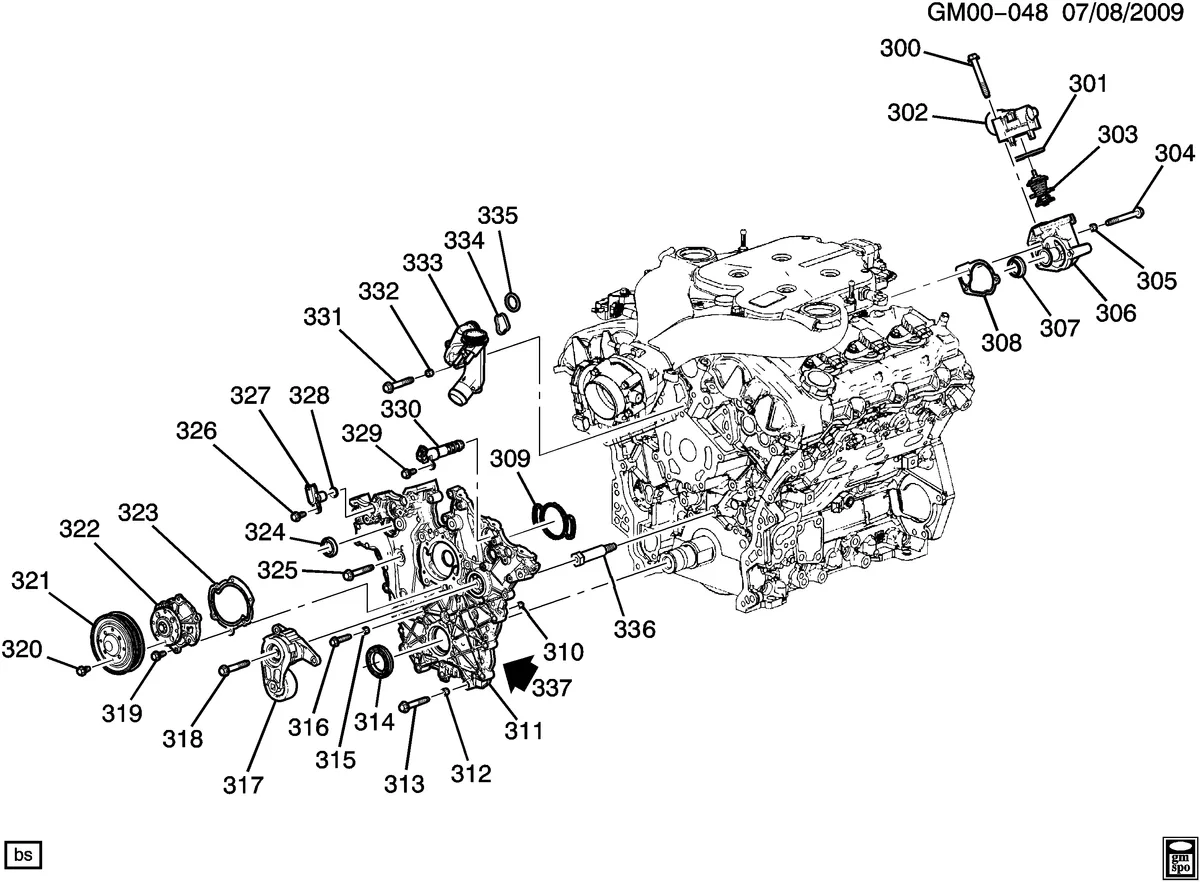
The two biggest problems are timing chain failure and water pump failure. These are connected by a single design decision. GM placed the water pump inside the timing chain cover, driven by the timing chain itself.
When the water pump fails, coolant leaks directly into the oil pan. When the timing chain stretches, it throws off valve timing and can skip teeth. That causes catastrophic internal damage.
Image source: Bing (Web (fair-use with source credit))
The model years most affected are 2009 through 2013. Those early 3.6L engines (the LLT variant) had the worst timing chain issues. The 2014 through 2017 models got an updated engine (LFX) with some improvements, but water pump and oil consumption problems persisted.
The 2018 redesign brought the LFY engine with better timing chain components. Cylinder deactivation issues and carbon buildup remain concerns on newer models.
Here is the bottom line for current owners. Change your oil every 5,000 miles with full synthetic Dexos1 oil. Catch coolant contamination early.
You can keep a 3.6L alive well past 150,000 miles. For used car shoppers, a 2018 or newer Traverse is a much safer bet, but it is not bulletproof. A 2009 to 2013 model with no documented timing chain service is a gamble you probably do not want to take.
The 3.6L V6: Design Weaknesses That Cause Most of the Trouble
You need to understand a few things about how this engine is built. It is not about bad parts or sloppy assembly. It is about engineering tradeoffs that created real-world failure patterns.
Why the timing chain is a known weak point
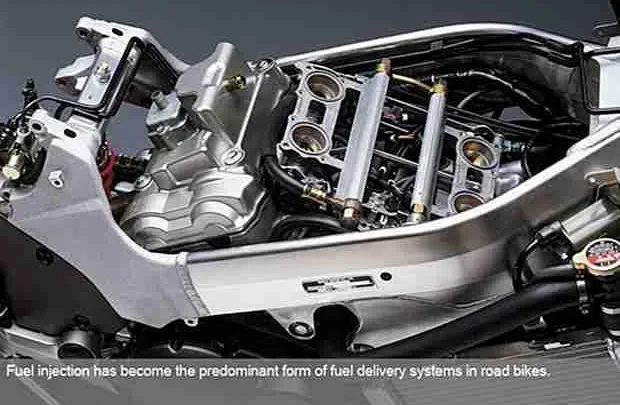
The 3.6L is a dual overhead cam (DOHC) engine with variable valve timing. The timing chain has to drive four camshafts and the variable timing phasers. That is a lot of mechanical load, especially at cold startup when oil pressure has not built up yet.
The chain tensioners on early engines used a design that could lose priming. When that happens, the chain develops slack. You hear it as a rattle for a few seconds on cold start.
That rattle is your warning. The chain stretches over time. Once it is stretched enough, the timing jumps.
That can bend valves, wreck pistons, and require a full engine rebuild.
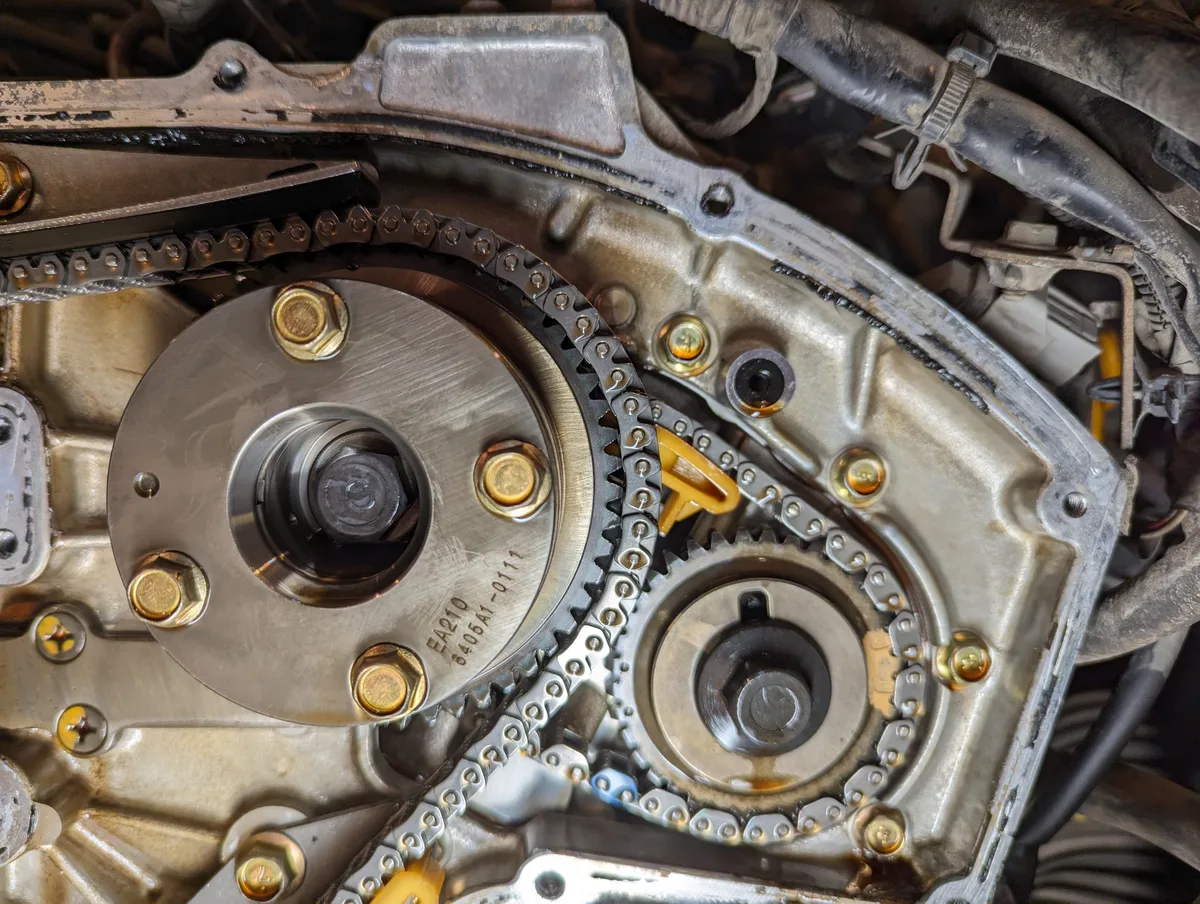
Image source: Bing (Web (fair-use with source credit))
GM issued several technical service bulletins for this. On 2011 and 2012 models, they extended warranty coverage for timing chain issues to 10 years or 120,000 miles in some cases. If you are past that or bought used, you are on your own.
How the water pump position creates a contamination risk
This is the design choice that surprises most people. The water pump is buried inside the timing chain cover. It is not driven by an external belt like most engines.
It is gear-driven by the timing chain.
When the water pump's internal seal fails, coolant seeps past the seal and enters the timing chain cavity. It mixes with engine oil. Your oil turns into what looks like chocolate milk.
If you do not catch it fast, you lose lubrication to the timing chain and bearings. Engine failure follows quickly.
Replacing the water pump requires removing the timing chain. That labor is expensive. The $1,200 to $2,000 water pump job includes all the same labor as a timing chain replacement.
Many owners choose to do both at the same time.
AFM/DFM lifter failure
Active Fuel Management (AFM) and Dynamic Fuel Management (DFM) are cylinder deactivation systems. They shut down some cylinders under light load to save fuel. The system uses special lifters that can collapse to stop the valves from opening.
Those lifters can fail. When they do, they stop collapsing and start making contact with the camshaft when they should not. The result is a ticking noise, a misfire code (usually P0300 or a specific cylinder code), and in bad cases, the lifter can come apart and send metal through the oil system.
On the Traverse, AFM was used from 2014 onward. DFM came with the 2018 redesign. Both have failure reports, though DFM seems to hold up slightly better.
The fix is replacing all affected lifters, replacing the camshaft if it is scored, and often replacing the oil pump and flushing the oil passages. It is a $2,500 to $4,000 job at a shop.
Direct injection carbon buildup
Starting with the 2014 model year, the 3.6L engine uses direct injection. Fuel is sprayed directly into the combustion chamber rather than onto the intake valves. That is good for power and efficiency.
But fuel never washes over the intake valves to clean them.
Over time, oil vapor from the PCV system deposits carbon on the back of the intake valves. The buildup restricts airflow, causes misfires, and reduces performance. Symptoms include rough idle, hesitation on acceleration, and eventually a check engine light for misfire.
The fix is walnut blasting or chemical cleaning of the intake valves. It typically costs $500 to $800 and needs to be done every 60,000 to 80,000 miles. If you are buying a used 2014 or newer Traverse, ask if this service has been done.
The Complete List of Common Engine Problems (With Symptoms)
Let's get specific. Here is every major problem this engine is known for, what it sounds like, and what to look for.
Timing chain failure
This is the most talked-about issue for good reason. It can destroy your engine if ignored.
Symptoms:
- A rattling noise from the front of the engine that lasts 2 to 5 seconds on cold start. As it gets worse, the rattle lasts longer.
- Check engine light with codes P0016, P0017, or P0018. Those mean the camshaft and crankshaft position sensors disagree on timing.
- Rough idle, poor acceleration, and eventually a no-start condition.
- In severe cases, the engine stalls while driving as the chain jumps teeth.
What happens inside: The chain stretches beyond its service limit. The tensioner cannot take up all the slack. Once the chain skips a tooth on a sprocket, valve timing changes.
Pistons can contact valves. That means bent valves, damaged pistons, and a full top-end rebuild or replacement engine.
When it hits: Most common between 60,000 and 120,000 miles. Worse on 2009 to 2013 models. Better on 2014 to 2017 models.
Rare on 2018 and newer, but not impossible.
Water pump failure
This one is dangerous because it can kill your engine before you notice a problem.
Symptoms:
- Coolant smell or visible puddles under the front of the engine.
- Coolant level dropping without an obvious external leak.
- Oil on the dipstick looks milky or frothy. That is coolant mixing with oil.
- Overheating as coolant level drops low enough.
- No audible warning in many cases until it is too late.
What happens inside: The water pump seal fails. Coolant enters the timing chain cavity. It drains into the oil pan.
Your oil loses its lubricating properties. The timing chain, bearings, and camshafts all run without proper lubrication. Engine failure follows in a matter of hundreds of miles, sometimes less.
When it hits: Usually between 80,000 and 120,000 miles. Some fail earlier. The 2014 to 2017 models had an updated pump with better seals, but failures still happen.
Excessive oil consumption
This is a frustrating problem because it is hard to prove and expensive to fix.
Symptoms:
- You add a quart of oil every 1,000 miles or more frequently.
- Blue smoke from the exhaust on startup or hard acceleration.
- Spark plugs fouled with oil deposits.
- Catalytic converter failure from oil contamination.
What causes it: Multiple things. Stuck piston rings from carbon buildup. A clogged PCV system that builds crankcase pressure and forces oil past the rings.
Worn valve stem seals. On direct injection engines, carbon on the back of the intake valves can prevent proper sealing.
When it hits: Gradual onset starting around 80,000 miles. Some owners report oil consumption from 30,000 miles on 2014 and newer models.
Cylinder deactivation lifter failure
This one is sudden and expensive.
Symptoms:
- A ticking noise that gets louder over time. It is usually on one bank of the engine.
- Check engine light for a specific cylinder misfire. Common codes are P0301 through P0306.
- Rough idle that smooths out at higher RPM.
- In bad cases, a loud knocking sound followed by immediate engine shutdown.
What causes it: The AFM or DFM lifter fails in the collapsed position or fails to collapse. It damages the camshaft lobe. Metal debris circulates through the oil system.
When it hits: Variable. Some owners see it at 50,000 miles. Others go past 150,000 without issue.
It is more common on engines that run long oil change intervals.
Coolant crossover pipe failure
The coolant crossover pipe sits on top of the engine. On early models, it was plastic. The plastic degrades over time from heat cycling.
Symptoms:
- Sudden coolant loss. A crack can dump all your coolant in minutes.
- Steam from under the hood.
- Overheating warning light.
- Visible crack on the pipe near the intake.
What to do: Replace it with an aluminum version. Aftermarket aluminum crossover pipes are available and are a permanent fix. The OEM plastic part will fail again.
Vacuum pump and PCV system problems
The vacuum pump on this engine can leak oil. It is mounted on the rear of the engine and can be hard to see.
Symptoms:
- Oil dripping from the rear of the engine after parking.
- Oil smell inside the cabin.
- Low oil level warning.
The PCV system is separate. It clogs over time, especially on direct injection engines where oil vapor mixes with combustion blowby. A clogged PCV system causes oil leaks from every seal.
Intake valve carbon buildup
This only affects direct injection engines (2014 and newer). It is slow and subtle.
Symptoms:
- Gradual loss of power and fuel economy over 30,000 to 60,000 miles.
- Rough idle that is not consistent with a misfire code.
- Hesitation on light throttle.
What it looks like: The intake valves develop hard black carbon deposits. They restrict airflow and disrupt the air-fuel mixture entering the cylinder.
What These Repairs Actually Cost (Real Numbers)
Let's talk money. These repairs are not cheap. Knowing what they cost ahead of time helps you make better decisions.
Timing chain replacement
This is the biggest routine repair on this engine. Parts (chain kit with tensioners, guides, sprockets) run $300 to $600. Labor at 10 to 14 hours adds $1,200 to $1,800.
Total at a shop is $1,800 to $3,500. At a dealer, expect $2,500 to $4,000.
Most shops will recommend doing the water pump at the same time since it is already accessible. Add another $200 for the pump itself and no additional labor.
Water pump replacement
If you catch it before the engine is damaged, parts (pump, gaskets, coolant) run $150 to $350. Labor is the same 10 to 14 hours as the timing chain, so $1,200 to $1,800. Total is $1,200 to $2,200.
If coolant has already mixed with oil and the engine needs flushing or bearing replacement, costs go up significantly. A full engine cleaning and bearing replacement can push $3,000 to $5,000.
Engine replacement or rebuild
When the damage is done, a used engine with 60,000 to 100,000 miles costs $2,500 to $4,500 installed. A remanufactured engine costs $3,500 to $5,500. Labor to swap adds $1,500 to $2,500.
Total with a used engine runs $4,000 to $7,000. With a remanufactured engine, expect $5,000 to $8,000.
A rebuild at a good machine shop is often $4,000 to $6,000. You get upgraded parts with that route.
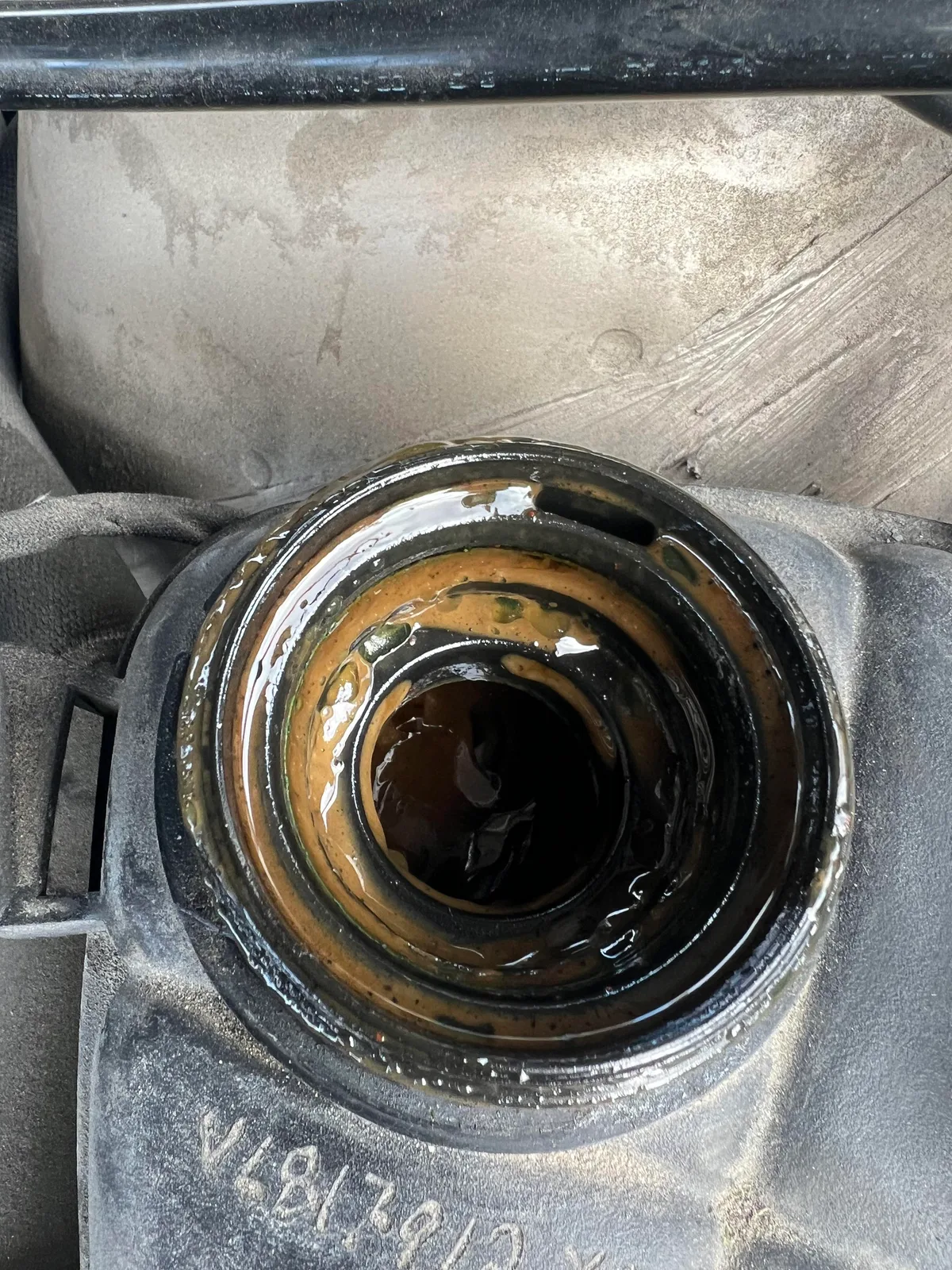
Image source: Bing (Web (fair-use with source credit))
Diagnostic costs
A proper diagnosis takes time. Visual inspection and oil check runs $50 to $100. Full scan and data logging runs $100 to $200.
Compression and leakdown test runs $150 to $300. Internal inspection with borescope runs $100 to $200.
Do not skip the diagnostic step. Throwing parts at these symptoms without understanding the root cause is a fast way to waste money.
Warranty extensions and GM goodwill programs
GM extended warranty coverage on timing chain components for certain 2011 and 2012 Traverse models. The coverage is 10 years or 120,000 miles. If you are within that window and have proof of regular oil changes, you may get coverage.
For other years, GM Goodwill programs exist on a case-by-case basis. Call Chevrolet customer service with your VIN and ask. Be polite, be persistent, and have service records ready.
No warranty extensions exist for water pump, oil consumption, or lifter failure as of 2026. Those repairs come out of pocket.
The Decision Guide: Fix It, Replace It, or Dump It
This is where you figure out what to do. The answer depends on your specific situation.
How to decide based on mileage, repair cost, and vehicle condition
If you have a 2009 to 2013 Traverse with 120,000+ miles:
If the timing chain has not been done yet, budget for it within the next 20,000 miles. If a major repair happens, ask yourself what the car is worth. If a $3,500 repair is more than half the vehicle's value, look at the rest of the car.
If the transmission, suspension, and body are solid, it is worth fixing. If the car has other issues, move on.
If you have a 2014 to 2017 Traverse with 80,000 to 120,000 miles:
Water pump and timing chain are still concerns but less urgent. Watch oil consumption. If you are adding a quart every 1,000 miles, address the PCV system first.
That is cheap. If the problem continues, it is probably rings. That is an expensive fix.
A lifter failure at this mileage is a serious blow. Budget for it or trade out of the car before it hits.
If you have a 2018 or newer Traverse:
You are in the best position, but not immune. Stay on top of oil changes with Dexos1 full synthetic. Watch for carbon buildup symptoms around 60,000 miles.
If you catch a lifter failure under warranty, you are golden. Out of warranty, it still hurts. But the frequency of major failures is lower on this generation.
What to do if you are staring at a $3,000 repair bill on a car worth $8,000
Compare the repair cost to the cost of replacing the vehicle. If you fix the Traverse for $3,000 and it is otherwise reliable, you are getting another 50,000 to 80,000 miles out of it. That is about $0.04 to $0.06 per mile in repair cost spread over those miles.
A new car payment on a $600 monthly note over the same period is $0.12 to $0.20 per mile just in depreciation and financing. The math often favors fixing the car you have.
But if the Traverse has transmission issues, rust, or electrical problems, those do not get fixed when you fix the engine. Look at the car as a whole. If it is in good shape otherwise, fix it.
If it is a bucket, let it go.
When a used or remanufactured engine makes sense
If the repair estimate for your current engine is $4,000 or more, a used or remanufactured engine starts to look attractive. A used engine from a reputable source with 60,000 to 80,000 miles costs $2,500 to $4,500 installed. That is often less than rebuilding the existing engine with the same potential for future problems.
Make sure the used engine is from a 2018 or newer Traverse if possible, or at least a 2014 to 2017 with documented maintenance.
A remanufactured engine costs more but comes with a warranty. If you plan to keep the car for five more years, the extra $1,000 to $2,000 is worth it for the peace of mind.
Signs that the vehicle itself is not worth saving
Some conditions mean you should walk away entirely. Frame or subframe rust that compromises safety. Transmission problems on top of engine problems.
Multiple engine issues suggesting overall poor maintenance. Body damage or interior wear that makes the car unpleasant to own. A repair cost that exceeds 70 percent of the car's value.
In those cases, take the money you would have spent on the engine and put it toward a different vehicle. The Traverse is a good platform when maintained. A neglected one is a money pit.
What Current Owners Must Do to Keep This Engine Alive
If you are keeping your Traverse, there is a clear playbook for survival. The owners who get 200,000 miles out of this engine share the same habits. It is not luck, it is maintenance.
Change your oil every 5,000 miles with full synthetic 5W-30 meeting the Dexos1 Gen2 spec. The oil life monitor claims 10,000 miles. That is too long for this engine.
Aggregate owner reports confirm this.
Check the oil color monthly. Pull the dipstick and look. If the oil looks like chocolate milk, you have coolant contamination.
That is the water pump failing. Park the car and call a tow truck. Every mile you drive at that point destroys bearings.
Listen to cold starts. A rattle from the front of the engine lasting two or three seconds is the timing chain. Catch it early and you might only need a tensioner replacement.
Ignore it and you will need a full engine job.
Stay on top of the PCV system. Every 30,000 miles, check the hose and replace the valve if it feels loose. It is a few dollars and ten minutes.
A clogged PCV system causes oil leaks, high crankcase pressure, and can push oil past the rings.
Change the coolant at 100,000 miles. Use only GM Dex-Cool and bleed the system fully. Air pockets create hot spots that crack the plastic crossover pipe.
Replace spark plugs at 100,000 miles. Coil packs are less predictable. If you get a misfire code, swap the suspect coil with another cylinder and see if the code moves.
Replace just the failed one unless you are seeing multiple failures.
Watch oil levels between changes. If you are adding a quart every 2,000 miles, start diagnosing early. At 70,000 miles, it might just be a PCV valve.
At 100,000 miles, the rings may already be gone.
What Used Car Shoppers Need to Check Before Buying a Traverse
The engine history matters more than the paint, interior, or stereo. Follow this checklist to spot problem cars before you hand over money.
Avoid the worst years first. The 2009 to 2013 models carry the highest timing chain risk. The 2014 to 2017 models are better but still have water pump and oil consumption concerns.
The 2018 and newer generation has far fewer major engine failures, though lifter issues still appear.
Here is what to look for during the walkaround. Check the oil cap for milky residue. Look for coolant stains or crust around the front of the engine near the timing cover.
Pull the dipstick and smell it. If it smells sweet or looks foamy, walk away.
Schedule the test drive for a cold start. Ask the seller to leave the car overnight or come back in the morning. Start it and listen from outside the front bumper.
A rattle for a few seconds means chain slack. That is a $2,000 to $3,000 repair hiding in the engine.
Check the service records like a detective. You want documented oil changes every 5,000 to 7,500 miles, not a gap of 20,000 miles. No records means assume the worst and price accordingly.
Spend $150 on a pre-purchase inspection by an independent mechanic. Focus their attention on the timing chain, water pump, crossover pipe, and PCV system. Ask them to scan for historical misfire codes and check the oil consumption history.
Use the known issues as leverage. A Traverse that needs a timing chain job at 90,000 miles is worth at least $3,000 less. A seller who refuses to budge on price is a seller you can walk away from.
Frequently Asked Questions
Is the Chevy Traverse engine reliable?
Reliability varies heavily by year. The 2009 to 2013 models have serious timing chain problems. The 2018 and newer models are much improved.
With oil changes every 5,000 miles, many owners pass 150,000 miles without major repairs. Without that maintenance, the engine can fail before 100,000.
How many miles do Traverse engines typically last?
Well-maintained engines regularly reach 150,000 to 200,000 miles. Neglected ones sometimes fail near 90,000. Timing chain failures historically hit between 60,000 and 120,000 miles.
Keep up with oil changes and address rattles immediately, and the engine will reward you.
Can I drive with a timing chain rattle?
You can, but you should not. The rattle means the chain has slack, and every mile adds more wear. Once the chain jumps teeth, you will bend valves and possibly ruin the engine.
Drive it straight to a shop. Do not drive it for two weeks waiting for an appointment.
Does the 2018 or newer Traverse fix these problems?
Mostly, yes. The 2018 redesign uses a newer engine version with better timing chain components. Water pump failures are rarer, and oil consumption is less common.
But carbon buildup and some lifter issues still happen. The frequency is lower, but not zero.
Should I buy an extended warranty for a used Traverse?
If you are buying a 2014 to 2017 model, yes. The timing chain and water pump risks make the coverage worthwhile. For 2018 or newer, it depends on the price.
A good extended warranty under $2,000 for 100,000 miles of coverage is worth considering.
Final Verdict: Should You Buy, Keep, or Walk Away?
For current owners with a well-maintained Traverse and no warning signs, keep it. Budget for a water pump and timing chain replacement around the 100,000 to 120,000 mile mark if you own a 2014 or older model. If you have a 2009 to 2013 with the original chain, start saving now.
For used car buyers, the 2018 and newer models offer a decent three-row crossover without the old engine's catastrophic failure reputation. The 2014 to 2017 cars can be smart buys if the price accounts for the risk and the service history is rock solid. The pre-2014 models should only be bought at a price that treats a timing chain job as inevitable.
The honest truth is that the Traverse is a comfortable, spacious SUV that sells cheap on the used market specifically because of its engine reputation. That creates an opportunity. Buy one that has been maintained, stay ahead of the known failures, and you will get a lot of vehicle for less than a comparable Honda or Toyota.
Just never skip an oil change.

Similar Posts