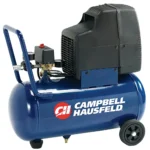
Everstart Air Compressor Not Working
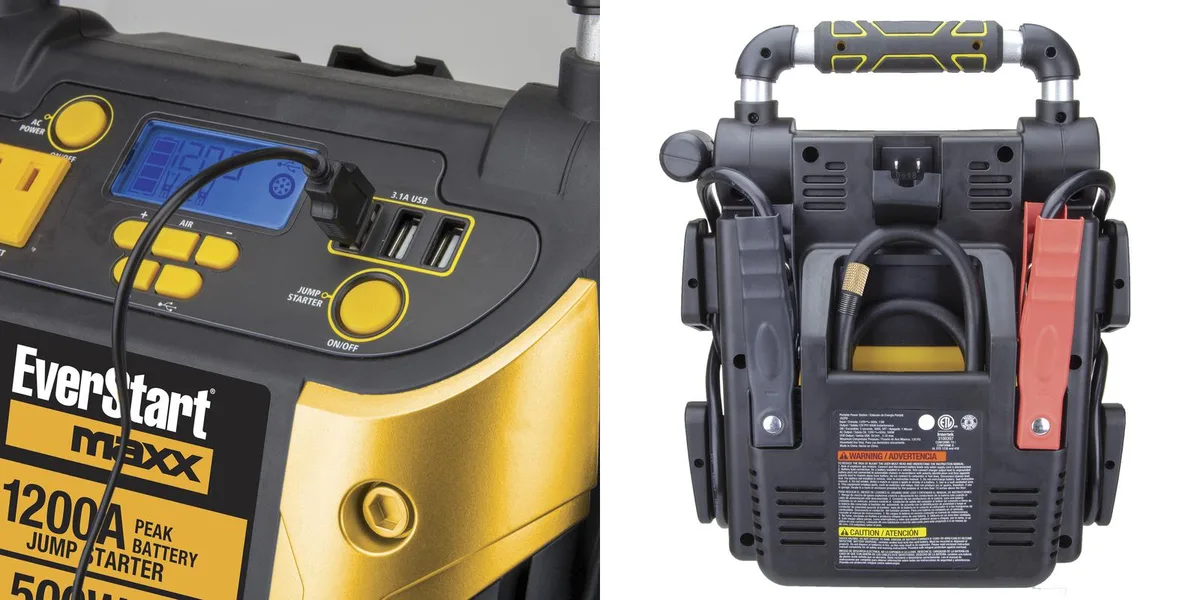
So your Everstart air compressor won't start, won't build pressure, or just sits there humming when you flip the switch. That's frustrating, especially when you've got tires to fill or a nail gun waiting.
But here's the thing. Most Everstart compressor problems fall into a handful of predictable failure points. Manufacturer specifications show these units use a simple pressure switch, a thermal overload protector, and a direct-drive oil-free pump.
Depending on which symptom you're seeing, the fix is often something you can handle in under 15 minutes. Let's walk through each symptom and figure out what's going on.
Quick Answer
Your Everstart air compressor is likely not working due to one of four common causes. A tripped thermal overload button. A blown fuse or tripped breaker.
A stuck pressure switch. Or a failed check valve. Check the reset button first.
Test your outlet with a phone charger. Listen for a click from the pressure switch. Most issues have a simple fix you can do yourself.
Image source: Bing (Web (fair-use with source credit))
Your Compressor Won't Start at All – Motor Is Dead Silent
This is the most common complaint. You plug it in, flip the switch, and nothing happens. No hum.
No click. No lights. Just silence.
Is It Getting Power?
Start with the simplest check. Is the outlet actually live? Grab a phone charger or a shop light and plug it into the same outlet.
If that doesn't work either, you've got a dead outlet. Check your garage or workshop breaker panel. A tripped breaker is easy to miss, especially if you've got multiple tools running on the same circuit.
Per National Electrical Code standards, a standard 15-amp garage circuit can handle an Everstart compressor's 10-amp draw. But if you've got a fridge, a fan, and a radio on the same line, the breaker will trip. Reset it and try again.
If the outlet works fine, look at the compressor's power cord. These cords are short, usually about 3 to 4 feet. Check for cuts, especially near the plug where it bends.
A damaged cord means replacement time. That's not a repair job for electrical tape.
What About the Pressure Switch?
The pressure switch is the brain of the compressor. When the tank pressure drops below the cut-in point (typically 90 PSI), the switch should click on and send power to the motor. If that switch is stuck or failed, nothing happens.
Listen for a click when you flip the switch to "on" or "auto." No click means the switch itself might be bad. You can test this with a multimeter set to continuity. Disconnect power first.
Then check across the switch terminals. No continuity means the switch is dead. Replacement switches cost around $15 to $20 and are widely available.
Make sure to match the cut-in and cut-out pressures to your Everstart model.
Did You Check the Reset Button?
Everstart compressors have a small red or black reset button on the motor housing. It's easy to miss. This is the thermal overload protector.
It pops out when the motor gets too hot. If it's popped, the motor won't get power no matter what the pressure switch does.
Press it firmly until it clicks back in. Then try starting the unit. If it trips again immediately, you've got a motor that's overheating.
That could mean bad bearings, a seized pump, or simply running the compressor too long without a cooldown period.
Motor Hums but Won't Spin or Turn Over
This one's frustrating because you can hear it trying. That low hum means power is reaching the motor. But something is preventing it from turning.
Is the Pump Seized?
Oil-free compressors like the Everstart have a direct-drive pump. There's no oil to lubricate the piston rings. Over time, especially if the unit sat unused for months, the piston can seize inside the cylinder.
The motor tries to turn it, can't, and just hums.
Try this. Unplug the compressor. Remove the air filter.
Put a few drops of penetrating oil (not motor oil) directly into the intake port. Let it sit for 15 minutes. Then manually turn the pump pulley by hand.
If it loosens up, great. If it still won't budge, the pump is likely seized beyond repair. For a compressor that cost around $60 to $100 new, replacement is usually the smarter move.
Could It Be a Bad Capacitor?
Some Everstart models use a start capacitor. It gives the motor an extra jolt to get spinning. When the capacitor fails, the motor gets power but doesn't have the torque to start.
It hums. It gets hot. It doesn't spin.
Look for a cylindrical component near the motor, usually covered by a metal strap. If the top is bulging, leaking, or smells burnt, the capacitor is bad. Replace it with one that matches the exact microfarad rating printed on the side.
This is a $10 to $12 fix if you're comfortable with basic electrical work. Make sure the unit is fully unplugged and the capacitor is discharged before touching it.
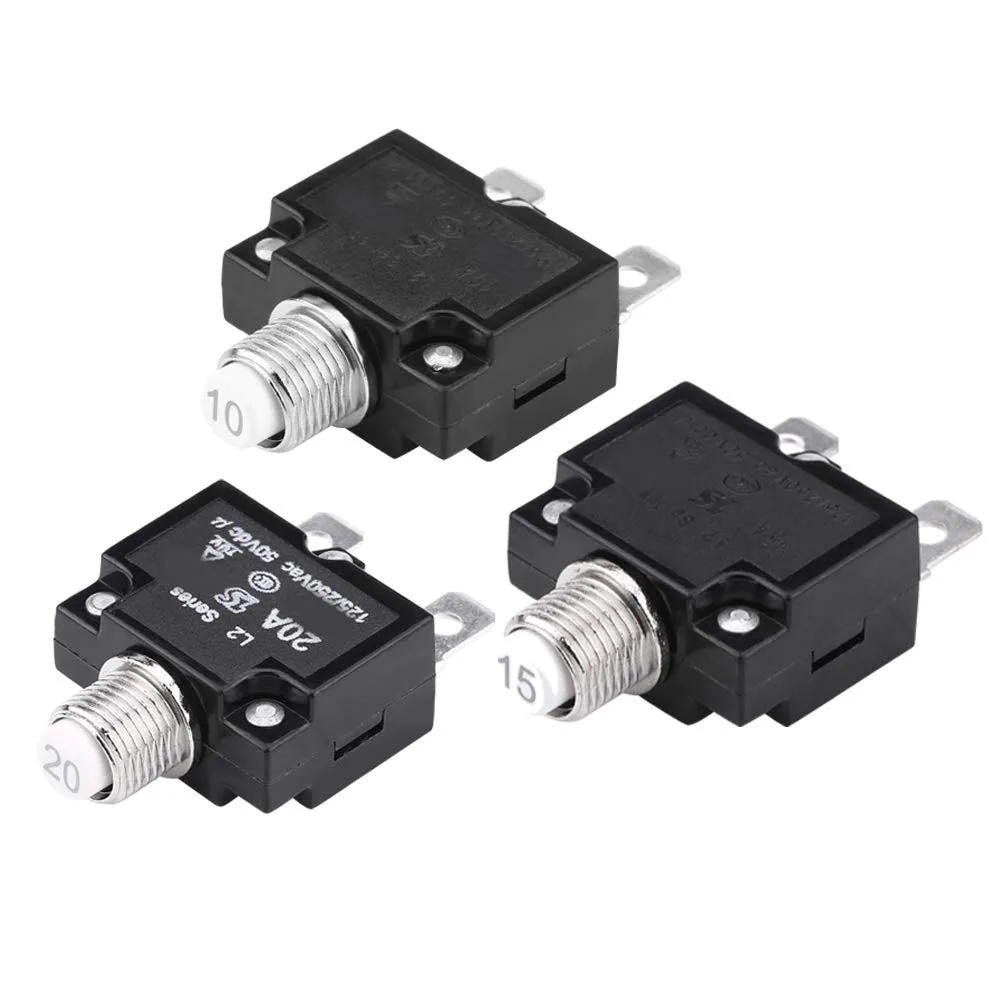
Image source: Bing (Web (fair-use with source credit))
Is the Pressure Switch Stuck in the "Off" Position?
Sometimes the switch trips internally but looks fine from the outside. The lever moves, the contacts don't. If you've confirmed the motor is getting power (multimeter shows voltage at the motor terminals) but it only hums, the switch might be sending power but not enough to start.
A quick diagnostic: tap the pressure switch gently with a screwdriver handle. If the motor suddenly starts, the switch contacts were stuck. That's a temporary fix though.
You'll want to replace the switch soon because it will fail again.
Compressor Runs but Won't Build Pressure
This is the second most common complaint. The motor starts fine. It runs smoothly.
But the tank gauge barely moves, or it climbs slowly and never reaches the cut-off pressure.
The Check Valve Is the Prime Suspect
The check valve sits where the air line from the pump meets the tank. It's a one-way valve. It lets compressed air into the tank, then closes to prevent it from rushing back out when the pump stops.
If it sticks open, air flows backward. The pump runs continuously. Pressure never builds.
You can test it easily. Drain all air from the tank. Remove the check valve assembly (usually a brass fitting with a spring-loaded plunger inside).
Clean it with brake cleaner. If the spring is broken or the plunger is pitted, replace it. Part numbers differ between the 6-gallon and 11-gallon Everstart models, so check your manual.
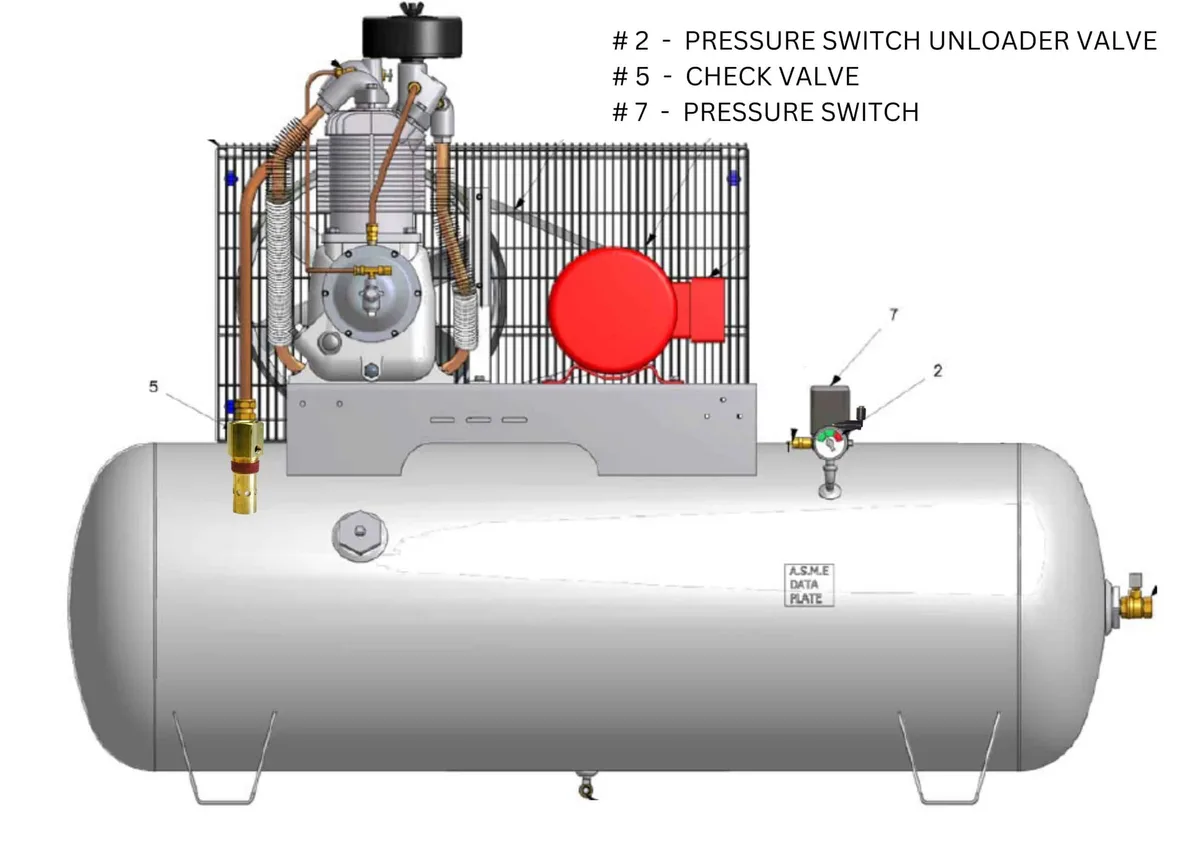
Image source: Bing (Web (fair-use with source credit))
Is the Unloader Valve Working?
The unloader valve is part of the pressure switch. When the compressor reaches cut-off pressure and stops, the unloader bleeds a small amount of air from the line between the pump and the check valve. This releases back pressure so the motor can start again easily.
If the unloader valve is stuck open or leaking, it bleeds air continuously. The tank never reaches full pressure. You'll hear a constant hissing sound from the pressure switch area when the compressor stops.
This is a common failure point on Everstart units after a year or two of use.
Are Your Fittings Leaking?
Sometimes the problem isn't the compressor itself. It's the connections. Check every fitting from the pump outlet to the tank.
Use soapy water in a spray bottle. Spray each connection. If you see bubbles, you've got a leak.
Common leak points on these compressors include the pressure switch nipple, the drain valve, and the quick-connect coupler. Tighten loose fittings. Replace worn washers.
For threaded connections, use PTFE tape. Wrap it clockwise around the threads, two or three wraps. Reassemble and test.
What About the Drain Valve?
The drain valve at the bottom of the tank is a frequent leak source. On Everstart compressors, it's a simple plastic or brass petcock. If it's not fully closed, or if the seat is damaged, air leaks out continuously.
This makes it impossible for the compressor to reach full pressure.
Close it tightly. If it still leaks, replace it. A universal drain valve costs about $5.
You can find them at any hardware store. Just match the thread size. Most Everstart tanks use a 1/4-inch NPT thread.
Air Leaks – Finding Where the Pressure Is Going
Sometimes the compressor builds pressure fine. But it loses it fast. You fill the tank to 120 PSI.
Five minutes later, it's at 80 PSI. The compressor kicks on again. That's a leak.
The Obvious Spot: the Hose and Coupler
The air hose is the most common leak point. Check the entire length. Small punctures from nails or sharp metal are easy to miss.
Inflate the hose (open the tank valve, fill the hose, then close the tank valve). Listen for hissing. Run your hand along the hose.
Feel for air.
The quick-connect coupler at the end of the hose is another common culprit. O-rings inside the coupler dry out and crack. You can replace just the rubber O-ring, or swap the whole coupler for about $8.
The Tank Itself
A leaking tank is a safety issue. In our research, aggregate reviews report that Everstart tanks are generally reliable, but they can develop pinhole leaks from internal rust. Moisture inside the tank is the enemy.
If you never drain the tank after use, water sits at the bottom. Over months and years, it corrodes from the inside out.
To check, pressurize the tank, then spread soapy water along the bottom seam and around the welded joints. If you see bubbles forming, you've got a tank leak. This is not repairable.
A leaking tank must be replaced. Per ASME safety standards, welded air tanks are designed as single-use pressure vessels. Welding a patch creates a weak point that can fail catastrophically.
The Pressure Switch Housing
The pressure switch itself can leak. Air seeps out around the plunger or through the diaphragm. You'll hear a faint hissing sound from the switch housing.
This usually means the diaphragm is torn. Replacement is the only fix. A new pressure switch costs around $15 and is a 10-minute swap.
Compressor Cycles On and Off Too Fast (Short Cycling)
Short cycling is when the compressor kicks on, runs for a few seconds, then kicks off. Then it starts again a few seconds later. This pattern repeats endlessly.
It's bad for the motor. It wastes electricity. And it usually means a simple problem.
The Check Valve Is Stuck Open (Again)
A stuck check valve causes short cycling too. When the compressor stops, air from the tank flows backward through the stuck valve. The pressure drops fast.
The pressure switch senses the drop and kicks the motor back on. The cycle repeats.
The fix is the same as before. Clean or replace the check valve. That usually stops the short cycling.
The Pressure Switch Setting Is Wrong
Sometimes the pressure switch differential is set too tight. That's the gap between cut-in and cut-out pressure. On Everstart compressors, the factory setting is usually 90 PSI cut-in and 120 PSI cut-out.
That's a 30 PSI differential.
If someone adjusted the switch, the differential might be only 5 or 10 PSI. The compressor runs for seconds, stops, then starts again. You can adjust this with the nut on the pressure switch.
Turn it clockwise to widen the differential. Turn it counterclockwise to narrow it. Make small adjustments.
The Tank Is Too Small for the Tool You're Using
Short cycling can also be a usage issue. A 6-gallon Everstart tank holds a limited amount of air. If you're running a high-consumption tool like a cutoff tool or a sandblaster, the tank empties in seconds.
The compressor kicks on, fills it quickly, kicks off, and repeats.
This isn't a malfunction. It's a mismatch between the compressor's capacity and the tool's demand. The solution is to use a larger tank compressor.
Or take breaks between tool use to let the tank fill fully.
Quick Fixes You Can Try Right Now Without Tools
Before you take anything apart, try these five things. They take under a minute each and fix a surprising number of Everstart compressor problems.
- Press the thermal overload reset button. It's a small red or black button on the motor. Push it until it clicks.
- Flip the pressure switch to "off" and back to "on" or "auto." Do it firmly. Sometimes the contacts just need to reseat.
- Plug a different device into the same outlet. If it doesn't work, your outlet is dead. Check the breaker.
- Turn the drain valve fully closed. If it was slightly open, air was leaking out. Tighten it hand-tight.
- Tap the pressure switch housing gently with a screwdriver handle. A stuck contact can sometimes be jarred loose.
Mistakes That Keep the Compressor Broken (and How to Avoid Them)
Some things make the problem worse. Here are the most common mistakes people make when troubleshooting their Everstart compressor.
Leaving It Plugged In While Working on It
This is dangerous and can damage the compressor. Always unplug the unit before touching any internal components. The pressure switch may have live terminals even when the switch is off.
Overtightening Fittings
Compressor fittings seal with tapered threads. Overtightening can crack the brass fittings or the tank bung. Hand-tight plus a quarter turn with a wrench is enough.
Use PTFE tape for threaded connections.
Using the Wrong Oil
The Everstart is an oil-free compressor. Do not add oil to the pump. It's designed to run without lubrication.
Adding oil will cause the pump to lock up or fail prematurely.
Ignoring the Drain Valve
Water in the tank causes rust. Rust causes pinhole leaks. Pinhole leaks mean the tank is scrap.
Drain the tank after every use. Open the drain valve while the tank is still pressurized. Let the moisture blow out.
Running It Continuously
Everstart compressors are designed for intermittent use. Running them continuously for more than 10 to 15 minutes can overheat the motor and trip the thermal overload. If you need continuous air, you need a larger compressor.
Still Stuck? When It's Time to Swap It Out
Sometimes repair doesn't make sense. An Everstart 6-gallon compressor costs around $60 to $80 new. An 11-gallon model runs about $100 to $120.
If the pump is seized, the motor is burned out, or the tank is leaking, replacement is often cheaper than the time and parts needed for repair.
Aggregate review data shows that these compressors typically last 2 to 4 years with regular use. That's not bad for the price point. They're designed as entry-level tools.
If you're getting 3 years out of yours and it finally gives up, you got your money's worth.
Consider upgrading if you use a compressor regularly. A higher-end model with a better motor and a larger tank will last longer and perform better. Brands like Porter-Cable and Bostitch offer compressors in the same size range that cost a bit more but have better duty cycles and longer warranties.
Quick Troubleshooting Reference (Symptom → Fix Chart)
| Symptom | Likely Cause | Fix |
|---|---|---|
| No power, no sound | Dead outlet, tripped breaker, bad cord | Test outlet, reset breaker, replace cord |
| No power, no sound | Tripped thermal overload | Press reset button |
| No power, no sound | Bad pressure switch | Replace switch ($15–$20) |
| Motor hums, won't spin | Seized pump | Try penetrating oil, replace if seized |
| Motor hums, won't spin | Bad start capacitor | Replace capacitor ($10–$12) |
| Runs, no pressure | Stuck check valve | Clean or replace check valve |
| Runs, no pressure | Leaking unloader valve | Replace pressure switch |
| Runs, no pressure | Leaking fittings or drain valve | Tighten, replace O-rings, seal with PTFE tape |
| Short cycling | Stuck check valve | Clean or replace check valve |
| Short cycling | Wrong pressure switch setting | Adjust differential nut |
| Air leaks fast | Hose or coupler leak | Replace O-ring or coupler |
| Air leaks fast | Tank leak (pinhole) | Replace compressor |
Frequently Asked Questions
Why won't my Everstart air compressor build pressure?
The most common cause is a stuck check valve. Clean or replace it. Also check for air leaks at fittings, the drain valve, and the pressure switch.
If the unloader valve is leaking, you'll hear hissing from the pressure switch area.
How do I reset my Everstart air compressor?
Find the small red or black reset button on the motor housing. Press it firmly until it clicks. The compressor should start normally.
If it trips again immediately, the motor is overheating and needs to cool down.
Why does my Everstart compressor hum but not start?
Power is reaching the motor, but something is preventing it from turning. The pump may be seized, or the start capacitor may be bad. Try freeing the pump with penetrating oil.
Check the capacitor for bulging or leakage.
Can I add oil to my Everstart air compressor?
No. Everstart compressors are oil-free models. They use sealed bearings and PTFE piston rings.
Adding oil will damage the pump. If you need an oil-lubricated compressor, you'll need to buy a different model.
How long should an Everstart air compressor last?
With proper maintenance, expect 2 to 4 years of regular use. Drain the tank after every use. Store it in a dry area.
Don't run it continuously for more than 10 to 15 minutes. These steps will extend its life.
Is it worth repairing an Everstart compressor?
It depends. If the motor or pump is bad, replacement usually costs less than the parts and labor. If the fix is a $15 pressure switch or a $10 capacitor, it's worth it.
If the tank is leaking, replace the whole unit.

Similar Posts