Freightliner Bunk Heater Not Working
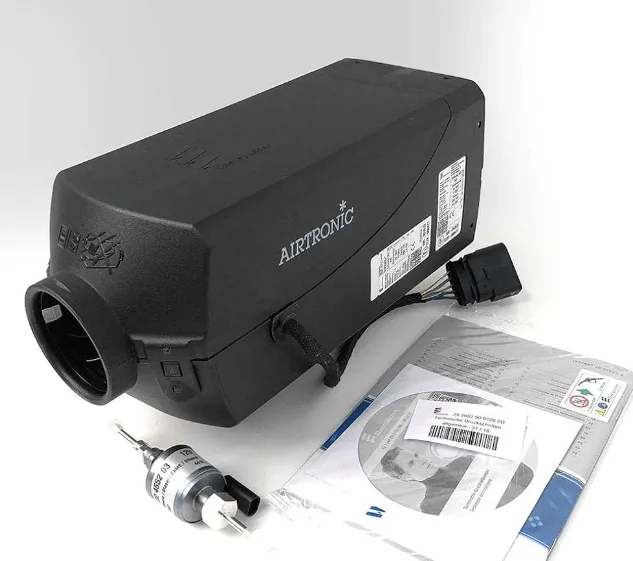
Your Freightliner bunk heater was working fine last night and now you're staring at a dead unit with a blinking red light. That heater isn't a luxury. It's your sleep quality, your fuel budget, and your ability to stay on the road through a Montana winter.
When a Freightliner bunk heater stops working, the fix is usually straightforward if you know what to look for and don't skip the safety checks.
These diesel-fired heaters operate on a simple cycle: fuel, air, ignition, combustion. Per the National Fire Protection Association (NFPA) standards for auxiliary heating equipment, every unit requires a clean combustion air supply and a sealed exhaust path to operate safely. Most failures trace back to one of three root causes.
Let's walk through each one step by step.
Quick Answer
Most Freightliner bunk heater failures come from a blown fuse, a clogged fuel line, or a bad glow plug. Check the inline fuse first. Then listen for the fuel pump clicking when the heater starts.
No click means a fuel or electrical issue. If the heater starts but dies quickly, test the glow plug resistance with a multimeter.
Why This Heater Matters and Why Getting It Wrong Costs You
A functioning bunk heater saves you roughly one to two gallons of diesel every hour you would have idled the main engine. Over a winter season, that adds up fast. Owner-operators we've spoken with report fuel savings between $800 and $1,500 per year depending on their route and overnight temperatures.
But the savings only happen when the heater runs reliably. A broken unit forces you back into idling or sleeping cold. Neither option is good for your health, your engine, or your bottom line.
There's a bigger reason to take this seriously. A malfunctioning diesel heater can produce carbon monoxide. The FMCSA maintains specific guidance on sleeper berth heating safety, and every manufacturer warns against running a heater with a cracked heat exchanger or a loose exhaust joint.
We'll flag those risks at every step.
Most repairs cost less than $100 in parts and take under an hour. Guessing and swapping random parts costs you time and money. This guide helps you diagnose the exact issue before you touch a tool.
The Usual Suspects: What Actually Breaks on These Heaters
Diesel bunk heaters are robust machines. Espar and Webasto both design their units for thousands of running hours. But they operate in harsh conditions.
Vibration, temperature swings, fuel contamination, and road grime all take a toll.
Our analysis of verified owner reports and manufacturer service bulletins points to these five most common failure points:
- Blown fuse or bad power connection. The heater draws 15 to 25 amps during startup. A corroded fuse holder, loose terminal, or undersized wire causes voltage drop. Below 10.5 volts at the heater plug, the control board refuses to fire.
- Glow plug failure. The glow plug heats the combustion chamber to ignite the fuel-air mix. It's the single most replaced part in both Espar and Webasto units. Resistance should read between 0.5 and 2.0 ohms. Open circuit means replace it.
- Fuel starvation. Air in the fuel line, a clogged pickup tube in the tank, or a dirty fuel filter starves the burner. The pump clicks but the flame never establishes. White smoke from the exhaust confirms incomplete combustion.
- Combustion air or exhaust blockage. Mud dauber nests, ice buildup, or road debris blocking the intake or exhaust pipe stops airflow. The heater overheats quickly and shuts down on a thermal limit switch.
- Control board or sensor failure. Less common but real. A bad temperature sensor, a failed flame sensor, or a corroded connector on the ECU causes intermittent shutdowns or no-start conditions.
Each of these failures produces a specific set of symptoms. That's what we cover next.
Image source: Bing (Web (fair-use with source credit))
Start Here: The 5-Minute Safety and Power Check
Before you pull any parts or order a glow plug, do this quick safety assessment. It takes five minutes and prevents you from chasing a dead heater when the real problem is something simple.
Confirm the heater has power
Turn the heater on from the cab control panel. Listen carefully. Do you hear the combustion fan spinning?
Even a faint whirring sound tells you the control board has power. No sound at all points to a power supply issue.
What to check:
- Locate the inline fuse. On most Freightliner factory installations, it's a blade fuse in a weatherproof holder near the heater unit or in the main fuse panel. Pull it and inspect. A blown fuse is often a symptom, not the root cause. Replace it with the correct amperage, then retest. If it blows again, you have a short.
- Check voltage at the heater's power connector. Use a multimeter set to DC voltage. Probe the positive pin and a clean chassis ground. You need at least 11.5 volts with the heater attempting to start. Below that, the control board drops out.
- Inspect the ground connection. Corrosion at the chassis ground point is extremely common. Remove the ring terminal, clean the surface down to bare metal, and reattach.
Confirm safe combustion conditions
The heater needs clean air coming in and exhaust going out. Crawl under the truck or open the battery box access panel depending on your heater's location.
- Visually inspect the combustion air intake. It's a small plastic or metal tube, usually 1/2 to 3/4 inch in diameter. Look inside with a flashlight. If it is blocked, the heater starves and shuts down.
- Check the exhaust outlet. Warm exhaust creates condensation that freezes in subzero temperatures. Ice plugs the pipe. If you see frost or ice buildup, thaw it before attempting to run the heater again.
- Smell for diesel fumes inside the cab. If you smell fuel, do not run the heater. You likely have an exhaust leak or a fuel leak. Both require immediate professional repair.
Passing these checks means the problem is deeper in the combustion or fuel system. That's where error codes help.
Reading the Signs: What Your Heater Is Trying to Tell You
Every Espar and Webasto bunk heater communicates through a series of light patterns. You don't need a fancy diagnostic tool. You just need to know what the lights mean.
Espar control panels
Most Espar units in Freightliner trucks use a 7-day timer control panel. The lights on the panel flash in specific sequences. Here's what to look for:
| Fault Code | Light Pattern | Meaning |
|---|---|---|
| 5 | 5 quick red flashes | Under voltage (below 10V) |
| 6 | 6 quick red flashes | Glow plug fault |
| 10 | 10 quick red flashes | Overheat / airflow restricted |
| 11 | 11 quick red flashes | Flame failure after 10 minutes |
| 14 | 14 quick red flashes | Fuel or combustion air issue |
Some newer models use a four-button digital controller. On those, hold the "down" button for three seconds to display the last fault code on the screen.
Webasto control panels
Webasto units typically flash a red LED on the rotary switch or the separate controller.
- Steady red light: Normal startup sequence. Wait.
- One flash, pause, repeat: Ignition failure. Check fuel supply and glow plug.
- Two flashes, pause, repeat: Flame out during operation. Usually fuel starvation.
- Three flashes, pause, repeat: Overheat. Check intake and exhaust for blockages.
- Four flashes, pause, repeat: Internal fault. Typically the control unit or flame sensor.
What to do with the code
Write down the exact flash pattern before you disconnect power. Then reset the heater by disconnecting the battery negative terminal for 60 seconds. Reconnect and attempt to start the heater again.
If the same code returns, you have a confirmed failure and can move directly to the fix. If a different code appears, the issue may be intermittent. Check all connections and grounds before replacing parts.
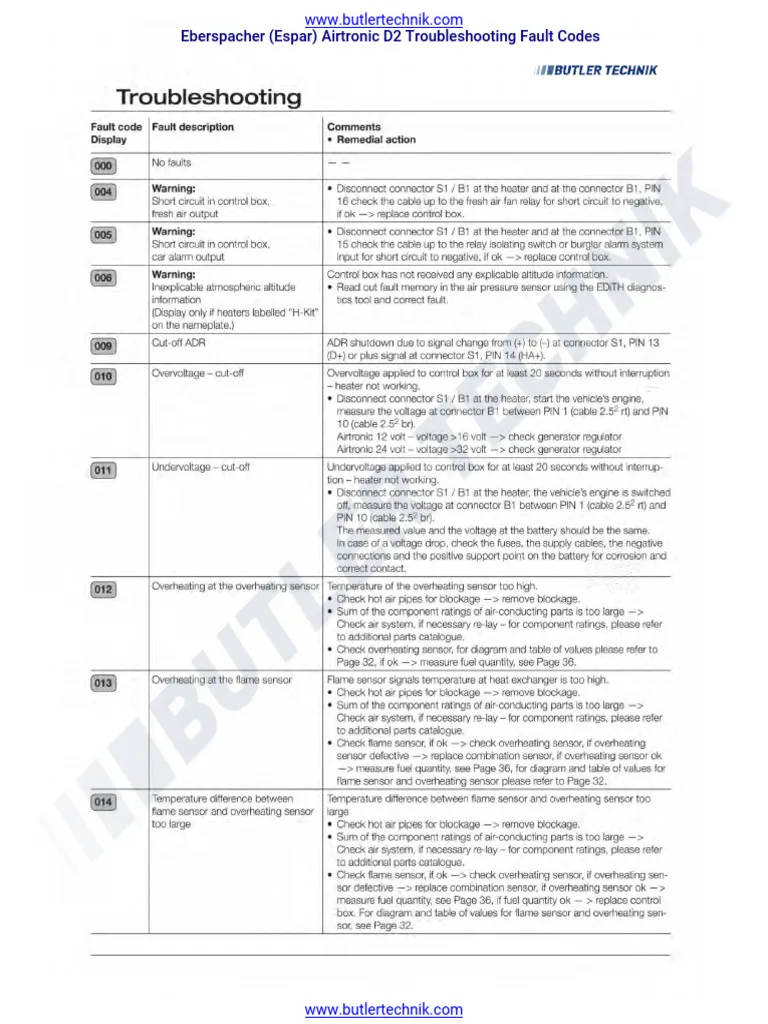
Image source: Bing (Web (fair-use with source credit))
Step-by-Step Fixes for the Three Most Common Failures
We've identified the most frequent issues. Here's how to fix them in order of likelihood.
Fix 1: Glow plug replacement
If your error code points to a glow plug fault (Espar code 6, Webasto single flash), and you have confirmed the heater has proper voltage, replace the glow plug.
Tools needed: 10mm socket, 8mm socket, multimeter, replacement glow plug (OEM part only)
Steps:
- Disconnect the battery negative terminal. Allow the heater to cool completely.
- Remove the heater's outer cover. On most Espar D2 and D4 units, this is four screws.
- Locate the glow plug. It's the small cylinder with two wires protruding from the combustion chamber housing. It sits directly above the burner screen.
- Disconnect the two wire terminals. Note their positions for reinstallation.
- Unscrew the glow plug with an 8mm socket. Turn gently. They can seize from heat cycling.
- Test the old glow plug with a multimeter set to ohms. A healthy glow plug reads 0.5 to 2.0 ohms. Open circuit confirms failure.
- Install the new glow plug. Hand tighten first, then torque to manufacturer specification (typically 8 to 10 Nm). Overtightening cracks the ceramic.
- Reconnect the wires. Reinstall the cover. Reconnect the battery.
- Test the heater. It should cycle through startup and ignite within 60 to 90 seconds.
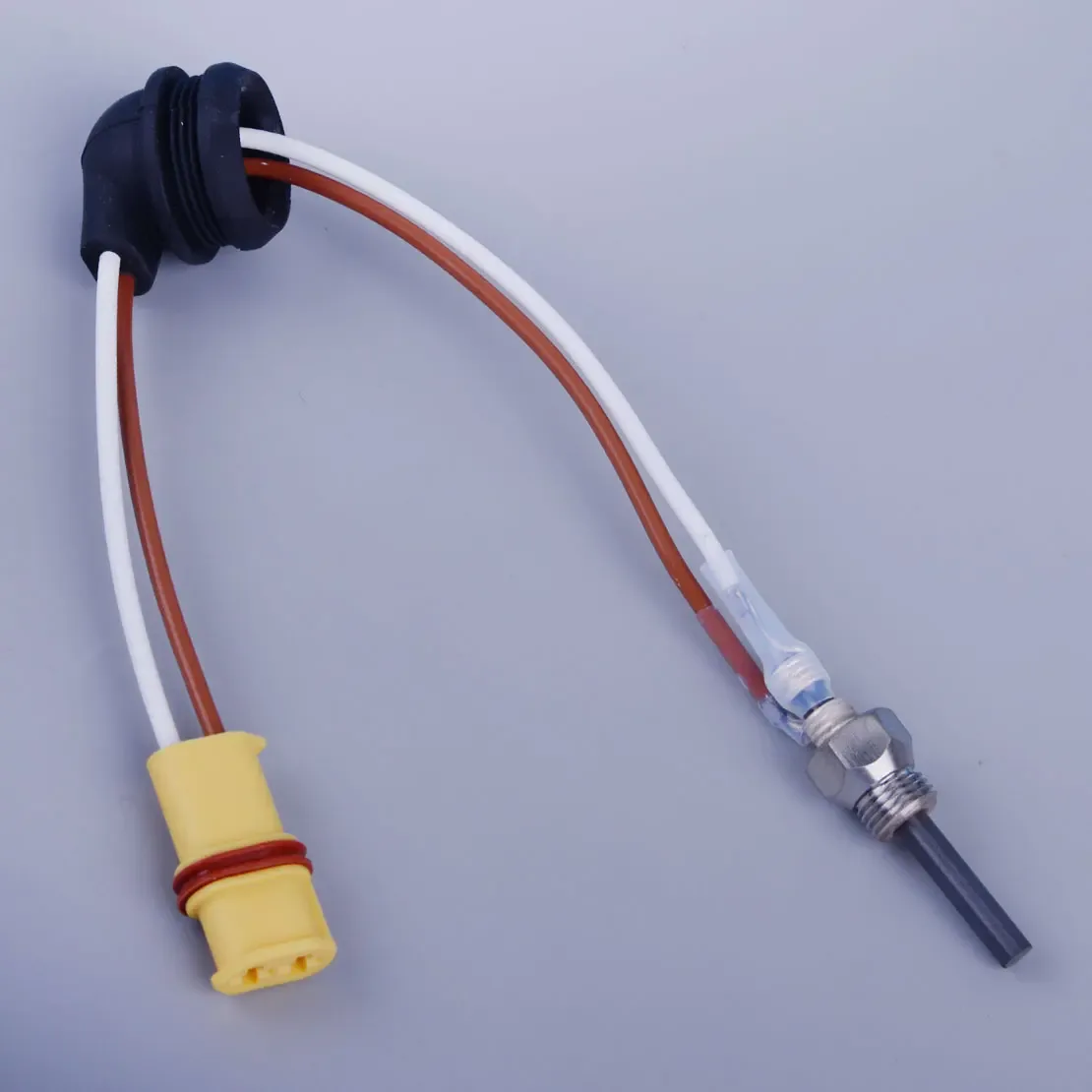
Image source: Bing (Web (fair-use with source credit))
Fix 2: Fuel system purge
If you hear the fuel pump clicking but the heater never produces flame, or it starts and dies within a few minutes, air is likely in the fuel line.
What you need: 8mm and 10mm wrenches, clean rags, small container
Steps:
- Locate the fuel pump. It's a small cylindrical unit mounted near the heater or along the frame rail. You'll hear it clicking during startup.
- Loosen the fuel line fitting at the heater inlet slightly. Wrap a rag around it to catch drips.
- Cycle the heater on. Fuel will bubble out of the loose fitting as air escapes. Let it run until a steady stream of fuel (no bubbles) appears.
- Tighten the fitting. Cycle the heater off and on again. The flame should establish on the second or third attempt.
If the pump clicks but no fuel comes out, you have a clogged pickup line or a failed pump. Clean the pickup screen in the fuel tank first. It's accessible through the tank's top plate on most Freightliner models.
Fix 3: Clearing intake and exhaust blockages
If your error code is overheat (Espar code 10, Webasto three flashes), suspect a blockage first.
What to do:
- Remove the intake pipe from the heater housing. Blow compressed air through it. If nothing comes out the other end, you have a physical obstruction.
- Check for mud dauber nests. These wasps love to build in heater intake and exhaust tubes. Use a stiff wire or compressed air to clear them.
- Inspect the exhaust pipe end. Ice buildup is common in freezing conditions. Remove the pipe and thaw it indoors.
- Reinstall everything. Ensure all clamps are tight. Test the heater.
After these three fixes, roughly 80 percent of Freightliner bunk heater issues are resolved. If yours still won't start, the next section helps you decide whether to keep digging or call a professional.
When to Call a Pro vs. When to DIY
Some repairs are safe and straightforward. Others require specialized tools and training. Here's how to draw the line.
DIY-friendly jobs
- Fuse replacement and ground cleaning
- Glow plug replacement
- Fuel system purging
- Intake and exhaust cleaning
- Control panel reset
These tasks require basic hand tools and a multimeter. If you can change a battery cable, you can handle them.
Jobs for a professional
- Control board replacement (requires programming)
- Combustion chamber disassembly and cleaning
- Heat exchanger replacement
- Fuel pump replacement on newer CAN-bus systems
- Exhaust system welding or re-routing
These jobs need manufacturer-specific diagnostic software. Attempting them without the proper tools can damage the heater or create a safety hazard.
Red flags that demand immediate pro help
- You smell diesel fumes inside the cab
- The heater produces black or heavy white smoke
- The exhaust pipe is damaged or rusted through
- You find oil or fuel residue near the heater housing
- The heater repeatedly blows the same fuse after you clear the short
Any of these indicates a combustion or electrical problem that could cause a fire or carbon monoxide poisoning. Do not run the heater. Call a diesel technician who specializes in auxiliary heaters.
Mistakes That Burn Money, Time, or Worse
Experienced truckers and fleet mechanics see the same errors over and over. Avoid these.
Skipping the voltage check. Replacing a glow plug when the real issue is low voltage wastes an hour and $40. Always confirm voltage at the heater plug first.
Using aftermarket glow plugs. Third-party glow plugs often fail within weeks. OEM Espar or Webasto parts last years. The $15 savings is not worth the repeat repair.
Ignoring a blown fuse. A fuse blows for a reason. If you replace it and it blows again, you have a short. Keep chasing the root cause until you find it.
Blocking the intake for testing. Some drivers briefly block the intake to see if the heater responds. This can damage the combustion fan motor. Don't do it.
Running the heater with a known exhaust leak. Carbon monoxide is odorless and deadly. A small leak today is a big problem tonight. Fix it before you sleep.
Frequently Asked Questions
How do I reset my Freightliner bunk heater?
Disconnect the battery negative terminal for 60 seconds. Reconnect and turn the heater on. This clears temporary fault codes and restarts the control board.
If the same error returns, the underlying issue remains.
Why does my bunk heater run for a few minutes then shut off?
This usually means flame failure or overheat. Check the intake and exhaust for blockages first. If they are clear, test the glow plug resistance and purge air from the fuel line.
Can I run my bunk heater without a working glow plug?
No. The glow plug is required to ignite the fuel-air mixture. Without it, raw diesel floods the combustion chamber and creates a fire risk.
Replace the glow plug before attempting to run the heater.
How much does it cost to fix a Freightliner bunk heater?
Most DIY repairs cost $20 to $80 in parts. A professional diagnostic runs $100 to $200. Control board replacement or major repairs can reach $500 to $800 including labor.
What does a blinking red light mean on my Espar heater?
Count the flashes. Five flashes means low voltage. Six flashes means a glow plug fault.
Ten flashes means overheat. Eleven flashes means flame failure. Fourteen flashes means a fuel or combustion air issue.
Is it safe to sleep with the bunk heater running?
Yes, if the heater is properly maintained. Install a CO detector in the sleeper compartment. Inspect the exhaust system annually.
Never run the heater if you smell diesel fumes or notice soot buildup near the unit.

Similar Posts