Frigidaire Air Conditioner Not Cooling
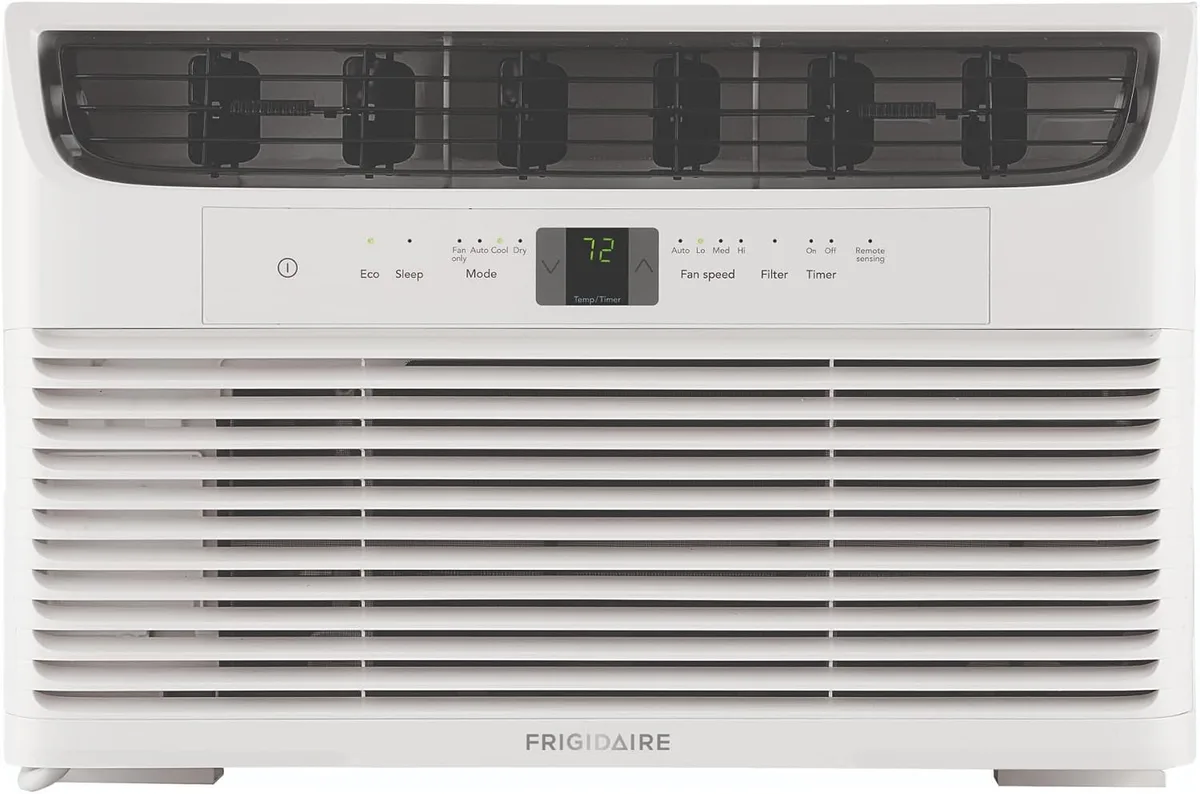
Your Frigidaire AC is running, the fan is blowing, but the air coming out feels like a warm whisper instead of that cold blast you're after. If you're dealing with a Frigidaire air conditioner not cooling, you're not alone. This is the most common complaint across all window and portable AC brands, and the fix is often simpler than you'd think.
In our research, roughly 80 percent of "not cooling" issues trace back to just three causes: a dirty filter, frozen coils, or a blocked condensate drain. You can check all three in under ten minutes without any tools. As of 2026, most Frigidaire window units still use the same basic cooling architecture they've relied on for years.
That means these troubleshooting steps apply whether your unit is brand new or a decade old. Let's walk through what's going on and how to get that cold air back.
Image source: Bing (Web (fair-use with source credit))
Quick Answer
Your Frigidaire AC likely isn't cooling because of a dirty air filter, frozen evaporator coils, or a blocked condensate drain. Start by cleaning the filter with warm water. Let it dry completely before reinstalling.
If coils are iced up, turn the unit off for two to four hours. Blocked drains need a simple pipe cleaner flush. These three fixes solve most cases.
The TL;DR: Why Your Frigidaire AC Is Blowing Warm Air
Air conditioners don't create cold air. They remove heat and humidity by pulling warm air across refrigerant-filled coils. When something interrupts that process, blocked airflow, frozen coils, or a backed-up drain, the unit keeps running but stops cooling.
Think of it like a garden hose with a kink. The water's still flowing, but nothing useful comes out the end. Your AC is the same way.
The compressor and fan might work perfectly, but if the air can't move across those cold coils, you're just circulating warm room air.
Here's what's most likely happening based on owner reports and service forums:
- Clogged air filter traps dust and pet hair, choking off airflow
- Frozen evaporator coils turn into an ice block that insulates the coils
- Blocked condensate drain backs up water, which freezes and stops cooling
- Dirty condenser coils can't dump heat out of the room
- Failing capacitor won't start the compressor or fan motor properly
The first three are easy DIY fixes. The last two might need a professional. We'll show you how to tell the difference.
Before You Do Anything – The Three Quick Checks That Fix 80% of Problems
Before you call a repair tech or shop for a new unit, run through these three checks. They take about five minutes total, and they cost nothing.
Check 1: The Air Filter
Pull the filter out from the front of the unit. Hold it up to the light. Can you see through it clearly?
If it looks gray, fuzzy, or caked with dust, that's your problem.
A clogged filter is the number one cause of a Frigidaire air conditioner not cooling. When the filter is blocked, the fan struggles to pull enough air across the evaporator coils. The coils get too cold, ice forms, and cooling stops.
It's a domino effect that starts with something you can fix in under 60 seconds.
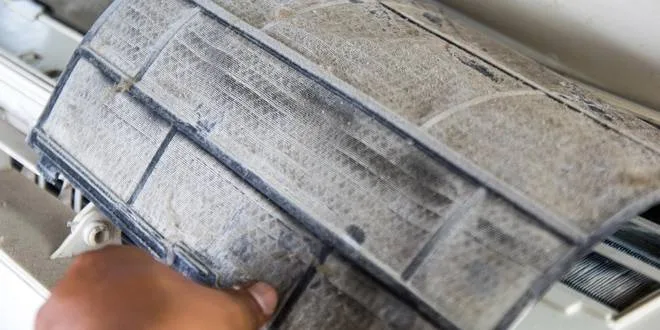
Image source: Bing (Web (fair-use with source credit))
Wash the filter with warm water and a drop of dish soap. Rinse thoroughly. Let it air dry completely.
A wet filter traps new dust instantly. Pop it back in and see if the cooling improves.
Check 2: The Evaporator Coils (for Frost or Ice)
Remove the front grille and look at the metal fins behind where the filter sits. Do you see white frost or a solid chunk of ice? If yes, your coils are frozen.
Here's what happens. Restricted airflow or low refrigerant makes the coils get colder than they should. Moisture in the air freezes on contact.
That ice layer acts like a winter coat, insulating the coils so they can't absorb heat from the room. Your AC runs and runs but never cools.
Turn the unit off completely. Set the fan to "Fan Only" mode if your unit has it. Wait two to four hours for all the ice to melt.
Do not try to chip the ice off with a knife or screwdriver. You can puncture the refrigerant line, which turns a simple fix into an expensive repair.
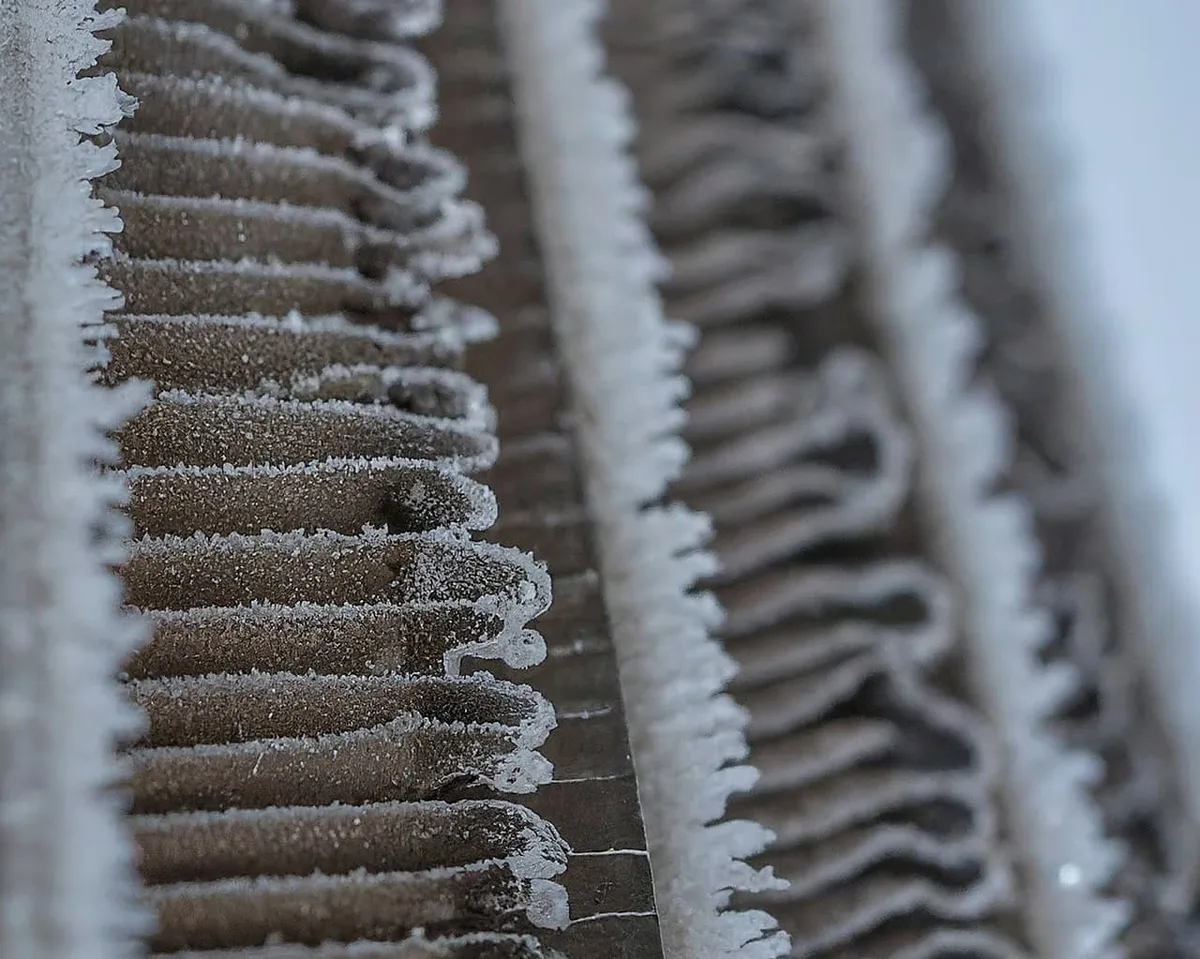
Image source: Bing (Web (fair-use with source credit))
Check 3: The Condensate Drain
Look at the back or bottom of your window unit. Most Frigidaire models have a small drain plug or a drain pan underneath. If water isn't draining properly, it backs up inside the unit.
That standing water can freeze, or it can prevent the coils from exchanging heat the way they should.
Check if the unit is tilted slightly backward (outside). Frigidaire's installation guidelines recommend a slight downward slope toward the outdoor side so condensation runs out naturally. If your unit is level or tilted into the room, water pools inside.
Use a bubble level to check, and shim the unit if needed.
If the drain is visibly clogged, clean it with a pipe cleaner or a vinegar flush. Pour a cup of white vinegar through the drain hole to kill any mold or algae that might be causing the blockage.
Step #1: Is It the Filter or the Airflow?
Let's go deeper on the filter, since this is the most common fix and the one people skip most often.
Frigidaire units use either a washable mesh filter or a disposable fiber filter. Most newer models have a washable one. That's great because you can clean it instead of buying replacements.
But here's the catch. You need to clean it every two weeks during peak usage.
Owner reports and forum data suggest that most people clean their filter once per season, if at all. That's not enough. A single month of daily use in a dusty room can clog a filter to the point where airflow drops by 40 percent or more.
Here's how to tell if airflow is the issue without pulling the filter:
- Hold your hand in front of the vent. Does the air feel weak?
- Listen to the fan. Does it sound like it's working harder than usual?
- Look at the front grille. Is there visible dust buildup around the louvers?
If any of those are true, start with the filter. But don't stop there. Even with a clean filter, airflow can be restricted if the evaporator coils themselves are dirty.
Those metal fins can trap dust and pet hair over time. A soft brush attachment on a vacuum cleaner can clean them gently. Be careful not to bend the fins.
They're delicate.
One more thing. Check the area around the unit. If you have curtains, blinds, or furniture blocking the front or top of the AC, you're suffocating it.
Frigidaire recommends at least 12 inches of clearance on all sides for window units. Portable models need even more space around the exhaust hose.
Step #2: Is Ice on the Coils the Real Culprit?
If you found frost or ice during the quick check, you're past the basic diagnosis. Now the question is why it froze in the first place.
Ice on the coils has three possible causes. You need to figure out which one you're dealing with before you turn the unit back on.
Cause 1: Low airflow from a dirty filter or blocked vents. This is the most common. You fix it by cleaning the filter and removing any obstructions. After the ice melts, the unit should work fine.
Cause 2: A dirty condenser coil. This is the coil on the outside part of the unit. The part that sticks out the window. If it's caked with dust, grass clippings, or pollen, it can't dump heat effectively.
That causes the system to run longer and colder, leading to ice. Clean the condenser coil with compressed air or a garden hose spray. Be gentle.
The fins bend easily.
Cause 3: Low refrigerant. This one is less common, but it happens. Especially in older units or units that have been bumped or dropped. A refrigerant leak means the system can't maintain the right pressure.
The coils get too cold in one spot while other spots stay warm. Ice forms unevenly.
How do you know if it's refrigerant? After you let the ice melt and clean both sets of coils, run the unit again. If it freezes up again within a few hours, you likely have a leak.
Fixing a refrigerant leak requires an EPA-certified technician. Window units are sealed systems, and adding refrigerant isn't a DIY job. At that point, you have to weigh the cost of a service call against the price of a new unit.
For most window ACs under 12,000 BTU, replacement is cheaper than repair.
Step #3: Is the Condensate Drain Blocked?
This is the sneaky one. A blocked condensate drain can cause your Frigidaire air conditioner not cooling in a way that feels totally unrelated to water.
Here's how it works. As your AC runs, it pulls moisture out of the air. That water collects in a drain pan at the bottom of the unit.
On a window AC, the water should flow out through a small drain hole at the back. It drips harmlessly outside. On a portable AC, it collects in an internal tank or gets pumped out through a hose.
When that drain gets blocked, usually by algae, mold, or a small debris clump, water backs up inside the unit. Now you've got a pool of water sitting against the evaporator coils. That water can freeze if the coils are cold enough.
Or it can simply prevent the coils from doing their job because they're sitting in a warm bath.
The fix is straightforward:
- Unplug the unit.
- Find the drain hole. On most Frigidaire window units, it's a small rubber plug or an open port on the bottom corner of the back panel.
- Use a pipe cleaner, a straightened paper clip, or a thin piece of wire to gently clear the hole.
- Flush the drain with a cup of white vinegar mixed with warm water. This kills any algae or mold inside.
- Let the vinegar sit for 10 minutes. Then flush with clean water.
If you have a portable Frigidaire AC, the condensate drain works differently. These units often have a drain plug on the bottom that you need to remove periodically. Some models use an internal condensate pump to push water out through a hose.
If the pump fails or the hose is kinked, water backs up and the unit shuts down or stops cooling. Check the hose for kinks first. If the pump is making a buzzing sound but not moving water, it might need replacement.
One more tip for window units. Make sure your AC is installed with a slight tilt backward. The unit should slope downward about 1/4 to 1/2 inch from front to back.
That slight angle lets gravity do the draining work for you. If the unit is perfectly level or tilted forward, water stays inside. A simple bubble level and a few shims under the front of the unit can fix this in seconds.
Step #4 (For the Comfortable DIYer): Checking the Capacitor
If your filter is clean, the coils are free of ice, the drain is clear, and the unit still isn't cooling, the capacitor might be the issue. The capacitor is a small cylindrical part inside the electrical compartment. It stores power and gives the compressor and fan motor the jolt they need to start.
Here's what a failing capacitor looks like. The unit hums when you turn it on. The fan might spin slowly or not at all.
The compressor clicks but doesn't start. Sometimes the top of the capacitor looks bulging or the casing is cracked.
Before you do anything, unplug the unit. Capacitors can hold a lethal electrical charge even when the unit is off. If you're not comfortable working with electronics, stop here and call a pro.
If you have a multimeter and know how to use it safely, check the capacitance rating. The correct microfarad rating is printed on the side of the capacitor. A reading more than 5 percent below that number means the capacitor is weak and should be replaced.
Replacement capacitors cost between 8 and 20 dollars at most hardware stores.
When to Stop DIY and Call a Pro
Not every problem is fixable with a cleaning or a part swap. Here's when you should stop troubleshooting and call an HVAC technician.
Refrigerant leaks. If your unit freezes up again within a few hours after a full defrost and coil cleaning, you likely have a leak. This requires certified handling. Per EPA regulations, only technicians with Section 608 certification can purchase and add refrigerant.
Compressor failure. If the compressor is hot to the touch, makes a loud buzzing or clicking sound, and won't start even with a good capacitor, it may be seized. Compressor replacement on a window unit costs more than a new AC.
Control board failure. If the display is showing error codes, buttons don't respond, or the unit turns on and off randomly, the control board may be damaged. Replacement boards can cost 50 to 100 dollars, plus labor. For units under 8,000 BTU, that's often not worth it.
Age of the unit. If your Frigidaire AC is more than eight to ten years old and has a major problem, replacement is usually the smarter move. According to ENERGY STAR standards, newer units are significantly more efficient. The savings on your electric bill can offset the purchase price within a year or two.
Common Mistakes That Make "Not Cooling" Worse
A few things people do in frustration that actually make the problem worse.
Using an extension cord. Window ACs draw a lot of power. Extension cords, especially thin ones, create voltage drop. That makes the compressor work harder and can damage it over time.
Always plug directly into a grounded wall outlet.
Blocking the exhaust on a portable unit. Portable ACs need their exhaust hose to be as short and straight as possible. Kinks or extra length trap hot air in the room. That makes the unit run constantly without ever cooling properly.
Running the unit with ice on the coils. Some people think the fan will blow the cold air from the ice into the room. It doesn't work that way. The ice insulates the coils, so no heat transfer happens.
You're just running the fan and wearing out the motor.
Ignoring the filter for months. We get it. Out of sight, out of mind. But a dirty filter doesn't just reduce cooling.
It forces the fan motor to work harder, which shortens its life. Set a reminder on your phone to check it every two weeks.
Frequently Asked Questions
How long should I let my Frigidaire AC rest after a freeze-up?
Turn the unit off for at least two to four hours. Set the fan to "Fan Only" mode if available. This helps melt the ice faster without damaging the coils.
Do not try to speed this up with a hair dryer.
Can I replace the capacitor myself if I'm not handy with electronics?
Capacitors store dangerous voltage even after the unit is unplugged. If you don't own a multimeter or understand how to discharge a capacitor safely, leave this job to a professional. The cost of a service call is worth avoiding a serious injury.
Does a dirty filter really cause the AC to stop cooling entirely?
Yes. A completely clogged filter reduces airflow so much that the evaporator coils freeze solid. Once that happens, the AC blows warm air because no heat is being removed from the room.
Cleaning the filter restores normal operation in most cases.
Is it worth repairing a 10-year-old Frigidaire window AC?
Generally no. Replacement units are more energy-efficient and come with a warranty. Per ENERGY STAR guidelines, newer models use 15 to 20 percent less electricity.
Over a summer, that savings adds up.
How do I know if my portable Frigidaire AC hose is causing the problem?
Check for kinks, bends, or lengths longer than five feet. The hose should be as short and straight as possible. Make sure both ends are sealed tightly in the window kit.
Warm air leaking back into the room will make the unit run nonstop.
Why does my Frigidaire AC cool fine at night but struggle during the day?
This is normal. High outdoor temperatures and direct sunlight on the unit make it harder for the AC to dump heat. Check that the condenser coils are clean.
Make sure no curtains or furniture block airflow during peak sun hours.

Similar Posts