Hepa Air Purifier For Home
Shopping for a HEPA air purifier for home feels straightforward until you're staring at a wall of conflicting specs and price tags from fifty bucks to over a thousand. The real problem is finding the right one for your situation without wasting money or buying something that makes your indoor air worse.
Per EPA guidelines and AHAM testing standards, a properly matched HEPA purifier can remove up to 99.97% of airborne particles at 0.3 microns, including dust mites, pollen, pet dander, and smoke. That performance only matters if the unit fits your room, pollutant type, and expectations. Let's cut through the marketing noise.
Quick Answer
A true HEPA air purifier captures 99.97% of particles at 0.3 microns. Match the CADR rating to your room size. Avoid units with ozone-generating ionizers.
Place it 3 feet from walls. Replace filters every 6 to 12 months. That's the whole formula.
Why HEPA Filter Quality Actually Matters for Your Health
The term "HEPA" gets thrown around, but not all filters labeled HEPA meet the standard. True HEPA (H13/H14 grade) must capture at least 99.97% of particles sized 0.3 microns. That size is the hardest particle to trap, larger ones get caught by impaction, smaller ones by diffusion, but 0.3 microns sits in the "most penetrating particle size" sweet spot.
Image source: Bing (Web (fair-use with source credit))
Particles at this scale include mold spores, bacteria, fine dust, and smoke small enough to bypass your body's defenses and reach your lungs. A genuine HEPA filter physically removes the stuff that triggers asthma attacks, allergic reactions, and respiratory irritation.
Some manufacturers sell "HEPA-type" or "HEPA-style" filters. Those are not the same. They might catch 85% or 90% of particles, which sounds decent until you realize you're paying for a filter missing the mark. The AHAM certification mark on a purifier means it's been tested and hits HEPA standards. If that mark isn't on the box, assume the filter is lower grade.
Aggregate research from the EPA shows indoor air can be two to five times more polluted than outdoor air in many homes. For someone with asthma, a properly rated HEPA filter can reduce triggers and lower episode frequency. For elderly household members or young children, it can mean fewer respiratory infections and better sleep.
What Makes a HEPA Purifier Work (And What Doesn't)
A HEPA purifier is mechanically simple. A fan pulls air through a dense mat of randomly arranged fibers, usually fiberglass, and particles get trapped as they try to pass through. No electricity zapping anything. No chemicals. Just filtration.
Three components determine whether a purifier actually cleans your room.
The fan motor matters more than you'd think. A weak fan can't push enough air through the dense HEPA media. Two units with identical-looking filters can perform completely differently. Manufacturer specs will list CFM or CADR. Pay attention to those numbers.
The pre-filter is your first line of defense. Most decent units have a washable or replaceable pre-filter that catches larger particles like pet hair and visible dust. This extends the life of your true HEPA filter significantly. If you skip cleaning the pre-filter, the main filter clogs faster and airflow drops.
The carbon layer handles odors and gases. HEPA filters alone cannot remove VOCs, cooking smells, or smoke odor. That requires activated carbon. The amount of carbon matters, a thin carbon sheet barely does anything. Look for units with at least one to two pounds of carbon if odor removal is a priority.
What doesn't work?
Ionizers and UV-C lights get marketed as "bonus features," but both come with serious caveats. Ionizers release charged particles that cling to surfaces, including walls and furniture, and can produce ozone as a byproduct. UV-C lights can kill bacteria and viruses, but only with long exposure times and direct contact. They don't remove particles from the air. If a unit advertises ionizer or UV as its main selling point, proceed carefully.
How to Match a Purifier to Your Specific Room and Problem
Most people buy a purifier based on the recommended room size on the box, stick it in a corner, and wonder why their allergies aren't improving. The box recommendation is usually one air change per hour, which is fine for general maintenance. For allergy and asthma relief, experts recommend four to five air changes per hour. You need a unit rated for a room two to four times larger than your actual room size.
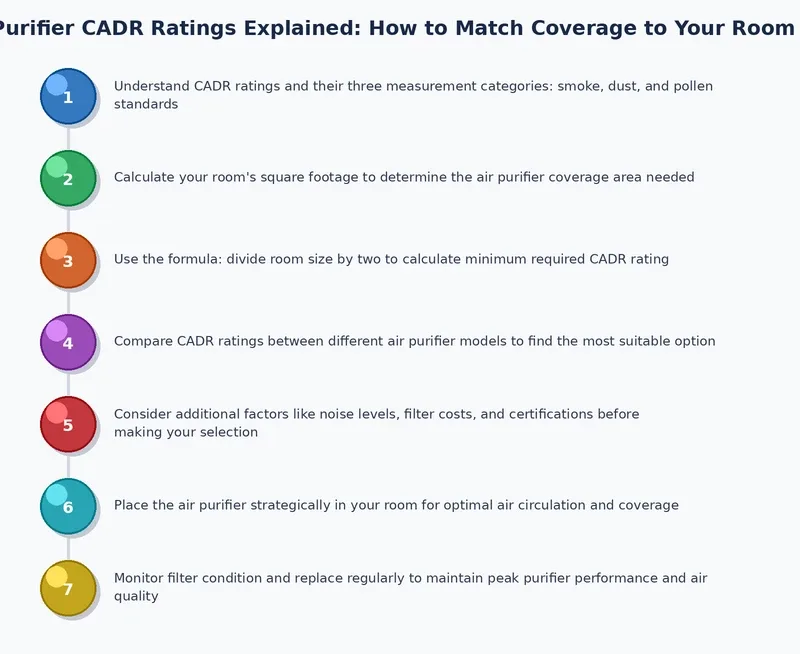
Image source: Bing (Web (fair-use with source credit)
Here's the simple math: Measure your room's square footage. Multiply by two. That's the minimum CADR you should look for. A 10×12 room is 120 square feet. Double that to 240. You want a smoke CADR of at least 240.
Match the purifier to your specific pollutant
- Dust and pollen: Standard HEPA with a decent pre-filter. Focus on CADR for dust.
- Pet dander and hair: Strong pre-filter that you can wash weekly. Heavier carbon layer for odor.
- Wildfire smoke: High smoke CADR, at minimum 300 for a medium room. Run it on high during smoke events.
- Mold spores: HEPA with constant operation. Pair with a dehumidifier if humidity is above 50%.
- Chemical fumes and VOCs: Heavy activated carbon (measured in pounds, not a thin sheet).
Room-to-room strategy
One powerful unit in the room where you spend most of your time beats three weak units scattered around. For most people, that's the bedroom. Run it on low at night for sleep quality, crank it to high during the day. As of 2026, the consensus among indoor air quality researchers is clear: a single properly sized unit in a closed room dramatically outperforms multiple undersized units in open spaces.
The Hidden Risks and Safety Issues Most People Miss
Not all air purifiers are safe. Some units actively degrade your indoor air quality while claiming to improve it.
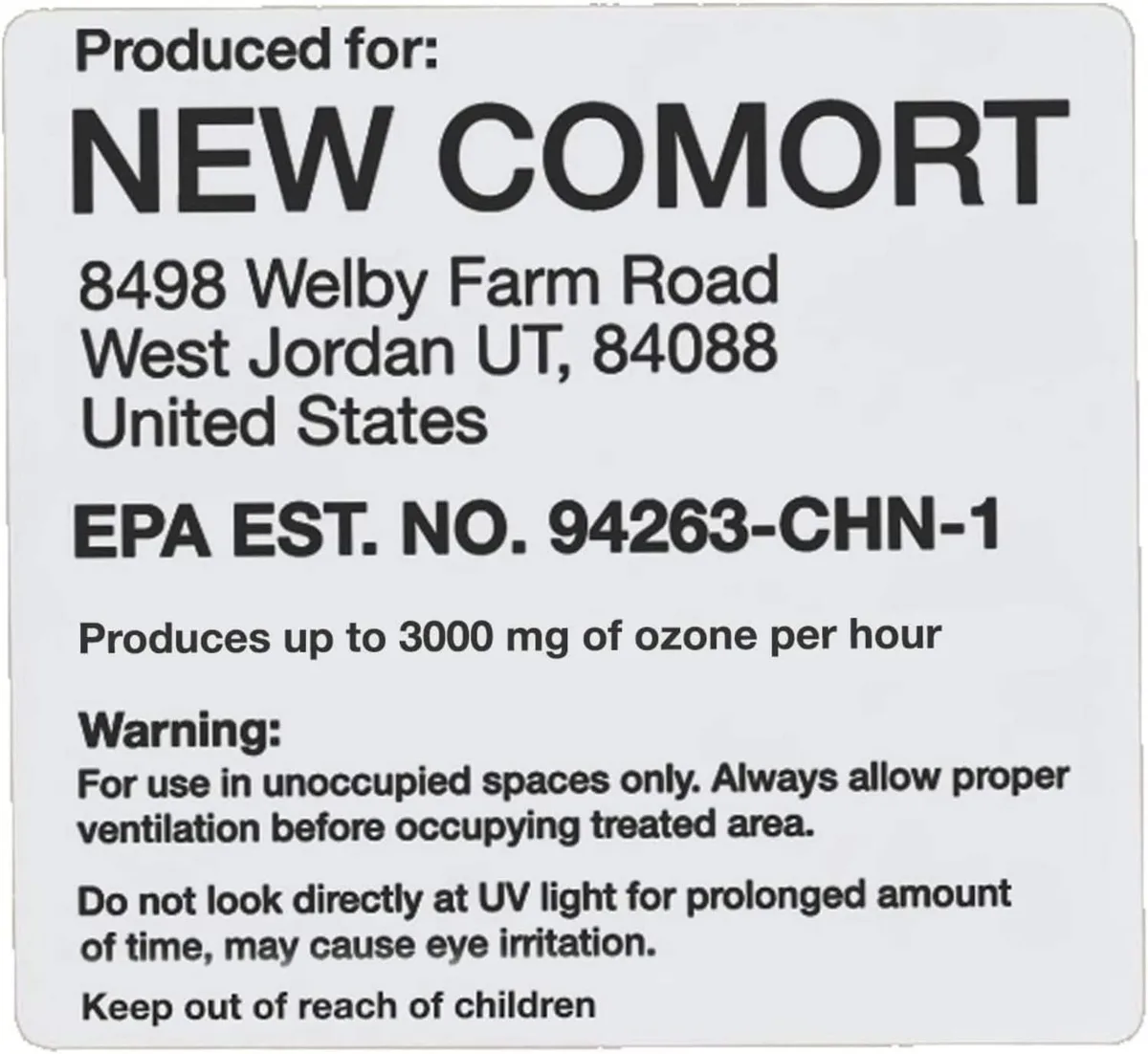
Image source: Bing (Web (fair-use with source credit))
The biggest hidden risk is ozone. Some purifiers, particularly "ionizers," "electrostatic precipitators," or "ozone generators," intentionally or unintentionally produce ozone. Ozone is a lung irritant. CARB sets a limit of 50 parts per billion for ozone emissions from air purifiers. Units exceeding that limit are illegal to sell in California, but they're still available online and in other states.
If you have asthma, ozone can trigger attacks. Long-term exposure damages lung tissue. Check whether any purifier you're considering has CARB certification. If it doesn't, or if it's labeled as an "ionizer" without HEPA filtration, move on.
The second risk is electrical safety. Air purifiers run continuously. A cheap unit with an undersized power supply or poor wiring can overheat. Look for UL or ETL certification marks. These aren't optional.
Filter neglect creates a third risk. A HEPA filter past its service life becomes a breeding ground for bacteria and mold. Captured particles sit in a warm, humid environment. When the filter is saturated, airflow drops and the unit can blow particles back into the room. Set a calendar reminder to replace the filter every 6 to 12 months.
Placement matters for safety. Units need at least three feet of clearance on all sides. Pushing one against a wall or behind furniture blocks airflow, overheats the motor, and reduces filtration to nearly zero.
Real-World Setup: Where to Place It and How Long to Run It
Placement and runtime are where most people leave performance on the table.
Place it in the breathing zone. The ideal spot is three to five feet off the floor, with at least three feet of clearance on the intake side. On the floor, it'll still work, but it's fighting against furniture legs and reduced airflow. In a bedroom, keep it at least three feet from the bed, close enough to clean your breathing air, far enough to avoid direct drafts.
Keep doors and windows mostly closed. A HEPA purifier works by cycling air in a contained space. Open windows let polluted outdoor air pour in. During wildfire season or high pollen days, seal the room tightly. For brief ventilation, open windows for five minutes and then close them.
Run it 24/7 during problem seasons. This is non-negotiable for allergy sufferers. Particles don't take breaks. Pollen counts spike in the morning and evening. Pet dander circulates all day. Running the unit only when you're home means the air has hours to accumulate particles while the unit is off. The energy cost is minimal, most units draw 30 to 100 watts on high.
Use the right fan speed for the situation.
- Low setting (nighttime): Quiet enough for sleep. Maintains background filtration.
- Medium setting (daily use): Good balance of noise and performance.
- High setting (problem events): Use during cooking, cleaning, smoke events, or when allergies flare. Moves maximum air but is louder.
Auto mode is helpful, but not perfect. Particle sensors work reasonably well for dramatic changes but can miss steady-state pollution. If symptoms aren't improving on auto mode, switch to manual and run consistent medium or high.
One unit per closed zone, if possible. For open floor plans, one large unit can cover the combined space. For separate rooms with closed doors, you need a unit in each room you occupy regularly.
Filter Maintenance and Long-Term Cost Reality Check
The purifier is the cheaper half. Replacement filter costs over a few years can exceed the purchase price.
True HEPA filters last 6 to 12 months in typical home use. Lifespan depends on how many hours you run the unit, how polluted your air is, and whether you clean the pre-filter regularly. A home with two dogs, a smoker, and a wood stove will chew through filters twice as fast as a clean apartment.
Pre-filter care is the single best thing you can do to extend main filter life. Vacuum or rinse the foam or mesh pre-filter every two to four weeks. That habit can double the life of your true HEPA filter. Skip it, and the main filter clogs in months.
Replacement filter costs vary wildly. Budget for $30 to $100 per filter change. Some brands lock you into proprietary filters that cost more. Others use standard sizes. Check filter prices before you buy the purifier.
Set a calendar reminder. The filter indicator light often uses a timer rather than an actual sensor. Every three months, visually inspect the filter. If it's visibly gray or brown, replace it regardless of the light.
Energy costs are low but not zero. A unit running 24/7 on medium adds roughly $5 to $15 per month to your electric bill. On low, closer to $3 to $8.
Your Decision Guide: What to Buy Based on Your Situation
Answer these three questions to know what kind of unit to look for.
What size space are you cleaning?
- Small room (under 200 sq ft): CADR of 150 to 200. Compact units work fine.
- Medium room (200 to 400 sq ft): CADR of 200 to 350.
- Large room (400 to 700 sq ft): CADR of 350 to 500.
- Open floor plan (700+ sq ft): CADR of 500 or higher, or two medium units at opposite ends.
What's your primary pollutant?
| Pollutant | Must-have features | Nice-to-have |
|---|---|---|
| Dust, pollen | True HEPA, good pre-filter | Washable pre-filter |
| Pet dander | True HEPA, washable pre-filter | Heavy carbon layer |
| Smoke (wildfire, cigarette) | High smoke CADR (300+), dense carbon | Particle sensor, auto mode |
| Mold spores | True HEPA, constant operation | Dehumidifier pairing |
| VOCs (paint, chemicals) | Heavy activated carbon (2+ lbs) | Carbon blends for specific VOCs |
What's your budget for the first year?
Include the purifier price plus two filter changes. If that total makes you wince, you need different features or cheaper filters.
Under $200 total: Possible for small rooms with basic features. Higher noise, thinner carbon.
$200 to $500 total: The sweet spot. Good CADR, reasonable noise, decent carbon, filters costing $30 to $60.
Over $500 total: Large rooms or premium features. Make sure extra spend goes toward performance.
Final rule of thumb
A true HEPA unit with CADR at least double your room's square footage, placed in open space and run 24/7 during problem seasons, will dramatically improve your indoor air. Skip the ionizers. Check for CARB certification. Budget for filters. Change them on schedule.
Common Mistakes That Ruin HEPA Purifier Performance
The biggest mistake is blocking airflow. Pushing the unit against a wall or tucking it behind a couch cuts intake by 50%. Keep three feet of clearance on all sides.
Running it only when you smell something bad misses the point. Most indoor pollutants are odorless. Dust mites, pollen, fine particulate matter from cooking. Run the unit consistently, not reactively.
Ignoring the pre-filter is the second biggest mistake. Vacuum or rinse it every two to four weeks. It takes two minutes.
Using the wrong fan speed for the situation. Low is for quiet nighttime. Medium handles daily needs. High is for cooking, cleaning, or smoke events.
Forgetting to close windows and doors. A HEPA purifier works best in a contained space. Open windows let polluted outdoor air pour in.
When to Seek Professional Help for Indoor Air Quality
If you have persistent mold growth on walls or ceilings, a purifier alone won't fix it. Find and fix the leak or humidity source. A dehumidifier and HEPA purifier together work well after addressing the moisture.
If someone has severe asthma or COPD, talk to a doctor about air quality. A HEPA purifier can help, but medical guidance on temperature, humidity, and ventilation is worth getting.
If your home has asbestos or lead paint, do not rely on a purifier. Those particles require professional remediation.
If your utility bills are high from running the purifier, check the filter. A clogged filter makes the fan work harder. Replacing it can cut energy use by 10 to 20%.
Verified Summary: What the Research Actually Says
The EPA and CDC both recommend HEPA air purifiers for reducing indoor particulate matter. Multiple peer-reviewed studies confirm HEPA filtration reduces asthma symptoms, allergy triggers, and respiratory irritation in children and adults.
What the research does not support: HEPA purifiers curing mold, removing all VOCs, or replacing proper ventilation. They work best paired with source control, ventilation, and humidity management between 30 and 50%.
The most underrated finding: consistency matters more than power. A modest unit running 24 hours a day outperforms an oversized unit running only four hours.
The final takeaway: Buy a true HEPA unit with CADR at least double your room's square footage. Place it in open space. Run it constantly during problem seasons. Clean the pre-filter. Change the main filter on schedule.
Frequently Asked Questions
How often should I run my HEPA air purifier?
Run it 24/7 during allergy season, wildfire events, or if you have pets. For general maintenance, running it while you're home and overnight is sufficient. The energy cost is roughly $5 to $15 per month.
Can a HEPA air purifier remove mold spores?
Yes, true HEPA filters capture airborne mold spores. The purifier won't fix the mold source. You need to address moisture and humidity separately. Pair it with a dehumidifier if your home is humid.
Do HEPA air purifiers help with cigarette smoke?
They help significantly. The HEPA filter captures smoke particles, and activated carbon absorbs the odor. For heavy smoking, you need a unit with thick carbon and high smoke CADR.
How loud are HEPA air purifiers on different settings?
On low, most units run 25 to 35 decibels, quieter than a whisper. Medium is 35 to 50 decibels, comparable to conversation. High can reach 55 to 65 decibels, similar to a vacuum cleaner.
What's the difference between a HEPA and a HEPA-type filter?
A true HEPA filter meets the 99.97% efficiency standard at 0.3 microns. A HEPA-type filter does not. It may catch 85 to 95% of particles. Only true HEPA filters carry AHAM certification or list H13/H14 grade.
Do air purifiers use a lot of electricity?
No. Most use 30 to 100 watts on high, comparable to a ceiling fan. Running one 24/7 adds roughly $5 to $15 to your monthly electric bill.

Similar Posts