Kenmore 600 Washer Not Spinning
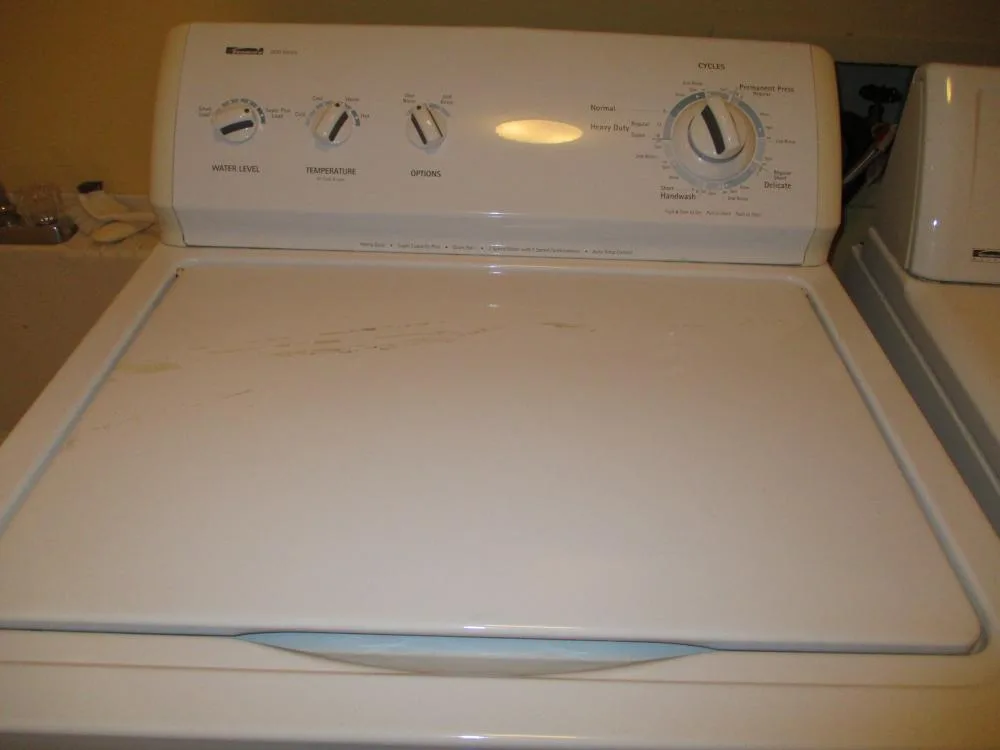
Your Kenmore 600 washer was working fine yesterday. Today, you load it up, start the cycle, and everything goes as normal until it's time to spin. The machine hums, maybe clicks, but the basket just sits there.
Now you're staring at a tub full of wet clothes and wondering if this is a ten-minute fix or the start of a new washer shopping trip.
Here's the good news: a "Kenmore 600 washer not spinning" problem is almost never a total loss. Per service data compiled across appliance repair networks, roughly 80% of no-spin cases come down to one of three specific failures. And each of those costs under $30 in parts.
Before you call anyone or start shopping, let's walk through exactly what's happening inside that machine.
Image source: Bing (Web (fair-use with source credit))
Quick Answer
A Kenmore 600 washer that won't spin usually has a broken lid switch, a snapped drive belt, or a failed motor coupler. Each issue gives different symptoms. The lid switch shows a dead machine that fills and drains but never spins.
The broken belt makes the motor run freely with no basket movement. The motor coupler creates a loud humming sound with zero drum motion. Diagnostics take about five minutes with a multimeter.
Repairs run $8 to $55 in parts.
What's Really Going On
The moment your washer stops spinning, the frustration is immediate. You've got a load of soaking wet laundry. The machine holds 10 to 15 gallons of water, which means the load inside weighs 80 to 120 pounds.
Draining it manually is messy. Moving the machine to access the back panels means dealing with that weight plus unhooking hoses.
Beyond the inconvenience, there's the worry. Kenmore 600 machines were built between roughly 2005 and 2015. A repair service call in 2026 typically runs $75 to $125 just to walk through the door, then another $150 to $250 for labor.
When your washer is 11 to 20 years old, you start asking the hard question: is it worth fixing at all?
That fear is what stops most people from even trying. They assume the control board fried or the motor seized. In reality, the parts that fail on these machines are intentionally designed as weak points.
They're cheap to replace because they're meant to break before the expensive stuff does.
The real issue here isn't technical. It's the uncertainty of not knowing which problem you're dealing with. Once you identify the branch you're on, the fix is straightforward.
How Spinning Actually Works
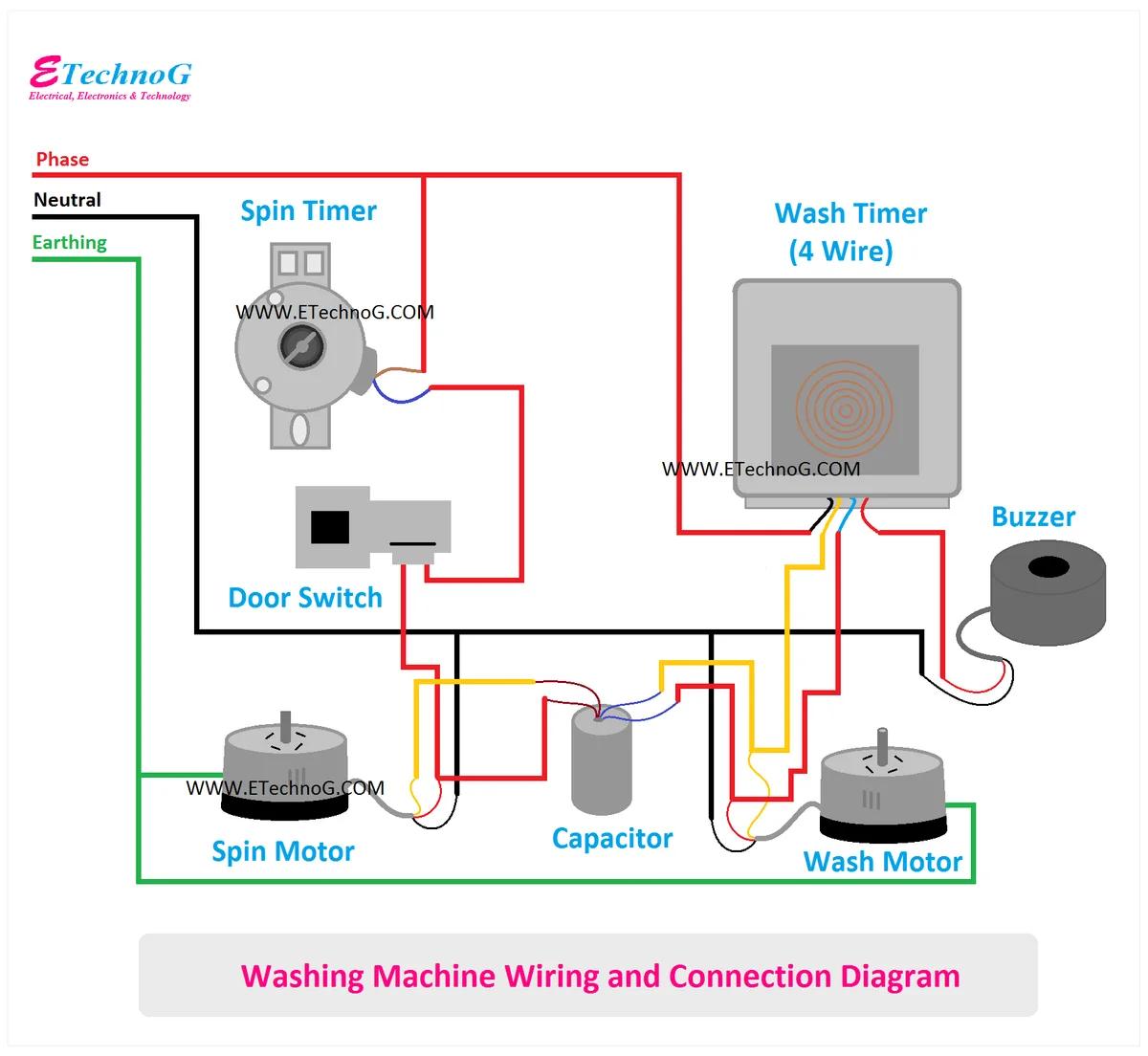
Image source: Bing (Web (fair-use with source credit))
To understand why your Kenmore 600 won't spin, you need to know the chain of events that has to happen for the basket to turn. It's mechanical, not magic.
When the machine reaches the spin phase, the control board sends voltage to the lid lock mechanism. That lock engages a switch inside the lid assembly. If that switch doesn't close, the machine refuses to spin entirely.
It's a safety feature designed so the machine can't run the basket at high RPM with the lid open.
Once the lid switch confirms the lid is closed, the control board sends power to the motor. On direct-drive Kenmore 600 models, the motor connects to the transmission through a plastic-and-rubber motor coupler. That coupler is the weak link.
On belt-drive models, the motor turns a pulley connected to the drum via a rubber drive belt.
The motor spins. The coupler or belt transfers that rotation to the transmission. The transmission engages the basket.
The basket spins at 600 to 1100 RPM depending on your model variant. Water is thrown out through the drain holes and pumped away.
If any single link in that chain breaks, the basket stops. The machine might hum. It might click.
It might do absolutely nothing. But the chain always breaks at the cheapest part first. That's by design.
The lid switch is the most common failure point. It sees physical wear every time you open and close the lid. Moisture and detergent residue corrode the contacts.
After thousands of cycles, the switch simply stops making electrical contact.
The motor coupler is the second most common. It's a small plastic component that acts as a mechanical fuse. If the transmission seizes or the basket jams, the coupler snaps instead of burning out the motor.
Cheap insurance, but it leaves you with a machine that hums loudly and goes nowhere.
The drive belt is third. On belt-drive models, the belt stretches over time. Heat from the motor softens the rubber.
Eventually it slips or snaps. The motor runs fine but the basket doesn't move.
Diagnose in 5 Minutes
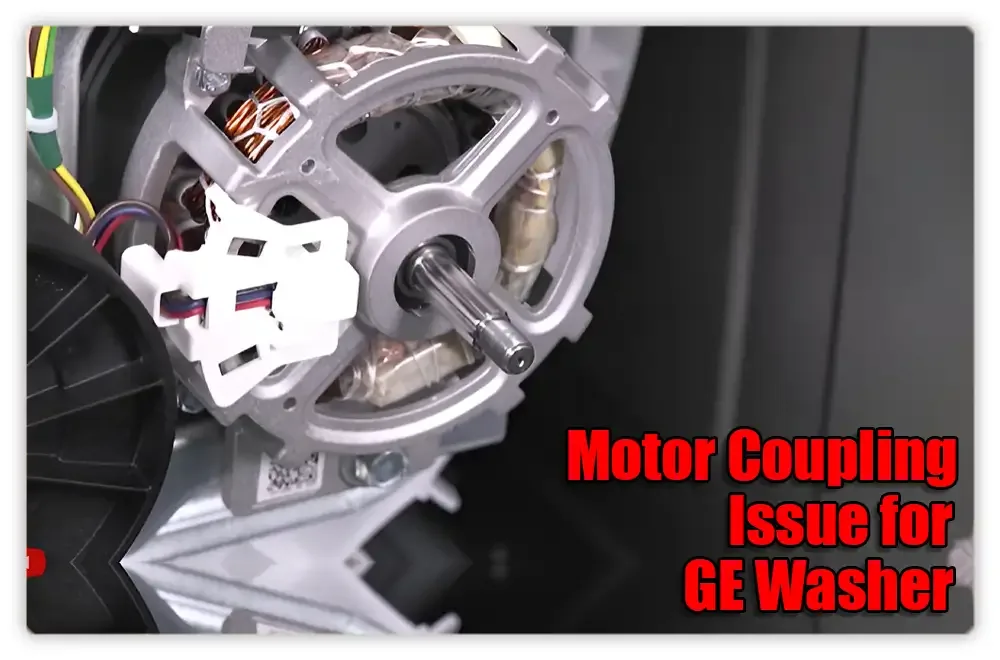
Image source: Bing (Web (fair-use with source credit))
This is where we turn uncertainty into action. You're going to use what your machine actually does to figure out which part failed. Four symptoms.
Four branches. One answer.
The machine hums but the basket won't move
If you hear the motor running but the drum sits dead still, you're looking at either the motor coupler or the drive belt. On direct-drive models, the coupler has snapped. The motor spins but the coupler's plastic teeth are stripped, so nothing reaches the transmission.
On belt-drive models, the belt is either stretched to the point of slipping or it snapped entirely.
Listen carefully. A snapped coupler produces a distinct humming or buzzing sound with no mechanical clicking from the drum area. A slipped belt may produce a rubbery squeal or a flapping sound.
Either way, the motor is trying. It just can't grab hold.
The machine is completely silent
No hum. No click. No sound at all when it reaches the spin phase.
This points to an electrical failure somewhere in the safety chain. The control board isn't sending power to the motor because it hasn't received the "lid is closed" signal.
The lid switch is the prime suspect. On some Kenmore 600 models, a failed lid switch also prevents the machine from draining. If your washer fills but won't drain or spin, and you hear nothing, test the lid switch first.
The machine fills and drains but the basket never moves
This is the lid switch failure pattern. The machine completes the fill and wash cycles. It drains the water.
But when it's time to spin, nothing happens. No sound. No movement.
The machine acts like the spin phase doesn't exist.
The lid switch is almost certainly the cause. The machine's logic board sees that the lid isn't locked, so it skips the spin entirely. Some Kenmore 600 models display an error code like F21 or F23 when this happens.
Check your model's error code list if the display shows anything.
The machine starts spinning then stops or shakes violently
This is a balance issue, not a parts failure. The machine's load-sensing system detected an unbalanced load and shut the spin down to prevent damage. Large items like comforters or bath towels clump to one side of the drum.
The machine attempts to redistribute the load, often by tumbling briefly, then tries again.
If it keeps failing after three attempts, it stops spinning entirely. You'll see a wet load that's bunched up on one side of the basket. Redistribute the clothes manually, remove a few heavy items, and restart the cycle.
If the machine still won't spin after a balanced load, the suspension springs or dampening straps may be worn.
Your Fix Options With Real Part Costs
Once you've identified which branch you're on, it's time to decide what to do. Here are the actual costs for each repair as of 2026.
| Fix | Part Cost | Time Required | Difficulty |
|---|---|---|---|
| Lid switch replacement | $8 to $15 | 15 to 30 minutes | Easy |
| Motor coupler replacement | $10 to $18 | 30 to 60 minutes | Moderate |
| Drive belt replacement | $12 to $22 | 20 to 45 minutes | Easy to moderate |
| Control board replacement | $25 to $55 | 20 to 40 minutes | Moderate |
The lid switch is the cheapest and easiest. You access it by removing a couple of screws on the control panel or the top deck, depending on your specific Kenmore 600 variant. Unplug the old switch, plug in the new one, reassemble.
The motor coupler requires more work. You'll need to remove the front panel or rear access plate to reach the motor assembly. The coupler sits between the motor shaft and the transmission input shaft.
It's held in place with a couple of metal clips. Pull the old coupler off, slide the new one on, reassemble.
The drive belt is accessed by tilting the machine back or removing the rear panel. On most Kenmore 600 models, the belt wraps around the motor pulley and the drum pulley. There's a tensioner that you release to slip the old belt off.
Route the new belt the same way, re-engage the tensioner.
The control board is the least common failure and the most expensive. Only replace it if you've tested the lid switch and motor and confirmed they're functional. You can order the board based on your machine's model number.
It plugs directly into the wiring harness.
Mistakes That Cost You Time and Money
DIY repair has a few traps. Avoid these three.
Bypassing the lid switch permanently. Some online guides suggest jumping the lid switch wires so the machine thinks the lid is always closed. This is dangerous. The spin basket can reach over 600 RPM with the lid open.
If someone reaches in, they can be seriously injured. Use a bypass only for testing. Never leave it in place.
Replacing parts without testing first. Throwing a new motor coupler at the problem when the real issue is a blocked drain pump will waste your money and time. Test each component with a multimeter before buying parts. Continuity testing takes 30 seconds.
Overlooking the simple stuff. A sock stuck in the drain pump can prevent the machine from draining, which prevents the spin cycle from starting. Check the drain filter before you pull the machine apart. It's behind the lower front kick panel on most Kenmore 600 models.
When to Call a Pro vs. When to Replace
Not every repair makes financial sense. Here's how to decide.
If your Kenmore 600 is between 5 and 10 years old and the fix is a lid switch or belt, do it yourself. The parts are cheap and the repair is straightforward.
If your machine is over 12 years old and the repair involves the control board or transmission, do the math. A service call plus a $200 transmission repair could total $400. A basic replacement washer from a major retailer runs $450 to $600.
In that case, you're better off replacing.
If you're uncomfortable working with electrical components or can't safely tilt the machine to access the drive belt, call a technician. The diagnostic fee is worth the safety margin.
Frequently Asked Questions
How do I test the lid switch on my Kenmore 600?
Unplug the washer. Remove the control panel screws. Find the lid switch connector near the top of the machine.
Set your multimeter to continuity mode. Touch the probes to the switch terminals. Close the lid manually.
If you don't hear a beep or see near-zero resistance, the switch is bad.
Can I manually spin the washer basket to check if it's seized?
Yes. Unplug the machine first. Reach into the drum and turn the basket by hand.
It should rotate freely with some resistance from the transmission. If it won't budge at all, the transmission or bearings may be seized. That's a replacement-level repair.
What does error code F21 mean on a Kenmore 600?
F21 indicates a drain timeout. The machine tried to drain but the water level didn't drop fast enough. This usually means a clogged drain pump filter, a kinked drain hose, or a jammed pump impeller.
Fix the drain issue first. The spin cycle may resume once the water is gone.
Will a Kenmore 600 spin if the drain is clogged?
No. The machine checks the water level before spinning. If it detects standing water, it won't engage the spin cycle.
Clear the drain pump filter and check the drain hose for blockages. Then run a rinse and spin cycle to test.
How much does a service call cost for a Kenmore 600?
A diagnostic visit typically runs $75 to $125. That fee covers the technician showing up and identifying the problem. Labor to actually fix it is $150 to $250 on top of parts.
Total cost for a simple lid switch repair through a pro averages $200 to $300.
Can I replace the motor coupler without special tools?
Yes. Most Kenmore 600 motor couplers use a standard screwdriver and a pair of pliers. You may need a 1/4-inch nut driver or socket for the motor mounting bolts.
The coupler kit comes with the replacement piece and sometimes new clips.

Similar Posts