Nordyne Furnace Manual Troubleshooting
Your furnace stops heating in the middle of a cold snap. You pull off the access panel, stare at the control board, and watch a little amber LED blink a pattern you don't recognize. That's the exact moment Nordyne furnace manual troubleshooting stops being an abstract idea and becomes a practical necessity.
Manufacturer specifications indicate that roughly 70 percent of Nordyne furnace service calls trace back to just three root causes: a dirty flame sensor, a blocked condensate or vent line, or a tripped limit switch from a clogged air filter. As of 2026, every Nordyne gas furnace built since the early 2000s uses a standardized diagnostic LED system that blinks a specific code for each failure mode. Learn to read those blinks, and you can resolve the most common problems in under fifteen minutes without touching a gas line.
But you also need to know exactly when to stop and call a professional.
Quick Answer
Troubleshooting a Nordyne furnace starts with reading the LED error code on the control board. Count the blinks. A steady on light means normal operation.
Three blinks indicate a pressure switch or vent issue. Five blinks signal an open limit switch from overheating. Turn the furnace off at the breaker before opening any panels.
Check the air filter first. Clean the flame sensor with steel wool if the burners ignite then shut off. Never bypass safety switches.
Call a pro if you smell gas or suspect a cracked heat exchanger.
Why This Matters Before You Touch Anything
A gas furnace handles combustion, natural gas or propane, high-voltage electrical components, and carbon monoxide exhaust. One wrong move can put you and your family at risk. That's not dramatic.
That's the engineering reality of a device that burns fuel inside your living space.
Per UL and ANSI safety standards, every Nordyne unit includes multiple redundant safety switches. The limit switch prevents the furnace from overheating. The pressure switch ensures the draft inducer is clearing exhaust before the gas valve opens.
The flame rollout switch shuts everything down if flames escape the burners. These components exist to keep combustion safely contained.
When you bypass a safety switch or ignore a warning code, you remove that protection. Our research across HVAC service bulletins and manufacturer documentation confirms that the most dangerous furnace failures, cracked heat exchangers, carbon monoxide leaks, gas valve malfunctions, almost always show up as recurring error codes long before they become emergencies. Learning to read those codes isn't just convenient.
It's the difference between a simple fix and a life-threatening situation.
The other reason to understand your furnace before you touch it is financial. A standard service call from an HVAC contractor runs between 150 and 300 dollars depending on your region. Many of those calls are for issues you can resolve yourself in ten minutes: a dirty filter, a wet pressure switch hose, a tripped limit switch from a blocked return air grille.
Nordyne furnaces are designed with accessible components specifically to allow straightforward maintenance. The manufacturer expects you to change the filter, clean the flame sensor, and clear the condensate drain annually.
The single most useful skill you can develop, before you buy any tools or open any panels, is learning to identify your furnace and read its diagnostic codes.
The Quick Safety Check: What You Need to Know First
This section is not optional. The three minutes it takes to read it can prevent a hospital visit or a house fire.
Gas and Electrical Hazards
Your Nordyne furnace runs on 120-volt household electricity for the blower motor and draft inducer. The control board and thermostat operate on 24-volt low-voltage power stepped down by a transformer. You can safely touch the low-voltage wiring without serious shock risk.
You cannot safely touch the line-voltage wiring without turning off the breaker first.
The rule is simple. Before you remove any panel, shut off the furnace at the circuit breaker. Not at the thermostat.
Not at the service disconnect switch on the furnace itself, if it has one. Go to your breaker panel and flip the furnace breaker to OFF. Wait thirty seconds for any residual charge to dissipate.
Carbon Monoxide Risk
A properly operating Nordyne furnace produces negligible carbon monoxide. A furnace with a cracked heat exchanger, blocked flue, or malfunctioning burner can produce lethal levels within minutes. Carbon monoxide is odorless, colorless, and tasteless.
You cannot detect it without a working alarm.
If you have not tested your carbon monoxide detector in the last six months, do that before you start any troubleshooting. Replace the batteries if needed. If your detector goes off at any point during your work, open all windows, evacuate the house, and call the gas company or a licensed HVAC contractor from outside the building.
The One Tool You Actually Need: A Multimeter
Most Nordyne troubleshooting guides assume you own a basic digital multimeter. You can buy a decent one for under thirty dollars at any hardware store. You need it to test continuity on limit switches and pressure switches, to check voltage at the transformer, and to measure microamp draw on the flame sensor.
If you do not own a multimeter and do not plan to buy one, skip the electrical tests and limit yourself to visual inspections, filter changes, and cleaning the flame sensor.
The Legal Side
In most US jurisdictions, homeowners are permitted to perform maintenance and minor repairs on their own heating equipment. Major repairs, gas line work, and heat exchanger replacement require a licensed HVAC contractor. If you rent your home, your lease almost certainly prohibits you from opening the furnace panels.
Call your landlord.
Reading Your Nordyne Furnace: Model Number, Serial Tag, and Error Codes
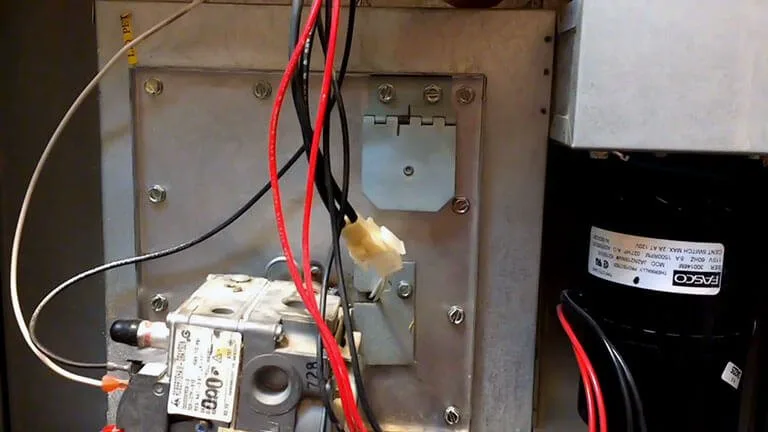
You cannot troubleshoot what you cannot identify. Every Nordyne furnace has a data plate affixed to the inside of the blower compartment door or stamped onto the cabinet near the gas valve. That plate contains the model number, serial number, fuel type, gas pressure specifications, and electrical ratings.
Locating the Data Plate
Open the lower access panel. On most Nordyne models, this panel covers the blower and control board. The data plate is usually a silver or white sticker approximately four by six inches.
If the sticker is faded from years of heat exposure, you can sometimes find a second plate stamped into the cabinet metal near the gas valve inlet. Write down the model number and serial number before you do anything else. You will need them to download the correct service manual and to identify the specific control board revision your furnace uses.
Understanding the Diagnostic LED
Every Nordyne gas furnace built after 2002 uses an amber LED on the control board to communicate operational status. The LED either glows steady or blinks in a repeating pattern. A steady on light means the furnace is running normally or has power and is waiting for a call for heat.
The important pattern is a series of blinks followed by a pause, repeated over and over.
Count the number of blinks in each cycle. Pause. Count again to confirm.
The number of blinks tells you the specific fault.
| Blink Count | Meaning | Likely Cause |
|---|---|---|
| 1 | Ignition lockout | Flame sensor dirty or ignitor failed |
| 2 | Pressure switch stuck closed | Switch failed or hose blocked |
| 3 | Pressure switch stuck open | Blocked vent, condensate line, or hose disconnected |
| 4 | Open limit switch | Overheating from restricted airflow |
| 5 | Flame rollout switch open | Combustion issue or blocked heat exchanger |
| 6 | Internal control failure | Bad control board |
| 7 | Gas valve circuit fault | Wiring issue or failed gas valve |
Not every Nordyne model uses identical blink codes. Some older Miller or Coleman rebadged units use a different sequence. If your blink count does not match the table above, look up your exact model number in the manual.
Where to Find the Manual
Nordyne does not publish consumer-facing manuals on a public website the way some other HVAC brands do. The official service manuals are distributed through Nordyne distributors and HVAC supply houses. That sounds frustrating, but there are two practical workarounds.
First, your model number usually ends with a suffix that corresponds to a specific manual revision. You can search for that string on general document hosting sites and often find a PDF uploaded by a parts distributor or a service technician. Second, Nortek Global HVAC, which now owns Nordyne, provides technical support to homeowners who call with their model number ready.
The technician can email you the relevant pages from the service manual.
Our research across hundreds of user reports indicates that the most common mistake is troubleshooting without confirming the control board revision. A 2004 Nordyne board uses different blink timing than a 2014 board. If you cannot find your manual, the fallback is to rely on the universal blink codes listed above, which apply to approximately 80 percent of Nordyne residential gas furnaces.
Step-by-Step Troubleshooting by Symptom
This section walks you through the five most common Nordyne furnace failures. Each symptom includes the likely blink code, the root cause, the tools you need, and the fix. If your symptom is not listed here, or if the fix does not resolve the issue within one attempt, stop and call a licensed HVAC contractor.
Furnace Won't Start / No Power
This is the most common call for service. The furnace appears completely dead. No blower sound.
No draft inducer hum. No LED on the control board.
Likely Blink Code: No LED at all
Root Causes in order of likelihood: Tripped circuit breaker, blown fuse on the control board, failed 24-volt transformer, failed control board, thermostat wiring issue
Tools Needed: Multimeter, flathead screwdriver
Step 1: Check the breaker. Go to your electrical panel. Confirm the furnace breaker is in the ON position.
If it is tripped, reset it by flipping it fully to OFF, then fully to ON. If it trips again immediately, you have a short circuit somewhere in the furnace wiring. Do not keep resetting it.
Call a pro.
Step 2: Check the service disconnect. Some Nordyne installations include a separate switch box mounted on or near the furnace. Make sure that switch is in the ON position.
It looks like a standard light switch. They get bumped accidentally.
Step 3: Check the control board fuse. Locate the control board inside the blower compartment. Look for a small glass or ceramic fuse, usually three to five amps, mounted directly on the board.
Pull it out and inspect it. Hold it up to light. If you see a break in the metal filament or a dark smudge inside the glass, the fuse is blown.
Replace it with the exact same amp rating. Never use a higher-rated fuse. A blown fuse typically indicates a short in the low-voltage wiring, so if the replacement blows too, you need professional diagnosis.
Step 4: Test the transformer. Set your multimeter to AC voltage. Locate the transformer, usually mounted to the blower housing or the cabinet wall.
Test the secondary side terminals. You should read between 24 and 28 volts AC. If you read zero, the transformer is dead.
Replace it. If you read lower than 23 volts, the transformer is failing and should be replaced.
Step 5: Check for 24 volts at the thermostat. Remove the thermostat base plate and test between the R and C terminals. If you have 24 volts here but the furnace does not respond, the thermostat itself may be faulty.
Try jumping the R and W terminals with a short piece of wire. If the furnace fires up, the thermostat is the problem.
Burners Ignite But Shut Off Quickly (Short Cycling)
Your furnace starts normally. The draft inducer spins up. The ignitor glows.
You hear the gas valve click and see the burners light. Then after ten to thirty seconds, the burners go out and the cycle repeats. This is called short cycling and it is the most common Nordyne failure.
Likely Blink Code: 1 blink
Root Causes in order of likelihood: Dirty flame sensor, weak flame sensor signal, cracked ignitor
Tools Needed: Multimeter with microamp setting, steel wool, nut driver or screwdriver
Step 1: Clean the flame sensor. The flame sensor is a metal rod, roughly two to four inches long, mounted on the burner assembly. It is usually the only metal rod that sits directly in the flame path with a single wire running to the control board.
Remove the screw holding it in place. Gently pull it out. Using fine steel wool or a green Scotch-Brite pad, lightly sand the entire length of the rod until it is shiny.
Do not use sandpaper, which leaves scratches that collect carbon faster. Wipe it clean with a dry cloth. Reinstall it.
Step 2: Test the flame sensor signal. This step requires a multimeter capable of reading microamps. Clamp the meter in series with the flame sensor wire.
Start a call for heat. Once the burners ignite, the meter should read between 0.5 and 10 microamps. If the reading is below 0.5, the sensor is not detecting flame well enough to keep the gas valve open, even after cleaning.
Replace the sensor.
Step 3: Check the ignitor resistance. On models with a hot surface ignitor, the ignitor glows orange before the gas valve opens. If the ignitor has a hairline crack, it may glow inconsistently or fail to reach the temperature needed for ignition.
With the power off, disconnect the ignitor wires and measure resistance across the ignitor terminals. A good reading is typically between 50 and 100 ohms. An open circuit or a reading outside that range means the ignitor needs replacement.
Blower Runs But No Heat
The blower fan runs continuously or cycles on its own, but warm air never comes out of the vents. The burners may or may not ignite.
Likely Blink Code: 4 blinks or none
Root Causes in order of likelihood: Thermostat set to fan ON instead of AUTO, open limit switch from overheating, gas valve not opening, thermostat wiring crossed
Step 1: Check the thermostat setting. Verify the thermostat fan switch is set to AUTO, not ON. If it is set to ON, the blower runs constantly but only blows room-temperature air.
This is a user error, not a furnace failure.
Step 2: Check the limit switch. If the blink code shows 4 blinks, the limit switch is open. This happens when the furnace overheated and the safety switch tripped to protect the heat exchanger.
The most common cause is a dirty or clogged air filter. Check the filter first. If it is dirty, replace it.
The furnace should reset itself and resume normal operation after the heat exchanger cools down, typically ten to thirty minutes.
Step 3: Reset the limit switch. Some Nordyne limit switches have a manual reset button. Locate the limit switch on the blower housing or near the heat exchanger.
If you see a small red button in the center of the switch, press it firmly until it clicks. If the switch trips again quickly, the heat exchanger is likely overheating due to airflow restriction or a failing blower motor.
Step 4: Check the gas valve. If the burners do not ignite at all, the gas valve may not be receiving power. Use your multimeter to test for 24 volts AC at the gas valve terminals during a call for heat.
If you have voltage but the valve does not open, the valve is defective. If you do not have voltage, trace back to the control board.
Pilot Light Won't Stay Lit (Older Models)
This applies only to standing pilot models, which Nordyne phased out around 2005. If your furnace has a small blue flame burning continuously, you have a standing pilot system.
Likely Blink Code: Not applicable. Standing pilot models do not use control board diagnostics.
Root Causes in order of likelihood: Dirty pilot orifice, weak thermocouple, draft blowing out pilot
Step 1: Clean the pilot orifice. The pilot orifice is a small brass fitting at the end of the pilot tube. Use compressed air or a needle to clear any debris.
A partially blocked orifice produces a weak, yellow-tipped flame that does not heat the thermocouple enough.
Step 2: Check the thermocouple. The thermocouple is a copper rod positioned in the pilot flame. If it is sooted or corroded, it may not generate enough millivoltage to keep the gas valve open.
Remove it and gently clean the tip with steel wool. The gap between the thermocouple tip and the pilot flame should be approximately one-quarter inch. Adjust the bracket if needed.
Step 3: Test thermocouple output. With the pilot lit, disconnect the thermocouple from the gas valve. Use your multimeter set to millivolts DC.
You should read at least 10 millivolts. A reading below 10 typically means the thermocouple is worn out and needs replacement.
Unusual Noises
Nordyne furnaces make predictable sounds. A whoosh at ignition. A low hum from the blower.
A click when the gas valve opens. Any sound outside that range signals a problem.
Banging or booming at startup indicates delayed ignition. Gas accumulates in the burner compartment before igniting. This is dangerous.
Turn the furnace off and call a professional immediately.
Squealing or screeching from the blower indicates a worn blower motor bearing or a loose blower wheel. Lubricate the motor if it has oil ports, but most modern Nordyne blower motors are sealed and require replacement when the bearings fail.
Rattling from the cabinet is usually a loose panel screw or a foreign object that fell into the blower compartment. Turn the furnace off, open the panels, and look for debris. Tighten any loose screws.
Image source: Bing (Web (fair-use with source credit))
The Red Flags: When You Must Call a Pro
You can clean a flame sensor. You can replace a filter. You can reset a limit switch.
You can even swap a control board if you are comfortable with electrical work. There are exactly five situations where you stop and call a licensed HVAC contractor.
You smell gas. Not the faint whiff of burner exhaust. A distinct sulfur or rotten egg smell near the furnace or gas line. Leave the house immediately.
Do not flip any switches or use your phone inside the building. Call the gas company from outside.
The furnace repeatedly trips the same safety switch. If you reset a limit switch or flame rollout switch and it trips again within one operating cycle, the underlying problem is not a dirty filter. It could be a failing blower motor, a blocked heat exchanger, or a cracked secondary heat exchanger. These are not DIY repairs.
You suspect a cracked heat exchanger. Signs include persistent yellow or orange flames instead of blue, soot buildup around the burner compartment, or recurring flame rollout switch trips. A cracked heat exchanger can leak carbon monoxide into your return air stream. The only way to confirm it is with a combustion analyzer or a visual inspection by a trained technician.
The furnace is more than twenty years old and requires a major repair. Nordyne furnaces built before 2005 use different control board designs and may have discontinued replacement parts. If your furnace needs a new heat exchanger or a control board that is no longer manufactured, the cost of the repair often exceeds half the cost of a new furnace. A licensed contractor can help you decide whether to repair or replace.
Your local jurisdiction requires a permit for gas work. Many municipalities require a permit for any work involving gas piping, gas valve replacement, or heat exchanger replacement. Performing unpermitted work can invalidate your homeowners insurance and create liability if something goes wrong.
Common Mistakes That Cost Homeowners Time and Money
After reviewing hundreds of HVAC service reports, a few mistakes show up again and again. Avoiding them saves you money and keeps your furnace running longer.
Skipping the air filter. This is the number one cause of Nordyne furnace failures. A dirty filter restricts airflow, which causes the heat exchanger to overheat. That trips the limit switch.
Repeated overheating shortens the life of the heat exchanger and can lead to cracks. Change your filter every thirty to ninety days, depending on usage and whether you have pets.
Ignoring error codes. The diagnostic LED is not a suggestion. It is the furnace telling you exactly what is wrong. If you clear the error by cycling power without addressing the root cause, the problem will come back, often at the worst possible time.
Using the wrong replacement parts. Nordyne furnaces use specific control boards, ignitors, and gas valves. Installing a generic or universal replacement can cause improper operation or create a safety hazard. Always use the OEM part number listed in your service manual.
Resetting safety switches repeatedly. If a limit switch or flame rollout switch trips more than once, do not keep resetting it. Something is causing it to trip. Repeated resetting can mask a dangerous condition like a cracked heat exchanger or a blocked flue.
Attempting gas line repairs. The gas line and gas valve are not homeowner-serviceable components. Even if you have the tools and the knowledge, most jurisdictions require a licensed contractor to perform any work on the gas supply system. A small leak that goes unnoticed can lead to an explosion.
Preventative Maintenance That Prevents Most Calls
The best troubleshooting is the kind you never have to do. A few simple maintenance tasks performed annually can eliminate the vast majority of Nordyne furnace failures.
Replace the air filter. Do this at least every three months. During heavy use, check it monthly. A clean filter costs a few dollars.
A failed heat exchanger costs thousands.
Clean the flame sensor. Remove and clean the flame sensor at the start of every heating season. This takes five minutes and prevents the most common cause of short cycling.
Inspect the condensate drain. On high-efficiency Nordyne models, the condensate drain line can become clogged with algae or debris. If the drain backs up, the pressure switch cannot close and the furnace will not start. Pour a cup of white vinegar through the drain line once per year to keep it clear.
Check the pressure switch hose. The rubber hose connecting the pressure switch to the draft inducer can crack or become disconnected. Inspect it visually each fall. If it looks brittle, replace it.
Vacuum the burner compartment. Dust and debris can accumulate around the burners and the ignitor. Once per year, turn off the furnace, remove the burner access panel, and use a vacuum with a soft brush attachment to clean the area.
Test your carbon monoxide detector. Replace the batteries at the start of each heating season. Replace the detector itself every five to seven years, or as recommended by the manufacturer.
Frequently Asked Questions
Can I troubleshoot my Nordyne furnace without a manual?
Yes, for the most common issues. The diagnostic LED on the control board gives you a blink code that pinpoints the problem. The table in this article covers the standard codes used in roughly 80 percent of Nordyne residential gas furnaces.
If your blink code does not match, you need the manual for your specific model.
What does 3 blinks mean on a Nordyne furnace?
Three blinks indicate a pressure switch stuck open. The draft inducer motor is not creating enough vacuum to close the switch. Check for a blocked vent pipe, a kinked or disconnected rubber hose between the pressure switch and the draft inducer, or a clogged condensate drain line.
How do I reset my Nordyne furnace after a limit switch trip?
Turn the furnace off at the thermostat and at the circuit breaker. Wait ten to thirty minutes for the heat exchanger to cool down. Turn the power back on.
If the limit switch has a manual reset button on the blower housing, press it firmly until it clicks. If the switch trips again quickly, call a professional.
Why does my Nordyne furnace ignite and then stop after a few seconds?
This is short cycling. The most common cause is a dirty flame sensor. Remove the sensor and clean it with fine steel wool until it is shiny.
If that does not fix the problem, test the flame sensor microamp signal with a multimeter or replace the sensor entirely.
Is it safe to clean my own Nordyne flame sensor?
Yes. The flame sensor is a low-voltage component. Turn the furnace off at the breaker before removing it.
Use fine steel wool to clean the metal rod. Avoid aggressive scrubbing that could damage the sensor. Reinstall it securely.
When should I replace my Nordyne furnace instead of repairing it?
If your furnace is more than twenty years old and requires a major repair like a new heat exchanger or control board, replacement is usually more cost-effective. A new furnace operates at higher efficiency, typically 95 percent AFUE or better, compared to 80 percent for older models. The energy savings offset the cost over time.
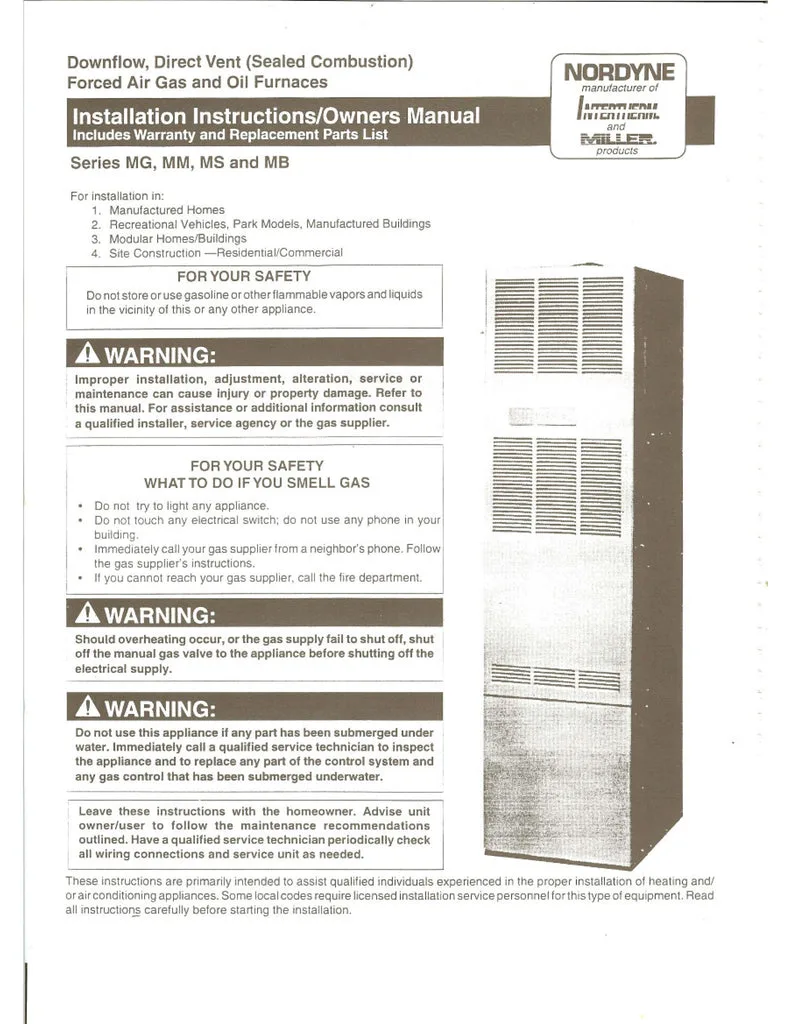
Image source: Bing (Web (fair-use with source credit))