Why Is Tp-Link Archer Ax73 Router So Slow: Fix It Fast

The Archer AX73 is usually “slow” because of poor setup, weak signal conditions, firmware issues, or device limits.
The TP-Link Archer AX73 is a strong Wi-Fi 6 router, but like any router, it can feel slow when the network around it is not set up well. I have seen this happen more times than I can count: the router looks powerful on paper, yet real-world speed drops because of placement, channel congestion, old settings, or a modem that cannot keep up. If your Archer AX73 feels slower than expected, this guide will walk you through the real causes, the fixes that matter, and the mistakes to avoid so you can get your Wi-Fi back on track.

Why the TP-Link Archer AX73 Can Feel Slow
The Archer AX73 is a dual-band Wi-Fi 6 router with good hardware, but speed is not just about specs. A router can only perform well when the internet line, modem, placement, signal path, and client devices all work together. In many homes, the bottleneck is not the router itself but one weak link in the chain.
I have tested setups where the AX73 delivered excellent speeds beside the router, yet performance dropped hard in another room. That is usually a sign of range loss, interference, or a device that does not fully support Wi-Fi 6 features. In other words, the router may be fine, but the network environment is holding it back.

Common Reasons the Archer AX73 Feels Slow
1. Weak Wi-Fi signal in the home
Wi-Fi slows down as distance grows. Walls, floors, mirrors, appliances, and even fish tanks can weaken the signal. If your phone or laptop is far from the router, the AX73 may switch to a lower speed to stay connected.
This is one of the most common reasons users think the Archer AX73 is slow. A router can advertise high speeds, but those speeds only appear when the signal is strong and clean.
2. Crowded wireless channels
Your neighbors’ routers may be using the same channels. When many nearby networks overlap, your router has to compete for airtime. That can cause lag, slow downloads, and choppy streaming.
This is especially common on 2.4 GHz, which is often crowded in apartment buildings and dense neighborhoods. Even 5 GHz can slow down when too many devices are active.
3. Poor router placement
A router hidden in a cabinet, behind a TV, or on the floor will often underperform. Wi-Fi spreads best from an open, central, elevated spot. When the AX73 sits in a bad location, it wastes a lot of its potential.
I once moved a customer’s router from the corner of a basement shelf to a hall table, and the speed jumped without changing anything else. That kind of result is more common than people think.
4. Old firmware or buggy settings
Firmware controls how the router behaves. If it is outdated, you may see slow speeds, random drops, or unstable performance. Some settings can also work against you if they were changed during setup.
TP-Link often improves stability and performance through firmware updates. Skipping those updates is like driving a good car with bad tire pressure.
5. Your internet plan is the real limit
Sometimes the router is fast, but the ISP plan is not. If you pay for 100 Mbps, the AX73 cannot create 500 Mbps out of nowhere. The router can only distribute what it receives from the modem.
This is easy to miss because router marketing focuses on very high wireless numbers. But the actual internet speed is still capped by your service plan and modem link.
6. A weak modem or bad ISP signal
Even with a great router, a poor modem or unstable internet line can drag everything down. If the modem loses sync, the router will only pass along a slow or unstable connection. Cable noise, DSL line problems, and ONT issues can all show up as “slow Wi-Fi.”
7. Too many devices using the network
Smart TVs, cameras, game consoles, tablets, phones, and smart home gear all compete for bandwidth. The Archer AX73 can handle many devices, but heavy traffic still adds strain. Large downloads, cloud backups, and 4K streaming can make the whole network feel sluggish.
8. Incorrect QoS or bandwidth limits
Quality of Service features can help, but bad settings can hurt performance. If QoS is misconfigured, your router may prioritize the wrong devices or split bandwidth in a way that feels slow. Bandwidth limits on specific devices can also create confusion.
9. Client device limitations
Sometimes the laptop, phone, or adapter is the bottleneck. An older device may only support Wi-Fi 5, weak antenna design, or a slow network card. In that case, the Archer AX73 is not the problem.
This matters because many users test speed on one old phone and blame the router. Always check multiple devices before deciding the router is slow.
10. Interference from other electronics
Microwaves, cordless phones, baby monitors, Bluetooth devices, and thick walls can all interfere with Wi-Fi. The AX73 can do a lot, but it cannot fully cancel physics. Interference often shows up as speed drops, jitter, and inconsistent signal strength.
How to Check Whether the Archer AX73 Is Really Slow
Before changing a bunch of settings, test the problem the right way. A careful check saves time and helps you find the true cause.
Use these steps:
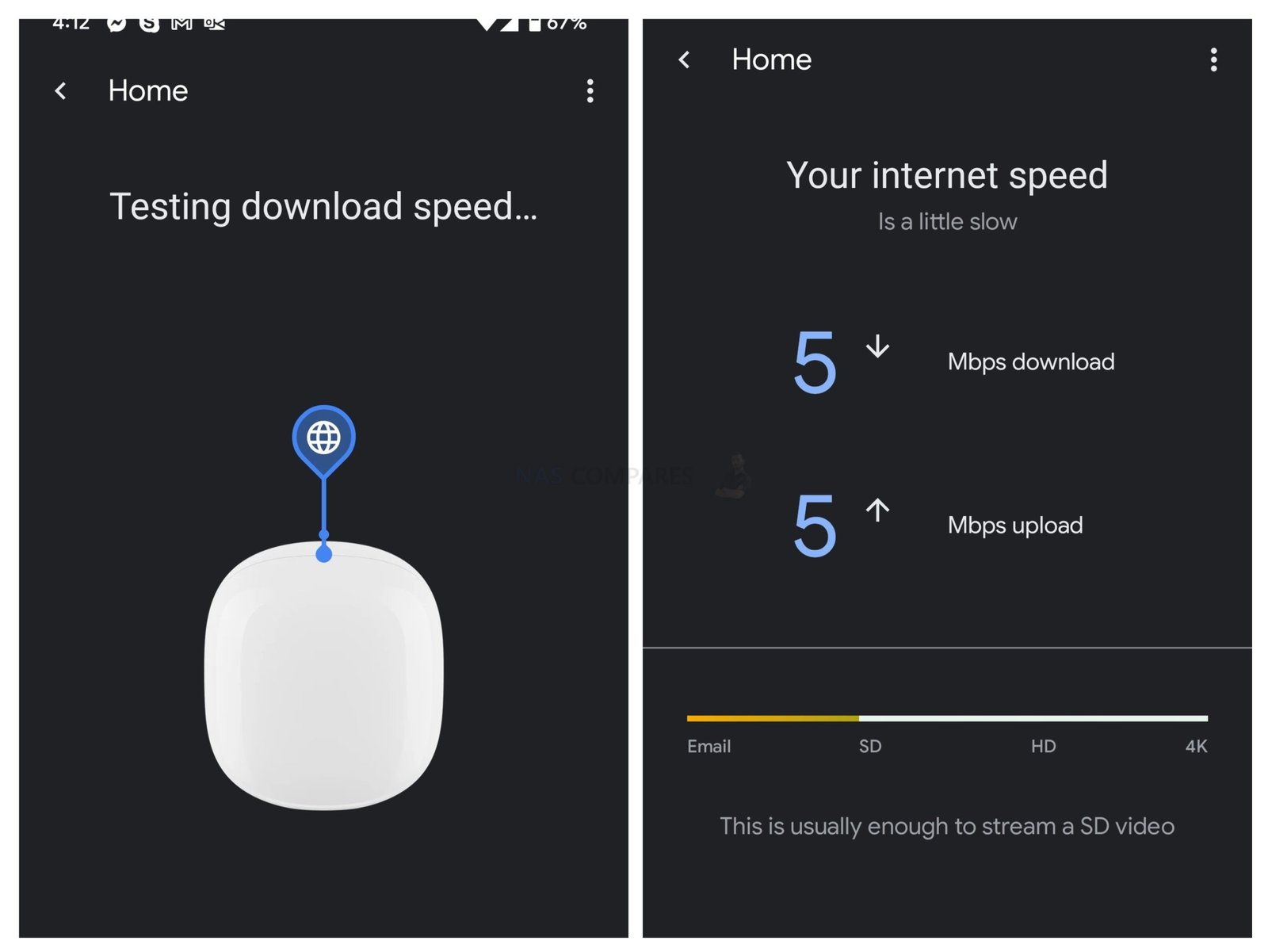
Test speed next to the router first
This tells you if the issue is with the internet line or the Wi-Fi range.Test speed on both 2.4 GHz and 5 GHz
The 5 GHz band is usually faster at short range, while 2.4 GHz can reach farther but is slower.Compare multiple devices
If one device is slow and another is fast, the problem may be the device.Use a wired Ethernet test
A wired test helps isolate whether the modem and ISP are delivering the right speed.Reboot the modem and router
This clears temporary network glitches and gives you a clean baseline.
When I troubleshoot home networks, I always start with a wired test. It is the fastest way to tell whether the bottleneck lives in the internet line or the wireless layer.
Best Fixes for a Slow TP-Link Archer AX73
1. Move the router to a better spot
Place the router in a central, open, elevated location. Keep it away from walls, metal surfaces, and large electronics. If possible, put it on a shelf or table instead of the floor.
A good location often improves speeds more than any setting tweak. Think of Wi-Fi like light: it spreads better when nothing is blocking it.
2. Update the firmware
Check for the latest firmware in the router’s admin panel or TP-Link app. Updates may improve stability, security, and performance. After updating, reboot the router and test again.
This is a simple step, but I have seen it fix strange slowdowns more than once. It is one of the highest-value maintenance tasks you can do.
3. Separate the bands if needed
If your devices keep switching between bands and causing instability, try giving 2.4 GHz and 5 GHz different names. That lets you choose the band manually based on the room and device. It can make performance more predictable.
For example:
- Use 2.4 GHz for smart home devices and far-away connections
- Use 5 GHz for laptops, phones, streaming, and gaming near the router
4. Pick a cleaner Wi-Fi channel
Use a Wi-Fi analyzer to find less crowded channels. On 2.4 GHz, channels 1, 6, and 11 are often best. On 5 GHz, you may need to test a few options for the cleanest result.
This can reduce congestion and improve stability in busy neighborhoods. The router may not be “broken”; it may just be fighting too much noise.
5. Review QoS settings
If QoS is enabled, make sure it matches your actual needs. Prioritize gaming, video calls, or work devices if needed. If the settings seem confusing, try turning QoS off briefly and testing the difference.
Sometimes simpler is better. Over-tuning the network can create more problems than it solves.
6. Restart or replace the modem
If your wired speed is already low, the router is not the main issue. Restart the modem and check the coax, DSL, or fiber line status. If the modem is old or unstable, replacement may be the real fix.
7. Reduce heavy background traffic
Pause cloud backups, system updates, game downloads, and big file syncs during important tasks. One laptop update can easily slow the whole house. That is not a router failure; it is bandwidth competition.
8. Check for device-side issues
Update your device’s Wi-Fi drivers, network settings, and operating system. Remove old saved networks if they cause reconnect problems. If possible, test a different phone or laptop to compare.
9. Use Ethernet for high-demand devices
Game consoles, desktops, and work PCs often perform better on Ethernet. Wired connections avoid Wi-Fi interference and give more stable speed. If the Archer AX73 has enough LAN ports for your setup, use them.
10. Factory reset only if needed
A reset can help if the router was configured badly or a setting got corrupted. But use this step carefully because you will need to reconfigure the network afterward. Save it for when simpler fixes do not work.
Real-World Performance Expectations for the Archer AX73
The Archer AX73 is capable of strong performance, but expectations need to match reality. In a clean setup, Wi-Fi 6 devices close to the router can see excellent speeds. Farther away, speeds naturally fall as the signal weakens.
Here is the practical truth:
- Near the router, 5 GHz can be very fast
- One or two rooms away, speed may drop
- Through multiple walls, 2.4 GHz may be more stable than 5 GHz
- Older devices may not see Wi-Fi 6 benefits at all
This is not a flaw unique to the AX73. It is how Wi-Fi works in the real world. The box may promise a huge total speed rating, but your actual result depends on distance, interference, device support, and internet plan.
When the Archer AX73 Is Not the Problem
Sometimes the router gets blamed unfairly. From my experience, these are the most common false alarms:
- The internet plan is too slow for the user’s expectations
- The modem is old or unstable
- The phone or laptop has a weak Wi-Fi chip
- The router is placed in a bad location
- A mesh node or extender is misconfigured
- Background downloads are eating bandwidth
If wired speeds are good and only wireless speeds are bad, then the router setup likely needs work. If wired speeds are already slow, contact your ISP or check the modem first.

Practical Tips to Get the Best Speed from Archer AX73
Use this simple checklist:
- Place the router in the center of the home
- Keep it high and open
- Update firmware regularly
- Use 5 GHz for speed near the router
- Use 2.4 GHz for range and smart devices
- Avoid crowded channels
- Test speed with Ethernet first
- Limit heavy downloads during work or gaming
- Replace old modems and weak adapters
- Reboot the network once in a while
These small habits can make a big difference. In many homes, the fastest fix is not a new router. It is a better setup.
Frequently Asked Questions About Why Is TP-Link Archer AX73 Router So Slow?
Why is my TP-Link Archer AX73 slower on 5 GHz than expected?
5 GHz is faster at short range, but it weakens more quickly through walls and floors. If you are far from the router, the speed drop is normal.
Does the Archer AX73 support Wi-Fi 6 for all devices?
No. Only devices with Wi-Fi 6 support can fully use those features. Older devices will still work, but they may not reach the same speeds.
Can firmware updates fix a slow Archer AX73?
Yes, they often can. Firmware updates may improve stability, security, and performance, so it is always worth checking for the latest version.
Should I use a Wi-Fi extender with the AX73?
Only if you truly need more coverage. A bad extender setup can make speeds worse, so a mesh system or better router placement is often a better choice.
Why is my wired speed good but Wi-Fi speed slow?
That usually means the internet line and modem are fine, but the wireless signal has issues. Common causes include distance, interference, crowded channels, or client device limits.
Conclusion
The TP-Link Archer AX73 can be a very capable router, but it will still feel slow if the setup, signal, or internet line is holding it back. In most cases, the fix is not mysterious: improve placement, update firmware, check channels, test with Ethernet, and make sure your modem and devices are not the weak link.
If your Archer AX73 is still underperforming, start with the simple checks first and work outward from there. A few smart changes can often turn a frustrating network into a fast, stable one. If you found this guide helpful, take a few minutes to test your own setup, and keep exploring more ways to get the most from your home Wi-Fi.

Similar Posts