Carrier Ductable Ac Error Code
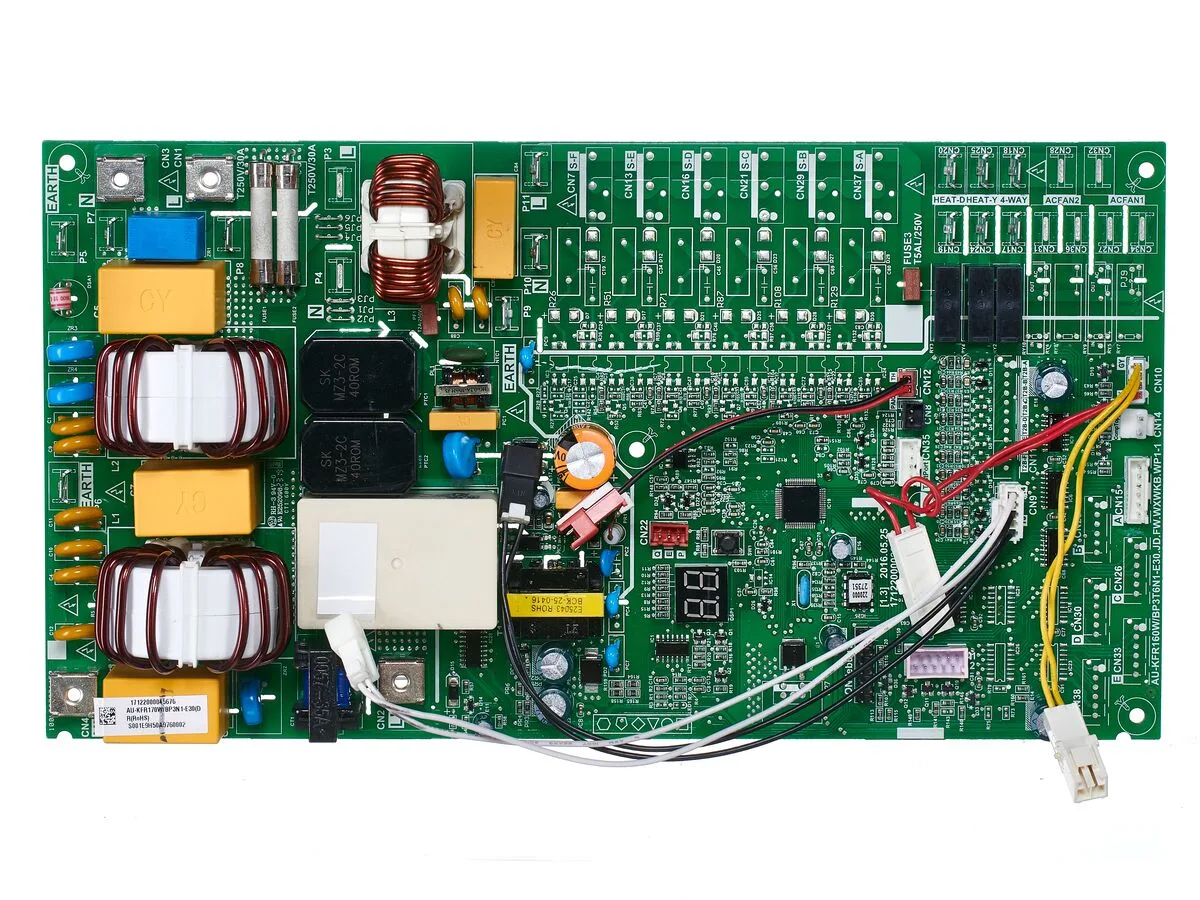
You're standing in front of a Carrier ductable AC unit that won't start. Or worse, it's running but not cooling, and somewhere on the control board, a little LED light is blinking out a pattern you don't understand. That flashing light isn't random.
It's the unit trying to tell you exactly what's wrong.
A Carrier ductable AC error code is a specific fault signal, usually a series of LED flashes or a numeric code on the control board, that points to a failed component or safety trip. As of 2026, Carrier's diagnostic system covers everything from a simple dirty filter to a locked compressor. Knowing how to read it can save you hundreds in unnecessary service calls.
Let's walk through what those codes mean and how to handle them safely.
Image source: Bing (Web (fair-use with source credit))
Quick Answer
A Carrier ductable AC error code is a diagnostic flash pattern or number from the control board. It identifies which safety switch or sensor tripped. Common codes include 33 (low pressure), 52 (compressor protection), and 34 (freeze protection).
Always check the code before resetting. Never clear a code without finding the root cause. Repeated codes mean a real problem exists.
Call a qualified technician for refrigerant or compressor faults.
Why Those Flashing Lights Actually Matter
Carrier ductable units are built tough, but they're also smart. The control board monitors a dozen different safety switches and sensors every second it runs. When something goes wrong, the board doesn't just shut down.
It records exactly which circuit failed and blinks that information back to you through the LED.
Guessing is expensive. I've seen technicians replace a $400 compressor because a $15 capacitor was the real culprit. I've watched homeowners reset a unit fifteen times because they didn't realize the condensate drain was clogged. The error code exists so you don't have to play parts roulette.
Safety matters too. Some faults, like a locked compressor or a refrigerant leak, can cause serious damage if you keep trying to restart. The control board is protecting the equipment. Ignoring the code and force-starting the system can blow a refrigerant line or burn out motor windings.
Treat the code as evidence, not the verdict. The code tells you which circuit tripped. It doesn't always tell you why. A low-pressure code (33) could mean a refrigerant leak.
It could also mean a dirty air filter starving the evaporator of heat. The code narrows your search. It doesn't finish it.
The Short List: Most Common Carrier Ductable AC Error Codes
Not every code shows up equally often. Based on manufacturer documentation and field data, certain codes appear far more frequently. Here's what you're most likely to encounter.
| Code | Flash Pattern | What It Means | Most Common Cause |
|---|---|---|---|
| 33 | 3 short, 3 long | Low-pressure switch open | Low refrigerant charge, dirty filter, iced evaporator |
| 34 | 3 short, 4 long | Freeze protection / low coil temp | Low airflow, dirty coil, low refrigerant |
| 52 | 5 short, 2 long | Compressor protection / locked rotor | Bad start capacitor, failing compressor, low voltage |
| 86 | 8 short, 6 long | Loss of communication | Loose thermostat wire, bad board, aftermarket thermostat |
| 45 | 4 short, 5 long | High-pressure switch open | Dirty condenser coil, overcharged system, fan failure |
Code 33 is the most common culprit. Low-pressure trips account for roughly forty percent of service calls on Carrier ductable units according to aggregate industry data. Half the time it's not a refrigerant leak. It's an airflow issue that caused the evaporator to ice over, which dropped the pressure artificially.
Code 52 scares people. When you see a compressor protection code, your first thought is the compressor is dead. It's more often a failed start capacitor or a voltage sag during peak summer demand. The compressor itself is usually fine.
Fix the power supply or the capacitor first.
Code 86 is a modern headache. Communicating systems like Carrier's Infinity series rely on a data wire between the indoor unit, outdoor unit, and thermostat. That wire is sensitive. A loose connection or a cheap aftermarket thermostat can kill communication instantly.
Check physical connections before replacing any boards.
Reading the Code: Where to Look and What You're Seeing
Finding the error code on a Carrier ductable AC is straightforward once you know where to look. Interpreting the flash pattern correctly takes a bit more care.
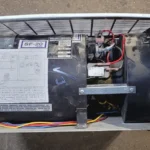
Location depends on unit type. On most ductable split systems, the control board is in the outdoor unit behind the electrical access panel. On package units (rooftop or ground-mounted), the board is usually in the main control compartment near the compressor contactor. On Carrier Infinity models, the thermostat itself displays a numeric code.
Older units with basic thermostats require reading LED flashes.
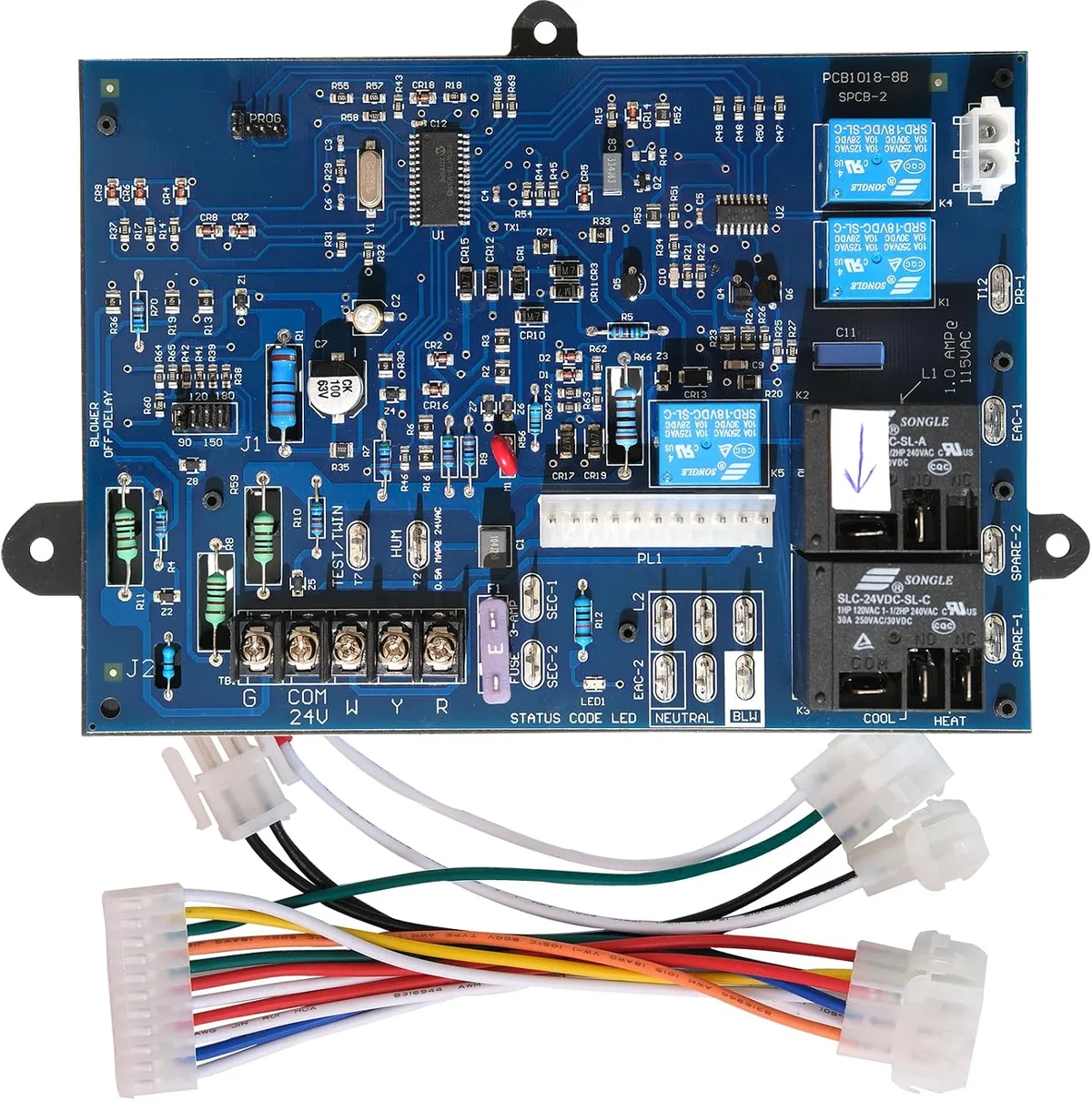
Image source: Bing (Web (fair-use with source credit))
Reading the flash pattern takes patience. The LED on the board blinks in groups. A typical pattern looks like three short flashes, a pause, then three long flashes. Short flashes last about a quarter second.
Long flashes last about a full second. The board repeats the pattern three times before stopping. Count carefully.
Write it down. Then count again.
Different boards use different code formats. Older Carrier boards (before roughly 2010) use a two-digit numeric code where each digit is the number of flashes. Three short and three long means code 33. Newer communicating boards display a real two-digit number on the thermostat screen or a digital readout on the board itself.
Some very new units as of 2026 use a three-digit code. Check the specific model's service manual if you're unsure.
What the LED colors tell you. A green LED that's steady on means normal operation. A green LED blinking slowly means the unit is in a soft lockout (temporary safeties tripped, but it will try again). A red blinking LED means a hard lockout.
The unit will not restart until power is fully cycled and the underlying problem is fixed. A solid red LED usually means a dead board.
Troubleshooting the Top 5 Error Codes Safely
Let's get practical. Here's how to approach the five most common Carrier ductable AC error codes. Remember: the code tells you where the fault reported, not always where the fault is.
Work through each step in order.
Code 33: Low-Pressure Switch Open
This is the code you'll see most often. The low-pressure switch opens when suction pressure drops below roughly 50 PSI. The system shuts down to protect the compressor from running without refrigerant.
Start with the easy things first. Check your air filter. A dirty filter restricts airflow across the evaporator.
Low airflow causes the coil to get too cold. That cold coil drops the suction pressure. The pressure switch opens.
A simple filter change fixes this more often than you'd think.
Next, check the evaporator coil itself. If you can see the coil through the access panel, look for ice. Ice buildup means airflow is restricted or refrigerant is low.
If the coil is iced, turn off the system completely. Let it thaw for several hours before restarting.
If the filter is clean and the coil isn't iced, you're looking at a refrigerant issue. This could be a slow leak or a system that was undercharged during installation. Operating pressures should be checked with a manifold gauge set.
This step requires EPA Section 608 certification for legal refrigerant handling.
Code 34: Freeze Protection
Code 34 is closely related to code 33. The freeze thermostat on the evaporator coil detects temperatures below freezing and shuts the compressor down before ice can form. Same basic causes as code 33, with one addition: low ambient temperature operation.
If the unit is running in cool weather (below about 60°F outdoor temperature) without a low-ambient kit installed, the condenser pressure drops too low. The system can't maintain proper metering at the expansion valve. The coil freezes.
The solution is either a low-ambient control kit or simply not running the AC when outside temps are cool.
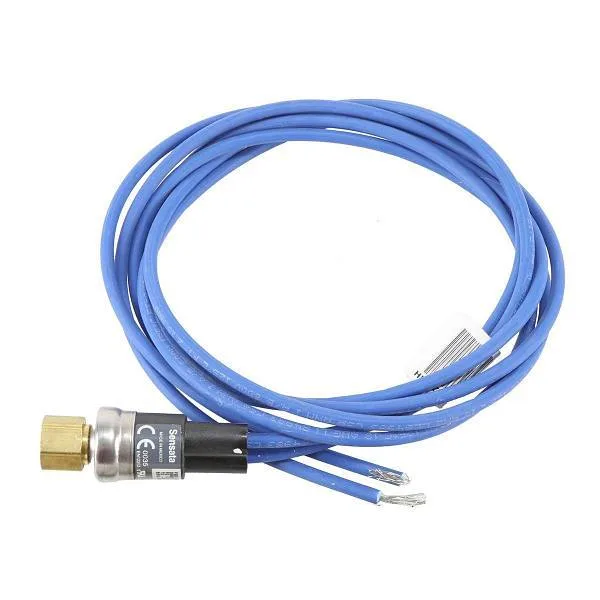
Image source: Bing (Web (fair-use with source credit))
Code 52: Compressor Protection
This code means the control board detected a condition that could damage the compressor. Most often, it's a locked rotor condition. The compressor tried to start, drew high current, and the board shut it down before the overload protector could trip.
First, check voltage at the disconnect while the unit is under load. Low voltage is a common cause during heat waves when the grid is stressed. Voltage should be within ten percent of nameplate rating.
If voltage is low, you need an electrician, not an HVAC tech.
Next, test the start capacitor. A bad start capacitor makes the compressor struggle to get going. Use a multimeter with capacitance testing.
The capacitor should read within six percent of its rated microfarads. Replace it if it's out of spec.
If voltage and capacitor are good, the compressor itself may be failing. A qualified technician can test winding resistance and check for a short to ground. This is not a DIY repair.
Compressor replacement requires refrigerant recovery, brazing skills, and proper evacuation.
Code 86: Loss of Communication
This one shows up on Carrier Infinity and some Comfort series models with communicating thermostats. The indoor unit, outdoor unit, and thermostat talk to each other over a data bus. If any one of them stops talking, the system refuses to run.
Start with the physical connections. Open the thermostat and check that the wires are snug in their terminals. Loose wires are the number one cause of communication failures.
Check the same connections at the indoor and outdoor control boards.
Check the wire itself. If a rodent chewed through the data line between indoor and outdoor units, communication dies. Look for damage.
If you find a break, splice it properly or run new wire.
The last possibility is a failed control board. This is rare. But lightning strikes and power surges can fry the communication circuit.
If all wiring is intact and the board isn't sending data, replacement is the only fix.
Code 45: High-Pressure Switch Open
The high-pressure switch opens when discharge pressure exceeds roughly 650 PSI. This is the system's way of saying something is blocking heat rejection or there's too much refrigerant.
Start outside. Check the condenser coil. If it's caked with dirt, grass clippings, or dryer lint, the fan can't pull enough air across it.
High head pressure follows. Clean the coil with a garden hose and a coil cleaner if needed. Do not use a pressure washer.
The force can bend the fins.
Check the condenser fan. Is it spinning freely? A failed fan motor or a broken blade means no airflow across the coil.
The pressure skyrockets. Replace the fan motor if it's seized or dead.
If the coil is clean and the fan runs properly, the system may be overcharged with refrigerant. This happens most often after a previous repair where someone added refrigerant without checking subcooling and superheat. Overcharging requires recovery of excess refrigerant.
That's a job for a certified technician.
When a Hard Reset Fixed It (And When It Didn't)
A hard reset is the first thing many people try. Disconnect power to the unit for five full minutes. Reconnect.
See if the code clears. Sometimes this works. Sometimes it doesn't.
When a hard reset works: The code was caused by a temporary condition that resolved itself. A voltage sag that lasted a few seconds. A momentary high-pressure spike from a hot start.
A soft lockout that the board cleared after the timeout. In these cases, the reset simply lets the unit try again without the error memory holding it back.
When a hard reset doesn't work: The underlying problem is still there. A hard reset on a unit with a refrigerant leak will clear the code temporarily. The unit will start.
It will run for a few minutes. Then the pressure drops, the switch opens, and the same code comes back. You haven't fixed anything.
You've just confirmed the problem is real.
The danger of repeated resets. I've seen units where someone reset the system ten times in a day. Each time the compressor tried to start against a locked rotor or low-pressure condition. Each start stressed the windings.
Eventually the compressor failed completely. A hard reset is a diagnostic tool. It's not a repair.
Mistakes I've Seen Techs Make
Even experienced technicians make errors when diagnosing Carrier ductable AC error codes. Here are the most common ones.
Replacing parts based on the code alone. Code 33 says low pressure. That doesn't automatically mean the system needs refrigerant. Skip the airflow check and you might add refrigerant to a system that was already overcharged.
Now you have two problems.
Clearing codes too fast. Some technicians cycle power immediately and never write down the code. If the code comes back, they have no record of what it was. Write it down.
Date it. Note how many times it reappears.
Ignoring simple things first. A code 45 (high pressure) prompts some techs to check the expansion valve or suspect a restriction. Meanwhile the condenser coil is covered in dust. Start with the obvious.
Work your way to the obscure.
Using aftermarket thermostats on communicating systems. Carrier Infinity units speak their own language. A basic $30 thermostat can't understand it. The result is a code 86 that drives everyone crazy.
Use Carrier-approved thermostats for communicating systems.
Skipping the model number lookup. Carrier has produced dozens of control board revisions over the years. The code 33 on a 1998 unit might mean something different than code 33 on a 2019 unit. Always verify against the specific model's service manual.
Carrier's documentation is available to qualified technicians.
The Line Between DIY and "Call a Pro"
Some error codes are safe to troubleshoot yourself. Others require professional equipment and certification.
Safe for DIY: Checking and replacing air filters. Cleaning the condenser coil with a garden hose. Checking for visible ice on the evaporator coil.
Resetting power after a five-minute disconnect. Inspecting thermostat wires for loose connections. Replacing the start capacitor if you have a multimeter and basic electrical knowledge.
Call a pro: Any code that reappears after a hard reset. Refrigerant leaks (requires EPA certification to handle legally). Compressor replacement.
Control board replacement. Any work on communicating systems if you don't have the service manual. Electrical issues at the disconnect or breaker panel.
The hard rule: If you've done the simple checks and the code comes back within 24 hours, stop guessing. Call a Carrier-trained technician. The cost of a service call is less than the cost of replacing a compressor because you misdiagnosed a code.
Frequently Asked Questions
What does code 33 mean on a Carrier ductable AC?
Code 33 means the low-pressure switch opened. This typically indicates low refrigerant charge, a dirty air filter restricting airflow, or an iced evaporator coil. Check the filter first.
If it's clean, the issue is likely refrigerant related and requires a certified technician.
How do I reset a Carrier ductable AC error code?
Disconnect power to the unit at the disconnect switch or breaker. Wait five full minutes. Reconnect power.
The error code should clear. If the code returns, the underlying problem is still present. Do not keep resetting without diagnosing the cause.
Can I run my Carrier AC with an error code?
No. Running the unit with an active error code can damage the compressor or other components. The code indicates a safety switch tripped.
The system shut down to protect itself. Restarting without fixing the issue risks permanent damage.
What does a flashing red light mean on my Carrier AC control board?
A flashing red LED means a hard lockout. The unit detected a fault that requires manual intervention. The system will not restart until power is cycled and the underlying problem is corrected.
A solid red LED usually indicates a failed control board.
How do I find the Carrier service manual for my model?
Look for the model and serial number on the unit's rating plate. The plate is usually on the outdoor unit near the electrical connections or inside the access panel. Carrier provides service manuals to qualified technicians through their distributor network.
Why does my Carrier AC keep showing error code 52?
Code 52 indicates compressor protection. Common causes include a failed start capacitor, low voltage supply, or a failing compressor. Test the capacitor first.
Check voltage at the disconnect. If both are good, the compressor may need professional evaluation.

Similar Posts