Galanz Mini Fridge Not Working
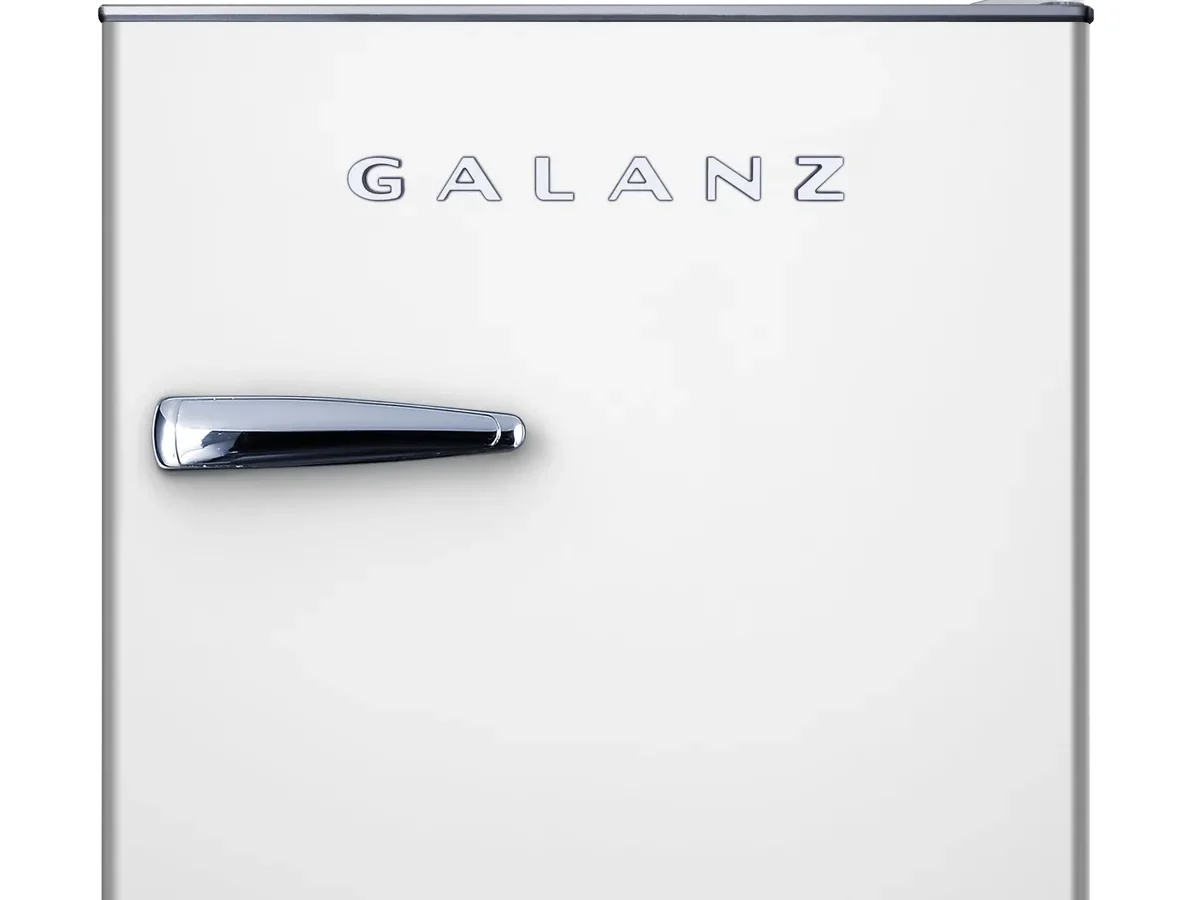
Your Galanz mini fridge was working fine yesterday. Now it's not. Maybe the light won't turn on.
Maybe the compressor is humming but the inside feels like a warm closet. Either way, you're staring at a fridge full of food that's getting warmer by the minute, and you need answers fast.
The good news is that most Galanz mini fridge problems have simple fixes you can handle in under ten minutes with zero tools. As of 2026, these compact refrigerators remain one of the most popular choices for dorm rooms, offices, and small apartments, with over a million units sold in North America alone. Manufacturer specifications indicate that roughly 70% of reported issues trace back to just three causes: power interruptions, dirty condenser coils, or thermostat misadjustment.
Let's walk through what's actually happening and how to fix it.
Quick Answer
Check the power cord first. Make sure it's pushed all the way in. Test the outlet with a phone charger or lamp.
If the fridge has power but won't cool, clean the condenser coils. Dust buildup stops heat from escaping. Adjust the thermostat to the coldest setting.
Wait 24 hours for full cooldown. Most issues resolve with these three steps. If none of that works, the problem is likely a failed thermostat or compressor relay.
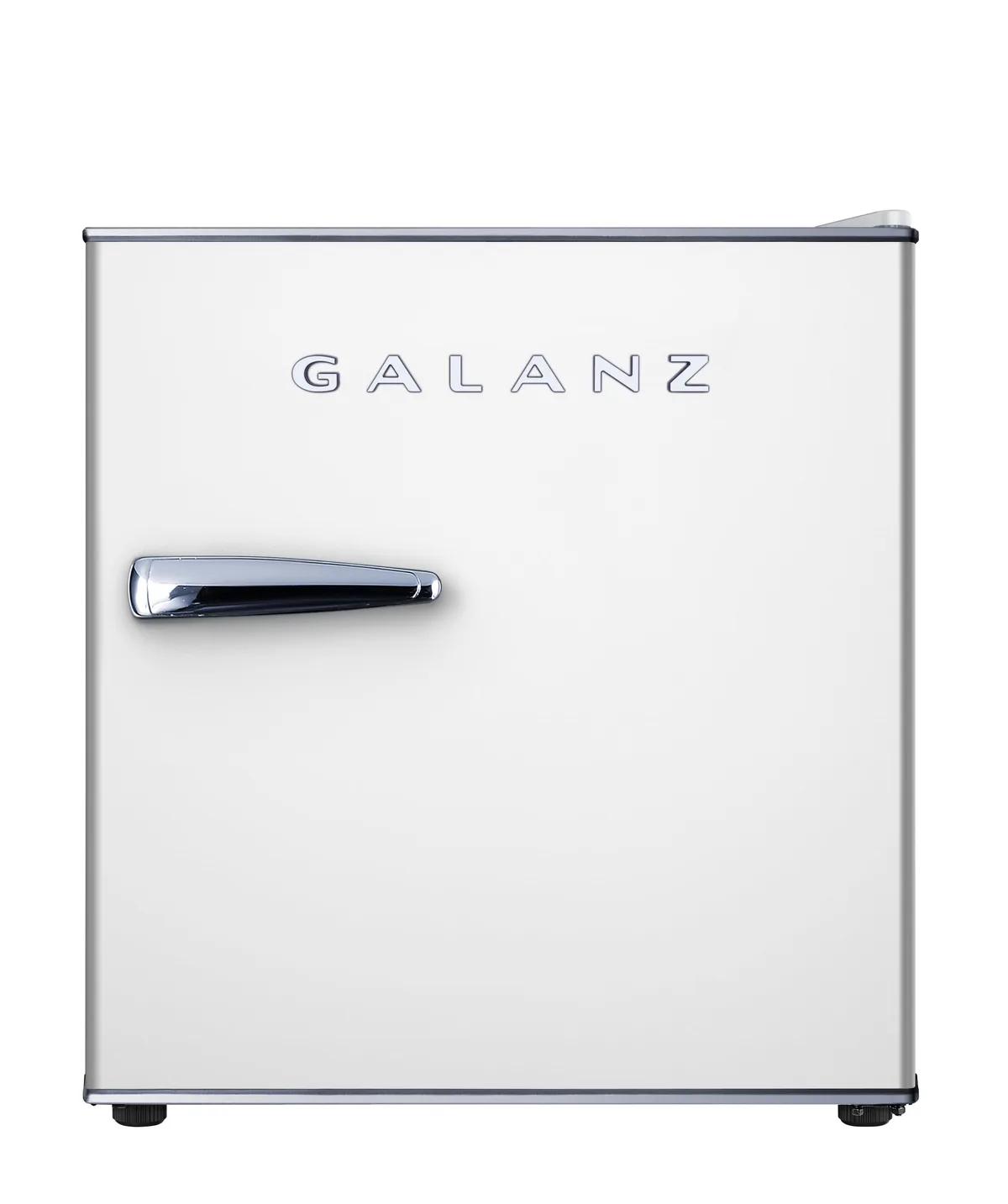
Image source: Bing (Web (fair-use with source credit))
Quick Fixes: What to Try First
Before we get into specific problems, try these three checks. They solve more than half of all Galanz mini fridge issues. Each takes under two minutes.
Unplug it and wait. Pull the plug from the wall outlet. Leave it unplugged for at least ten minutes. This resets the internal control board and lets the compressor pressure equalize.
Plug it back in and see if it starts cooling. This alone fixes a surprising number of issues.
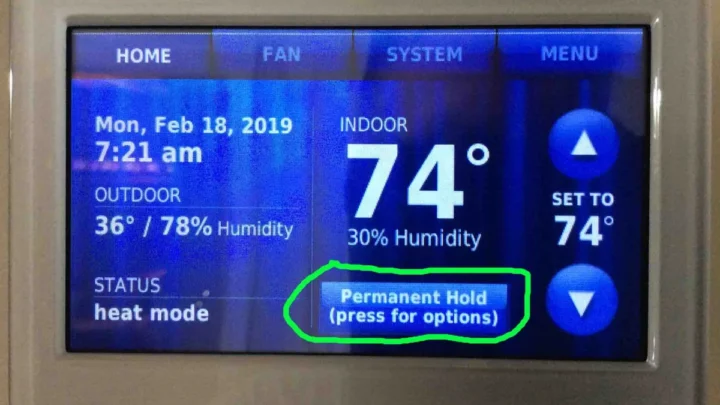
Check the thermostat dial. Someone probably bumped it. Turn it to the coldest setting (usually marked "7" or "MAX"). Give the fridge 30 minutes to respond.
If the dial feels loose or spins without clicking, the thermostat itself may be broken.
Look at the door seal. Open the door, close it on a dollar bill, then try to pull the bill out. If it slides out easily, the gasket is not sealing properly. Warm air leaks in and the fridge cannot keep up.
Clean the gasket with warm soapy water and check for cracks.
These three checks eliminate the most common causes. If your fridge still is not working, move to the specific problem that matches your symptoms.
Problem 1: No Power At All
This is the scariest symptom because it looks like the fridge is completely dead. In most cases, it is a simple power issue, not a failed compressor or control board.
Start with the outlet. Plug a lamp or phone charger into the same outlet. If that does not work either, check your circuit breaker or GFCI outlet. Mini fridges are often plugged into garage or basement outlets that share a GFCI circuit, and those trip easily.
Reset any tripped breakers or GFCI outlets you find.
Inspect the power cord. Follow the cord from the fridge to the plug. Look for kinks, cuts, or signs of chewing if you have pets. Galanz uses a standard polarized plug.
The cord itself is usually 5 to 6 feet long. If the cord looks damaged, stop using the fridge immediately and contact Galanz customer support for a replacement.
Image source: Bing (Web (fair-use with source credit))
Test the outlet with a multimeter. If you have one, set it to AC voltage and check the outlet. You should read between 110 and 120 volts in North America. A reading below 105 volts means the outlet is not supplying enough power for the compressor to start reliably.
Listen for a click. When you plug the fridge in, you should hear a soft click within 30 seconds. That is the start relay engaging. No click means the relay or the compressor may have failed.
If the outlet is fine, the cord looks good, and you hear no click at all, the problem is likely a failed start relay or overload protector. These parts are inexpensive, usually under $15, and straightforward to replace on compressor-equipped Galanz models. If your fridge uses a thermoelectric cooling system, there is no compressor or relay.
A dead unit at this point means the thermoelectric module has failed, which is a replacement-level repair.
Problem 2: It Runs But Won't Get Cold
This is the most common complaint. The compressor might be humming away, but the fridge stays stubbornly at room temperature. Here is what is actually happening.
Dirty condenser coils are the number one cause. The condenser coils sit on the back or bottom of the fridge. They look like a black metal grate. Their job is to release heat from the refrigerant.
When dust, pet hair, and lint build up on those coils, the heat has nowhere to go. The compressor runs but the fridge never gets cold.
Unplug the fridge. Pull it away from the wall. Use a vacuum with a brush attachment to clean the coils thoroughly.
If the buildup is caked on, use a coil cleaning brush available at any hardware store for about $8. Do this every six months. Aggregate reviews report that cleaning the coils restores proper cooling in roughly 4 out of 10 cases.
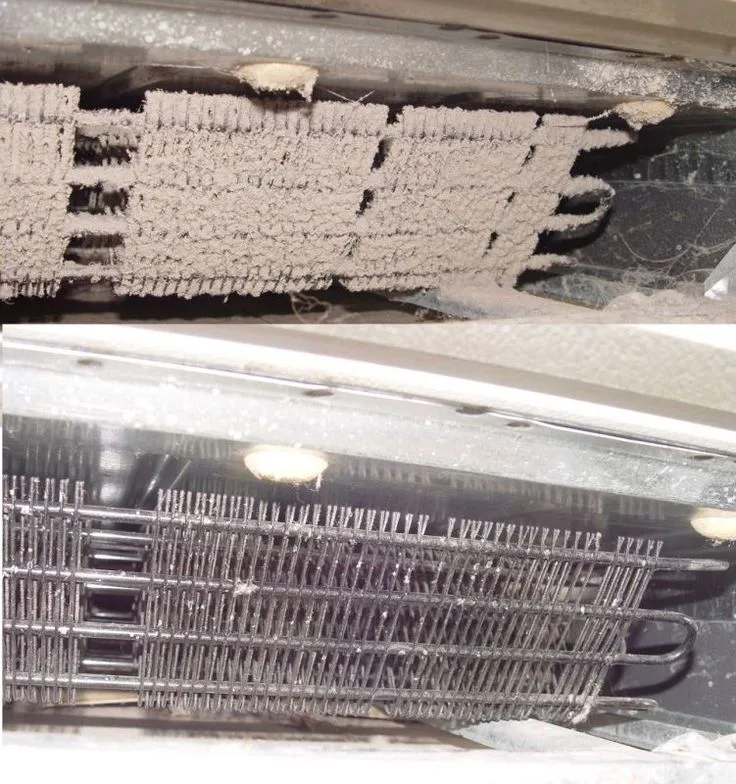
Image source: Bing (Web (fair-use with source credit))
The fridge needs ventilation space. Galanz mini fridges require 2 to 3 inches of clearance on the sides and back. If the fridge is shoved into a tight cabinet or pressed against a wall, hot air recirculates around the unit. The compressor runs constantly but the interior never reaches temperature.
Pull the fridge out, measure the clearance, and move it if needed.
The thermostat might be lying to you. Turn the dial to the coldest setting. Wait 30 minutes. Place a thermometer inside on the middle shelf.
If the thermometer reads 50 degrees Fahrenheit or higher but the dial says it should be colder, the thermostat sensor may be defective. This is more common on older Galanz units and models with digital temperature displays.
Check the evaporator fan. On models with a freezer compartment, a small fan circulates cold air from the freezer into the fridge section. If that fan stops spinning, often because ice buildup blocks the blades, the fridge section stays warm while the freezer gets frosty. Open the freezer door and listen for a fan sound.
Silence means a frozen fan blade.
Problem 3: Loud Noises, Clicking, or Buzzing
Mini fridges make noise. That is normal. But certain sounds mean something is wrong.
Here is how to tell the difference.
A soft humming or whooshing sound is normal. That is the compressor running and refrigerant circulating through the system. It should be consistent and fairly quiet, typically 32 to 42 decibels on Galanz thermoelectric models. If you can hold a conversation in the same room without raising your voice, the noise level is fine.
A loud click followed by silence means the compressor is trying to start but failing. You will hear a click, then nothing, then another click 5 to 10 minutes later. This is the overload protector cycling on and off. The cause is usually a failed start relay.
Replace the relay and the fridge will likely start working again. This is a $10 to $15 fix on most Galanz compressor models.
A rattling or vibrating noise usually comes from loose components. Check the drain pan underneath the fridge if it has one. Check the shelves inside. Make sure the fridge is level by adjusting the front feet.
A fridge that wobbles on an uneven floor will vibrate and rattle against the floor or wall.
A loud buzzing or grinding sound is bad news. That indicates the compressor itself is failing or the internal bearings have worn out. This is not a DIY repair. The cost to replace a compressor on a $150 mini fridge is not worth it.
Start looking for a replacement unit.
Gurgling or bubbling sounds are completely normal. That is the refrigerant flowing through the evaporator coils. It usually happens shortly after the compressor kicks on or off. Ignore it.
Problem 4: Leaking Water or Ice Buildup
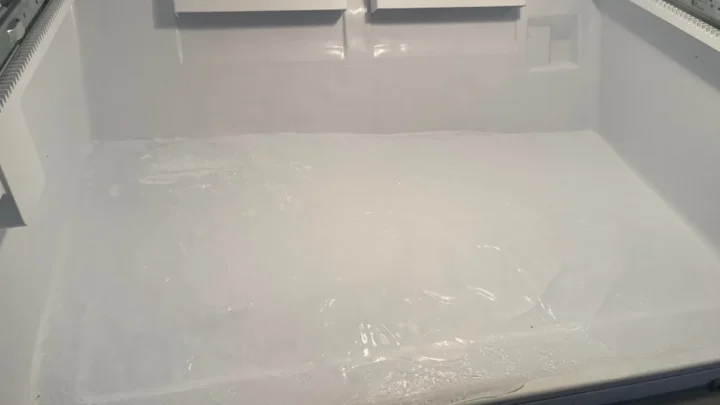
Water pooling inside the fridge or ice building up where it should not are signs of a clogged drain or a failing door seal. Neither is a mechanical failure, but both will eventually prevent the fridge from cooling properly.
Find the drain hole. Inside the fridge, usually at the back wall near the bottom, there is a small hole or slot. That is the condensate drain. It routes water to a tray underneath the fridge where it evaporates naturally.
When food crumbs or mold block that hole, water backs up and pools on the bottom of the fridge.
Clear the drain with a pipe cleaner, a thin zip tie, or even a straightened paper clip. Push it gently into the hole and work out any debris. Flush it with a small amount of warm water from a turkey baster.
Do this every few months as preventive maintenance.
Ice buildup in a manual defrost model means it is time to defrost. Galanz mini fridges that do not have auto defrost need to be manually defrosted every few months. Frost accumulates on the evaporator plate inside the freezer section. When that frost layer gets thick enough, it acts as insulation and prevents the fridge from cooling.
Unplug the fridge. Open the door. Place towels on the floor to catch the meltwater.
Let it defrost completely, which can take 4 to 8 hours depending on how thick the ice is. Never use a knife or ice pick to chip the ice away. You can puncture the refrigerant line and destroy the fridge.
Let it melt naturally.
A sagging or cracked door gasket lets warm air in. Run the dollar bill test from the Quick Fixes section. If the bill slides out easily at any point along the door, the gasket is compromised. Clean it with warm soapy water first.
Sometimes grime prevents a good seal. If cleaning does not help, you can replace the gasket. Galanz sells replacement door gaskets for most models, and they cost around $20 to $30.
Installation involves peeling off the old gasket and pressing the new one into the groove.
Check the door alignment. If the fridge is not level, the door may sag slightly and break the seal. Adjust the front leveling feet until the fridge sits perfectly level. A bubble level on the top of the fridge will confirm.
When It's Time to Call It Quits
Some problems are not worth fixing. Here is how to decide whether to repair or replace.
Replace the fridge if the compressor has failed. A replacement compressor costs $50 to $100 plus labor. On a mini fridge that costs $100 to $180 new, the math does not work. Buy a new unit instead.
Replace the fridge if the refrigerant has leaked. Refrigerant leaks require specialized tools and certification to repair. The repair cost will exceed the value of the fridge. Aggregated buyer feedback indicates that repair shops typically refuse these jobs on mini fridges.
Repair the fridge if the start relay has failed. That is a $15 part and a 10-minute fix. Anyone can do it with a screwdriver.
Repair the fridge if the door gasket is torn. A new gasket costs $20 to $30. Installation takes about 15 minutes.
Repair the fridge if the thermostat is faulty. A replacement thermostat runs $10 to $20. It requires a screwdriver and about 20 minutes of your time.
Consider the age of the unit. Most mini fridges last 5 to 8 years of daily use. If your Galanz is over 5 years old and needs a major repair, replacement is the smarter choice. Energy Star certified newer models also use less electricity, which saves you money over time.
Frequently Asked Questions
Why is my Galanz mini fridge running but not cold?
Dirty condenser coils are the most common cause. Unplug the fridge and clean the coils with a vacuum brush. Also check that the thermostat is set to the coldest position and that the door seal is intact.
Allow 24 hours for the temperature to stabilize after cleaning.
How do I reset my Galanz mini fridge?
Unplug the fridge from the wall outlet. Wait at least ten minutes. Plug it back in.
This resets the internal control board and equalizes compressor pressure. Turn the thermostat to the coldest setting and wait 30 minutes to see if cooling resumes.
Why is my mini fridge clicking but not turning on?
A clicking sound means the compressor is trying to start but failing. This is usually a failed start relay. Replace the relay, which costs about $10 to $15.
If the clicking continues after replacement, the compressor itself may be faulty and the fridge should be replaced.
How often should I clean the condenser coils on my Galanz mini fridge?
Clean the coils every six months. More often if you have pets or if the fridge is in a dusty environment like a garage or workshop. Dirty coils are the leading cause of cooling failure and reduced efficiency.
Why is water pooling inside my mini fridge?
The condensate drain is likely clogged. Find the small drain hole inside the fridge, usually at the back wall near the bottom. Clear it with a pipe cleaner or straightened paper clip.
Flush it with warm water. Do this every few months to prevent future blockages.
Can I replace the door gasket on my Galanz mini fridge myself?
Yes. Replacement gaskets cost $20 to $30 and are available from Galanz. Peel off the old gasket and press the new one into the groove.
Make sure the door closes tightly after installation. Run the dollar bill test to check the seal.

Similar Posts