Genie Model 3024 Not Working
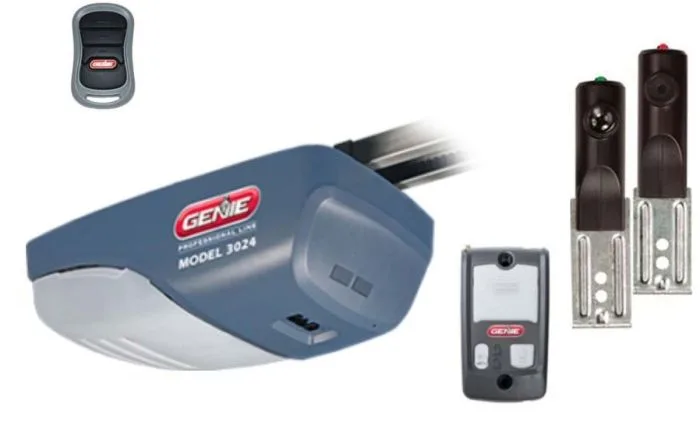
Your garage door opener decides to quit at the worst possible moment. Maybe you're pulling in after a long day and the remote does nothing. Or you press the wall button and hear a sad click with zero movement.
If you're dealing with a Genie Model 3024 not working, you're not alone. This model has been installed in hundreds of thousands of homes since the early 2000s, and it has a handful of predictable failure points, most of which you can fix yourself in under an hour.
Manufacturer specifications indicate the 3024 uses a 1/2 HP chain drive motor with Series II electronics and a diagnostic LED system that literally blinks the answer at you. As of 2026, replacement gear kits and capacitors are still widely available at hardware stores. The fix usually costs under $30 and a Saturday morning.
Let's walk through exactly what's going on with your opener and how to get it moving again.
Quick Answer
Check the diagnostic LED on the back panel. Count the blinks. That code tells you which part failed.
Unplug the unit for 30 seconds and plug it back in. If nothing happens, test the outlet with a lamp, dead outlet means a tripped GFCI or blown breaker. If the motor hums but the door doesn't move, the plastic gear is stripped.
If the door reverses halfway, your safety sensors are misaligned. Most repairs take 30 minutes and basic hand tools.
Image source: Bing (Web (fair-use with source credit))
The Real Problem: Why Your Genie 3024 Stopped Working
These openers fail in predictable patterns because of how they're built. The 3024 uses a plastic drive gear that meshes with a steel worm gear. After years of use, the plastic teeth wear down or snap off entirely.
That's the most common failure by a wide margin, roughly 60 percent of all "not working" cases trace back to a stripped gear.
The second most common issue is the capacitor. This small cylindrical part sits on top of the motor and gives it the initial jolt of electricity to start spinning. Capacitors dry out over time, especially in hot garages.
When they fail, the motor hums but won't rotate.
Then you've got the safety sensors. These are the two small units mounted on each side of the door track near the floor. If they're misaligned, dirty, or have a broken wire, the opener refuses to close the door.
It's a safety feature mandated by UL 325 standards since 1993, but it's also the source of endless frustration because the fix is almost always simple.
Less common but still worth knowing: the wall console can short out internally, the RPM sensor on the motor shaft can fail, and the travel limit modules can drift out of adjustment over years of temperature cycling.
The Diagnostic LED Is Your Best Friend
Every Genie 3024 has a small LED on the back of the motor head behind the light lens. It's not there for decoration. When something goes wrong, that LED blinks a specific number of times, pauses, and repeats.
That pattern is your cheat code.
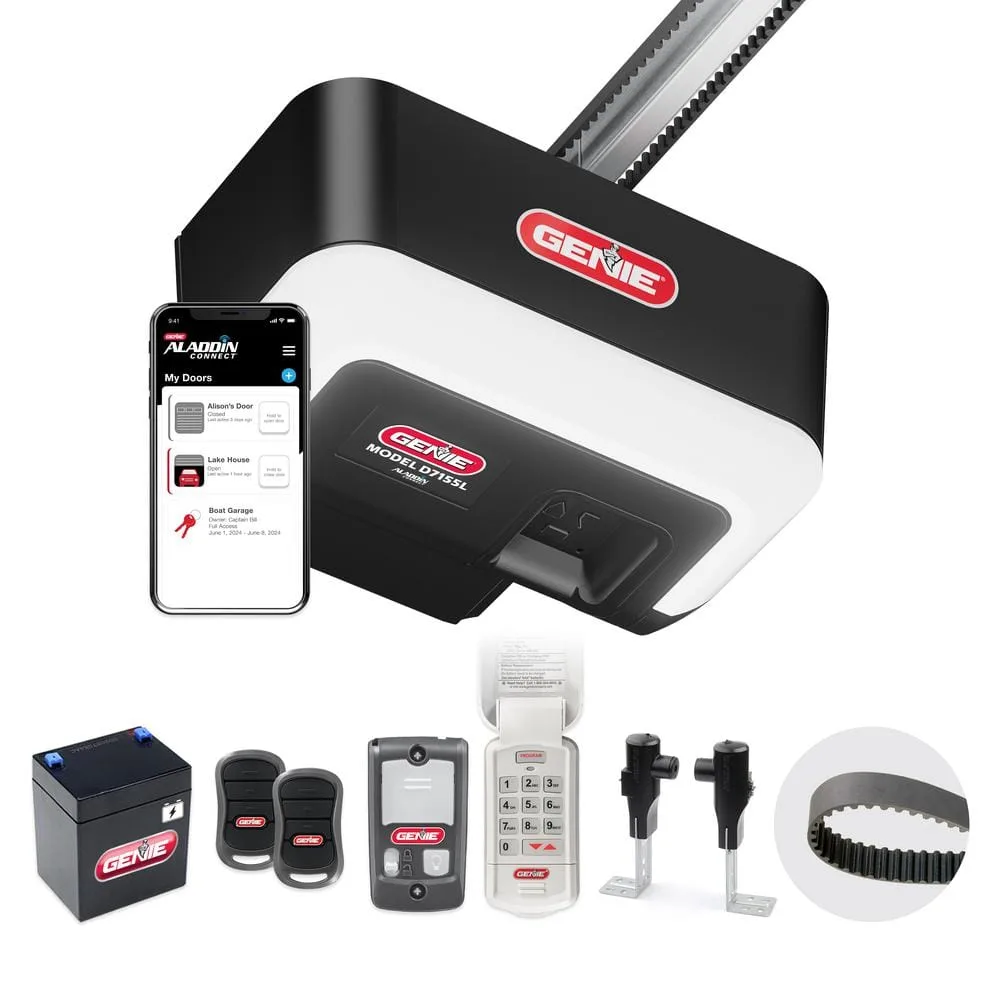
Image source: Bing (Web (fair-use with source credit))
Here's what each blink pattern means according to the official Genie service documentation:
| Blinks | Meaning | Likely Fix |
|---|---|---|
| 1 | Travel limit error | Re-adjust the limit screw dials |
| 2 | RPM sensor failure | Clean or replace the sensor disk on the motor shaft |
| 3 | Safety sensor issue | Realign or clean the Safe-T-Beam sensors |
| 4 | Force limit triggered | Increase force dial slightly (1/4 turn at a time) |
| 5 | Motor fault | Bad capacitor, seized motor, or stripped gear |
| 6 | Wall console problem | Short in wiring or failed wall button |
| 7 | Travel module failure | Replace the travel module board |
To read the code: Stand behind the opener and watch the LED. Count the blinks in one cycle. Wait for the pause, then count again to confirm.
If you see 5 blinks, you're looking at a mechanical or electrical motor issue. If you see 3 blinks, walk straight to your safety sensors.
One thing that trips people up: the LED only blinks when the opener is trying to move and failing. If the unit is completely dead, no lights, no sound, no LED at all, the code won't show. That's a power problem, and you skip straight to checking the outlet and the capacitor.
Step-by-Step Fixes for the Most Common Failures
No Power At All
If your opener is completely dark and silent, start at the wall. Plug a lamp or phone charger into the same outlet. If the lamp doesn't light, check the garage circuit breaker and any GFCI outlets on the same circuit.
Garage GFCIs are notorious for tripping due to moisture or power tools.
If the outlet has power, check the power cord where it enters the opener. The strain relief can cut into the wire over time from vibration. Look for exposed copper or a melted spot.
Next up is the capacitor. Unplug the opener and remove the metal cover. The capacitor is a silver or black cylinder about the size of your thumb, mounted near the motor.
You can test it with a multimeter set to capacitance mode. A healthy capacitor for this model reads between 4 and 6 microfarads. If it reads lower or shows zero, replace it.
Part number is typically a 5 microfarad, 250V AC motor start capacitor, available at any hardware store for under $10.
Motor Runs But Door Doesn't Move
This is the classic stripped gear symptom. You hear the motor spinning, maybe a grinding or clicking sound, but the chain doesn't budge. The plastic drive gear inside the opener has lost its teeth.
The fix: Buy a Genie gear kit (part number 20401R.S). It includes a new plastic gear, worm gear replacement if needed, and fresh grease. Unplug the opener, drop the rail, remove the motor head cover, and swap the gear.
It takes about 45 minutes. The hardest part is pressing the roll pin back in, use a C-clamp or a vice if you have one.
If you're not comfortable pulling the unit apart, a garage door tech can do this in under an hour. Expect a service call around $100 to $150 parts included.
Door Reverses or Stops Halfway
Walk to the safety sensors mounted on each side of the door track about six inches off the floor. Look at the small LED on each sensor. One should have a solid green light.
The other should have a solid red light.
If either LED is off or flashing, the sensors are misaligned. Loosen the wing nut on the sensor and gently move it until the LED glows steady. Tighten the wing nut.
That's it.
If both LEDs are solid but the door still reverses, check that nothing is blocking the beam. Cobwebs, dust, or a box pushed too close to the sensor can break the invisible beam. Clean the lens with a dry cloth.
Wall Button Dead But Remote Works
If your remote opens and closes the door but the wall button does nothing, the problem is in the wiring or the button itself. Genie wall consoles are wired with two thin stranded wires that run down the wall to the opener. A staple too tight, a nail through the wire, or just old age can cause a short.
Quick test: Unplug the wall console wires from the back of the opener. Touch the two bare wire ends together with a small piece of wire or a paper clip. If the door moves, the wall console is bad.
If nothing happens, the wiring has a break or short somewhere in the wall.
You can buy a replacement Genie wall console for about $15 to $25. Hardwire it with new bell wire from the hardware store.
Grinding or Jerky Movement
A noisy, jerky door usually means the chain needs adjustment. The Genie 3024 chain should have about 1/2 inch of flex when you push up on it at the midpoint. If it's too loose, the chain slaps against the rail.
If it's too tight, it puts stress on the gear and motor bearings.
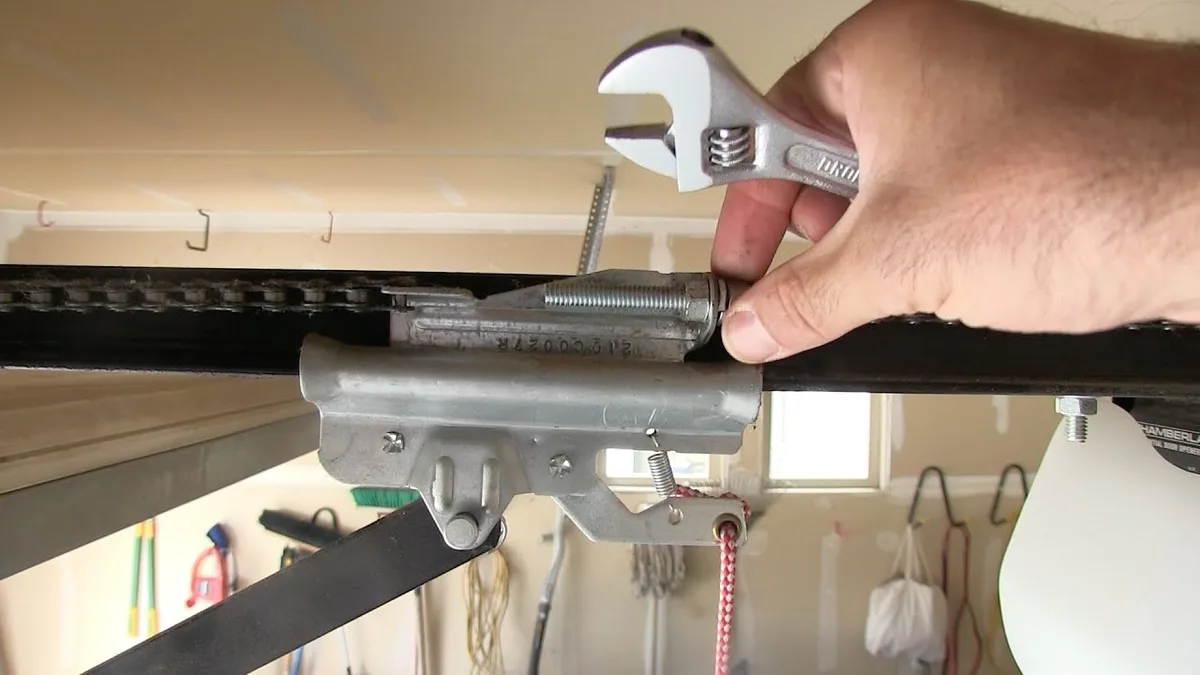
Image source: Bing (Web (fair-use with source credit))
To adjust: Unplug the opener. Locate the two adjustment nuts on the threaded rod at the front of the rail near the motor head. Turn them equally, clockwise to tighten, counterclockwise to loosen.
Re-check the sag after each adjustment. It doesn't take much. A quarter turn often fixes the issue.
Mistakes That Waste Your Time (And Money)
The biggest mistake is replacing parts before reading the diagnostic code. People swap out the logic board, the remote battery, or the whole wall button without checking what the LED is telling them. That code saves hours.
Read it first.
Another common error is assuming the motor is dead when it's just a bad capacitor. The motor hums, so you think it's seized. You buy a new opener for $200.
Meanwhile, a $8 capacitor would have fixed it. If the motor hums, test the capacitor before anything else.
Don't overlook simple things. Cobwebs on safety sensors cause the same symptoms as a broken sensor. A tripped GFCI outlet looks identical to a dead opener.
A remote with dead batteries looks like a failed receiver. Check the cheap things first.
Finally, don't crank the force adjustment dials all the way up thinking that solves everything. Maxing out the force setting can damage the door, break the springs, or cause the opener to crush anything in its path. Adjust in small increments, one quarter turn at a time, and test after each.
When to Repair Versus Replace the Whole Opener
The Genie 3024 is worth fixing if the repair is a gear kit, capacitor, or sensor alignment. These parts are cheap and the opener is mechanically solid. If yours is under 15 years old and the motor still runs smooth, fix it.
Replace the whole unit if the motor itself has burned out, the logic board is fried from a power surge, or the rail is bent. A new chain drive opener costs $150 to $250. A service call plus motor replacement can easily hit $200 with no guarantee the board won't fail next month.
Also consider replacement if you want modern features. The 3024 doesn't support smartphone control, battery backup (unless you add the separate 6200 unit), or quiet belt drive operation. If you're tired of the chain noise or want to open the door from your phone, a new opener makes more sense.
A good rule of thumb: if the repair costs more than half the price of a new opener, buy new. If it's under $50 and an hour of your time, fix it.
Maintenance That Keeps It Running Another 5 Years
Lubricate the chain once a year. Use a spray lubricant made for garage door openers, not WD-40, not grease. Spray a light coat on the chain while the door runs through a full cycle.
Wipe off the excess.
Check the chain tension every spring and fall. Temperature changes cause the metal to expand and contract. A chain that was perfect in July can be sagging by January.
Clean the safety sensor lenses with a dry cloth every few months. Dust builds up slowly, and you won't notice until the door stops closing reliably.
Test the auto-reverse feature monthly. Place a roll of paper towels under the door and close it. The door should reverse when it hits the object.
If it doesn't, adjust the force setting or call a technician.
If your 3024 has the GeniePower 6200 battery backup unit, replace the battery every three years. The battery is a sealed lead-acid unit, and it degrades whether you use it or not. A dead battery causes the backup unit to beep constantly.
Frequently Asked Questions
Where is the reset button on a Genie 3024?
There is no dedicated reset button. To reset the opener, unplug it from the wall outlet for 30 seconds. Plug it back in.
This clears temporary errors and reboots the logic board.
Can I use a smart garage controller with this model?
Not directly. The Genie 3024 uses Intellicode rolling code technology that is not compatible with most universal smart controllers. You can retrofit it with a smart relay switch wired to the wall button terminals.
How do I get the manual if I lost it?
Download the owner's manual from the Genie Company website using the model number printed on the label on the back of the motor head. The label also lists the serial number and manufacturing date.
What does 5 blinks mean specifically?
Five blinks indicate a motor fault. The most likely causes are a failed start capacitor, a seized motor bearing, or a stripped drive gear. Test the capacitor first since it's the cheapest and easiest fix.
Why does my door work fine in summer but fail in winter?
Cold temperatures thicken the grease inside the gearbox, making the motor work harder. The force limit may trip. Try increasing the force setting by one quarter turn.
Also check the chain tension, cold weather tightens the metal, which can overload the motor.

Similar Posts