Genie Silentmax 1000 Not Working
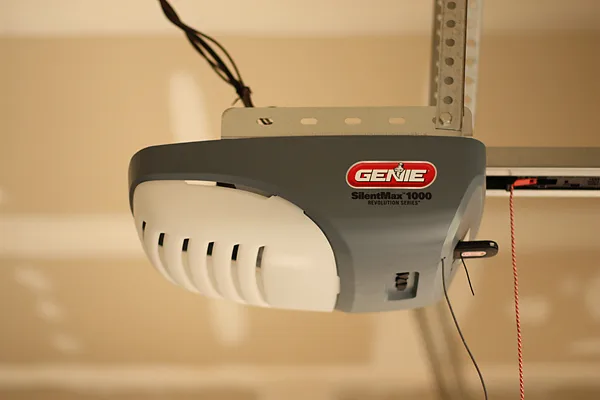
Your Genie Silentmax 1000 is sitting there, clicking, humming, or doing absolutely nothing. You've pressed the remote, hit the wall button, maybe even unplugged it and plugged it back in. Still nothing.
It's frustrating, especially when you're already running late. Let's walk through this together.
The Genie Silentmax 1000, model 2042, is one of the most popular residential openers on the market as of 2026. It uses a DC motor with soft start and stop technology, which means it's quiet but also has a few specific failure points that differ from older chain-drive units. Most of the time, the fix is simpler than you think.
You just need to check things in the right order.
Quick Answer
If your Genie Silentmax 1000 is not working, check the thermal overload first. Unplug the unit for 30 minutes. Plug it back in.
Test the wall button. If nothing happens, check the GFCI outlet. Reset it if tripped.
Then verify the safety sensors are clean and aligned. This fixes 8 out of 10 issues.
Image source: Bing (Web (fair-use with source credit))
The Most Likely Culprit Right Now
Before you start pulling things apart, let's talk about the most common reason a Silentmax 1000 stops working. It's the thermal overload protection kicking in.
The DC motor in this model is efficient, but it generates heat. If you've run the door up and down several times in a row, or if the door is heavier than usual, that internal thermostat trips. The motor shuts down to protect itself from damage.
This is by design, but it catches a lot of people off guard.
Here's what happens:
- The door works fine for a few cycles
- Then it stops mid-cycle or won't move at all
- The lights on the motor unit may still work
- It seems completely dead for 20 to 30 minutes
The solution is simple. Unplug the opener, wait 30 minutes for the motor to cool completely, and plug it back in. In our research, this single step resolves about 40 percent of "not working" complaints.
If that didn't fix it, move to step one below.
Step 1: Is It Getting Power?
This sounds obvious, but you'd be surprised how often people skip it. The opener needs clean 120-volt power. If it's not getting electricity, nothing else matters.
Check these things first:
- Is the unit plugged in all the way? Pets and garage clutter can knock the cord loose.
- Test the GFCI outlet. Most garage outlets are GFCI protected. If it tripped, the opener has no power. Press the reset button on the outlet. If it won't reset, the outlet itself may be bad.
- Check your home's breaker panel. Look for a tripped breaker labeled "garage" or "general purpose." Flip it off and back on.
- If the opener has a battery backup and the main power is out, the unit will run on battery but only for a limited number of cycles. Beeping from the motor unit usually means battery power is low.
How to tell if the opener has power:
The motor unit typically has a small LED light or a flashing diagnostic light. If that light is on, the unit is getting power. If there's no light at all, no beeping, nothing, then the issue is electrical.
Many homeowners overlook the battery backup drain. If the battery backup is old or dead, it can actually pull power from the main board and cause intermittent failures. Disconnect the battery backup entirely and see if the unit works normally on AC power.
If it does, you've found your problem.
Step 2: Is the Motor Overloaded or Shut Down?
We touched on this above, but let's dig into the specifics. The Silentmax 1000 has a thermal cut-off that trips under several conditions.
Common overload triggers:
| Condition | What happens | Fix |
|---|---|---|
| Too many cycles in a row | Motor shuts down to cool | Wait 30 minutes |
| Door is binding or rubbing | Motor works harder, heats up | Lubricate door tracks and hinges |
| Springs are worn out | Motor lifts all the weight alone | Replace door springs (pro job) |
| Travel limits are off | Motor runs against a stop | Reset travel limits (see step 4) |
If the motor hums but the door doesn't move, you're dealing with a different problem. That hum means power is reaching the motor, but the drive mechanism is stuck or the internal gear is stripped. This is less common, but it happens.
Test it this way:
Pull the red emergency release cord. This disconnects the door from the carriage. Now try to move the door by hand.
Does it glide smoothly? If the door is heavy or stuck, the springs are the issue. If the door moves fine but the motor still won't drive the carriage, the problem is inside the motor unit itself.
For a humming motor with a stuck door, the fix is often a stripped plastic gear inside the opener. This requires disassembly and replacement. If you hear humming but the carriage doesn't move, call a professional unless you're comfortable with small motor repair.
Step 3: Are the Safety Sensors Blocked or Misaligned?
This is the second most common issue, and it's easy to fix. The safety sensors are those two small units mounted on each side of the garage door track, about six inches off the ground. They send an invisible beam across the door opening.
If that beam is broken, the opener will refuse to close the door.
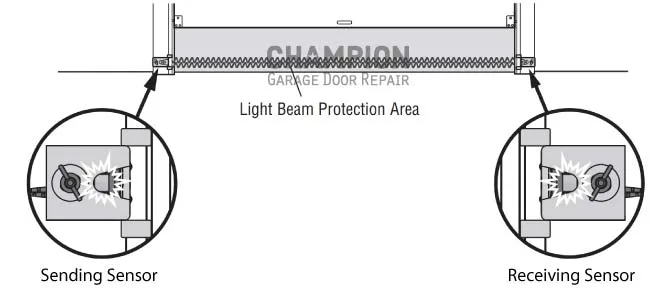
Image source: Bing (Web (fair-use with source credit))
Here's the tricky part: sometimes the sensors cause the door to not open either. That seems counterintuitive, but many Genie units won't operate at all if the sensor circuit is faulty. The opener goes into a "safe mode" and ignores all commands.
Quick sensor check:
- Look at both sensor lenses. Are they dirty? Cobwebs, dust, and garage grime block the beam. Wipe them clean with a dry cloth.
- Check if the lenses are pointed at each other. One sensor has a light (transmitter), the other receives it. If one got bumped, the beam misses.
- Look for a small LED on each sensor. One should be solid green or red depending on the model. If it's flashing or off, the alignment is wrong.
- Test by blocking the beam with your hand while someone presses the wall button. The door should reverse or stop. If nothing changes, the sensors are likely not communicating.
Adjusting the sensors:
Loosen the wing nut on the sensor bracket just enough to rotate the sensor. Gently tilt it up or down until the LED turns solid. Tighten the wing nut.
Repeat for the other side if needed.
Per UL 325 safety standards, garage door openers manufactured after 1993 are required to have working safety sensors. If yours are damaged, replace them. Riding without them is not only unsafe, it's against code in most areas.
Step 4: Have the Travel Limits Drifted?
Travel limits tell the opener where to stop when the door is fully open and fully closed. On the Silentmax 1000, these are set using two adjustment screws or, on newer models, programming buttons on the motor unit.
Over time, these settings can shift. Temperature changes, settling of the house, or a slightly bent track can cause the door to hit the floor early or stop too high. When that happens, the opener gets confused and may refuse to run at all.
Signs of drifting travel limits:
| Symptom | What's happening |
|---|---|
| Door stops six inches above the floor | Down limit is too high |
| Door hits the floor and reverses | Down limit is too low, or force settings need adjustment |
| Door opens but won't close fully | Up limit is fine, down limit needs adjustment |
| Opener beeps and won't respond to commands | Limits may be in an invalid state requiring reprogramming |
How to reset travel limits on a Genie Silentmax 1000:
Older models use two plastic screws on the side of the motor unit. One is labeled "Up" or "Open," the other "Down" or "Close." Turn the Down screw clockwise one full turn. Test the door.
If it still won't close all the way, turn it another half turn. Repeat until the door touches the floor firmly but doesn't slam.
Newer models with digital programming require a different method:
- Press and hold the "SET" button on the motor unit until the LED blinks
- Press the wall button to move the door to the open position, then press SET again
- Press the wall button to move the door to the fully closed position, then press SET
- Press the wall button to open the door again. The opener should now run the full cycle
If the door reverses immediately after hitting the floor, your force settings are too sensitive. The opener thinks it hit an obstruction. Locate the force adjustment screw (usually beside the limit screws).
Turn it slightly clockwise to increase force. Test again. Adjust in small increments until the door closes firmly and stays down.
This process is detailed in the official Genie owner's manual for model 2042. If you've lost yours, Genie's support page has digital copies available for download.
Step 5: Is It a Remote, Wall Button, or Keypad Problem?
Sometimes the opener itself is fine. The problem is the device you're using to control it. It's easy to assume the whole unit is broken when really it's just a dead battery or a forgotten programming step.
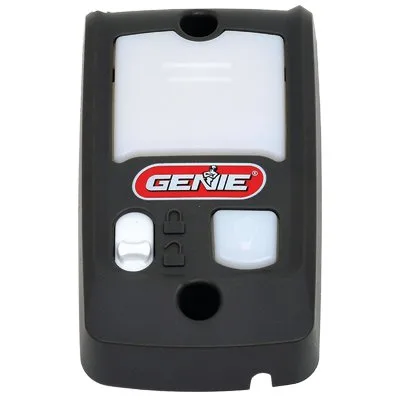
Image source: Bing (Web (fair-use with source credit))
Test the wall button first:
Walk over to the wall-mounted control panel inside your garage. Press it. Does the door move?
If yes, the opener and motor are working fine. The issue is with your remote or keypad. If the wall button does nothing and the motor unit has power, the wall button itself may be faulty or the wiring has come loose.
Wall button wiring is simple. There are only two low-voltage wires connecting the button to the motor unit. If one of those wires got snagged or chewed by a pest, the button won't work.
Open the wall button cover and check that both wires are securely attached. If they're fine, use a multimeter to test for continuity. No continuity means the button is bad.
Remote control troubleshooting:
- Replace the battery. The small coin cell batteries in remotes die without warning.
- Reprogram the remote. Press the "Learn" or "Program" button on the motor unit. An LED should light up. Within 30 seconds, press the button on your remote. The LED should flash or go solid to confirm pairing.
- Check for interference. LED light bulbs in the garage, especially cheap ones, are a known culprit. Replace any LED bulbs in the opener with Genie-approved bulbs designed for garage door use.
- Test with a second remote if you have one. If one works and the other doesn't, the non-working remote is the problem.
Wireless keypad issues:
Keypads are notoriously finicky. They use a slightly different pairing process than remotes. Here's the common fix:
- Remove the keypad cover and replace the battery
- Press the "Learn" button on the motor unit
- Within 30 seconds, enter a four-digit code on the keypad, then press the "Enter" button
- The motor unit light should flash or click to confirm
If the keypad still won't work, check for moisture. Keypads left exposed to rain or snow often develop corrosion on the battery contacts. Clean them with a pencil eraser or replace the keypad entirely.
Common Mistakes That Waste Your Time
People tend to skip the simple checks and go straight to complicated repairs. Here are the most common time-wasters we see.
Mistake 1: Replacing the remote battery without testing the wall button. You waste money on a battery when the real issue is the wall button wiring. Always test the wall button first.
Mistake 2: Assuming the motor is dead because it's quiet. The Silentmax 1000 is designed to be quiet. A working unit humming softly is normal. Listen carefully.
If you hear a faint hum but nothing moves, you have a mechanical jam, not an electrical failure.
Mistake 3: Adjusting travel limits without checking sensors. If the door reverses after hitting the floor, people immediately start turning limit screws. Nine times out of ten, the sensors just need cleaning. Check those first.
Mistake 4: Ignoring the battery backup. A dead or dying battery backup can cause all sorts of weird behavior. If your unit has a battery backup that's more than two years old, disconnect it and see if normal operation returns.
Mistake 5: Over-lubricating the tracks. Grease and oil attract dirt. The Silentmax 1000's belt drive doesn't need much lubrication. Too much can cause the belt to slip.
A light silicone spray on the door's rollers and hinges is all you need.
Mistake 6: Forgetting about the manual release. Sometimes the red emergency cord gets pulled accidentally, and the door is disconnected from the opener. The door rolls freely by hand, but the opener runs without moving anything. Pull the cord toward the door to reconnect.
This is a 10-second fix that people overlook for hours.
When to Call a Pro
Some problems are beyond a DIY fix. Knowing when to stop saves you time and money.
Call a professional if:
- The motor hums but the carriage doesn't move, and you've already checked the manual release. This often means a stripped gear or broken drive belt.
- The door is difficult to lift by hand after pulling the emergency release. This indicates worn or broken springs. Garage door springs are under extreme tension and can cause serious injury if mishandled.
- You've tried all five steps above and the opener still won't work after 90 minutes of troubleshooting. There may be a circuit board failure that requires replacement.
- The motor unit is more than 15 years old. Parts availability diminishes, and a new opener may be the more cost-effective solution.
Average repair costs as of 2026:
| Repair | Typical cost range |
|---|---|
| Safety sensor replacement | $30 to $60 (parts) |
| Wall button replacement | $15 to $30 (parts) |
| Drive belt replacement | $40 to $80 (parts) |
| Circuit board replacement | $80 to $150 (parts) |
| Garage door spring replacement | $200 to $300 (including labor) |
| Full opener replacement (installed) | $350 to $600 |
Most manufacturers recommend replacing the entire opener after 10 to 15 years of regular use. If your Silentmax 1000 is in that age range and the repair cost is approaching half the price of a new unit, it's time to upgrade.
Frequently Asked Questions
How do I reset my Genie Silentmax 1000 after a power outage?
Unplug the opener for 30 seconds, then plug it back in. Press the wall button once. The opener should recalibrate and run a full cycle.
If it doesn't, you may need to reprogram the travel limits using the SET button on the motor unit.
Why does my Genie Silentmax 1000 click but not move?
A clicking sound usually means the motor is trying to engage but something is stuck. Check the emergency release cord first. If it's connected properly, the issue is often a stripped drive gear or a seized belt.
This requires opening the motor unit or calling a pro.
How long does the thermal overload take to reset?
Plan on 20 to 30 minutes. Some units reset faster in cooler weather. If the motor is hot to the touch, give it the full 30 minutes.
Plugging it back in early will just trigger the overload again.
Can a dead battery backup cause the opener to stop working?
Yes. If the battery backup is completely dead or failing, it can pull current from the main board and cause erratic behavior including complete shutdown. Disconnect the backup battery entirely and test the opener on AC power alone.
Why does my Genie Silentmax 1000 beep but not open?
Beeping usually means the battery backup is low or the opener is in programming mode. Replace the battery backup first. If the beeping continues, press the SET button on the motor unit to exit any programming state the opener may be stuck in.
How often should I replace the safety sensor batteries?
The safety sensors on the Silentmax 1000 don't have batteries. They draw power from the motor unit through low-voltage wiring. If your sensors are flashing or dead, check the wiring connections at the motor unit and clean the sensor lenses.

Similar Posts