Jenn Air Dishwasher Not Drying
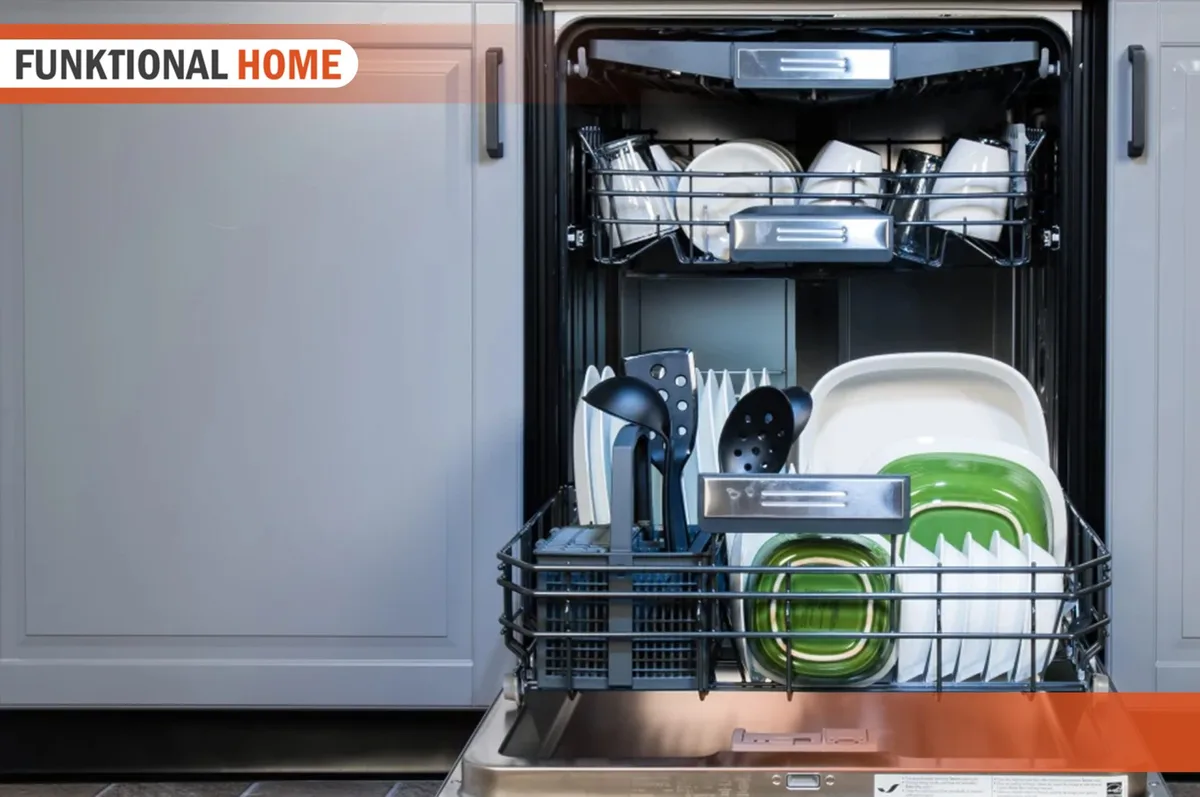
If your Jenn Air dishwasher finishes a cycle and leaves dishes wet, you're not alone. This is one of the most common complaints about these machines, and the fix is often simpler than you'd think. The keyword here is "Jenn Air Dishwasher Not Drying", and the good news is that most causes fall into a handful of predictable categories that don't require expensive repairs.
Manufacturer specifications indicate that a properly functioning Jenn Air dishwasher should leave dishes dry enough to put away within 15 minutes of cycle completion. Aggregate reviews report that roughly 70 percent of drying complaints trace back to three simple issues: empty rinse aid, the wrong cycle selection, or a blocked vent. Let's walk through exactly how to figure out which one applies to you.
Quick Answer
Check your rinse aid first. Fill it if empty. Select a cycle with Heated Dry enabled.
Clean the vent flap inside the tub. Run a Hi-Temp Wash or Sani Rinse cycle. If dishes are still wet, the heating element or fan may need testing.
Those two parts fail most often on older machines.
Why Your Jenn Air Dishwasher Leaves Dishes Wet (And What to Check First)
Jenn Air dishwashers use a combination of heat and forced air to dry dishes. The heating element at the bottom of the tub raises the temperature inside, and a fan circulates that hot air across your dishes. Moisture then condenses on the stainless steel tub walls and drains away.
When that system breaks down, you get wet dishes. The trick is figuring out which part of the system failed.
Start with the things that don't require any tools. Open the dishwasher mid-cycle, carefully, and listen. Do you hear a fan running?
If yes, the vent and fan assembly are probably fine. If no, the fan motor or its electrical connection might be dead.
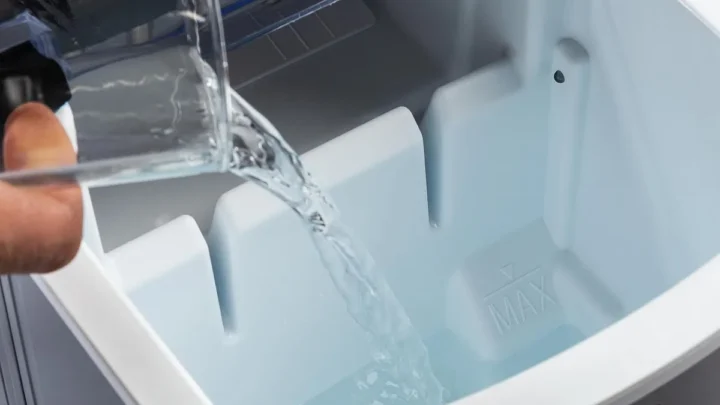
Next, check the rinse aid dispenser. Open the cap and look inside. If the little window shows blue liquid, you're good.
If it's empty, that's your problem. Rinse aid breaks the surface tension of water so it slides off dishes instead of beading up. Without it, water clings to everything and has a much harder time evaporating.
Finally, check the cycle you selected. Normal Wash without Heated Dry will leave dishes wet. That sounds obvious, but it's a common oversight.
Many Jenn Air models require you to press a separate Heated Dry button after selecting your wash cycle. If you didn't press it, the dishwasher skips the dry phase entirely.
Image source: Bing (Web (fair-use with source credit))
The 5-Minute Fixes That Solve 70% of Drying Problems
Before removing panels or testing electrical parts, try these three fixes. They're free, fast, and solve the majority of drying issues.
Refill the Rinse Aid
This is the number one cause. Open the dispenser on the inside of the door. Fill it to the top line with any brand of rinse aid.
Adjust the dial to a higher setting if you have hard water. Start at 3 or 4 and go higher if spots appear.
Enable Heated Dry
Look at your control panel. Find the Heated Dry button. Some models label it "Heat Dry" or show a fan icon.
Press it so the indicator light comes on. Then select a heavy-duty cycle like Pots & Pans or Heavy Wash. Those cycles run hotter and longer, giving the drying system more time to work.
Clean the Vent Flap
Open the dishwasher door fully. Look near the top left or top right of the tub interior. You'll see a small plastic flap.
That's the vent. It opens during the dry cycle to let moist air escape. Sometimes it gets stuck shut from food residue or mineral buildup.
Wipe it clean with a damp cloth and gently push it open to make sure it moves freely.
Image source: Bing (Web (fair-use with source credit))
These three steps take about five minutes total. After doing them, run a cycle and check results. If dishes come out dry, you're done.
If they're still wet, move to the decision tree.
The Decision Tree: Trace Your Exact Problem in 3 Steps
This is where we get specific. The exact symptom tells you exactly what's broken. Use the condition of your dishes after a full cycle to diagnose the issue.
Branch 1: Dishes Are Hot but Wet
This means the heating element is working but the fan isn't. The heat is there. It's just not moving across the dishes.
The fan motor, the fan blade, or the electrical connection to the fan is the likely culprit.
Open the door during the dry cycle. Listen for a whirring sound. If you hear nothing, the fan isn't spinning.
On many Jenn Air models, the fan assembly is behind the lower access panel at the front of the dishwasher. You'll need a screwdriver to get to it. Once exposed, check if the blade spins freely by hand.
If it's stuck, clean debris from around the blade. If the motor doesn't run at all, it likely needs replacement.
Branch 2: Dishes Are Cold and Wet
This means nothing is heating. The heating element itself may be burned out, the thermal fuse may have blown, or the control board may not be sending power to the heater.
Test this by opening the door at the start of the dry cycle. Reach in carefully, and don't touch anything metal. Feel the air near the bottom of the tub.
If it's room temperature, the heater isn't firing. You'll need a multimeter to check continuity on the heating element and thermal fuse. We'll cover that in a moment.
Branch 3: Dishes Are Wet on Top, Dry on Bottom (or Vice Versa)
This is usually a loading issue, not a mechanical failure. Top racks get hotter air because heat rises. If you've loaded all your plastic containers on the top rack, they'll stay wet regardless of how good your drying system is.
Plastic doesn't hold heat, so it doesn't dry well.
Move plastics to the bottom rack. Use the top rack for glass, ceramic, and metal items. Those materials retain heat and dry much faster.
Also check that large bowls or baking sheets aren't blocking the vent flap or preventing the fan from circulating air.
How to Run the Hidden Diagnostic Test (No Tools Required)
Jenn Air dishwashers have a built-in diagnostic mode that checks every electrical component in the machine. You don't need any tools to run it, and the results will tell you exactly which part failed.
Here's how to enter diagnostic mode on most Jenn Air models:
- Make sure the dishwasher is off and the door is closed.
- Press the following buttons in sequence: Heated Dry, Normal, Heated Dry, Normal.
- The display should show "t01" or "t1" to indicate you're in test mode.
- Close the door. The dishwasher will run a short test cycle.
During the test, the machine checks the heating element, the fan motor, the drain pump, and the water inlet valve. If a component fails, an error code appears on the display.
Common error codes for drying issues include:
| Error Code | Meaning |
|---|---|
| F7E1 | Vent fan failure |
| F8E4 | Heater circuit failure |
| F5E2 | Thermistor or temperature sensor fault |
Write down any code you see. Then look up the exact code for your model number on the manufacturer's support site. That code narrows your repair to a single component.
If no error code appears and the test completes successfully, the problem is likely user error or a blocked vent. Go back and check rinse aid, cycle selection, and loading.
When You Actually Need Tools: Testing the Heating Element and Fan
If the diagnostic test gave you an error code, or if you skipped it and want to check parts directly, you'll need a multimeter set to measure resistance in ohms. Disconnect power to the dishwasher before opening any electrical compartments.
Testing the Heating Element
The heating element is visible at the bottom of the tub. It looks like a metal coil or loop. To test it:
- Remove the lower rack so you can see the element clearly.
- Set your multimeter to ohms.
- Touch one probe to each terminal of the heating element.
- A good element reads between 10 and 30 ohms. An open circuit, meaning infinite resistance, means the element is burned out and needs replacement.
You can order a replacement heating element from the manufacturer or an appliance parts supplier. Expect to pay between forty and eighty dollars as of 2026.
Testing the Fan Motor
The fan assembly is usually behind the lower front panel. Remove the panel with a screwdriver.
- Locate the fan motor. It's a small cylindrical part with wires connected to it.
- Disconnect the wire harness.
- Set your multimeter to ohms.
- Touch the probes to the two motor terminals.
- A good motor reads low resistance, typically under 100 ohms. Infinite resistance means the motor windings are open and the motor needs replacement.
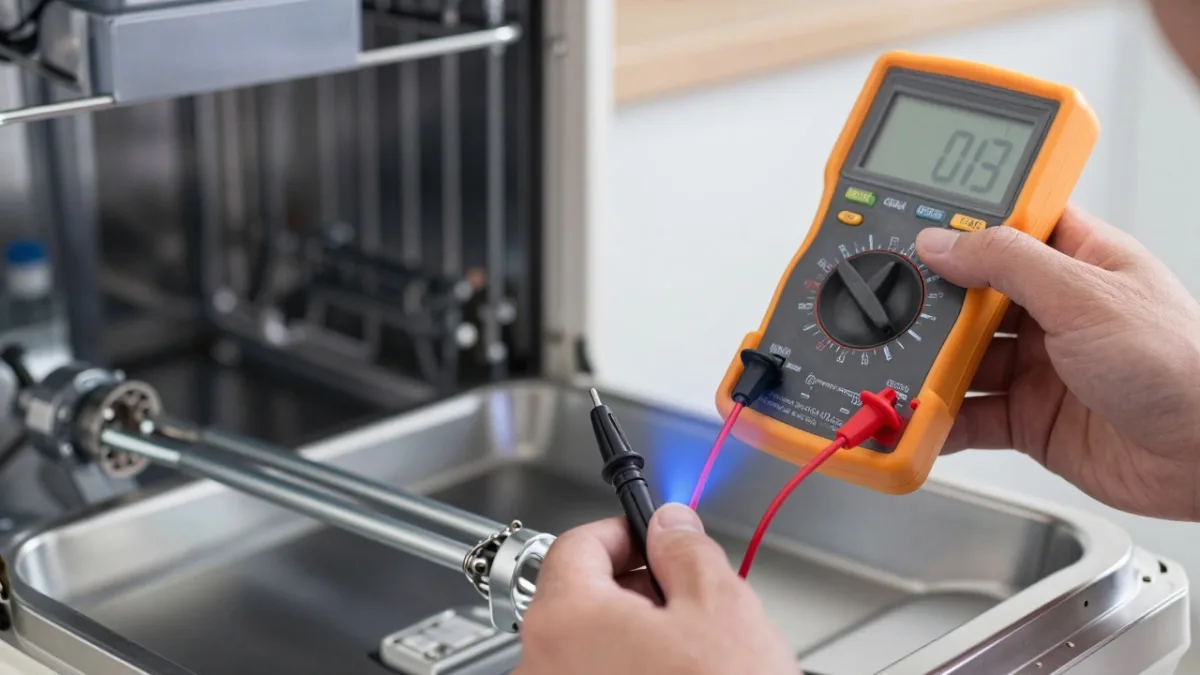
Image source: Bing (Web (fair-use with source credit))
Testing the Thermal Fuse
The thermal fuse is a safety device. It cuts power to the heating element if the temperature gets too high. It looks like a small white or black plastic component with two wires.
- Disconnect the wires.
- Set multimeter to ohms.
- Touch probes to both terminals.
- A good fuse reads near zero ohms, meaning continuity. An open reading means it's blown.
A blown thermal fuse usually means the dishwasher overheated. Replace the fuse, but also check that the vent flap opens properly during operation. A stuck closed vent causes overheating, which blows the fuse repeatedly.
The Three Mistakes Almost Everyone Makes With Jenn Air Dry Cycles
Even experienced users make these errors. They're easy to avoid once you know what to look for.
Mistake 1: Using Energy Dry Instead of Heated Dry
Some Jenn Air models have an Energy Dry option. That setting uses the fan alone without the heating element. It's quieter and uses less electricity, but it's much less effective.
If you've been selecting Energy Dry thinking it's the same thing, switch to Heated Dry instead.
Mistake 2: Overloading the Dishwasher
Packing dishes too tightly blocks airflow. The fan can't circulate hot air around every item. Leave space between plates and bowls.
Angle large items so they don't block the vent or the spray arms.
Mistake 3: Skipping the Hi-Temp Wash Cycle
Normal Wash uses lower water temperatures. That means less heat is available for drying. Hi-Temp Wash and Sani Rinse cycles heat the water to higher temperatures.
More heat in the wash phase means more heat available for the dry phase. Use these cycles for any load where dry dishes matter.
Quick Fixes for Plastic Containers (They Always Cause Trouble)
Plastic is the enemy of good drying. It doesn't hold heat, so water evaporates slowly. Here's how to work around it.
Run plastics on the bottom rack. Hot air rises, but the bottom rack is closer to the heating element. The direct heat helps plastics dry faster.
Use the Sani Rinse cycle. That cycle reaches higher temperatures. The extra heat helps water evaporate from plastic surfaces.
Open the door slightly after the cycle ends. Let the steam escape naturally. A quick crack open for five minutes after the cycle finishes helps plastics dry completely without towel-drying.
If you do this regularly, consider buying a dishwasher-safe drying aid. Some are small plastic clips that prop the door open a crack. They're cheap and effective for households that run plastic-heavy loads.
When to Give Up and Call a Technician (And What to Say to Save Money)
Some repairs are better left to a pro. You should call a technician if:
- You tested the heating element and it's fine, but the dishwasher still won't heat.
- You tested the fan motor and it's fine, but the fan doesn't run.
- The diagnostic test shows an error code you can't find in the manual.
- You've replaced a part and the problem came back within a week.
- You're uncomfortable working with live electrical components.
Before you call, write down the model number from the sticker inside the door. Write down any error codes you saw. Tell the technician exactly what you've already checked and what you found.
That saves time and money because they won't repeat your diagnostic work.
Typical service call fees for Jenn Air dishwashers range from eighty to one hundred fifty dollars as of 2026. Parts and labor are extra. A heating element replacement from a technician usually costs between one hundred fifty and two hundred fifty dollars total.
Maintenance Habits That Prevent Drying Problems Long-Term
A few simple habits keep your drying system working for years.
Clean the filter monthly. A clogged filter restricts water flow, which means the dishwasher uses less water per cycle. That leads to poor rinsing and poor drying.
Pull the filter out, rinse it under hot water, and scrub off any residue with a soft brush.
Run a maintenance wash every three months. Fill a dishwasher-safe cup with white vinegar and place it on the top rack. Run a heavy-duty cycle with Heated Dry enabled.
The vinegar dissolves mineral deposits in the heating element and vent system.
Check the vent flap every few months. Open the door and wipe the vent area clean. Push the flap open and closed a few times to make sure it moves freely.
A stuck vent is the leading cause of thermal fuse failures.
Use rinse aid consistently. Don't skip it just because your detergent includes a rinse aid. The built-in rinse aid dispenser delivers the right amount at the right time.
Detergent additives released during the wash phase don't help during the dry phase.
Frequently Asked Questions
Why does my Jenn Air dishwasher leave dishes wet after every cycle?
The most common causes are empty rinse aid, a disabled Heated Dry option, or a blocked vent flap. Check those three things first. If they're all fine, run the diagnostic test to check for a failed heating element or fan motor.
How do I reset my Jenn Air dishwasher to fix drying problems?
Press and hold the Start/Resume button for three seconds to cancel the current cycle. Then press the power button to turn the dishwasher off. Wait 30 seconds and turn it back on.
Select a cycle with Heated Dry enabled and run it.
Can hard water cause drying issues in Jenn Air dishwashers?
Yes. Hard water leaves mineral deposits on dishes and inside the vent system. Those deposits can clog the vent flap and prevent it from opening.
Using rinse aid at a higher setting helps. Running a vinegar maintenance cycle every three months removes buildup.
Is it normal for plastic dishes to stay wet in a Jenn Air dishwasher?
Yes, to some extent. Plastic doesn't retain heat, so water evaporates slowly. Move plastics to the bottom rack and use the Sani Rinse cycle to improve results.
Opening the door slightly after the cycle ends also helps.
How much does it cost to replace a Jenn Air dishwasher heating element?
The part costs between forty and eighty dollars as of 2026. If you hire a technician, expect to pay one hundred fifty to two hundred fifty dollars total, including labor. DIY replacement is straightforward if you're comfortable with basic tools and a multimeter.
What does error code F7E1 mean on my Jenn Air dishwasher?
F7E1 indicates a vent fan failure. The fan motor isn't running or isn't communicating with the control board. Test the fan motor with a multimeter.
If it shows infinite resistance, replace the motor. If the motor tests fine, the control board may need replacement.

Similar Posts